Internet Freedom Foundation (IFF)

22.7K posts

Internet Freedom Foundation (IFF) banner
Internet Freedom Foundation (IFF)

Internet Freedom Foundation (IFF)

@internetfreedom

Internet Freedom Foundation (IFF) is an advocacy organisation born from https://t.co/hYIxzR64qM. IFF secures your civil liberties in the digital age.

India Katılım Aralık 2014
696 Takip Edilen85.3K Takipçiler
Sabitlenmiş Tweet
Internet Freedom Foundation (IFF)
Internet Freedom Foundation (IFF)@internetfreedom·
We’ve come a long way, but we’re not there yet. From 220 to 451 members, this growth has been powered by people like you. Now, we need one final push to reach 1000. You can help by sharing IFF with your friends and family, sending a simple message, or even hosting a small fundraiser for a moment that matters to you. Every effort, no matter how small, helps us get closer. (Email Template in 2nd thread) Support our work: internetfreedom.in/donate
English
3
20
34
24.4K
Internet Freedom Foundation (IFF) retweetledi
nisarga
nisarga@ni5arga·
@internetfreedom @IndianCERT Hi, the vendor which has developed the portal is known as "Coempt EduTeck Pvt Ltd". They publicly advertise this platform on their website. I've been informed that multiple other institutions use the same vulnerable OnMark platform. More details here: ni5arga.com/blog/posts/hac…
English
7
44
159
5.1K
Internet Freedom Foundation (IFF)
We hope that @IndianCERT responds to these incident reports publicly. IFF would have filed a RTI but it has been exempted from any transparency requirements. CERT-In and CBSE should at the very least disclose the name of the vendor who has developed the OSM portal. internetfreedom.in/statement-exem…
nisarga@ni5arga

This is really really bad, found another severe vulnerability in CBSE's OSM portal. Just sent another report to CERT-In.

English
10
74
309
9.5K
Internet Freedom Foundation (IFF)
The internet is where citizens hold power to account. But new IT Rules could make censorship easier, fact-checking weaker, and online creators more vulnerable to government oversight. This isn’t just about one blocked account. It’s about your right to speak, question, and know. We have a week to push back. For Resource note, see the second thread
English
3
125
283
6.3K
Internet Freedom Foundation (IFF) retweetledi
Internet Freedom Foundation (IFF)
Will more hate speech laws make the internet any less toxic? After Karnataka, Telangana and Odisha are proposing to make fresh hate speech laws. As our analysis shows it’s not the absence of law but lack of policing reforms that is enabling hate speech online. These new laws will only give new legal powers for censorship and criminal prosecution that will only be abused.
English
0
20
54
4.3K
Internet Freedom Foundation (IFF)
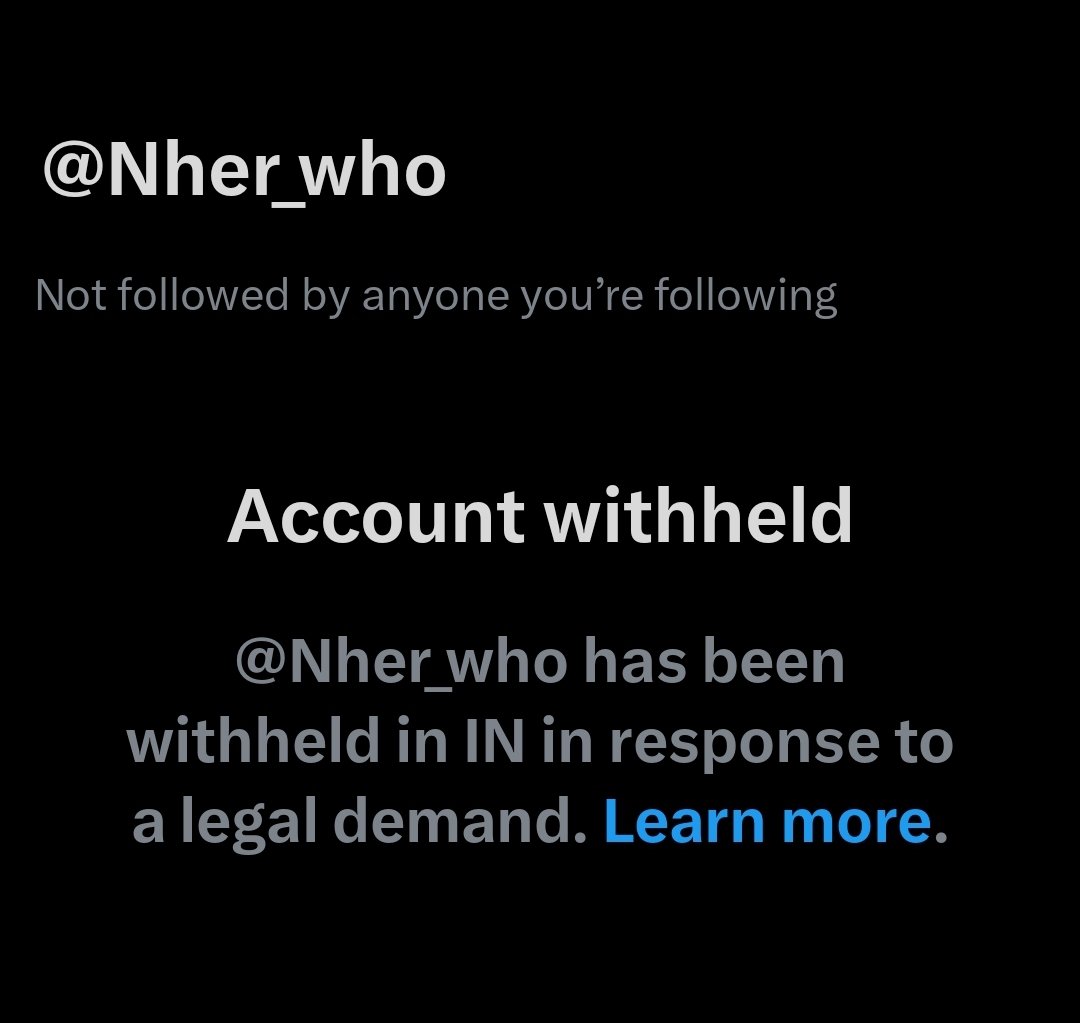
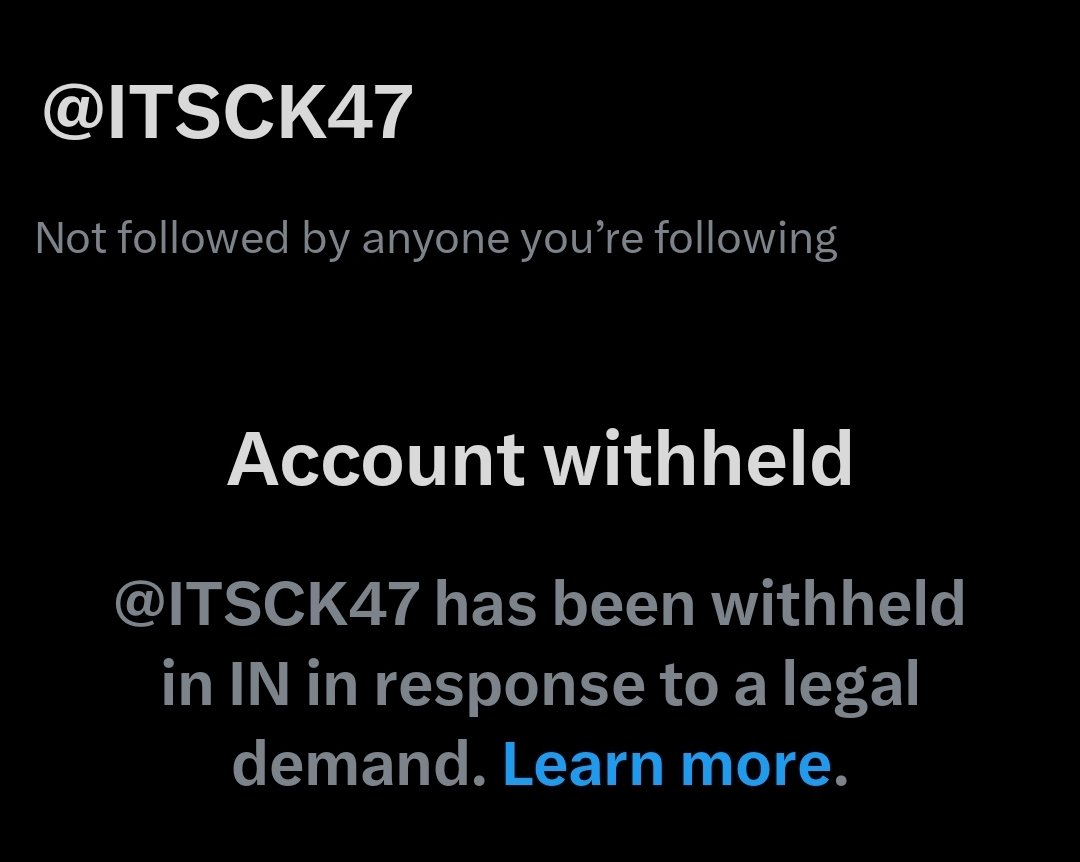
IFF’s Statement on the Blocking of X Account of the Cockroach Janta Party 22 May 2026 On May 21, 2026, the X (formerly Twitter) handle of the Cockroach Janta Party (CJP) (@CJP_2029) was withheld in India under Section 69A of the Information Technology Act, 2000. IFF strongly condemns the blocking of the CJP’s X handle as a blatant misuse of State power and an arbitrary and disproportionate attempt to stifle freedom of speech and expression, a fundamental right guaranteed under Article 19(1)(a) of the Constitution of India. According to reporting by The Indian Express on May 22, 2026, the blocking directions were issued on the basis of inputs from the Intelligence Bureau citing threat to the sovereignty of India, jeopardizing national security and the fact that the account was gaining traction among young people. Section 69A of the IT Act, 2000, empowers the Central government to direct any Government agency or intermediary to block public access to information in the “interest of sovereignty and integrity of India, defence of India, security of the State, friendly relations with foreign States or public order or for preventing incitement to the commission of any cognizable offence”. While Section 69A of the IT Act, 2000 permits blocking on limited grounds, these grounds cannot be vague and speculative. Political commentary and criticism of public institutions are protected forms of speech under the Indian Constitution. The popularity of the account or the fact that the account mobilised young people through political expression cannot by itself be treated as a threat to national security. The Indian Express’s report mentions that “blocking orders are issued under a confidential framework” which is deeply concerning. We remind the Union Government that the Supreme Court of India upheld Section 69A of the IT Act, 2000 in Shreya Singhal v. Union of India (2015) on the basis that it is a narrowly drawn provision with several safeguards in place, including written reasoning for the blocking that is subject to legal challenge. State censorship like the blocking of CJP’s X account propagates opacity and provides affected users with no options for redressal, thereby effectively defeating these safeguards. IFF calls on the Union government to ensure timely notices are provided to affected users along with clear grounds and avenues for remedy. IFF has previously explained how users whose constitutional rights are being infringed upon by the State can seek restoration of their blocked content. If you are an Indian social media user or journalist whose content has been blocked due to a government order, please write to us at legal@internetfreedom.in.
English
15
188
538
18.1K
Internet Freedom Foundation (IFF) retweetledi
PKR | প্রশান্ত | پرشانتو
Today at 18:30 @IIC_Delhi - Draft Digital Content Rules* - Safeguards or Curbs? #TMFDialogues With advocate Apar Gupta (Founder-Director, IFF), Nikhil Pahwa (founder Medianama), journalist Sangeeta Barooah Pisharoty (president, Press Club of India) journalist Seema Chishti (editor, The Wire), advocate Shreya Singhal (Shreya Singhal v. UoI / 66A). Send your questions/comments! @apar1984 @nixxin @sangbarooahpish @seemay *Information Technology (Intermediary Guidelines and Digital Media Ethics Code) Amendment Rules, 2026 "heavily regulate Synthetically Generated Information and expedite content takedowns": @GoI_MeitY @FreeMedia_In @internetfreedom @PCITweets @thewire_in @svaradarajan @PIB_MeitY @_sabanaqvi @ShumaRaha @pavanduggal @dhanyarajendran @DigipubIndia @medianama
The Media Foundation@FreeMedia_In

Join us for a Media Dialogue on ‘DRAFT DIGITAL CONTENT RULES: SAFEGUARDS OR CURBS?’ Speakers: @nixxin @apar1984 @seemay @sangbarooahpish & Shreya Singhal Moderator: @prasanto May 22, 6.30 PM @IIC_Delhi 👇

English
0
12
11
3.8K
Internet Freedom Foundation (IFF)
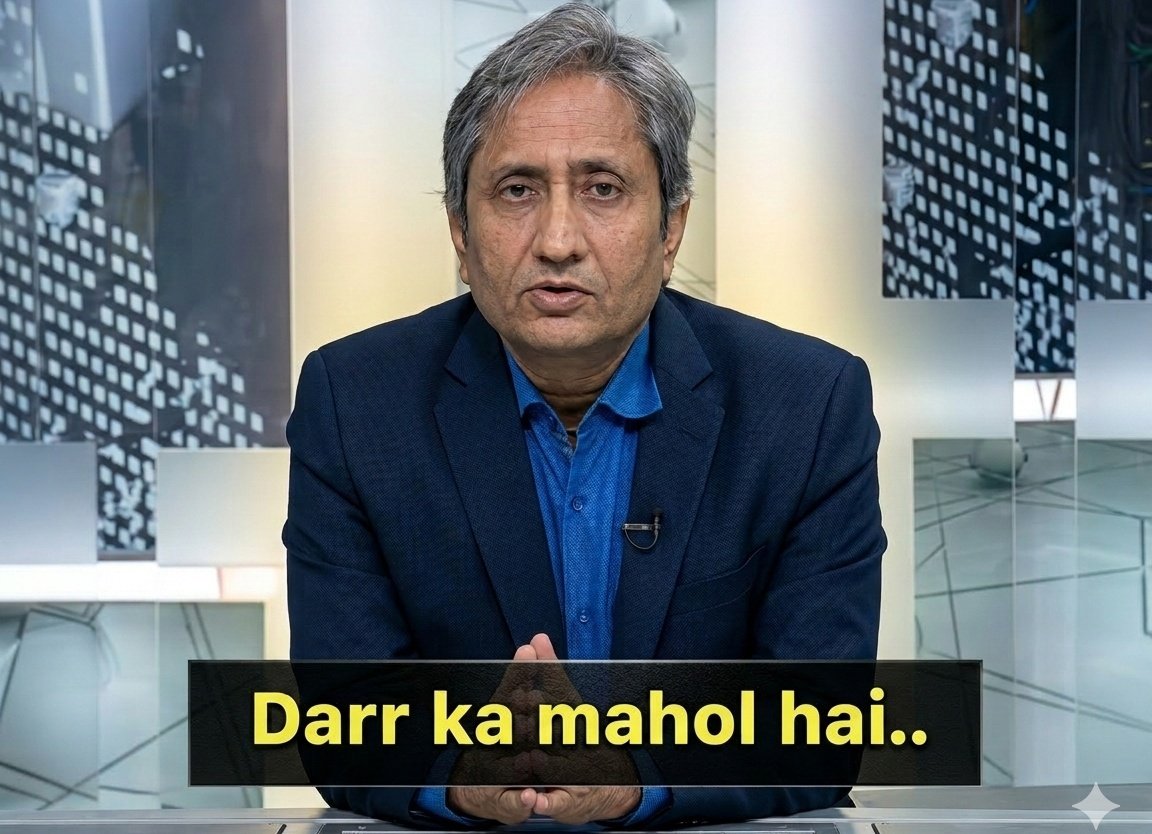
Cockroaches survive nuclear disasters. The authorities panic over social media posts. We condemn the takedown of Cockroach Janta Party (@CJP_2029 ) page on X/Twitter under India’s opaque digital censorship infrastructure. It is clear violation of free speech and expression. We will provide any and all support against any illegal state censorship. @Cockroachisback Comic by @aaaaadvik
Internet Freedom Foundation (IFF) tweet mediaInternet Freedom Foundation (IFF) tweet mediaInternet Freedom Foundation (IFF) tweet media
English
65
1.2K
4K
94K
Internet Freedom Foundation (IFF)
IFF’s Statement on West Bengal’s Recent Circular Restricting Freedom of Speech and Media Engagement of  West Bengal State Employees 21-May-2026 On May 19, 2026, the West Bengal State Government issued a Circular (No. 139 -CS/2026), which severely curtails the freedom of speech and expression of civil servants working in the state in an overbroad manner. The Office of the Chief Secretary of the Government of West Bengal issued a Circular that restricts the information that can be shared by members of the All India Services (“AIS”), West Bengal Civil Services and West Bengal Police Service and other State Government employees including the other Police and Jail staff. Further, the Circular is also applicable to employees of state-funded autonomous bodies, boards, corporations, undertakings and educational institutions, as well as members of the AIS engaged with the affairs of the state effectively including a wide category of State Government employees (“West Bengal State Employee(s)”) within its ambit. The Circular invoked various provisions of the All India Services (Conduct) Rules, 1968 (“AIS Rules”), West Bengal Services (Duties, Rights and Obligations of the Government employees) Rules, 1980 (“WB Services Rules”), and the West Bengal Government Servants’ Conduct Rules, 1959 (“WB Servants’ Conduct Rules”) (together “Rules”). The Circular lays down sweeping restrictions on the freedom of speech and expression of West Bengal State Employees by imposing blanket restrictions on them, which are given in the circular. While the Circular presents itself as a reiteration of existing service rules which already contain safeguards, it effectively goes beyond them. Illustrations of the excessive and disproportionate nature of the Circular with respect to each of the above mentioned Rules is given below. For instance, Rule 6 of the AIS Rules provides that, previous sanction of the Government shall not be required when a service member, publishes a book, contributes to or participates in a public media either in the bonafide discharge of his duties or otherwise, provided that such a service member makes it clear at all times that the views being expressed, are of his own and not those of the Government. Further, Rule 4 of the WB Services Rules (which provides for Rights of government employees), under clause (4) states that, any Government employee, with prior intimation to the authority, may participate in a radio or television programme provided that nothing should be said in such programme which: a) incites communal and/or parochial feelings; b) goes  against the unity and integrity of the country. Furthermore, Rule 4(5) WB Services Rules clearly provides that any Government employee may contribute any literary or scientific writing or write any letter to any newspaper or periodical, subject to the provisions laid down in clause (4) discussed above. Moreover, Clause (3) of the Circular provides for a complete prohibition on any contribution in editing/ managing of any newspaper/periodical/publication and on any participation in any radio broadcast or writing of any article or letter for any newspaper or periodical by a West Bengal State Employee (as defined above) without prior sanction of the government, which clearly goes against the WB Services Rules. Therefore, even a bare reading of the Circular makes it evident that it is violative of the existing Rules. Rule 23 of the WB Servants’ Conduct Rules provides that no Government employee shall, communicate directly or indirectly to Government employees belonging to other departments, or to non-official persons, or to the press any document or information which has come into his possession in the course of his public duties. The Rule itself carves out the exceptions for this situation by excluding this conduct when done under any general or special order of Government or in the performance in good faith of the duties assigned to the employee, or on a bona fide belief that the information will lead to checking corruption, other malpractices, or in detecting or punishing delinquents. Moreover, such prohibitions raise serious constitutional concerns. While the state may impose narrowly tailored restrictions as illustrated in the Rabat Action Plan on advocacy of national, racial or religious hatred that constitutes incitement to discrimination, hostility or violence, such restrictions can not operate as blanket prohibitions on criticism, association with media or public engagement. Furthermore, in Kameshwar Prasad and Ors. v. The State of Bihar and Anr. (1962), the Supreme Court of India observed that simply because an individual is a member of a Government service does not extinguish such a person’s constitutionally guaranteed rights. The Supreme Court had noted,  “By the mere fact that a person enters Government service, be does not cease to be "a citizen of India", nor does that disentitle him to claim the freedoms guaranteed to every citizen”. Notably, this position was reinforced by the Supreme Court in O.K. Ghosh v. E.X. Joseph (1962). IFF calls on the State Government of West Bengal to review the Circular as it is ultra vires the existing Rules and ensure that any restriction on the freedom of speech and expression of West Bengal State Employees is aligned with the existing safeguards under the Rules.
Internet Freedom Foundation (IFF) tweet media
English
2
37
89
4.1K
Internet Freedom Foundation (IFF)
India currently does not have a dedicated AI law. Instead, regulation is spread across existing legal frameworks such as the Information Technology Act, 2000, the Digital Personal Data Protection Act, 2023, and sector-specific rules. Recent amendments addressing deepfakes and synthetic content indicate some regulatory movement, but they do not create a comprehensive AI governance framework. (5/5) Support our work: internetfreedom.in/donate
English
0
0
2
460
Internet Freedom Foundation (IFF)
However, the report notes that India’s development-focused AI strategy has not been accompanied by equal attention to risks such as algorithmic bias, opacity, surveillance, discrimination, and lack of accountability. As AI systems become embedded in governance and public infrastructure, these gaps become increasingly significant. (4/5)
English
1
0
2
514
Internet Freedom Foundation (IFF)
India hosted the AI Impact Summit, 2026, positioning itself as a key voice in global AI governance. The Summit produced the New Delhi Declaration on AI Impact and saw India join the Pax Silica coalition on AI infrastructure and technology supply chains. But IFF’s new report finds that these global commitments have not been translated into strong domestic safeguards for AI governance yet. (1/5) Read More: internetfreedom.in/indias-ai-gove…
English
1
4
19
1.5K
Internet Freedom Foundation (IFF)
652 apps blocked. No public list. No transparent process. No meaningful recourse. Now even @gambanapp , an app designed to help people block gambling websites, has reportedly remained banned in India for over three years under Section 69A. When governments can quietly remove apps without clear reasons, published orders, or due process, it raises a bigger question: who gets to decide how we use the internet, and without accountability to whom? Our latest blog examines India’s app blocking regime, the legal gaps behind these bans, and why opacity under Section 69A should concern every internet user.
Internet Freedom Foundation (IFF) tweet mediaInternet Freedom Foundation (IFF) tweet mediaInternet Freedom Foundation (IFF) tweet mediaInternet Freedom Foundation (IFF) tweet media
English
2
46
110
8.5K