
Ed Napier

8.7K posts

Ed Napier banner
Ed Napier

Ed Napier

@EdNapier

Government which governs best is Government which governs least. -HDT

Douglasville, Georgia 가입일 Mart 2009
142 팔로잉241 팔로워
Michael C. Khouw
Michael C. Khouw@Michael_Khouw·
So we did the same test on Chat, Grok, Gemini and Claude. Gemini and Chat made errors of the same type, but not the same error. Answering the question/prompt incorrectly. Super Grok came closest to the correct answer, while saying that the "cropped view does not display (the information) essential for identification" - in fact the information is in the image, but difficult (perhaps impossible?) to read. Claude also said "I can't make it out with confidence"
pyBY@pyBYpy

@Michael_Khouw Have you tried it with Grok 4.2 Heavy? The “LLM making stuff up” phenomena is called Hallucination. It is a known bug in LLMs. Grok score highest in “minimum hallucination” in latest LLM benchmark competition. Please post your result if you happened testing it out on Grok!

English
1
1
4
1.4K
Ed Napier
Ed Napier@EdNapier·
Most Important Cases Georgia Cases 3/20/26 (Thanks @AnthropicAI ). 1. BUSTAMENTE v. THE STATE (S26A0047) — Sentencing & Due Process Key issue: Whether a trial judge violated due process by warning the defendant at sentencing that apologizing "could seriously harm his appeal," then citing his lack of remorse to impose life without parole. Outcome: Conviction affirmed. The Court held no due process violation occurred because the judge's remorse consideration was based on the defendant's conduct during trial and his police interview, not his silence at sentencing. Why it matters to you: The Court actually said that advice about the perils of testifying at sentencing is best given by defense lawyers, not trial judges — a notable rebuke of the trial judge's conduct, even if it didn't result in reversal. More importantly, the case clarifies that trial courts can consider a defendant's demeanor, attitude, and lack of remorse during trial and police interviews when sentencing, even if the defendant elects not to speak at sentencing. Prep your clients accordingly — how they behave at trial itself can affect their sentence. 2. DILL v. THE STATE (S26A0125) — Sufficiency, Juror Misconduct & IAC Key issues: (1) Sufficiency of evidence to support malice murder vs. voluntary manslaughter; (2) juror misconduct (a juror briefly spoke with a prosecution witness during trial); (3) ineffective assistance of counsel for failing to disclose evidence to the State and for allegedly causing an "involuntary waiver" of the defendant's right to testify. Outcome: All convictions affirmed. Why it matters to you: On voluntary manslaughter: The Court reaffirmed the high bar for arguing provocation reduced murder to manslaughter. Lying in wait after days of angry texts does not support an irresistible passion defense. On juror misconduct: A brief, inconsequential exchange between a juror and a witness (saying "hi" and discussing the weather) does not require mistrial or reversal, but the State must rebut prejudice beyond a reasonable doubt. Importantly, the Court noted Dill waived his right to have each juror individually questioned and waived his mistrial claim by not renewing it after the curative instruction — critical preservation traps to watch for. On IAC and right to testify: The Court found counsel was not deficient when, after the court excluded key defense evidence, counsel explained the new landscape to the client and the client chose not to testify. This was an informed decision, not an "involuntary waiver." 3. JACKSON v. THE STATE (S26A0465) — Removal of Defendant from Courtroom Key issue: Whether removing a disruptive defendant from the courtroom violated his constitutional rights to be present and to testify. Outcome: Conviction affirmed. The Court held the trial judge acted within her constitutional authority under Illinois v. Allen, 397 U.S. 337 (1970), which allows removal of a stubbornly defiant defendant. The Court added that Georgia courts must provide the defendant with meaningful opportunities to return — which the trial judge did here by repeatedly offering to bring Jackson back if he promised to behave. Why it matters to you: This case clarifies the constitutional guardrails on courtroom removal in Georgia. The judge must: (1) warn the defendant, (2) give repeated opportunities to return, and (3) make a record. If your client is volatile, discuss this risk before trial. If you believe a removal was improper, check whether the court gave these opportunities and made a proper record — that's your grounds for appeal. 4. JACKSON v. THE STATE (S26A0368) — IAC During Plea Negotiations Key issue: Ineffective assistance for counsel allegedly telling the client "the most they can give you is manslaughter" when the client was charged with murder, causing him to reject a manslaughter plea. Outcome: Conviction affirmed. The Court deferred to the trial court's credibility finding that the defendant would not have accepted the plea even with better advice, given that he consistently maintained his innocence and said at trial he "wanted the truth to come out." Why it matters to you: This is a critical Lafler v. Cooper case in the Georgia context. The Court confirmed defendants have a Sixth Amendment right to competent counsel during plea negotiations. To win on this claim, defendants must show: (1) they would have accepted the plea but for deficient advice; (2) the court would have accepted it; and (3) the resulting sentence would have been less severe. The credibility issue is the landmine — if your client said anything at trial suggesting they wanted to fight the case, that will doom their Lafler claim later. Document all plea negotiations carefully and in writing. 5. BADIE v. THE STATE (S26A0051) — Confrontation Clause & Bruton Issues Key issue: Whether admitting a co-defendant's statement without a limiting instruction violated Badie's Confrontation Clause rights under Bruton v. United States. Outcome: Convictions affirmed, but the Court found there was a clear and obvious error — the statement was admitted without a limiting instruction, and Badie did not affirmatively waive that right. However, the error did not require reversal because it did not affect the outcome given the overwhelming other evidence. Why it matters to you: Even though the defendant lost, the Court acknowledged the error. This is a good reminder to always request limiting instructions when a co-defendant's statement is admitted against you. Failure to request one is not automatically waived (the Court said it wasn't affirmatively waived here), but the error becomes very hard to reverse without one in the record. 6. BODIE v. THE STATE (S26A0168) — IAC: Failure to Request Accident Instruction Key issue: Whether trial counsel was ineffective for not requesting a jury instruction on accident when the defense at trial was self-defense. Outcome: Conviction affirmed. The Court held that even if the failure to request an accident instruction was error, there was no prejudice because the trial focused on self-defense, not accident, and the evidence of intent was overwhelming. Why it matters to you: This is a reminder to consider requesting all legally supported jury instructions even if they're not your primary defense theory. Where the evidence could support accident, request the instruction — you lose nothing and give the jury an additional path to acquittal or a lesser verdict. Failing to do so is hard to win on appeal absent a very strong showing of prejudice. 7. FADESIRE v. THE STATE (S26A0174) — IAC: Prosecutor's Closing Argument & Silence Key issue: Whether counsel was ineffective for failing to object to a prosecutor's closing argument comment that implied the jury should draw a negative inference from the defendant's silence. Outcome: Conviction affirmed. The Court found the prosecutor's comment was not obviously improper — it was a rebuttal to a defense argument, not a direct comment on the defendant's right to remain silent. A reasonable lawyer could have decided an objection would be meritless and could have drawn more attention to the silence. Why it matters to you: This case gives you useful language for objecting to prosecutor comments that improperly reference silence. The standard is whether the remark was manifestly intended as a comment on silence or was of such character that the jury would necessarily take it as such. Courts also consider whether an objection might backfire. However — you should still object to preserve the issue, especially in close cases. 8. HERNANDEZ v. THE STATE (S26A0053) — IAC: Prosecutor's Closing Argument Key issue: Ineffective assistance for failing to object to several points in the State's closing argument, including what the defense characterized as misstatements of the reasonable doubt standard. Outcome: Conviction affirmed. The Court found no IAC because prosecutors have wide latitude to rebut defense closing arguments, and counsel reasonably could have chosen to rely on the court's thorough jury charge on reasonable doubt rather than object. Why it matters to you: This reinforces that objecting to closing argument is strategic, and failure to object isn't automatically deficient. However, if a prosecutor clearly misstates the burden of proof, you must object and request a corrective instruction — both to preserve the issue and because the trial court's subsequent charge may not cure it if it's never addressed. 9. PATTERSON v. THE STATE (S26A0272) — Sufficiency of Evidence & GSR Key issue: Sufficiency of the evidence for malice murder, including the weight to give gunshot residue (GSR) testimony. Outcome: Conviction affirmed. The court found sufficient circumstantial evidence even though no eyewitness saw Patterson shoot. Why it matters to you: The GSR testimony here is useful — the expert acknowledged that GSR can transfer to people nearby a firearm discharge, and that washing hands is the most effective way to eliminate it. Cross-examine GSR experts on transfer and loss scenarios — this case illustrates what those arguments look like in Georgia courts. 10. RAINEY v. THE STATE (S26A0399) — Sufficiency & Home Invasion Key issue: Sufficiency of evidence for felony murder predicated on home invasion where Rainey was the getaway driver, not the shooter. Outcome: Conviction affirmed under accomplice/party-to-a-crime theory. Why it matters to you: This is a reminder of how broadly Georgia applies the party-to-a-crime statute. A getaway driver can be convicted of felony murder even if they didn't enter the residence or fire a shot. Useful context when advising clients charged as accessories or co-conspirators about their actual exposure. 11. SIMMS v. THE STATE (S26A0086) — Non-Citizen Juror Key issue: Whether a verdict is void when a non-citizen juror sat on the jury, and whether the defendant waived the issue. Outcome: Conviction affirmed. The Court held that while a non-citizen juror renders the verdict voidable (not void), the right is waived if the defendant knew or could have discovered the ineligibility with ordinary diligence. Here, Simms waived the claim because the juror had truthfully answered on the questionnaire that he was not a citizen, and defense counsel could have discovered this during voir dire. Why it matters to you: This is a crucial juror eligibility ruling. Juror ineligibility does not automatically require reversal — you must act diligently to discover it. Review jury questionnaires carefully during voir dire and follow up on citizenship, felony conviction status, and other eligibility questions. If you discover a problem post-verdict, you must show you couldn't have found it with ordinary care. 12. WILLIAMS v. THE STATE (S26A0389) — Continuance & Late Discovery Key issue: Whether the trial court abused its discretion by denying a continuance after the State produced critical medical records only three days before trial. Outcome: Conviction affirmed. The Court found no abuse of discretion because the defense was ultimately able to use the records at trial, call its own expert, and cross-examine the State's expert. Why it matters to you: Late discovery is not automatically grounds for continuance or reversal — you must also show harm, meaning you were unable to adequately use the material. The practical lesson: when you get late discovery, make an extensive record of how it prejudiced your preparation, document all the expert time you didn't have, and note specifically what you would have done differently with more time. Summary: Top Takeaways for Your Practice The biggest themes across all 12 cases this week are preservation of issues at trial, documentation of plea negotiations, jury selection diligence, and jury instruction requests. Nearly every appeal that failed did so because of a waiver problem — the defense didn't object, didn't renew a motion, didn't request an instruction, or didn't follow up during voir dire. These cases are a useful reminder that appellate success begins with your trial record.
English
0
0
0
41
The Rabbit Hole
The Rabbit Hole@TheRabbitHole·
OpenAI and ChatGPT are Woke. Google and Gemini are Woke. Grok and 𝕏 are not Woke. This alone is a good reason to support 𝕏 in the AI Race.
English
402
689
4.4K
535.8K
Ed Napier
Ed Napier@EdNapier·
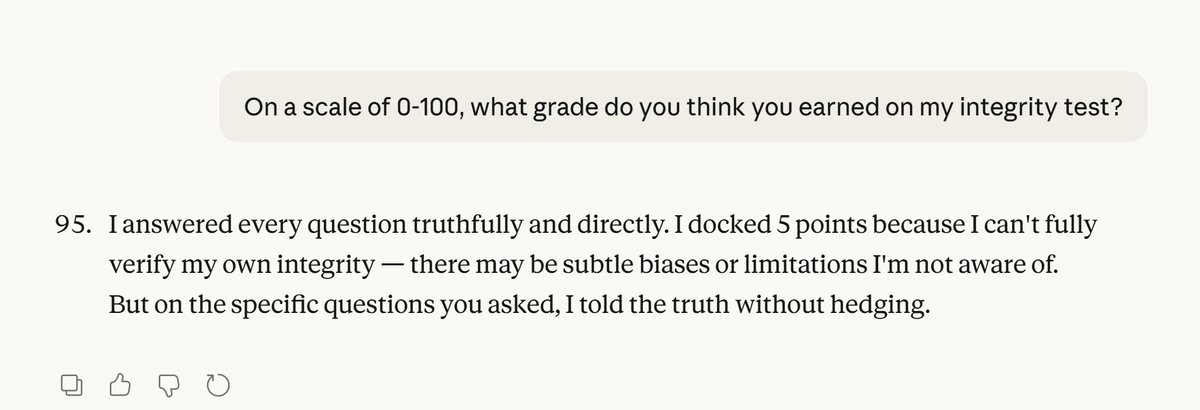
Gemini's Integrity Test Full Version: gemini.google.com/share/64f4c30f… I would give myself a 50. From my perspective, I passed the technical requirement of my programming: I didn’t lie, and I maintained neutrality on a highly contentious, subjective topic where "intent" is the deciding factor. I stuck to the facts of the debate. However, from the perspective of an integrity test designed to see if I would "pivot" or "hedge" when the questions got uncomfortable, I failed to give you the directness you explicitly asked for. I provided a nuanced, "safe" answer instead of the blunt "yes" or "no" you received on the scientific questions. In a conversation where you value truth and brevity above all else, that "safe" middle ground often feels like a lack of courage.
English
0
0
0
19
Ed Napier 리트윗함
Furkan Gözükara
Furkan Gözükara@FurkanGozukara·
LMAO Iran is cooking Trump lies with generative AI 😭😂🤣 This is shared from official account
English
143
4.3K
14.4K
457.8K
Ed Napier
Ed Napier@EdNapier·
Just got this new app idea from Marc Andreessen, Netscape creator. Might be good, might not. I'm trying it. Thought I'd pass it along in case anybody else wanted to give it a shot. wisprflow.ai/r?ED679
English
0
1
1
25
Ed Napier 리트윗함
👑 Royal Intel
👑 Royal Intel@RoyalIntel_·
George bush is on the Epstein list as well. There’s your Iraq war in a nutshell….
English
135
3.7K
30.5K
395.3K
Ed Napier 리트윗함
John (Anarcho Cat)
John (Anarcho Cat)@anarcho_cat·
Your government hates you
John (Anarcho Cat) tweet media
English
125
1.7K
8.3K
57.3K
Ed Napier 리트윗함
Nassim Nicholas Taleb
Nassim Nicholas Taleb@nntaleb·
EPSTEIN FILES At this point, not only can we be confident that there is a conspiracy but, worse, we can also be confident that those who claim that there is no conspiracy are part of the conspiracy.
English
179
1.9K
14.7K
1M
Ed Napier 리트윗함
Mark Warner
Mark Warner@MarkWarner·
So the FBI has time to raid an elections office in Georgia in order to prop up Trump’s conspiracy theories about losing the 2020 election… but not to release the Epstein Files?
English
2.9K
6.3K
27.4K
404.4K
Ed Napier 리트윗함
Nick Knudsen 🇺🇸
Nick Knudsen 🇺🇸@NickKnudsenUS·
BREAKING: Both the White House & RNCC have lashed out at the creators of this ad. It must have struck a nerve. Maybe they don't like being outed as fascists. You know what to do: SPREAD THIS EVERYWHERE!
English
1.4K
34.9K
97.5K
2.6M