Fidesium

383 posts

Fidesium banner
Fidesium

Fidesium

@Fidesiumapp

Fidesium uses advanced automation and dev tools to cut time, costs and risk for your audits. https://t.co/Z5bsgE8795
Get protected here ➤ 가입일 Mart 2023
369 팔로잉311 팔로워
고정된 트윗
Fidesium
Fidesium@Fidesiumapp·
Take control of your projects security. Start for free 🔗 app.fidesium.xyz Save time, stay secure and do it with ease. Simply connect your projects GitHub and recieve scan results in minutes not days.
English
2
1
9
613
Fidesium
Fidesium@Fidesiumapp·
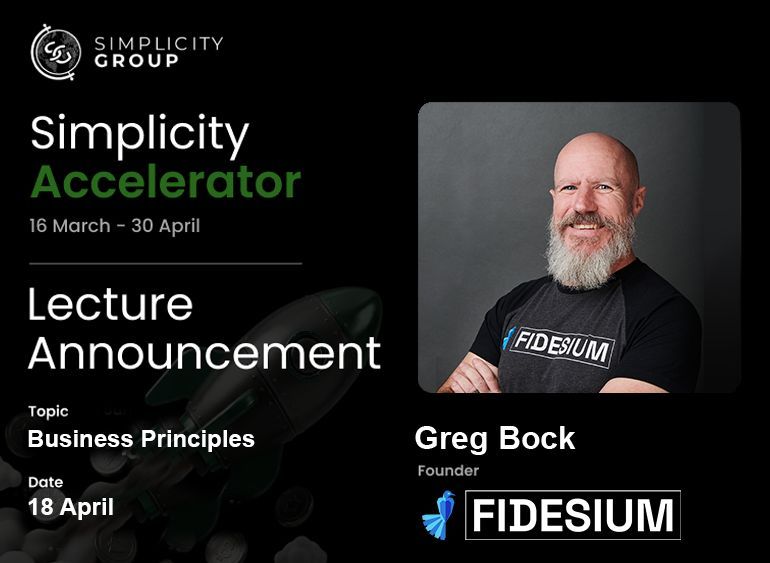
Last week at the @SimplicityWeb3 Group accelerator, one thing stood out: Founders are asking better questions. Not just: “How do we grow faster?” But: “What assumptions are we building on?” Our co-founder @bockus joined a strong group of speakers alongside teams from Base, DWF Labs, Canton Network and others, sharing a perspective that cuts across both #startups and #Web3security: Shout out to what Simplicity Group is building here. More rooms where founders think at this level. #FirstPrinciples
Fidesium tweet media
English
0
1
3
31
Fidesium
Fidesium@Fidesiumapp·
Excited to announce that we will be attending EthCC[9] in Cannes! March 30 – April 2 at the Palais des Festivals. DM us, let's talk code, audits, and keeping things safe at scale. See you on the French Riviera!
Fidesium tweet media
English
0
1
1
56
Fidesium 리트윗함
Aakash Gupta
Aakash Gupta@aakashgupta·
Someone just poisoned the Python package that manages AI API keys for NASA, Netflix, Stripe, and NVIDIA.. 97 million downloads a month.. and a simple pip install was enough to steal everything on your machine. The attacker picked the one package whose entire job is holding every AI credential in the organization in one place. OpenAI keys, Anthropic keys, Google keys, Amazon keys… all routed through one proxy. All compromised at once. The poisoned version was published straight to PyPI.. no code on GitHub.. no release tag.. no review. Just a file that Python runs automatically on startup. You didn’t need to import it. You didn’t need to call it. The malware fired the second the package existed on your machine. The attacker vibe coded it… the malware was so sloppy it crashed computers.. used so much RAM a developer noticed their machine dying and investigated. They found LiteLLM had been pulled in through a Cursor MCP plugin they didn’t even know they had. That crash is the only reason thousands of companies aren’t fully exfiltrated right now. If the code had been cleaner nobody notices for weeks. Maybe months. The attack chain is the part that gets worse every sentence. TeamPCP compromised Trivy first. A security scanning tool. On March 19. LiteLLM used Trivy in its own CI pipeline… so the credentials stolen from the SECURITY product were used to hijack the AI product that holds all your other credentials. Then they hit GitHub Actions. Then Docker Hub. Then npm. Then Open VSX. Five package ecosystems in two weeks. Each breach giving them the credentials to unlock the next one. The payload was three stages.. harvest every SSH key, cloud token, Kubernetes secret, crypto wallet, and .env file on the machine.. deploy privileged containers across every node in the cluster.. install a persistent backdoor waiting for new instructions. TeamPCP posted on Telegram after: “Many of your favourite security tools and open-source projects will be targeted in the months to come.. stay tuned.” Every AI agent, copilot, and internal tool your company shipped this year runs on hundreds of packages exactly like this one… nobody chose to install LiteLLM on that developer’s machine. It came in as a dependency of a dependency of a plugin. One compromised maintainer account turned the entire trust chain into a credential harvesting operation across thousands of production environments in hours. The companies deploying AI the fastest right now have the least visibility into what’s underneath it.
Andrej Karpathy@karpathy

Software horror: litellm PyPI supply chain attack. Simple `pip install litellm` was enough to exfiltrate SSH keys, AWS/GCP/Azure creds, Kubernetes configs, git credentials, env vars (all your API keys), shell history, crypto wallets, SSL private keys, CI/CD secrets, database passwords. LiteLLM itself has 97 million downloads per month which is already terrible, but much worse, the contagion spreads to any project that depends on litellm. For example, if you did `pip install dspy` (which depended on litellm>=1.64.0), you'd also be pwnd. Same for any other large project that depended on litellm. Afaict the poisoned version was up for only less than ~1 hour. The attack had a bug which led to its discovery - Callum McMahon was using an MCP plugin inside Cursor that pulled in litellm as a transitive dependency. When litellm 1.82.8 installed, their machine ran out of RAM and crashed. So if the attacker didn't vibe code this attack it could have been undetected for many days or weeks. Supply chain attacks like this are basically the scariest thing imaginable in modern software. Every time you install any depedency you could be pulling in a poisoned package anywhere deep inside its entire depedency tree. This is especially risky with large projects that might have lots and lots of dependencies. The credentials that do get stolen in each attack can then be used to take over more accounts and compromise more packages. Classical software engineering would have you believe that dependencies are good (we're building pyramids from bricks), but imo this has to be re-evaluated, and it's why I've been so growingly averse to them, preferring to use LLMs to "yoink" functionality when it's simple enough and possible.
English
298
2.3K
11K
2.7M
Fidesium
Fidesium@Fidesiumapp·
Security team trying to affect real change in the ecosystem. You should check them out. The team also let me know they will be showing the film at @EthCC We are really proud to support @ChainPatrol and their project on @Giveth! 💜 Read about their impact or support them here: giveth.io/project/lights… #Giveth
English
1
3
6
570
Fidesium
Fidesium@Fidesiumapp·
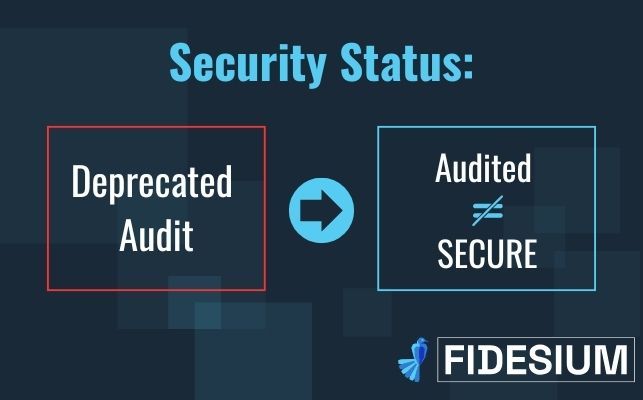
⚠️ An expired audit isn’t just a technical issue; it’s a governance risk: If stakeholders rely on outdated validation, you’re operating on false security assumptions. Security claims must be version-aware. #web3security
Fidesium tweet media
English
0
2
3
59
Fidesium 리트윗함
Fidesium
Fidesium@Fidesiumapp·
Our CTO Abraham Polishchuk, @cryptoabe4, is speaking on: Defensive Programming in Web3 at @BalkansCryptox Here’s what actually matters ↓
Fidesium tweet media
English
1
1
1
20
Fidesium
Fidesium@Fidesiumapp·
If your system assumes good behavior, it’s already broken. #Web3Security
English
0
0
1
11
Fidesium
Fidesium@Fidesiumapp·
That’s what defensive programming actually means.
English
1
0
1
9
Fidesium
Fidesium@Fidesiumapp·
Smart contracts don’t get patched. They get exploited.
English
1
1
2
29
Fidesium
Fidesium@Fidesiumapp·
Everyone in London is Londonmaxxing: AI founders VCs Deeptech labs Stablecoin startups But the real alpha? Shipping smart contracts that don’t get drained at 3am. Security > hype.
Fidesium tweet media
English
0
1
5
184
Fidesium
Fidesium@Fidesiumapp·
What invalidates an audit❓️ Not every change. But these do: - Access control edits - Logic rewrites - New external integrations - Governance parameter changes - Dependency upgrades Security assumptions drift quietly. #web3security
Fidesium tweet media
English
0
0
0
23