
ICRIER

4.6K posts

ICRIER banner
ICRIER

ICRIER

@ICRIER

ICRIER is India's premier policy think-tank seeking to augment knowledge content for policy-making for India's effective engagement with the global economy.

New Delhi-110003 가입일 Ocak 2011
194 팔로잉6K 팔로워
ICRIER
ICRIER@ICRIER·
As India looks to expand access to China’s pharma and engineering markets, trust not just tariffs will be key. A strong people connect will strengthen and facilitate economic engagement. Insights from Dr. @NishaTaneja20, Senior Visiting Professor, ICRIER, in a recent piece for @WIONews highlights a critical reality that while policy signals may open doors, regulatory barriers and strategic caution continue to shape the trajectory of India–China trade. 📖 Read the full story: wionews.com/world/india-be…
English
0
0
0
43
ICRIER 리트윗함
The Dialogue
The Dialogue@_DialogueIndia·
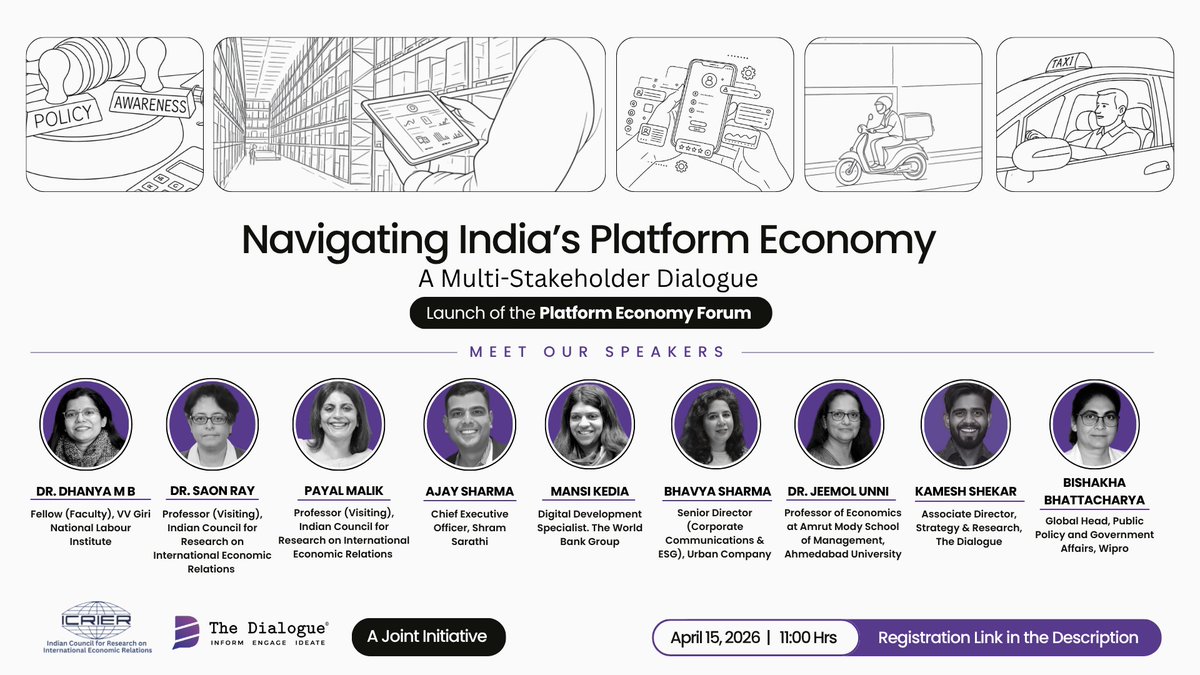
🚨 #EventAlert | #SpeakerLineup | 𝐍𝐚𝐯𝐢𝐠𝐚𝐭𝐢𝐧𝐠 𝐈𝐧𝐝𝐢𝐚’𝐬 𝐏𝐥𝐚𝐭𝐟𝐨𝐫𝐦 𝐄𝐜𝐨𝐧𝐨𝐦𝐲: 𝐀 𝐌𝐮𝐥𝐭𝐢-𝐒𝐭𝐚𝐤𝐞𝐡𝐨𝐥𝐝𝐞𝐫 𝐃𝐢𝐚𝐥𝐨𝐠𝐮𝐞 As India’s platform economy undergoes a structural transformation, digital platforms are reshaping how 𝐯𝐚𝐥𝐮𝐞 𝐢𝐬 𝐜𝐫𝐞𝐚𝐭𝐞𝐝, 𝐨𝐫𝐠𝐚𝐧𝐢𝐬𝐞𝐝, and 𝐝𝐢𝐬𝐭𝐫𝐢𝐛𝐮𝐭𝐞𝐝 across sectors. This evolution presents both significant opportunities and complex governance challenges. Against this backdrop, 𝐓𝐡𝐞 𝐃𝐢𝐚𝐥𝐨𝐠𝐮𝐞, in collaboration with the 𝐈𝐧𝐝𝐢𝐚𝐧 𝐂𝐨𝐮𝐧𝐜𝐢𝐥 𝐟𝐨𝐫 𝐑𝐞𝐬𝐞𝐚𝐫𝐜𝐡 𝐨𝐧 𝐈𝐧𝐭𝐞𝐫𝐧𝐚𝐭𝐢𝐨𝐧𝐚𝐥 𝐄𝐜𝐨𝐧𝐨𝐦𝐢𝐜 𝐑𝐞𝐥𝐚𝐭𝐢𝐨𝐧𝐬 (𝐈𝐂𝐑𝐈𝐄𝐑), is convening a high-level, in-person dialogue that will also mark the launch of the 𝐏𝐥𝐚𝐭𝐟𝐨𝐫𝐦 𝐄𝐜𝐨𝐧𝐨𝐦𝐲 𝐅𝐨𝐫𝐮𝐦, a collaborative initiative bringing together 𝘨𝘰𝘷𝘦𝘳𝘯𝘮𝘦𝘯𝘵, 𝘪𝘯𝘥𝘶𝘴𝘵𝘳𝘺, 𝘢𝘤𝘢𝘥𝘦𝘮𝘪𝘢, and 𝘤𝘪𝘷𝘪𝘭 𝘴𝘰𝘤𝘪𝘦𝘵𝘺 to support the 𝘳𝘦𝘴𝘱𝘰𝘯𝘴𝘪𝘣𝘭𝘦, 𝘴𝘶𝘴𝘵𝘢𝘪𝘯𝘢𝘣𝘭𝘦, and 𝘪𝘯𝘤𝘭𝘶𝘴𝘪𝘷𝘦 evolution of platform ecosystems. We are pleased to bring together an 𝐞𝐬𝐭𝐞𝐞𝐦𝐞𝐝 𝐥𝐢𝐧𝐞-𝐮𝐩 𝐨𝐟 𝐬𝐩𝐞𝐚𝐤𝐞𝐫𝐬: 🔹 𝐃𝐫. 𝐃𝐡𝐚𝐧𝐲𝐚 𝐌 𝐁, Fellow (Faculty), VV Giri National Labour Institute 🔹 𝐃𝐫. 𝐒𝐚𝐨𝐧 𝐑𝐚𝐲, Professor (Visiting), Indian Council for Research on International Economic Relations (ICRIER) 🔹 𝐏𝐚𝐲𝐚𝐥 𝐌𝐚𝐥𝐢𝐤, Professor (Visiting), Indian Council for Research on International Economic Relations (ICRIER) 🔹 𝐀𝐣𝐚𝐲 𝐒𝐡𝐚𝐫𝐦𝐚, Chief Executive Officer, Shram Sarathi 🔹 𝐌𝐚𝐧𝐬𝐢 𝐊𝐞𝐝𝐢𝐚, Digital Development Specialist, The World Bank Group 🔹 𝐁𝐡𝐚𝐯𝐲𝐚 𝐒𝐡𝐚𝐫𝐦𝐚, Senior Director (Corporate Communications & ESG), Urban Company 🔹 𝐃𝐫. 𝐉𝐞𝐞𝐦𝐨𝐥 𝐔𝐧𝐧𝐢, Professor of Economics, Amrut Mody School of Management, Ahmedabad University 🔹 𝐊𝐚𝐦𝐞𝐬𝐡 𝐒𝐡𝐞𝐤𝐚𝐫, Associate Director, Strategy & Research, The Dialogue 🔹 𝐁𝐢𝐬𝐡𝐚𝐤𝐡𝐚 𝐁𝐡𝐚𝐭𝐭𝐚𝐜𝐡𝐚𝐫𝐲𝐚, Global Head, Public Policy and Government Affairs, Wipro Join us as we move from 𝘥𝘪𝘢𝘭𝘰𝘨𝘶𝘦 𝘵𝘰 𝘥𝘦𝘭𝘪𝘷𝘦𝘳𝘢𝘵𝘪𝘰𝘯 and towards actionable pathways for India’s digital economic future. 𝐄𝐯𝐞𝐧𝐭 𝐃𝐞𝐭𝐚𝐢𝐥𝐬: 🕛 April 15, 2026 | 11:00 Hrs (IST) 📍 New Delhi ➡️ 𝐑𝐞𝐠𝐢𝐬𝐭𝐫𝐚𝐭𝐢𝐨𝐧 𝐋𝐢𝐧𝐤: t.co/ecT1ffmzP4 #platformeconomy #digitaleconomy #techpolicy #innovation #publicpolicy #india #futureofwork #ecosystems Speakers: @DhanyaMB | @vvgnli | @SaonRay | @ICRIER | @malikpayal | @AjaySharma | @Shram_Sarathi | @emke08 | @WorldBankIndia | @bhavyachirps | @urbancompany_UC | @JeemolUnni | @AhdUniv | @kameshsshekar | @BishakhaBhatta2 | @Wipro | @ncaer | Hosts: @kazimriz | @SaonRay | @ICRIER | @kritisingh29 | @kameshsshekar
The Dialogue tweet media
English
0
2
0
115
ICRIER
ICRIER@ICRIER·
🚨 #EventAlert | 𝐈𝐂𝐑𝐈𝐄𝐑 x 𝐓𝐡𝐞 𝐃𝐢𝐚𝐥𝐨𝐠𝐮𝐞 present 𝐍𝐚𝐯𝐢𝐠𝐚𝐭𝐢𝐧𝐠 𝐈𝐧𝐝𝐢𝐚’𝐬 𝐏𝐥𝐚𝐭𝐟𝐨𝐫𝐦 𝐄𝐜𝐨𝐧𝐨𝐦𝐲: 𝐀 𝐌𝐮𝐥𝐭𝐢-𝐒𝐭𝐚𝐤𝐞𝐡𝐨𝐥𝐝𝐞𝐫 𝐃𝐢𝐚𝐥𝐨𝐠𝐮𝐞 As India’s platform economy undergoes a profound structural transformation, digital marketplaces, AI-enabled coordination, and platform-based service delivery are reshaping how 𝐯𝐚𝐥𝐮𝐞 𝐢𝐬 𝐜𝐫𝐞𝐚𝐭𝐞𝐝, 𝐞𝐱𝐜𝐡𝐚𝐧𝐠𝐞𝐝, and 𝐝𝐢𝐬𝐭𝐫𝐢𝐛𝐮𝐭𝐞𝐝 across sectors. From mobility and logistics to retail and financial services, this evolution presents both significant opportunities and complex governance challenges. Against this backdrop, 𝐈𝐧𝐝𝐢𝐚𝐧 𝐂𝐨𝐮𝐧𝐜𝐢𝐥 𝐟𝐨𝐫 𝐑𝐞𝐬𝐞𝐚𝐫𝐜𝐡 𝐨𝐧 𝐈𝐧𝐭𝐞𝐫𝐧𝐚𝐭𝐢𝐨𝐧𝐚𝐥 𝐄𝐜𝐨𝐧𝐨𝐦𝐢𝐜 𝐑𝐞𝐥𝐚𝐭𝐢𝐨𝐧𝐬 (𝐈𝐂𝐑𝐈𝐄𝐑) in collaboration with The Dialogue, is convening a high-level, in-person conference to initiate a 𝐬𝐭𝐫𝐮𝐜𝐭𝐮𝐫𝐞𝐝, 𝐦𝐮𝐥𝐭𝐢-𝐬𝐭𝐚𝐤𝐞𝐡𝐨𝐥𝐝𝐞𝐫 𝐝𝐢𝐚𝐥𝐨𝐠𝐮𝐞 on navigating India’s platform economy. The conference will also mark the launch of the 𝐏𝐥𝐚𝐭𝐟𝐨𝐫𝐦 𝐄𝐜𝐨𝐧𝐨𝐦𝐲 𝐅𝐨𝐫𝐮𝐦, a collaborative initiative that brings together 𝐠𝐨𝐯𝐞𝐫𝐧𝐦𝐞𝐧𝐭, 𝐢𝐧𝐝𝐮𝐬𝐭𝐫𝐲, 𝐚𝐜𝐚𝐝𝐞𝐦𝐢𝐚, and 𝐜𝐢𝐯𝐢𝐥 𝐬𝐨𝐜𝐢𝐞𝐭𝐲 to support the 𝘳𝘦𝘴𝘱𝘰𝘯𝘴𝘪𝘣𝘭𝘦, 𝘴𝘶𝘴𝘵𝘢𝘪𝘯𝘢𝘣𝘭𝘦, and 𝘪𝘯𝘤𝘭𝘶𝘴𝘪𝘷𝘦 evolution of platform ecosystems. Join us as we move from 𝘥𝘪𝘢𝘭𝘰𝘨𝘶𝘦 𝘵𝘰 𝘥𝘦𝘭𝘪𝘷𝘦𝘳𝘢𝘵𝘪𝘰𝘯 and towards actionable pathways for India’s digital economic future. 📅 April 15, 2026 | Wednesday ⏰ 11: 00 Hrs. (IST) 📍 New Delhi ➡️ 𝐑𝐞𝐠𝐢𝐬𝐭𝐫𝐚𝐭𝐢𝐨𝐧 𝐋𝐢𝐧𝐤: t.co/ecT1ffmzP4
ICRIER tweet media
English
0
2
2
83
ICRIER
ICRIER@ICRIER·
Our recent working paper, “Clean Energy Employment in India: A State-level Analysis of Non-Fossil Fuel Energy Sources and Energy Efficiency,” authored by @Goldar_amrita, @SomitDasgupta, Sajal Jain, and @diyadasgupta95, examines the evolving employment landscape in clean energy. It explores implications for skills and regional distribution, and outlines policy measures to support a just and effective transition. Read more: icrier.org/publications/c… #CleanEnergy #NetZero #EnergyTransition #RenewableEnergy #EnergyEfficiency #Skilling
ICRIER tweet media
English
0
0
2
148
ICRIER
ICRIER@ICRIER·
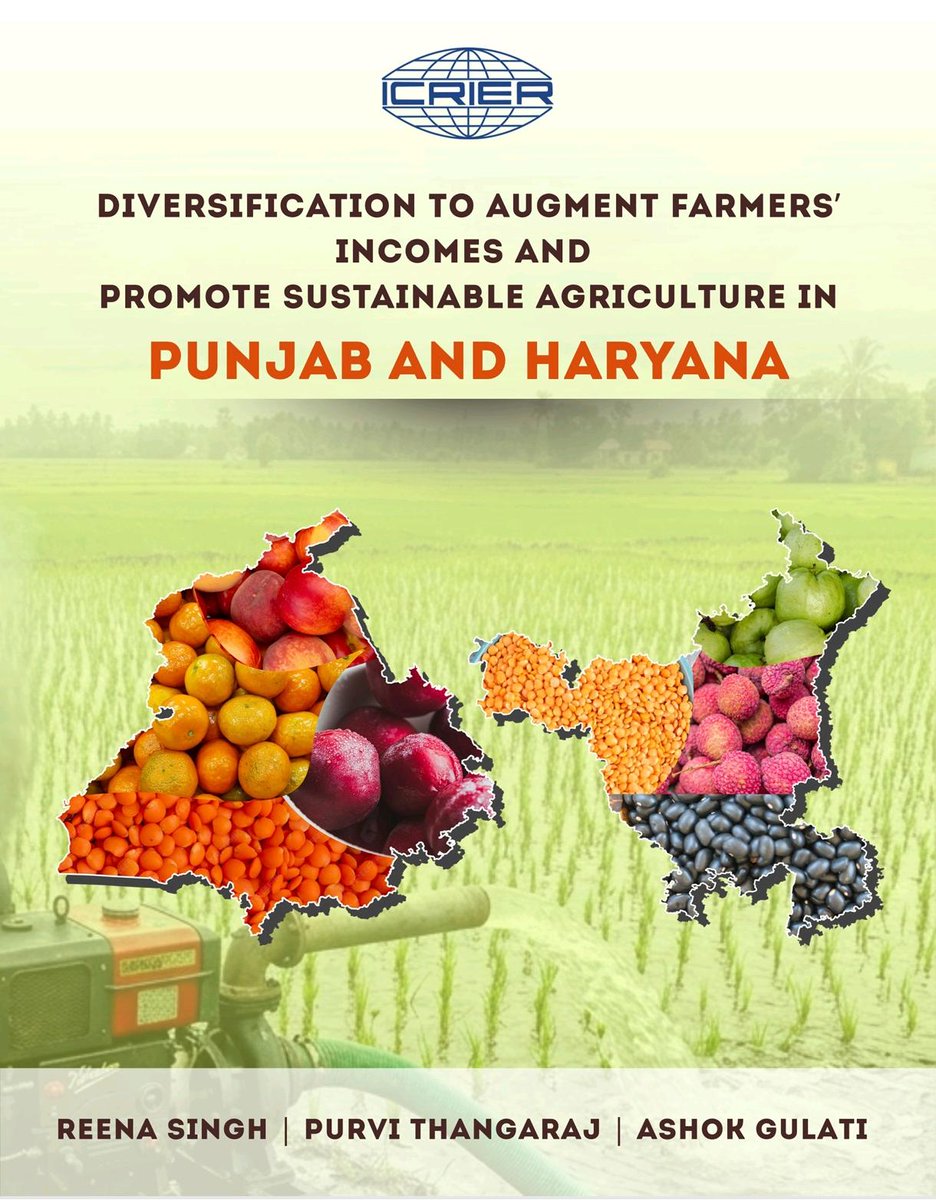
#newpublicationalert Punjab and Haryana powered India’s food security during the Green Revolution. But today, intensive rice cultivation practices have placed severe stress on natural resources, leading to the degradation of land and depletion of groundwater in both states. Our latest report authored by Reena Singh, Purvi Thangaraj and Ashok Gulati, “Diversification to Augment Farmers’ Incomes and Promote Sustainable Agriculture in Punjab and Haryana,” highlights a clear pathway forward. Key insight: Paddy cultivation receives significantly higher subsidies, about ₹40,000–₹52,000 per hectare, compared to ₹6,000–₹10,000 for pulses and oilseeds. This skewed incentive structure continues to drive unsustainable cropping patterns. What can be done? Repurpose existing subsidies to create crop-neutral incentives 🔷 Provide ~₹35,000 per hectare as upfront support for farmers shifting away from paddy, through a 50:50 partnership between GoI and state governments 🔷 Complement this with carbon credit incentives (USD 15–20 per tonne of GHG reduction) 🔷 Ensure assured procurement of alternative crops at MSP to reduce market risk 🔷 Strengthen the availability of high-yielding varieties (HYVs) for maize, pulses, oilseeds, and horticulture 🔷 Repurpose savings from fertiliser, power, and irrigation subsidies to fund the transition This expenditure on incentivising legumes or other alternative crops is not an additional expenditure but only repurposing the existing subsidies to create crop-neutral incentives. Read the full report here: lnkd.in/gHXDzfkz #Agriculture #Sustainability #Punjab #Haryana #CropDiversification
ICRIER tweet media
English
0
1
2
121
ICRIER
ICRIER@ICRIER·
India’s boardrooms are growing — but the gender gap isn’t closing fast enough. Over the past decade, the share of female business directors in India has risen from 23.4% to 29.1%. That’s progress but at this pace, parity remains distant. These numbers don’t just reflect opportunity, they reflect the constraints shaping it. Women in India continue to face structural barriers to formal business leadership — from limited access to finance and legal identity, to deeply embedded social norms around who belongs in positions of authority. 👉Data from the World Bank Entrepreneurship Database, which tracks trends across 100+ economies, “defines business directors as individuals who lead newly registered limited liability companies in a given year”. The data shows that globally, the picture is uneven. Countries like South #Africa, #Thailand, and the #Philippines are approaching gender parity in business directorship. In contrast, economies such as #China and #Nigeria show gaps exceeding 40%. ➡️ #India is somewhere in the middle, while it has momentum, the task now is to make that progress structural, not cyclical by addressing the underlying constraints that shape women’s entry into and persistence in business leadership. The real question isn’t just how many women are becoming business directors but what systemic conditions are enabling or reversing that progress. #WomenInBusiness #GenderEquality #DataInsights #WomenEntrepreneurs #PublicPolicy #ICRIER #EPWD
ICRIER tweet media
English
0
1
2
137
ICRIER
ICRIER@ICRIER·
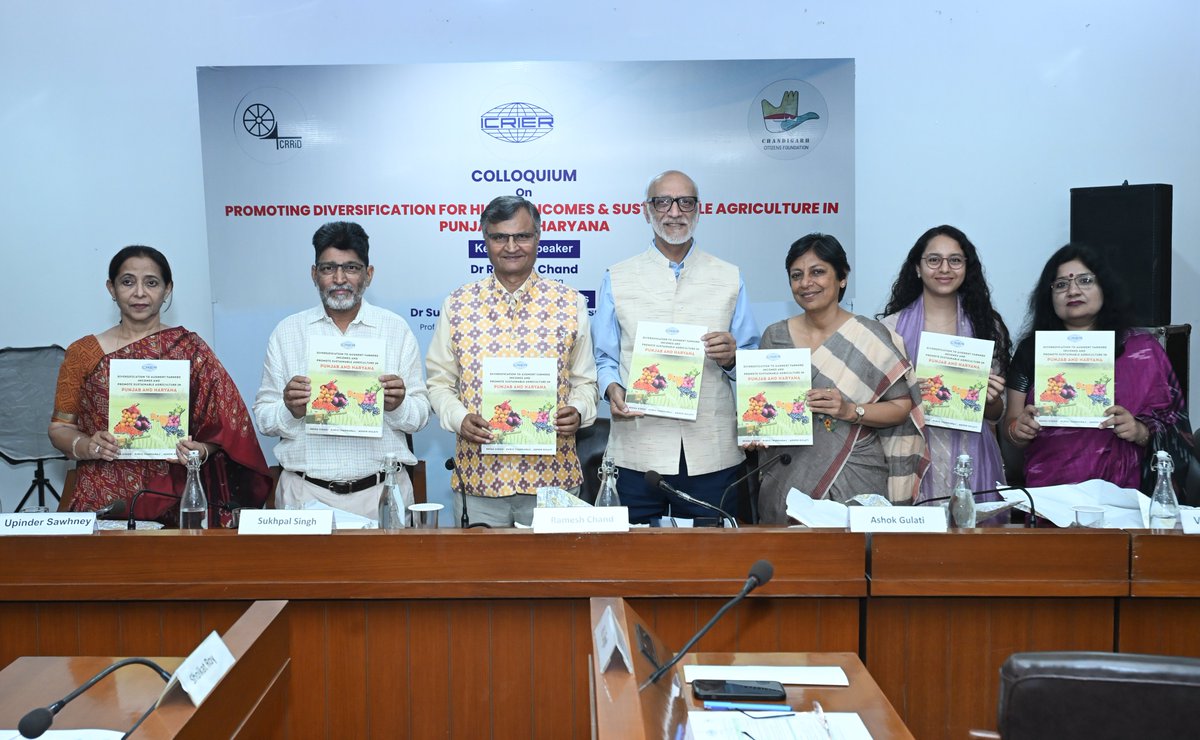
#EventHighlights Punjab and Haryana’s agricultural model stands at a critical juncture — with slowing growth, environmental stress, and stagnant farmer incomes calling for urgent transformation. At the recent colloquium hosted by ICRIER, Centre for Research in Rural and Industrial Development (CRRID), and Chandigarh Citizens Foundation (CCF), policymakers and experts came together to chart a sustainable and income-augmenting path forward. Key Takeaways: 🔹 Diversification is critical – Moving beyond the rice-wheat system towards high-value crops like fruits, vegetables, pulses, and oilseeds can boost farmer incomes and sustainability. 🔹 Growth through innovation – As highlighted by Dr Ramesh Chand, strategic diversification could raise agricultural growth to nearly 5%. 🔹 Markets hold the key – Dr Sukhpal Singh emphasised that enabling market access and strengthening institutions is essential for making diversification viable. 🔹 Sustainability & farmers' incomes must go hand-in-hand – Protecting natural resources while improving livelihoods remains central to policy priorities, as noted by Smt. Vini Mahajan. 🔹 Smart policy incentives can drive change – As presented by Dr Ashok Gulati, repurposing subsidies to support shifts towards pulses and oilseeds can reduce environmental stress while remaining fiscally viable. The colloquium also marked the release of ICRIER's report titled "Diversification to Augment Farmers' Incomes and Promote Sustainable Agriculture in Punjab and Haryana", co-authored by Dr Reena Singh, Ms Purvi Thangaraj, and Dr Ashok Gulati. Read the full report here - lnkd.in/gHXDzfkz
ICRIER tweet mediaICRIER tweet media
English
0
1
4
133
ICRIER
ICRIER@ICRIER·
Nisha Taneja Senior Visiting Professor, ICRIER, in her latest piece in The Economic Times highlights that India’s engagement with China remains overly import-focused, missing significant export opportunities in one of the world’s largest markets. Despite China’s massive import demand, India’s share is just 0.7%, indicating strong untapped potential across key sectors. The article calls for a shift towards a balanced, export-led strategy, backed by clearer policies and better market access.
ICRIER tweet media
English
0
1
6
354
ICRIER
ICRIER@ICRIER·
#OpEd @profarpita1, Professor, ICRIER and Eshana M., Consultant ICRIER in their latest piece in @DHNInsight that while India’s healthcare budget for 2026–27 signals intent with increased allocations and a strong push for digital health and innovation, critical gaps remain in preventive care, primary healthcare, and addressing the rising burden of non-communicable diseases. The piece underscores that without stronger last-mile delivery and system design, higher spending alone may not translate into better health outcomes. Read the full article: lnkd.in/gqTvQyvF
English
0
1
0
115
ICRIER
ICRIER@ICRIER·
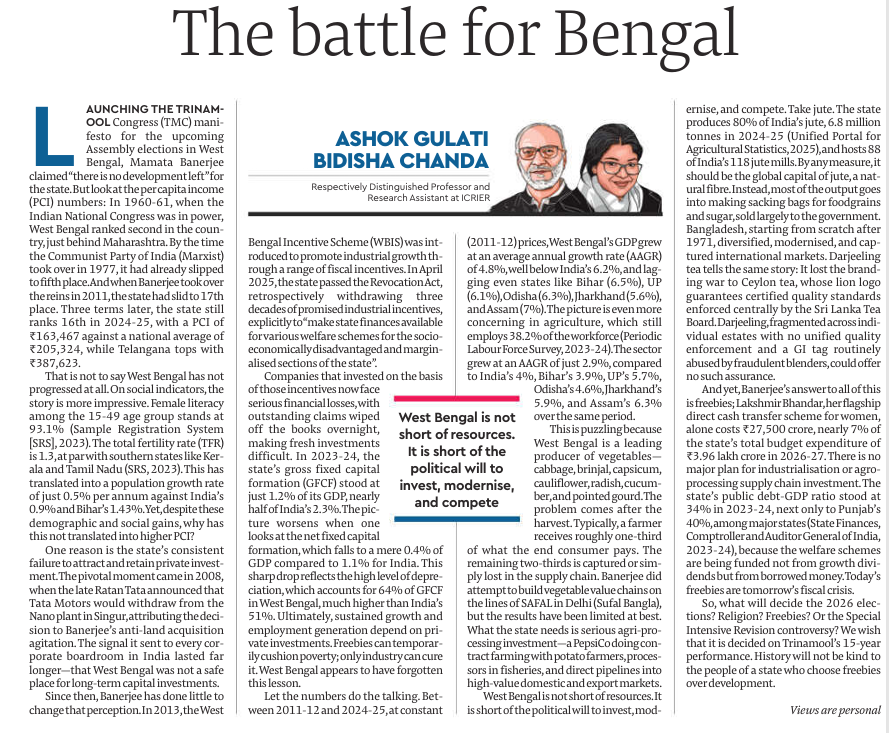
#OpEd West Bengal's welfare schemes are being funded not from growth dividends, but from borrowed money. Ashok Gulati and Bidisha Chanda put it plainly in today's op-ed: today's freebies are tomorrow's fiscal crisis. But Bengal doesn't need to start from scratch to get ahead. It is already a leading producer of vegetables: cabbage, brinjal, cauliflower, pointed gourd. It hosts 88 of India's 118 jute mills. It grows Darjeeling tea, one of the most globally recognisable agricultural brands in the world. The production base is there. What's missing is serious agro-processing investment, functional value chains, and the political will to back private capital over populist transfers. A PepsiCo doing contract farming with potato farmers. Processors building pipelines into high-value domestic and export markets. That's the model this op-ed points to, and it's not far-fetched for Bengal. It's just unfunded and deprioritised. Freebies can win elections but only investments can compound into true development. lnkd.in/gJBAYhy2 lnkd.in/gExrvJHK #Bengalpolls #freebiepolitics #agroprocessingvaluechain #developmentagenda
ICRIER tweet mediaICRIER tweet media
English
0
1
1
93
ICRIER
ICRIER@ICRIER·
𝐈𝐧𝐜𝐥𝐮𝐬𝐢𝐨𝐧 𝐨𝐟 𝐠𝐞𝐧𝐝𝐞𝐫 𝐩𝐫𝐨𝐯𝐢𝐬𝐢𝐨𝐧𝐬 𝐢𝐧 𝐈𝐧𝐝𝐢𝐚’𝐬 𝐅𝐓𝐀𝐬 𝐢𝐬 𝐬𝐭𝐢𝐥𝐥 𝐢𝐧 𝐚 𝐟𝐨𝐫𝐦𝐚𝐭𝐢𝐯𝐞 𝐬𝐭𝐚𝐠𝐞. Officially recognized by the United Nations in 1977, International Women's Day on March 8, every year is a day when women are recognized for their achievements. In fact, the entire month has also come to be a time for reflection on the progress that has been made towards gender equality and how much more remains to be done. ICRIER's latest policy brief, "Gender Provisions in India's Free Trade Agreements: A Work in Progress" by Nisha Taneja, Sanjana Joshi, Vasudha Upreti, and Pratik Tiwary, delves into how gender has been integrated into India's free trade agreements in the last ten years. Of eight major FTAs concluded between February 2016 and February 2026, five clearly include gender provisions — ranging from preamble references and individual articles to a dedicated gender chapter. While recognizing the progress made, the brief also identifies existing gaps and areas where current approaches remain limited. For trade to deliver more inclusive outcomes, women must be more systematically integrated into trade policy and related institutional frameworks. Based on this assessment, the brief offers policy recommendations to make India's future FTAs more gender affirmative. Read the full policy brief: lnkd.in/gT63cHYs #GenderAndTrade #InclusiveTrade #WomenInTrade #TradePolicy #FTAs #GenderEquality #WomensEconomicEmpowerment #IndiaTrade #PolicyResearch #InclusiveGrowth #SDGs
ICRIER tweet media
English
0
0
1
106
ICRIER
ICRIER@ICRIER·
When energy prices rise, the impact isn’t gender-neutral. What appears as a macroeconomic shock, driven by global volatility, supply disruptions, or geopolitical tensions — often plays out in deeply personal ways. And more often than not, women bear the brunt. From managing cooking fuel and household budgets to navigating rising transport costs, women sit at the centre of how households adjust to energy shocks. As fuel prices rise, the burden shows up as more time spent on unpaid work, reduced mobility, and constrained economic opportunities. Women often absorb these trade-offs invisibly. India has made significant progress in expanding access to clean cooking fuel and improving energy access. But these gains remain fragile. Rising fuel costs risk reversing this progress, pushing households back to traditional fuels, increasing women’s time burden, and limiting their ability to participate in the workforce. 👉 The key question is not just how India responds to energy shocks but who bears the cost of that adjustment. In our latest blog for #EPWD, we explore: ➡️ how energy price shocks translate into gendered impacts ➡️the risks to women’s time, mobility, and economic agency ➡️and why gender-responsive policy measures are critical Read the full blog at: icrier.org/epwd/blog/macr… #GenderAndEnergy #EnergyPrices #WomenAndWork #PublicPolicy #InclusiveGrowth #TimeUseSurvey #UjjwalaYojana #PMUjjwala
ICRIER tweet media
English
0
0
1
58
ICRIER
ICRIER@ICRIER·
#OpEd Arpita Mukherjee (@profarpita1), Professor, ICRIER, and Latika Khatwani, Research Assistant, ICRIER in their latest piece in @livemint “Let’s work on stepping up India’s agri exports to the EU,” argue that tariff reductions under the India–EU FT`A alone will not guarantee greater market access for Indian agricultural exports, unless we focus on sustainable agriculture production. They highlight that Indian exporters — especially farmers and SMEs — must align with stringent EU requirements on food safety, sustainability and environmental and labour standards. The article points to key challenges such as limited awareness, inadequate traceability to the farms, fragmented supply chains, and pushed for greater investment to help small farmers and SMEs integrate in export value chains. The authors emphasise that unlocking opportunities in the EU market will require stronger domestic capabilities, better compliance with global standards, and smart policy twists to support farmers and SMEs to export. Read the full article: livemint.com/opinion/online…
ICRIER tweet media
English
0
1
4
88
ICRIER
ICRIER@ICRIER·
India’s EV transition is accelerating, but is it driving inclusion? In her latest blog for #EPWD, Sonal Shah (@Abaezgrace), Founder, @Urban_Catalysts, explores why a truly sustainable mobility future must also be gender-inclusive. From skilling gaps to workplace barriers, women remain underrepresented across the EV ecosystem—despite clear potential to contribute meaningfully to this growing sector. As India pushes toward ambitious electrification goals, integrating women into this transition isn’t just equitable—it’s essential for unlocking jobs, innovation, and inclusive growth. Read more: icrier.org/epwd/blog/labo…
English
0
1
1
55