Jake Leguee

3K posts

Jake Leguee banner
Jake Leguee

Jake Leguee

@JakeLeguee

Farmer, writer, speaker from Fillmore SK. Growing durum, canola, lentils, and flax. Director with Canadian Wheat Research Coalition & former chair of SaskWheat.

Fillmore, SK 가입일 Haziran 2012
2.6K 팔로잉4.8K 팔로워
고정된 트윗
Jake Leguee
Jake Leguee@JakeLeguee·
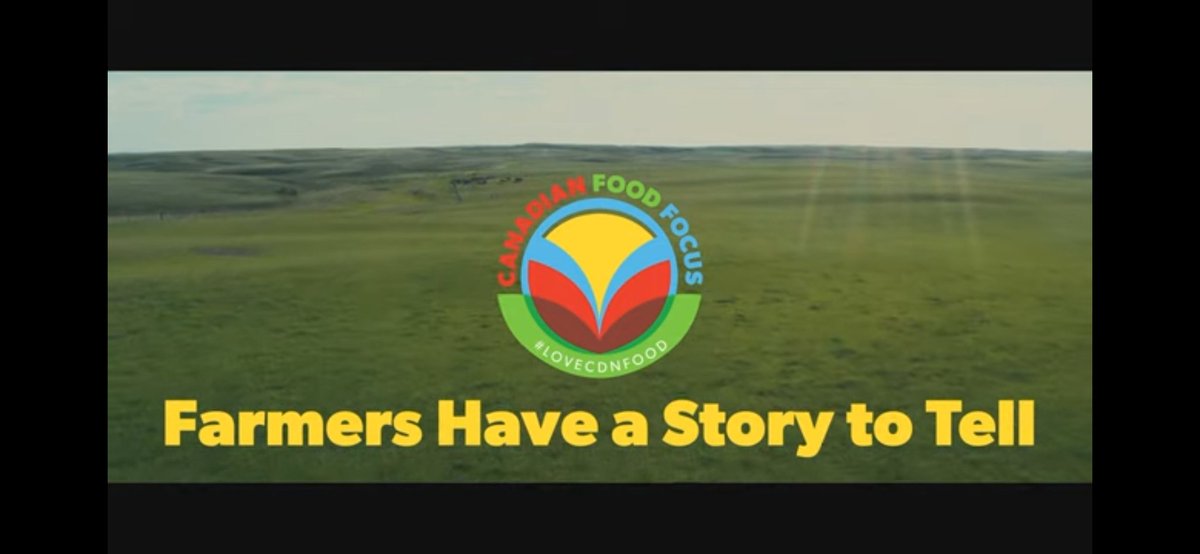
How do we engage with the vast majority of people that don't have any experience with farming? I really enjoyed the opportunity to share our farm's story during seeding this spring, and how we are working to bridge this gap. Canadian Food Focus did an amazing job on this video - check it out! canadianfoodfocus.org/for-our-partne…
Jake Leguee tweet media
English
12
16
95
16.4K
Jake Leguee
Jake Leguee@JakeLeguee·
@BHill51508128 No. Just no. Preharvest gly is not used much, and where it is, it's past physiological maturity. No impact on the plant. And also no, a small amount or large amount being unsafe is not an automatic problem. Again, a glass of table salt can kill you. Dose makes poison.
English
1
0
13
451
Bald headed Lion
Bald headed Lion@BHill51508128·
@JakeLeguee With all due respect, I don’t want to argue, but my viewpoint is that if a large quantity, or any volume at all can be proven un safe, than even a little bit is un safe. Pre harvest gly is the issue I think though with RFK. It starves nutrients from the seed, and kills microbes
English
7
0
1
474
Jake Leguee
Jake Leguee@JakeLeguee·
RFK Jr has some opinions about pesticides. Fortunately, facts don't care about his opinions. I've written a lot about glyphosate and other pesticides over the years. Spoiler alert - they're safe. Here's one worth reading: thelifeofafarmer.com/2018/08/13/doe…
Secretary Kennedy@SecKennedy

I will always tell the American people the truth. Pesticides and herbicides are toxic by design, engineered to kill living organisms. When we apply them across millions of acres and allow them into our food system, we put Americans at risk. Chemical manufacturers have paid tens of billions of dollars to settle cancer claims linked to their products, and many agricultural communities report elevated cancer rates and chronic disease. Unfortunately, our agricultural system depends heavily on these chemicals. The U.S. represents 4% of the world’s population, yet we use roughly 25% of its pesticides. If these inputs disappeared overnight, crop yields would fall, food prices would surge, and America would experience a massive loss of farms even beyond what we are witnessing today. The consequences would be disastrous. I support President Trump’s Executive Order to bring agricultural chemical production back to the United States and end our near-total reliance on adversarial nations. His EO protects two pillars of national strength: our defense readiness and our food supply. When hostile actors control critical inputs, they directly threaten the security of the American people. The Trump administration will secure these supply chains to eliminate that vulnerability. President Trump did not build our current system — he inherited it. For decades, Washington designed modern agriculture. Policymakers wrote farm policy, directed research dollars, structured subsidies and crop insurance, and shaped commodity markets to reward monocultures and maximum yield. Those deliberate choices locked farmers into chemical dependence and prioritized short-term output over long-term soil vitality and human health. We are now changing course — without destabilizing the food supply. Alongside @USDA @SecRollins, we are accelerating the transition to regenerative agriculture by expanding farming systems that rebuild soil, increase biodiversity, improve water retention, and reduce reliance on synthetic chemicals, including pre-harvest desiccation. We are also driving the rapid adoption of next-generation technologies, including laser-guided weed control, electrothermal and electrical systems, robotics, precision mechanical cultivation, and biological controls that replace blanket spraying with precision intervention. These solutions are not theoretical. Farmers are already putting them to work. Markets are scaling them. Now the federal government will act with urgency to expand their reach and accelerate adoption nationwide. I have met with hundreds of farmers and agricultural leaders across the country. They understand the pressures firsthand. Chemical inputs cut into margins. Chemical-resistant pests are spreading. Soil health is declining. Foreign markets are shutting out American produce. Farmers want workable alternatives, and they want policies that support transition without threatening their livelihoods. At HHS, I am leading a coordinated effort grounded in gold standard science. I am working with Secretary Rollins and @EPALeeZeldin to expedite a better future where a thriving agricultural system is less dependent on harmful chemicals. We are sharing data, coordinating strategy, and supporting farmers through a practical transition. The Make America Healthy Again agenda forces us to challenge long-standing assumptions about how we grow food, structure markets, and measure success in this country. Reform at this scale will test entrenched interests, and it will not move in a straight line. President Trump has opened the door to this debate and backed meaningful change — not only in policy, but in the national conversation about health and agriculture. American farmers stand at the center of this movement. They deserve policies rooted in rigorous science and economic reality. Our children deserve a food system that protects and strengthens their health. With President Trump’s leadership, we are securing critical supply chains, confronting the health risks embedded in our current system, and deploying every available tool to build a stronger, safer, more resilient American food supply.

English
65
25
123
45.5K
Bald headed Lion
Bald headed Lion@BHill51508128·
@JakeLeguee That was a lame response and a poor argument. You just proved that it isn’t safe
English
2
0
2
449
Jake Leguee
Jake Leguee@JakeLeguee·
@BHill51508128 By that logic, we should ban everything. Alcohol, caffeine, table salt, you name it, it has a dose where it becomes dangerous. Even water.
English
3
1
29
476
Bald headed Lion
Bald headed Lion@BHill51508128·
@JakeLeguee So it’s it’s not purely safe. Just “safe” at lower dosages. That doesn’t make it safe Jake
English
5
0
1
472
Jake Leguee
Jake Leguee@JakeLeguee·
@BHill51508128 The dose makes the poison. That's like telling someone, if acetaminophen is so safe, eat a bottle of it.
English
7
2
36
1.2K
Jake Leguee 리트윗함
John Barlow
John Barlow@JohnBarlowMP·
After an audit of the Liberal's On-Farm Climate Action Fund revealed there was no strategy to achieve its promised outcomes, poor results management, unreliable and incomplete data, and exaggerated performance targets. And yet, this Liberal government continues to pour hundreds of millions into programs with no credible metrics, while cutting and sacrificing the vital, proven work of our agricultural research centres.
English
14
189
436
7.3K
Jake Leguee
Jake Leguee@JakeLeguee·
I have never forgotten the moment Paul Harvey's "So God Made A Farmer" played during the Super Bowl in 2013. I was watching the game with my Dad & other family. The living room was silent. It was deeply moving. @RamTrucks, you still have my gratitude. globalfarmernetwork.org/so-god-made-a-…
English
0
0
13
802
Jake Leguee
Jake Leguee@JakeLeguee·
@Darcytwheat Cuts without a thought towards the long term impact. I'm not sure there is a goal beyond cutting spending.
English
1
0
4
112
Darcy Pawlik
Darcy Pawlik@Darcytwheat·
@JakeLeguee Absolutely, cuts without thoughtful planning are deep and don’t heal. It’s hard to understand what the goal is here.
English
1
1
5
246
Jake Leguee
Jake Leguee@JakeLeguee·
The announced cuts to AAFC will be devastating for the future of breeding and research in Canada. The shuttering of research stations and the loss of 665 staff will be felt by farmers across Canada. Cuts like this aren't opportunities to find efficiencies; they are a loss of research capacity.
Canadian Wheat Research Coalition@wheat_research

NEWS RELEASE: @AAFC_Canada staffing cuts threaten agricultural research capacity and ROI for farmers Read more: ow.ly/HTF650Y1UAc #cdnag #westcdnag #wheatresearch

English
6
14
73
8.1K
David Sullivan
David Sullivan@davesullivan15·
@JakeLeguee What’s the budget savings doing this? $100M in salaries less some severance? Op costs on these buildings would be modest. Maybe $200M total annual savings? $300M? Single digit dollars per acre in western Canada. Short sighted and generational loss of real world research.
English
1
0
8
209
Jake Leguee
Jake Leguee@JakeLeguee·
Love this. "Sapiens" gave me a similar feeling. We, humanity, are more than an insignificant speck in an indifferent universe. This belief leads to nothing but nihilism. We are so much more - and if we internalized that, imagine what we could do. I'll be giving 'The Beginning of Infinity' a read.
Anders K.@Falliblemusings

I used to think Sapiens was a great book. Sweeping, provocative, the kind of book that makes you feel like you finally understand the big picture of human history. It's on every CEO's bookshelf, assigned in universities, praised as a masterwork of synthesis. Yuval Noah Harari is treated as one of the serious thinkers of our time. But something nagged at me. Some passages felt off. Claims that human rights are just figments of our collective imagination, not real things, just stories we tell ourselves. That nations, laws, money, justice, doesn't exist outside our heads. That meaning itself is a delusion we've invented to cope. That we're far more powerful than ever before but not happier. That hunter-gatherers had it better because they had no dishes to wash, no carpets to vacuum, no nappies to change, no bills to pay. That sounded depressing to me, but was perhaps just the realistic scientific worldview? What it meant to see the world clearly, without comforting illusions. Then I read The Beginning of Infinity by @DavidDeutschOxf. Deutsch has a concept he calls 'bad philosophy.' Not philosophy that's merely false, but philosophy that actively prevents the growth of knowledge. Ideas that close doors rather than open them. That makes problems seem unsolvable by design. After soaking in Deutsch's framework (it's dense, a bit like digesting a delicious whale), it becomes clear: Harari's books are riddled with bad philosophy. They're smuggling nihilism in under the guise of scientific objectivity. Some examples: On meaning: "Human life has absolutely no meaning. Humans are the outcome of blind evolutionary processes that operate without goal or purpose... any meaning that people inscribe to their lives is just a delusion." On human rights: "There are no gods in the universe, no nations, no money, no human rights, no laws, and no justice outside the common imagination of human beings." On free will: "Humans are now hackable animals. The idea that humans have this soul or spirit and they have free will, that's over." On progress: "We thought we were saving time; instead we revved up the treadmill of life to ten times its former speed." The Agricultural Revolution? "History's biggest fraud." We didn't domesticate wheat, "it domesticated us." On our cosmic significance: "If planet Earth were to blow up tomorrow morning, the universe would probably keep going about its business as usual. Human subjectivity would not be missed." On the future: "Those who fail in the struggle against irrelevance would constitute a new 'useless class.'" Homo sapiens will likely "disappear in a century or two." This is bad philosophy. It tells us our problems are cosmically insignificant, our solutions are illusions, and that progress is neither desirable nor within our control. It's also perfect nonsense. No one would ever go back to being hunter-gatherers. Would you rather worry about your kid spending too much time on Roblox, or face the 50% chance she won't reach puberty? And our so-called "fictions"? They ended slavery. They gave women equal rights. They solved hunger. They eradicated smallpox. They turned sand into computer chips. They got us to the moon, and hopefully soon, to Mars and beyond. These "fictions" are already reshaping the universe, and over time they may become the most potent force in it. Now compare Deutsch: "Humans, people and knowledge are not only objectively significant: they are by far the most significant phenomena in nature." "Feeling insignificant because the universe is large has exactly the same logic as feeling inadequate for not being a cow." "Problems are soluble, and each particular evil is a problem that can be solved." "We are only just scratching the surface, and shall never be doing anything else. If unlimited progress really is going to happen, not only are we now at almost the very beginning of it, we always shall be." Where Harari sees a species of deluded apes stumbling toward obsolescence, Deutsch sees universal explainers, the only entities we know of capable of creating explanatory knowledge, solving problems, and potentially seeding the universe with intelligence. The difference isn't academic. Ideas shape action. If you believe life is meaningless, progress is a trap, and humans are hackable animals with no free will, how does that affect what you build? What you fight for? What you teach your children? Harari's books sell because they flatter a fashionable pessimism. They let readers feel sophisticated for seeing through the "delusions" everyone else lives by. That smug cynicism is corrosive. And it's everywhere: in schools, in media, in bestselling books. More than half of young adults now say they feel little to no purpose or meaning in life. This is what happens when you teach an entire generation bad philosophy. Less progress, less health, less wealth. Less flourishing. And ultimately, a higher chance that civilization and consciousness go extinct. Fortunately, there's another equally well-written, but much truer, account of homo sapiens, appropriately titled 'The Beginning of Infinity'. And this one smuggles no despair in by the backdoor. But let's give Harari credit where it's due. He is right about one thing: if planet Earth blew up tomorrow, we wouldn't be missed. Because there'd be no one left to miss us, just a careless universe, blindly obeying physical laws. We are the only ones who can miss, but we're not going to. We're going to aim, hit, and keep going. Full credit for the amazing meme to @Ben__Jeff

English
0
0
3
854
Jake Leguee 리트윗함
Simon Maechling
Simon Maechling@simonmaechling·
Glyphosate isn’t controversial because it’s understudied. It’s controversial because the evidence is ignored. Fact 1. This chemical is exhaustively studied: •40+ years of data. •Thousands of studies. •Reviewed repeatedly across continents. Fact 2. Global regulators agree: Every major regulatory authority that assesses real-world exposure reaches the same conclusion: •US EPA •EFSA •ECHA •Health Canada 👉 Not carcinogenic at human exposure levels. 👉 Not genotoxic. 👉 No unacceptable health risk when used as directed. This is not one agency. This is not a global conspiracy. Fact 3: The largest human study says no. •54,000+ pesticide applicators. •Followed since 1993. •No link to overall cancer. •No consistent link to non-Hodgkin lymphoma. If glyphosate caused cancer, this study should have found it. It didn’t. Fact 4: Food residues are not the issue. •Residues are far below safety limits. •Dietary exposure does not pose a cancer risk. •Drinking water exposure is not a health hazard. “Toxic” without dose is not toxicology. Fact 5: Worker exposure is also low. •Measured exposures are far below NOAELs. •Regulators repeatedly conclude: not of concern. So where does the scare come from? One outlier → IARC IARC did a hazard classification, not a risk assessment. They put glyphosate in the same category as: •Red meat. •Hot beverages. •Being a barber. IARC explicitly ignores exposure. Regulators do not. This is the entire conflict: Hazard-only classification vs Risk-based regulation. Confuse the two - and fear wins. Bottom line: No pesticide regulator on Earth currently considers glyphosate a cancer risk at real-world exposure levels. The science is boring. It’s to put a stop to the misinformation.
English
176
606
2.3K
174.5K
Jake Leguee 리트윗함
Sask Wheat
Sask Wheat@SaskWheat·
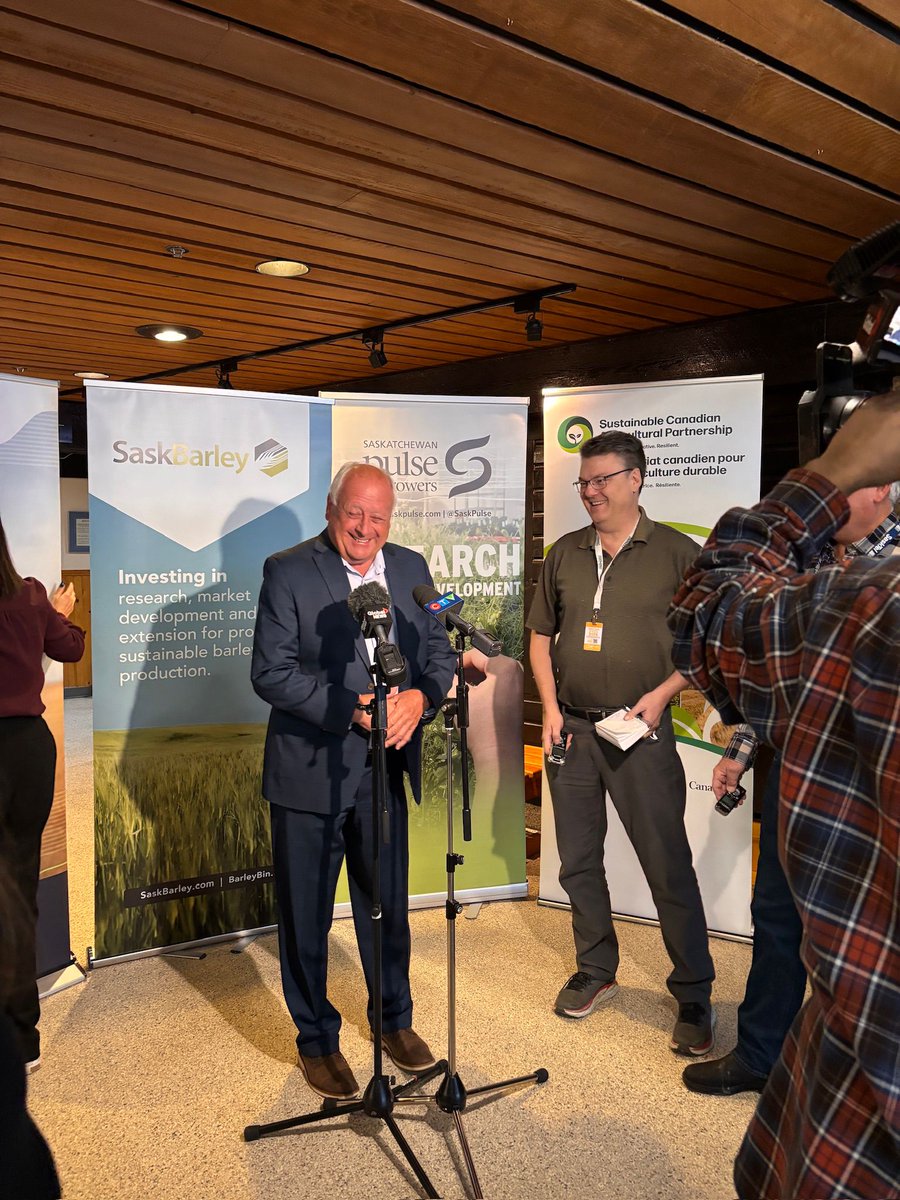
NEWS RELEASE: Sask Wheat commits over $2.1 million to wheat research and strategic initiatives The Honourable David Marit, Minster of Agriculture, announced the funding of all crop-related ADF projects funded through the Sustainable Canadian Agricultural Partnership (Sustainable CAP) at the Saskatchewan Crops Forum today. READ MORE: saskwheat.ca/sask-wheat-com…
Sask Wheat tweet mediaSask Wheat tweet media
English
0
3
7
886
Jake Leguee 리트윗함
Sask Wheat
Sask Wheat@SaskWheat·
As another year comes to a close, we look forward to sharing Sask Wheat's progress in the effort to make wheat a more profitable crop in Saskatchewan. Our 2024-2025 annual report is now available for producers and industry members alike to view, discover and to interact with... that's right! This year, our annual report also features an interactive aspect. Head to the back page to find out what it is! Thank you, producers. Sask Wheat looks forward to bringing more value, dedication and commitment to wheat producers in 2026. saskwheat.ca/2024-2025-annu…
Sask Wheat tweet media
English
0
1
2
296
Jake Leguee 리트윗함
RealAgriculture
RealAgriculture@realagriculture·
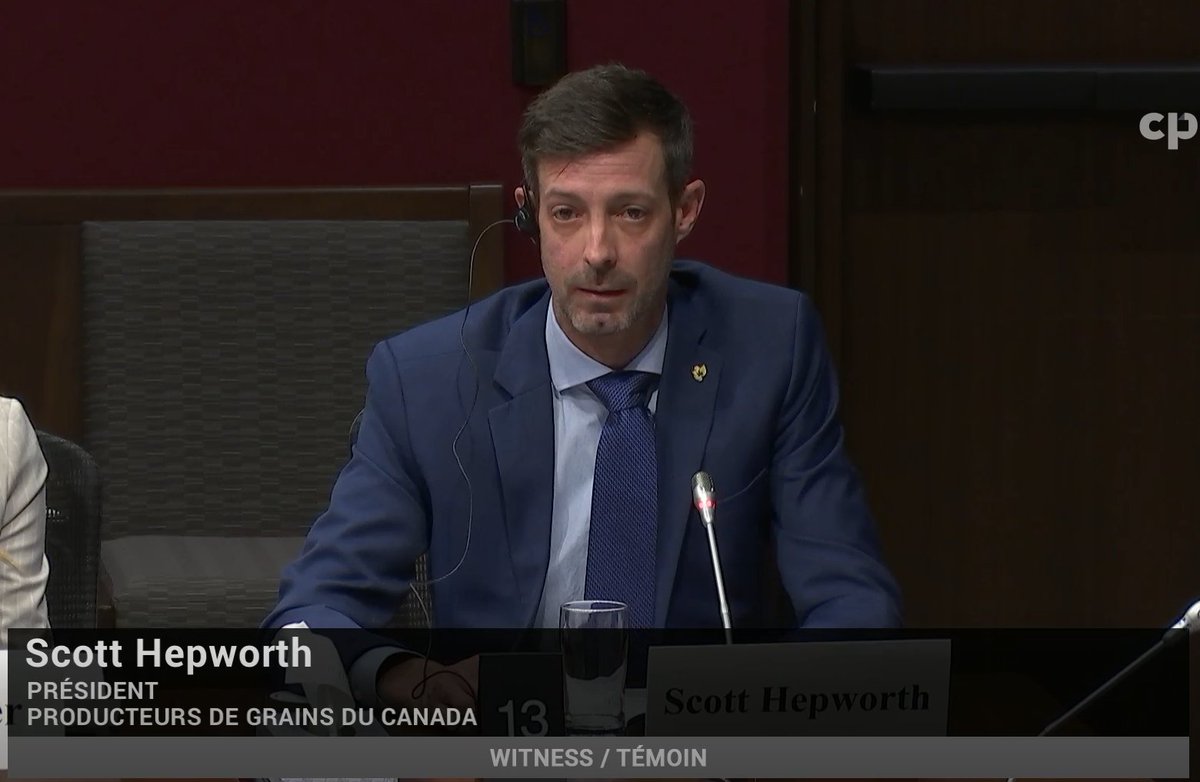
Farm groups are urging Ottawa for an export sales reporting program to enhance market transparency. The current model means export sales are only known weeks later. In this discussion, Sask Wheat chair @JakeLeguee highlights the potential benefits for farmers. 👉 Read more: ow.ly/6yxO50XnZa2 #cdnag #westcdnag
RealAgriculture tweet media
English
0
4
11
1.3K