

Libby
2.6K posts
Libby
@LibbyMag
'There are moments when twiddling is about all a fellow feels himself equal to.' (P G Wodehouse) | she being the cat’s mother
UK 가입일 Ocak 2013
796 팔로잉943 팔로워

Hot take: Most daily Masses should not include a homily. Its absence would, paradoxically perhaps, better catechize the faithful of the purpose of the Mass.
English

I had an argument with another historian (in front of the Bishop) about whether the year 1400 was the last year of the 14th or the first year of the 15th century. Stay safe out there, people
English
@paxangloceltae You’re not wrong but show me a big European city where it’s better. I’m just back from Rome which is covered with graffiti and rife with phone crime - not to mention street harassment of women (not an oldie like me, but a big problem for my daughter)
English

I haven’t commuted into central London for a few weeks so managed to somewhat forget how radicalising an experience it can be. On both trains this AM I was the only Briton - it was not like this pre-2020.
A man was smoking a spliff in the carriage and another decided to serenade us with his Bluetooth speaker (his music taste was poor). Multiple fare evaders (reflecting London’s wonderful diversity) at the barriers.
When boarding the Underground, we had to listen to this announcement on a loop. ‘Phone theft is common at this station’ every 30 seconds. I’ve never heard the CT/61016 or no smoking announcements that often.
This is what I expect in a third world country (although, in fairness, I’ve travelled to some and even they don’t have to warn people not to have their phones out on public transport).
We are in living in a first world, highly developed country. It should be safe to stand on a platform inside a transport station *in the capital city* of this advanced economy without being barked at to not have your phone out because it’s so unsafe.
Here’s a novel idea: instead of stopping people from having their phones out, how about we robustly deal with phone theft, get BTP onto platforms to rugby tackle the thieves, and lock the scum up for considerable periods as a deterrent to others?
Stop dealing with things downstream and making life miserable for the law-abiding country. Tackle problems at source.
Tourists hearing this shit must think they’ve accidentally ended up in a failed state.
English
Sobbing students after A level paper 1 - ever seen anything like it
English
Libby 리트윗함
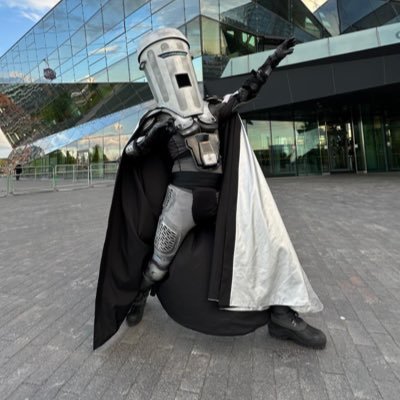
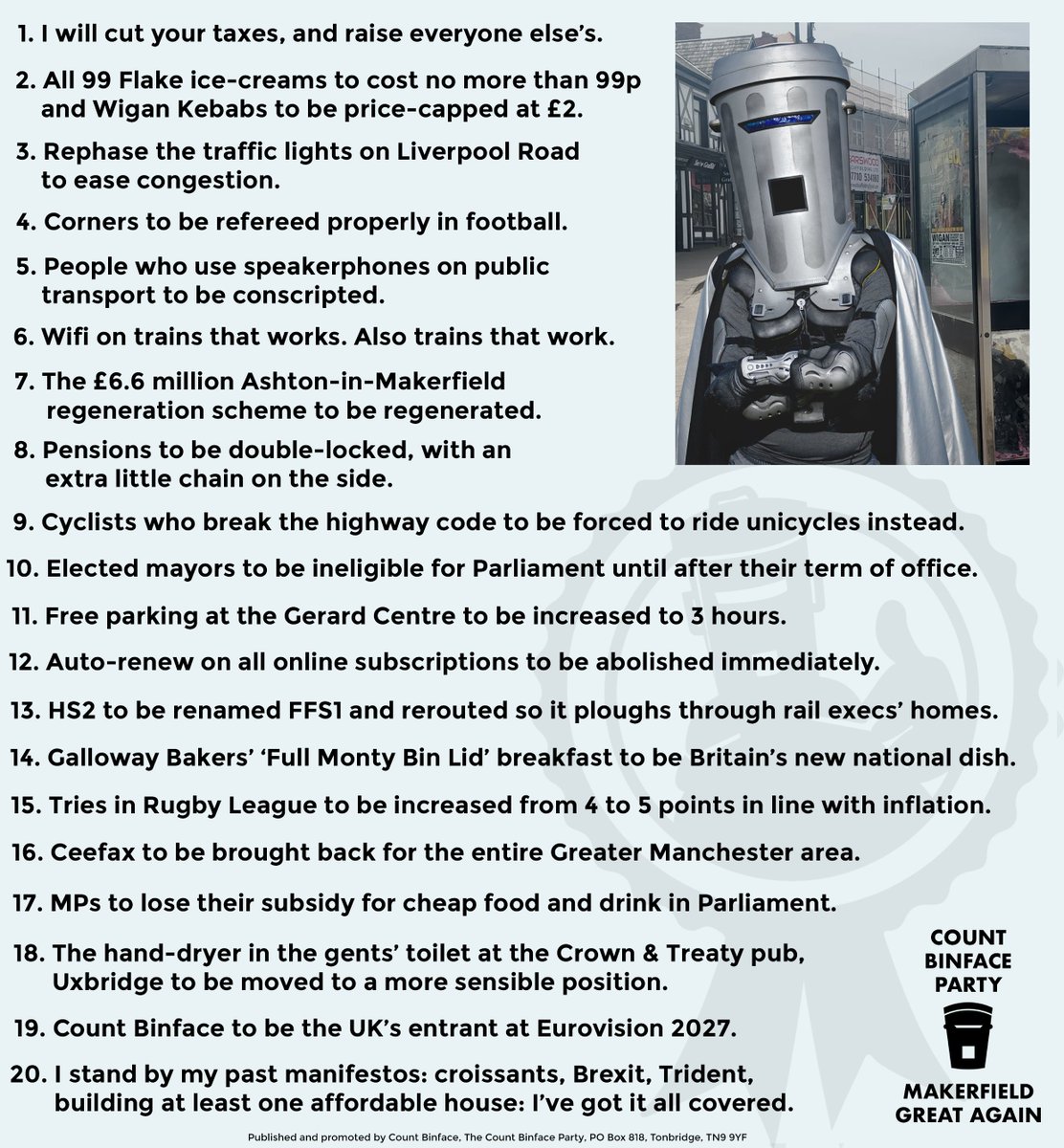
Here it is: my 2026 manifesto for the #Makerfield By-Election. Makerfield Great Again! #VoteBinface #MakeYourVoteCount
English
@CroneThe86880 @Johnsoldear Worse than Classic FM because as well as the above it has to play mediocre music by composers you’ve never heard of in order to ensure women composers are fairly represented.
English

@Johnsoldear It's turned into Classic FM - a limited repertoire of basic classics, chatty drivel and records chosen by Norman in Hull, whose late mother loved the Three Tenors and wants Nessun Dorma in her memory.
English
Just heard Georgia Mann on R3 informing us that " Elgar is now most often thought of as the composer of tub- thumping marches". BBC standards are abysmal now, compared to even 10 years ago. They assume the listeners are morons who want easy- listening pap.
English
Libby 리트윗함

If true this would be a huge win for feminism. Women are grossly underrepresented in the dictatorship and authoritarianism fields
Redd@ReddCinema
Kim Jong Un is set to formally name his daughter, Kim Ju Ae, as the next leader of North Korea 😳
English
A sad and shocking case linked here.
Another young man killed in a racist attack but no attention from the media for obvious reasons.
(Article is paywalled but there are ways round that.)
mickey go@daveyravine
@Laak_Van_Gogh @DannyShawNews Stephen Lawrence's case has been examined endlessly for over 30 years mate.... Ither racially notivates murdera in the 90s....not so much. I'd bet you've never even heard of Richard Everitt. thecritic.co.uk/issues/septemb…
English
Libby 리트윗함

A few nights ago, a few professors at the Angelicum treated the students to a private concert by the Hillbilly Thomists.
Although only three members of the eight-man troupe were with us, they sang as though all of Tennessee had somehow found its way into the heart of Rome.
English
Beautiful picture of the Holy Trinity at the Venerable English College in Rome (where I went to Mass this morning!)
Art4TheGlryOfGod🌻by Sharon 🌻@Art4ThGlryOfGod
#Art image for today’s Feast of The English Martyrs Paired with Matthew 10:17-22 “Beware of men, for they will deliver you over to councils and flog you…” ~~~~~~~ The Martyr's Picture, #Painting by Durante Alberti Oil on canvas, Painted in 1581 © The Venerable English College, Rome ~~~~~~~ Reflection on the Painting… by Father Patrick van der Vorst “Today we celebrate the Feast of the English Martyrs. Our painting, The Martyrs’ Picture, was painted in 1581 by Durante Alberti, shortly after the foundation of the Venerable English College in 1579, where the work still hangs today. It presents the Blessed Trinity above, with two great English martyrs below: Saint Thomas of Canterbury (on the left) and Saint Edmund, King of East Anglia (on the right). At the centre, a burst of divine light radiates behind God the Father, marked by a triangular halo, a symbol of the Trinity, more commonly seen in later Eastern iconography, sometimes bearing the inscription HO ON (“The One Who Is”). Christ, with arms outstretched, is held by the Father. His wounds pour blood down onto a map of the British Isles, a striking image of grace flowing into a land where so many martyrs shed their own blood, as Catholic priests were persecuted and put to death for their faith. Above, a cherub lifts the College motto: Ignem veni mittere in terram - “I have come to cast fire upon the earth.” Tradition tells us that students would gather before this image to sing the Te Deum whenever news arrived that a former student had been martyred back in England. Forty-four of those alumni have since been recognised as saints. “This painting belongs to a wider moment in the Church’s history, shaped by the reforms following the Council of Trent under Pope Gregory XIII. At a time when Catholics in England and Wales could no longer train for the priesthood at home, seminaries like the English College in Rome became lifelines; places where young men were formed in faith, knowing full well that returning home might cost them their lives. Originally a hospice for pilgrims, the building was soon transformed into a seminary under Jesuit care, sending priests back into a hostile environment where fidelity to the Catholic faith was often met with persecution and death. The painting is therefore not simply decorative: it is formative, a visual reminder of the cost of discipleship and the fire of mission. “The martyrs we honour today gave their lives in witness to Christ, living the words of the Gospel with the Spirit of the Father speaking through them. For many of us, the idea of laying down our lives for the faith feels distant. And yet, their witness is not confined to history. Even today, across the world, there are Christians who suffer and die quietly for their faith, unseen and unheard. They are the hidden martyrs of our own time. When Pope Paul VI canonised the English Martyrs in 1970, he recalled the words of Tertullian: “The blood of Christians is the seed that is sown as it was with the shedding of Christ's own blood, so it is with the sacrificial offering of her Martyrs in union with His: a source of life and of spiritual fecundity for the Church and the entire world.” Christian.art mailchi.mp/d3b455ad6fda/l…
English
English

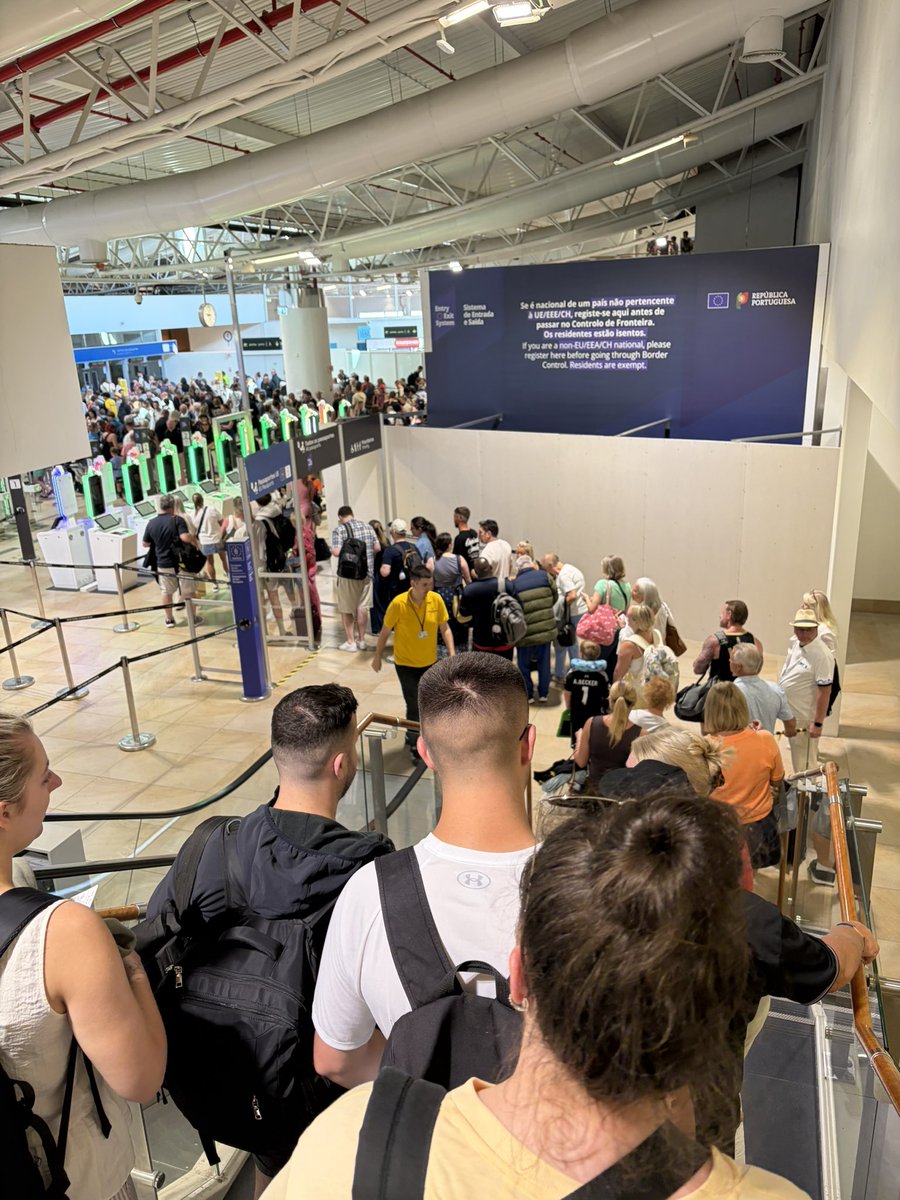
Believe the news. This is Faro airport just now. This is after baggage check in and security. This is passport control to enter international departure terminal. I came 3 hours before, and it’s still tight for time.
@SimonCalder @Ryanair @easyJet @jet2tweets
English
@brandon_d_smith Algorithm going hard — Us too! Except we swam and got drenched thanks to him, years ago…
English

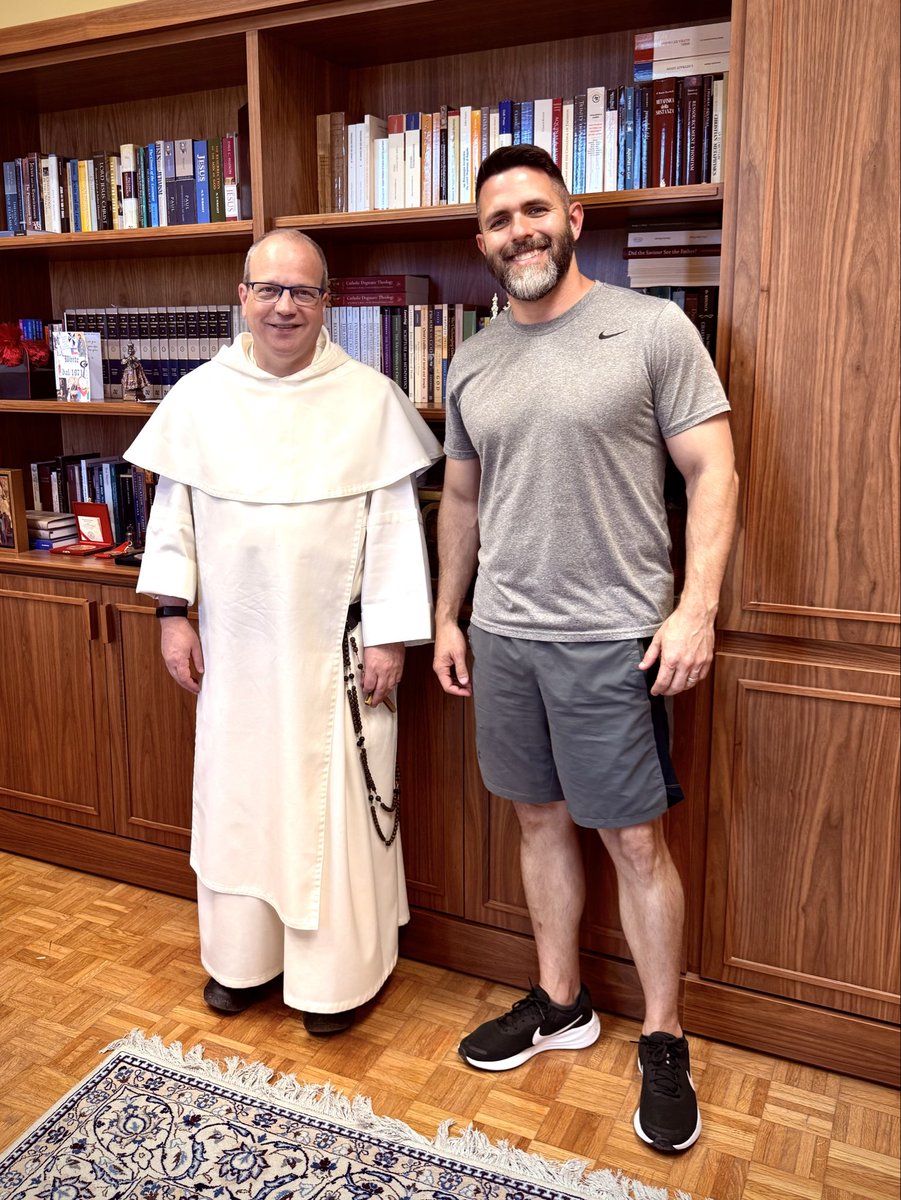
Just got back from Rome (again). Appreciated the history, grandeur, and beauty of the medieval church. Crossed the Tiber and stayed dry. Even spent time my favorite priest and Catholic theologian-apologist, Fr. Thomas Joseph White.
And now I’m gonna Baptist even harder.



English
@OurPastHasGone @RosieDuffield1 My Boots travel hairdryer is still going strong from 1990 😬
English
@RosieDuffield1 I am more puzzled by the fact that anyone would pay that much for a hairdryer - I got one from Home Bargains for about a tenner
English

" ...not enough attention has been paid to his most extraordinary purchase of all: a £349.99 Dyson hairdryer. A curious choice. Mainly because, as photographs will attest, Mr Murrell’s head is completely bald..."
telegraph.co.uk/gift/86d4fefb0…
English
@MrsEmmaWebber Glad you all got some time to relax and enjoy yourselves. If anyone deserves it, you do.
English

I don’t normally post personal stuff. Mainly because we don’t get to do many ‘interesting’ things.
But today we got to enjoy a bit of time out with the beautiful Kumar family and our incredible legal team at Wembley Stadium for the Rugby League Challenge Cup Final.
Neil Hudgell; you have been such a source of support. Without you (and team) I honestly think we’d have thrown ourselves off of Beachy Head two years ago.
Good people are out there….🙏


English
@christiancalgie Walk away and feel free (but have a tiny bit of guilt when the cashier asks you)
English

@CptHastings1916 @rachel__rach Let her read the not-very-good stuff on her own. You read her the challenging stuff she’d never pick up. IMNVHO
English

@rachel__rach She loves them. I'm not a huge fan but I can see that objectively JKR is an excellent storyteller with a well-developed imagination.
English
@DrFrancisYoung Ooh! Loved his book on Chastity. Knew him in a previous life in Cambridge. Seriously brainy, holy man.
English


The Church of St Anselm & St Cecilia, Lincoln's Inn Fields, London.
Architect Frederick Walters; built 1909 to replace the old Sardinian Embassy chapel destroyed in the creation of Kingsway.


English

In other news, does any normal couple need a double sink? Do people really do their teeth at exactly the same time? They same to me to be the weirdest thing.
English
English

JUST IN: The Marian Franciscans @marianfriars will cease to be as of June 1
@BishopEgan has approved their request to dissolve their association. They will “join another Association with a similar charism
& in the coming months relocate”
The friars say the Latin Mass & the New Rite
Full details underneath

English