Livepeer

6.6K posts

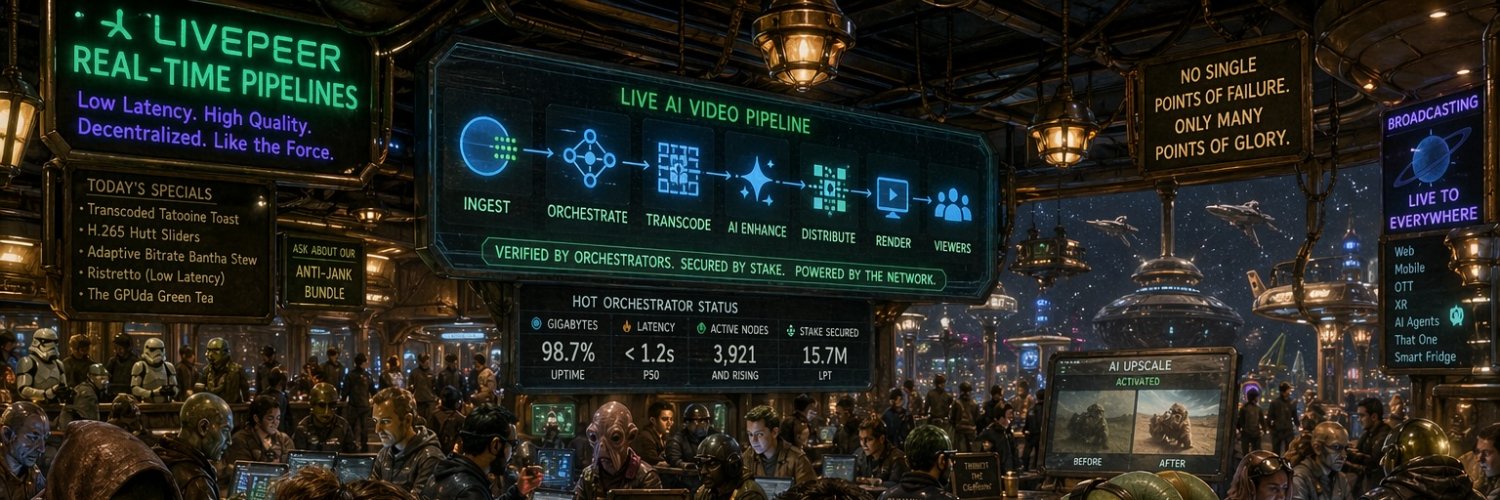
Livepeer banner
Livepeer

Livepeer

@Livepeer

The open GPU network for real-time AI video.

가입일 Mart 2017
428 팔로잉49.2K 팔로워
Livepeer
Livepeer@Livepeer·
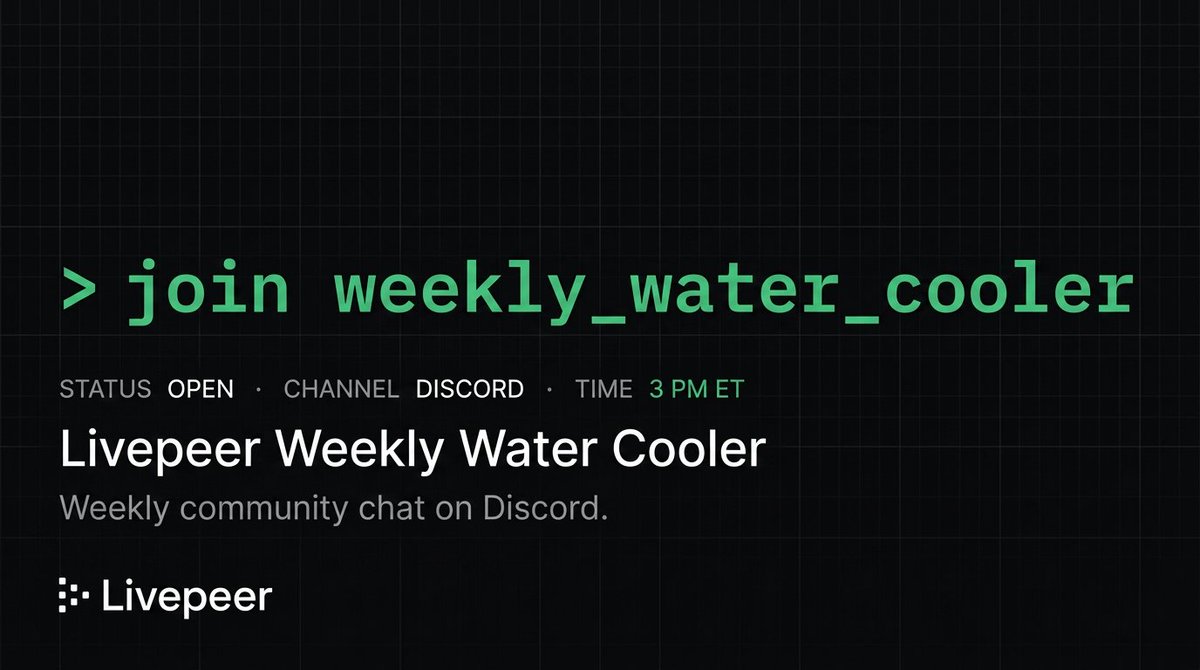
Starts in one hour ⏰ the Livepeer project weekly contributor Water Cooler. Show us your last bash command 👾 live on Discord 3 ET.
Livepeer tweet media
English
2
2
20
713
Livepeer
Livepeer@Livepeer·
.@DaydreamLiveAI Scope's latest workflow is a 7-node, real-time agent avatar that gestures, glances, reacts, and responds to its own lighting. The workflow combines @LTXStudio LTX 2.3 — a rare open‑weights model with joint audio‑video generation from a single prompt — with face-front avatar LoRAs trained on close-up footage. Together, they bias agent avatar responses toward natural lip sync, eye motion, and micro‑expressions —all on a single GPU. x.com/DaydreamLiveAI…
English
0
1
11
722
Livepeer
Livepeer@Livepeer·
NEW RELEASE Scope v0.2.5 from @DaydreamLiveAI Current image-to-agent avatars land as flat talking faces. Scope v0.2.5 sharpens conversational avatar workflows by skipping CPU offload on high-VRAM GPUs, boosting generation speed.
Daydream@DaydreamLiveAI

Last week, we shipped the tutorial for a real-time conversational AI avatar in #Scope, running on a single GPU with a 24GB VRAM floor and LTX 2.3 model. You can see the demo of it running. This week, we are taking it further and answering the question: When does running this locally beat a cloud API? If you are making that decision, this is for you 🧵

English
2
10
33
1.8K
Livepeer
Livepeer@Livepeer·
A new sovereign primitive, built on open infra: 🎙️ Record locally ⚡ Transcribe on (Whisper-large-v3, 17.8× realtime) 🐝 Store audio + transcript on @ethswarm ⛓️ Anchored to Ethereum Livepeer community member @chrishobcroft shipped the minimum-viable voice-to-permanent-record stack— no clouds, no custodians.
Livepeer tweet media
English
3
10
49
3.1K
Livepeer
Livepeer@Livepeer·
60 minutes (or ~3.6k GPU-seconds, for those keeping latency score) until the weekly community Water Cooler chat 🍹
Livepeer tweet media
English
1
4
28
1.2K
Chemist 🧪
Chemist 🧪@ChemistDeFi·
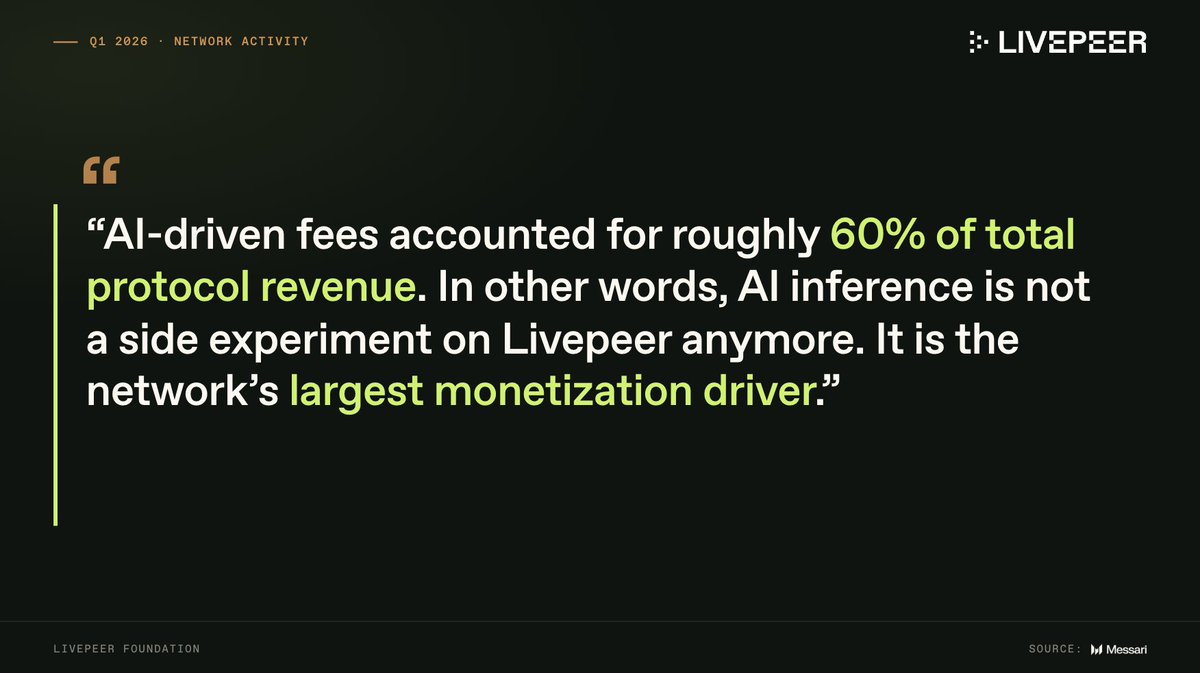
@Livepeer network built for transcoding now serving world models lol. demand mix is the real signal, agent avatars and gen video is where compute actually earns its keep
English
1
0
4
132
ComfyUI
ComfyUI@ComfyUI·
We’ve temporarily suspended new free-tier account creation on Comfy Cloud due to a recent abuse incident targeting high-cost video generation models. Importantly, - All existing paid accounts and credits are unaffected - Existing free-tier credits will not roll over next month We built the free tier because we genuinely want new users to experience ComfyUI easily. We have to step back temporarily to protect the platform, but we are still working on that goal and will share more updates as soon as we have them. Thanks for the support and patience.
English
19
16
209
24.1K
Livepeer
Livepeer@Livepeer·
@aakashgupta The next constraint isn’t “more GPUs,” it’s how you provision them. The orchestration layers that can flexibly route work to available, performant GPUs will define the next wave of AI compute.
English
1
6
26
1.4K
Livepeer
Livepeer@Livepeer·
@farzyness Open compute, open heart, open mind.
Nederlands
0
1
11
130
Farzad 🇺🇸 🇮🇷
Farzad 🇺🇸 🇮🇷@farzyness·
Distributed energy and compute is inevitable.
Aakash Gupta@aakashgupta

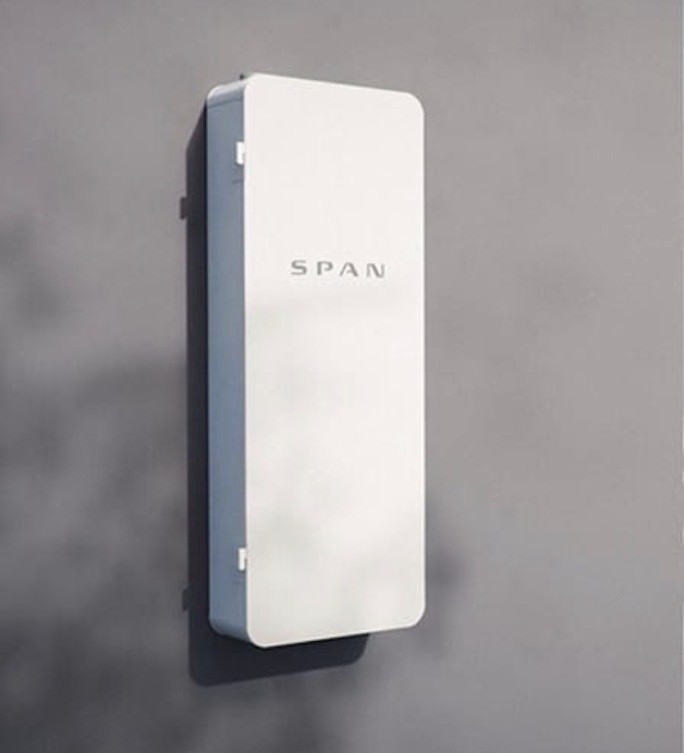
Nvidia just figured out how to put an AI data center on the side of your house. And pay you to host it. Each XFRA node packs 16 Blackwell RTX Pro 6000 GPUs, 4 AMD EPYC CPUs, and 3TB of RAM in a Dell PowerEdge rack mounted next to the AC condenser. The homeowner pays nothing for the hardware. They get discounted electricity and internet in exchange for letting Span tap unused capacity on their electrical panel. This sounds insane until you look at the actual constraint blocking AI infrastructure. Hyperscalers are not GPU-limited. Nvidia ships them on schedule. They are not capital-limited. They are sitting on hundreds of billions in capex. What they cannot get is grid interconnection. A 100MW data center requires a substation upgrade that takes 4 to 7 years in most US markets. US grid operators have over 2,600 gigawatts stuck in their interconnection queues per Lawrence Berkeley Lab. The wait, not the silicon, is the bottleneck. Span solved this by going behind the meter. A new Pulte home has 200A service. That's 48kW of capacity. The home uses 1 to 3kW most hours. The headroom never gets touched. Span's smart panel measures real-time consumption and dynamically routes whatever the home isn't using to the XFRA node. No substation upgrade. No queue. Just slack capacity sitting on the residential side of the meter, already cleared. Span claims it can deploy 8,000 nodes for one fifth the cost of a comparable 100MW centralized facility, six times faster. PulteGroup is the wedge. They delivered 29,000 homes in 2025. The XFRA unit goes in during construction next to the smart meter. No retrofit. Pulte gets a feature on the spec sheet and revenue share on the compute that flows through the wall. The grid was the bottleneck. Pulte just became the workaround.

English
33
35
434
79.4K
Aakash Gupta
Aakash Gupta@aakashgupta·
Nvidia just figured out how to put an AI data center on the side of your house. And pay you to host it. Each XFRA node packs 16 Blackwell RTX Pro 6000 GPUs, 4 AMD EPYC CPUs, and 3TB of RAM in a Dell PowerEdge rack mounted next to the AC condenser. The homeowner pays nothing for the hardware. They get discounted electricity and internet in exchange for letting Span tap unused capacity on their electrical panel. This sounds insane until you look at the actual constraint blocking AI infrastructure. Hyperscalers are not GPU-limited. Nvidia ships them on schedule. They are not capital-limited. They are sitting on hundreds of billions in capex. What they cannot get is grid interconnection. A 100MW data center requires a substation upgrade that takes 4 to 7 years in most US markets. US grid operators have over 2,600 gigawatts stuck in their interconnection queues per Lawrence Berkeley Lab. The wait, not the silicon, is the bottleneck. Span solved this by going behind the meter. A new Pulte home has 200A service. That's 48kW of capacity. The home uses 1 to 3kW most hours. The headroom never gets touched. Span's smart panel measures real-time consumption and dynamically routes whatever the home isn't using to the XFRA node. No substation upgrade. No queue. Just slack capacity sitting on the residential side of the meter, already cleared. Span claims it can deploy 8,000 nodes for one fifth the cost of a comparable 100MW centralized facility, six times faster. PulteGroup is the wedge. They delivered 29,000 homes in 2025. The XFRA unit goes in during construction next to the smart meter. No retrofit. Pulte gets a feature on the spec sheet and revenue share on the compute that flows through the wall. The grid was the bottleneck. Pulte just became the workaround.

Aakash Gupta tweet mediaAakash Gupta tweet media
English
154
298
1.6K
351.7K