Rebecca Kacaba

344 posts

Rebecca Kacaba banner
Rebecca Kacaba

Rebecca Kacaba

@RKacaba

CEO and Co-founder @Dealmakertech, Democratizer of the captial markets, Financial Times Most Innovative, Inc Most Innovative Companies.

United States 가입일 Temmuz 2013
429 팔로잉460 팔로워
고정된 트윗
Rebecca Kacaba
Rebecca Kacaba@RKacaba·
Proud to share: we have raised $20M to accelerate the explosion of retail capital. @Dealmakertech
Rebecca Kacaba tweet media
English
1
1
4
276
Rebecca Kacaba
Rebecca Kacaba@RKacaba·
This is a historic moment for retail investors: SpaceX is allocating 30% of its IPO to retail. The typical allocation is 5-10%. @elonmusk, the most successful entrepreneur on earth, just looked at his cap table and made a choice to allow retail a greater stake in his company. This isn't a gesture. It's a signal. We've been building toward this moment for years. DealMaker has processed over $2B in online capital raises. We've seen companies use retail offerings to tap into their most loyal communities. The infrastructure exists. The regulatory framework exists. And now the biggest IPO in history is validating what we've always known. Here's what happens next: other companies nearing IPO take notice. Then earlier-stage companies start asking why they don't open their cap tables to the people who actually use and believe in their product. This is a major shift. And it's not going to slow down.
English
0
1
2
26
Rebecca Kacaba
Rebecca Kacaba@RKacaba·
Every day I get to read why people invest through DealMaker, and honestly, it never gets old. "I bought my first bag 2 years ago and I've been using it EVERY single time I travel. So when the opportunity was presented to not just be a customer but a partner, it was a no brainer for me." That's not an institutional check. That's conviction. Someone who loved a product so much they decided to own a piece of it. This is what happens when you remove the gatekeepers. When customers become investors. When belief becomes ownership. This is retail capital formation. And it's why we built DealMaker.
English
0
0
1
11
Rebecca Kacaba
Rebecca Kacaba@RKacaba·
I’ve been invited to the All-In Liquidity Summit in May to chat with some of the sharpest LPs, fund managers, and founders in the industry. This unique event brings together a small, curated room in Napa Valley where real conversations happen. Message me if you’re heading to the Summit!
Rebecca Kacaba tweet media
English
0
1
3
87
Rebecca Kacaba
Rebecca Kacaba@RKacaba·
Robinhood launched a publicly traded venture fund that lets retail investors access private companies. Portfolio includes Databricks, Revolut, Ramp, Stripe, ElevenLabs, and more. Vlad and I have discussed this and it’s clear we've been circling the same thesis for a while. He went on Bloomberg recently and explained the motivation behind this new initiative plainly: this is about getting retail access to private companies. Not after the IPO. Not after the wealth creation has already been captured. Now. This is a massive signal because of what it confirms: the wall between public and private markets is coming down. And it's not regulators forcing it. It's demand. Retail investors want in earlier. They want access to the companies reshaping industries before the markup, before the wealth creation is already captured by a handful of institutional players. The industry's response used to be: "retail doesn't belong in private markets." Now one of the largest retail brokerages in the world has built the exact infrastructure to prove otherwise — and stacked it with some of the most recognized private companies. For anyone still skeptical that retail capital is reshaping private markets: the biggest platforms in the world are now betting their roadmaps on it. That's not a trend. That's a structural shift.
English
0
1
3
99
Rebecca Kacaba
Rebecca Kacaba@RKacaba·
Huron University recently asked me to reflect on my time studying Psychology there, and honestly, it turned into one of those conversations where you surprise yourself with how much a place shaped you. Studying psychology has been one of my biggest assets as a founder. Building technology that actually works is really just an exercise in understanding why people do what they do. Every product we ship at DealMaker, I'm watching how people adopt it, how it changes their behavior, whether it clicks or whether we missed something. Since co-founding @Dealmakertech, we've processed over $2B in capital and proved that community-driven funding isn't some niche experiment. It's the future. People should own the brands they love. Watching companies grow alongside the communities that believed in them early? That's what drives me. Grateful for the foundation. Still building on it every day. Thanks to Huron for the invite to be part of this. It was a fun one to reflect on. @huronuni huronu.ca/e-huron/catchi…
English
0
0
3
41
Rebecca Kacaba
Rebecca Kacaba@RKacaba·
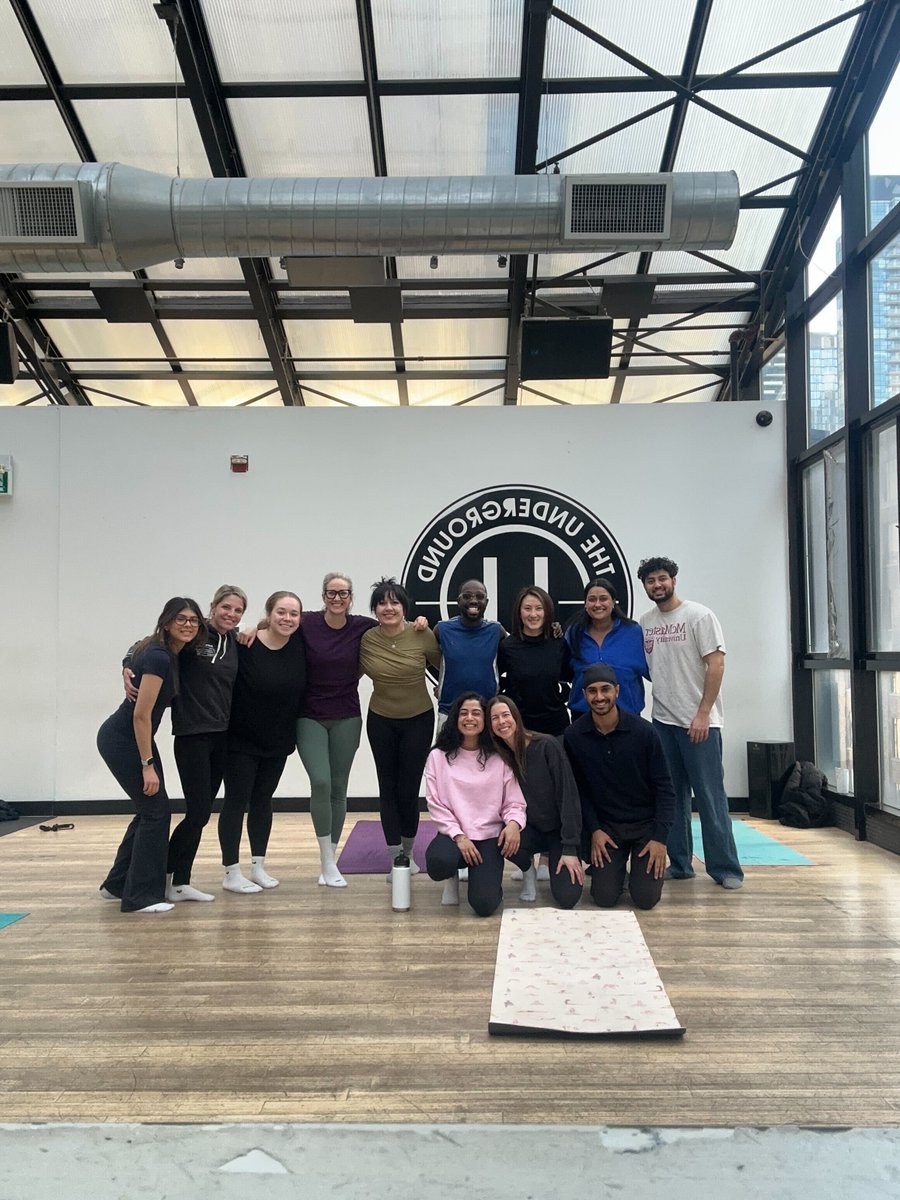
This week, the @Dealmakertech team had a lunchtime Pilates class. This class, which was an idea that Alysha Fardella led, is a perfect example of how our people take initiative and show up. It was great to sweat it out with the team! If you're interested in joining DealMaker, we're hiring. dealmaker.tech/careers
Rebecca Kacaba tweet media
English
0
0
2
31
Rebecca Kacaba
Rebecca Kacaba@RKacaba·
During our company offsite in Mexico last year, I noticed a man making his way toward me during one of our events. He pulled out his phone and showed me his DealMaker portfolio. He was an investor. Five companies. Companies he believed in. Companies he'd invested in directly, on his own terms, without waiting for institutional permission. Then he told me about the returns. He paid for his trip to Mexico with them. It's easy to lose sight of what we actually do when you're deep in product roadmaps and regulatory frameworks and quarterly metrics. You start thinking in abstractions: $2B raised, 900+ deals, 1.7M+ investments processed. But that conversation reminded me of the real people that DealMaker affects. The real wealth that’s created. The real lives changed because someone decided to invest in a company they believed in, at a moment when that belief actually mattered. That investor didn't need permission from a gatekeeper. He didn't need to be accredited to a certain net worth threshold. He saw a founder with a vision. He believed. He acted. And his conviction compounded into real returns. That's not a transaction. That's ownership. That's what changes families. We build infrastructure. But what we're really building is the ability for people to participate in the wealth creation they've historically been locked out of. Sometimes you need a reminder of why that matters.
English
1
2
9
538
Rebecca Kacaba
Rebecca Kacaba@RKacaba·
"The JOBS Act passed in 2012. Why isn't digital capital formation everywhere by now?" I've heard this question for years, usually from VCs expecting linear adoption curves. It's a fair question. But it misses something fundamental about how transformative infrastructure actually gets built. Venture capital was born in the 1950s. It didn't explode until the internet created both the frontier worth funding and the liquidity events that proved the model worked. That's roughly 40 years of groundwork before the inflection point. But here's what's different now: we didn't have to wait that long. GameStop was the cultural catalyst that sparked the rise of retail in 2021. Retail investors are now done asking permission. Done sitting on the sidelines while institutions decide what they can access, when, and at what price. That empowerment doesn't stay contained. It spreads. When retail investors force transparency in public markets, they start asking why private markets remain walled gardens. When they prove they can move markets collectively, they demand a seat at the table where real wealth is created. Not after companies go public. Before. We're watching it unfold in real-time. Retail investors are funding everything from tech companies to local businesses. The platforms have matured. The regulatory framework has stabilized. And most importantly: a generation of investors now expects access as a baseline. The infrastructure didn't fail. The culture finally caught up.
English
0
0
3
56
Rebecca Kacaba
Rebecca Kacaba@RKacaba·
Employee stock ownership plans are a foregone conclusion today. But once upon a time, they weren't. In the 1970s, employee stock ownership plans were invented to give employees a stake in the companies they built. The results were undeniable: faster growth, lower failure rates, and significantly more employee wealth. Alignment creates momentum. No one argues stock option plans are irrelevant anymore. Ownership aligns incentives. Full stop. So here's the question we should be asking: why does ownership stop at the employee? When customers own equity, they don't just transact. They advocate. Supporters become evangelists. Communities transform into permanent stakeholders who move with you through every stage of growth. Employee stock ownership plans broadened ownership to employees. We're broadening it further: to customers, users, believers. The communities actually fueling these companies. Same principle. Wider circle. Exponentially more powerful. For VCs and institutional investors skeptical of retail capital: you already believe this thesis. You just don't realize it yet. If employee stock ownership plans work—and they do—then you already know why customer ownership works too. The infrastructure exists. The regulatory framework exists. What's left is the will to extend ownership to everyone who believes. That's what we're building at DealMaker.
English
0
0
2
334
Rebecca Kacaba
Rebecca Kacaba@RKacaba·
The Great Wealth Transfer will be the biggest accelerant for retail investing we've ever seen. Over the next several years, Millennials are set to inherit an unprecedented amount of wealth from previous generations. We're talking about tens of trillions of dollars moving from Boomers to their children and grandchildren. In 2020, The New York Times reported this massive transfer could unfold within a decade. We're now halfway through this decade. And here's what makes this significant: Millennials invest differently than their parents. They're digital-native, comfortable with apps and platforms that democratize access. They're skeptical of traditional gatekeepers. They want to back companies and causes they believe in, not just hand their money to wealth managers who park it in the same old funds. We're already seeing a cultural shift towards the empowerment of retail investors. WSJ and CNBC have published articles with titles like ‘retail investors have become a force that can't be ignored.’ Our own internal data confirms it. CEOs of major financial companies like Robinhood are saying they're on a crusade to open up private markets to retail investors. This is the beginning of a structural transformation in capital markets. When this wealth changes hands, it won't just sit in traditional portfolios. It will seek new opportunities, new platforms, new ways to participate in building the future. VCs, PE firms, and private companies are already starting to take notice. The ones who move early will have first-mover advantage in the largest capital reallocation of our generation.
English
1
0
4
51
Rebecca Kacaba
Rebecca Kacaba@RKacaba·
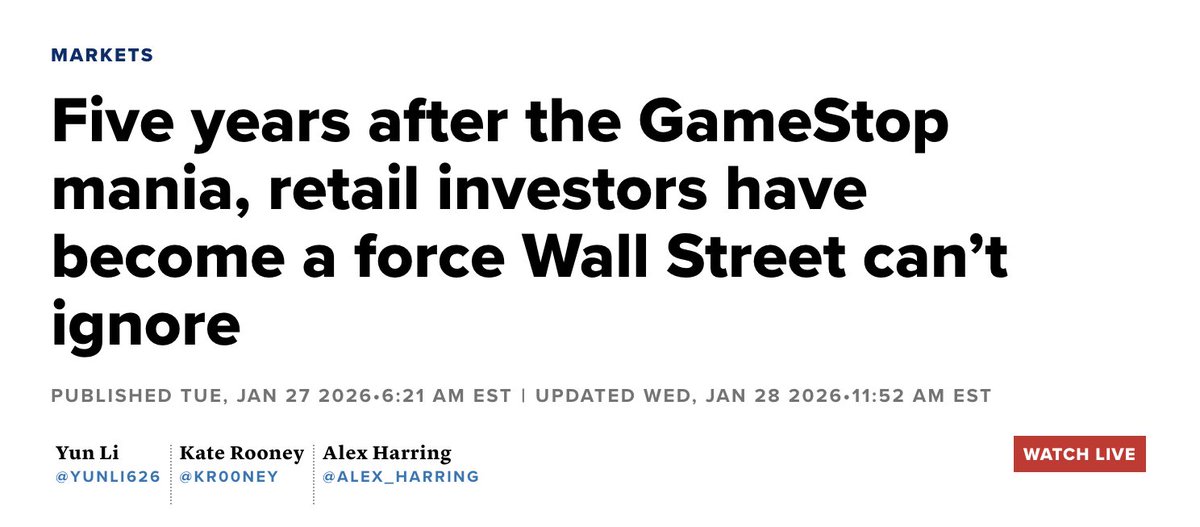
We’ve entered the era of the retail investor. That’s one of the things that’s come into sharper focus for me after reading this @CNBC piece by @YunLi626, @Kr00ney, and @alex_harring. We didn’t really understand what Gamestop was at the time. But it’s clear now that it was the catalyst for retail and the start of this new era. And that surge in retail investors post-Gamestop tracks with our own internal data. From 2020 to 2025, DealMaker's investor base grew by a whopping 3,000%. Now, firmly in the middle of the era, we have people like Vlad Tenev, @RobinhoodApp's CEO, who are pushing for regular people to get exposure to private companies and their upside. This conversation is going to keep moving forward. VCs and private companies who once viewed retail investors as “dumb money” will come to see them as a strategic force as this cultural shift continues to take hold.
Rebecca Kacaba tweet media
English
1
0
3
355
Rebecca Kacaba
Rebecca Kacaba@RKacaba·
This is the conversation we need to be having. @vladtenev is right: the concentration of AI wealth into dozens of shareholders while we wait for trillion-dollar IPOs is creating conditions that could undermine American innovation. We're watching extreme concentration of capital ownership play out in real-time at unprecedented speed and scale. The solution needs to go further than ever before: customers, users, and communities that fuel these companies need equity exposure too - and are good for the business! Equity crowdfunding can enable millions of Americans to own stakes in transformative companies before valuations make 100x returns mathematically impossible. The regulatory infrastructure exists. The technology exists. What's missing is the will to democratize access. If we don't fix this now, we're choosing between blunt redistribution policies or strangling the innovation that could define this century. There's a better path: broadening ownership while companies are still growing. That's what we're building toward at @Dealmakertech. That's the future worth fighting for.
English
0
2
4
206
Vlad Tenev
Vlad Tenev@vladtenev·
Thanks for the thought-provoking piece. My main critique is that you are overemphasizing flashy but low probability events like “left-handed bacteria,” while merely giving lip service to the risk of extreme economic concentration of power, which is very real and materializing as we speak. Anthropic is reportedly raising funds at a $350B valuation, and the wealth created thus far has been concentrated into a few hundred (perhaps more like dozens) high net worth individuals / institutions. It’s looking increasingly likely to me that none of the leading AI labs will IPO until they reach valuations in the trillions, at which point retail investors will finally be able to get shares. In order for retail to get a 100x return on these investments, which was achievable for Apple, Microsoft, Amazon, and Google, the valuations of the AI labs will need to reach hundreds of trillions of dollars, meaning it’s likely too late for a more equitable redistribution of wealth. Simply put, you are currently exacerbating the problem. The consequences of this are that voters may take matters into their own hands and push for either or both 1) more aggressive / nonsensical forms of redistribution — the CA Founders’ Tax is just the beginning or 2) a drastic knee-capping of the AI industry in America, which make the CCP dominance scenario more likely. The solution is to enable retail ownership now, increasing the number of Americans with economic exposure to Anthropic and other AI labs from hundreds of people to millions.
Dario Amodei@DarioAmodei

The Adolescence of Technology: an essay on the risks posed by powerful AI to national security, economies and democracy—and how we can defend against them: darioamodei.com/essay/the-adol…
English
250
291
3.8K
725K
Rebecca Kacaba
Rebecca Kacaba@RKacaba·
We're witnessing a fundamental shift in who gets access to wealth-building opportunities. I'm inspired by the founders, investors, and voices breaking down barriers and championing retail investors' place at the table. Here are some people that I’m following in 2026 who are shaping this conversation: @vladtenev co-founded @RobinhoodApp to democratize finance for all, eliminating trading commissions and building a mobile-first platform that brought millions of first-time investors into the market. @alex_harring, reporter at @CNBC, has been documenting the retail investor revolution with sharp, data-driven reporting. Recent pieces, like one on Palantir's retail army, showcase how everyday investors are outperforming professionals and demanding respect on Wall Street. @brian_armstrong has been at the forefront of advocating for sensible crypto regulation. As @coinbase's CEO, he's actively pushing for legislation that protects consumers while making digital assets accessible to everyday investors, helping legitimize crypto as part of the mainstream financial system. @hannaherinlang, reporter at @WSJ, captured the seismic shift in market dynamics with her piece on retail investors becoming a dominant force. @nejatian, CEO of @Opendoor, stepped into the role after a retail investor-driven uprising that saw the stock surge more than tenfold. He's embracing this new shareholder base with livestreamed earnings presentations and an AI-first strategy, directly engaging the everyday investors who powered Opendoor's comeback. @dlauer, former high-frequency trader turned retail investor champion, has spent years fighting for market transparency and fairness. As founder of We the Investors, he's breaking down the complex mechanics of market structure and advocating for regulatory changes that level the playing field for everyday traders. @GAustinAllison, CEO of @PacasoHomes who opened their cap table to 17,500+ retail investors, raising $72.5M and demonstrating how retail capital can complement venture funding while building brand advocates. Who else should I be following?
English
1
0
6
127
Rebecca Kacaba
Rebecca Kacaba@RKacaba·
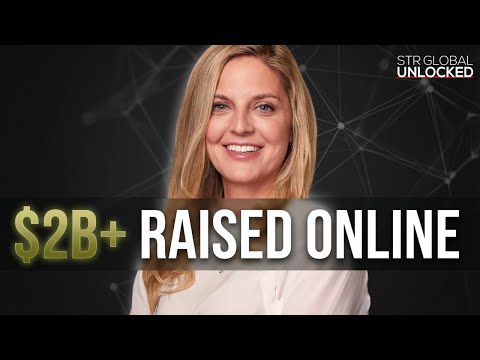
I built DealMaker because I saw an opportunity to give the people who believe in you most a seat at the table. Recently I talked with @slehmann1 on STR Global Unlocked about this shift happening in how companies raise capital and why we built DealMaker to lead it. For years, I watched capital formation work the same way: gatekeepers decided who deserved funding. Communities had conviction but no seat at the table. Founders had to choose between control and capital. We built DealMaker to change that equation. When your customers become your investors, everything shifts. Loyalty compounds. Valuation strengthens. Your community doesn't just fund you, they evangelize for you. That's not just better capital. That's strategic advantage. For founders in proptech, hospitality, real estate, and beyond: the shift isn't coming. It's here. Links to the full episode in the comments.
English
1
1
4
195
Rebecca Kacaba
Rebecca Kacaba@RKacaba·
The future of food isn’t being shaped in boardrooms. It’s happening right now in test kitchens, where founders are reinventing what we eat and how we nourish ourselves. I saw a post recently from a CPG founder who had spent months in a retailer’s test kitchen experimenting with superfoods. Lion’s Mane chia pudding. Regenerative ingredients. Gut health meets product innovation. It wasn’t just R&D, it was a glimpse into a new food system taking shape. What stood out wasn’t the recipe. It was the mindset. This founder didn’t see retail distribution as a box to check. They saw it as a signal of where America is headed: toward a food ecosystem that supports small regenerative farmers and prioritizes functional nutrition for everyone. That’s the kind of founder who gets me excited about what we’re building at DealMaker. Because as this transformation accelerates, one question becomes impossible to ignore: if the future of food is being built by these visionary founders, why should investment access remain limited to a select few? More and more, food and wellness founders are choosing to raise capital from the people who believe in them most: customers who love their products, communities aligned with their mission, and everyday investors who want to help shape the future of food. This is where opportunity meets impact and where access matters. DealMaker is proud to support founders who are reimagining what’s possible. Across industries, across movements, across missions — we’re helping them democratize ownership and bring their communities into the story. The future of food is being invented right now. And everyone deserves a seat at the table.
English
0
0
1
32
Rebecca Kacaba
Rebecca Kacaba@RKacaba·
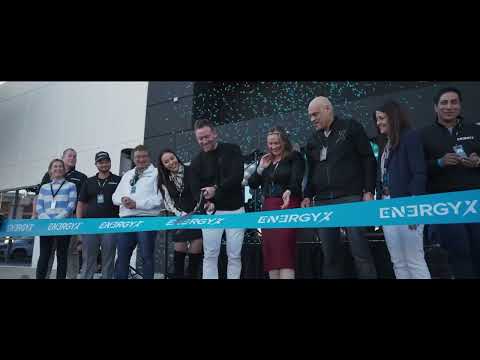
"The world is not shaped by those who wait, but by those who dare to forge its future." It started as an internal slogan, but we quickly realized it captures everything we stand for. We're in the business of powering a new era. The companies we support are led by founders who won't wait for permission or validation from the old playbook. They don’t fear the future, they create it. The Innovators. The Pioneers. The unstoppable forces of nature. These are the transformers of tomorrow. We fuel founders bold enough to reimagine entire industries, and we're building a team that's just as relentless and visionary as the companies we support. If you're someone who drives change and doesn’t see obstacles, but opportunities, we want to hear from you. Check out our open roles and help us forge the future of how companies raise capital. youtube.com/watch?v=AsaYFn… Careers page: dealmaker.tech/careers
YouTube video
YouTube
English
1
0
4
222
Rebecca Kacaba
Rebecca Kacaba@RKacaba·
When we started DealMaker, we believed something fundamental: capital and community should move together. This year, that belief became undeniable. Our 2025 wrapped just dropped, and the story it tells isn't just about numbers. It's about a shift in who gets to build the future. $500M moved through our platform. That works out to an average of $57,078 every hour. But here's what matters more: it flowed directly from believers to builders. We also hit 1.6M potential investors reached and opened our global HQ in NYC, putting us at the center of the capital markets we're reshaping. The future of capital formation won't look like the past. It won't be decided by who gets invited to the right rooms. It will be built by communities who believe in what's being created, and founders brave enough to let them in. To every founder who chose community. To every investor who saw opportunity. To our team who proves every day that when capital and community move together, loyalty becomes leverage. This is just the beginning. Check out the full wrapped: dealmaker.tech/wrapped
English
0
0
1
30