STEPS02.COM

3.9K posts

STEPS02.COM banner
STEPS02.COM

STEPS02.COM

@STEPS02dotCOM

Not here to https://t.co/YNtdbFPZD1 here to Express

Zimbabwe 가입일 Mayıs 2020
111 팔로잉80 팔로워
STEPS02.COM
STEPS02.COM@STEPS02dotCOM·
@shumbakadzi_zim Surely hazvityise from the vocal point of view,but when you cant properly write #CAB3,it tells a different but inner person of thyself!? Maybe part of your mind was maping out the shortest route to the last square metre of Earth - to seek refugee!
English
0
0
0
28
STEPS02.COM 리트윗함
Dr Walter Mzembi
Dr Walter Mzembi@waltermzembi·
Keep standing even if you do not understand , Heaven has not forgotten your Name , God has not forgotten your tears , God has not forgotten His Promises , the Enemy wants you to believe Nothing is happening , but God is working in places you cannot see , your Faith should be greater than your Fear , a weak faith cannot sustain a powerful destiny and until you cross the fear line you cannot harvest the blessings in store for you ! You cannot step fully into the future while carrying yesterday on your shoulders , more faith and more faith…
English
39
56
358
14.9K
STEPS02.COM
STEPS02.COM@STEPS02dotCOM·
@ProfJNMoyo Surely if "Crystal clear",would it have needed this booklet narrative? This whole mind blowing interpretation & underraking (CAB3),is because the demigods CAN'T lengthens a 24hour day,say into a 100hr day,a 12 hr night into a 120hr one? so as to "develop?" the Nation? REALLY?
English
0
0
0
188
Prof Jonathan Moyo
Prof Jonathan Moyo@ProfJNMoyo·
Closing Argument: 2/4 Under Clauses 4 and 9 of the Constitution of Zimbabwe (Amendment No. 3) H.B.1 Bill, 2026, the President and Members of Parliament will serve a seamless “Continuation in Office” from 2023 to 2030. This is not a two-year term extension from 2028 to 2030. Since its gazetting on 16 February 2026, the Bill has been plagued by persistent misconceptions. Chief among them are the claims that: • the Bill is allegedly being rushed into law before President Mnangagwa—who was sworn in on 4 September 2023—reaches the three-year mark on 5 September 2026 (the minimum deemed a full term under section 91(2)), so that the current 10th Parliament can elect him to a fresh seven-year term ending in 2033; • alternatively, the Bill supposedly grants President Mnangagwa and sitting MPs a “top-up” of two years that would not count as a full term under section 91(2); and • the Bill allegedly lacks any transitional provisions for the shift from a five-year to a seven-year electoral cycle. All three claims are demonstrably false. First, the Bill makes crystal clear that the transition to the seven-year national electoral cycle begins in 2023 and runs to 2030. There is therefore no urgent deadline of 4 September 2026 to beat, nor any need for the current Parliament to re-elect the President. His mandate rests squarely and exclusively on the harmonised general election of 23/24 August 2023. No rush is required or implied. Second, the notion that the Bill confers a “two-year top-up” finds no support in any clause. It rests on a fundamental misreading of section 91(2), which states: “A person is disqualified for election as President or appointment as Vice President if he or she has already held office as President under this Constitution for two terms, whether continuous or not, and for the purpose of this subsection three or more years’ service is deemed to be a full term.” The phrase “three or more years’ service is deemed to be a full term” establishes a protective minimum threshold, not a flexible ceiling. The term limit provision regulates what constitutes a term and sets the maximum at two terms, with a ceiling of “…or more years.” The actual number of the ceiling is determined by the length of the term or electoral cycle, as regulated by the inextricably linked provisions of sections 95(2), 143(1) and 158, read with section 277(1)(a). Although these sections harmoniously relate to (and predate) section 91(2), they are not term limit provisions within the meaning of subsections (1) and (7) of section 328. Once an incumbent has served three years or longer in any single term, that service counts as a full term for disqualification purposes. The actual length of a presidential term is governed exclusively by section 95(2), which currently sets it at five years. Section 91(2) therefore provides no authority for a two-year “top-up” from 2028 to 2030 that would somehow evade the two-term limit. To read it otherwise would transform a constitutional safeguard into an open-ended licence for perpetual extension—an interpretation the Constitution simply does not permit. Third, Clauses 4, 9 and 10 of the Bill contain an explicit and unmistakable transitional design. They create a single, continuous seven-year term commencing on 4 September 2023 and ending on 5 September 2030. This is not an extension tacked onto the end of the current five-year term in 2028; it is a reformed and restructured term from its very inception. That is precisely why Clauses 4 and 9 include the transitional “continuation in office” provisions: they guarantee a seamless bridge from the old five-year framework to the new seven-year framework without triggering a fresh “third term” or the need for a referendum. The arithmetic is straightforward and unassailable. Under the Bill, the President’s tenure runs from September 2023 to September 2030—one lawful term, lengthened by Parliament’s sovereign amending power. No separate sub-two-year fragment is being added in 2028. Section 91(2) fixes the minimum that counts as a term; section 95(2) fixes the full term’s length; and the Bill lawfully varies that length from its starting point in 2023. In truth, the Bill does not tamper with the personal tenure of the President or MPs as individuals. Through Clauses 4 and 9, it does something far more transparent, principled and profoundly in the national interest: it amends the electoral cycles of the Presidency and Parliament as institutions in sections 95(2) and 143(1), aligns them with the timing of elections (section 158) under clause 10, and lengthens the national electoral cycle from five years to seven years. The Constitutional Court’s reasoning in paragraphs 52 to 55 of its judgment in Marx Mupungu v Minister of Justice, Legal and Parliamentary Affairs & 6 Ors (CCZ 7/21, 2021) provides an unassailable blueprint for exactly this kind of amendment. It is not advisory; it is binding, authoritative precedent that leaves no honest room for doubt or partisan distortion. Clauses 4 and 9 of the Bill settle the matter beyond question. They deliberately mirror the Constitutional Court’s own language in Mupungu: Clause 4: Amendment of section 95 of the Constitution Section 95 (“Term of office of President and Vice-Presidents”) is amended— (a) by deleting “five years” in subsection (2)(b) and substituting “seven years”; (b) by inserting the following new subsection after subsection (2): “(2a) Notwithstanding section 328(7), subsection (2)(b) shall apply to the continuation in office of the President.” Clause 9: Amendment of section 143 of the Constitution Section 143 (“Duration and dissolution of Parliament”) is amended— (a) by deleting “five-year term” in subsection (1) and substituting “seven-year term”; (b) by inserting the following new subsection after subsection (2): “(2a) Notwithstanding section 328(7), subsection (1) shall apply to the continuation in office of the Senate and National Assembly.” For completeness, and given the importance of the issue, the full text of subsections (1), (2), (3) and (4) of section 186 of the Constitution must be set out verbatim: 186 Tenure of office of judges (1) The Chief Justice and the Deputy Chief Justice hold office from the date of their assumption of office until they reach the age of seventy years, when they must retire unless, before they attain that age, they elect to continue in office for an additional five years: Provided that such election shall be subject to the submission to, and acceptance by the President, after consultation with the Judicial Service Commission, of a medical report as to their mental and physical fitness so to continue in office. (2) Judges of the Constitutional Court are appointed for a non-renewable term of not more than fifteen years, but— (a) they must retire earlier if they reach the age of seventy years unless, before they attain that age, they elect to continue in office for an additional five years: Provided that such election shall be subject to the submission to, and acceptance by the President, after consultation with the Judicial Service Commission, of a medical report as to the mental and physical fitness of the judge so to continue in office; (b) after the completion of their term, they may be appointed as judges of the Supreme Court or the High Court, at their option, if they are eligible for such appointment. (3) Judges of the Supreme Court hold office from the date of their assumption of office until they reach the age of seventy years, when they must retire unless, before they attain that age, they elect to continue in office for an additional five years: Provided that such election shall be subject to the submission to, and acceptance by the President, after consultation with the Judicial Service Commission, of a medical report as to the mental and physical fitness of the judge so to continue in office. (4) Notwithstanding subsection (7) of section 328, the provisions of subsections (1), (2) and (3) of this section shall apply to the continuation in office of the Chief Justice, Deputy Chief Justice, judges of the Constitutional Court and judges of the Supreme Court. The wording of Clauses 4 and 9 is therefore no political manoeuvre, personal favour or act of self-dealing. It is a deliberate, constitutionally compelled recalibration of Zimbabwe’s electoral framework, powerfully justified and directly enabled by section 181 (as amended by the Constitution of Zimbabwe (Amendment No. 2) Act 2021) and by the binding precedent of the Constitutional Court in the Mupungu case. Continuation in Office of the President and MPs from 2023 to 2030 Clauses 4 and 9 contain a crystal-clear transitional provision that critics have strangely overlooked. On the back of the clarifying non-obstante clause, the new subsections expressly provide that the seven-year electoral cycles apply to the continuation in office of the current President and the current Parliament, notwithstanding section 328(7). The new cycle therefore runs from 4 September 2023 to 5 September 2030, and the sitting President and MPs will continue in office throughout that entire period. Parliament used precisely this framing in the Constitution of Zimbabwe (Amendment No. 2) Act 2021 when it lengthened the retirement age of superior court judges from 70 to 75 under the amended section 186. In Mupungu, the Constitutional Court examined identical language and reached conclusions that now govern this Bill with irrefutable authority. When the Court upheld Parliament’s lengthening of judicial retirement ages as lawful, it affirmed two bedrock principles of Zimbabwean constitutional law that apply with equal force here: 1. Every enactment is presumed to be “always speaking” unless the contrary is clearly stated—a rule codified in section 11 of the Interpretation Act [Chapter 1:01]. 2. The plain, unambiguous words of a provision must be given their fullest possible effect, applying to all persons and circumstances—past, present and future—so that the law achieves perfect harmony and avoids superfluity. This identical interpretive framework yields three conclusive implications for Clauses 4 and 9. First, the continuation in office of President Mnangagwa from his swearing-in on 4 September 2023, and of the current National Assembly and Senate whose terms began on the same day, is squarely and lawfully justified by the Mupungu ruling. Just as the ConCourt held that the amended judicial age limit applied to judges already in office before 2021, the plain language here applies the seven-year cycle to the public officials already serving. The ConCourt was emphatic: the “always speaking” doctrine and the explicit reference to “continuation in office” leave “no room” for confining the amendment to future office-holders only. Any narrower reading would render the new subsections meaningless—something the Court refused to countenance. Because this is a matter of fundamental importance, the following excerpt from paragraphs 53 to 55 of the Mupungu judgment, delivered by Patel JCC, must be reproduced verbatim: “I fully agree that different parts of the Constitution should, to the extent that it is possible to do so, be harmoniously construed so as to avoid any conflict between them. However, it is also an established canon of construction that every legislative enactment must be construed, unless otherwise expressed or necessarily implied, as one that is “always speaking”. In other words, the enactment must be construed and applied to all persons and circumstances that it governs, whether past, present or future, in order to give effect to the enactment according to its true spirit, intent and meaning. This time-honoured common law rule of interpretation is firmly codified in s 11 of the Interpretation Act [Chapter 1:01]. What this means in the context of subs (4) of s 186 is that the provisions of subss (1), (2) and (3) apply to the continuation in office of all the judicial officers referred to in those subsections, including those judges who were incumbents of their respective offices before s 186 was amended. The plain wording of s 186(4) makes it unambiguously clear that its scope of coverage cannot be confined to apply to only those judges who assume the offices in question after the amendment. This interpretation of s 186(4) does not, in my view, give rise to any inconsistency, absurdity or superfluity. The only possible interpretive difficulty that might arise relates to the application of the non obstante clause in s 186(4), i.e. “notwithstanding subs (7) of s 328”. In this regard, I do not agree with the submission by Mr Dracos that this clause modifies and amends s 328(7). Nor do I accept the contention by Mr Uriri that it operates to supersede s 328(7), for that would result in a glaring conflict between the provisions of s 186 and those of s 328. Rather, I am inclined to construe subs (4) of s 186 as having been inserted in order to clarify and reinforce the position that subss (1), (2) and (3), in their amended form, do not constitute amendments to any term-limit provision. And that being the case, they remain applicable to the continuation in office of the incumbent judges identified in subs (4). This harmonised interpretation gives full meaning and substance to s 186(4), without occasioning any infringement of s 328(7) and the restrictions on continuation in public office that its provisions are designed to impose.” Second, the “notwithstanding section 328(7)” clauses serve exactly the clarifying and reinforcing purpose the Court identified. They do not modify, amend or repeal the term-limit protections; they simply confirm that lengthening the national electoral cycle does not amend any term-limit provision. This construction ensures perfect constitutional harmony and gives full effect to the reforms in sections 95(2), 143(1) and 158 without the conflicts some critics imagine. The Mupungu precedent forecloses an effects-based reading of section 328(7). Hence, the Constitutional Court’s reasoning is text-first: section 328’s entrenchment mechanisms are triggered only by amendment of protected text, not by every consequential, political or administrative effect that may follow from constitutional redesign. Accepting that argument would make section 328(7) unworkable, as almost any constitutional amendment could be restated as an indirect effect upon it. The Court rejected this reading, and the textual trigger remains the law. Third, the “always speaking” doctrine directly authorises the application of the seven-year continuation in office from 4 September 2023 to 5 September 2030.This is not impermissible retroactivity; it is the ordinary, constitutionally mandated operation of an “always speaking” statute upon the living facts it regulates. The doctrine applies to President Mnangagwa and sitting MPs exactly as it applied to incumbent judges in 2021. The amendment lawfully recalibrates the entire ongoing term from the moment it began after the 2023 swearing-in. Crucially, the Bill leaves section 91(2)—the presidential term-limit provision—completely untouched. President Mnangagwa’s maximum of two terms remains precisely as before. Three or more years still count as a full term. Because the term-limit provision itself is not amended, there is no extension of personal eligibility, no breach of any undertaking, and no departure from the President’s declared constitutionalist stance. His continuation in office flows directly from these principled institutional reforms that promote stability, continuity and effective national governance. The Constitutional Court’s guidance in Mupungu leaves no interpretive doubt. Once enacted, the Bill will lawfully establish seven-year electoral cycles for the Presidency, Parliament and local authorities, running fully and legitimately from September 2023 to September 2030. The Parliament elected in 2030 will be the first to serve entirely under the new framework. Any narrower reading of these clauses would contradict the plain wording of the Constitution, defy the “always speaking” doctrine, and ignore the harmonious intent the Court has already declared binding. The Bill rests on the solid, unshakeable foundation of established constitutional law. It is not expediency or self-dealing; it is an act of profound fidelity to the Constitution—guided, clarified and compelled by the very precedent the Court has laid down. This is the Mupungu Precedent in action: lawful, logical, necessary, and vital for the continued democratic progress and stability of our beloved nation!
English
154
112
145
32.8K
Levison Chambati
Levison Chambati@ChambatiLevison·
"No BIPPA Farms Will Be Returned to Former White Commercial Farmers" – Cde Ziyambi Concerns and speculation surrounding the possible return of BIPPA-protected farms to former white commercial farmers were decisively addressed by Cde Ziyambi Ziyambi, Minister of Justice, Legal and Parliamentary Affairs, during a ZANU PF Provincial Coordinating Committee (PCC) meeting held in Chinhoyi yesterday. The Minister categorically stated that there is no Government policy or intention to return farms to former white commercial farmers, dismissing claims that the country's Land Reform Programme is under threat. Cde Ziyambi clarified that where former BIPPA farm owners have already vacated their properties and the land has since been allocated to beneficiaries under the Land Reform Programme, the resettled farmers will not be displaced, evicted, or required to surrender their land. Those beneficiaries will continue occupying and utilizing the farms without interference. He emphasized that the matter at hand concerns compensation, not the reversal of land reform. Certain farms covered under Bilateral Investment Promotion and Protection Agreements (BIPPAs) were acquired after Independence under international agreements involving the farmers' countries of origin. Consequently, Zimbabwe is addressing compensation obligations arising from those agreements in accordance with the law and its international commitments. The Minister further noted that in instances where former BIPPA farm owners remain on their farms, their current arrangements will continue to be respected within the framework of existing agreements. Cde Ziyambi's clarification should put to rest fears that indigenous Zimbabweans who benefited from the Land Reform Programme risk losing their land. There is no scenario in which resettled farmers will be removed to pave the way for former BIPPA farm owners who have already left. The Government's position remains clear and consistent: the Land Reform Programme is irreversible, while compensation obligations are being handled separately and in line with the Constitution, the law, and Zimbabwe's international obligations. Source: Remarks by Cde Ziyambi Ziyambi at the ZANU PF Party PCC Meeting, Chinhoyi @ZANUPF_Official @NehandaRadio @DeptCommsZW @edmnangagwa @ChangeRadioZW @ZimFirstLady @shumbakadzi_zim @ZimDaily @kachikuli @KMutisi @IanSmiththe3rd @rwandan_tutsi23
English
14
13
30
51.1K
Arsenal
Arsenal@Arsenal·
One final push. Together 😤
English
571
3.2K
23.9K
405.9K
STEPS02.COM
STEPS02.COM@STEPS02dotCOM·
@waltermzembi The 2nd Republic has brewed her own bogus kidboy with xenophobic tendencies in the name of CAB3,and there are some nursing rodicts of beatings while others are recovering from terror mafia threats characteused by thuggeey and thievery from the cell upto the Cental committee level
English
0
0
0
238
Dr Walter Mzembi
Dr Walter Mzembi@waltermzembi·
Are Xenophobic attacks in South Africa State Assisted , State ignored or State sponsored ? Is the State really helpless as it seems or it's allowing citizen action to lead in something it has an interest in but cannot be seen to lead ? How should Africa respond ? Eye for an eye , or take it's people back and fix issues at home inorder to plug the migration tide ? Long term is South Africa ' s official indifference sustainable?
English
150
76
293
44.5K
STEPS02.COM
STEPS02.COM@STEPS02dotCOM·
@City_Chief A bew UEFA record for @Arsenal for completing all the games "undefeated" but ciuldnt bring it home from Budapest!
English
0
0
0
69
City Chief
City Chief@City_Chief·
Arteta thought he could win the Champions League playing terror ball. 😭 23% possession.
10 men behind the ball.
Praying for VAR. And in the end? Another European heartbreak. 😂🏆❌
City Chief tweet media
English
9
18
264
6.1K
Premier League
Premier League@premierleague·
Taking the Champions League race right to the end. A campaign to be proud of, @Arsenal 👊
Premier League tweet media
English
1.1K
5.4K
55.4K
627K
STEPS02.COM
STEPS02.COM@STEPS02dotCOM·
@Mavhure Obviously ,reen the cold night is spared from few but cheeky noises till the wee hours of the last day of this weekend!
English
0
0
0
35
STEPS02.COM 리트윗함
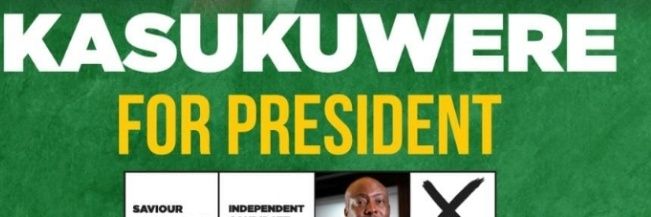
Saviour Kasukuwere
Saviour Kasukuwere@Hon_Kasukuwere·
@ArtherChatora Tawanda now you see the difference . Innocent man around Mugabe are watching .
English
19
1
10
7.8K
STEPS02.COM
STEPS02.COM@STEPS02dotCOM·
@zimlive And these are the people who should choose the Oresidebt on our behalf? The MPs who are also denied to vote for their choice,but a party. Thank you ZZ for releasing another material for use in our challenge against a hyena in the sheep's skin!
English
0
1
3
661
ZimLive
ZimLive@zimlive·
📹 Zanu PF MPs and Senators will be denied a secret vote when the controversial Constitutional Amendment (No 3) Bill comes before parliament, the Leader of the House Ziyambi Ziyambi declared on Wednesday. The House will be divided into those in support and those against, he says
English
132
62
178
168.1K
STEPS02.COM
STEPS02.COM@STEPS02dotCOM·
@Katstg @City_Chief @PepTeam As long as i also dont like Maresca but this rumour is what should make Pep pack his bags because it disdtablises the team and real fans should value a club ahead of individuals who in the end are mortals!
English
0
0
0
23
Kat StG
Kat StG@Katstg·
@STEPS02dotCOM @City_Chief @PepTeam There was no departure announcements, just rumors…and if those rumors were truly started by Maresca’s camp, basically to try and push his appointment along quicker, I want Pep another 10 years and Maresca never!!
English
2
1
6
308
City Chief
City Chief@City_Chief·
Every City fan wants the same thing right now: #OneMoreYearGuardiola 🩵 If there is even a small chance he stays, the club and the fans should do everything to make it happen. One more year, @PepTeam. One more dance. 🐐🩵
City Chief tweet media
English
80
234
2.3K
109.9K
STEPS02.COM
STEPS02.COM@STEPS02dotCOM·
@waltermzembi Praying for the evil system and enablers isnt crossing the "red line?" Even the Creator would not tolerate suchranging from Cain,Herode,Belteshaazar,Golliath and even places like Gommorah The evil system should go!
English
0
0
1
39
Dr Walter Mzembi
Dr Walter Mzembi@waltermzembi·
Praying for self yes but a more powerful prayer is when you pray for others and even more powerful when you pray for your enemies . We taught on how to pray for the system , God’ s Exchange buzzes RED when you pray for others , for the system , not selfish prayers.
English
7
6
90
5.1K
Dr Walter Mzembi
Dr Walter Mzembi@waltermzembi·
In a brazen act of faith , Harare Remand Prisoners thru my teaching , on the 1st of January declared 2026 the “ acceptable year of the Lord” invoking Isiah 61 and a Jubilee Season . We committed NPA and by 7th January a directive on decongesting prisons was issued !
English
53
53
362
32K
STEPS02.COM
STEPS02.COM@STEPS02dotCOM·
@City_hq Good leaders should know when to leave the stage! When there are more freawuent and "frustrating"questions about your future,know that the time is nigh!
English
0
0
0
2
City HQ
City HQ@City_hq·
🎙️| Pep Guardiola on whether he’ll be #ManCity manager next season: “I’ve talked 3-4 seasons ago when there was one year left. You have to understand I should talk with my chairman first, right?” “After, we’ll decide if I have 1 more year, we’ll talk everything, and decide...”
City HQ tweet mediaCity HQ tweet media
English
4
11
504
12K
STEPS02.COM
STEPS02.COM@STEPS02dotCOM·
@City_Xtra @ESPNBrasil Wrong move,you cant throw away a sleek,pacy and technically gifted winger in an era when attacking flair is the order of the day! Learn from PSG,BARCA,BAYERN- their front 3 which dont give defence the chance to reirganize once caught offguard!
English
0
0
1
1.9K
City Xtra
City Xtra@City_Xtra·
#ManCity are now ready to negotiate a sale of Savinho for between €50M-€60M. The 22-year-old is no longer seen as an important part of the squad. [via @ESPNBrasil]
English
389
307
6.5K
1M
STEPS02.COM
STEPS02.COM@STEPS02dotCOM·
@City_Chief Im sure the successor will not inherit Pep's SMALL squad policy. So Savio and probably Ake should stay
English
0
0
0
163
City Chief
City Chief@City_Chief·
Huge summer ahead for Man City! Expected departures: Bernardo Silva — departing John Stones — departing Mateo Kovačić — likely Nathan Aké — likely Savinho — likely You could probably add one or two more names to that list too. This is not just about replacing players - it is about freshening up the squad again and preparing for a new cycle after Pep. Big decisions ahead for the club.
English
26
27
683
30.9K
STEPS02.COM 리트윗함
Dr Walter Mzembi
Dr Walter Mzembi@waltermzembi·
Nearly most Zimbabwean surnames are found in prison , many inmates can go for months to years without a visit from a relative which by the way is an antidote to mental disorders. Prisoners pray unceasingly 24/7, many find God inside . Visit them!
English
113
220
1.6K
75.3K
City Report
City Report@cityreport_·
𝘽𝙍𝙀𝘼𝙆𝙄𝙉𝙂: Chelsea are shaping up for a LEGAL BATTLE with Manchester City over Enzo Maresca! 🚨‼️ The allegation that Maresca had told Chelsea’s ownership that he was in talks with City has not been disputed. The expectation is that Chelsea will seek compensation from City, with the added threat of disclosure about the terms of Maresca’s departure from Stamford Bridge, and the events in the months leading up to it. For any action to be brought against City it is understood that a complaint would have to be made by Chelsea to the Premier League, which would then be obliged to investigate under the terms of its own rules. The legal case Chelsea have in that regard will unfold when Maresca’s appointment is made official. 📰 @SamWallaceTel
City Report tweet media
English
35
30
932
112.3K