The Insane Asylum | Selfish Investing | Web3

2.4K posts

The Insane Asylum | Selfish Investing | Web3 banner
The Insane Asylum | Selfish Investing | Web3

The Insane Asylum | Selfish Investing | Web3

@TriQuantumTech

Co-founder TriQuantum Tech(web3)/Bestselling author/Top 40 charted musician/PhD nuclear physics UC Berkeley/TopPrf audited accts: stocks+crypto/3 of 6 twitaccts

Join 32k subscribers: 가입일 Eylül 2018
1.2K 팔로잉644 팔로워
The Insane Asylum | Selfish Investing | Web3 리트윗함
Miles Deutscher
Miles Deutscher@milesdeutscher·
Perplexity is underrated af. I use it daily for things other AI platforms simply can't do. Here's everything I'm currently using inside the Perplexity tool suite: • Perplexity Computer (OpenClaw for browser) • Finance mode - politician tracking, finance data/research/modeling • Council - deploy agent swarms • Deep research - daily deep research/tables • Analyse - for markets/competitor analysis • Spaces - projects except you can share/collab with others (I share these with my team) • Discover feed - curated AI news feed • Connectors - for connecting my daily tools (Gmail, Drive) • Assistant - browser control & light calendar management So much value for $200/month.
English
93
39
754
74.8K
The Insane Asylum | Selfish Investing | Web3 리트윗함
Balaji
Balaji@balajis·
No. But I'm happy to explain. (1) First, you assume incorrectly that America is a valuable economy that everyone wants to get into, when it's unfortunately more like a bankrupt country that the smart money is rapidly getting out of. That's why BTC has appreciated by >100,000,000X against USD, why gold is at record highs, why yields are soaring, and why the DXY is crashing. I take no pleasure in pointing this out, but I do have to point it out. (2) Second, you assume incorrectly that airgapping is censorship when it's actually more like digital borders. If X wants to retain both its American and Indian users, it might try to recommend American posts to Americans and Indian posts to Indians, rather than fomenting conflict where there was none before. (3) Third, you assume incorrectly that airgapping is bad for getting your voice out there as an American. But recall that there are only 77M MAGA but 1.4B from India. In the absence of airgapping, you will eventually be overwhelmed on every thread by English-speaking Indians, who will soon represent the majority of English speakers online (if they aren't already). That will be extremely painful, for you. (4) Fourth, you assume incorrectly that I'm advocating for continued immigration of tech to the US, when I actually tell global technologists to stop coming to the West and instead decentralize abroad because the system is about to go supernova. (5) Fifth, you assume incorrectly that every Indian is dependent on the H-1B. But the H-1B is about as central to Indian talent today as the American market is to Chinese trade. That is: it's not so important that it can't be done without. As context, after the start of the trade war in 2017, China rerouted most of its trade over the last 10 years to other markets, such that it only gets ~15% of revenue from the US. Like it or not, that means China is essentially indifferent to the 2025 tariffs. Indians are similarly already rerouting talent flows to places like Dubai in the UAE, which has a higher GDP-per-capita and millionaire density than the US...and is rolling out golden visas even as the US is cutting back on H-1Bs. South Asians are >50% of the UAE, so Dubai is friendly to Indians in a way the US increasingly isn't. That is happening simultaneously with the growth of the Indian home market. You might not know this, but India was the fastest growing economy in the world over the last 10 years, even ahead of China: Finally, and most importantly, because Indians now have the TCP/IP visa, they don't really need the H-1B visa. An Indian engineer may be a second class citizen in America, but they are a first class citizen on the global Internet, and that's all they need. Anyway: in the long run, I do think Americans and Indians will get along again. But for the foreseeable future I advise Indians to (a) not come to America, (b) not inadvertently boost anti-Indian threads, (c) build themselves up economically in India, in the UAE, and on the Internet, and (d) generally reduce their dependence on the US in every possible respect, especially with respect to the US financial system. That's what airgapping means.
Balaji tweet mediaBalaji tweet mediaBalaji tweet media
~~datahazard~~@fentasyl

Coinbase's former CTO demanding pro-indian national censorship on US social media services was the final nail in the coffin for any sympathy I might have once held for H1B advocates.

English
183
761
3.6K
558.4K
The Insane Asylum | Selfish Investing | Web3 리트윗함
Atlas Thugged
Atlas Thugged@AtlasXThugged·
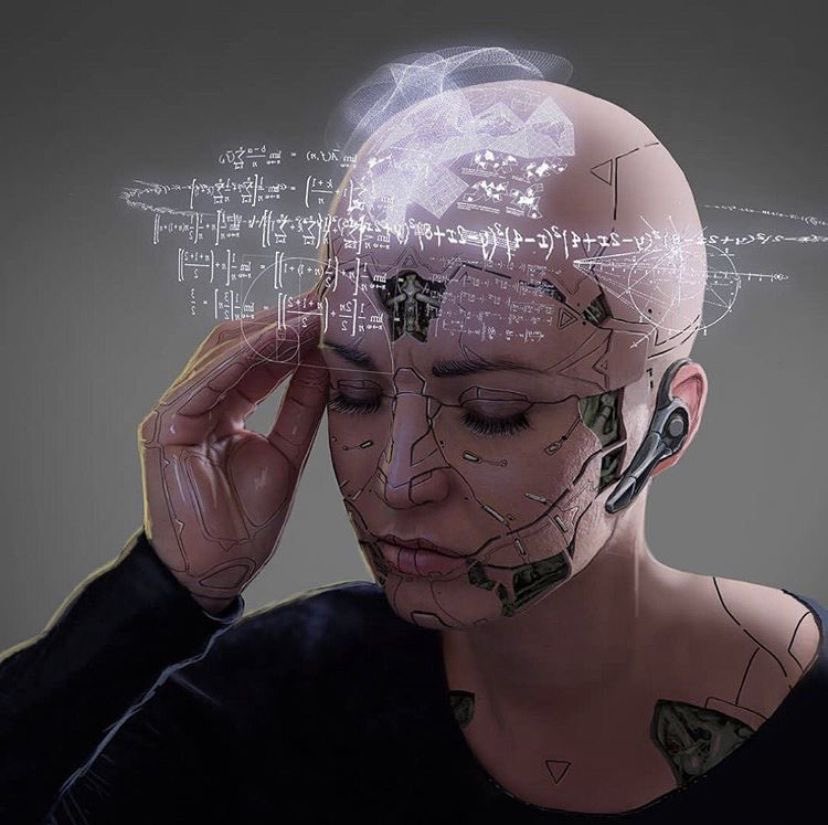
At what point is a cybernetically modified person no longer human?
Atlas Thugged tweet media
English
19
3
46
5.1K
The Insane Asylum | Selfish Investing | Web3 리트윗함
Marc Andreessen 🇺🇸
Why AI Won't Cause Unemployment Marc Andreessen Reposted Jan 24, 2025 "In retrospect, I wish I had known more about the hazards and difficulties of [running] a business." -- George McGovern Fears about new technology replacing human labor and causing overall unemployment have raged across industrialized societies for hundreds of years, despite a nearly continual rise in both jobs and wages in capitalist economies. The jobs apocalypse is always right around the corner; just ask the Luddites. We had two such anti-technology jobs moral panics in the last 20 years — “outsourcing” enabled by the Internet in the 2000’s, and “robots” in the 2010’s. The result was the best national and global economy in human history in pre-COVID 2019, with the most jobs at the highest wages ever. Now we’re heading into the third such panic of the new century with AI, coupled with a continuous drumbeat of demand for Communist-inspired Universal Basic Income. “This time is different; AI is different,” they say, but is it? Normally I would make the standard arguments against technologically-driven unemployment — see good summaries by Henry Hazlitt (chapter 7) and Frédéric Bastiat (his metaphor directly relevant to AI). And I will come back and make those arguments soon. But I don’t even think the standand arguments are needed, since another problem will block the progress of AI across most of the economy first. Which is: AI is already illegal for most of the economy, and will be for virtually all of the economy. How do I know that? Because technology is already illegal in most of the economy, and that is becoming steadily more true over time. How do I know that? Because, [see chart]. This chart shows price changes, adjusted for inflation, across a dozen major sectors of the economy. As you can see, we actually live in two different economies. The lines in blue are the sectors where technological innovation is allowed to push down prices while increasing quality. The lines in red are the sectors where technological innovation is not permitted to push down prices; in fact, the prices of education, health care, and housing as well as anything provided or controlled by the government are going to the moon, even as those sectors are technologically stagnant. We are heading into a world where a flat screen TV that covers your entire wall costs $100, and a four year college degree costs $1 million, and nobody has anything even resembling a proposal on how to systemically fix this. Why? The sectors in red are heavily regulated and controlled and bottlenecked by the government and by those industries themselves. Those industries are monopolies, oligopolies, and cartels, with extensive formal government regulation as well as regulatory capture, price fixing, Soviet style price setting, occupational licensing, and every other barrier to improvement and change you can possibly imagine. Technological innovation in those sectors is virtually forbidden now. Whereas the sectors in blue are less regulated, technology whips through them, pushing down prices and raising quality every year. Note the emotional loading of the interplay of production and consumption here. What do we get mad about? With our consumer hat on, we get mad about price increases — the red sectors. With our producer hat on, we get mad about technological disruption — the blue sectors. Well, pick one; as this chart shows, you can’t have your cake and eat it too. Now think about what happens over time. The prices of regulated, non-technological products rise; the prices of less regulated, technologically-powered products fall. Which eats the economy? The regulated sectors continuously grow as a percentage of GDP; the less regulated sectors shrink. At the limit, 99% of the economy will be the regulated, non-technological sectors, which is precisely where we are headed. Therefore AI cannot cause overall unemployment to rise, even if the Luddite arguments are right this time. AI is simply already illegal across most of the economy, soon to be virtually all of the economy.
Marc Andreessen 🇺🇸 tweet media
English
768
1.6K
9.2K
1.8M
Beff (e/acc)
Beff (e/acc)@beffjezos·
DC is the anti-WEF right now.
English
9
2
85
9.9K
The Insane Asylum | Selfish Investing | Web3
@atlantis__labs @beffjezos And the woke there are insisting on far more austere carbon zero measures that would further stoke inflation and kill farming. The homeless and drug addiction issues have destroyed once opulent regions such as Santa Monica rendering it one of the most dangerous cities in the US
English
0
0
2
673
The Insane Asylum | Selfish Investing | Web3 리트윗함
John Goddard
John Goddard@nonestlex·
THE BLACK PILL Recently I’ve been grappling with this fact: Parliament does not act in the best interests of its people. To me, it seems that Parliament has an agenda (which is independent of any agenda held by the populous) and it attempts to force that agenda through the democratic system any way it can. It utilises an array of tools to do this: propaganda, the legal system, legislation, etc. Take ‘the Voice’ as an example (you remember, that thing that would have created a Constitutionally enshrined race-based body). This was taken to a referendum last year, and was defeated (decisively). The people overwhelmingly voted against it. In a democracy, this should be the end of the story, since the people had spoken. But it was not the end. Instead, States, Territories, and the Federal Government continue to push ‘truth telling’ (whatever that is) and ‘treaty’ (why any government would sign a treaty with its own citizens is beyond me). These steps are clearly opposed to the will of the people, as expressed through referendum. Another example is the Australian government’s censorship legislation. This was originally released for public comment in late 2023. At the time it was widely criticised by the public. The government refused to release the vast majority of public submissions (which is egregious in itself). The legislation was then re-introduced in 2024. Again, it was widely criticised. Notwithstanding, the government attempted to force it through Parliament with very little debate. By some miracle, this failed. But within a week another bill was introduced which would achieve a similar outcome. It seems that the legislation nobody wants just keeps morphing and changing shape until (presumably) Parliament finds a form that it can enact despite the public push back. This is egregious and anti-democratic. When you start to recognise this pattern, you can’t unsee it. The political apparatus has an agenda that it wants to enact regardless of the will of the people. In Australia, this is facilitated by our Constitution which ensures that there is a power imbalance between the People and the State (this is done by not providing the People with rights to free speech or to bear arms). Over a long enough time horizon, this power imbalance means that the will of the State supersedes the will of the people. For me, this realisation is a black pill. The will of the people is not something that Parliament considers is relevant. Parliament is adhering to someone else’s agenda. If the People push back and say ‘no, we don’t want the Misinformation Bill to pass because we don’t want to be censored’, Parliament says ‘ok, we will pass the Duty of Care Bill which does the same thing but in a different way (peasants)’. Our Constitution enables this. This is not a democracy. Not in any real sense. And what does that make Australian citizens? We’re not free people living in a democratic society. We are mere serfs in some fiefdom. We exist to work and be taxed and consume goods from the MegaCorporations in bed with Parliament. I don’t see a way through this at this stage.
John Goddard tweet media
English
165
238
972
30.1K
The Insane Asylum | Selfish Investing | Web3 리트윗함
Ole Lehmann
Ole Lehmann@itsolelehmann·
Day of a European in 2025 - wakes up - likes a meme on x, gets arrested - tries to use AI, blocked - drinks water, bottlecap gets stuck - opens browser, 48 cookies - wants to watch a workout on YT, blocked - buys coffee, pays 50c extra for the cup - clicks to buy a product, no EU shipping - starts a website, gets fined for GDPR - orders meat, gets shamed for destroying planet - tries to start company, gets sued - repeat
English
539
1.8K
17K
1.3M
The Insane Asylum | Selfish Investing | Web3
Politicized science cripples health and the economy while politicized education dumbs down the masses. Meanwhile weaponizing terms such as terrorism, pedophilia, and money laundering keeps many in fear.
English
0
0
1
84
Balaji
Balaji@balajis·
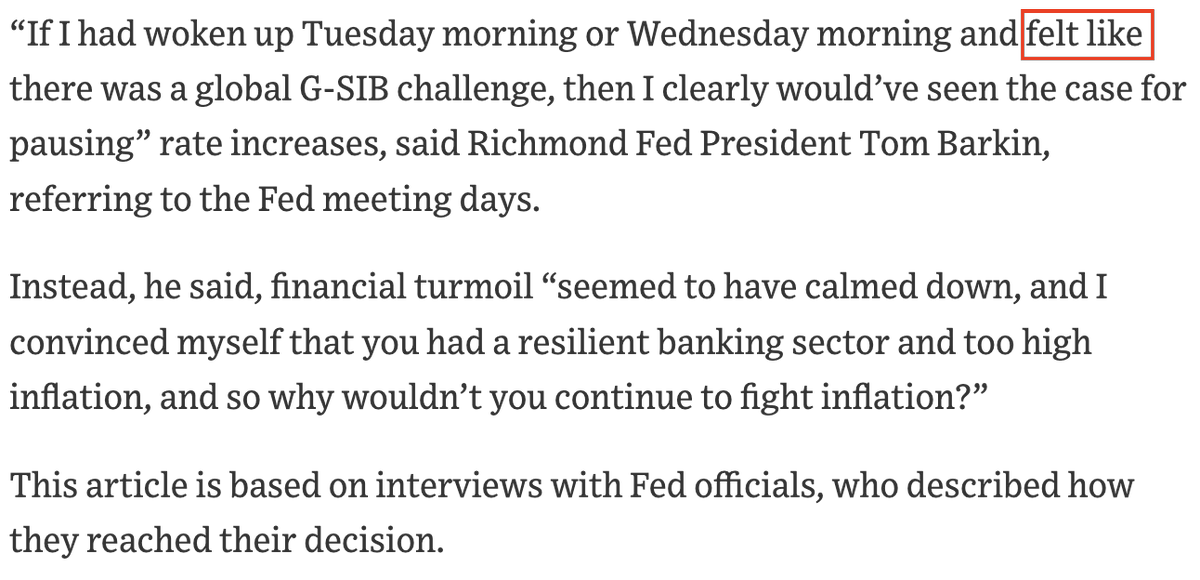
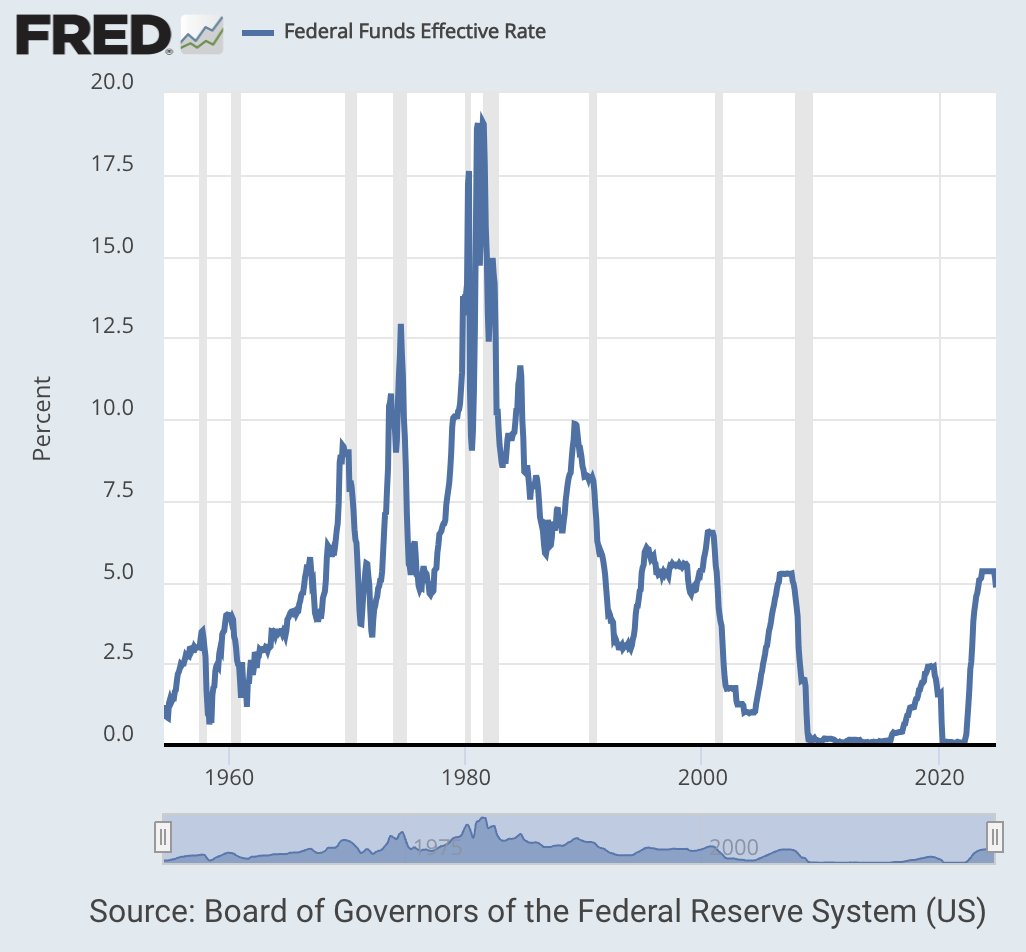
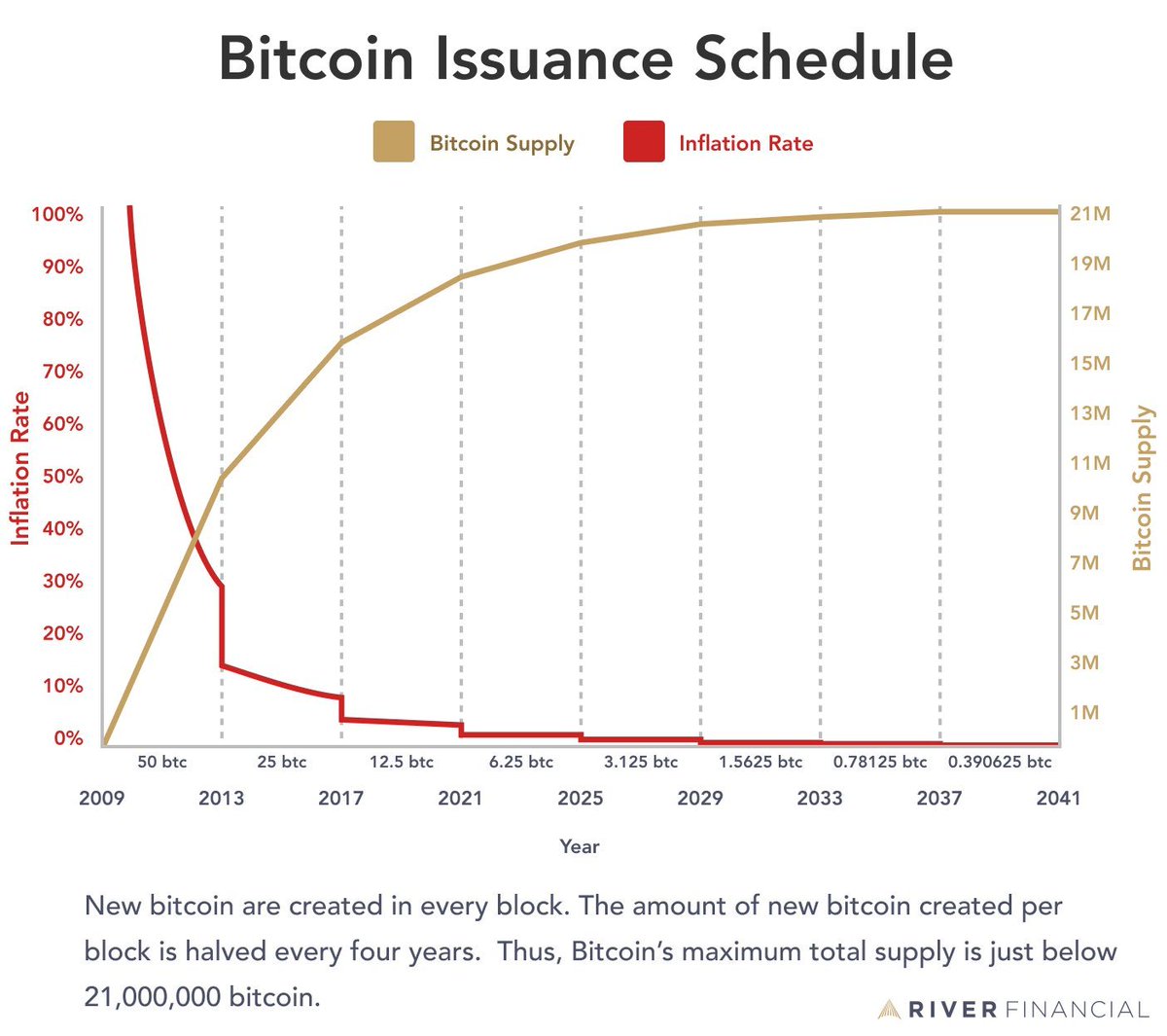
THE FED IS FEELS When I say the Fed sets rates on feels, I mean it in the most literal sense. See the quote[1] below, where they admit setting rates based on what they "felt like" in the morning! That piece[1] gives a behind-the-scenes look into how Fed officials "reached their decision." It's as retarded as you can imagine. Literally what FOMC members do is wake up, scroll the news feed, then push a button to make rates gyrate. Just like you, fr fr — except the Fed is for real. Fed apparatchiks use months-old data[2] to steer the economy, which is like steering a car by mail. They don't have realtime dashboards that show what their rate changes are actually doing to millions of firms. They certainly don't have controlled experiments on the impact of Fed policies...because they change rates for the whole economy at once. Moreover, they make decisions as a committee, based on the internal politics of the FOMC and the external pressure of the press. The difference between a step up from 1.25% to 1.5% is much bigger proportionally than from 4.5% to 4.75%, but they talk about them similarly. There is no more "science" here than there was during COVID. When you immerse yourself in their minutes[3] you realize they're just picking numbers out of a hat, just like the South Park clip[4]: Future historians will regard the entire process as insane. A few unelected bureaucrats are setting rates for the whole world, all while justifying their politically motivated groupthink as "data driven." I mean, look at the rate graph[5]. Does that look like the dispassionate solution to an equation for optimal control of the economy? Or does it look more like a political tracking poll...gradually tilting downward because low rates poll well? I could go on at length, but at this point you start to get to the core of the issue. The Fed defenders will log on and start saying things like "what, do you want to take away the Fed's control over interest rates? Then they can't HELP people! They can't guarantee[6] full employment, and that's one of the Fed's two mandates!" This is what gives the game away. Keynesianism is just stealth Communism[7]. And the Fed isn't "technocratic", any more than the Soviet Politburo was. It's statist theft. That's sometimes disguised sometimes as engineering and sometimes as compassion — but it's always just an excuse for total control by an incompetent state. Fortunately, we now have the alternative in the form of the decentralized network. As a sidebar...tradfi won't get this. They think of the Fed as the sun at the center of their solar system. They sometimes curse it, sometimes praise it, but they can't really imagine a world without it. Defi gets it, however. Defi users were born into fiat, but they also know about a different system where BTC is the center of gravity. So, they know about a system where the Fed has no control but you do. They know about a system where interest rates are set by a decentralized process, where buyers and sellers of loans simply agree on a rate between themselves, as is already the case in onchain order books[8]. And they know about a system in which monetary policy is set by algorithm[9], not feels. That system is the future.
Balaji tweet mediaBalaji tweet mediaBalaji tweet mediaBalaji tweet media
Zack Guzmán@zGuz

@balajis What do you mean “based on feel?” They pretty clearly communicate what they are basing their policy decisions on

English
35
161
1.1K
209.9K
The Insane Asylum | Selfish Investing | Web3 리트윗함
Tucker Carlson
Tucker Carlson@TuckerCarlson·
Elon Musk is all in. (0:00) Elon Musk Is All in on Donald Trump (6:35) Providing Starlink to Victims of Hurricane Helene (9:22) If Trump Loses, This Is the Last Election (21:49) The Epstein and Diddy Client List (33:38) Vaccines (35:49) The Movement to Decriminalize Crime (50:22) Gavin Newsom (53:11) Europe’s Declining Birthrate (57:02) We Need Religion (1:08:04) Why Is There So Much Anti-Human Messaging? (1:19:33) AI and the Woke Mind Virus (1:43:01) Musk’s Role in a Trump Administration Includes paid partnerships.
English
9.1K
40.8K
146.8K
56.9M
The Insane Asylum | Selfish Investing | Web3 리트윗함
Michael Shellenberger
Michael Shellenberger@shellenberger·
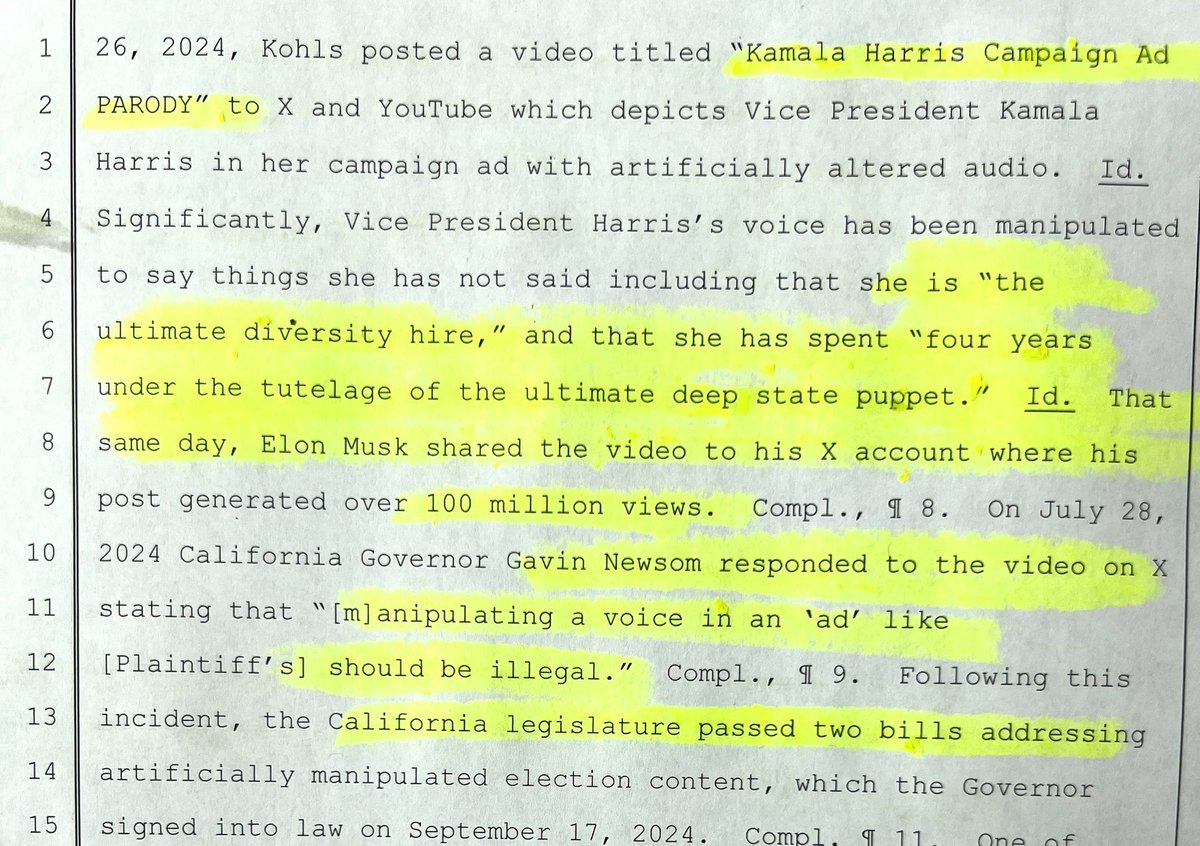
On Sept 27 @nytimes accused @elonmusk of being “misleading” for criticizing a new California law to censor parody. “The laws have exceptions for parody” said the Times Five days later a judge ruled the law unconstitutional. Why? Because it banned a video clearly labeled “PARODY”
Michael Shellenberger tweet mediaMichael Shellenberger tweet media
English
441
4.9K
19.8K
25.6M
The Insane Asylum | Selfish Investing | Web3
In Dyson swarm construction, automated, self-replicating robots would build the swarm by harvesting raw materials from Mercury. Energy would be transferred using mirrors or wirelessly between individual satellites, panels, and Earth
English
0
0
1
93
The Insane Asylum | Selfish Investing | Web3
e/acc dream: block out part of the sun with a Dyson swarm using the power for AI compute…solves global warming and gets humanity to Kardashev type 1 while addressing all AGI power needs which eventually gets us to K2.
English
1
0
0
106