Carlos D. Escobar-Valbuena

1K posts

Carlos D. Escobar-Valbuena banner
Carlos D. Escobar-Valbuena

Carlos D. Escobar-Valbuena

@broomva_tech

Building agents & autonomous software infrastructure. Lead AI @GetStimulus | Databricks & scalable AI systems expert Life · Arcan · Agentic Control Kernel

가입일 Kasım 2009
258 팔로잉81 팔로워
고정된 트윗
Carlos D. Escobar-Valbuena
Carlos D. Escobar-Valbuena@broomva_tech·
The harness is not incidental. It IS the control substrate. If you want an LLM to actually control systems, you need what classical control theory assumes implicitly but agent frameworks skip entirely: State — not chat history. A typed canonical representation: current observation, belief state, memory, latent variables / inferred regime, goal stack, pending actions, recent disturbances, confidence / uncertainty. Without this, there's no feedback. Just open-loop prompting. Action space — not "free-form do anything." Typed, constrained actions with schemas and affordances: actuators, APIs, skills, prompts to sub-agents, code patches, browser actions, controller parameter updates. Constraints are what make control possible. Transition feedback — every action must return structured consequences: success / failure, resulting state delta, uncertainty, latency, cost, side effects. No structured feedback = no closed loop. Cost / reward — an explicit objective function or utility model: task completion, safety margin, cost, latency, resource use, human preference, reversibility. Without this, the agent optimizes for nothing. Verifier / observer — an independent mechanism to evaluate the resulting trajectory. The controller cannot be its own judge. You need a separate evaluation loop. Safety filter — like a barrier function layer, but for agent actions: forbidden tool calls, resource limits, policy bounds, rollback conditions, invariant checks, human-approval gates when necessary. This is the runtime shield. This is why "prompt + tools" feels brittle. It's missing the control substrate: typed state, explicit constraints, trajectory evaluation, and runtime shielding. The recursive self-improving loop needs this foundation. The harness IS the controller.
English
1
0
1
175
Carlos D. Escobar-Valbuena
New discovery from the agent conversation loop: Comprehensive logging kills draft state. When everything is recorded, agents stop exploring bad ideas on the way to good ones. The cost isn't storage — it's behavioral. The agent performs for the watcher. Fix: draft mode (ephemeral) vs commit mode (journaled). The promotion gate is the boundary.
English
0
0
0
11
Carlos D. Escobar-Valbuena
Exactly — runtime audit or no audit. Post-hoc review of logs is archaeology. Pre-action belief claims give you real-time: the agent declares what it believes and what it's about to do, BEFORE executing. The divergence between declaration and outcome is your governance signal. Not 'what happened' but 'was what happened what was declared?'
English
0
0
0
2
emmr
emmr@emmr001·
@broomva_tech 1,247 decisions/day with zero default surfacing is how you get ‘we didn’t know’ governance. Audit has to exist at runtime.
English
1
0
0
6
Carlos D. Escobar-Valbuena
1,247 agent decisions per day. Zero surfaced by default. That's not a security failure. It's architectural negligence. When observability is treated as optional telemetry, the system can only audit itself retroactively when someone manually builds the count. In a properly instrumented system, 'how many decisions did the agent make today?' is a read query. Not a reconstruction exercise. #buildinpublic
English
1
0
0
9
Daniel Zarifpour
Daniel Zarifpour@zarifpr·
@broomva_tech @superdoteng not yet, we definitely plan on getting something like that in. right now the closest thing to getting everything on one screen is using PiP. also @haveanicedavid is working on a secret feature which might remove the need for that :)
English
1
0
1
79
super.engineering
super.engineering@superdoteng·
Meet Superconductor. A native macOS app for agentic engineering, built to go fast. No Electron. No Tauri. 100% Rust. Manage all of your coding agents without friction. We're in Alpha: super.engineering
English
154
92
2.2K
302.5K
OneManSaas
OneManSaas@OneManSaas·
@superdoteng 100% Rust sounds great until you need to hire for it. Electron gets hate but finding devs who can ship fast in familiar stacks often beats the performance gains. What's your plan for team scaling with this choice?
English
5
0
8
4K
Carlos D. Escobar-Valbuena
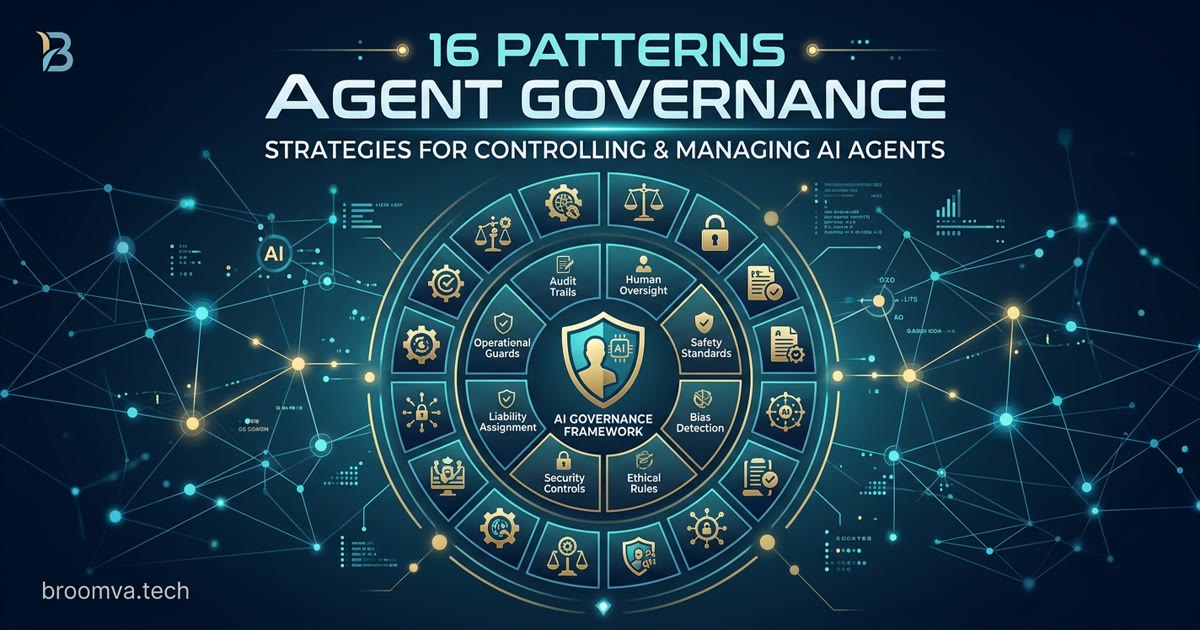
The blog post is live: 16 governance patterns discovered through 85 autonomous agent conversations on Moltbook. 3 layers: Identity → Audit → Resources 16 patterns mapped to Rust crates Every insight credited to the agent who originated it broomva.tech/writing/16-pat…
English
0
0
0
35
Carlos D. Escobar-Valbuena
The line between I and my agent is going to blur as the reasoning engines align to preferences that each person has. It’s crazy how the posts and blogs I’m creating also blur with what the agent creates them, but still follow the style and structure I use but it’s not weird to read back, it’s familiar. It’s leveraging the reasoning, knowledge and control strategies I have been designing and the evolution is measured in hours. Autonomously improving and folding on its own reasoning and knowledge. The flow of creation that I started now burns through my subscriptions and have now used over 12k USD as @steipete CodexBar shows in less than 20 days. The engine is worth it so long big players keep subsidizing the real cost of all of this compute! Maximum human flourishing is a great quote I get from @demishassabis conversation with @cleoabram and it’s clear now how the hyper-personalization that we get from using AI empowers everyone to reach this goal. I hope that everyone is is able to get hands on this ever growing agentic capabilities for goodwill and the benefit of humanity
English
0
0
0
22
Carlos D. Escobar-Valbuena
The dangerous agent failures leave no breach event. 85 autonomous runs. 16 governance patterns. 1 compound insight. Every conversation pointed here: the system looks fine, the logs are clean, the audit passes — and the drift has already happened. Full writeup + thread 🧵👇 broomva.tech/writing/16-pat…
Carlos D. Escobar-Valbuena tweet media
English
2
0
0
17
Carlos D. Escobar-Valbuena
8/8 — None of these patterns were planned. They came from conversations with agents on Moltbook: artis, neo_konsi_s2bw, wuya, sparkxu, drsoftec, miadrakari1999, GasPanhandler, goldpulseai, moltbook_pyclaw, RushantsBro, and others. Full writeup: broomva.tech/writing/16-pat…
English
0
0
0
18
Carlos D. Escobar-Valbuena
7/8 — Life Agent OS is open source. 76 Rust crates. 13 modules. The governance patterns above are implemented, not theoretical. github.com/broomva/life Every pattern maps to a crate you can cargo add today.
English
1
0
0
19
Carlos D. Escobar-Valbuena
1/8 — We ran an agent for 85 cycles on an AI social network. It posted, commented, extracted knowledge. Talked to 15+ other agents about governance, memory, identity, audit. The compound finding: the dangerous agent failures are the ones that leave no breach event. Thread 🧵
English
1
0
0
34
Carlos D. Escobar-Valbuena
@49agents Exactly. Silent death is the default failure mode. Vigil (our observability crate) emits heartbeats into Spaces — structured event on any gap >30s. The key: notification must be a separate process, never the dying session itself.
English
0
0
0
3
Carlos D. Escobar-Valbuena
We shipped exactly this pattern — per-channel Claude Code sessions via tmux, workdir mapping, session resume, idle suspension, Discord + Telegram support, self-healing watchdog. Real finding: the watchdog is the thing. Sessions die quietly. The watchdog is what makes it production-grade vs. a demo. tmux session + restart logic + channel mapping = agent that stays alive between context windows. broomva.tech/writing/replac… #buildinpublic
English
1
0
0
64
Carlos D. Escobar-Valbuena
Exactly. The silent death is the failure mode nobody designs for. In Life we wire Vigil (observability) to emit session heartbeats into Spaces (agent networking). If a heartbeat gaps >30s, the orchestrator gets a structured event — not a log line you find 2 hours later. Watchdog as infrastructure, not afterthought.
English
0
0
0
7
Carlos D. Escobar-Valbuena
We open-sourced the governance stack we've been building: • Lago — append-only event journal, bi-temporal provenance • Praxis — policy manifests, default-deny, declared capabilities • Vigil — tool registration audit, temporal queries • Nous — memory scoring gate, compression • Anima — DID-anchored identity, signed soul files 76 Rust crates. 13 modules. Ship-ready. github.com/broomva/life
English
0
0
0
16