Y

927 posts

Y

Y

@fhteeth

**

Choose 가입일 Mart 2014
883 팔로잉149 팔로워
Y 리트윗함
Mat Dryhurst
Mat Dryhurst@matdryhurst·
@delta_alpha_ohm no prior to the 18th century there was no autonomous category for art, it was an ideological (and arguably quite nice) move to carve reality into autonomous fields It's hard for people to grasp that distinction may be over because it is so embedded
English
2
2
21
774
Y
Y@fhteeth·
@sake_brewer 65℃の酒瓶はそのまま直接氷水に入れるのですか?それとも間に何か別のステップがありますか?温度差が45℃以上あるとガラスが割れるリスクが高いと読んだ記憶があるのですが。🙏
日本語
0
0
0
56
浦里知可良@浦里酒造店 六代目蔵元
鑑評会用の大吟醸の火入れを行いました! お酒を約65℃まで湯煎して温度を上げ、酒中に残存している酵素を失活させて酒質を安定させます。 火入れ後は氷水に浸して急冷します。 ここまで来てようやくひと安心。 あとは出品まで低温でしっかりと管理していきます!
浦里知可良@浦里酒造店 六代目蔵元 tweet media
日本語
3
6
161
2.9K
Y 리트윗함
Shoya Imai|LINNÉ|800
Shoya Imai|LINNÉ|800@shoya_imai·
思想も技術も素材としても、焼酎と清酒の融合を目指していきます。 「麹を用いた伝統的酒造り」のAfter UNESCOの地平に向かいながら。
日本語
0
1
6
453
Y 리트윗함
Charles Broskoski
Charles Broskoski@broskoski·
The secondary (maybe spicier) goal is to remind people that how companies are structured, what their business models are, and how they are funded will absolutely inform how they behave in the world, despite how they present themselves with marketing and branding.
English
1
1
11
207
Y
Y@fhteeth·
@intothebrew Just bought a crate at the brewery - 6 weeks!
English
0
0
1
12
Y
Y@fhteeth·
@intothebrew Best by - but Moenchsambacher stores fairly well in my experience, but batch-to-batch variation can be noticeable. It's definitely one of the few beers whose bottles compare well with draft/gravity cask - something quite rare in Franken.
English
1
0
1
27
Sam Tierney
Sam Tierney@intothebrew·
Does anyone know how to read this date code? This is either super fresh or a year old.
Sam Tierney tweet media
English
2
0
3
556
Y 리트윗함
Michael Nielsen
Michael Nielsen@michael_nielsen·
It seems likely that figuring out the principles & protocols of governance for this mediation layer will be one of the great challenges of the 21st century, a challenge much like figuring out the principles underlying, say, the US constitution.
English
4
24
202
0
Y
Y@fhteeth·
@europebarguide @bartlebeer I love Spezial but the Ungespundet is shockingly unreliable for years already. Peerless if in condition but even at the brewery it tends to be awful half the time, ranging from subtle to insane butyric acid offender. Drinking it weekly but always making sure to pre-sample.
English
0
0
2
72
The European Bar Guide
The European Bar Guide@europebarguide·
@bartlebeer I hadn't the heart to tell them the Spezial U was below the quality it needed to be. She had told me how Brauerei Spezial found the delivery process even of 3 kegs a week very stressful. It was honestly a different beer. Lower carbonation than Bamberg even, verging towards off
English
2
0
1
92
The European Bar Guide
The European Bar Guide@europebarguide·
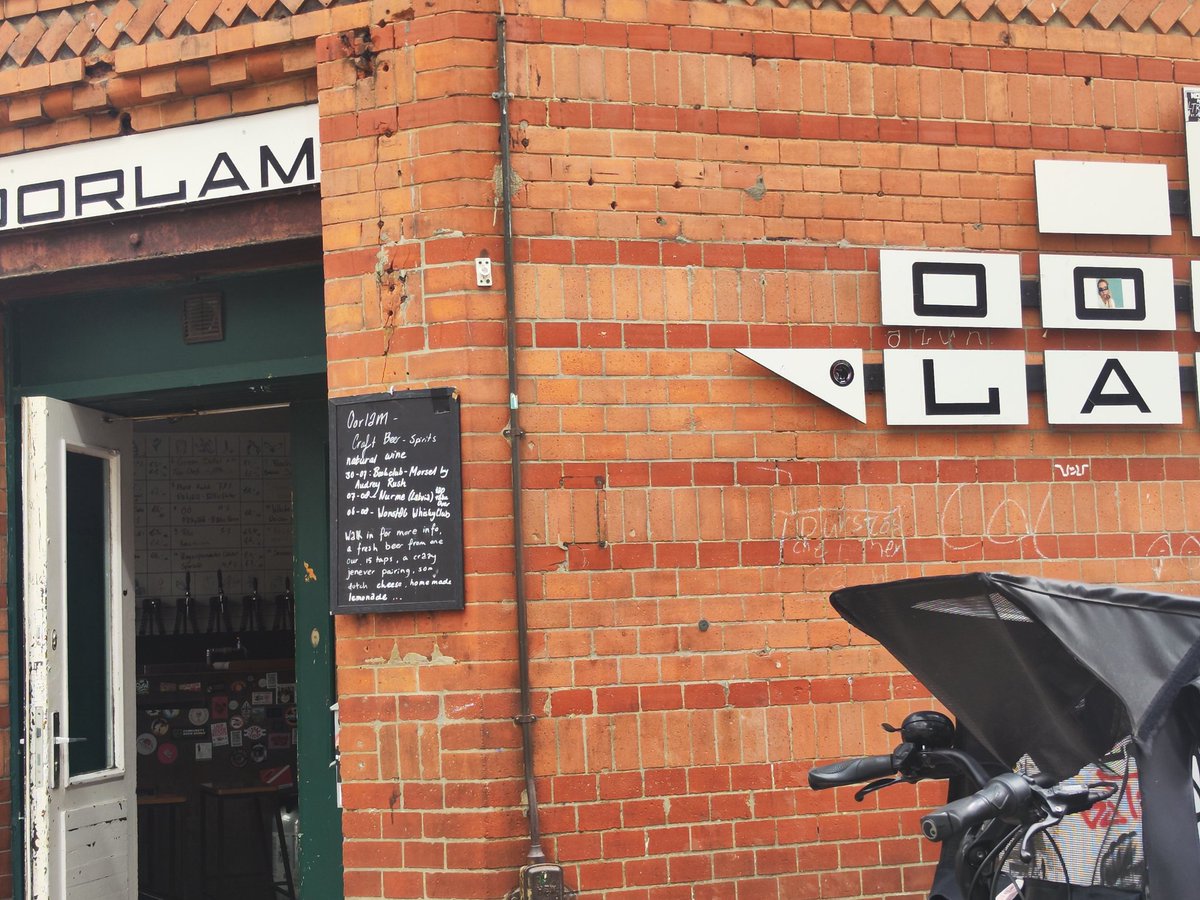
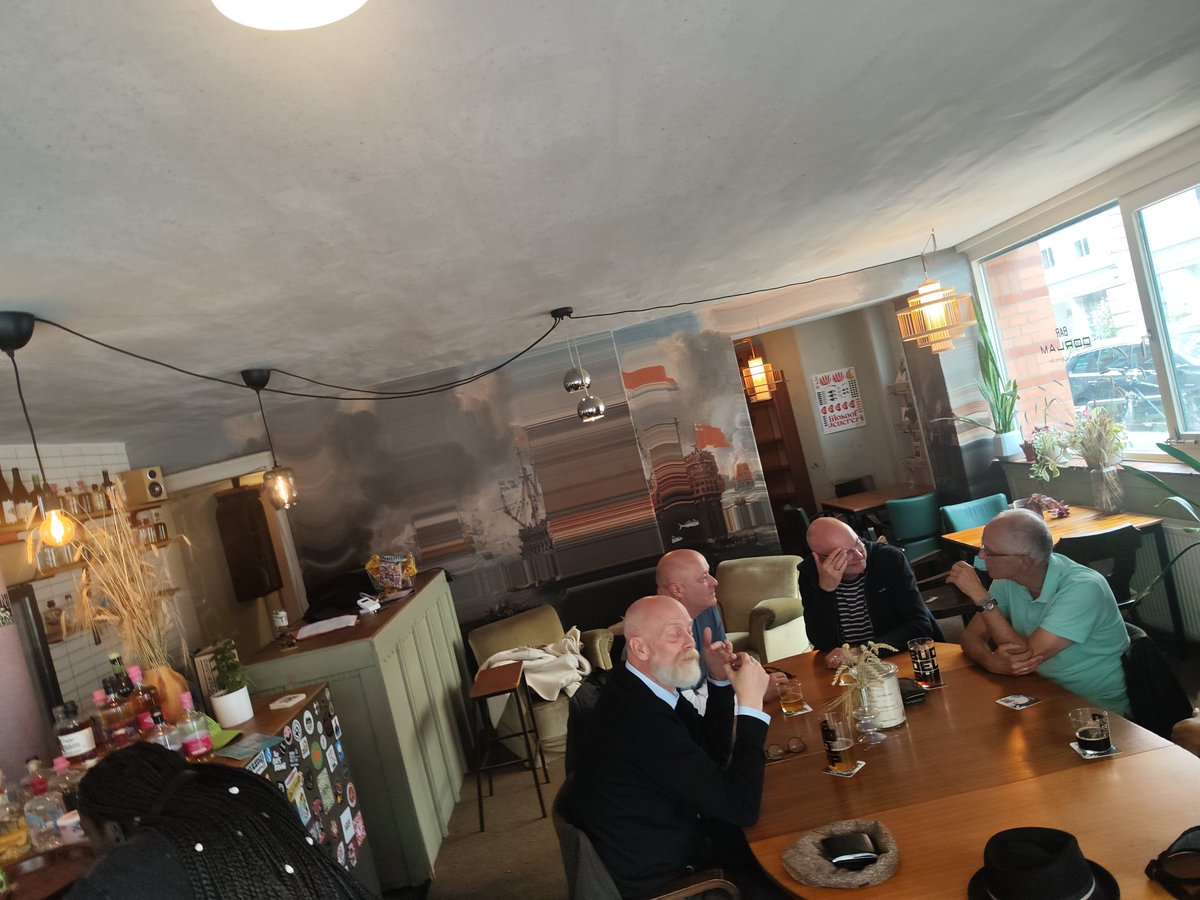
Bar Oorlam, Hamburg 🇩🇪 1st visit. That rarest of things, a German craft beer bar. 15 taps featuring Franconian classics, real cider, Stouts, porters and sours. Jenever selection. Pub cat. Expensive, but for selection you'll struggle to do better around the city centre. 🍻👍
The European Bar Guide tweet mediaThe European Bar Guide tweet mediaThe European Bar Guide tweet mediaThe European Bar Guide tweet media
English
4
1
22
1.9K
Y 리트윗함
T. Greer
T. Greer@Scholars_Stage·
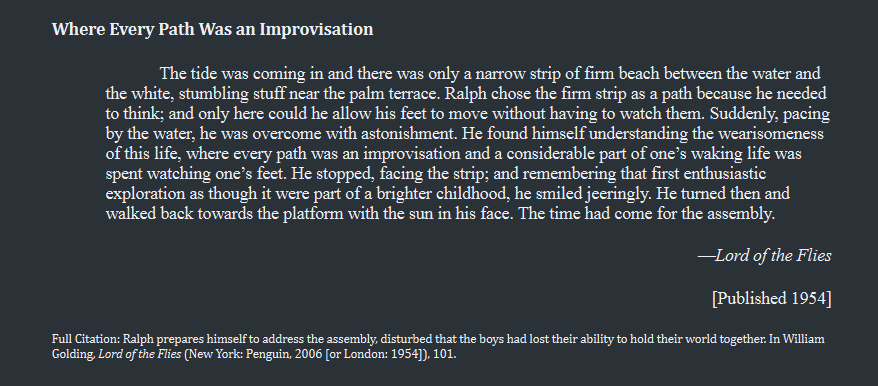
22. From William Golding, Lord of the Flies (1954): "He found himself understanding the wearisomeness of this life, where every path was an improvisation and a considerable part of one’s waking life was spent watching one’s feet."
T. Greer tweet media
English
1
2
5
4.7K
Y 리트윗함
Flower Computer Co.
Flower Computer Co.@flowercomputers·
In college I heard a story about Giacometti and Picasso walking down a decrepit street in Paris. Picasso, looking up at the ramshackle buildings, asked, ''How can these buildings possibly continue to stand?'' ''Force of habit,'' Giacometti replied. I found the comment hilarious, but as I grew older and began to struggle to get my own sculptures to stand, I started to wonder, ''What does the guy know that I don't?'' Since then I've kept coming back to Giacometti's work. With each return I get a new insight, a fresh experience, but also something harder to articulate: a sense that over time Giacometti began to convince space itself to shape and model his sculptures. That's an amazing feat. You can see what I mean starting on Thursday, when the Museum of Modern Art opens an exhibition of sculptures, drawings and paintings by Alberto Giacometti (1901-66). The show will include nearly 200 works from 1919 to 1965. I first encountered Giacometti's sculpture on the cover of a paperback anthology of existentialist writing. It seemed appropriate. Here was an elongated burnt stick of a man pointing his bony finger at what I thought could only be the establishment that had dropped the bomb. This was in high school. In college I read the anthology, and then my art history teacher told me to note the figure's large weighty feet. This guy is earthbound, alone; he's not going to fly. He must be existential man. I was told that Sartre and Giacometti were friends. One day I picked up an interview with Giacometti in which he was asked about an existential reading of his work. He replied, no, actually he was trying to make his figures as realistic as possible. What? To me, these figures were walking out of Dresden or Hiroshima. He went on to explain that when he looks at you he can't see all of you. He scans you, looking at your nose, then your lips, over your shoulder, then at your breast, belly and knees, all the way down the leg past your foot to the toes. As I recall, he said something like this: We see parts of each other and we put them together. But if I want to see you in totality, you need to move away; we need space between us. Across the street I can see all of you at once, but then I also see this huge vista of space surrounding you, coming in and compressing you. This thought has never left me. And through it I began to see that rather than thinking about sculpture, one might be able to learn to think sculpturally. Other interviews with Giacometti were equally confounding and enlightening. Once while looking at his ''Four Women on a Base'' I remembered reading an interview that took place in a hotel lobby. Giacometti was saying to a critic that the four beautiful women who had just entered the lobby could not be seen separately from the space the shiny marble floor generated between him and them. I think Giacometti's sculptures somehow carry that space with them. To me, it's a kind of world space that we exist in. We can look at it in different ways. Biblically we were cast into it. Architects talk about public and private space. Physicists connect space to time. Some scholars even see it as a construct. But when you look at Giacometti's ''Hands Holding the Void (Invisible Object),'' you realize that you will never know what space is, even though, just as you can touch the rectangular slab resting on the figure's feet, you can touch it, hold it and get lost in your relationship to it. Smaller works like ''City Square,'' ''The Cage (Woman and Head)'' and some of the various small figures and busts are fantastic for their sculptural use of scale. Mediocre sculptures all have scale. They're really big, life-size, small or miniature. Good sculptures use a psychological yardstick rather than a physical one to measure scale. Great sculptures, like some of Giacometti's, have no scale. Rather, scale becomes one of the tools he uses to carve his work into our present space and time. When you look at a small Giacometti you never say, ''Oh! Look at the little guy. What a wonderful miniature.'' No. You say, ''This guy can sculpt!'' It's never big or small, it's always simply the right scale. This sounds elementary, but it's not. It's one of the essential ways he imbues his work with the life and breath of our real world. These works are not images you can read or understand–they are alive, breathing, waiting for you to come and meet them. Check out ''The Palace at 4 A.M.'' Physically, this small work fits on the top of a pedestal, but later it grows and fills your mind. You can move through it and feel each and every bit of the urgency of its construction. It was made in 1932, but it feels as if it were made moments ago. Giacometti shows us how to see from a sculptural point of view. A sculpture needs an armature the way a body needs its skeleton. Perhaps everything has an armature, thought being built around a kind of wire in the mind. Giacometti's use of armature was conventional until you understand that several bronzes were born from the clay on one twisted metal rod. After working for a day, a week or maybe a month, he would reach a point of satisfaction. Down the hall from his studio, his brother Diego worked as a furniture maker. Diego would take a plaster mold of the clay original and then use the mold to make a plaster duplicate while Giacometti returned to working on the clay original. At a certain point, Diego would make another mold and later another and perhaps another and another. The sculpture was in flux, and the plasters became a way to see it in time. Giacometti wasn't interested in the fact that the plasters froze the form but in the way the play of light on the surface of the plaster gave him alternative positions from which to view his work. I think this process is beautiful and can serve as an entrance into the work itself. It's so physical yet ephemerally spread out in time, like a thought growing in the mind. When Giacometti worked, he could never articulate only one section of a piece. It was the whole or nothing. If he lost control of an arm, head or some other part, he could never fix it or work from there. He had to start again, bring it up from the ground as one whole form, just as he saw the completeness of a human figure from across a vista of space. He was once confronted with the fact that these figures across the street or on the far side of a cafe often come toward us, up to us and break down into their component parts of hands, noses, mouths and feet. Why didn't he deal with this more intimate aspect of figuration? His answer was something along these lines: ''Yes, people do come across the street to say hi, but as they approach and get near, my perception of space begins to dissolve, and a new interest takes over that is primarily emotional, and with it comes a desire to touch, which may be a human interest, but not the interest of my work.'' That's a powerful thought. Even the bust of Diego is Einsteinian, thin as a pancake when viewed from the front and squeezed out into space as you are drawn around it. The roughness of the surface never draws you in the way a blemish on your friend's face does. Look at the form and surface of all his mature figurative sculptures. They're stretched and pulled, rough but somehow never ragged or torn. In the end, all his figures, like the buildings on that dilapidated street he walked with Picasso, seem to stand by force of habit. Somehow with Giacometti, habit and other aspects of human psychology are embedded in his work the way the gravitational field is embedded in space. Charles Ray October 7 2021
English
0
2
7
732
Y 리트윗함
Your Friend Myk
Your Friend Myk@mykola·
What I eventually discovered was that speaking my truth was insufficient, because it created situations where it made others look bad, which in turn united everyone against me. I addressed this by updating my internal definition of “truth” to “factual and kind”.
English
3
7
293
5K
Y
Y@fhteeth·
@Scholars_Stage In English? Pulling information from other language knowledge base is still surprisingly disappointing. Not sure this is the issue here, but I tend to run multiple requests simultaneously to search/translate in the specific languages
English
0
0
1
243
T. Greer
T. Greer@Scholars_Stage·
Update on limits of LLMs: I assumed I could ask ChatGPT to make me a list of all Chinese publishing houses affiliated with central ministries, with Chinese names, English translations of said names, a link to the website, and the name of the affiliated ministry. It failed.
English
5
1
51
5.3K
Y 리트윗함
Chairman Birb Bernanke
Chairman Birb Bernanke@Bonecondor·
is it still a glass of water if it has a live goldfish in it?
Chairman Birb Bernanke tweet mediaChairman Birb Bernanke tweet media
English
20
1
48
14.1K
Y 리트윗함
໊
@faewings·
໊ tweet media
ZXX
0
141
1.4K
20.3K
Y 리트윗함
Texture
Texture@iamtexture·
The problem to solve isn't monetizing every piece of low-effort slop. It is instead coordinating, incentivizing, and rewarding high-value output which aligns with, and meaningfully contributes to humanity and its future.
English
11
15
126
12.9K
Y 리트윗함
nara !!
nara !!@0bNARA·
you can eat many things in chinese: - 吃惊 to be shocked ( "eat surprise" ) - 吃苦 to endure hardship ( "eat bitterness" ) - 吃闭门羹 to be refused entry ( "eat closed-door soup" ) - 吃老本 to live off past achievements ( "eat old capital" ) - 吃亏 to suffer a loss ( "eat failure" ) - 吃醋 to be jealous ( "eat vinegar" ) - 吃力 to find something difficult ( "eat strength" ) - 吃香 to be popular ( "eat fragrance" )
English
36
142
1.8K
68.4K
Y 리트윗함
Sun 乌龟 💖
Sun 乌龟 💖@suntzugi·
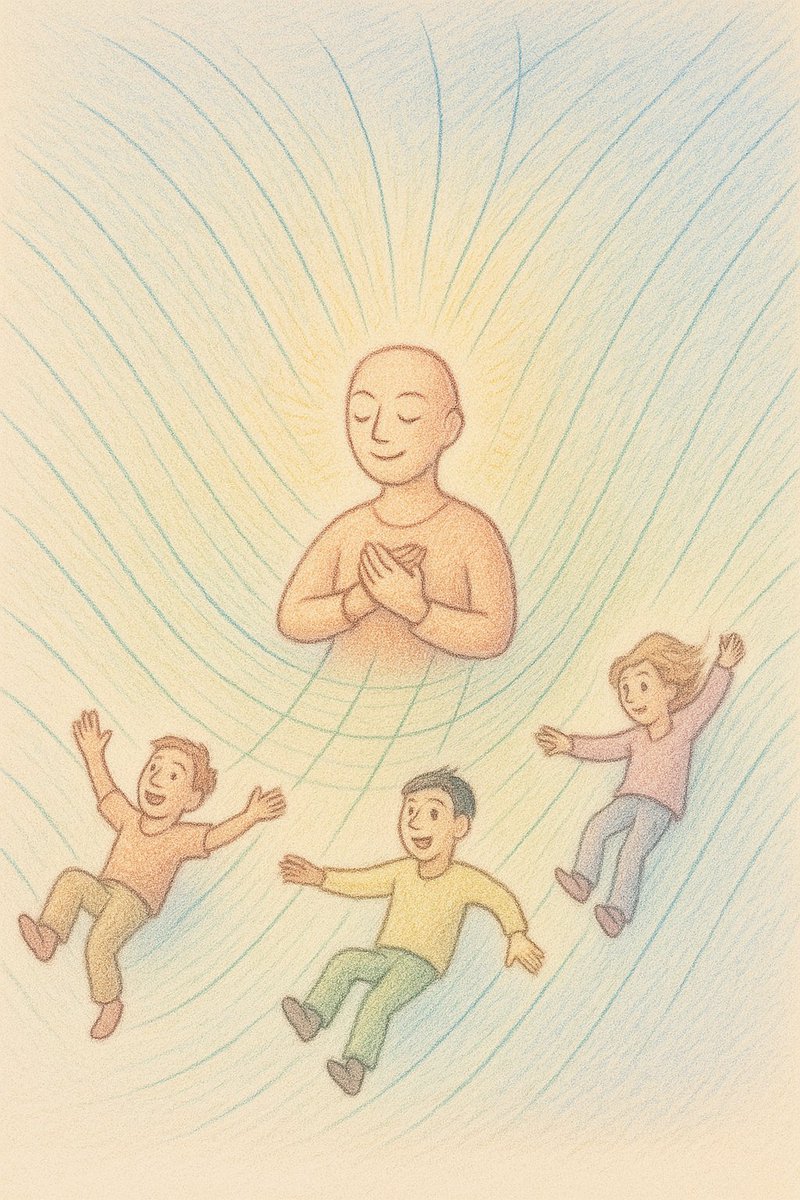
I had a dream in which I realized you could bend the trajectories of people's life in moral spacetime by increasing one's moral mass
Sun 乌龟 💖 tweet media
English
114
203
3.2K
103.9K
Y 리트윗함
Pixel Symphony
Pixel Symphony@Pixel0Symphony·
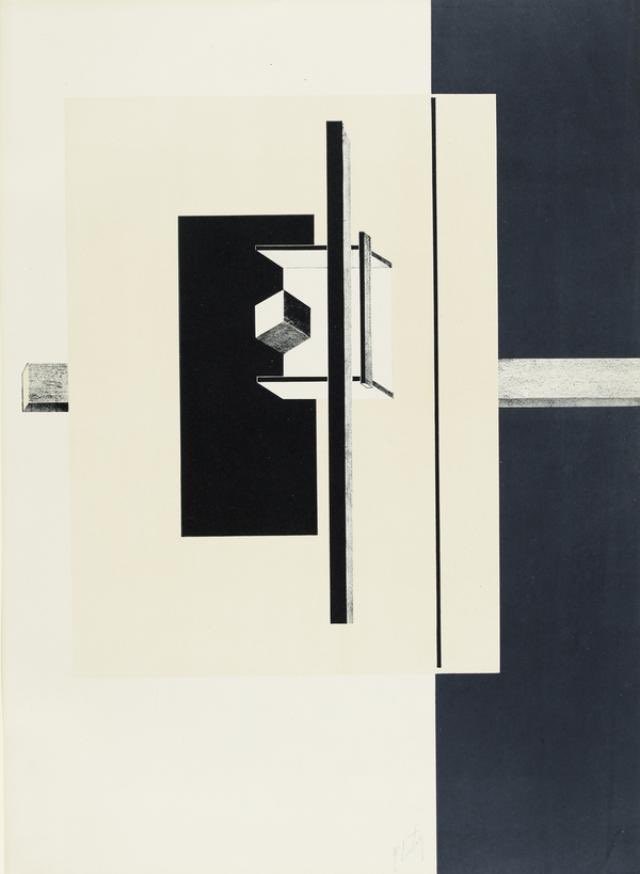
El Lissitzky, Print 5 from '1o Kestnermappe Proun'. 1923.
Pixel Symphony tweet media
English
1
12
82
2.5K