G.D. Sanders

2K posts

G.D. Sanders banner
G.D. Sanders

G.D. Sanders

@gdsanders

가입일 Mart 2009
546 팔로잉158 팔로워
Spencer Tillman
Spencer Tillman@SpenceTillman·
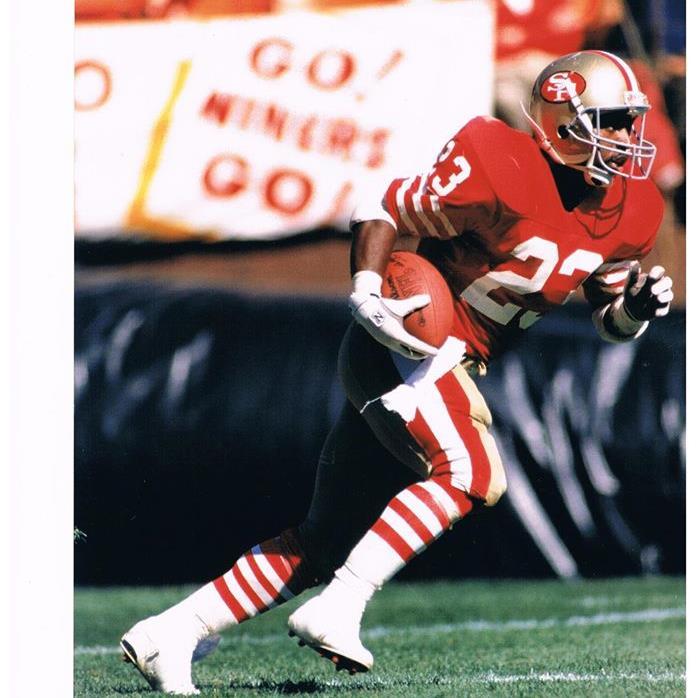
Honored to announce my induction into the National High School Football Hall of Fame. I’m equally excited to Congratulate my teammate, Marcus Dupree! The National High School Football Hall of Fame’s most prestigious annual honor will bear his name! He was One-of-one!
Spencer Tillman tweet media
English
13
26
280
4.4K
G.D. Sanders 리트윗함
Gokul Rajaram
Gokul Rajaram@gokulr·
BE ACTION ORIENTED A different way of framing what @pmarca says below - but one that reaches the same conclusion - is that the state of mind most conducive to success is action orientation. Psychologists have studied the states of mind that tend to make us more successful, whatever the challenge. There are at least two we can adopt: action orientation and state orientation. Adopting an action orientation means focusing on the task ahead with no thought to your current emotional or physical state. A state orientation means you’re thinking principally about yourself: how prepared you feel in that moment, the worry you feel over a text left unanswered, the light prickling at the back of your throat. Adopting an action orientation, it turns out in studies, makes it much more likely that you accomplish the task. Arnold Schwarzenegger is the epitome of action orientation. In his biography on Netflix, one of the things that stands out across all three episodes is his relentless focus on action. He says, “When I wake up in the morning, I don’t ask myself, ‘How am I today,’ [or] ‘Do I feel sad today’?” In other words, he doesn’t ruminate on how he feels on a daily basis. He adds, “If you’re busy all the time, you don’t have time to think about this stuff. Let’s just move forward. Move. Move. Move. Move.” Classic action orientation.
Marc Andreessen 🇺🇸@pmarca

My big conclusion from this week: Introspection causes emotional disorders.
English
22
27
362
44.5K
G.D. Sanders
G.D. Sanders@gdsanders·
@TonyDungy They’re losing the best of the best! Prayers for new beginnings and quick transition to new role.
English
0
0
0
4
Tony Dungy
Tony Dungy@TonyDungy·
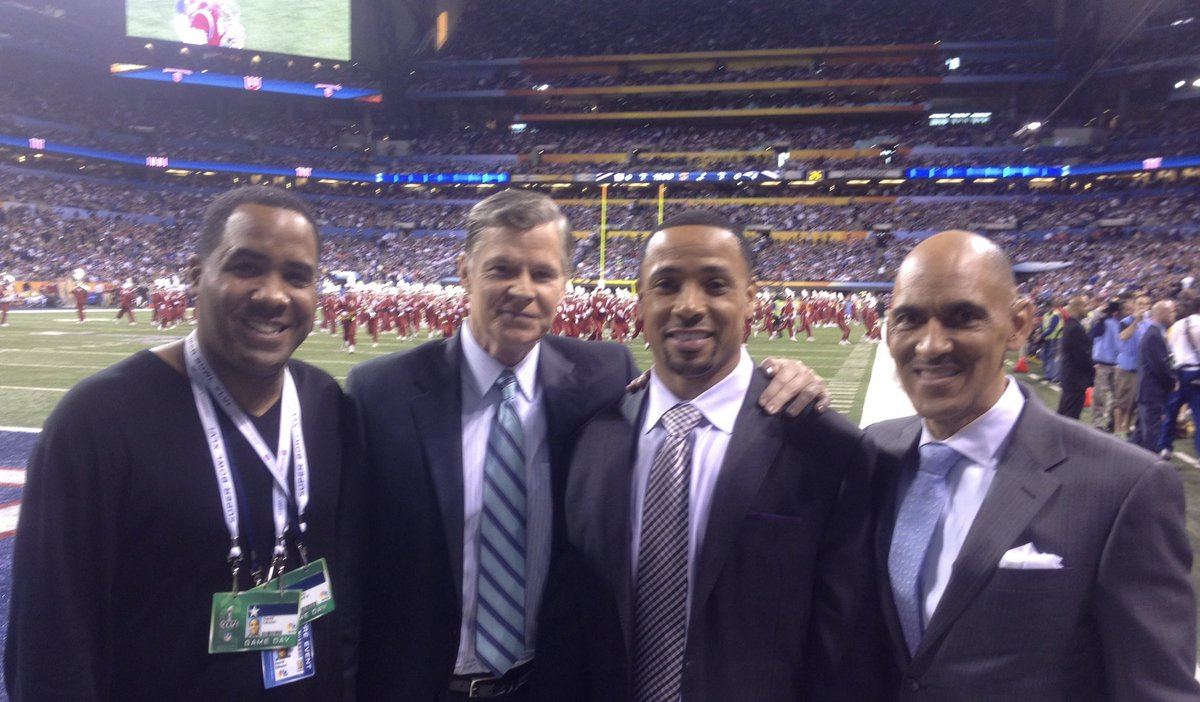
I have been informed by NBC that I won’t be back with FNIA this fall and it has given me time to reflect and also to look ahead.    It’s disappointing  news but I want to thank my NBC family for making the last 17 years so special.  I’ll have lasting memories of my time there, especially with Rodney Harrison who has become a tremendous friend.   God has always directed me in these moments and while I’m not sure what the next step will be for me—whether it will be in football, in broadcasting, or getting more involved in church and community outreach —I know God has plans for my life and I can’t wait see them unfold. And I am reminded of one of my favorite verses in the Bible-Romans 8:28. “God works all things for His good for those who love the Lord.”
Tony Dungy tweet media
English
4.5K
3.4K
56.3K
4.5M
G.D. Sanders 리트윗함
Patrick OShaughnessy
Patrick OShaughnessy@patrick_oshag·
Shyam on why the US needs to become reindustrialization maximalists: "The biggest lie of globalization was that the US would do the innovation while China did the production. The breakthrough behind the Attention Is All You Need paper came from Google trying to improve Translate by 3%. Innovation is a consequence of production. WuXi went from being a cheap pair of hands for pipetting contract research to now 50% of all clinical trials are drugs that are created in China. We ceded the innovation. It wasn't taken from us. We ceded it because we had a completely incorrect preset. I don't think it's true that we're not great at building things in this country. Look at Elon and the progeny of Elon. Apple has spent the equivalent on an inflation adjusted basis in the last five years of two and a half Marshall plans (~$350B+) building talent and capacity in China. How about we try to spend one Marshall plan here?"
Patrick OShaughnessy@patrick_oshag

My conversation with Shyam Sankar (@ssankar). Shyam has spent nearly 20 years as the most important person at Palantir that most people have never heard of. We spend a lot of time understanding his worldview, which helps explain why he has devoted his life to this work. At the center of it is a belief in the primacy of people -- all meaningful change comes from a small number of builders willing to be heretics first. You will find few people who think as deeply about the relationship between technology and national power. In many ways, he is becoming the modern version of the heretics he most admires. We discuss: - What Alex Karp taught him about identifying superpowers and unlocking talent - Heretics + the components of American greatness - The origins of the FDE model - Ontology and chips – where value will accrue in AI - Why dual-use companies are the future of American industry - China and what it would take for the US to reindustrialize - His journey from Nigeria to Orlando and what his dad taught him about gratitude Enjoy! Timestamps: 0:00 Intro 2:23 Defining Heretics in US Military History 8:36 Shyam’s Personal Disagreeableness 9:49 Formative Experiences & Worldview 12:52 What Makes America Exceptional 14:48 What Does Greatness Mean? 15:33 Alex Karp 16:46 How to Unlock Talent 19:21 Identifying Superpowers and Kryptonite 22:54 The Gamma Ray Moment 25:00 Palantir's Next 10 Years 27:03 Forward Deployed Engineering 33:40 Explaining What Palantir Is 37:50 Military vs. Commercial Customers 39:00 The State of the US Military Today 47:01 How to Re-Industrialize America 51:06 Perspective on China as an Adversary 56:17 How to Get More Heretics in Government 1:03:53 Managing Rapid Pivots & Momentum 1:08:48 Where Will AI Value Accrue? 1:13:33 Reasserting the Legitimacy of Institutions 1:15:54 To Do or To Be? 1:16:31 Reflecting on Fatherhood 1:17:34 Kindest Thing

English
10
63
362
68.4K
G.D. Sanders 리트윗함
Marc Andreessen 🇺🇸
My information consumption is now 1/4 X, 1/4 podcast interviews of the smartest practitioners, 1/4 talking to the leading AI models, and 1/4 reading old books. The opportunity cost of anything else is far too high, and rising daily.
English
1.4K
3.9K
35.1K
34.6M
Tren Griffin
Tren Griffin@trengriffin·
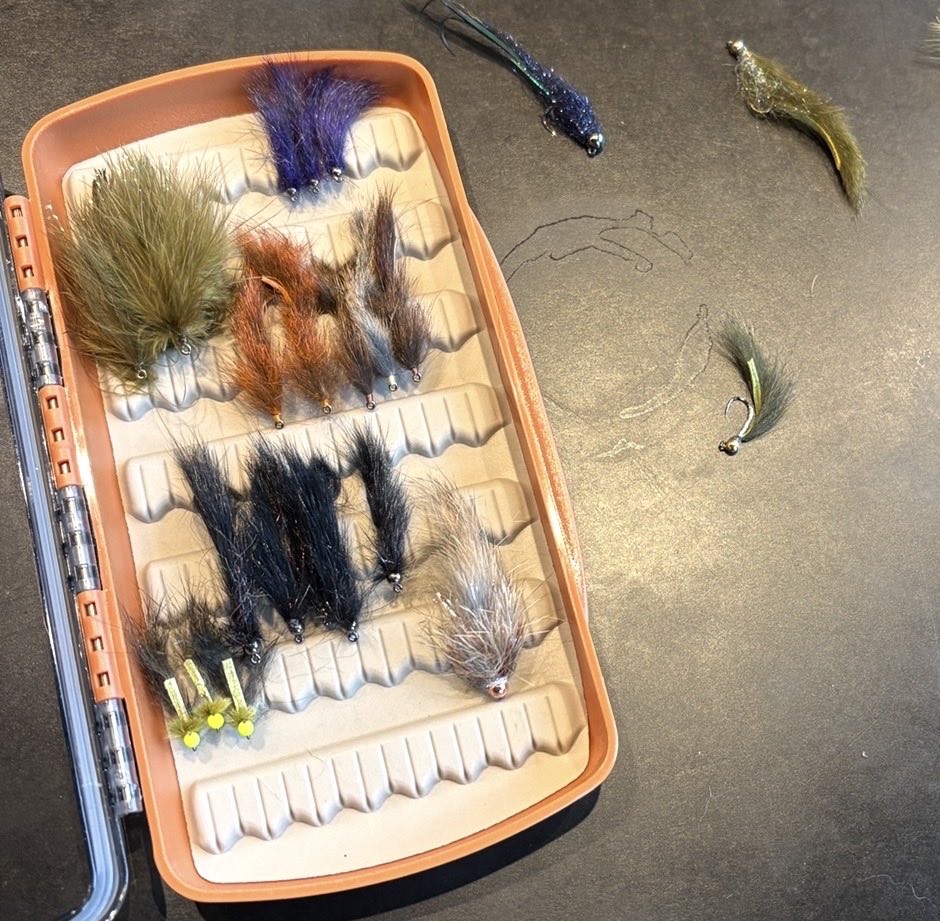
I'll be fishing tomorrow in the stream that was Ernest Hemingway's favorite fishing spot near Sun Valley. Can you name it? Mostly brown trout using these flies are clues. Mostly rainbow trout in his second favorite spot. Ski in the morning and fish In the afternoon. Big fun!
Tren Griffin tweet media
English
4
0
20
3.9K
G.D. Sanders 리트윗함
Visegrád 24
Visegrád 24@visegrad24·
BREAKING: In Tehran, people are cheering and celebrating amid reports of Khamenei's death.
English
1.1K
17.8K
71.5K
6.3M
G.D. Sanders 리트윗함
Open Source Intel
Open Source Intel@Osint613·
Iranians celebrated in the streets following news of Khamenei’s death.
English
168
2.5K
11.6K
563.6K
G.D. Sanders 리트윗함
Bret Taylor
Bret Taylor@btaylor·
I’ve been trying to simulate using Codex for the next year and what will change about my perspectives on software engineering as I transition from being a computer programmer to a harness engineer. There are so many, but here are a couple that have stuck with me: Software dependencies - Large open source systems like Linux and MySQL seem like they will remain just as important, but I wonder if I will start to have different perspectives on smaller software libraries when the functionality can be relatively easily produced and tested with AI. Given the past decade of supply chain vulnerabilities and maintenance issues in open source libraries, will it become a best practice to reduce dependencies and write our own where possible? Documentation - When I built a product before, the “specification” was split between docs, Slack, Figma, and Linear — but the vast majority of behavior was specified in code, i.e., the long tail of functionality is an emergent property of the code I write. The conundrum with agent-produced code is that it’s not clear which parts of the code were prompted (i.e., specified) and which parts were “vibed” (i.e., unspecified). That seems problematic when continuously evolving a large system over time because the harness will “forget” past instructions. I don’t think replaying prompts is correct either because in a single Codex session, a good chunk of interactions are interactive and effectively transient. I have an intuition that documentation will be as important of an output of my Codex sessions as code, documenting the substantive product decisions made during my session. Those docs clearly need to be directly in the repo, versioned with the code and available as context for future sessions. The docs / context discussion in OpenAI’s recent post on harness engineering resonated with me and maps to my intuition: openai.com/index/harness-…
English
46
33
594
85.9K
G.D. Sanders 리트윗함
John Collison
John Collison@collision·
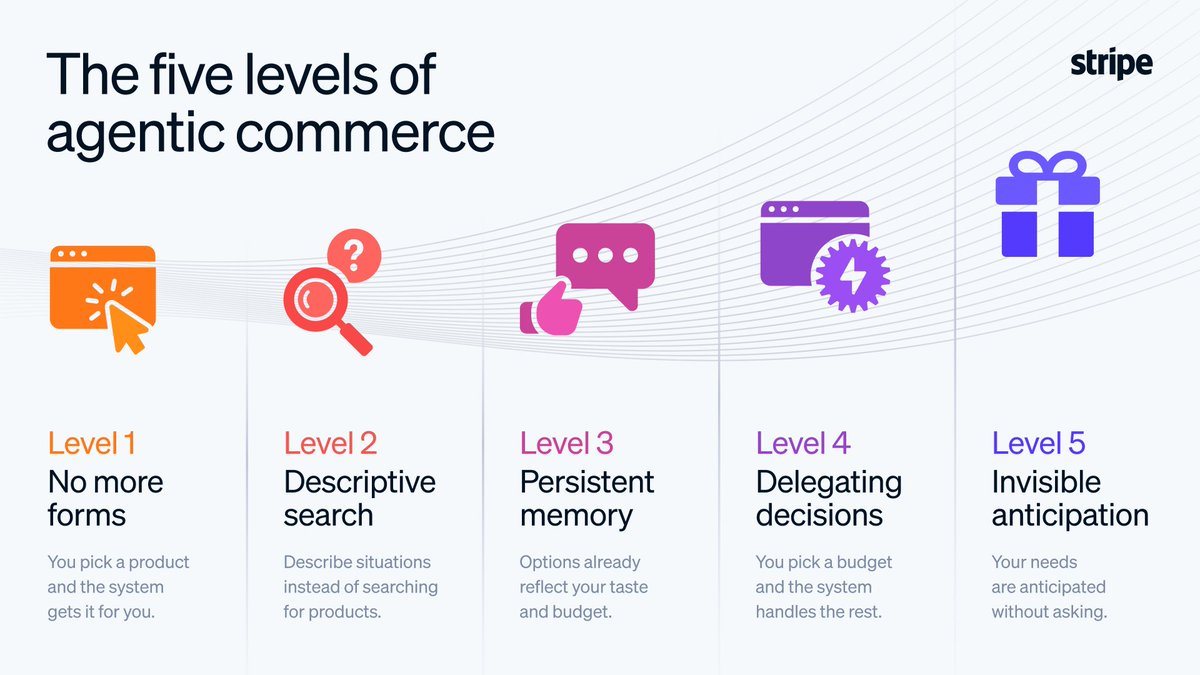
In our annual letter, we describe the progression we expect in agentic commerce. You tend to hear the later levels discussed in the hype, but we're already seeing lots of activity in levels 1 and 2 of agentic commerce. Read more: stripe.com/annual-updates…
John Collison tweet media
English
42
102
805
134.2K
G.D. Sanders
G.D. Sanders@gdsanders·
Heard the news of Robert Duvall’s passing earlier today. Happy to have met him at the film premiere of our friend Billy Joe Shaver’s biography produced by Duvall’s wife Luciana. Wonderful man and my favorite actor - who brought to life so many of the most memorable characters.
G.D. Sanders tweet media
English
0
0
2
100
G.D. Sanders
G.D. Sanders@gdsanders·
@TracesofTexas Driven by there dozens of times. Beautiful photo and a special area of Texas. Prayers for peace the family. PS - Wenzel’s is one of my favorites. Kent is a great guy and I miss stopping by there as we’ve moved away.
English
1
0
2
93
Traces of Texas
Traces of Texas@TracesofTexas·
Traces of Texas reader Bryan Davis kindly sent in this nifty photo, which speaks for itself. I liked the photo but I LOVED what Bryan had to say about it: "I drove to a memorial service for a friend's son in Hamilton early Monday and stopped to take this photo. It was along a scenic stretch of Texas State Highway 22 near the ghost town of Lanham. Lanham is located midway between Cranfills Gap and Hamilton in eastern Hamilton County. I've long admired this view but always thought I was too busy to stop. But this time, on my return to Clifton, I finally made that time. It was hard to miss this calling to me on Monday, because I just happened to be listening to Willie Nelson sing "Blue Skies" when this came into view. Between the colorful Texas-themed tank, old windmill and stark blue skies, it was just all so picture perfect. Following the memorial service, I enjoyed a Rueben sandwich and sweet tea at Wenzel's off the Hamilton courthouse square. It offered some time for reflection. Parent's saying goodbye to a a child...it's not the way life is supposed to be. A young, brilliant life ended all too soon by cancer. But Noah left his mark on every person who crossed his path. A stark reminder to give your kids a hug, or at least a call, no matter how old they are. Hope your day is filled with blue skies, sweet memories, kind friends, and the gratitude that comes from seeing another precious sunset. So many others aren't afforded the privilege. " Thank you, Bryan. In these hyper-intense times, it's nice to be reminded to slow down and take some time to enjoy Texas. I need to do more of that myself.
Traces of Texas tweet media
English
7
29
316
9.2K
G.D. Sanders 리트윗함
Tyler Rogoway
Tyler Rogoway@Aviation_Intel·
Today the mainstream learns about the chronic drone incursions over the Southern Border, which includes advanced systems, another story we have been reporting within our broader, in depth drone threat coverage for many years. No they aren’t easy to defend against, even now.
English
19
46
462
43.1K
G.D. Sanders 리트윗함
Michael Mauboussin
Michael Mauboussin@mjmauboussin·
We have a new report out today, "Bayes and Base Rates: How History Can Guide Our Assessment of the Future." -We place projected sales growth rates of some artificial intelligence (AI) businesses in the context of history. - We review literature on success rates for big projects (% on budget, on time, deliver expected benefits). -We discuss Michael Porter's work on plans to expand capital expenditures. Link in comment
English
14
54
419
174.4K
G.D. Sanders 리트윗함
Nabeel S. Qureshi
Nabeel S. Qureshi@nabeelqu·
I got Opus to score all of Leopold's predictions from "Situational Awareness" and it thinks he nailed it:
Nabeel S. Qureshi tweet media
English
31
73
1.1K
114.8K
G.D. Sanders 리트윗함
Greg Brockman
Greg Brockman@gdb·
Software development is undergoing a renaissance in front of our eyes. If you haven't used the tools recently, you likely are underestimating what you're missing. Since December, there's been a step function improvement in what tools like Codex can do. Some great engineers at OpenAI yesterday told me that their job has fundamentally changed since December. Prior to then, they could use Codex for unit tests; now it writes essentially all the code and does a great deal of their operations and debugging. Not everyone has yet made that leap, but it's usually because of factors besides the capability of the model. Every company faces the same opportunity now, and navigating it well — just like with cloud computing or the Internet — requires careful thought. This post shares how OpenAI is currently approaching retooling our teams towards agentic software development. We're still learning and iterating, but here's how we're thinking about it right now: As a first step, by March 31st, we're aiming that: (1) For any technical task, the tool of first resort for humans is interacting with an agent rather than using an editor or terminal. (2) The default way humans utilize agents is explicitly evaluated as safe, but also productive enough that most workflows do not need additional permissions. In order to get there, here's what we recommended to the team a few weeks ago: 1. Take the time to try out the tools. The tools do sell themselves — many people have had amazing experiences with 5.2 in Codex, after having churned from codex web a few months ago. But many people are also so busy they haven't had a chance to try Codex yet or got stuck thinking "is there any way it could do X" rather than just trying. - Designate an "agents captain" for your team — the primary person responsible for thinking about how agents can be brought into the teams' workflow. - Share experiences or questions in a few designated internal channels - Take a day for a company-wide Codex hackathon 2. Create skills and AGENTS[.md]. - Create and maintain an AGENTS[.md] for any project you work on; update the AGENTS[.md] whenever the agent does something wrong or struggles with a task. - Write skills for anything that you get Codex to do, and commit it to the skills directory in a shared repository 3. Inventory and make accessible any internal tools. - Maintain a list of tools that your team relies on, and make sure someone takes point on making it agent-accessible (such as via a CLI or MCP server). 4. Structure codebases to be agent-first. With the models changing so fast, this is still somewhat untrodden ground, and will require some exploration. - Write tests which are quick to run, and create high-quality interfaces between components. 5. Say no to slop. Managing AI generated code at scale is an emerging problem, and will require new processes and conventions to keep code quality high - Ensure that some human is accountable for any code that gets merged. As a code reviewer, maintain at least the same bar as you would for human-written code, and make sure the author understands what they're submitting. 6. Work on basic infra. There's a lot of room for everyone to build basic infrastructure, which can be guided by internal user feedback. The core tools are getting a lot better and more usable, but there's a lot of infrastructure that currently go around the tools, such as observability, tracking not just the committed code but the agent trajectories that led to them, and central management of the tools that agents are able to use. Overall, adopting tools like Codex is not just a technical but also a deep cultural change, with a lot of downstream implications to figure out. We encourage every manager to drive this with their team, and to think through other action items — for example, per item 5 above, what else can prevent a lot of "functionally-correct but poorly-maintainable code" from creeping into codebases.
English
413
1.6K
12.3K
2.1M
Elad Gil
Elad Gil@eladgil·
Going to be in Austin for a day Anything I should do in a few hours off in evening?
Elad Gil tweet media
English
83
2
138
43.1K
G.D. Sanders 리트윗함
Alex Rampell
Alex Rampell@arampell·
“The Software Clone Wars of 2004” History doesn’t repeat, but it rhymes Before SaaS, and before freemium, there was “shareware” — try before you buy software. This was a concept dating back to the 1980s, where software would be freely distributed on floppy discs attached to PC magazines…dozens of products on one floppy! Written by hobbyists and even upstart companies. id Software of Doom fame started out like this, as did McAfee. As did I! As things like BBSs, AOL, Compuserve, and eventually the Internet grew in the 1990s, one of the main use cases was downloading shareware. And it eventually started becoming a big business. The biggest download site was the appropriately named Download.com, owned by CNET. Around the same time, more people in more countries got access to the internet. And this little site called Elance (now Upwork!) survived the dotcom bust and ended up being a leading outsourcing site for everything from translation to, you guessed it, software engineering. So now there was a huge opportunity. You pick the number one or even number twenty product on Download.com that’s printing money. You go to Elance. You get dozens of predominantly Indian and Eastern European outsourcing shops to compete / bid on “cloning” it. I had a pop-up blocker (how I met @jonoringer), a couple of security products, and a bunch of utilities like a cool macro tool, an email tracker, etc. But now I could hire somebody for $500 and have them replicate anything on the top download site on the Internet! It was incredible. But it wasn’t. There is such much complexity under the hood that you never see merely by using the product. You see it when designing the product, when receiving hundreds of customer complaints, when realizing how much you could improve your conversion funnel, etc. You can replicate something “skin deep” but miss most vital organs. Who knew you needed a Pancreas or two kidneys? Elance fundamentally changed the shareware business. Anyone with agency could now hire somebody to clone a product or build a product. But here’s what I noticed: -cloning almost never worked, because there was too much “dark matter” in these products to be understood or seen when the goal is just rote replication -coming up with a NEW idea — much better path, since you have to conceive of all of the myriad corner cases. No free ride to rest on. -technical people still reigned supreme, since they could edit the resulting code from the outsourced shops -distribution > product. Now that it was so easy to build (or hire to build!), the advantage went to those with a real knack for acquiring customers. And it couldn’t just be “I uploaded it to the file library” like it used to be in the good old days of the 90s Now replace Elance with Claude or Cursor, and repeat this exercise Distribution will rule supreme. Original thought and insight will rule supreme. “Cloning” things at a shallow depth is a fool’s errand. Good luck.
English
15
27
243
27.3K