
iamlogtun.eth
8.1K posts


iamlogtun.eth
@iamlogtun
Web3 Educator 📚| Ambassador @puffer_finance 🐡& @axisrobotics | Video Content Creator 📹
Metaverse 가입일 Ağustos 2022
1.1K 팔로잉1.2K 팔로워


Which robotics project on Base do you like best?
Base Hub 🛡️@BaseHubHB
Which AI on Base do you like best?
English

Ethereum scaled with rollups but fragmentation came with it.
What if appchains could scale independently, while still feeling like one unified chain? No bridging, no siloed liquidity nor fragmented UX
@puffer_unifi enables synchronously composable based appchains powered by @ethereum itself.
@puffer_finance @puffer_unifi @puffer_preconf @AmirOnchain @StecoinZhang @art3chris
English

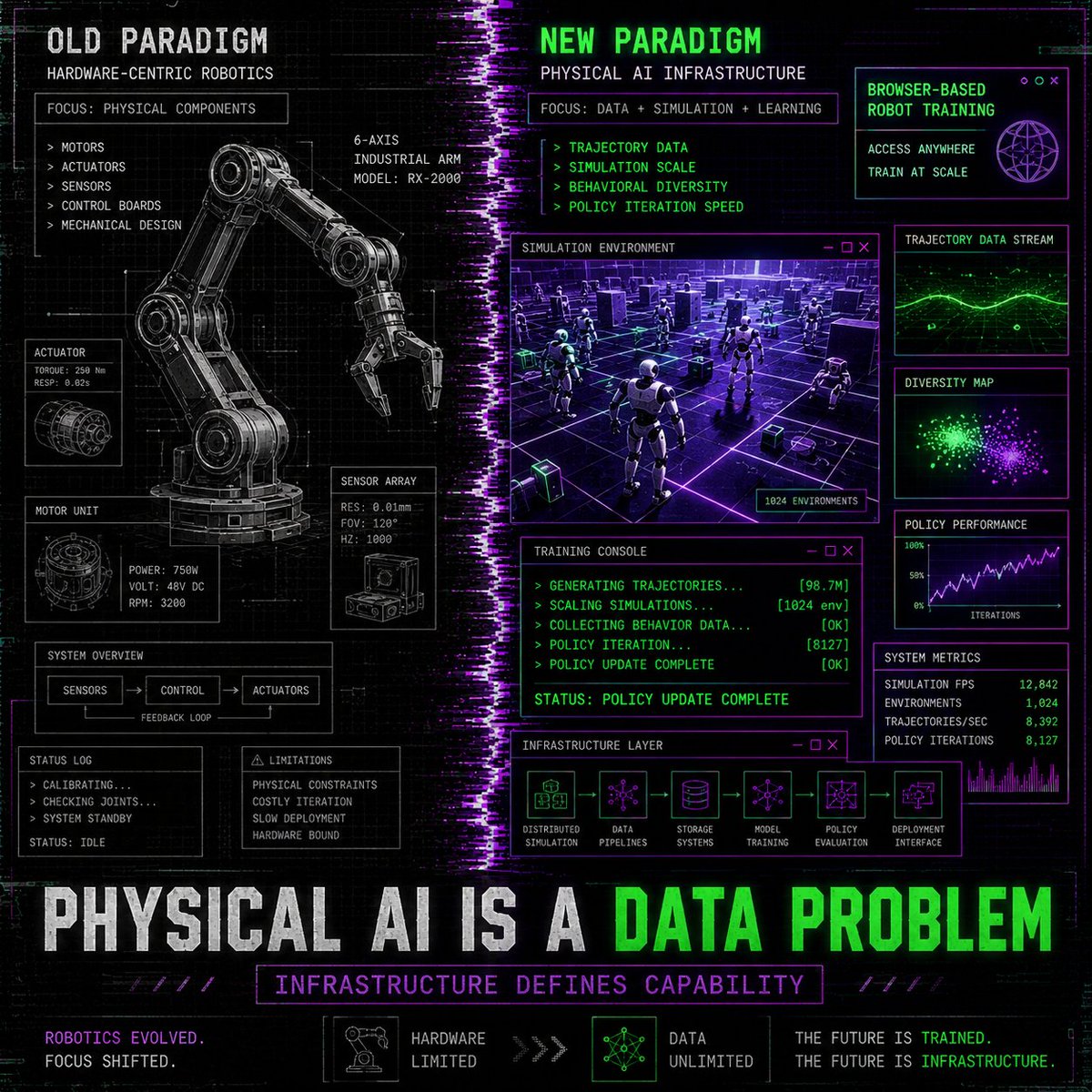
Most people still analyze robotics from the hardware layer.
That’s outdated.
The real bottleneck is:
trajectory data
simulation scale
behavioral diversity
policy iteration speed
Physical AI is increasingly becoming a data infrastructure problem.
That’s why browser-based robotic training systems are architecturally interesting.
@axisrobotics
English





Many people think synchronous composability just means “fast bridging.”
It does not. It means solving three separate infrastructure problems simultaneously for based appchains.
1. L2 → L1: withdrawing from L2 to L1 without waiting long time.
2. L1 → L2: accessing L1 liquidity from L2 without trusting a third-party bridge.
3. L2 → L2: coordinating atomic execution across separate based appchains.
Starting with L2 → L1 — the capital efficiency problem.
The problem: rollup withdrawals require verification that the rollup state is valid before Ethereum releases funds. Optimistic rollups enforce a 7-day challenge window. Even ZK rollups can take minutes or even hours. Capital becomes trapped between layers. Institutions cannot operate efficiently. DeFi liquidity fragments.
The @puffer_unifi solution: proof-generated bridging.
TEE provers — Intel TDX and AMD SEV — independently re-execute the rollup state transition. Both must agree. The L1 rollup contract verifies the proof on-chain. Funds are released atomically.
No long time wait. No third-party attestation. No off-chain verifier to compromise.
TEE is live today. ZK proving is next. As ZK matures, it joins the prover multisig alongside TEE, adding a second independent trust assumption.
The fast withdrawal from L2 to L1 is not released because time passed, but it is released because the rollup state was verified.
Next up: L1 → L2 and L2 → L2. 🐡

English

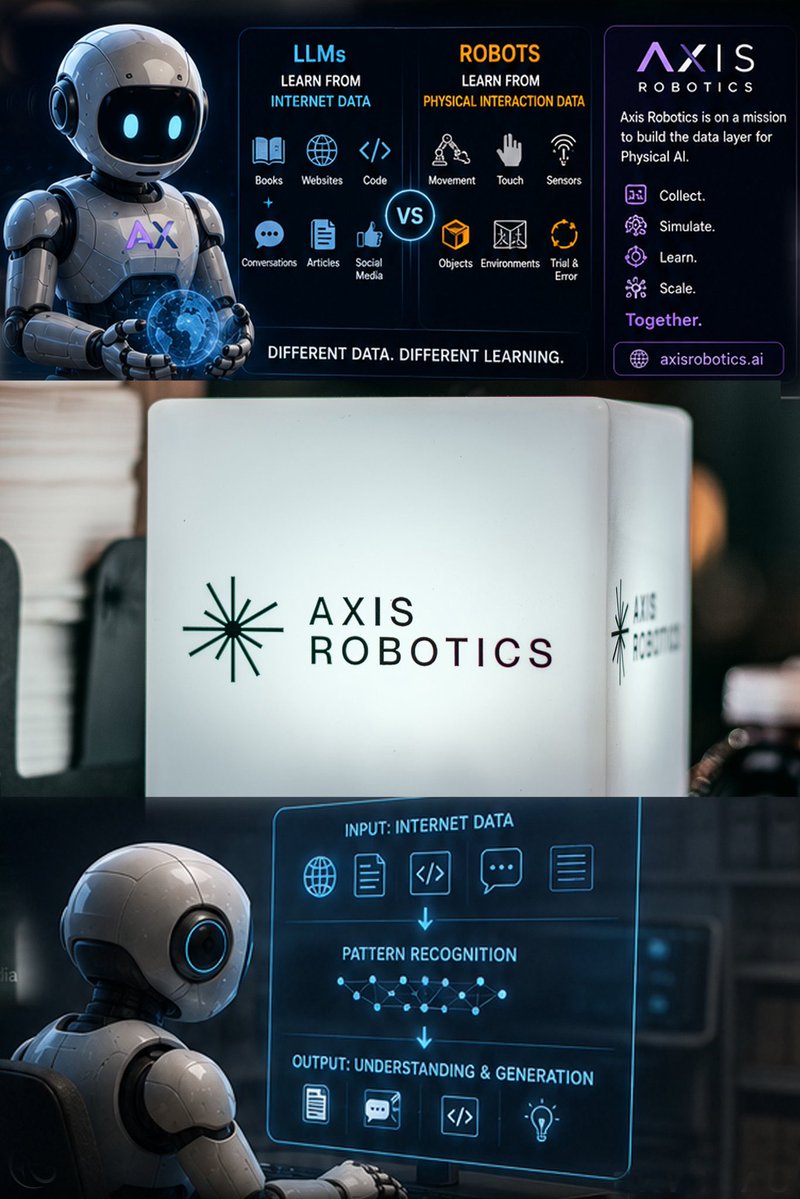
Why Data Is the Backbone of Robotics 🤖
The AI boom was built on internet-scale data.
The robotics revolution will be built on something far harder to obtain:
Physical interaction data.
And this is exactly where projects like @axisrobotics are focusing their vision. 🧵 👇
English
@Sam_wolf1122 @axisrobotics Where do you see the funding details bro?😎
English

Why is everyone talking about @axisrobotics?
1️⃣ The Tech: A 6-axis control stack for total deterministic movement.
2️⃣ The Lead: Dr. G, a veteran in industrial kinematic control.
3️⃣ The Backing: $5M seed round led by Galaxy
Here is a professional breakdown 🧵👇

English

𝗪𝗵𝘆 𝗗𝗮𝘁𝗮 𝗶𝘀 𝘁𝗵𝗲 𝗕𝗮𝗰𝗸𝗯𝗼𝗻𝗲 𝗼𝗳 𝗥𝗼𝗯𝗼𝘁𝗶𝗰𝘀
Everyone understands why ChatGPT needed the internet.
Billions of web pages, articles, books with all of it scraped, cleaned, and fed into a model until it could think in language.
Robots need the same thing. But there's a catch:
The internet doesn't teach a robot how to move.
LLMs run on text. Robots run on physical interaction data with how to pick up an object, navigate a space, respond to resistance, recover from failure.
That data doesn't exist on Google. It has to be generated.
And that's exactly the gap Axis is filling with one contributor task at a time.
The data problem for robotics is the biggest bottleneck in physical AI right now.
Whoever solves it, wins. (@axisrobotics)

English

The lookahead is what makes based sequencing credible.
Gateways know their slot windows in advance. State syncs before transitions. Preconf issuance remains continuous across every slot.
For UniFi appchains, this means L1 and L2 share not just a sequencing root, but a predictable, coordinated execution environment where users always know who is sequencing and when.
Deterministic by design. Not a soft promise. 🐡
Puffer Preconf@puffer_preconf
📖 Glossary: Lookahead Mechanism A schedule that maps upcoming Ethereum L1 slots to their assigned proposer, who delegates sequencing rights to a gateway, revealed approximately one epoch (~6.4 minutes) in advance. The lookahead mechanism gives rollups predictability over who provides preconfirmations and when. Before each slot transition, the outgoing gateway syncs state with the incoming one, ensuring continuous preconf issuance without gaps. Puffer Preconf translates that structure into fast, coordinated execution across rollups. 🐡
English
@puffer_preconf Solid infrastructure play by the Puffer team. 🐡🚀
English

📖 Glossary: Lookahead Mechanism
A schedule that maps upcoming Ethereum L1 slots to their assigned proposer, who delegates sequencing rights to a gateway, revealed approximately one epoch (~6.4 minutes) in advance.
The lookahead mechanism gives rollups predictability over who provides preconfirmations and when. Before each slot transition, the outgoing gateway syncs state with the incoming one, ensuring continuous preconf issuance without gaps.
Puffer Preconf translates that structure into fast, coordinated execution across rollups. 🐡

English
while touching grass, let’s learn a little about AXIS
everyone talks about AI robots like the hard part is the model. Is it really?
the bottleneck is data.
LLMs had the internet.
physical AI has almost nothing.
that’s the gap @axisrobotics is trying to solve @iamlogtun

English

🔥 Strong energy throughout #InnovateMiami by @TheTieIO alongside @consensus2026!
From packed discussions on institutional crypto and market structure to nonstop conversations around Ethereum infras, it was great to see the level of engagement around what Puffer is building.
Institutional crypto is just getting started! 🐡
English
English