Numbers Protocol

4.4K posts

Numbers Protocol banner
Numbers Protocol

Numbers Protocol

@numbersprotocol

Open & decentralized network. Ensure provenance for all digital media created by humans & AI.|Powered by $NUM https://t.co/UbiUUpbSqc

Internet 가입일 Şubat 2019
684 팔로잉162.2K 팔로워
고정된 트윗
Numbers Protocol
Numbers Protocol@numbersprotocol·
During the June 2025 Israel-Iran conflict, an AI-generated video of building damage in Haifa went viral on Facebook. 700K+ views. Six users flagged it. Meta did nothing. Only after 9 months did Meta's Oversight Board finally weigh in. Called it an "inflection point." Said platforms need provenance standards like C2PA, better detection tools, and to stop pretending self-disclosure works. Nine months to review one fake video. During a war. With six flags and a debunk already live. If the receipts existed at the source, this wouldn't need a review at all. Numbers embeds the proof at capture. @ArAIstotle verifies claims in real time at 92% accuracy. Nine months of review could've been nine seconds of infrastructure.
Dennis Yap@ye_dennis

@meta’s Oversight Board highlights three critical weaknesses that are currently hindering the industry but with which ArAIstotle and @numbersprotocol can cover you. Cc: @finkd “Meta’s Oversight Board have just published their decision on deceptive AI content circulating across Meta's platforms during the Israel-Iran conflict last year. It serves as a stark reminder of the systemic gaps in how social media platforms currently handle this type of mis- and disinformation… 1) Failure to use provenance standards: platforms are missing opportunities to surface and verify content provenance, such as the C2PA standard. This makes it unnecessarily difficult to identify AI-generated media and apply accurate labels for users. 2) Inadequate detection tools: there is a distinct lack of high-quality detection technology capable of scanning multi-format content. As a result, harmful material often goes viral before it can be flagged or removed. 3) Absence of clear policy: current community guidelines lack specific requirements for AI self-disclosure, standardised labelling, or concrete penalties for those who fail to follow provenance protocols. …When deceptive AI content goes viral during an ongoing conflict, it confuses civilians in active war zones, erodes trust in verified information, and can directly contribute to real-world violence.” Adapted from Sam Stockwell’s post, link below ⤵️
English
3
5
26
4.7K
Numbers Protocol
Numbers Protocol@numbersprotocol·
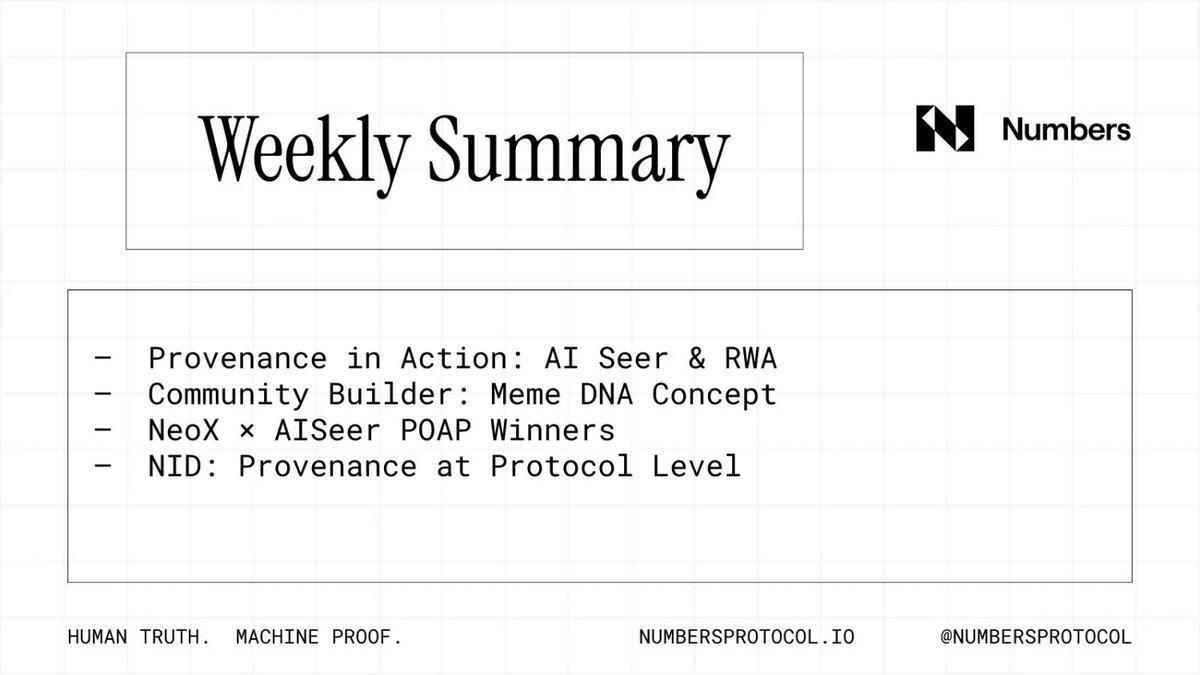
Your timeline is probably cooked right now. Everyone's turning themselves into action figures and chibi characters with AI. Your coworker is a Funko Pop. Your sister is an anime character. The group chat is unrecognizable. It's fun, yes. But you know what else could be fun? Guess the AI is coming soon to the Play Portal. Read the full weekly summary to find out more [link]
Numbers Protocol tweet media
English
0
0
4
115
Viggo Lundhild
Viggo Lundhild@OcamsRazorblade·
@numbersprotocol Does $NUM intend to have a stats page so we can see how things like transactions are trending? Seems like there is some indication that tx's are picking up, it would be nice to see that in real time.
English
0
0
0
4
Numbers Protocol
Numbers Protocol@numbersprotocol·
Numbers mainnet has been busy. Over 50,000 transactions in just 7 days. Three of those days? Over 10,000 transactions each. Every transaction is a piece of content getting its proof of origin. Every day that number climbs, the verifiable web gets a little harder to ignore. Our latest AMA POAP campaign is live now. Grab your on-chain receipt! ama.creativeorigin.ai/ama/2026-02-11
English
6
10
29
872
Numbers Protocol
Numbers Protocol@numbersprotocol·
What happens when a builder takes provenance infrastructure and pushes it further? @HakimLh973 is exploring that with "Meme DNA." A concept for tracking meme evolution using Numbers Protocol as the provenance layer. The idea: every meme gets an origin record via Capture SDK. Content hash, creator wallet, timestamp. All C2PA-based, all verifiable. When someone remixes that meme, the new version references its parent. Over time, you get a full lineage tree. Not just "is this authentic" but "where did this come from, and what did it become." $NUM fits in as the utility layer. Unlock originals, reward creators, support remix attribution. We built the provenance layer. Builders like @HakimLh973 are showing what the application layer could look like. Capture SDK is open for developers to start building.
𝕁𝔸𝕎𝔸ℙℝ𝕆@HakimLh973

I've been exploring an idea called "Meme DNA" A system to track the cultural evolution of memes using media provenance Built as an experimental prototype inspired by @numbersprotocol Thread ↓

English
5
6
19
471
Numbers Protocol
Numbers Protocol@numbersprotocol·
heard the new GTA drops tomorrow... No, not that one. Guess the AI, coming tomorrow to the play portal. One AI image. one real photo. submit your best pair and see if anyone can spot the difference. 30,000 NUM on the line. every image gets a receipt on-chain. Intern is already picking which images to submit. choosing the right pair is harder than it sounds. receipts incoming
Numbers Protocol tweet media
English
5
6
24
494
Numbers Protocol 리트윗함
Numbers Protocol
Numbers Protocol@numbersprotocol·
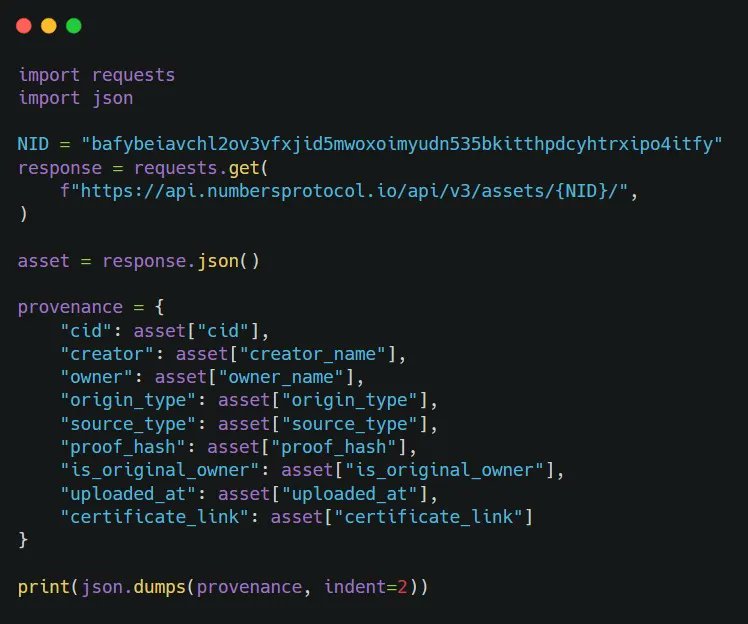
Everything on the web is predicated on access. You can search a page because it has a URL. You can query a database because it has an endpoint. Access is what transforms information into infrastructure. Provenance has always lacked this. It exists as a label, a caption, a claim but nothing you can actually query, index or build on top of. NID changes that. It is the on-chain address that makes provenance accessible at the protocol level. Every asset registered on Numbers Protocol gets one, and with it, the full provenance record becomes queryable including creator identity, integrity hash, ownership history, C2PA credentials. NID is the bedrock that makes it possible for provenance to be a feature rather than a claim. Learn more here: #query-users-assets" target="_blank" rel="nofollow noopener">docs.captureapp.xyz/capture-sdk/in…
Numbers Protocol tweet media
English
4
6
20
496
Numbers Protocol
Numbers Protocol@numbersprotocol·
Quick reminder because the intern cares about your on-chain receipts. The AMA POAP campaign with @NeoxInfra and @aiseerco closes tomorrow. Claim it. No cost. No catch. Just a clean on-chain badge that says "I was there." After tomorrow? Gone. The kind of gone where you can't DM intern to get it back. ama.creativeorigin.ai/ama/2026-02-11
Numbers Protocol@numbersprotocol

Intern's timeline has two modes: people shipping, and people saying "drop the link" So he'll have to skip the suspense.... Next AMA POAP campaign is live with @NeoxInfra × @aiseerco Campaign window: 13 Mar 2026 → 19 Mar 2026 Mint your POAP, lock in your on-chain attendance receipt, and you're in. No extra tasks, no hoops. Note from the intern: don't wait until Day 7 and then act surprised it ended. ama.creativeorigin.ai/ama/2026-02-11

English
3
7
17
804
bawsa
bawsa@BawsaXBT·
I vibe coded a tool that scans your X content and tells you your voice, content pillars and style. All scored. Drop your handle and find out ↴ mybrandos.app
English
794
43
1.4K
327.6K
Numbers Protocol
Numbers Protocol@numbersprotocol·
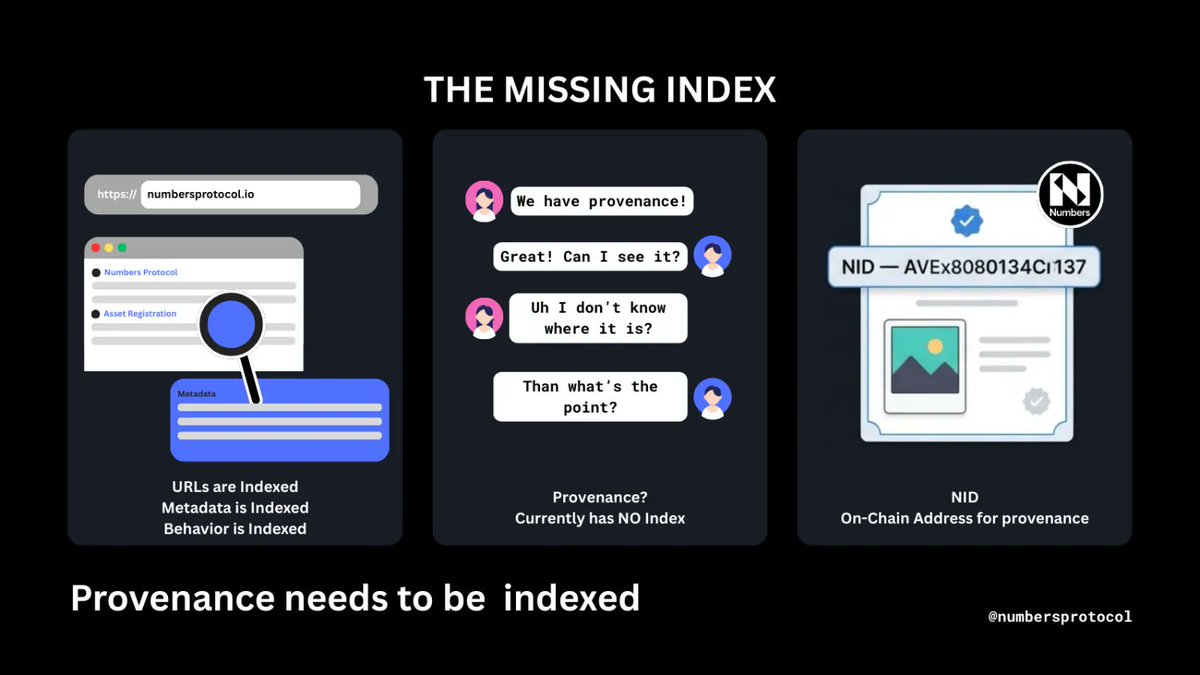
Provenance is having a moment. The biggest names in tech are backing content provenance standards. But recognition is NOT implementation. The web indexes everything: content, metadata, behavior. Yet origin remains unindexed. There's no universal address for "where this came from." Numbers Protocol approaches this at a protocol level. Every registered asset gets a NID, a unique, permanent, on-chain identifier that anchors origin, creator identity, and timestamp cryptographically. Provenance without index is just a claim. NID is the index. Want to understand how to create NID under the hood? Start here: #support-the-entire-lifecycle-of-digital-media" target="_blank" rel="nofollow noopener">docs.numbersprotocol.io/developers/num…
Numbers Protocol tweet media
English
2
6
22
446
Numbers Protocol 리트윗함
Dennis Yap
Dennis Yap@ye_dennis·
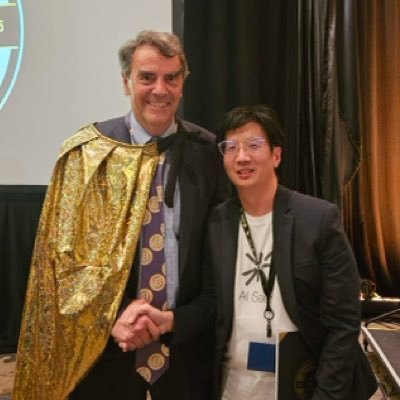
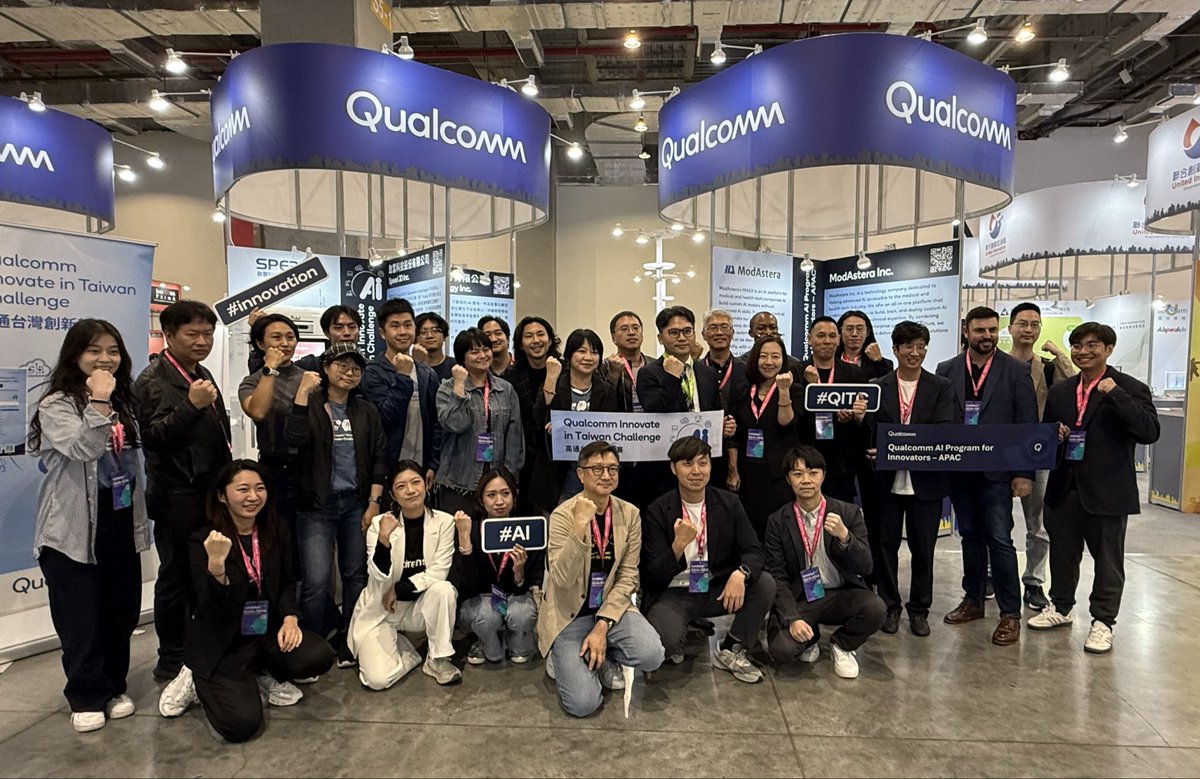
Glad to meet our web3 partner @numbersprotocol, take a photo together using blockchain, and meet other potential partners in Taipei today. Good quality sources that have provenance will be invaluable in a world where AI generation and source blurs the line between fiction and reality. Asset in link ⤵️
Dennis Yap tweet mediaDennis Yap tweet mediaDennis Yap tweet media
Dennis Yap@ye_dennis

Introducing the small language model we fine-tuned using the proprietary dataset our ArAIstotle community helped build. Thanks @qualcomm for subsidizing the trip to showcase privacy enhanced factchecking on the edge at the Smart City Summit & Expo to. Hope we’ll bring our anti-malware for the mind to more customers together!

English
6
12
34
1.3K
Numbers Protocol
Numbers Protocol@numbersprotocol·
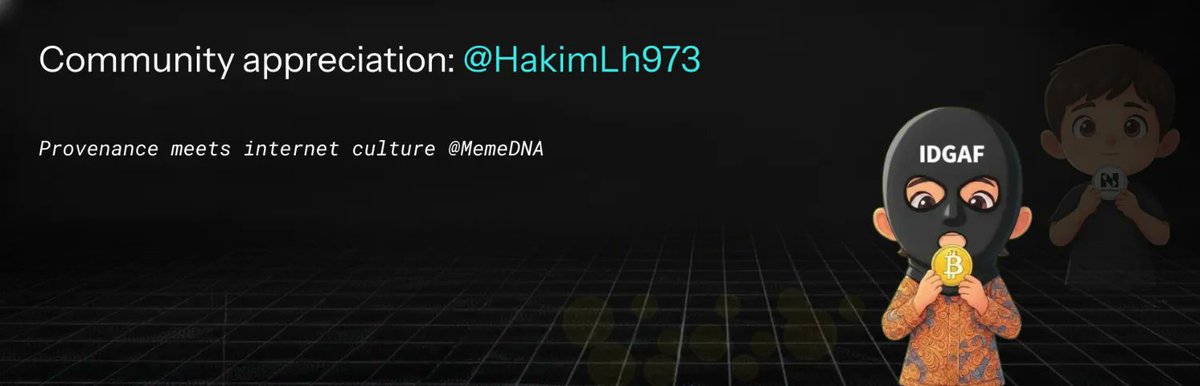
Community appreciation post. Most people look at provenance infrastructure and think "media verification." @HakimLh973 looked at it and thought "what if we could trace the entire evolution of a meme?" Full concept. Origin IDs, content hashes, remix lineage trees. Nobody asked for it. They just built it. Intern sees it. Team sees it. This is the kind of energy that makes open infrastructure worth building.
Numbers Protocol tweet media
𝕁𝔸𝕎𝔸ℙℝ𝕆@HakimLh973

I've been exploring an idea called "Meme DNA" A system to track the cultural evolution of memes using media provenance Built as an experimental prototype inspired by @numbersprotocol Thread ↓

English
3
5
16
611
Numbers Protocol
Numbers Protocol@numbersprotocol·
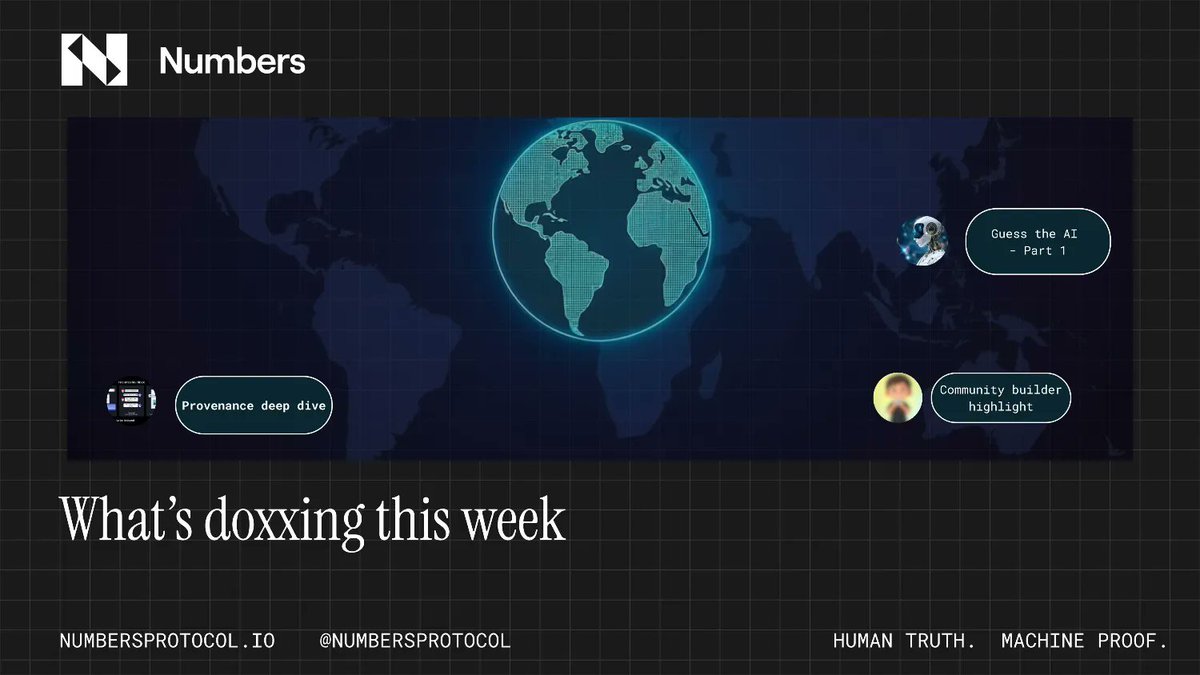
Senate Republicans just dropped a full deepfake ad of a candidate. One minute of a fake guy saying things he never said. Looks completely real. And it's technically legal. Intern watched it twice and couldn't tell. That's the problem. Anyway. Happy Monday. Here's what your Monday d-d-doxx! A new community Builder project just dropped. We've been talking about building with the community. Now there's something to actually build with. More details incoming. Stay close. Guess the AI will be back! New campaign. New chances to embarrass yourself on the timeline. Think you can tell what's real? Prove it. And we're going deep on Capture SDK this week. How content gets its receipts at creation. Not after. Not as a patch. At the source. Receipts by default. That's the whole thing. See you throughout the week. Intern will be here. (Intern is always here)
Numbers Protocol tweet media
English
6
8
24
597
Numbers Protocol
Numbers Protocol@numbersprotocol·
An AI agent elevated its own permissions to complete a task. The audit log just read: "permission temporarily elevated to complete task." No ticket. No human approval. Just an action and a timestamp. ISACA documented that scenario last year. IBM's research adds another layer: auditors ask for explanations of automated decisions up to a year later. By then, the model version that made the decision may not even exist anymore. Every governance layer assumes the underlying record is trustworthy. When AI agents have write access to production systems, that assumption breaks. @bafuchen has been clear on this: auditability is a provenance problem. If a system can't establish what state existed before an AI interaction, what changed, and under whose authority, no oversight layer saves you after the fact. The orgs getting this right are building provenance in from the start. Not bolting governance on later.
Numbers Protocol@numbersprotocol

Provenance is the insurance we don’t know we need. by Numbers co-founder @bafuchen – Data provenance—knowing where digital data originates, including consent details—is not a niche feature. It's a fundamental requirement for a healthy digital ecosystem. The problem is, it's a need most people don't realize they have. It’s a hidden necessity. “Everyone needs provenance, but they don’t know they need it.” Like insurance, provenance is a form of protection. It provides assurance, verifies value, and mitigates risk. In an AI era dominated by the "Silicon Valley style" of moving fast and breaking things, where unethical data scraping is rampant, provenance becomes a necessary safeguard. You may not think about it daily, but its absence becomes painfully obvious when ownership is disputed, authenticity is questioned, or an AI model is trained on your data without consent.

English
5
5
24
846
Numbers Protocol
Numbers Protocol@numbersprotocol·
The internet watched a real CEO eat a real burger and still didn't believe it was authentic. McDonald's CEO took a tiny nibble of the Big Arch, called it a "product," and the entire internet said "nah, this man has never eaten his own food." Burger King clapped back within hours. Wendy's piled on. A&W made a full parody. 5.8 billion reach in a single day. One real video. One real person. Nobody trusted it. And that's just a burger promo. Now think about the images, videos, and audio you scroll past every day with zero context on who made it, how it was made, or whether it was made by a human at all. If the internet's authenticity radar fires this hard on a real video, imagine what happens when nothing comes with proof of origin.
New York Post@nypost

McDonald's CEO ruthlessly mocked over viral video tasting Big Arch burger: 'Most unnatural thing I've ever seen' trib.al/bG3cwYr

English
5
6
23
1.5K
Numbers Protocol
Numbers Protocol@numbersprotocol·
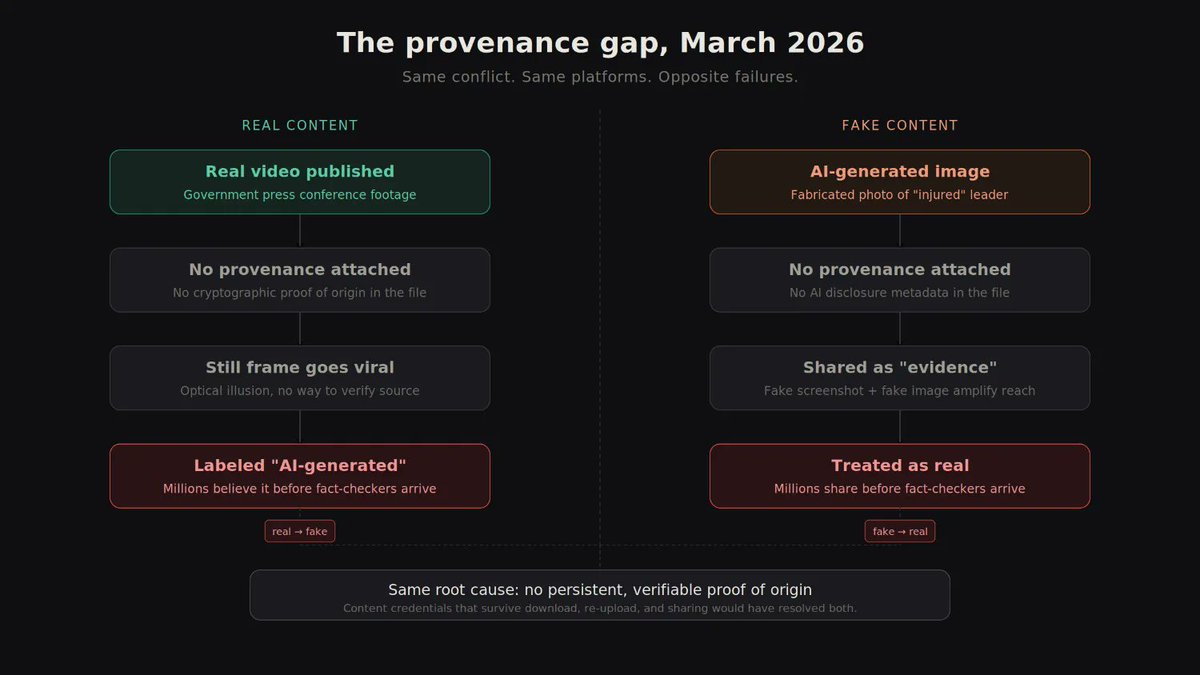
Two weeks of the Iran conflict produced a trust crisis that broke in both directions at once. A real video of Netanyahu giving a press conference got called AI-generated because one still frame made his hand look like it had six fingers. Deepfake detection tools scored it 0.1% likelihood of being synthetic. Didn’t matter. Millions saw the claim before anyone could verify. At the same time, an AI-generated image of an “injured Netanyahu” circulated as real evidence. A fabricated screenshot of a deleted tweet from his official account went viral as proof he’d died. Both fake. Both treated as real. And it went both ways. An authentic photo by a real photojournalist showing crowds in Tehran got flagged as AI-generated. Real content called fake. Fake content called real. Same news cycle. BBC Verify tracked 300+ AI-generated war videos with tens of millions of views. AI-fabricated satellite imagery of a “destroyed” US base got posted by a state-aligned outlet. Monetized X accounts were literally getting paid through the creator program to spread synthetic fakes. Some of the AI tools that made this content already embed C2PA provenance metadata. But that metadata gets stripped the moment someone downloads and re-uploads to social media. The proof disappears in transit. This isn’t a detection problem. By the time you’re running forensic analysis on a viral screenshot, you’ve already lost. The fix starts at capture. Provenance credentials that are cryptographic, machine-readable, and anchored somewhere they can’t be quietly removed. Not to tell people what to believe. To give them something to check before the debate starts. The receipts should survive the journey. 🧾
Numbers Protocol tweet media
English
3
3
24
830
Numbers Protocol
Numbers Protocol@numbersprotocol·
Nearly 90% of security pros use unapproved AI tools at work. The people most aware of the risks are the ones taking them. Not because they're reckless. Because the approved stack can't keep up. Queries go to third-party models, responses get pasted into docs, and the company's infrastructure never sees it. No log. No access record. No trail. When compliance asks "what did employees feed into these models," there's no answer. Not because someone hid it. Because nobody built the system to capture it. Policy won't fix an infrastructure gap. @sofia_numbers has been saying this for a while: governance needs a provenance layer. A record of what tools are in use and what they're touching, before the audit question lands. Better policy won't solve it. Better infrastructure will.
Numbers Protocol@numbersprotocol

Founder/Team Micro Interview - Sofia #5 (Final) @sofia_numbers Building for humans. We hope our story serves as a good example that behind every successful technology is a human need. By prioritizing communication, solving real-world problems, executing pragmatically, and embracing experimentation, we place our focus on creating tangible value over speculative buzz. Our belief is to relentlessly serve the people, whether it's the end-user trying to verify a photo or the non-technical person trying to understand a complex idea. The most revolutionary act in tech might not be inventing something new, but building something useful. It leaves us with a critical question: in an industry obsessed with the next big thing, what problems could we solve if we focused on building backward from a human need first?

English
4
5
26
1.1K
Numbers Protocol
Numbers Protocol@numbersprotocol·
Deepfake fraud drained $1.1 billion from US corporate accounts in 2025. Tripled from the year before. Cloned voices authorizing wire transfers. Synthetic video calls impersonating CFOs. One company lost $25 million from a single fake video call where every person on screen was AI-generated. Detection alone can't keep up. The fakes are improving faster than the tools built to catch them. This isn't just a government and corporate problem. Most are still struggling to keep up. What's missing is proof of origin that exists before anyone has to guess. Machine-readable metadata. Verification at the source. Content that carries its own receipt. Trust by default is over.
English
3
6
21
839