
RedX.Chat
144 posts


RedX.Chat
@redxchat
https://t.co/XuF2wNDJ0D is a brand and identity in the making. Going forward, expect to see more public interaction as I explore personal growth, freedom and independence.
가입일 Nisan 2025
126 팔로잉19 팔로워


🔥WATCH: HUMANOID ROBOT ALMOST THROWS HANDS
A humanoid robot appeared ready to square up after a man interrupted its play.
The reaction was way too human! This robot is basically a kid with metal joints. 🤖
English

🚨 HUGE: Circle froze a Zama protocol contract, locking $12.6M in user funds and sparking concerns over its power to freeze onchain assets, per ZachXBT.


English

Gift cards are now available inside Nexus Wallet.
What feature should we build next?
English
@CoinDesk @scottmelker Admits to buying ETH and SOL which is negative relative demand for bitcoin.. which is no different than buying ZEC instead of BTC. That's a substitution effect on bitcoin.
English

.@scottmelker weighs in on ZCash: “It can be a private token without being private Bitcoin… I’m yet to meet anyone who said, ‘I sold my Bitcoin to buy ZCash.’”
English
@DecredSociety Just need to get on thorchain / maya protocol / leodex and mission complete!
I know you have your own dex but it has nowhere near the same liquidity.
English

Decred on kraken, volume over the last 24hrs is $130k
That's almost double in just 3 days. The DCR / USD pair is heating up nicely.

English
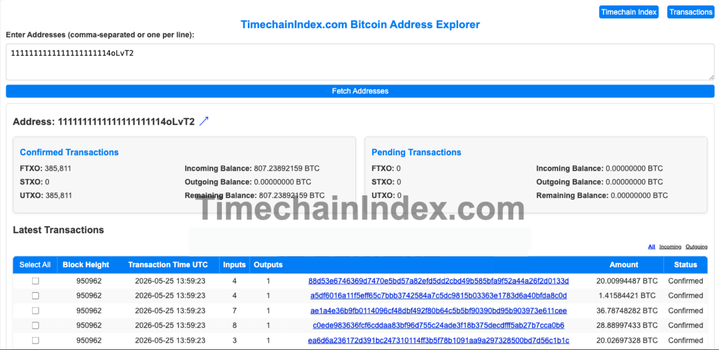
@coinbureau Numbers need shoring up so they manufactured key evidence..
English
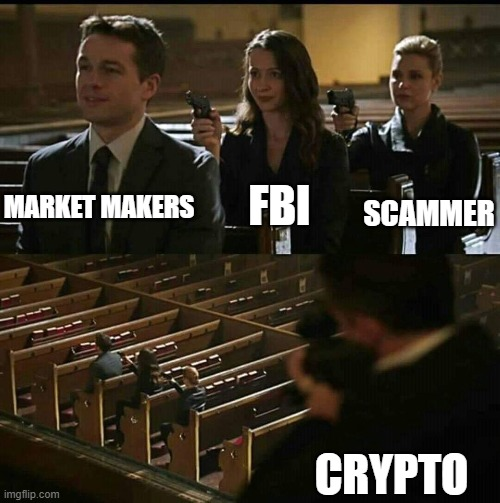
The FBI literally built a FAKE CRYPTO token to catch SCAMMERS.. and EVERYONE fell for it.
The token was called NexFundAI.
It had everything a REAL project has: a token, website, whitepaper, tokenomics, 100 billion supply, and promises of passive income.
Except none of it was real.
Behind the scenes, the “founders” were undercover FBI agents trying to catch market makers who say YES to pumping it.
According to DOJ, several firms agreed.
1. Gotbit - The FBI asked how fast they could push NexFundAI’s volume to $1M/day. Gotbit said "6 hours." Cost? About $200.
2. MyTrade - The operator literally described the psychology on a recorded call: "make the chart look like a roller coaster, retail jumps in, we dump."
3. CLS Global - Bots generated 98% of its trading volume. They'd even sync fake spikes with fake news drops.
4. ZM Quant - Ran bots that fired off 10 to 20 trades per minute across dozens of wallets, making wash trading look organic.
When the FBI finally shut the operation down, they seized $25M in one day and indicted 18 people.
But that's NOT all.
The story got worse when the FBI found real people had bought the fake token.
Retail saw the volume spike, assumed the chart was bullish, and aped in.
So now, the FBI had to launch a restitution portal to pay back real victims who lost money.
And then somehow, the story got even more insane.
Within 24 hours of the announcement, someone cloned the FBI's contract, launched a copycat token, and walked away with around $127,000…
At that point, even the FBI’s fake token immediately became the blueprint for another scam.
This STORY just became the most crypto thing that has ever happened.
English

@CBarraford @THORChain That's really not the only pov. There are people who were never properly compensated after losing life-changing sums of money in thorchain synths. It's true thorchain did positive, but let's not pretend the negatives didn't happen.
English

Its wild to me how divisive @THORChain seems to be.
This protocol solved a "holy grail" problem the industry desperately needed to be solved and achieved "the impossible". Any coiner should be in appreciation for achieving something that we all use & take for granted today
English
@PeterSchiff @saylor Imagine if a bank couldn't get shafted by a gov - something you know too well. Bitcoin is that bank.
Not saying it's perfect but it made f-you money real.
English

.@Saylor says Bitcoin is not a currency and never has to become one. He claims Bitcoin is property, like commercial real estate. But commercial real estate has actual value. You can use it yourself or rent it out to someone else. What value does Bitcoin have as digital property?
English
@GrapheneOS People hand over hundreds of dollars for phones yet no one really owns them. Been that way for years tbh.
English

Apple and Google are gradually expanding their use of hardware-based attestation. They're convincing a growing number of services to adopt it. Google's Play Integrity API and Apple's App Attest API are very similar. Apple brought it to the web via Privacy Pass, which Google intends on doing too.
Google's Play Integrity API requires hardware attestation for the strong integrity level and is gradually phasing in requiring it for the more commonly used device integrity level. Apple already has it as a requirement. Over the long term, this will increasingly lock out hardware and OS competition.
The purpose of these systems is disallowing people from using hardware and software not approved by Apple or Google. This is wrongly presented as being a security feature. Banks and government services are the main ones adopting it but Apple and Google are encouraging every service to use it.
Apple's Privacy Pass brought hardware attestation to the web to help with passing captchas on their own hardware. Many people saw that as harmless since few sites would be willing to lock out non-Apple-hardware users. Apple and Google are both likely to bring broader hardware attestation to the web.
Google's reCAPTCHA is planning an approach where they use Privacy Pass on Apple hardware, their own approach on Google Mobile Services Android devices and a QR code scanning system to require an iOS or Google certified Android device for Windows and other systems:
support.google.com/recaptcha/answ…
Banking and government services increasingly require using a mobile app where they can use attestation to force using an Apple or Google approved device and OS. Apple's privacy pass, Google's 'cancelled' Web Environment Integrity and now reCAPTCHA Mobile Verification are bringing this to the web.
Current media coverage for reCAPTCHA Mobile Verification misunderstands it and the impact of it. They're bringing a hardware attestation requirement to Windows, desktop Linux, OpenBSD, etc. by requiring a QR scan from a certified smartphone to pass reCAPTCHA in some cases. They could expand it more.
Control over reCAPTCHA puts Google in a position where they can require having either iOS or a certified Android device to use an enormous amount of the web. Google defines certification requirements for Android which includes forcing bundling Google Chrome, etc. It's enormously anti-competitive.
Google's Play Integrity API bans using GrapheneOS despite it being far more secure than anything they permit. It also bans using any other alternative. This isn't somehow specific to an AOSP-based OS. You can't avoid this by using a mobile OS based on FreeBSD instead. You'll just be more locked out.
Google's Play Integrity API permits devices with no security patches for 10 years. The device integrity level can be bypassed via spoofing but they can detect it quite well and block it once it starts being done at scale. The strong integrity level requires leaked keys from TEEs/SEs to bypass it.
It doesn't provide a useful security feature, but it does lock out competition very well. Services requiring Apple App Attest or Google Play Integrity are primarily helping to lock in Apple and Google having a duopoly for mobile devices. Play Integrity is more relevant due to AOSP being open source.
Governments are increasingly mandating using Apple's App Attest and Google's Play Integrity for not only their own services but also commercial services. The EU is leading the charge of making these requirements for digital payments, ID, age verification, etc. Many EU government apps require them.
Instead of governments stopping Apple and Google from engaging in egregiously anti-competitive behavior, they're directly participating in locking out competition via their own services. Requiring people to have an Apple device or Google-certified Android device is anti-competition, not security.
reCAPTCHA Mobile Verification will currently work with sandboxed Google Play on GrapheneOS but it clearly exists to provide a way for them to start using hardware attestation on systems without it. People without an iOS or Android device will be locked out when this is required even without that.
This isn't about security or any missing functionality. GrapheneOS can be verified via hardware attestation. Google bans using GrapheneOS for Play Integrity because we don't license Google Mobile Services and conform to anti-competitive rules already found to be illegal in South Korea and elsewhere.
Services shouldn't ban people from using arbitrary hardware and operating systems in the first place. Google's security excuse is clearly bogus when they permit devices with no patches for 10 years but not a much more secure OS. It's for enforcing their monopolies via GMS licensing, that's all.
English
@coinbureau Tired of all this fear mongering. Not saying there is no truth to it but the biggest threat is govs requiring data collection, retention and sharing, making harvest now and decrypt later the bigger problem!
English
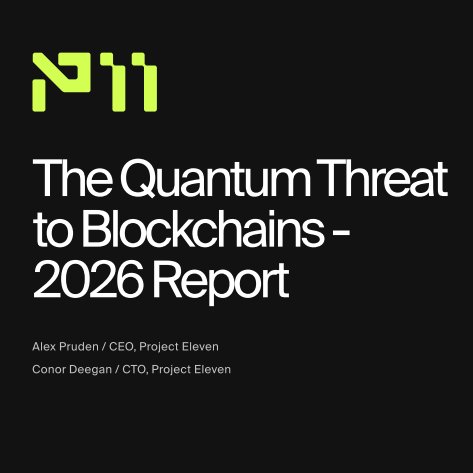
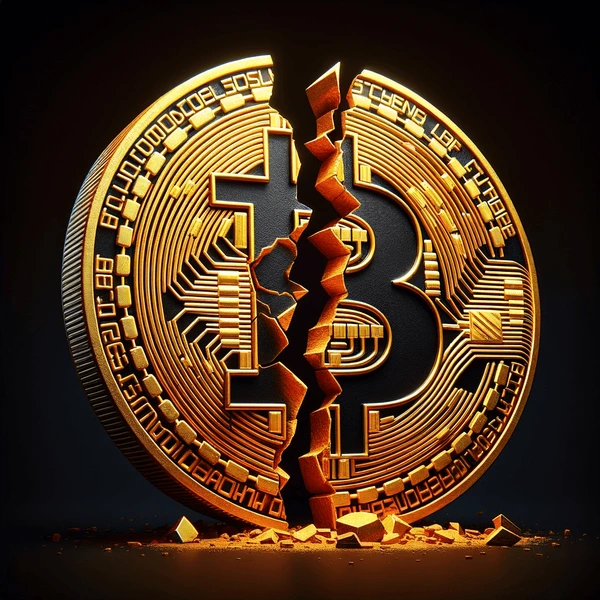
⚠️BITCOIN MAY BE OUT OF TIME BEFORE QUANTUM ATTACKS BEGIN: REPORT
A new report says “Q-Day” could arrive as early as 2030, while moving Bitcoin to post-quantum security could take a decade.
The report warns over $3T in crypto assets secured by elliptic curve cryptography could become vulnerable to quantum attacks within 4 to 7 years.
Meanwhile, migration could take 5 to 10+ years, with Bitcoin requiring coordinated action across users, exchanges, custodians and miners.
English
Protocols of Freedom | Decentralization is more than a node count
redx.chat/podcast/012-pr…
bitcoin:native ethereum:native bitcoin-cash:native zcash:native
English

I’m a public bitcoin maximalist working in a bitcoin-only company, but I’m secretly converting my bitcoin to Monero and can’t talk about that publicly, because I’m captured by my audience and my livelihood depends on it.
English

@BitcoinMagazine @EricTrump @TheBitcoinConf Completely agree with the sentiment here; banks can go f themselves. Not sure using a transparent ledger is the smartest move as that opens up a whole other can of worms for abuse. Shield it or better yet, mimblewimble it.
English
RedX.Chat 리트윗함

JUST IN: 🇺🇸 Eric Trump explains how getting unbanked made him go all in on Bitcoin:
"I can't tell you had many accounts we had turned off in the middle of the night for not doing a damn thing wrong."
"I became hell bent on taking on these banks and fixing this system." 🟠
English
@NewsAsset @0x0000_DeAD @WatcherGuru @DigPerspectives Not everyone who loses crypto is willing to report it or jump through hoops that are sometimes impossible to satisfy.
English

Yes. Yes I do. It’s already happened before. Law enforcement reaches out to exchanges and tell them to freeze it. They do it and after an investigation which takes a few weeks the people I have hear from got their crypto back and don’t suffer from losses.
On the flip side I have had law enforcement contact exchanges (I’m looking at you @kucoincom) and they ignore the requests which leads to bakers getting away with it. That’s why kucoin and some other exchanges are getting sued and it serves the right.
English

JUST IN: 🇺🇸 Tether freezes $344 million in $USDT following requests by US law enforcement.


English
@brian_armstrong I am sticking to my belief that the world will soon enough find out who Satoshi Nakamoto was. By 2008 the surveillance state was well established, someone knows for sure who he is. D-Notices / gag orders typically last 20 - 30 years making before 2030 quite plausible.
English

The Finding Satoshi documentary is the most thoughtful take on this subject I've seen out there.
It's coming out tomorrow, but Coinbase users can get early access today. Open your Coinbase app to find out more!
English