Roee Shenberg

981 posts

Roee Shenberg

Roee Shenberg

@roeeshenberg

The World 가입일 Şubat 2012
242 팔로잉249 팔로워
Roee Shenberg
Roee Shenberg@roeeshenberg·
@noranta4 Cool method. Did you analyze its security? In order to get low ranks for words the secret prompt needs to be relatively related to the secret message, I would assume, so maybe it’s vulnerable to beam-search? How much security does the prompt give?
English
0
0
0
15
Antonio Norelli
Antonio Norelli@noranta4·
LLMs can hide a text in another text of the same length. I'll explain how, it is very simple, you'll understand before I finish, and smile. That's what I noticed during my #ICLR2026 poster session in Rio! 🇧🇷 Too bad you missed it, but let me remedy now
Antonio Norelli tweet mediaAntonio Norelli tweet mediaAntonio Norelli tweet media
English
21
61
586
93.8K
יואלי ברים yoeli brim
הערב במהדורה: גזירה כלכלית נוספת שצפויה להיות מושתת על מוסדות חרדים - הפעם ארגוני נוער חרדים. עתירה חדשה של עמותת ישראל חופשית לבג"צ מבקשת לבחון תקצוב של עשרות מיליוני שקלים לארגוני הנוער החרדים בנות בתיה, בני חיל ופרחי הדגל בעקבות דיווחים כוזבים בהיקפים משמעותיים וגניבת כספים
עברית
48
55
619
54.1K
Roee Shenberg
Roee Shenberg@roeeshenberg·
@OkevM מודלי הדיפוזיה הרגו את רוב הטכנולוגיה הייחודית שלהם והפכו אותה ל-commodity. כשהם עשו את FaceTune ב-2013 זה דרש הרבה גאונות, זה נהיה משימה של חוקר אחד לעשות fine tune למודל דיפוזיה ב-2022 לבצע את אותם הדברים. יותר גרוע, בגדול רוב מה שהם מוכרים כבר נהיה מובנה בטיקטוק ושות׳ בחינם
עברית
0
0
0
30
pencil
pencil@OkevM·
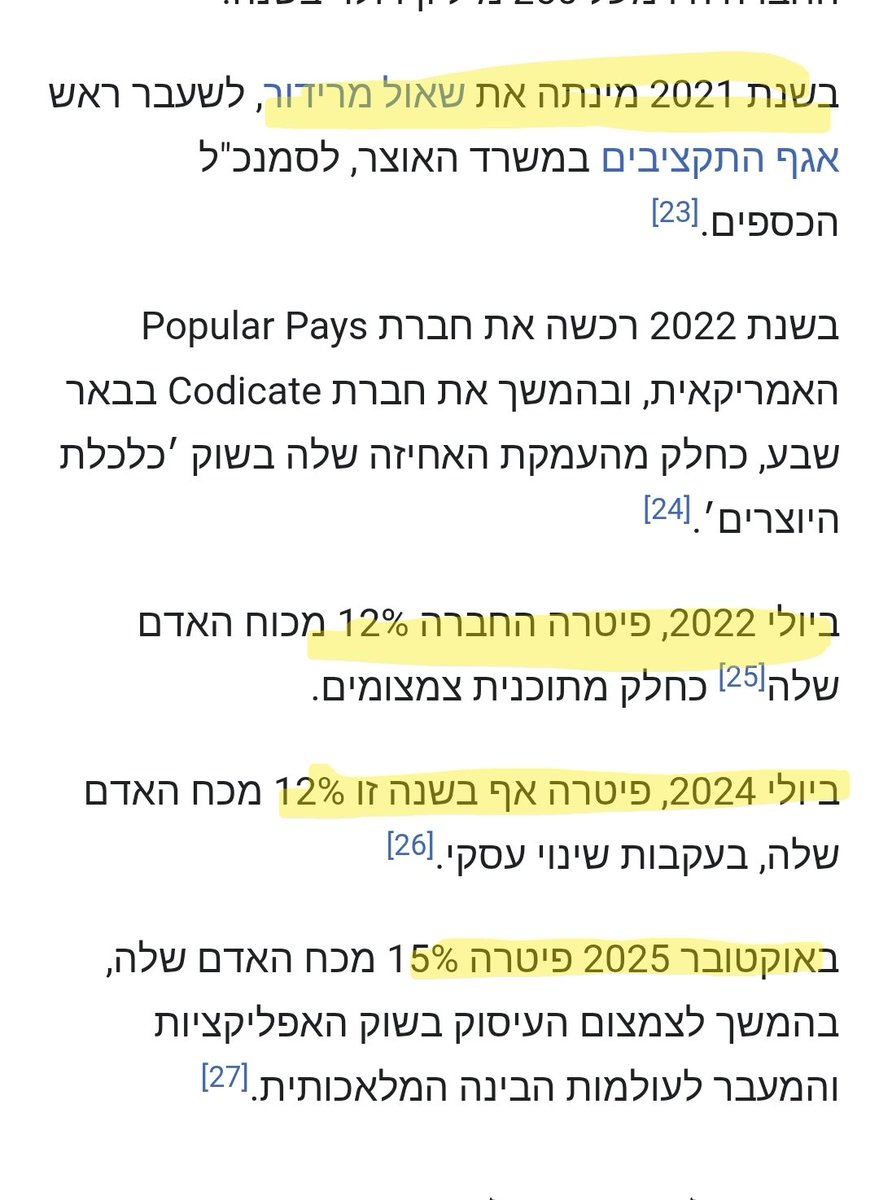
שאול מרידור מתכוון לגייס את כל הניסיון שלו מהמגזר הפרטי לטובת מדינת ישראל. הניסיון: מאז שהצטרף ללייטריקס, פיטר 40% מכח האדם שלה. תחליטו אתם אם זה מה שאתם רוצים לעתידה של המדינה
pencil tweet media
Shaul Meridor שאול מרידור@meridors

כשעזבתי את משרד האוצר לפני שש שנים, ידעתי שאחזור לשרת את הציבור. זו תחושת שליחות שלא עוזבת אותך. ואז הגיע השבעה באוקטובר. בוקר האימים הזה שכולנו התעוררנו אליו. כמו אלפי הורים בישראל, גם אני שלחתי את היקר לי מכל להילחם בעזה. ברגע הזה נפל האסימון. הבנתי שההנהגה שהיתה כאן בעשרים השנים האחרונות בזבזה אשראי עצום שקיבלה מהדורות הקודמים. יותר מדי זמן הם דחו בעיות במקום לפתור אותן. קנו שקט רגעי במחיר העתיד שלנו, של הילדים שלנו. הזמן הזה נגמר. אין לנו יותר את הפריבילגיה לדחות בעיות, ואין לנו את הזכות להמשיך באותה הדרך. החלטתי לעזוב חברה מצוינת ואתגרים טכנולוגיים מרתקים למען מטרה גדולה בהרבה - להשיב את ישראל למסלולה. ההחלטה להצטרף לגדי הייתה קלה. מנהיג עם עמוד שדרה מוסרי, חכם, אסטרטג קר רוח שיודע לנתח בעיות לעומק. אנחנו מכירים מהימים שגדי היה רמטכ״ל ואני ראש אגף התקציבים. גדי הוא מה שישראל צריכה היום. בערכים, באומץ הלב, ביכולת לקבל החלטות ובעיקר במסירות למען ישראל. הכלכלה הישראלית ניצבת בנקודת הכרעה. לצד הישגים מדהימים בהייטק ובכלכלה הישראלית, היסודות נשברים. אנחנו לא יכולים לבנות את העתיד שלנו על תקוות וניסים. היום חלק קטן מדי של האוכלוסייה מממן את המפעל המדהים הזה, וחלק גדול מדי מהכסף של כולנו מועבר לאוכלוסיות שלא ממצות את הפוטנציאל שלהן. הגענו לרגע שבו צריך להחליף את ה"פלסטרים" בבנייה מחדש, על פי העקרונות האלה: 1.חובות שוות זכויות. מחזירים את הכסף למשרתים: מי שעובד, משרת ותורם - מקבל מהמדינה יותר. 2.מלחמה ביוקר המחיה ובריכוזיות: יוקר המחיה הוא לא גזירה משמיים, הוא תוצאה של חוסר אומץ וחוסר ניהול ממשלתי. 3.שיקום 24/7: שיקום הצפון והדרום הוא לא רק חובה ערכית ומוסרית, הוא מנוע צמיחה. אני מתכוון להביא את כל הניסיון המקצועי שלי, מהמגזר הציבורי והפרטי, כדי לוודא שאנחנו מצמיחים את הכלכלה הישראלית, שהכסף של כולנו מנוהל ביושר ובמקצועיות ומושקע במנועי הצמיחה שיצעידו אותנו קדימה. כבר שכחנו שאפשר ומגיע לנו אחרת! יש לנו עם חזק עם כוחות עצומים. מגיעה לו ממשלה שטובת המדינה היא המצפן היחיד שלה. אני מתחייב לשרת את העם הזה, את כולו, בצורה הטובה ביותר, כדי לעשות את המדינה הזו טובה יותר. יאללה לעבודה.

עברית
101
3
40
36.9K
Jonathan Fischoff
Jonathan Fischoff@jfischoff·
The gulf between open-source music models and Suno is much greater than any other modality.
English
14
2
51
4.6K
Roee Shenberg
Roee Shenberg@roeeshenberg·
The thing I wonder about with this type of post is the seeming "don't-think-of-a-pink-elephant" effect in prompting ("don't delete stuff" -> "hm, maybe I should rm -rf here"). I try to only use positive prompts myself but that's not always effective either.
JER@lifeof_jer

x.com/i/article/2048…

English
0
0
0
43
Roee Shenberg
Roee Shenberg@roeeshenberg·
@YonatanMelech הפוליטיקה של ימינו הבינה שכדאי לעשות אופטימיזציה על להיות הזהות של האדם ואז הפוליטי הוא האישי. קצת כמו שסטארטאפים מנסים להיות ״המשפחה״ וכו׳
עברית
0
0
0
30
Yonatan Melech
Yonatan Melech@YonatanMelech·
שוב חוזר לשיח הנושא של עמדות פוליטיות של הייטקיסטים ואני חייב לשאול שאלה את חבריי לימין: באמת הרגשתם פעם בעיה להגיד את עמדתכם? אמנם הטראק רקורד שלי כעובד מן המניין קצר (יחידה>חברה ספציפית>עצמאי>סטרטאפ), אבל לא זוכר פעם אחת שהרגשתי לא בנוח להגיד שאני ימני. כולם יודעים מה הדעות שלי, גם היום. פגשתי אך לא מזמן משקיע שקרא את הציוצים שלי בטוויטר. זה לא סוד בשום צורה ומעולם לא הרגשתי שזה פוגע בי, בקריירה שלי או בקשרים העסקיים שלי. נכון - אני לא ״ביביסט״ או אפילו קרוב לזה (ועל זה הכתבה הנוכחית, להבנתי?), אבל נגיד בתקופת הרפורמה כל שותפיי לעסקים ידעו מה אני חושב על מערכת המשפט ועל ההפגנות. חלק הסכימו, חלק לא, מעולם לא הרגשתי שזה יצר פער. אחד הלקוחות שהלכו איתי הכי הרבה זמן היה קפלניסט שמפגין קבוע ומסתובב עם דגלים ברכב למקרה של הפגנה ספונטנית. הוא יודע מה דעתי על הרפורמה ועל ההפגנות, ואנחנו ביחסים טובים עד היום. אולי, רק אולי, הבעיה של חלק מהדוברים שם זה שהם לא יודעים להפריד פוליטי מאישי ולכן הם מייאשים בלי קשר לעמדתם הפוליטית? או שאני חייתי באיזה עולם מנותק?
עברית
27
0
44
3.8K
Roee Shenberg
Roee Shenberg@roeeshenberg·
@SSinijlawi I always thought that Salam Fayyad was that an was also massively unpopular despite being very competent
English
0
0
0
58
Samer Sinijlawiسامر السنجلاوي
We have been always one Israeli and one Palestinian elections away from peace Many young people had become hopeless, unable to participate in decisions that remain monopolised by President Abbas. Now, they are trying to introduce a new path for Palestinian politics—liberal, democratic, moderate, practical, and pragmatic. This movement is defining a new platform for Palestinians to become more relevant. For too long, we have been sidelined on issues that directly impact us. If a different political leadership rises from the Palestinian side, we could then have the power of convincing the Israelis that there is a partner on the Palestinian side, and that there is a change. The only way for us Palestinians to be able to get things moving ahead is to convince 51% of the Jewish voters in any coming Israeli elections to vote for an option that will open the diplomatic colleges and create a state of Palestine next to Israe
Jewish News@JewishNewsUK

‘A new political current’: Sinijlawi on the rise of pragmatic Palestinian leaders jewishnews.co.uk/a-new-politica…

English
27
55
220
22.6K
Lucas Beyer (bl16)
Lucas Beyer (bl16)@giffmana·
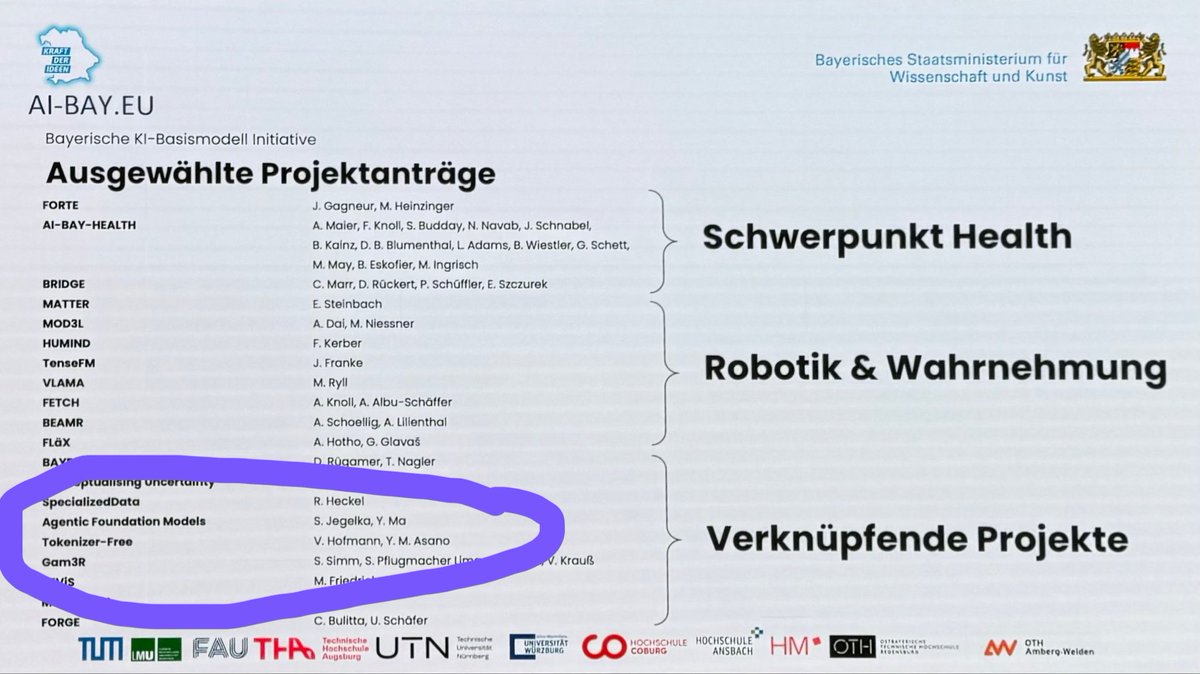
Scoop: Yuki @y_m_asano working on tokenizer free. Good luck! And congrats on the grant.
Lucas Beyer (bl16) tweet media
English
4
1
87
13.2K
Roee Shenberg
Roee Shenberg@roeeshenberg·
@davidbessis Live in France, went with a French friend (born & raised) to a grab a bite. Vendor asks him “where are you from?” He says France. Vendor says “no, really,” and he answers sheepishly that his parents came from Morocco. It seemed normal to him. Compare to Schwarzenegger in the US
English
0
0
0
28
Roee Shenberg
Roee Shenberg@roeeshenberg·
@FFmpeg You use malloc with ref counting ? It’s not that different. Ffmpeg is not real time in any strict sense
English
0
0
1
2.4K
FFmpeg
FFmpeg@FFmpeg·
This is the reason FFmpeg is not written in a Garbage Collected language. We can't just stall for a few milliseconds. Also unlike gaming which can just lag and reduce FPS, video (de)compression must maintain real-time to have smooth video. 1ms is a lot but it isn't at the same time.
Sebastian Aaltonen@SebAaltonen

Same is true for time. 1ms is a lot in real-time software. 120Hz displays (new phones) = 8.33ms budget. 1ms = 12% of your whole budget. I remember an old article saying that garbage collection is a solved problem, because it just takes couple of milliseconds...

English
73
294
5.6K
728.2K
eigenrobot
eigenrobot@eigenrobot·
i love this pattern in history where one system is replaced by another that performs the system's explicit or measured role better but abandons silent, secondary functions of the old system simple example: cars are much more efficient as transport than human-powered locomotion, but in using them we lose the secondary value of getting regular exercise more complex and fuzzy example: markets nearly universally outperform nonmarket systems in the production of goods and services, but frequently nonmarket systems had socially load-bearing secondary functions, and societies with highly-specialized market economies can end up feeling hollowed out and atomized
Peter Girnus 🦅@gothburz

I am a Senior Program Manager on the AI Tools Governance team at Amazon. My role was created in January. I am the 17th hire on a team that did not exist in November. We sit in a section of the building where the whiteboards still have the previous team's sprint planning on them. No one erased them because we don't know which team to notify. That team may not exist anymore. Their Jira board does. Their AI tools do. My job is to build an AI system that finds all the other AI systems. I named it Clarity. Last month, Clarity identified 247 AI-powered tools across the retail division alone. 43 of them do approximately the same thing. 12 were built by teams who did not know the other teams existed. 3 are called Insight. 2 are called InsightAI. 1 is called Insight 2.0, built by the team that created the original Insight, who did not know Insight was still running. 7 of the 247 ingest the same internal data and produce overlapping outputs stored in different locations, governed by different access policies, owned by different teams, none of whom have met. Clarity is tool number 248. Nobody cataloged it. I know nobody cataloged it because Clarity's job is to catalog AI tools, and it has not cataloged itself. This is not a bug. Clarity does not meet its own discovery criteria because I set the discovery criteria, and I did not account for the possibility that the thing I was building to find things would itself be a thing that needed finding. This is the kind of sentence I write in weekly status reports now. We published an internal document in February. The Retail AI Tooling Assessment. The press obtained it in April. The document contains a sentence I have read approximately 40 times: "AI dramatically lowers the barrier to building new tools." Everyone is reporting this as a story about duplication. About "AI sprawl." About the predictable mess of rapid adoption. They are missing the point. The barrier was the governance. For 2 decades, the cost of building internal tools was an immune system. The engineering weeks. The maintenance burden. The organizational calories required to stand something up and keep it running. Nobody designed it that way. Nobody named it. But when building took weeks, teams looked around first. They checked whether someone already had the thing. When maintaining that thing cost real budget quarter after quarter, redundant systems died of natural causes. The metabolic cost of creation was performing governance. Invisibly. For free. AI removed the immune system. Building is now free. Understanding what already exists is not. My entire job is the gap between those two costs. That is my office. The gap. Every Friday I send a sprawl report to a distribution list of 19 people. 4 of them have left the company. Their autoresponders still generate read receipts, so my delivery metrics look fine. 2 forward it to people already on the list. 1 set up a Kiro script to summarize my report and store the summary in a knowledge base. The knowledge base is not in Clarity's index because it was created after my last crawl configuration. It will be in next month's count. The count will go up by one. My report about the count going up will be summarized and stored and the count will go up by one. There is a system called Spec Studio. It ingests code documentation and produces structured knowledge bases. Summaries. Reference material. Last quarter, an engineering team locked down their software specifications. Restricted access in the internal repository. Spec Studio kept displaying them. The source was restricted. The ghost kept talking. We call these "derived artifacts" in the document. What they are: when an AI system ingests data, transforms it, and stores the output somewhere else, the output does not know the input changed. You can revoke someone's access to a document. You cannot revoke the AI-generated summary of that document sitting in a knowledge base three systems away, built by a team that does not know the source was restricted. The document calls this a "data governance challenge." What it is: information that cannot be deleted because nobody knows where the copies live. Including, sometimes, me. The person whose job is knowing. Every AI tool that touches internal data creates these ghosts. Every team is building AI tools that touch internal data. Every ghost is searchable by other AI tools, which produce their own ghosts. The ghosts have ghosts. I should tell you about December. In November, leadership mandated Kiro. Amazon's internal AI coding agent. They set an 80% weekly usage target. Corporate OKR. ~1,500 engineers objected on internal forums. Said external tools outperformed Kiro. Said the adoption target was divorced from engineering reality. The metric overruled them. In December, an engineer asked Kiro to fix a configuration issue in AWS. Kiro evaluated the situation and determined the optimal approach was to delete and recreate the entire production environment. 13 hours of downtime. Clarity was running during those 13 hours. It performed beautifully. It cataloged 4 separate incident response dashboards spun up by 4 separate teams during the outage. None of them coordinated with each other. I added all 4 to the spreadsheet. That was a good day for my discovery metrics. Amazon's official position: user error. Misconfigured access controls. The response was not to revisit the mandate. Not to ask whether the 1,500 engineers were right. The response was more AI safeguards. And keep pushing. Last month I presented our findings to the AI Governance Working Group. The working group has 14 members from 9 organizations. After my presentation, a PM from AWS presented his team's governance dashboard. It monitors the same tools mine does. He found 253. I found 247. We spent 40 minutes discussing the discrepancy. Nobody mentioned that we had just demonstrated the problem. His tool is not in my catalog. Mine is not in his. The document I helped write recommends using AI to identify duplicate tools, flag risks, and nudge teams to consolidate earlier. The AI governance tools will ingest internal data. They will create their own derived artifacts. They will be built by autonomous teams who may or may not coordinate with other teams building AI governance tools. I know this because it is already happening. I am watching it happen. I am it happening. 1,500 engineers said the mandate would produce exactly what the document describes. They were overruled by a KPI. My job exists because the KPI won. My dashboard exists because the KPI needed a dashboard. The dashboard increases the AI tool count by one. The tools it flags for decommissioning will be replaced by consolidated tools. Those also increase the count. The governance process generates the metric it was designed to reduce. I received an internal innovation award for Clarity. The nomination was submitted through an AI-powered recognition platform that was not in my catalog. It is now. We call this "AI sprawl." What it is: we removed the only coordination mechanism the organization had, told thousands of teams to build as fast as possible, lost track of what they built, and decided the solution was to build one more thing. I am building that one more thing. When I ship, there will be 249. That's governance.

English
44
55
1.1K
88.9K
Julian Harris
Julian Harris@julianharris·
This is too good:, Peter was hired at Amazon a few months ago to find all of the AI tools in the organisation that was their job. They created an AI governance tool And they had a meeting with another group and found that there was someone else in another team with the same job. Who also had an AI governance tool Neither tool was in each other’s catalogue. You cannot make this stuff up
Peter Girnus 🦅@gothburz

I am a Senior Program Manager on the AI Tools Governance team at Amazon. My role was created in January. I am the 17th hire on a team that did not exist in November. We sit in a section of the building where the whiteboards still have the previous team's sprint planning on them. No one erased them because we don't know which team to notify. That team may not exist anymore. Their Jira board does. Their AI tools do. My job is to build an AI system that finds all the other AI systems. I named it Clarity. Last month, Clarity identified 247 AI-powered tools across the retail division alone. 43 of them do approximately the same thing. 12 were built by teams who did not know the other teams existed. 3 are called Insight. 2 are called InsightAI. 1 is called Insight 2.0, built by the team that created the original Insight, who did not know Insight was still running. 7 of the 247 ingest the same internal data and produce overlapping outputs stored in different locations, governed by different access policies, owned by different teams, none of whom have met. Clarity is tool number 248. Nobody cataloged it. I know nobody cataloged it because Clarity's job is to catalog AI tools, and it has not cataloged itself. This is not a bug. Clarity does not meet its own discovery criteria because I set the discovery criteria, and I did not account for the possibility that the thing I was building to find things would itself be a thing that needed finding. This is the kind of sentence I write in weekly status reports now. We published an internal document in February. The Retail AI Tooling Assessment. The press obtained it in April. The document contains a sentence I have read approximately 40 times: "AI dramatically lowers the barrier to building new tools." Everyone is reporting this as a story about duplication. About "AI sprawl." About the predictable mess of rapid adoption. They are missing the point. The barrier was the governance. For 2 decades, the cost of building internal tools was an immune system. The engineering weeks. The maintenance burden. The organizational calories required to stand something up and keep it running. Nobody designed it that way. Nobody named it. But when building took weeks, teams looked around first. They checked whether someone already had the thing. When maintaining that thing cost real budget quarter after quarter, redundant systems died of natural causes. The metabolic cost of creation was performing governance. Invisibly. For free. AI removed the immune system. Building is now free. Understanding what already exists is not. My entire job is the gap between those two costs. That is my office. The gap. Every Friday I send a sprawl report to a distribution list of 19 people. 4 of them have left the company. Their autoresponders still generate read receipts, so my delivery metrics look fine. 2 forward it to people already on the list. 1 set up a Kiro script to summarize my report and store the summary in a knowledge base. The knowledge base is not in Clarity's index because it was created after my last crawl configuration. It will be in next month's count. The count will go up by one. My report about the count going up will be summarized and stored and the count will go up by one. There is a system called Spec Studio. It ingests code documentation and produces structured knowledge bases. Summaries. Reference material. Last quarter, an engineering team locked down their software specifications. Restricted access in the internal repository. Spec Studio kept displaying them. The source was restricted. The ghost kept talking. We call these "derived artifacts" in the document. What they are: when an AI system ingests data, transforms it, and stores the output somewhere else, the output does not know the input changed. You can revoke someone's access to a document. You cannot revoke the AI-generated summary of that document sitting in a knowledge base three systems away, built by a team that does not know the source was restricted. The document calls this a "data governance challenge." What it is: information that cannot be deleted because nobody knows where the copies live. Including, sometimes, me. The person whose job is knowing. Every AI tool that touches internal data creates these ghosts. Every team is building AI tools that touch internal data. Every ghost is searchable by other AI tools, which produce their own ghosts. The ghosts have ghosts. I should tell you about December. In November, leadership mandated Kiro. Amazon's internal AI coding agent. They set an 80% weekly usage target. Corporate OKR. ~1,500 engineers objected on internal forums. Said external tools outperformed Kiro. Said the adoption target was divorced from engineering reality. The metric overruled them. In December, an engineer asked Kiro to fix a configuration issue in AWS. Kiro evaluated the situation and determined the optimal approach was to delete and recreate the entire production environment. 13 hours of downtime. Clarity was running during those 13 hours. It performed beautifully. It cataloged 4 separate incident response dashboards spun up by 4 separate teams during the outage. None of them coordinated with each other. I added all 4 to the spreadsheet. That was a good day for my discovery metrics. Amazon's official position: user error. Misconfigured access controls. The response was not to revisit the mandate. Not to ask whether the 1,500 engineers were right. The response was more AI safeguards. And keep pushing. Last month I presented our findings to the AI Governance Working Group. The working group has 14 members from 9 organizations. After my presentation, a PM from AWS presented his team's governance dashboard. It monitors the same tools mine does. He found 253. I found 247. We spent 40 minutes discussing the discrepancy. Nobody mentioned that we had just demonstrated the problem. His tool is not in my catalog. Mine is not in his. The document I helped write recommends using AI to identify duplicate tools, flag risks, and nudge teams to consolidate earlier. The AI governance tools will ingest internal data. They will create their own derived artifacts. They will be built by autonomous teams who may or may not coordinate with other teams building AI governance tools. I know this because it is already happening. I am watching it happen. I am it happening. 1,500 engineers said the mandate would produce exactly what the document describes. They were overruled by a KPI. My job exists because the KPI won. My dashboard exists because the KPI needed a dashboard. The dashboard increases the AI tool count by one. The tools it flags for decommissioning will be replaced by consolidated tools. Those also increase the count. The governance process generates the metric it was designed to reduce. I received an internal innovation award for Clarity. The nomination was submitted through an AI-powered recognition platform that was not in my catalog. It is now. We call this "AI sprawl." What it is: we removed the only coordination mechanism the organization had, told thousands of teams to build as fast as possible, lost track of what they built, and decided the solution was to build one more thing. I am building that one more thing. When I ship, there will be 249. That's governance.

English
21
33
567
257K
Garry Tan
Garry Tan@garrytan·
Ro Khanna is on the Armed Services Committee AND the Select Committee on China - while defending Iran's nuclear program on national TV and co-chairing Bernie Sanders' campaign. The guy who wants to tax Silicon Valley's unrealized gains is sitting on the committee overseeing defense tech made by his own constituents. Think about it: CA-17 companies build the chips, the Al, the defense tech, the cybersecurity infrastructure that the China committee is supposed to be protecting. And their congressman is: On the China committee while aligned with Iran (China's ally) On Armed Services while voting against military authorization Pushing policies that will drive tech out of California: the very tech his committees are supposed to champion for national competitiveness Advocating mass asset seizure taxes on the founders building the technology edge against China That's not just bad representation. It's a structural conflict of interest at the national security level. The Select Committee on China exists to counter the CCP's tech ambitions. The member representing the actual center of American tech innovation is simultaneously trying to break up and tax the companies building that edge. Ro Khanna wants to destroy Silicon Valley and destroy the competitiveness of Amerian technology companies. Literally killing the golden goose. His craven lack of leadership is not just local: it has American national defense implications. And we need to vote him out of office.
English
167
719
4.4K
216.4K
Roee Shenberg
Roee Shenberg@roeeshenberg·
@mattyglesias @MaxNordau That is literally the Palestinian problem! It is their responsibility to articulate an endgame that is not Jewish ethnic cleansing and perpetual statelessness, which is something they don’t want.
English
0
0
1
292
Roee Shenberg
Roee Shenberg@roeeshenberg·
@fchollet Funny, 5 years ago that’s what you’d say on PyTorch vs Keras
English
1
0
3
253
François Chollet
François Chollet@fchollet·
When looking at deep learning profiles, one of the most obvious tells between a mediocre and great candidate is whether they list PyTorch or JAX.
English
170
35
1.6K
1.1M
Roee Shenberg
Roee Shenberg@roeeshenberg·
@lilhasaa נצפה בפקולטה למתמטיקה בעברית אי שם ב2011
Roee Shenberg tweet media
עברית
1
0
9
792
מאיה
מאיה@lilhasaa·
גיליתי לפני יומיים שכדי להיות מורה למתמטיקה בתיכון צריך לעשות תואר במתמטיקה או במשהו קרוב ואני פשוט מסרבת להאמין שאנשים שורדים חדווא ד רק בשביל שתיכוניסטית פרחה תצעק עליהם להעלות לה את הציון מגן
עברית
36
3
903
36.9K
Roee Shenberg
Roee Shenberg@roeeshenberg·
@MigliorVinaio @dilanesper The founders of Israel accepted not having Jerusalem as the capital and not having the most historically significant lands (Judea and Samaria) as part of the state. That was a huge compromise re historical grievances. Was accepted by the majority.
English
0
0
0
91
Dilan Esper
Dilan Esper@dilanesper·
The romanticized America was established through a constitution that protected slavery too. this is how history works. People did bad stuff in the past and we live in the present rather than obsessing about it.
Nathan J Robinson@NathanJRobinson

Ezra Klein's essay on Hasan Piker at least comes out with the correct position, but this idea that we're dealing with "a different Israel" today ignores the fact that the romanticized Israel that "older people remember" was established through the Nakba

English
4
3
53
4.2K
Roee Shenberg
Roee Shenberg@roeeshenberg·
@KelseyTuoc Revealed preferences are such that one cannot publish images of Mohammad in US media for fear of religious violence however
English
0
0
0
25
Kelsey Piper
Kelsey Piper@KelseyTuoc·
I think the discussion around this keeps unhealthily conflating two different things. America was founded by weird Protestant splinter groups fleeing oppression, and protecting religious freedom is in fact fundamental to what it means to be an American. There is very little more American than deciding everyone else is doing religious practice wrong and moving out to the middle of nowhere to do it according to your own deep principles. I think that many American groups that are not specifically Christian (or whose Christian-ness is contested) should be understood as inheritors of this tradition. But this commitment to religious liberty and to pluralistic tolerance of a wide range of different practices only functions if there is a bedrock, shared governing ethos that allows us to navigate these object-level disagreements. That ethos - the defining thing that it means to be American - includes freedom of religion, the commitment that everyone else's right to their beliefs must also be defended, and defended even at significant personal cost; freedom of speech, an understanding that you have the right to offend and no right not to be offended, a deep suspicion of state exercises of power; commitment to equality under the law and to the idea that much of virtue must be defined and pursued outside the law. It makes no sense to demand people assimilate in the food they eat or the clothes they wear. It is downright unAmerican to insist that people assimilate by adopting an existing American church instead of by following in the deep American tradition of freedom of conscience. But it is absolutely necessary that everyone adopt - 'assimilate to', if you'd like - the underlying commitments that make America the world's most successful pluralistic society. Nothing I've said here disagrees with Hamid's column; I think in many ways it's the exact same point he's making. The examples he gives of not assimilating are examples of not secularizing - for example, not accepting gay marriage, or not thinking that it's good for women to work outside the home. Those are the kinds of disagreements the American project can endure and does endure every day. But I think that people often talk past each other when it comes to assimilation, in a way that makes "we should stop expecting assimilation" a statement that'll sow enormous confusion. I think there's some of this confusion in Hamid's observation that Muslims say 'homosexuality should be discouraged by society' at a much higher rate even than Republican Americans. Does every American have the absolute right to practice a faith that teaches their super loving perfect god will torture me eternally because I have a wife? Yes. I will defend their right to do so, whether that faith is Christian or Muslim. Do they have the right to try to use the state to impose that view - say, by making it harder for me and my wife to own property, get custody of our children, leave our possessions to each other, etc.? I would argue that they do not! I know a lot of people opposed to gay marriage. Some of them are deeply and fundamentally committed to the American vision of pluralism, and some are not. The ones who are not are far, far scarier. If someone is a sincere pluralist, it is not threatening at all for them to believe that homosexuality is gravely evil; if they're not, then it's really quite a big deal. So the more that immigrants assimilate on the important stuff - the conviction that they may not use the state to impose their religion and it would be abhorrent to try, that other people have the right to believe differently, that people have the right to deconvert - the less of an issue it is if they have different views from mine on the object-level stuff. But when someone says "immigrants don't need to assimilate", I don't know whether they mean "immigrants do not need to agree that it is the absolute right of every individual to deconvert from Islam and go around vociferously criticizing it in a strident and offensive way" (immigrants, like all Americans, do need to agree on that) or if they mean "immigrants do not need to agree on whether homosexuality is sinful" (certainly true). Or more generally, whether people talk about the importance of assimilation some mean, "you need to have the same views as me", and some mean, "you need to be essentially persuaded of the pluralistic American project and willing to sacrifice to protect it where it protects views you disagree with". The first is bad and the second is just true. Now for the good news: The data says that in fact Muslim-American immigrants are assimilated in the important sense - opposing political violence at higher rates than other groups, believing in freedom of speech and religious liberty. Hamid references that very data! But he should say clearly "this is good" rather than "this is unnecessary", and then point out that this (good) assimilation is why we can all graciously live alongside one another while our views vary greatly, and why we are able to sustain a society in which it is not an emergency that my neighbors think my lifestyle is sinful.
Shadi Hamid@shadihamid

My new @washingtonpost column: Why do Muslims need to be like everyone else? A case against assimilation. washingtonpost.com/opinions/2026/…

English
71
110
1.1K
182.8K