Brittany Bartak, CCA

9.5K posts

Brittany Bartak, CCA banner
Brittany Bartak, CCA

Brittany Bartak, CCA

@yieldBee

Yield Plus Agronomics-Owner, Agronomist 🌱 Channel SeedPro 🌽 GrowForward Leadership

Bassett, Nebraska 가입일 Ocak 2010
3.9K 팔로잉3.5K 팔로워
Brittany Bartak, CCA
Brittany Bartak, CCA@yieldBee·
@JerodMcDaniel Our planned blend for grazing under a pivot this summer; Berseem Clover Brassica (Winfred) Buckwheat Cowpeas German Millet Pearl Millet Prussic Acid Free Sorghum X Sudangrass Hybrid Peredovik Sunflower
English
0
0
4
384
Jerod McDaniel
Jerod McDaniel@JerodMcDaniel·
Hit me with your best recommendation of summer annuals or blends thereof that could be planted under pivot for cattle grazing this summer. Asking for me.
English
38
5
69
31.3K
Brittany Bartak, CCA
Brittany Bartak, CCA@yieldBee·
@braunfarm Watch the plants and focus on plant demand nutrient management as well as a big big focus on biology. I love a good soil health analysis but it's not the end all, be all. "what are the plants telling me?" is my focus.
English
0
0
2
67
Tim “Clownshow Farms” Braun
Let’s talk soil tests. Anytime you hear someone talk about soil health, the Haney test seems to be something they worship. Talking with Agvise they don’t put much value in it compared to conventional acid extraction. What’s the best way to go about managing fertility this day and age? One thing that really shocked me was Haneys recs come back at 1.1 lbs N/bushel which is way high for an efficient producer In my neck of the woods the university doesn’t recommend using nitrate tests to make recommendations unless it’s pulled immediately before planting, our low OM and CEC make it a challenge. Haney is a challenge because they want it done during the growing season A person could spend a fortune on Haney, TND, PFLA and other weird testing but do they return value to my bottom line?
Tim “Clownshow Farms” Braun tweet media
English
13
0
10
4.6K
Brittany Bartak, CCA
Brittany Bartak, CCA@yieldBee·
Never in my 38 years of life have I seen a football game go like that and have that sort of ending. What in the world was going on?! 😂
English
0
0
1
414
Brittany Bartak, CCA
Brittany Bartak, CCA@yieldBee·
Not sure why we even turned this ridiculous football game on. 🤦🏼‍♀️
English
0
0
0
400
Casey Schuhmacher
Casey Schuhmacher@cowbroker·
@yieldBee TCFA (Tx Cattle Feeders Assoc) want open border for cattle, have big lobbying power for a multitude of reasons….they have better weather for feeding cattle in the winter, but look at their grain basis…feedstuff costs more so they need the cheaper cattle to compete
English
1
0
1
149
Brittany Bartak, CCA
Brittany Bartak, CCA@yieldBee·
No, no theory. Only thing is the testimonies of others who use milk or milk replacer within their operations, at that rate, and love what they see and the results they get. I've talked to people that use milk versus no milk and have seen physical responses from plants, especially grass. I received a news article the other day from a friend that stated the producer noticed his cows preferred grass 'treated' w/ milk over non-treated....to me that says Brix was higher with the milk. Cattle aren't stupid.
English
0
0
2
120
Andrew McGuire
Andrew McGuire@agronomistag·
@yieldBee Is there a theory for why a miniscule amount of milk replacement powder could have any measurable effect?
English
1
0
0
154
Brittany Bartak, CCA
Brittany Bartak, CCA@yieldBee·
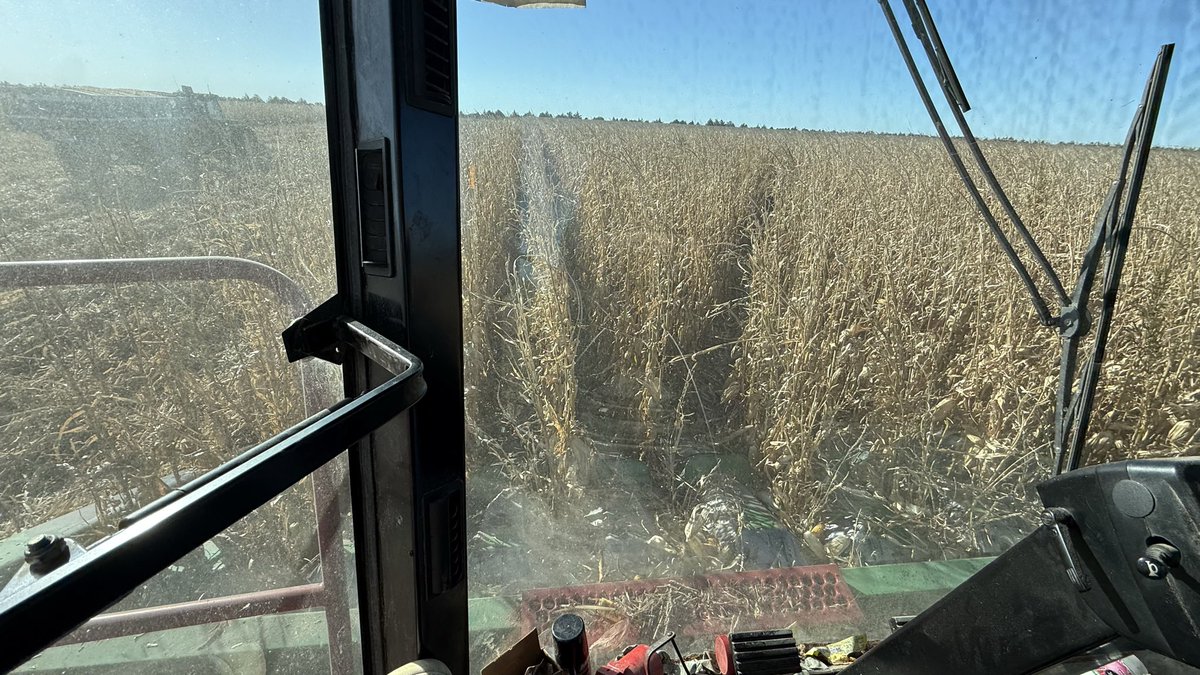
Two hour combine ride this morning w/grower who only had 30-ish lbs of commercial Nitrogen on this field(as starter) w/molasses & milk replacer via fertigation thru the season. 3 years corn on corn 105 day hybrid Rough math using combine grain tank & row length things should be super close to 200 bushel/acre yield. Brings his PROFIT per acre up to around $140. He’s tickled pink. With education, management & more education this way of growing a monoculture crop is ABSOLUTELY possible. We brainstormed what next year’s starter is going to be…& it won’t be a commercial fert. 😏
Brittany Bartak, CCA tweet media
English
5
2
34
5.4K
Brittany Bartak, CCA
Brittany Bartak, CCA@yieldBee·
It's all about perspective. This guy aims for highest profitability, not highest yield. There will be somewhat higher yields around him but they've got $150-200/acre MORE into it than he does. And at the cost of natural resources. There's already corn coming out up here at 200-210 bu/ac under pivot that has 230-240+ lbs of N and lots more irrigation water.
English
0
0
0
138
Andrew McGuire
Andrew McGuire@agronomistag·
@yieldBee 4 ounces of water per acre is approximately 0.05 drops per square foot. Assuming the milk replacement is about the same, what could it possibly do at such a low rate?
English
1
0
6
419
Brittany Bartak, CCA
Brittany Bartak, CCA@yieldBee·
Good question--NO IDEA. I'm not sure 100% why he settled on the number of passes he did. We watched Brix climb and stay high thru majority of the season and that was a big goal he had--high Brix. In our 'research' on molasses/sugar apps, you eventually 'run out' so a every 7-10 day pass was what we tried.
English
0
0
0
124
Brittany Bartak, CCA
Brittany Bartak, CCA@yieldBee·
@RobertRasmus2 A legume cover in what context?? Legumes have a place but in general, I wouldn't do just a solo(or blend) of legumes as a cover/service crop--not enough carbon pumping back into the system with only legumes.
English
0
0
0
137
Brittany Bartak, CCA
Brittany Bartak, CCA@yieldBee·
@agronomistag Yes. Non-medicated milk replacer, 4 oz/acre with each pass of “fertigation” with the molasses at 1 pint per acre. I think he did 6 passes.
English
1
0
0
482
Brittany Bartak, CCA 리트윗함
Jason Schley
Jason Schley@JasonSchley·
Decided to make this video to address a lot of the questions that have been sent the last few days. Nutrient efficiency - what happened? I’m sure someone will tear this apart, claiming it’s wrong. This is my opinion only, based off studying literature and the crop. I’ve spent 20+ years of watching the crop and comparing plant uptake results to soil lab reports.
English
9
14
94
21K
Brittany Bartak, CCA
Brittany Bartak, CCA@yieldBee·
LOVE every part of this especially rebuilding our communities! I’d add it would rebuild our families & values too! Win-win-win!!
Jason Hanson@JasonHanson2028

You own a section of land. ±640 ac. Historically cropland. Corn and soys. You want to improve your soil health. NRCS-types recommends you to no-till/strip-till, add small grains and cover crops where possible to meet conservation crop rotation, and they also want you to adopt nutrient (and pest) management concepts, which gives you 4/5 key soil health practices. A nice change. Will take 4-5 years to make it through the transition, but it’s doable and after year 4 you’ll be off and running. Your weed pressures and management level has changed - it’s perhaps more mental now than reputations labor, but it can work. You’ll generally see small annual increases in your soil organic matter, and overtime you’ll see the positive changes in your soil. But I think we need to get to the next level. Sure, we have a hard enough time selling people on the concepts above, but what about this: You skip the massive equipment. You break your 1/4 sections into 80’s or even 40’s again, and you fence the entire thing. You put a well in the middle (or as close to it as you can), and you fence in access to water for every field. You might plant shelter belts/windbreaks again. You design it so you now have 8-16 new fields and now you really start designing. Now, instead of 4 opportunities in a given year to grow a good crop, you have 8+. But instead of keeping all the fields cropped, you pick 2 of your 80 acre fields and you plant them to pasture in the fall of Year 0. Year 1, you’re grazing 160 acres, and aftermath grazing 480 acres. You’re figuring out your new management, and you’re hiring a few local folks (maybe your family) to help manage it all. You carry on until year 10. In that year, you till up one of the pastures (you hire a high school kid with a good back to do that job), and meanwhile you’re planting another 80 into pasture again. You leave the other established pasture in and you keep managing it for another ten years. That’s 20 years total. A generation. And now it’s time to reap what you’ve sown in the soil, and you till it and put it back into cropland until the next cycle. You keep doing this every 10 years, cycling the 20 year pasture out, keeping the 10 year pasture in, and you keep moving this system around, but the entire time you’re fertilizing your entire 640 and you’re ensuring production for every generation that follows. You’re also hedging your bets every single year. You have grains and cattle. You have perennials and annuals, but you’re always growing and always building soils, heavily so on at least 25% and slightly so on the rest. But you’re managing a nearly complete system. You can’t hardly fuck this up. You’re building a model, a legacy, and it’s for today, tomorrow, and for 100 years from now, too. I’d argue we should do this with half our acres - planning and rotating pastures as much as any crop - and managing your herd in a way that mimics nature - with migration patterns that existed way before people were people. This is my ultimate goal. For now we’ll keep building our 10 acre farmstead and we’ll work to find the opportunity to find our 640 (the real size doesn’t matter), but we have enough cropland in America that 546,875 (350m ac / 640 ac) farms could do this tomorrow, and the country would be better off for it. Grain prices would be higher with 25% of the cropland put back to pasture. Cattle would be higher because people would be buying to start their herds. Jobs would be available in and around your communities. Families would have opportunities. Rural schools would be filled. Main Street would be busy. A local butcher shop might open up. The local farmers markets would be busier. And our roads and bridges would be fixed with the increased tax base. Some say this is crazy or utopian, but it’s doable. This isn’t crazy. It’s achievable . This could be incentivized through USDA policy, and enhanced with anti-trust - breaking up any entities that fight it. Enjoy the day! 🇺🇸 Godspeed.

English
0
0
2
903
Brittany Bartak, CCA
Brittany Bartak, CCA@yieldBee·
@dbatie I'll pick my growers brain and background on his conversations w/ his contact & get back to you. :)
English
1
0
1
101
Don Batie
Don Batie@dbatie·
@yieldBee Figured the molasses was for sugar, had heard of others trying that. Milk replacer was a new one.
English
1
0
2
75
Brittany Bartak, CCA
Brittany Bartak, CCA@yieldBee·
I work w/ a grower who only used commercial starter for his corn fertility this year—no manure. Did fertigation passes of molasses & milk replacer mix. I cannot WAIT for him to pick his corn. My Kernel count yield estimate was 184. His Economics versus his neighbor who used 220# of commercial N is +$84/ac profit versus -$2/acre loss. 💃
Jason Schley@JasonSchley

Opened the field I have been waiting for, this is the field with only 30 units of N applied to the soil. ROI field, learning to get better is always the goal. I can definitely say this is how we will farm now! Two years in a row, low inputs, better management has paid well here in SD!

English
4
0
24
5.4K
Brittany Bartak, CCA
Brittany Bartak, CCA@yieldBee·
Molasses as a sugar(food) source for biology. Milk replacer--I've heard mixed bag of reasons why; some people claim it helps with weed control/suppression, others say helps with biology(as a food) to some degree. The molasses was my only input/suggestion, milk replacer came from another guy the grower has talked to.
English
1
0
1
99
Don Batie
Don Batie@dbatie·
@yieldBee Why molasses and milk replacer? Very interesting study.
English
1
0
0
126
Brittany Bartak, CCA
Brittany Bartak, CCA@yieldBee·
ABSOLUTELY the biology makes it. We barely know anything, in the grand scheme of things. 😅 We do know that plants consume way more than what is typically 'added' via commercial fert, yet growers don't ask on how or why then dive into the details on how to expand it, unfortunately.
English
0
0
2
49
Dutch dirt farmer
Dutch dirt farmer@JakeZwagerman·
@yieldBee I think we got a lot to learn on this type of stuff. I also think the biology of the soil makes the yeild more then we understand.
English
1
0
1
113
Brittany Bartak, CCA
Brittany Bartak, CCA@yieldBee·
@CraigKwap @JasonSchley said it best in his reply--there are TONS and TONS of nutrients locked in our soils. If we focus on the things needed to unlock those nutrients, the soil takes care of itself, in a sense. We don't need to 'add' nutrients back in. There is no mining.
English
1
0
3
96
Craig
Craig@CraigKwap·
@yieldBee Pulling out what is available in the soil and not replacing it
English
1
0
0
157