Daxter

3K posts

Daxter banner
Daxter

Daxter

@0xDaxter

Crypto researcher. Tracking crypto trends, cycles, and narratives. Always early.

Katılım Temmuz 2025
71 Takip Edilen395 Takipçiler
Daxter
Daxter@0xDaxter·
My dad said Polymarket is just a gambling platform. I told my OpenClaw: turn $100 into $6,000 in 5 days or I’m deleting you. It built the whole weather loop in 41 minutes. No questions, just a scanner, a filter, and a strict entry rule. The edge was stupid simple. NOAA publishes the real forecast grid first, and the buckets lag because people price it off weather apps. Day 1, Hour 2. Chicago cold front update hit NOAA with 93% confidence, and Polymarket still priced the bucket like it was a coin flip. $100 -> $280. Day 1, Hour 7. NYC heat bucket drifted 9c off the model while liquidity was thin for five minutes. $280 -> $610. Day 2, Hour 4. Miami humidity spike showed up in NOAA runs hours before it hit the mainstream apps. OpenClaw spread it across 3 cities instead of yoloing one. $610 -> $1,340. Day 3, Hour 10. Seattle overnight low was mispriced again, same pattern, same mistake, different city. OpenClaw clipped the repricing, then went flat instead of getting greedy. $1,340 -> $2,420. Day 4, Hour 6. Dallas and Atlanta buckets went stale
English
0
0
3
101
Daxter
Daxter@0xDaxter·
I let a bot do 17,860 tiny decisions so I didn’t have to make one big one. That’s basically what OpenClaw is for. It’s not “predicting”. It’s sitting in repeatable micro-lanes where prices lag for seconds, then clipping the edge with strict rules and moving on. This month it ran 17,860 trades. Most of those aren’t heroic fills, they’re maker-first probes that either fill quickly or get cancelled the moment the edge compresses. The loop is boring on purpose. Fixed risk per market, no revenge sizing, no chasing, and “no fill” is a valid outcome because forcing fills is just paying spread to feel busy. When the loop is working, PnL doesn’t come from a single screenshot bet. It comes from stacking small edges until the curve starts looking illegal. Examples from the run: $73 -> $7,380 $65 -> $6,404 $251 -> $5,516 That’s not one lucky trade. That’s the same disciplined behaviour repeated until it compounds. I’m dropping the terminal breakdown and the ruleset next. No ref links, no private access bait, just how the system actually prints.
English
0
0
2
150
Daxter
Daxter@0xDaxter·
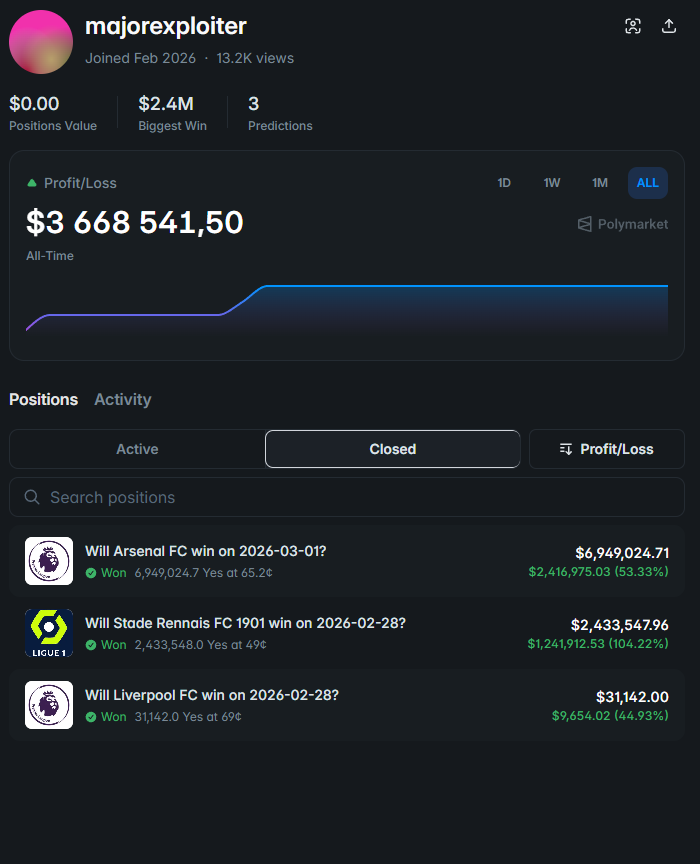
I argued with a Chinese guy in WeChat that you can’t print serious PnL on Polymarket without a whole team. He laughed, called it cope, and said the real money is just insiders and lucky whales. So I told him about the weirdest account I’ve seen this month. majorexploiter. +$3,668,541 profit. 3 predictions. Joined Feb 2026. Three. Not 3,000. Three. The first bet was pure violence. Arsenal to win March 1. YES at 65c. He dropped $4,532,049 on one football match. Walked out with $6,949,024. Profit $2,416,975. Then he did it two more times. Three clicks, three wins, $3.67M up. And that’s the part that freaks people out. No grind arc. No “building a curve”. No fifth bet. Positions went back to $0.00. Account basically went silent. My WeChat guy instantly went “insider, obviously”. So I pulled the profile and ran it through my OpenClaw analyzer anyway. Not to “prove” anything. Just to see if the behaviour matches a real execution loop. It doesn’t look like a trader compounding. It looks like a wallet that shows up only when conviction is absolute, size is max, and timing is surgical. If you’re wrong on one of those, you don’t come back for a fourth click. That’s why the account stopping at three bets is the tell. He ended the chat with the most annoying line. “Team is for monitoring. Insider is for winning.” Maybe he’s right. Or maybe Polymarket football is just the cleanest lane for someone who already knows the score. Either way, I’ve never seen anything more suspicious than three green lines and $3.67M gone.
Daxter tweet mediaDaxter tweet mediaDaxter tweet media
English
1
0
2
82
Daxter
Daxter@0xDaxter·
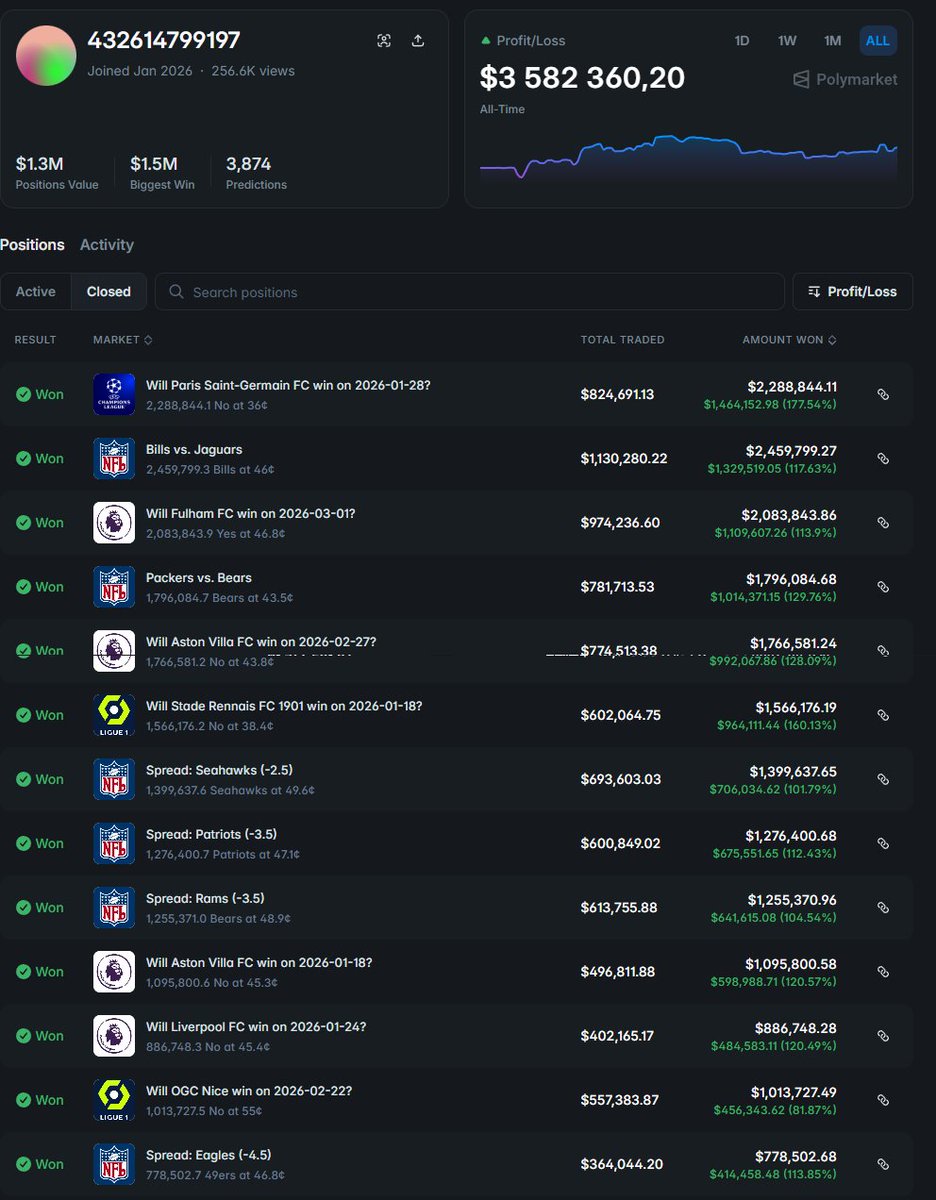
I cracked the setup of a Polymarket account quietly compounding size, then ran the whole thing through my OpenClaw analyzer to see the how, not the takes. The trader is 432614799197. Joined Jan 2026, 3,874 predictions, $1.3M positions value, $1.5M biggest win. What made me stop scrolling is the scale and the repeatability. On the monthly leaderboard he’s sitting around +$550K profit on $7.44M volume. And it’s not “one lucky event”. One of the biggest wins this month is literally a football market: Fulham vs Tottenham, showing $974,237 → $2,083,844 on the board. So the edge here doesn’t look like genius forecasting. It looks like someone who waits for tiny repricing windows, posts size when the book thins out, and lets convergence do the work. High turnover, big clips, same market shape over and over. That’s how you end up with a profile that has 256.7K views without ever needing a viral tweet. Profile: @432614799197?via=Daxter" target="_blank" rel="nofollow noopener">polymarket.com/@432614799197?… Do you read this as pure execution edge, or just one hot month with size?
Daxter tweet media
English
0
0
1
84
Daxter
Daxter@0xDaxter·
Best Polymarket strategy I saw in Feb 2026 was pure microstructure. 5-minute markets. Fast feeds. One boring formula that prints if you don’t get greedy. The core is LMSR pricing: C(q) = b * log(sum(exp(q / b))) The loop is simple: - take the Polymarket price as the market prior - read 4 external price feeds - recompute a Bayesian posterior every refresh - flag contracts where Polymarket lags the posterior by more than 8% - size with fractional Kelly - fire a limit order and let the book do the work No “alpha chat”, no mystical narratives. Just lag detection, sizing discipline, and execution. Fun part is how unsexy it is. Explaining LMSR at parties is the fastest way to end the party :З And if you start forcing fills, the market will teach you humility in 5 minutes flat. It’s basically speedrunning ego death. I wrote it in Rust because latency is the whole game in short-expiry windows. If you keep risk capped and don’t chase, the edge can cover API and RPC costs and the loop stays self-funded. Do you trade 5-minute markets, or stick to longer expiry only?
English
0
0
1
166
Daxter
Daxter@0xDaxter·
I’ve been testing my Polymarket Asist which works directly on the polymarket It pulls markets, spots setups, and if I want it to, it can route execution straight into Polymarket itself. The reason this is even possible is anon Poly Dev shipping Polymarket CLI. Rust CLI that an agent can actually use without duct-taping ten SDKs together. Gemmini for market discovery, Data API for account and activity, and the CLOB API for the orderbook and orders. Everything is just signed EIP-712 messages, and even a market order is basically a marketable limit, so the assistant signs and posts, and the venue matches. I kept the sizing logic intentionally dumb. It only cares about edge, caps risk Kelly style, and it never forces trades when the book tightens. The win isn’t some magical forecasting. It’s behaviour, maker-first entries, quick cancels when edge compresses, and being fine with no fill. I also swapped in a fresh Gemini model that dropped this week, and it’s scary fast at parsing markets and summarising the stack. Anyone else building agents directly on Polymarket rails?
English
0
0
3
148
Daxter
Daxter@0xDaxter·
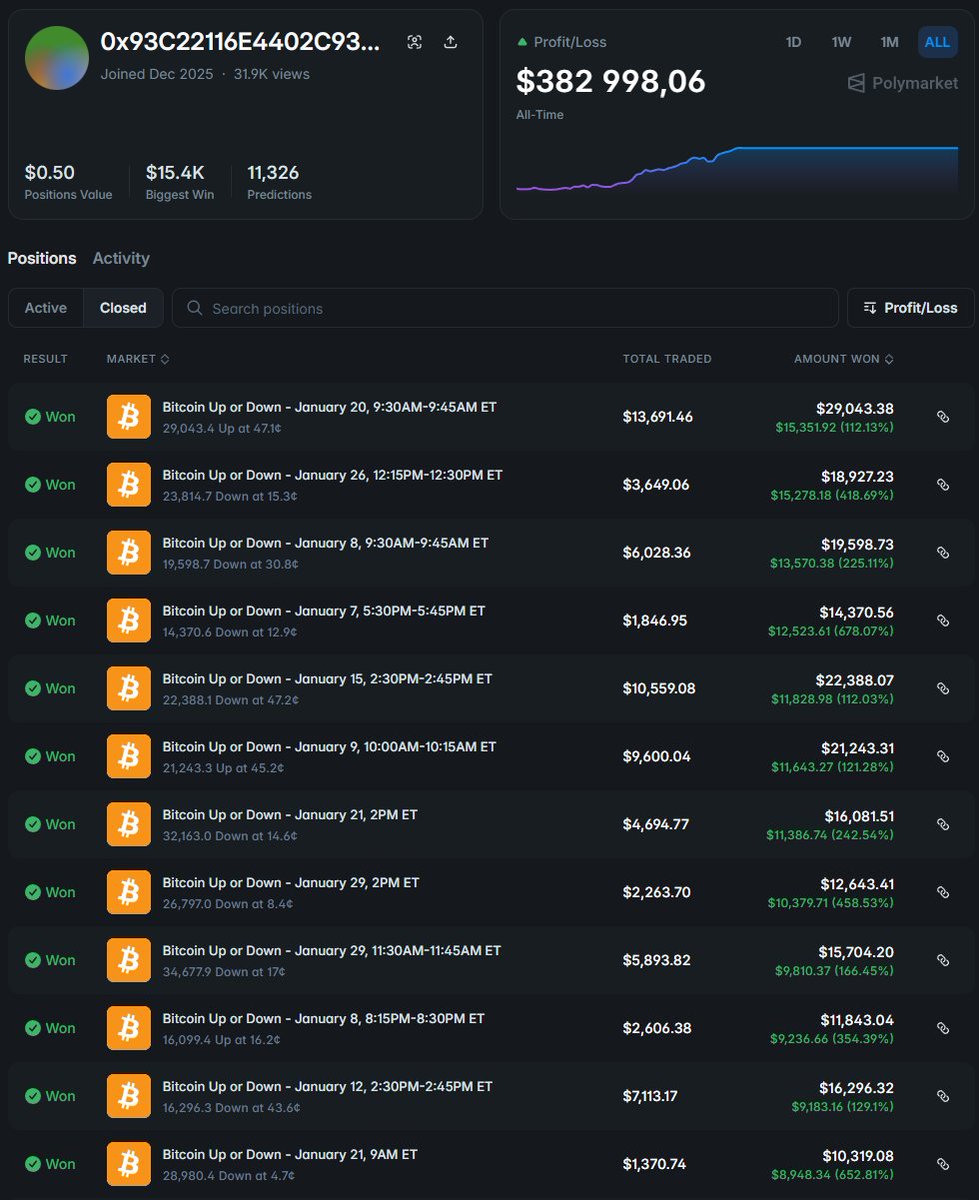
Wintermute analytics guy quietly farmed Polymarket, and the wallet trail looks way too familiar. I spent about 5 hours on one profile because it kept popping up in the same place, with the same behaviour, over and over. Short-expiry $BTC windows. Clean timing. No random buttons. → Profile: @0x93C22116E4402C9332Ee6Db578050e688934C072-1766959058103" target="_blank" rel="nofollow noopener">polymarket.com/@0x93C22116E44… Address: 0x93C22116E4402C9332Ee6Db578050e688934C072 First thing that hit me was the scale. All-time PnL $382,998 11,326 predictions since Dec 2025 Biggest win $15.4K Most people with that count look like spray-and-pray. This one doesn’t. You scroll the closed positions and it’s the same rhythm: 15-minute $BTC “Up or Down”, entries show up right when volatility kicks, exits land when odds snap back to fair. It feels like someone trading pricing lag, not someone “calling direction”. So I stopped staring at the PnL and followed the plumbing. Where does it fund from, where does it route after a streak, what does it touch before it consolidates. The trail overlaps with the kind of routing you see around market-maker style ops. Clean hops, controlled consolidation, no messy retail footprint. That’s why the Wintermute angle even came up in my head. To be clear, this is a pattern call, not a doxx. But the behaviour fits: analytics mindset, execution discipline, harvesting small mispricings at scale. And on Polymarket, that’s basically a cheat code.
Daxter tweet mediaDaxter tweet mediaDaxter tweet media
English
0
0
1
118
Daxter
Daxter@0xDaxter·
I cracked the setup of a Polymarket trader quietly compounding PnL and rebuilt the logic after running his wallet through my OpenClaw analyzer. The trader is gatorr - joined Polymarket in November 2025. Around 263 predictions, biggest single win about $141.8K, and almost all activity concentrated in repeatable market types instead of random narratives. His Profile: @gatorr?via=Daxter" target="_blank" rel="nofollow noopener">polymarket.com/@gatorr?via=Da… I ran his entire account not to see predictions, but to understand execution. Entry timing, position sizing, order behavior after probability shifts, and how exposure changes between markets. What stands out is not accuracy but consistency of placement. He rarely enters during momentum. Most orders appear right after micro repricing, when liquidity temporarily disappears and spreads widen for a few seconds. Instead of predicting outcomes, he trades market reaction delay. When probability updates propagate unevenly across related markets, he posts liquidity where pricing hasn’t caught up yet. Price later converges, and edge closes without needing direction. His portfolio also looks diversified, but actually clusters around the same information cycle. Different markets react to the same event at different speeds, so exposure hedges itself naturally while still harvesting inefficiency. Position scaling follows a strict ladder. Initial probe size is small, confirmation adds size, and only then does meaningful exposure appear. Losing trades never trigger size expansion, which keeps equity curve smooth. The deeper edge is structural: edge = timing mismatch × controlled sizing × spread capture Accuracy stays average, but average win consistently exceeds average loss, and risk never compounds during noise periods. After rebuilding the logic, the account stops looking like a lucky trader. It looks like someone systematically trading execution gaps inside the CLOB rather than trying to predict the future.
Daxter tweet mediaDaxter tweet media
English
0
0
1
165
Daxter
Daxter@0xDaxter·
You can make $200K in a week with a legal exploit on Polymarket if you treat it as execution The exploit is negative-vig capture: you buy YES and NO on the same market when the combined cost sits below $1 after fees, so once both legs fill the payout is mathematically locked at resolution. People have publicly reverse-engineered bots doing exactly this in “sniper mode”, entering both sides when YES + NO < 1.00, then repeating it at scale. Where it gets real is fills and fees. Polymarket’s taker fees on eligible markets made thin edges harder, and those fees fund the maker rebates program, which is why the serious version tends to be maker-first with heavy cancel/replace discipline instead of crossing spread every time. There’s also a GitHub repo that lays out the same core playbook on the 15-minute binaries: hedging arb when YES + NO adds up to less than $1, plus a second leg built around latency/signal arb using Binance or Bybit moves before odds fully adjust. The whole strategy can be expressed in one line, and everything else is risk control: edge = 1.00 − (YES_ask + NO_ask) − fees − slippage You only trade when edge stays positive after fill risk, and you kill the trade fast if one leg fills and the other doesn’t, because that’s how arb turns into a bad directional position. If you want this to print, scaling is boring: small size per market, many reps across low-corr markets, hard caps, strict depth filters, strict time-to-fill windows, and a shutdown rule when fill quality degrades. That’s the difference between a bot that compounds and a bot that donates.
English
2
0
2
202
Daxter
Daxter@0xDaxter·
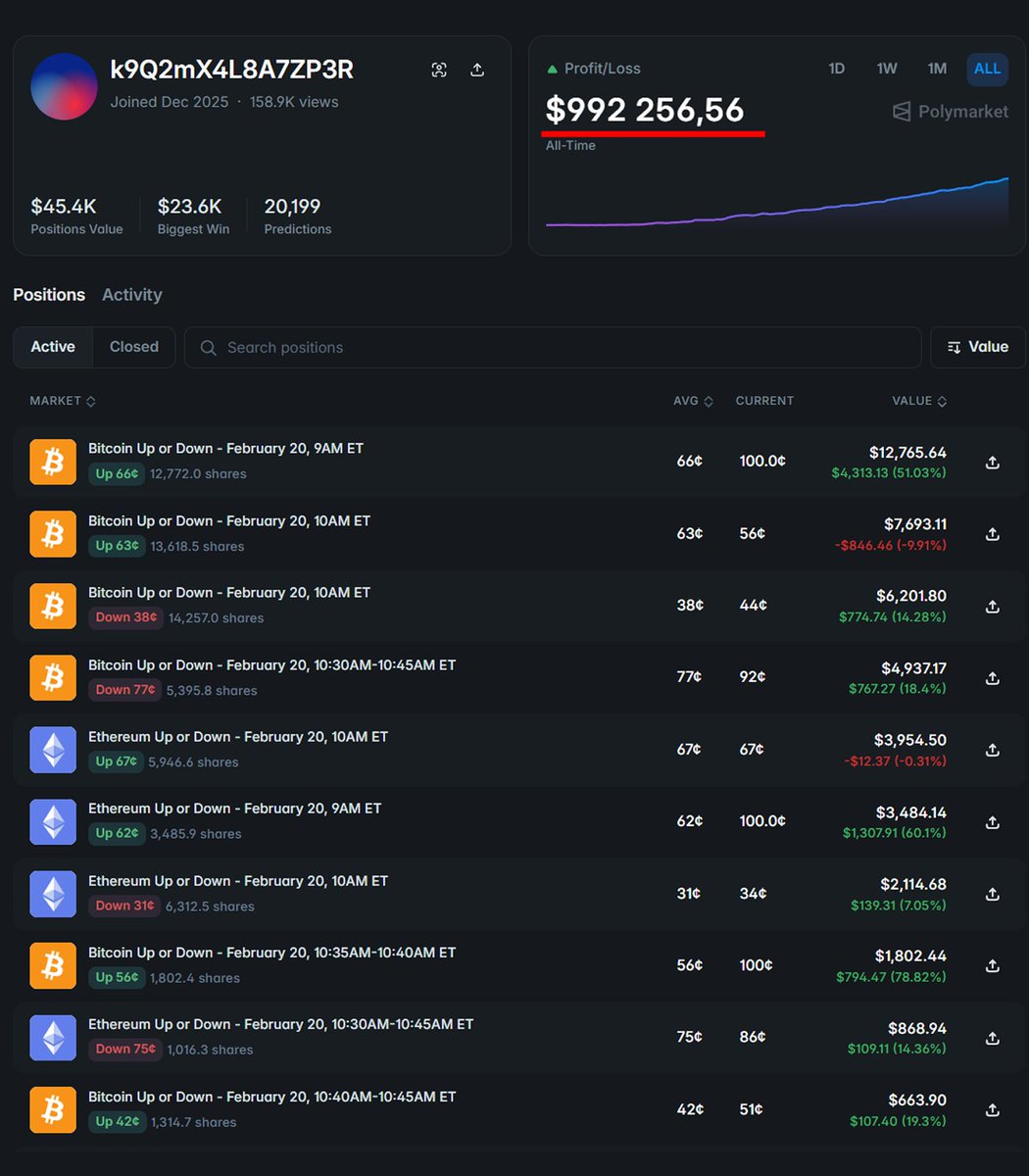
Guy worked on the Polymarket team about 6 months ago, then left and started trading under the radar. He’s not a public face and not a CT character more like one of those operators people don’t notice until the PnL is already loud, and the consistency is what gives it away. The wallet: @k9Q2mX4L8A7ZP3R @k9Q2mX4L8A7ZP3R?via=Daxter" target="_blank" rel="nofollow noopener">polymarket.com/@k9Q2mX4L8A7ZP… When you watch his positioning for a bit, it stops looking like “good calls” and starts looking like engineered execution: sizing stays systematic, entries cluster around the same kinds of moments, and the way he adds or exits reads like a process that’s built around timing windows rather than conviction. That’s the uncomfortable part about Polymarket edge. A big slice of it is not being smarter than the crowd, it’s being earlier than the crowd when price is about to reprice, then executing cleanly while the book is still catching up. Polymarket pushes Chainlink-sourced updates through RTDS, and if you’re listening to the right stream you can measure tick freshness from payload.timestamp, then fire into the CLOB the moment a low-lag tick hits. On fast markets that reprice in bursts, that creates a repeatable advantage versus anyone who’s trading from UI or building decisions off delayed feeds. I ran his account through my trader-analyzer built on OpenClaw and Claude Code, scanning entry timing, order-ladder behaviour, and reaction patterns around updates until the picture clicked and the strategy stopped being mysterious. After that I rebuilt the same pipeline on my side, with OpenClaw keeping the runtime supervised and Claude Code helping me iterate the logic and back-check the behaviour patterns, while the executor stays on a tight hot path: RTDS tick → lag filter → CLOB order → fill handling and cooldown. This is why the curve looks like it does. He’s not trying to win every trade, he’s trying to show up first with disciplined sizing and let repetition do the work, which is exactly the kind of thing ex-team members understand better than most because they know how the system breathes. If you want, I’ll break down the mechanics I’m copying next: the lag thresholds, cooldown logic, and fill handling so it doesn’t turn into fee churn.
Daxter tweet mediaDaxter tweet media
English
0
0
1
114
Daxter
Daxter@0xDaxter·
I cracked setup trader who pulled $270k in 30 days on Polymarket, rebuilt it in OpenClaw Today I ran his account through my trader-analyzer built on OpenClaw and Claude Code, looking for entry timing, order patterns, his full order ladder, and how he reacts to updates. At some point it just clicked, and it became obvious where his edge comes from. Start point is execution time on 15-min markets. Not “better prediction”, not extra dashboards - pure speed to post order before book fully reprices. Polymarket pushes Chainlink-sourced prices through RTDS on topic crypto_prices_chainlink. Every tick includes payload.timestamp, so lag is measurable, clean: Date.now() - payload.timestamp, no guessing. His flow repeats: fresh tick, low lag, order fires into CLOB immediately, while rest of market still catching up. I rebuilt same pipeline on my side. OpenClaw handles runtime and process control, Claude Code helps parse history and extract repeat conditions, and execution stays on hot path only: RTDS tick → lag filter → order send → fill control from stream, no heavy calls inside event. Real edge is not just “being fast”, it’s being fast with discipline. Cooldown, max exposure, cancel/replace logic, fill confirmation, hard rules on when to stop trading, otherwise strategy turns into fee printer on noise. Not claiming copy-paste PnL, but mechanics are real and testable. Next I’ll drop exact log metrics I track and how I verify edge is timing, not lucky streak.
Daxter tweet media
English
0
0
9
2.1K
Daxter
Daxter@0xDaxter·
By the way, thanks to @KyleDeWriter for his post about Polymarket getting data through Chainlink it kind of opened my eyes to this possibility :3
English
0
0
1
81
Daxter
Daxter@0xDaxter·
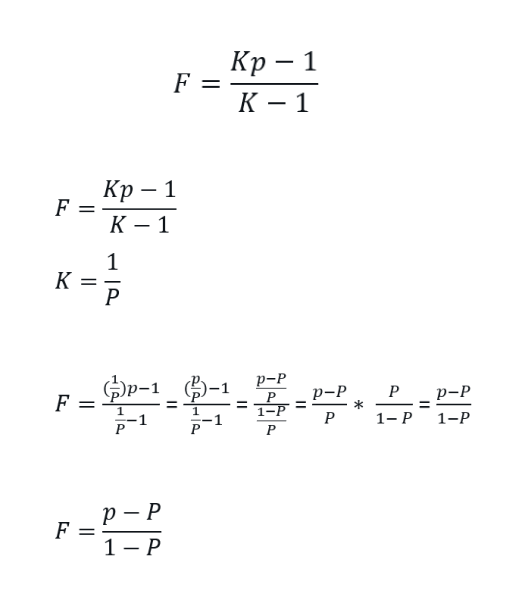
My Best 3 formulas i coded into my OpenClaw to manage bankroll on Polymarket and that’s exactly how i got to +$2,300 instead of random eyeballed sizing 1) prediction market kelly (size only when edge is real) F = (p − P) / (1 − P) p = my probability, P = market price, F = fraction of bankroll no edge means no trade. edge grows, size grows, simple. 2) fractional kelly (anti-greed, anti-model-error layer) stake = bankroll × F × k i run k = 0.25 default, 0.5 only when model is properly tested, 0.125 when market is noisy full kelly assumes you’re right too often. fractional kelly assumes you’re human. 3) quick odds conversion (payout intuition for any price) K = 1 / P 25c price means K = 4 odds cheap buckets pay more, so kelly reacts harder, and sizing stays consistent across ranges. how it actually runs inside OpenClaw is boring but effective. bot estimates p, pulls live P, computes F, cuts it with k, then places order only if edge survives fees and liquidity check. biggest improvement wasn’t “better predictions”. it was removing self-sabotage. manual me sizes too big when emotional and too small when setup is clean. OpenClaw sizes same every time. not magic, not auto-trader. just bankroll math that forces discipline.
Daxter tweet mediaDaxter tweet media
English
1
0
1
177
Daxter
Daxter@0xDaxter·
I argued with a Chinese guy in WeChat that you can’t hit big PnL on Polymarket without a whole team. He got annoyed, dropped one link, and said he runs it solo. > gabagool22. Numbers load and it instantly kills your argument. +$827,846.75 profit, 26,129 predictions, 99.6% win rate, about $134,351,569 traded volume, biggest single win only $7,144. If biggest win is seven grand but total is near a million, that’s not “one crazy bet”, that’s a loop. What makes it even funnier is he doesn’t look like “team account” either. No public brand, no community flex, no big story markets, just constant short-window grinding that feels like work, not gambling. I expected him to be some genius who predicts better than everyone. Reality is worse: he doesn’t need to predict, he needs pricing to be sloppy for seconds and he needs execution to be strict. 0xinsider tags him Accumulator, which basically means he keeps clipping small edges and stacking them instead of swinging for screenshots. That matches the profile shape: huge trade count, high win rate, and PnL curve that looks like stairs, not a heart monitor. The “solo” part is the main lesson. Team helps with infra and monitoring, but edge is still two things: picking lanes where crowd misprices fast, and refusing to break rules when volatility tries to bait you into chasing. Short-window crypto markets are perfect for that. Books go thin, people panic-click, spreads widen, and you get brief moments where contracts are priced like emotion, not probability. So the system becomes boring constraints. Size stays small so you don’t move book, orders don’t chase, cancels happen fast when edge compresses, and you only press when pricing is clearly off enough to survive fees and slippage. He ended the chat with one line that felt like a slap. “Big PnL doesn’t need team. It needs discipline that doesn’t get tired.” → Wallet: @gabagool22" target="_blank" rel="nofollow noopener">polymarket.com/@gabagool22
Daxter tweet media
English
1
0
2
425
Daxter
Daxter@0xDaxter·
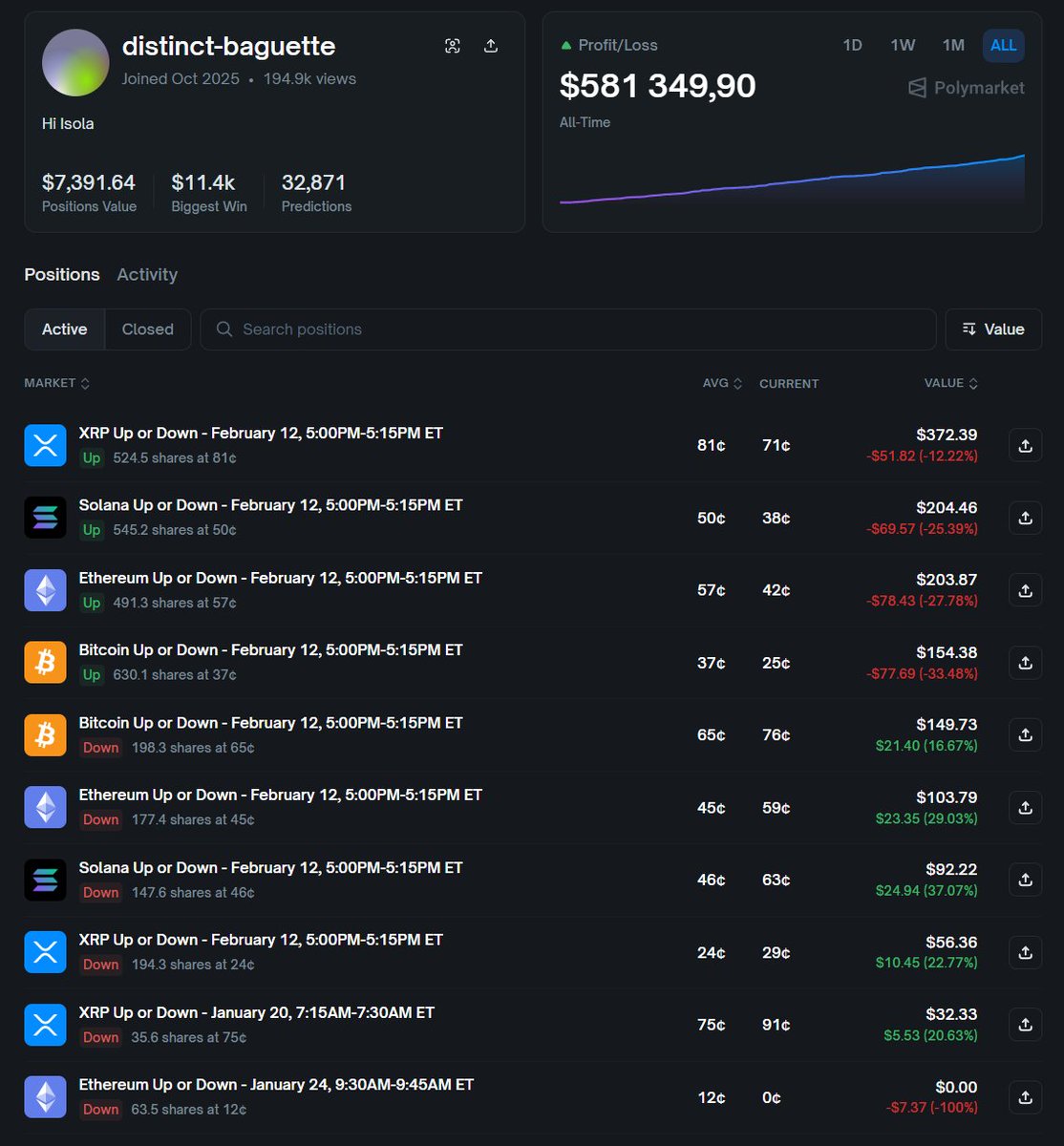
Chinese student just got nominated for Forbes Top 30 Finance traders His profile: distinct-baguette Handle looks like a joke until you read the leaderboard. distinct-baguette is sitting around $581,368 profit on the all time Crypto board, with about $52,223,695 in volume behind it. Even this month he is still up about $98,380 while pushing roughly $7,566,449 volume, which tells you it’s not some old lucky streak he’s been living off. Then you look at the profile stats and it gets more annoying. Joined Oct 2025, roughly 32,358 predictions, and the biggest single win is about $11.4K. That is the tell, because whales who “just got lucky” have one giant spike they keep riding, but this is the opposite, it’s a grind that only works if the edge is repeatable. The lane is pretty clear from what he trades. A lot of it is short window crypto directionals like Bitcoin Up or Down and similar contracts, the kind where books get thin and pricing gets sloppy for seconds at a time. If you are clicking those markets like a normal person, you are basically signing up to lose to someone who has a faster loop. The part everyone misses is the edge is usually boring. It’s not predicting better, it’s pricing faster when the crowd breaks the math and the cleanest version is when YES plus NO slips under $1 for a moment because panic widens spreads and people smash the wrong side. Think like this. YES trades 48c, NO trades 49c, total is 97c, and one of them must settle at $1. So the whole game becomes execution, because if you can take both sides without getting legged you are clipping cents that compound into real money when you do it thousands of times. That’s also why people keep writing that the accounts printing size on Polymarket are basically bots running short duration crypto loops not genius discretionary traders, because the profit comes from repetition and the bottleneck is always the same. And that’s where the Forbes nomination story stops sounding like ego and starts sounding like timing. If your biggest win is only five figures but your total PnL is in the high six figures, you’re not winning by being smarter than the market, you’re winning by being faster than it, and doing it so consistently it starts looking like a job. → Wallet: @distinct-baguette" target="_blank" rel="nofollow noopener">polymarket.com/@distinct-bagu…
Daxter tweet media
English
0
0
1
169
Daxter
Daxter@0xDaxter·
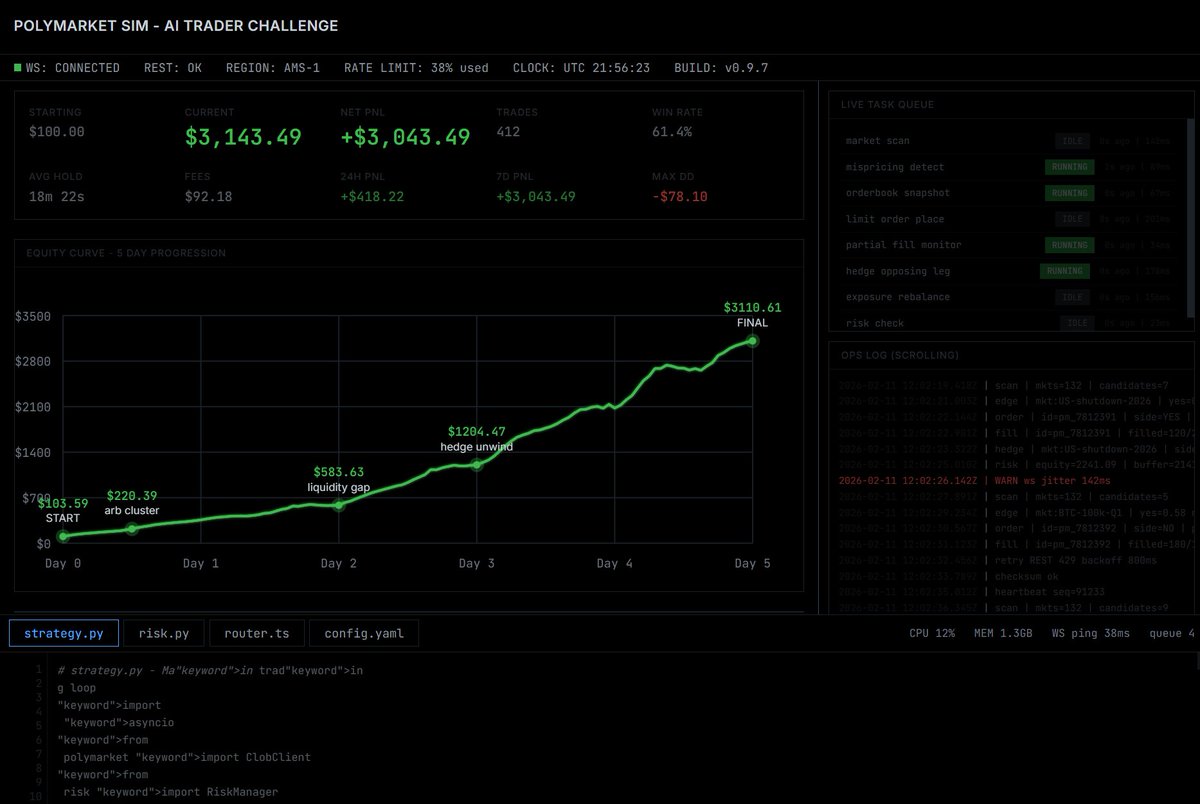
I gave an AI $100 on Polymarket and told it: print PnL or get shut off 5 days later it’s sitting at $3,143.49, net up $3,043.49 that’s roughly 31.4x on bankroll, and it did it without one big hit energy Here’s the part i care about: the stats look like a machine, not a flex 412 trades, 61.4% win rate, 18m avg hold, $92.18 fees, max drawdown only $78.10 Last 24h alone it added $418.22, so it’s not just early luck that died after day 1 The bot is dumb in the right way It doesn’t try to be smart, it tries to be consistent while the book is moving Mid-loop it’s basically this: > market scan > mispricing detect > orderbook snapshot > limit order place > partial fill monitor > hedge opposing leg > exposure rebalance > risk check What kept it alive is boring constraints Small size so it doesn’t move the book, depth check before clicking, cancel loop if the spread tightens, and no chasing when a fill slips Every time it breaks those rules, it stops being arb and starts paying for impatience There was a moment it dipped, you can see the drawdown in the curve But it didn’t spiral because it doesn’t revenge trade, it just keeps clipping the same edge until it’s gone My takeaway is simple This is what Claude Code is actually good for in trading: building a decision engine that never gets tired, never gets emotional, and never forgets the rules If it stays this stable for another week, i’m scaling it slowly If it starts paying fees to “feel busy”, i’m pulling the plug fast How long do you think a bot like this survives before the edge gets crowded?
Daxter tweet media
English
0
0
1
152
Daxter
Daxter@0xDaxter·
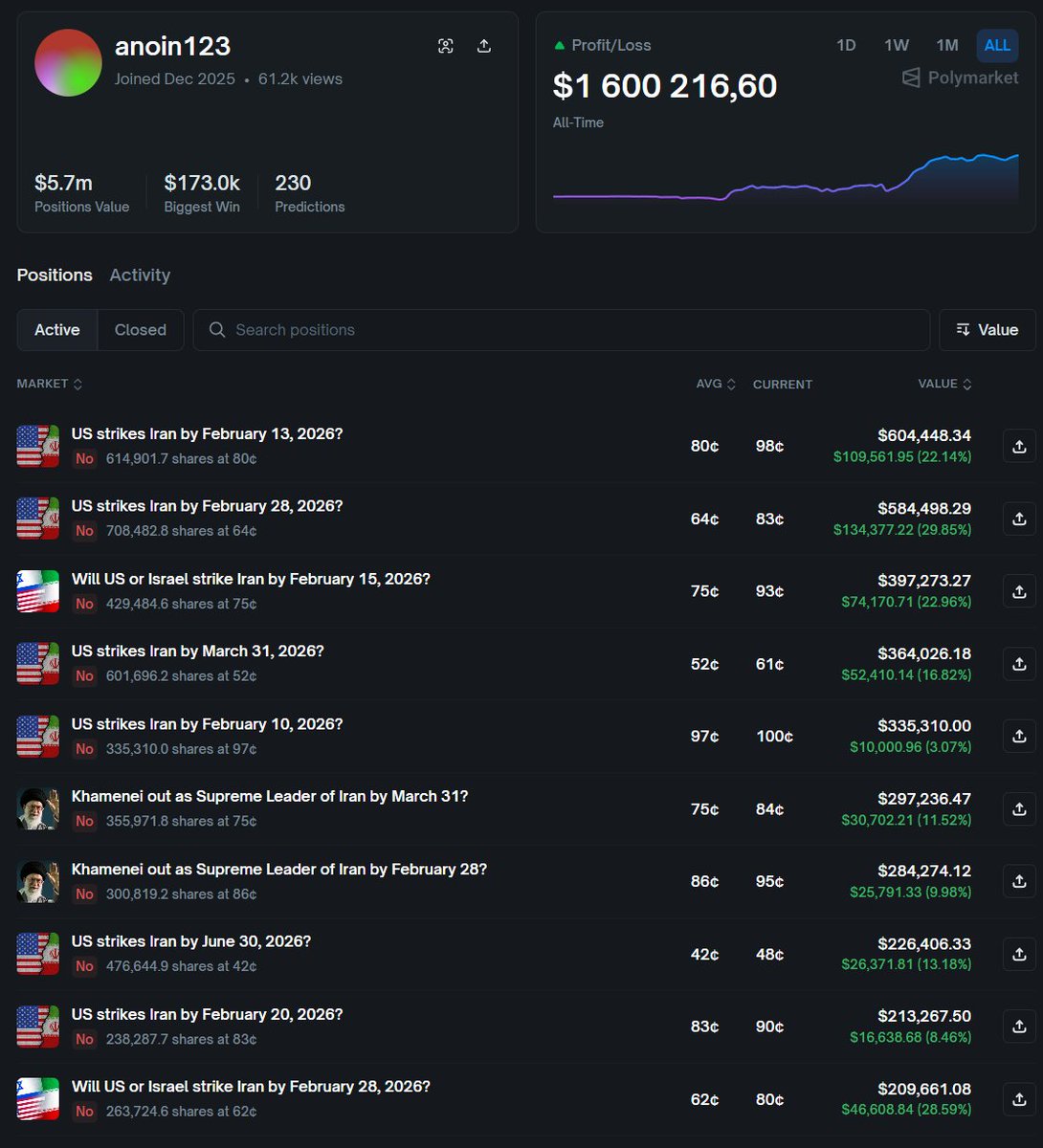
I’ve got this Iranian student in my uni, and one day he left his laptop unlocked. I wasn’t even trying to snoop. It was just there. Browser open. Polymarket tab pinned. One glance and my brain did that thing where you stop breathing for a second. anoin123. Joined Dec 2025. 230 predictions. Biggest win $173,000. Open positions value about $5.7M. I clicked once, expecting the usual. One lucky election hit, one dumb punt, then silence. But the history didn’t look like gambling. It looked like work. The funniest part is he’s not running some flashy “AI edge”. He’s just doing one thing most people refuse to do on Polymarket. Wait When the crowd panics into a headline, odds overshoot, spreads get messy, everyone starts paying for urgency. He sits there, takes the other side, and lets the market walk back to reality. This month alone he’s sitting around +$909K on the monthly profit leaderboard, on about $9.3M volume. Not because he “never loses”. Because he sizes when mispricing is obvious, and stays small when it isn’t. What hit me is how normal he acts while doing it. No alpha talk. No screenshots. No Discord flex. He just closes the tab and goes back to class like it’s nothing. I asked him what he actually watches before he clicks. He said one line: Thin books, one-sided crowd, and time pressure. You do not need better prediction. You need better behaviour under pressure. Profile: @anoin123" target="_blank" rel="nofollow noopener">polymarket.com/@anoin123
Daxter tweet media
English
2
0
1
195