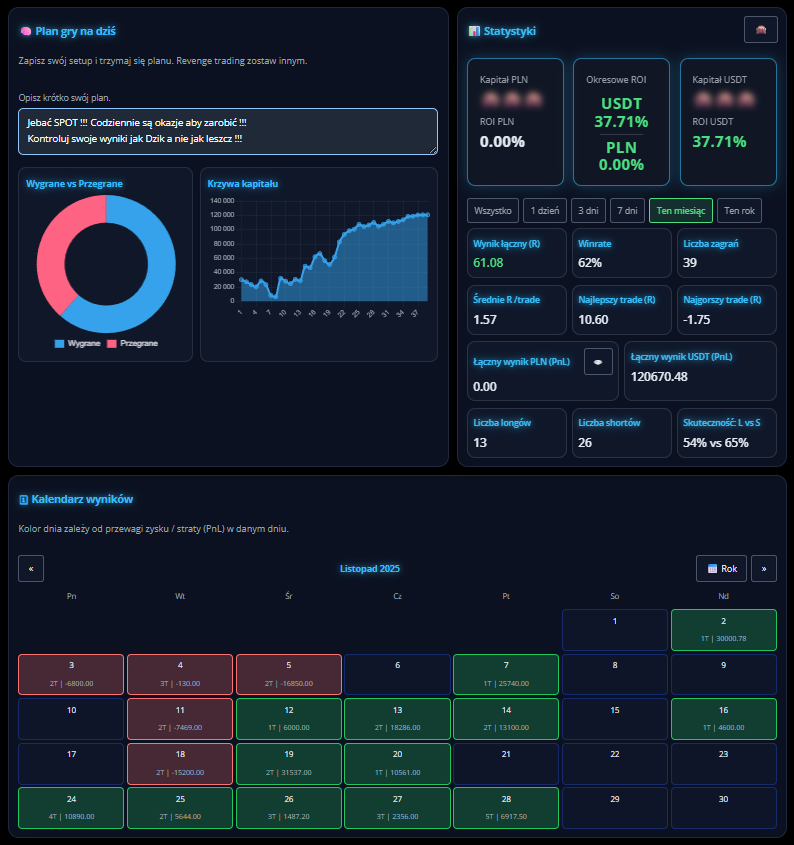
@KryptoDzikPL Mikołaj w tym roku przyszedł wcześniej. Piękny wynik, gratki i równie dobrego, albo i lepszego grudnia :)
Polski
PB
223 posts

@0xPBcrypto
NFTs | Rarepepe maxie | Crypto baghodler | Web3 gaming enthusiast | Defi



On today's episode of The Interview, our guest is @bogdikery, an active Prediction Market trader. Keep reading to hear more about Bogdano's PM views, a very worthwhile read! Hello Bog, how are you doing today? Hey, doing good thanks! How did you get into Crypto? I came from Traditional Finance world and got into crypto at the turn of 2020/2021 When and How did you stumble upon Prediction Markets? I had my first contact with Polymarket just before Arbitrum airdrop speculations so it was like early 2023. However, I have fully focused on Polymarket mid-2024 with the US Presidential campaign. How’d you describe Prediction Markets to anyone who’s just hearing about it? I actually encountered such situation IRL. I always describe it as a mix of stock market + traditional bookies where you can buy and sell contracts that will pay out based on the outcome of this particular market/event and the price is set up by people not business (i.e. bookie). You can buy/sell whenever you want, and the price is a direct probability. What single biggest advantage does Prediction Markets bring to the average person? For me prediction markets are ALL-IN-ONE place where you can speculate, gamble, invest, earn (from yield). Huge universality. And the best part is that I know quite a lot of people who are following all news from geopolitics, OSINT, economy, finance, technology etc., and now they can all earn from their research – they can truly see if their insights/due diligence pay out. What markets narratives do you actively trade or prefer to trade? I don’t have any favorite markets to trade day-by-day. I rather focus on finding some consensus bias difference i.e. finding unique situations. It happens frequently. From my experience – London Weather on particular day, Elon’s # Tweets, Coinbase next listings, Will Trump sign Executive Order on particular day or Anime of the Year and Best Main Character of the Year. What’s your base thought process to approaching these trades? I don’t have particular thought process, I just base on my intuition and insights – like with this above examples. For Anime of the Year and Best Main character – general consensus and Polymarket odds were favoring Frieren, whereas from my point of view Solo Leveling was much more hyped across X and other anime sites (perhaps also the fact that I watched almost all candidates helped). That’s why I bought Solo Leveling and Sung Jinwoo. Can you give an overview on what tools you use, what metrics you like to look at and what conditions prompt you into entering a trade? I like to check from time-to-time Insider Finder at @Polysights. @pizzintwatch is also nice source of information (related to the US military). I recently found out about @hashdive's PRO tier, which features a powerful insider-tracking tool alongside robust great metrics and analysis. What are some of your worst losses and how did that impact how you trade? During last year's NBA Championship, I tried to buy a contract for one of teams with lower chances to win and to profit from what's now called a 'bonding' strategy (selling a high-probability contract and gaining small %). However, due to my own mistake (oversight) I lost over $5k due to a reckless mistake: instead of buying the 'No' contract at 99 cents, I accidentally bought the 'Yes' contract at 1 cent - and this team of course didn’t win Championship. What single biggest problem do you think Prediction Markets have atm? Liquidity. How’d you reckon this be solved? I once suggested to create such an entity – Polymarket Vault - where users can deposit money and earn yield. It would work like this: people could deposit a Polymarket token or USDC into this vault, and the vault itself would act as a market maker/liquidity provider, generating yield in the process. This would leverage talented people who manage large-scale liquidity providing, plus it would create a new source of income and onboard new users. This is particularly good for people which don't want to take on risks, they could deposit, say, $1000 into this vault, and it would generate a certain percentage for them. It has plenty of advantages, - users with higher risk-averse can just deposit money for yield (we gain another potential group of users like from DeFi, Yield groups etc.). - We can have sufficient available liquidity for less liquid markets or inject this or some part into particular markets we would like to push up. Also, an airdrop would play a critical role in that - Thanks to huge airdrop - retention of airdrop with such solution can be even higher. For example, in case of Hyperliquid and HYPE distribution - airdrop retention oscillated around 10-20% which then were injected into the HYPE ecosystem (in that time that was $300-400m of liquidity). x.com/bogdikery/stat… On the flip side, what’s an underexplored/underrated concept within Prediction Markets? I will refer here to my Traditional Finance experience – and in my opinion – Polymarket Finance tab i.e. Earnings, Commodities, Stocks and Indices. Polymarket delivers new and new tools and markets for that. And personally, I think the space of earnings if some company will beat or not it’s previous quarter earnings it’s a huge step forward and not yet explored by TradFi. Where do you see the overall Prediction Market ecosystem in say, 12 months from now? Polymarket is currently in the hyperbolic stage of growth which accelerated in the last 3 months. I expect this trend to continue in the next 12 months from now with huge potential for further acceleration. Milestones – Polymarket US launch, Polymarket token & airdrop and new integrations, contracts. Perhaps some direct contract between Polymarket and the US Gov.? What accounts would you recommend people follow to get familiar with Prediction Markets in general? @defiance_cr, @curiouscamilo, @tsmultra and @poly_archive and one of the Polymarket Traders X list: x.com/i/lists/197854… Anything else you’d like to share? Thanks for having me! Let me know guys if you have some questions!

BUY ZONE ████████ ▒ 90% ⋘ 𝚕𝚘𝚊𝚍𝚒𝚗𝚐 𝚜𝚝𝚊𝚋𝚕𝚎𝚌𝚘𝚒𝚗𝚜... ⋙






O co chodzi? Dlaczego CVD długoterminowo ciągle opada skoro cena rośnie? Czy to dlatego, że bitcoinów jest coraz więcej? O czym w ogóle mówi ten wskaźnik i jakie ma znaczenie w analizie sentymentu na rynku skoro tylko spada i spada bez końca? Od początku 🙂 CVD (Cumulative Volume Delta) - to różnica między agresywnymi kupującymi a sprzedającymi. Czyli uwzględnia tylko volumen transakcji wykonanych "z palca" (PKC/zlecenie market). Co istotne, w tym zawarte są również zlecenia trigger - stop loss, bo one zawsze są realizowane marketem. CVD = Σ (wolumen po ask − wolumen po bid) Dlaczego wiecznie opada? Prezentowany odczyt pokazuje nam deltę skumulowaną od początku pomiarów, a agresywne zlecenia w większości występują podczas paniki, podczas gdy duzi kupujący na spocie często akumulują pasywnie (zlecenie limit buy), czego CVD nie pokazuje. Dochodzą do tego przepływy arbitrażowo-hedgingowe (perpetuale prowadzą price discovery, a spot bywa wtedy agresywnie sprzedawany dla hedge'a), co długofalowo może zaniżać CVD. Do czego przydaje się ten wskaźnik i jak go używać? Najlepiej interpretować zmiany i dywergencje względem konkretnych punktów odniesienia (np. od lokalnego dołka/szczytu), a nie sam poziom pomiaru. Ja zestawiam CVD ze wskaźnikiem wartości otwartych pozycji (OI) oraz fundingiem dla perpetuali, żeby zobaczyć, jak kształtują się przepływy. Szczególnie interesują mnie momenty lokalanego wypłaszczenia CVD po wystąpieniu istotnego ruchu ceny, ponieważ to oznacza, że na spot przeważają zlecenia pasywne (limit). W zestawieniu z agresywną aktywnością na lewarowanych instrumentach pochodnych często sygnalizuje potencjał na wyczerpanie ruchu i odwrócenie trendu. Przykład: -> cena po istotnym wzroście zaczyna konsolidować, -> cvd spot wypłaszczone i lekko opada, -> futures otwiera agresywnie pozycje long, To dla mnie oznacza duże prawdopodobieństwo na rychły ruch przynajmniej korygujący. Ten wskaźnik ze względu na swoją specyfikę ma zastosowanie głównie w handlu krótko- i średnio terminowym.