
Sabitlenmiş Tweet
0xRebels
1.1K posts


0xRebels
@0xRebels
Retired & Retarded. Founder of 7. Father of 1.
Katılım Mayıs 2022
515 Takip Edilen513 Takipçiler

0xRebels retweetledi

The multi trillion dollar grid fiasco (the best investing opportunity for the next 10 years).
If you put a gun to my head and asked me where to park capital for the next ten years with total conviction, i wouldn’t point you towards some speculative biotech or the latest ai software play.
There’s really only one answer: global grid infrastructure.
The world is currently obsessed with sexy. Everyone is tripping over themselves to talk about generative ai, silicon chips, or fucking memory. And don't get me wrong, that stuff is great to invest in. It works.
But the market has a massive, fucking catastrophic blind spot. It is completely ignoring the brutal, physical reality required to actually make those things happen.
The reality is this... the global power grid is broken. It is an ageing, wheezing, pathetic mess that was built for the 1970s and is now being asked to carry the weight of a digital revolution.
You can’t run a gpt-5 cluster without a massive power grid. You cannot transition to green energy without a complete overhaul of the copper and electrical hardware that keeps the lights on.
The grid is the ultimate bottleneck. And because it is a bottleneck, the people who own the solutions are going to make a disgusting amount of money.
real numbers vs political fantasy
I don't just look at spreadsheets to understand this. I am currently involved in a massive solar, hydrogen, and battery project in Portugal. We are right in the thick of it, and let me tell you, the numbers are staggering.
When you are on the ground trying to actually build the future, you realise that the gap between political ambition and physical reality is a fucking canyon. We have the solar potential, we have the hydrogen tech, and we have the battery blueprints. But getting that energy from a field in Portugal into the wider European system is where the fantasy hits the wall.
The scope of what is required to modernise the connection points and handle the load of green hydrogen production is beyond what most analysts can even fathom.
We are out here looking for funding to bridge that gap (pre approved grants before construction is even done, that's how desperate they are), and it highlights the precise problem... everyone wants the green energy result, but nobody wants to talk about the trillions of euros in unsexy hardware needed to make it viable.
This isn't a theoretical problem for me at the moment. It is a daily, multi-billion euro headache.
Batteries are the prize... stop falling for the green tech crap
The biggest mistake investors make is conflating green tech with the actual investment opportunity. Green tech, the solar panels and wind turbines, is becoming a commodity. It is just an input. The real opportunity, the one with the fatter margins and the massive bottleneck, is batteries.
This is why solar in the UK is a joke. Investing in UK solar is like trying to run a marathon in a swimming pool, the environment just isn't built for it.
The irradiance levels are pathetic. But when you move that same equipment to a high-yield region like Portugal, where you have the sun to actually charge the system properly, it becomes a no-brainer win-win.
The solar panel is just the pump. The battery is the tank. Without the tank, the pump is useless because the grid can’t handle the pressure. The green part of the equation is only a win when you have the storage capacity to decouple generation from consumption. In the UK, you’re pumping into a leaky bucket on a cloudy day. In Portugal you're creating grid smoothness.
The state-backed retainer: how to get paid for doing nothing
The real money in batteries isn't just from buying low and selling high. It is in the Reserve Market. This is where the grid operator pays you just to sit there and be ready to save the system from a total blackout.
Grid operators are terrified of frequency deviations. If the frequency drops below 50Hz (or 60Hz in the US), the whole system can trip. Batteries are the only assets fast enough to respond in milliseconds. Because of this, governments are now subsidising the very act of keeping your batteries charged.
Through schemes like the Cap and Floor models in the UK or the Capacity Markets in Europe, the government essentially guarantees a minimum revenue for battery operators. They subsidise your charging during periods of excess renewable generation, sometimes even paying you to take the power, and then allow you to discharge at a higher rate and a massive premium the moment the grid enters a stress event.
You are effectively being paid a retainer by the state to act as the grid's emergency lung. In mature markets like the UK, these ancillary services and frequency response contracts have historically earned over £110,000 per MW per year. Even as these markets saturate, the shift towards wholesale trading and the balancing mechanism ensures that if you have the storage, you have the leverage.
The grid is absolutely fucked
For the last thirty years, electricity demand in developed nations was basically flat. We got better at making lightbulbs and fridges, so we didn't need more juice. But that era is dead. We are now hitting a perfect storm of demand that the current system simply cannot handle.
1. The ai power hunger
A single ai search consumes ten times more power than a standard Google search. We are looking at a paradigm shift where global data centre electricity consumption is projected to double by 2030, hitting over 1,000 terawatt-hours (twh).
In the us alone, data centre demand is set to skyrocket from 17 gw in 2022 to an estimated 130 gw by 2030.
That is roughly 12% of the entire country's annual demand. If you think a 1970s grid can just absorb 113 gw of new, high-density load without a total meltdown, you are delusional.
2. the 2,500 gw queue
We are building wind farms and solar parks at a record pace, but we have nowhere to plug them in. There are currently over 3,000 gigawatts of renewable energy and storage projects sitting in interconnection queues globally. To put that in perspective, that is more than the total power capacity of the us and europe combined.
In the us alone, the queue has ballooned to over 2,600 gw, with average wait times for a connection approaching five years. Developers are paying through the nose just to get a study done, with interconnection costs now representing 30 to 37% of total project budgets. It is a clusterfuck of epic proportions.
3. ageing as a national security risk
The average transformer in the us is over 40 years old.
The grid was designed for a world where power flowed one way, from a big coal plant to your house. Now, we need it to flow every which way, balancing ev chargers, solar roofs, and massive server farms.
the grids missing stomach
This is the part that people really don't get. You can build all the solar panels in the world, but if the sun goes down and you don't have a way to store that energy, the grid collapses.
Renewables are intermittent and unreliable. They are a nightmare for grid operators who have to balance supply and demand in real-time. The only way to make a green grid work, and the only way to keep data centres running 24/7 without burning coal, is massive, utility-scale battery storage (BESS).
The us added a record 57.6 gigawatt-hours (gwh) of battery storage in 2025 alone. Forecasts now suggest we will need 600 gwh of total capacity by 2030 to keep the lights on.
We are talking about moving from 40 gw of total storage today to a world where we add 35 gw per year by 2026.
This is the missing stomach of the grid, and without it, the whole system shits the bed.
Desperate governments and the stickiest money on earth
This isn't a problem that might get fixed. It is a problem that must be fixed, or the entire global economy grinds to a halt.
In the age of electricity, power is the new oil. That makes the revenue in this sector essentially bulletproof.
When a government or a utility provider realises their grid is failing, they don't look for the cheapest option. They look for the only option that works.
This creates the government floor, massive direct spending, federal grants, and must-pass legislation. In the us, the IIJA still has hundreds of billions of dollars waiting to be deployed, and the iea says annual grid investment needs to rise by 50% by 2030 just to keep pace.
When the customer is a desperate government with a printing press, the revenue is large, it’s inflated by necessity, and it’s essentially guaranteed. It is the stickiest, most recession-proof money on the planet.
The firms owning the mess
To build a concentrated portfolio for this bottleneck, you need firms that own the physical reality of the grid and the storage that makes it viable. Here are the five pillars.
1. Caterpillar Inc. (Cat)
Caterpillar is the king of the grid's emergency room. While most investors focus on their construction equipment, the real story is in their power and energy segment.
In 2025, cat reported record-breaking revenue of $67.6 billion. Their power and energy division exploded, with sales to users in north america up 30% in q4 2025 alone. Data centres and utilities are desperate for cat’s massive reciprocating engines and turbines to provide backup power and grid stabilisation. When the grid fluctuates because a cloud blocked the sun, cat’s hardware keeps the system from crashing.
Cat is signing 20-year service and maintenance contracts on this hardware. They ended 2025 with $11.7 billion in enterprise operating cash flow and a record backlog. They are selling the guaranteed uptime of the global economy.
2. Tesla Inc. (Tsla)
Tesla energy is now the primary margin driver for the firm. While the media remains obsessed with vehicle deliveries, the generation and storage division is quietly dominating the utility market.
In 2025, tesla energy revenue reached $12.8 billion. Energy generation and storage gross margins hit a record 29.8% in q4 2025, significantly outperforming their automotive segments. They deployed 46.7 gwh of storage for the full year 2025, a 49% surge year-over-year.
The megapack is the industry standard for utility-scale storage. With factories in lathrop and shanghai ramping to 40 gwh of capacity each, and a new megapack 3 facility near houston targeting 50 gwh, tesla provides the grid's stomach. Major utilities and hyperscale data centres looking to bypass the grid queue are deploying tesla hardware as a primary infrastructure asset.
3. Fluence Energy (Flnc) (I don't like their financials yet though)
Fluence is the global leader in utility-scale energy storage and optimisation software.
The growth is mental. Fluence reported 2025 revenue of $2.3 billion, but their pipeline has grown to a staggering $30 billion. They signed over $750 million in new orders in q1 2026 alone, bringing their record backlog to $5.5 billion.
For fiscal year 2026, they are forecasting revenue of up to $3.6 billion, with their annual recurring revenue (arr) from high-margin software hitting $180 million. As data centres move towards 800-volt dc architectures and look for behind-the-meter storage to bypass the five-year grid queue, fluence is the primary beneficiary.
4. Prysmian Group (Pry) (insane chart)
Fixing the grid requires miles of high-voltage, subsea, and underground cable. Prysmian is the billy big bollocks of this space, laying the nervous system of the new global economy.
Prysmian closed 2025 with their highest-ever adjusted ebitda of €2.4 billion and a massive €17 billion backlog.
Their transmission segment saw organic growth of 28.7% in 2025. Their transmission margins hit 18.3%, and in q4 2025, they reached a best-in-class 20.9%.
With the acquisition of Encore Wire, they have a stranglehold on the north American market. You cannot build a factory, a data centre, or a wind farm without prysmian’s copper. They are the literal threads holding the modern digital and power world together.
5. Schneider Electric (Sndr)
Schneider is the brain that allows the ageing grid to survive in Europe. They provide the digital switchgear, the automation, and the software that manages power flow.
In 2025, schneider crossed €40 billion in revenue for the first time, with organic growth of 9%. Their data centre and networks segment now represents 30% of their total market exposure. They provide the 800 volt dc architectures and the Ecostruxure platform that helps data centres manage their massive power loads.
Their moat is built on switching costs. Once a utility or a data centre uses schneider’s software and hardware, they are locked in for life.
They are forecasting organic revenue growth of 7 to 10% through 2026, but with the speed to power race accelerating, schneider is the primary beneficiary.
The massive shifts nobody can ignore
Why now? Why is this the trade of the decade?
The speed to power race
For the last ten years, data centre developers cared about latency. Now, they only care about power. In markets like northern virginia or dublin, the wait time to get a new connection to the grid can be five to seven years.
That is a fucking eternity.
Companies are now building their own micro-grids and substations just to bypass the queue. This is a massive, unplanned capital expenditure boom that goes straight into the pockets of the foundation firms.
The grid as a national security mandate
We are in a new era of geopolitical tension. Having an ageing grid isn't some minor inconvenience, it is a massive fucking hole in our national security.
Between cyber threats and extreme weather events, which now cost the us over $1 billion per event, the mandate to harden the grid is no longer optional.
This ensures that the capex from utilities will remain at record highs regardless of what happens to the broader market.
The re-shoring of industry
Near-shoring and re-shoring are the new mantras. Building semiconductor fabs and battery plants in the midwest requires massive amounts of earth-moving, electrical engineering, and raw materials.
You can't build a $20 billion chip plant on a 1970s power line. It is fucking impossible.
So there you go.
My view on the most important change over the next decade.
English
@Afs2407 @LewAndDoDoy Kinda thinking about doing the same thing. Still my avg would be 2-3 eth i think
English


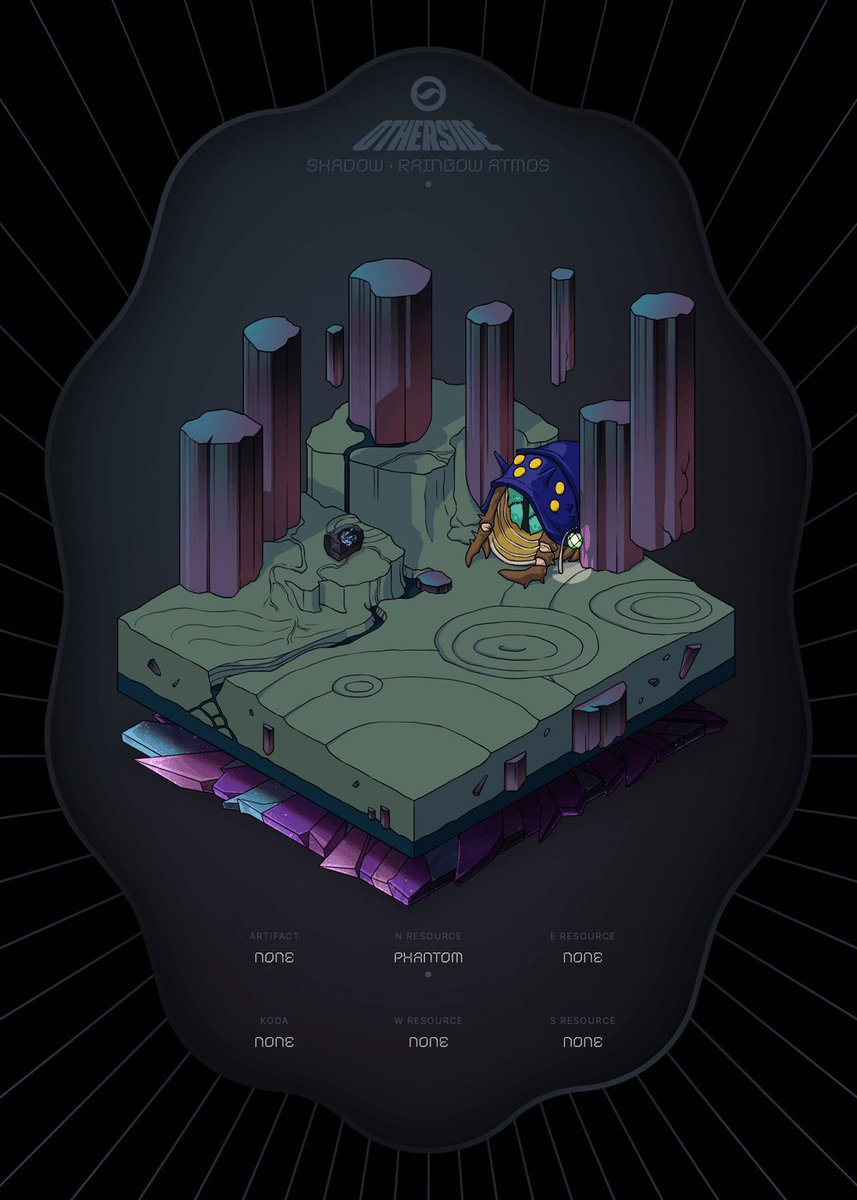
Just realized I paid more for this deed than the current BAYC floor.
I'll be alright.
Adam Weitsman@AdamWeitsman
Very excited to announce the acquisition of 2,000 Otherdeeds and 203 Kodas from an important private collection. I’ve always been the strongest believer in Yuga Labs and their Otherside project and I’m very grateful to the seller for their trust in me. This acquisition will now add to the assemblage creating a collection of over 8,500 Otherdeeds. To me, NFTs are more than just a digital asset; they represent a personal passion of mine. Each purchase reflects my confidence and support of the entire Web3 community. Special thanks to @steven_papas for putting this deal together, and @nichoviss for always helping me with your knowledge. You both are very important to me 🙏
English
0xRebels retweetledi

No debt
Ideal weight
8 hours of sleep
Mental health on track
Right nutrition
Zero Alcohol
This was my peak
I was 8
English


Hear me out. Bored Ape Templar Knights French Clubhouse.
320 members at 1eth each.
Tim@TimurNegru
Is anyone in the market for a 700-year-old Templar Knights watchtower? Because there's one for sale in the Lot valley, France. 7 bedrooms across 6 floors, a frescoed dining room, spiral staircase and views over a peaceful medieval village in the Lot region. There's also a 2-bedroom stone cottage in the walled courtyard, an enclosed garden and a heated swimming pool. Asking price: €550k ($634k). The Templar Knights who built this probably didn't picture the pool. But here we are.
English
@beijingdou Lol can someone actually do a spreadsheet of what the yearly maintenance would be? Taxes, some permanent staff etc…
English
@Jimmyj123673426 @fardeentwt Lol :) wasn’t a divorce :) thanks for asking :)
English

@0xRebels @fardeentwt Did you lose alot in the divorce though?
English

did not expect a article to make me question my entire personality
turns out the 4am grind and 6 coffees a day was just slowly destroying my face and eating my muscles the whole time
lifemaxxers@lifemaxxjourney
English

You might consider stopping what you're doing right now, but not for the latest BREAKING article or "You wouldn't believe...." type of bs.
Just stop. Stay still for a bit. Breathe in, breathe out. Do it again. Do it a couple more times. Ask yourself - How are you, mate, really?
youtube.com/watch?v=2zXp4Z…

YouTube
English
Wait wait wait wait
Elon Musk@elonmusk
@Rainmaker1973 The universe is fundamentally integer. There are a finite number of Planck cubes, which means a limited number of digits of pi (which can be thought of in integer form) to calculate volume. And you cannot have a fraction of a quark or lepton, so … integer.
English


