Tien (🧙‍♂️,🧙‍♂️)

15.3K posts

Tien (🧙‍♂️,🧙‍♂️) banner
Tien (🧙‍♂️,🧙‍♂️)

Tien (🧙‍♂️,🧙‍♂️)

@0xSunbin

Maxi @anoma @zama

Katılım Kasım 2021
2.8K Takip Edilen3.3K Takipçiler
Tien (🧙‍♂️,🧙‍♂️)
. @RialoHQ is doing something very few blockchains can: turning upgrades from a nightmare into a seamless process. With Gauss, changing validators, quorum rules, or even the consensus itself no longer requires downtime. The inner log handles everything, while the outer log keeps only what execution actually needs — clean, minimal, and efficient. It’s not just safe thanks to BFT and quorum intersection — it’s also highly flexible. Upgrades no longer mean tearing the system apart. In a world where change is constant, Rialo is built to evolve — and that’s the real advantage 🚀

Tien (🧙‍♂️,🧙‍♂️) tweet media
Rialo@RialoHQ

x.com/i/article/2036…

English
0
0
1
21
Tien (🧙‍♂️,🧙‍♂️)
You need: • Relayers • Keeper networks • External APIs • Multiple transactions • Sometimes even multiple tokens just to run one flow. Rialo fixes this with native async execution. Developers can write workflows using AFTER wait until, similar to the familiar async/await pattern. Here’s what happens: 1️⃣ A transaction starts executing 2️⃣ The program reaches AFTER wait until 3️⃣ Execution pauses while an external operation runs 4️⃣ The chain automatically resumes execution when the result returns No relayers. No keepers. No manual callbacks. Just a single async workflow managed by the chain itself. Example: Credit-based DeFi lending Today most DeFi loans are overcollateralized. But real-world lending often depends on credit scores, not collateral. With Rialo, a lending protocol could: • Receive a loan request • Fetch the borrower’s FICO score • Pause execution while the score is retrieved • Resume automatically when the result arrives • Approve the loan if the score passes a threshold All inside one async workflow across multiple blocks. Async transactions unlock a new class of applications: 🏦 Bank-verified onchain payments 🪪 Identity & compliance checks 📊 External risk or market data 💳 Credit-based lending Even better, Rialo nodes can call external APIs directly via REX (Rialo Extended Execution) while preserving deterministic onchain outcomes. The result: Less infrastructure. Fewer failure points. More real-world applications onchain. Async execution isn’t just a feature. It’s the bridge between Web3 systems and real-world services. grialo @RialoHQ
Tien (🧙‍♂️,🧙‍♂️) tweet media
English
1
0
1
28
Tien (🧙‍♂️,🧙‍♂️) retweetledi
Rialo
Rialo@RialoHQ·
Neo Finance 🤝 Rialo
Italiano
151
74
403
30.9K
Tien (🧙‍♂️,🧙‍♂️)
Privacy isn’t the same as lawlessness. With @RialoHQ , privacy and compliance aren’t trade-offs — they’re built into the protocol itself. Users can join and transact anonymously: – Encrypted transfers – Concealed amounts – Protected balances At the same time, institutions can access a view key for regulatory audits when required. True privacy for individuals. Regulatory clarity for institutions. No compromises. Get Real. Get Rialo.
Tien (🧙‍♂️,🧙‍♂️) tweet media
English
2
0
3
32
Tien (🧙‍♂️,🧙‍♂️)
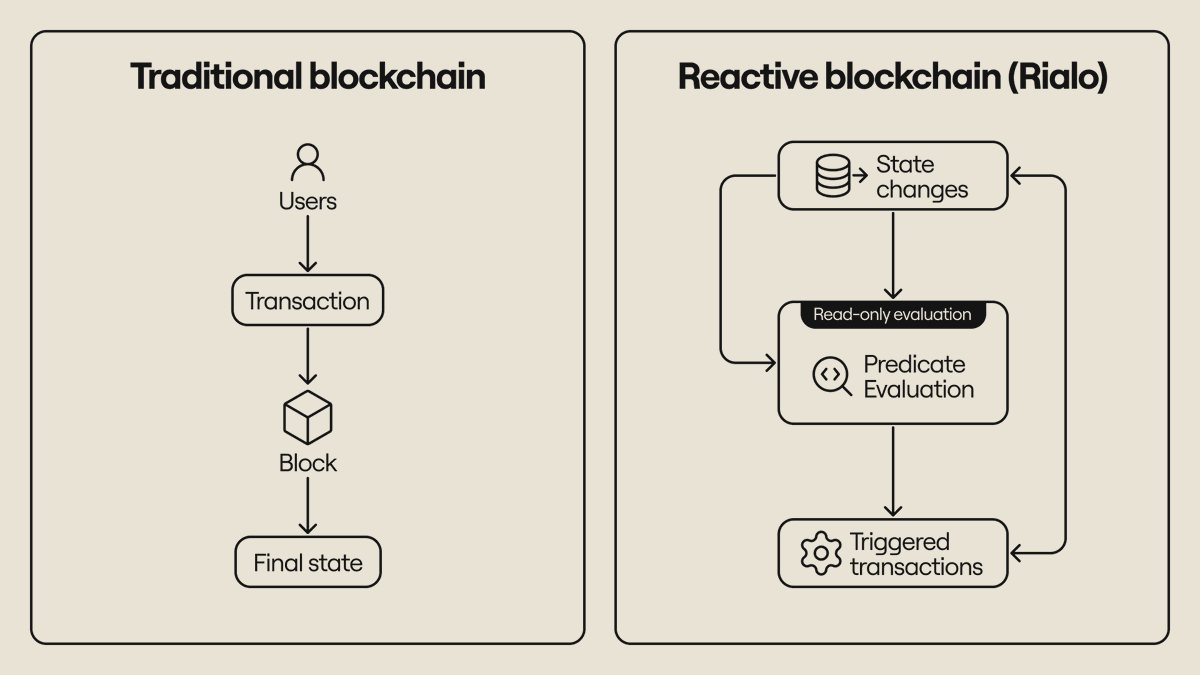
> @RialoHQ : Reactive transactions are the next step in onchain automation. Instead of relying on bots, keepers, or offchain middleware, Rialo integrates automation directly at the protocol level through reactive transactions — transactions that automatically execute when predefined conditions are met.The structure is simple:• Predicate → The trigger condition (time, state, events, oracle data, etc.) • Execution payload → The logic that runs when the condition evaluates to trueWhen the predicate = true → the chain automatically queues and executes the transaction. No user action. No bots. No cron jobs. This unlocks true onchain workflows: – Lending markets automatically checking collateral every block – Perp DEXs updating funding rates & triggering liquidations – AMMs dynamically adjusting fees based on volatility – RWA protocols distributing coupons autonomously – Prediction markets settling when verified data becomes availableAll deterministic. All enforced by the chain.Most importantly, automation inherits native execution guarantees. It runs only when conditions are satisfied. It executes exactly the defined logic. No third-party dependencies.Reactive transactions turn blockchains from “transaction processors” into “continuous logic engines.”Automation is no longer middleware. It becomes a protocol primitive.That’s the shift.
Tien (🧙‍♂️,🧙‍♂️) tweet media
English
1
0
2
21
Tien (🧙‍♂️,🧙‍♂️)
Rialo @RialoHQ isn’t “monolithic”. It’s supermodular. Only integrates what truly compounds value: • Data • Automation • Interop • Privacy • Execution
Tien (🧙‍♂️,🧙‍♂️) tweet media
English
0
0
2
27
Tien (🧙‍♂️,🧙‍♂️) retweetledi
Succinct
Succinct@SuccinctLabs·
Succinct is partnering with @optimism to bring ZK to the Superchain! OP Succinct will become a preferred ZK proving solution for the OP Stack, extending Succinct’s reach to 90% of the rollup market. In the coming months, OP Mainnet ($2B TVL), will integrate OP Succinct.
English
46
40
243
35.8K
Tien (🧙‍♂️,🧙‍♂️)
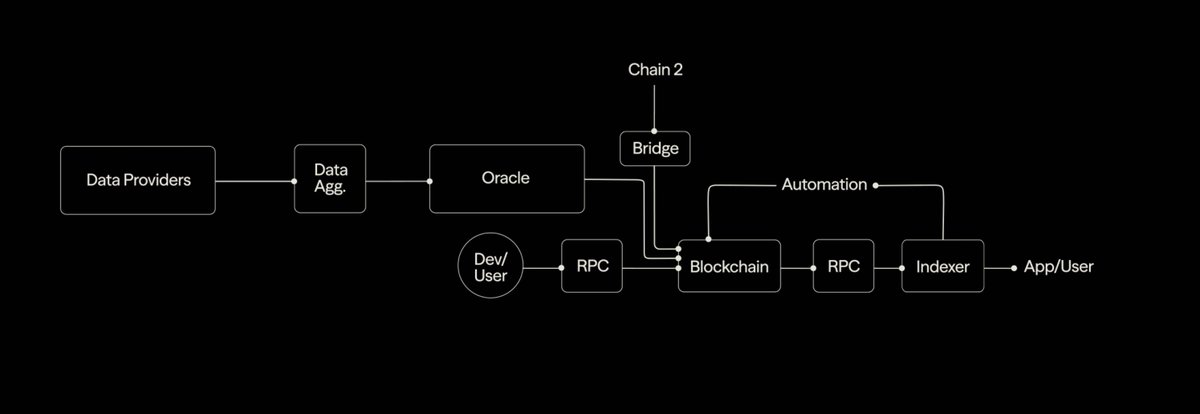
- @RialoHQ – Redefining Automation and Data Infrastructure for Blockchain In today’s blockchain ecosystem, most decentralized applications (dApps) still rely heavily on off-chain components such as oracles, bridges, indexers, and automation bots. While these tools are essential, they also introduce performance bottlenecks, security risks, and trust assumptions. Rialo was created to fundamentally redesign this model by bringing automation and conditional execution back on-chain. 1. Traditional Architecture: Fragmented and Off-Chain Dependent As shown in the diagram, the common architecture today follows this flow: Data Providers → Data Aggregators → Oracles → Blockchain → Indexers → App/User Alongside this are supporting components: Bridges for cross-chain connectivity RPCs for user and developer access Automation bots for execution Indexers for data aggregation Each layer plays an important role, but also introduces potential points of failure: Oracles can be delayed or manipulated Automation depends on off-chain bots Bridges are frequent attack targets Indexers can become outdated As a result, core application logic is fragmented across multiple off-chain layers instead of living entirely on-chain. 2. The Core Problem: Blockchains Cannot Act on Their Own Traditional blockchains only execute when a transaction is submitted. This means they: Cannot trigger actions autonomously Struggle with real-time conditional logic Depend on external keepers and bots For example, a contract that needs to liquidate a position when prices drop must still wait for an off-chain bot to submit a transaction. During congestion or outages, this logic may never execute on time. 3. Rialo: Bringing Automation and Conditions On-Chain Rialo addresses this problem at its root by redesigning how execution works: Conditions are stored on-chain Automation logic is embedded in the protocol Execution is tied to validators Dependence on off-chain actors is minimized Instead of: Off-chain monitoring → decision-making → transaction submission Rialo enables: On-chain detection → on-chain triggering → on-chain execution This transforms blockchains from passive systems into actively operating platforms. 4. Component Roles in the Rialo Ecosystem Based on the diagram, Rialo’s architecture can be understood as follows: a. Data Layer Data Providers Data Aggregators Oracles Rialo still leverages external data sources, but optimizes how data is delivered on-chain, reducing latency and risk. b. Access Layer Dev/User → RPC → Blockchain Developers and users interact via RPC as usual, but system execution does not depend on them. c. Cross-Chain and Automation Layer Bridges enable multi-chain connectivity Automation is natively integrated with the blockchain Automation is no longer a separate service layer—it becomes part of the core infrastructure. d. Application and Output Layer Blockchain → RPC → Indexer → App/User Indexers remain for data presentation and analytics, not for controlling logic. 5. Key Advantages of Rialo ✅ True Decentralization Reduced reliance on bots, keepers, and private servers strengthens trustlessness. ✅ High Reliability Logic runs alongside validators, minimizing failure points. ✅ Resilience During Volatility In highly volatile markets: No bot downtime No gas wars No missed triggers ✅ Better Developer Experience Developers only need to: Define conditions Write logic Deploy contracts No additional automation backends are required. 6. Use Cases for Rialo This model is especially suited for: DeFi: liquidations, rebalancing, stop-loss Lending: collateral management Derivatives: automatic settlement Gaming: real-time logic DAOs: condition-based governance Rialo enables dApps to become “living systems” rather than passive smart contracts. 7. Rialo and the Future of Blockchain Automation In the long term, Rialo represents a shift toward: “From reactive chains to autonomous chains” From blockchains that react, to blockchains that operate independently. By unifying automation, oracle inputs, and execution logic on-chain, ecosystems become: Less dependent on intermediaries More scalable More secure More sustainable This lays the foundation for next-generation Web3 applications, where blockchains are not just ledgers, but decentralized operating systems.
Tien (🧙‍♂️,🧙‍♂️) tweet media
English
1
0
3
39
Codex
Codex@CodexFX·
Stablecoins under the hood. Familiar UX on top. Stay tuned 👀
Codex tweet media
English
82
27
255
12.6K
Tien (🧙‍♂️,🧙‍♂️)
. Rialo : solving a core problem in today’s blockchain stack. @RialoHQ is building blockchain infrastructure where privacy is native, not an afterthought. That single design choice unlocks use cases most onchain apps today simply can’t reach. 🔹 Private Financial Markets Rialo enables institutional-grade onchain liquidity without exposing strategies, positions, or sensitive trading data. This is a hard requirement for funds and institutions—and something DeFi has struggled to support until now. 🔹 Privacy-Preserving Credit With Rialo, users can prove real-world creditworthiness without revealing personal financial data onchain. Onchain credit can finally connect to real-world credibility in a way that’s both secure and compliant. 🔹 Secure Offchain Sync Rialo bridges blockchains with banks, identity providers, and private APIs using end-to-end encrypted authentication. Onchain and offchain systems no longer live in silos—they sync securely. What stands out to me about Rialo is that they’re not trying to be “faster.” They’re trying to be usable in the real world. Privacy and compliance aren’t optional—they’re prerequisites for real adoption. And that’s exactly where Rialo is focused. If you’re building or investing seriously in Web3 infrastructure, Rialo is absolutely a project to watch. 👉 Get Real. Get Rialo.
Tien (🧙‍♂️,🧙‍♂️) tweet media
Rialo@RialoHQ

Public blockchains haven’t scaled for the real world, not because of speed, but because of transparency and compliance. Today's onchain apps are walled off from banks, identity providers, and private APIs because they’re transparent by default. Rialo changes that. By making privacy native, we bridge the gap between decentralized tech and legacy systems in a compliant and secure way. - Private Financial Markets: Institutional-grade liquidity without exposing your strategy. - Privacy-Preserving Credit: Prove your real world creditworthiness without exposing your data. - Secure Offchain Sync: Authenticate with any API while staying encrypted. Don’t just build onchain. Build for the real world. Get Real. Get Rialo.

English
5
0
7
72
Tien (🧙‍♂️,🧙‍♂️) retweetledi
Elon Musk
Elon Musk@elonmusk·
Whoever said “money can’t buy happiness” really knew what they were talking about 😔
English
127.7K
59.2K
599.3K
111.5M
Tien (🧙‍♂️,🧙‍♂️)
🌀 @RialoHQ Native automation is what RWA actually needs : Tokenization is not the hard part of RWA. Real financial systems depend on: - clear conditions - predictable cash flows - automatic enforcement Manual intervention breaks trust. Offchain scripts break auditability. Reactive transactions allow financial logic to be encoded directly: - coupon payments - NAV updates - redemption conditions - default handling Each step runs only when its condition is satisfied. And it runs the same way every time. Rialo turns the blockchain into a deterministic financial backend.
Tien (🧙‍♂️,🧙‍♂️) tweet media
English
3
0
6
77
Tien (🧙‍♂️,🧙‍♂️) retweetledi
Codex
Codex@CodexFX·
Onchain FX is the missing layer for a universal payment rail.
English
22
12
99
2.9K
Tien (🧙‍♂️,🧙‍♂️) retweetledi
Elon Musk
Elon Musk@elonmusk·
🎶 All my X’s live in Texas 🎶
English
10.2K
8.8K
157.2K
50.8M
Tien (🧙‍♂️,🧙‍♂️) retweetledi
Zun
Zun@Zun2025·
For those who missed this AMA with Rand TLDR : 1/ Binance Prime Sale users paid $0.05 per token, not $0.025, as Binance also used their TGE allocation to give bonuses to sale users, thus the effective price seems to be $0.025. Now the real question, is it not a discount? → No. If Binance were truly selling ZAMA at a discounted price like $0.025, Zama would receive less money per token and its total fundraising would be cut in half. But in the Prime Sale, the actual sale price is still $0.05, so Zama receives the full amount for every token sold. The lower "effective price" only comes from Binance giving extra bonus tokens from the separate TGE marketing allocation. That means users feel a discount, but Zama's revenue and valuation are not reduced at all. 2/ Users : Can we expect Upbit or other tier-1 exchange listings? → Rand : there are more tier-1 exchange listings yet to be disclosed, and in fact, Zama as a privacy project would be the first one to achieve so many tier-1 exchange listings on day 1. 3/ Users : When can we claim our sale bonus tokens? → Rand : Bonus tokens will be directly airdropped to wallets on TGE day. Note : But in the docs, they have mentioned March 3rd. Need to confirm from @rand regarding this. I have even recorded the full AMA. Will post the video in the thread soon, anyone who is interested can check it out.
Rand@randhindi

I spent most of the day talking to people in our community to understand their views on our TGE strategy. This made me realize there are many open questions regarding some of the choices we made. I will be doing a live video AMA tomorrow at 2pm UTC (link tbd), where you can ask anything you want. Anything you want to know about Zama, about FHE, about our team, about our TGE, just ask. Hopefully this will help clarify any doubts so we can focus on building a successful long term ecosystem together.

English
77
16
358
31.5K
Tien (🧙‍♂️,🧙‍♂️) retweetledi
ade | rialo.io
ade | rialo.io@itachee_x·
Back to gym after almost a year of being "locked-in". Can barely lift anything 😢
English
44
2
109
3.5K
Tien (🧙‍♂️,🧙‍♂️) retweetledi
Rialo
Rialo@RialoHQ·
Privacy is deeply baked into our evolution and culture. We didn’t evolve for a world of constant surveillance. Reclaiming privacy is how we reclaim freedom. @harryhalpin (CEO, @nymproject) spoke about this on our recent Privacy Roundtable 👇
English
118
83
448
35.3K
Tien (🧙‍♂️,🧙‍♂️)
Overcollateralization isn’t a feature. It’s the result of DeFi being blind to real-world credit. Rialo changes that with a Real World Aware Stack: Verified Credit Attestations → bridge the recovery gap Streaming Capital Flow → reduce principal at risk Live Credit Telemetry → dynamic risk adjustment When recovery is real and measurable, we lower collateral without increasing risk. Get Real. Get @RialoHQ .
Tien (🧙‍♂️,🧙‍♂️) tweet media
English
0
0
5
55
Tien (🧙‍♂️,🧙‍♂️)
. @RialoHQ : DeFi Without Operators Imagine a lending protocol that: Checks collateral every block Triggers partial liquidations automatically Activates circuit breakers during volatility Delays execution when oracle data is unstable All of this logic can be encoded as reactive workflows on Rialo. No need for: Liquidation bots Risk operators Emergency admins This matters because: Bots can be attacked Admins can make mistakes Keepers can fail at critical moments On @RialoHQ , operational risk is converted into deterministic onchain logic, validated by the network. The protocol stops being “operated” and becomes self-governing by design.
Tien (🧙‍♂️,🧙‍♂️) tweet media
English
0
0
2
41