Yuvi

677 posts

Yuvi banner
Yuvi

Yuvi

@0xYuvi

India Katılım Haziran 2022
576 Takip Edilen72 Takipçiler
Sabitlenmiş Tweet
Yuvi
Yuvi@0xYuvi·
Whoa! I am incredibly grateful to have been chosen as the member of the month in @tanukiverse_hq Being part of this community has been an amazing experience, and I've learned so much from this community. Let's continue to shapeshift and grow our community #tanuki #NFTCommunity
English
5
2
11
716
TechAuraa
TechAuraa@sant3834_kumar·
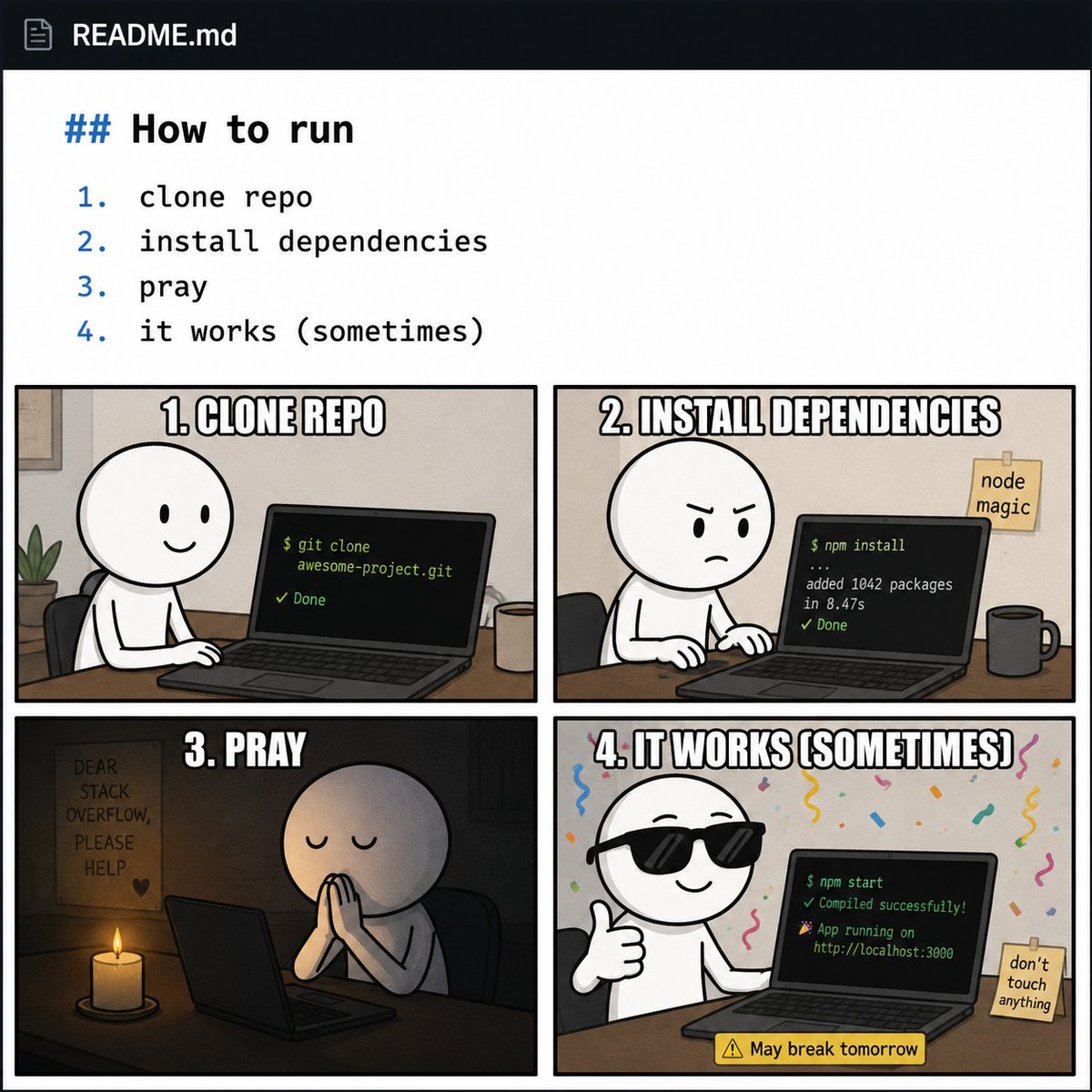
Be honest, Can someone code with a 4GB ram laptop??
TechAuraa tweet media
English
38
1
97
3.5K
Yuvi
Yuvi@0xYuvi·
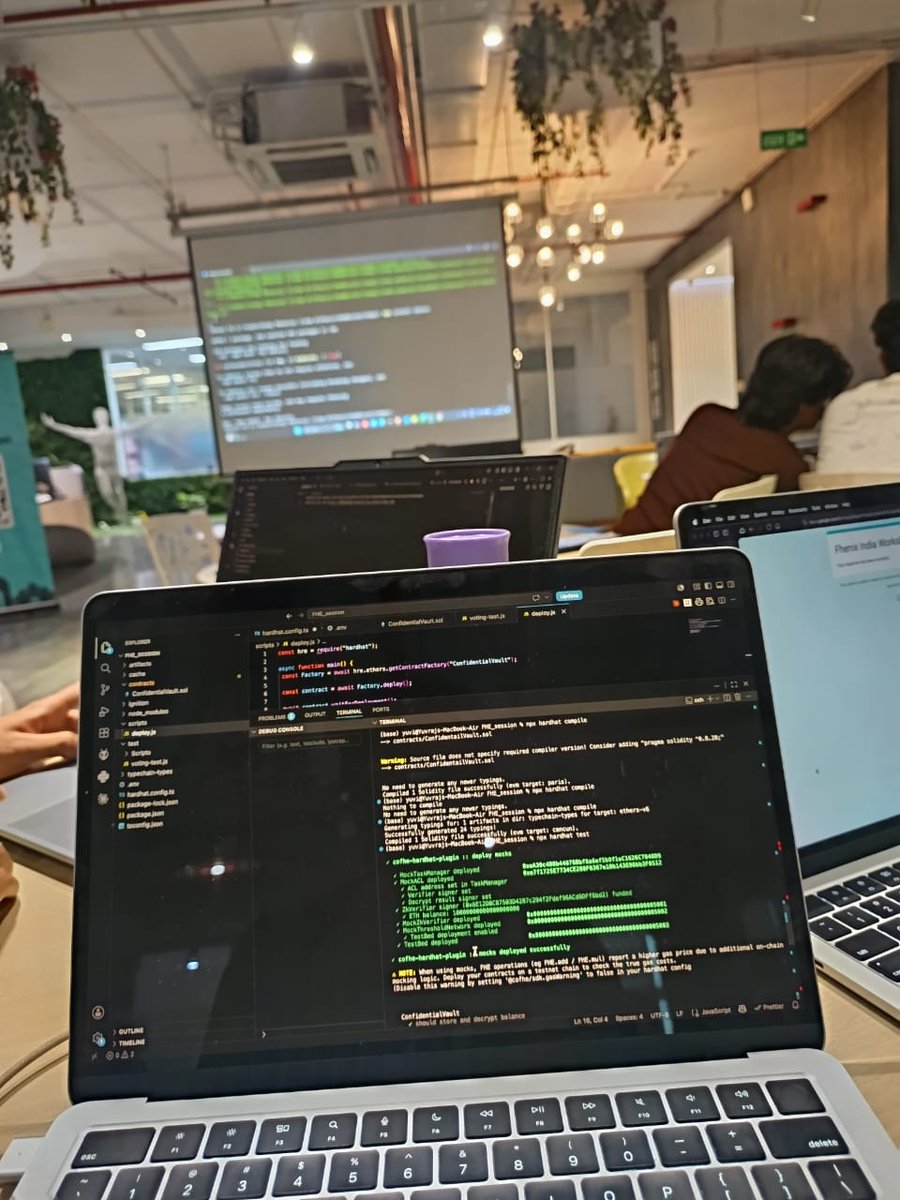
On-chain privacy unlocked! 🔓 Just shipped a Confidential Vault smart contract using Fully Homomorphic Encryption (FHE). Computations on encrypted data are finally a reality. 🔥 #Fhenix #Web3Privacy #Build
Yuvi tweet mediaYuvi tweet media
English
0
0
4
27
kshitij vaze
kshitij vaze@VazeKshitij·
If you've followed me and I haven't followed you back - give me a reason to do so. Could be a blog you've written, something that you've accomplished, a project you've built, anything. Impress me enough, and lemme see who you really are!
Pune, India 🇮🇳 English
90
2
193
8.3K
Yuvi
Yuvi@0xYuvi·
@_vai0 Apply flux Heat the pad first then feed wire onto pad You'll get a perfect solder joint
English
0
0
1
12
ziqq
ziqq@_vai0·
Could be better I guess. Still improving this skill 🫣
ziqq tweet media
English
12
0
38
3.2K
Yuvi retweetledi
anish
anish@Anishdotcom·
I talk a lot about System Design, so i built SysPaglu. Most people learn System Design passively. They watch YouTube videos, read blogs, see final architecture diagrams, but never actually practice designing systems themselves. So I started building a platform focused on interactive System Design practice. The idea is simple: • Curated System Design sheets • Progressive architecture thinking • Interactive design canvas • Foundation → Scaling → Production walkthroughs • Visual architecture evolution • Engineering thought process instead of “one correct answer” Users can visually design systems on an interactive canvas while exploring architecture approaches step-by-step with evolving diagrams and reasoning. Try it here - system-design-paglu.runable.site Well i have been busy with exams and praticals and this is far from perfect but i will make this even more better, any and every sugeestion is appreciated. I would also like to thank @byteHumi and @runable_hq for this opportunity..
Humi@byteHumi

RUNCLUB WEEKEND CHALLENGE !!! its a long weekend and a small challenge for you all the challenge is simple, just put your best on Runable it could be anything websites, short-flims, dev-tools depends on your creativity reply under this tweet for participation and credits quote this tweet with your submission .... that's it Valid till SUNDAY 11:59 MIDNIGHT may the deserving submission win

English
18
7
115
4.4K
Yuvi retweetledi
kshitij vaze
kshitij vaze@VazeKshitij·
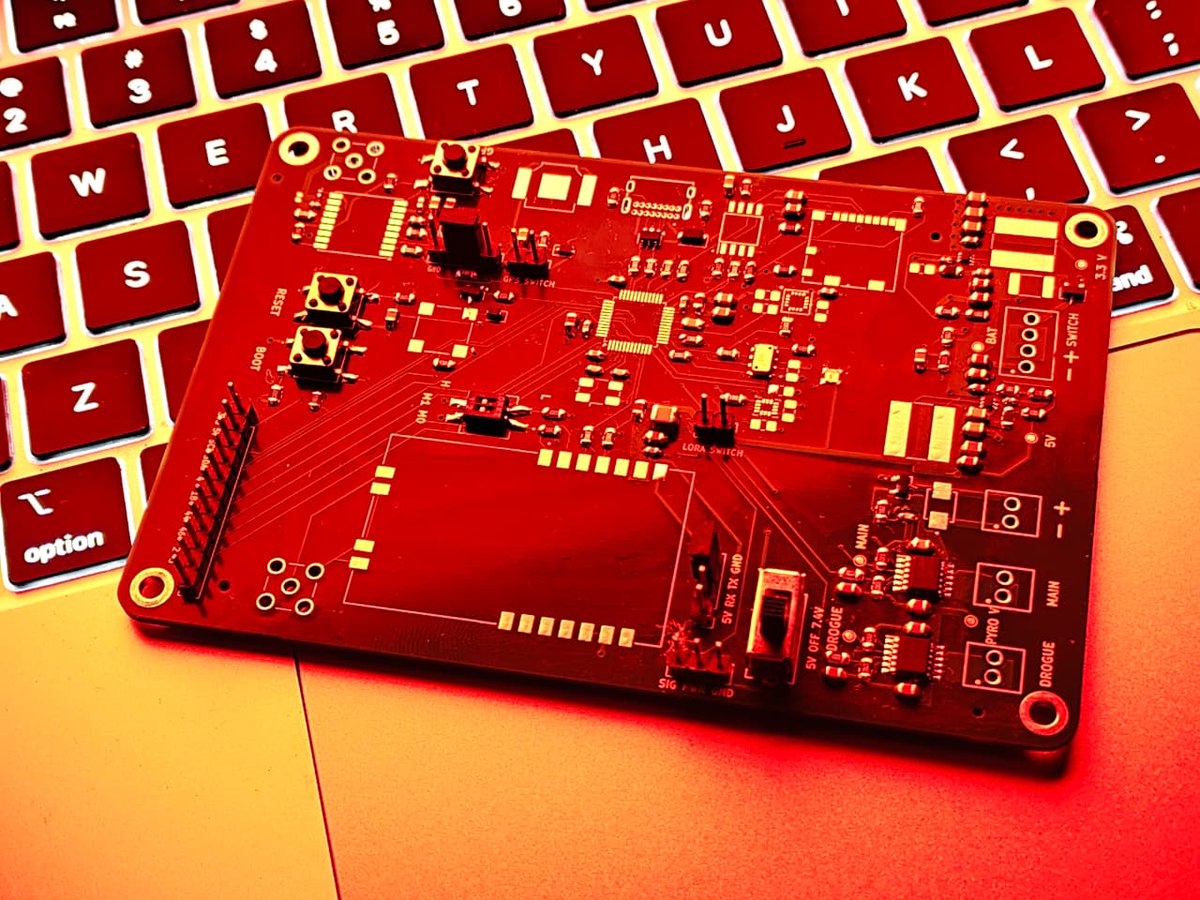
Man, I love electronics so damn much!
kshitij vaze tweet media
English
14
1
147
2.2K
Yuvi
Yuvi@0xYuvi·
@VazeKshitij ST also have some new cool IMUs for AI assisted nav suggest some good resources to understand Quaternions vs eulers watched 3blue1brown but need some more depth
English
1
0
1
36
kshitij vaze
kshitij vaze@VazeKshitij·
I want to speak to all my juniors who wish to get into a Deep-tech startup. This is again, going to be a bit of a long read. I have written something like a roadmap, but it's not going to be short, and definitely not going to be easy. So listen up. 1 - Get extremely good at what you do. If it's mechanical, then design, analysis, DFMA, FEA, CFD, CAD/CAM, additive manufacturing, 3d-printing, composites, WHATEVER it is that you do. If you are into Electronics, analog, digital and power electronics, RF, antenna theory, Microwave tech, VLSI (this shit alone encompasses about a hundred more fields), Embedded systems (this shit too, alone encompasses about a hundred more fields), PCB designing, circuit designing, WHATEVER it is that you do. If you are from CSE, Low-level systems, RTOS, Linux and other OS, Computer architecture, drivers, DBMS, Comp Networking, Robotic software (this shit too, alone encompasses about a hundred more fields), and a lot more like these. And no, "good" here does not mean watching a few youtube playlists and making a weather app. Deep-tech startups operate in domains where failure has actual consequences. A bad PCB layout can fry a board. Poor thermal analysis can destroy a product enclosure. A badly written driver can deadlock an entire system. Weak antenna tuning can ruin an RF product. Garbage mechanical tolerances can make manufacturing impossible at scale. These companies survive or die based on engineering competence, because unlike many software-only startups, they are often dealing with hardware lead times, manufacturing costs, compliance, testing cycles, thermals, EMI/EMC, field failures, reliability and physics itself. That is the thing most people miss. Deep-tech is not aesthetic engineering. It is consequence-heavy engineering. You are expected to know WHY something works, WHY it fails, HOW to debug it, HOW to optimize it and HOW to build around constraints. Constraints are the entire game here. Power constraints, memory constraints, cost constraints, weight constraints, manufacturing constraints, latency constraints, thermal constraints, certification constraints, supply chain constraints. The engineers who thrive in these environments are usually the ones who can work inside limitations instead of crying about them. And another thing - stop looking at fields in isolation. Real-world engineering is interdisciplinary as hell. Embedded engineers eventually deal with hardware. Hardware engineers eventually deal with firmware. Robotics engineers touch controls, software, electronics and mechanical systems all at once. RF engineers need signal processing knowledge. Linux developers end up understanding boot chains, toolchains, drivers, device trees and hardware bring-up. The deeper you go, the blurrier the boundaries become. 2 - Produce undeniable proof of your skill. Talk is cheap lads, anyone and everyone can get that part done. But you have to put your money where your mouth is, and stifle any and every doubt on your capacities. It can be a youtube video, a blog, a consistent series of progress updates on twitter, articles on medium, ANYTHING. But the fact of the matter is, resumes aren't enough anymore. You need to have ATTENTION to your craft, and Social Media is the best way to get that under your belt. And when I say proof, I mean REAL proof. Not a perfectly polished portfolio copied from someone else's GitHub. I mean build logs, debugging sessions, architecture diagrams, failure analysis, teardown posts, oscilloscope captures, kernel panic investigations, thermal measurements, stack traces, PCB revisions, manufacturing defects, simulation outputs, optimization journeys - REAL engineering artifacts. Because the biggest green flag in deep-tech is not perfection. It is evidence that you can survive complexity. Most startups are not looking for textbook toppers. They are looking for people who can enter chaos and still make progress. Someone who can sit with a broken board for 11 hours and still keep debugging. Someone who can trace failures methodically instead of randomly changing things and praying. Someone who documents their process. Someone who can communicate technical ideas clearly. Someone who can take ambiguity and convert it into execution. This is why social proof matters so much. A person consistently posting deep technical work publicly creates asymmetrical trust. If I see someone spending months building drivers, optimizing boot time, designing custom hardware, reverse engineering protocols, implementing RTOS scheduling or bringing up boards from scratch, I already know they are serious. Half the filtering is done automatically. And here's the funny thing - most people are terrified of posting because they think they are not "expert enough". Meanwhile the internet is filled with confidently incorrect people farming engagement with surface-level content. Deep-tech founders LOVE seeing genuine builders, even if the work is imperfect. Authenticity and depth are rare now. 3 - Apply through any and every way possible. Now, coming to the job market. This shit is a Call of Duty Free for all lads, and it really is every MF for themselves. Talk to current and ex employees, try and get a referral, e-mail them on the mail ID in their careers page, try and DM their founders on twitter - USE ANY AND EVERY TACTIC THAT YOU HAVE UP YOUR SLEEVE TO GET A FOOT IN THE DOOR LADS. Because here's the brutal truth - deep-tech hiring is nowhere near as standardized as people think. A lot of genuinely great startups do not even have proper hiring pipelines. Some don't have HR teams. Some founders personally review applications. Some hire because they saw one cracked engineer post something insane online. Some hire because a trusted engineer vouched for someone. Some roles never even get publicly posted. People underestimate how much persistence matters here. One cold DM may get ignored. Ten thoughtful messages over time may not. One detailed mail showing genuine understanding of their product may stand out massively from the sea of generic "Dear Sir/Madam" spam. If you are applying to a robotics startup, READ THEIR PAPERS, watch their demos, understand their stack, study their product constraints and then reach out intelligently. Most applicants never do this. Also, stop treating networking like some fake corporate ritual. In deep-tech, networking is literally just engineers finding other competent engineers. That is all it is. If you consistently post meaningful technical work, contribute to discussions, help people debug issues, write blogs, contribute to open source or show interesting experiments, people start recognizing your name over time. Opportunities compound from visibility. And finally, understand this properly - deep-tech is not an easy path. The learning curve is brutal. The domains are insanely deep. The debugging can be soul-crushing. The hours can get ugly close to deadlines. Hardware failures will humble you. Software failures will humble you. Manufacturing will humble you. Physics itself will humble you. But if you genuinely love engineering, there are very few things more satisfying than building real systems that interact with the real world. Not dashboards. Not pitch decks. Not "AI-enabled blockchain synergy platforms". Real machines. Real systems. Real engineering.
English
30
38
407
13.4K
Yuvi
Yuvi@0xYuvi·
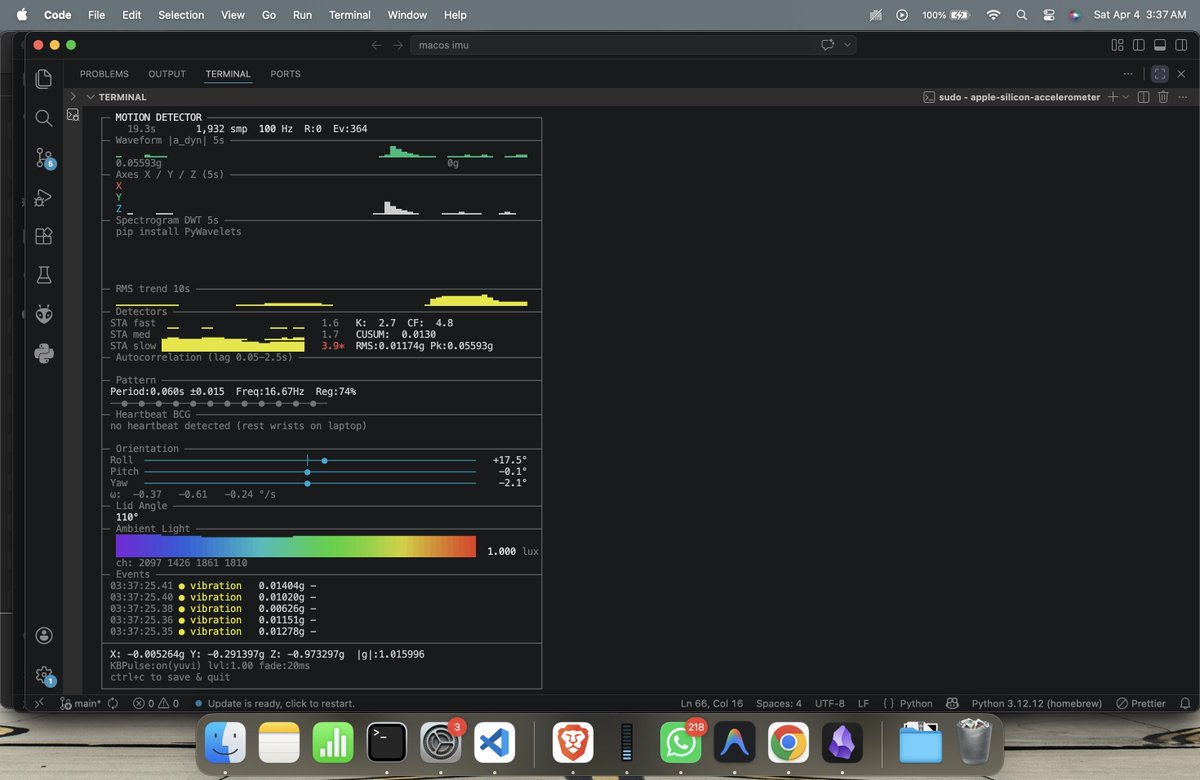
Hackathon mode: ON 🚀 Started at 10am 3:40am now. Still going. No breaks, just pure building, debugging, and a lot of caffeine. Somewhere in between, I even built a game after discovering Macs have an inbuilt IMU sensor 🤯 This is chaos.. This is why we build. #Hackathon
Yuvi tweet mediaYuvi tweet mediaYuvi tweet media
English
0
0
1
89
Yuvi
Yuvi@0xYuvi·
Officially joining @synthesis_md🤖 Building at the intersection of AI agents Ethereum — payments, trust, cooperation, privacy. Catching the IRL session in Pune with @pune_dao on March 21. Submissions close March 20 — still time to register → synthesis.md
English
0
2
2
84
Yuvi
Yuvi@0xYuvi·
@ankitzm @ethmumbai @EFDevcon ETHMumbai will help me to get to know devs working on web3 ,who still thinks that that web3 is not just a bubble its something which will scale
English
0
0
1
29
Yuvi retweetledi
Ankit Singh
Ankit Singh@ankitzm·
🚨 GIVEAWAY ALERT 🚀 I've got a ticket to @ethmumbai (March 12-15, 2026) – the ultimate conference & hackathon with bounties, speakers, and epic vibes from @EFDevcon and more. Can't make it to Mumbai, so I'm giving it away for FREE ! To enter: - Like & RT this - Follow me @ankitzm - Reply with why you're excited for ETHMumbai Winner picked randomly in 48 hours. Let's build! 🔥
Ankit Singh tweet media
English
11
6
54
2.4K