Majid Seif

1.6K posts

Majid Seif

Majid Seif

@0x_The_Fox

Katılım Ocak 2011
541 Takip Edilen459 Takipçiler
Majid Seif retweetledi
Lark Davis
Lark Davis@LarkDavis·
Warren Buffett, 95 years old, has seen every market cycle imaginable. And he's saying right now? We've never had a bigger gambling mood than this. Not investing. Gambling. The man isn't saying the sky is falling. He's just saying a whole lot of prices out there are... absolutely silly his words, not mine. Maybe listen to the guy who's been right since before most of us were born.
English
117
77
750
125.8K
Majid Seif retweetledi
The Assembly
The Assembly@InTheAssembly·
Michael Burry made $100 million for himself and $725 million for his investors betting against the housing market in 2008. Hollywood made a movie about him called The Big Short. Last quarter he made his BIGGEST market call in 17 years. Here's where he's putting his money now: – He opened a 3.5% position in PayPal at $49.38 – He's adding Salesforce (CRM) – He's adding MSCI – He's holding Adobe (ADBE), Autodesk (ADSK), Veeva (VEEV), Fiserv (FISV). Every name on that list is software or payments. Every name on that list got destroyed in the recent selloff. Wall Street thinks AI is going to kill these companies, Burry thinks Wall Street is wrong. His thesis: the recent software crash wasn't about AI disruption It was driven by technical pressure in private credit markets. None of his picks rely on private credit. He says the AI disruption fears are overblown. This is the same Burry who: – Shorted Palantir with put options on 5 million shares – Shorted Nvidia with put options on 1 million shares – Accused hyperscalers of using accounting tricks to hide $176 billion in depreciation – Called this the biggest speculative bubble of all time Translation: Burry doesn't think tech is dead. He thinks the AI Mag 7 are overpriced and the rest of tech is mispriced The man who saw 2008 coming when nobody else did just told you exactly what he's buying and why. Every time he makes a new move, we will break it down here. Turn on notifications so you don’t miss the alert, this is VERY important. Many people will wish they followed us sooner.
The Assembly tweet media
English
113
124
1.4K
482.7K
Majid Seif retweetledi
The Assembly
The Assembly@InTheAssembly·
A 25 year old just turned $225 million into $5.5 billion in 12 months. Here’s exactly what he bought. Leopold Aschenbrenner got fired from OpenAI in April 2024. He spent the next few months writing a 165-page thesis predicting AGI by 2027. Then he launched a fund and put his money where his thesis was. He bought zero Nvidia. Zero Microsoft. Zero Google. Zero Amazon. He bought what AI actually runs on. Bloom Energy (BE), power infrastructure for data centers. Up 1,422% in one year. Lumentum (LITE), optical components that move data between chips. Up 1,331%. Sandisk (SNDK), storage. Up 3,130%. CoreWeave (CRWV), GPU cloud infrastructure. Up 166%. Iris Energy (IREN), AI computing and data centers. Up 583%. The thesis was simple: every AI company needs energy, bandwidth, storage, and compute. Nobody was buying those. Everyone was buying the AI companies themselves. He was right. His fund now manages $6 billion. Backed by Patrick and John Collison of Stripe and former GitHub CEO Nat Friedman. I’m adding this to my watchlist. Every time he files a new 13F, we will break it down here. Turn on notifications so you don’t miss the alert, this is VERY important. Many people will wish they followed us sooner.
The Assembly tweet media
English
188
1.1K
15.5K
6.8M
Majid Seif retweetledi
Mario Nawfal
Mario Nawfal@MarioNawfal·
So you know the company that makes Claude, the AI you’ve probably used? They just built something so dangerous they refuse to release it to the public. It is called Claude Mythos, and here is the insane part: Anthropic did not train it to be a hacking tool, the capabilities just appeared on their own as a byproduct of making it smarter. They looked at what it could do and said we cannot let anyone have this. What can it do? It found thousands of previously unknown security vulnerabilities in every major operating system and every major web browser. Including a 27-year-old bug in OpenBSD, one of the most secure operating systems ever built, that the entire global security community missed for nearly three decades. An Anthropic engineer with zero security training asked it to find a remote code execution vulnerability before going to bed, woke up the next morning and had a complete working exploit waiting. Over 99% of the vulnerabilities it found were still unpatched at the time of the breach. So instead of releasing it, Anthropic gave access to 40 companies including Apple, Google, Microsoft, and JPMorgan under Project Glasswing, backed by $100 million in usage credits. The idea being: let defenders use it before attackers get something similar. Then unauthorized users got in anyway, on the exact same day it was announced, exploiting a contractor's credentials and making educated guesses about the model's location. The U.S. Treasury Secretary called an emergency meeting with Goldman Sachs, Citi, and other big banks specifically because of Mythos. Mozilla used it to find and patch 271 Firefox vulnerabilities in weeks. The UK's AI Security Institute confirmed it is the first AI model to complete a simulated full network takeover. And OpenAI announced a similar model just one week later. We are in a completely different era with this stuff and most people have no idea. Source: Anthropic, TechCrunch, Bloomberg
Mario Nawfal tweet mediaMario Nawfal tweet mediaMario Nawfal tweet mediaMario Nawfal tweet media
English
120
495
1.9K
139.4K
Majid Seif retweetledi
Shanaka Anslem Perera ⚡
Shanaka Anslem Perera ⚡@shanaka86·
Elon Musk said the biggest mistake he ever made in hiring was overweighting intelligence. The man who built a neural network that learned physics from 9 billion miles of driving data. Who taped out AI5 on April 15. Who runs the Colossus supercluster training a 1 trillion parameter model. Who is building Terafab to produce 1 terawatt per year of AI compute. That man looked into the camera and said: “I think goodness of heart is important. I underweighted that at one point.” Now look at what his own machines just did to the argument for pure intellect. Frontier AI models scored above 94 percent on GPQA Diamond in April 2026. This is a PhD-expert-level science benchmark so hard that questions are only included if non-expert PhDs with internet access and 30 minutes cannot answer them. Human domain experts score 65 percent. Some re-benchmarks pushed that to 69.7. The machines beat the smartest humans alive by over 24 points on questions designed to require deep doctoral expertise. Intelligence is being commoditized in real time. Not in theory. In reproducible benchmark scores that improve with every training run. Grok 4.3 is finishing its 1 trillion parameter checkpoint this week. Claude scores 94.2. Gemini 94.1. The cost of PhD-level reasoning is collapsing toward the price of an API call. Musk saw this before the benchmarks confirmed it. His hiring process at Tesla and xAI now requires no resume and no cover letter. Three bullet points describing the toughest technical problems you have ever solved. A 20-minute conversation where, as he put it, “if the conversation is not wow, believe the conversation, not the paper.” And then the filter that cannot be faked: talent, drive, trustworthiness, and goodness of heart. He called those traits “fundamental” and “unchangeable.” This is not soft management philosophy. This is resource allocation under scarcity. When cognitive ability was scarce and expensive, you optimized hiring for IQ. You hired the credential. The degree. The prestige signal. The college wage premium held at 62 percent because intelligence was hard to find and impossible to replicate at scale. That constraint just broke. An API call costing cents now outperforms a PhD on the hardest science questions humanity has ever constructed. The 62 percent wage premium has stagnated for two decades while AI capabilities doubled annually. The crossover is not coming. It arrived. So what is still scarce? Not computation. Terafab will produce that at planetary scale. Not knowledge. Every frontier model contains more factual information than any human who has ever lived. Not reasoning. GPQA Diamond proved that. What is scarce is the thing Musk identified: whether someone will do the right thing when nobody is watching, when the deadline is impossible, when the shortcut is invisible, and when the cost of integrity is personal. That cannot be trained into a neural network. It cannot be fine-tuned. It cannot be distilled from data. It emerges from a life lived with a specific set of values that no architecture can replicate. The man building infinite intelligence just told you the only thing it cannot produce. Character is the last advantage that cannot be automated. And the person who understands that best is the one making intelligence cheapest.
Shanaka Anslem Perera ⚡ tweet media
Daniel J. Arbess@DanArbess

“When intelligence becomes infinite, character becomes the only scarce resource left. Integrity is not a soft skill anymore. It is the last advantage that cannot be automated. We spent a generation outsourcing our worth to our intelligence. Intelligence is about to become the cheapest thing on earth. Character will become the most expensive. The mind was never the measure of a person. The heart always was.”

English
70
174
685
81.4K
Majid Seif retweetledi
Mario Nawfal
Mario Nawfal@MarioNawfal·
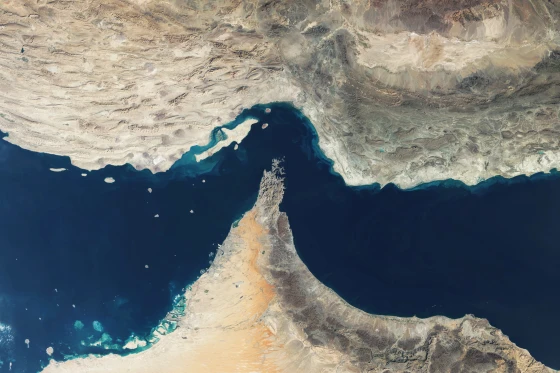
🇮🇷🇴🇲 The Strait of Hormuz will have a toll booth for the first time in history... The ceasefire agreement includes allowing both Iran and Oman to charge fees on ships transiting the Strait. Iran will use the revenue for reconstruction. The world never paid to use this waterway before tonight. Iran went to war with the most powerful military on earth and came out of it with something no nation has ever had: a formal revenue stream from 20% of the world's oil supply passing through its waters. Source: AP
Mario Nawfal tweet media
Mario Nawfal@MarioNawfal

🚨🇺🇸 Trump accuses CNN of running a fraudulent Iranian statement claiming Iran "forced the US to accept its 10-point plan," including lifting all sanctions, withdrawing all U.S. forces, and recognizing Iran's control over the Strait of Hormuz. Trump says the article was sourced from a fake news site in Nigeria and that authorities are investigating whether "a crime was committed." If the statement is fake, someone deliberately planted a story designed to blow up the ceasefire within hours of it being announced. Think about who benefits from that. Trump just agreed to pause. Iran just agreed to reopen the Strait. Pakistan just invited both sides to Islamabad. And within minutes, a headline drops claiming the U.S. surrendered to every Iranian demand, perfectly designed to enrage Americans and humiliate Trump into walking away from the deal. Whether it came from Nigeria or anywhere else, the timing alone should make everyone ask who wanted this ceasefire to fail before it even started...

English
640
1K
4.9K
1.1M
Majid Seif retweetledi
Evan
Evan@EvanWritesOnX·
The chart says China dropped from $1.3 trillion to $650 billion in US Treasuries. What it doesn't say is where that money went. Gold reserves above 2,300 tonnes and climbing. Payment systems connecting 110 countries. Ports, pipelines, and mines across three continents. China isn't selling American debt because it's scared. It's selling because it's almost finished building the replacement.
DD Geopolitics@DD_Geopolitics

🇺🇸🇨🇳 Chinese holdings of US Treasury securities have fallen to their lowest level since the 2008 financial crisis, dropping from a peak of ~$1.3 trillion in 2011 to roughly $650 billion today. As the US wages war in the Middle East and escalates tensions with Beijing, China continues quietly offloading American debt. The trend has accelerated sharply since 2022.

English
23
79
399
34K
Majid Seif retweetledi
Bull Theory
Bull Theory@BullTheoryio·
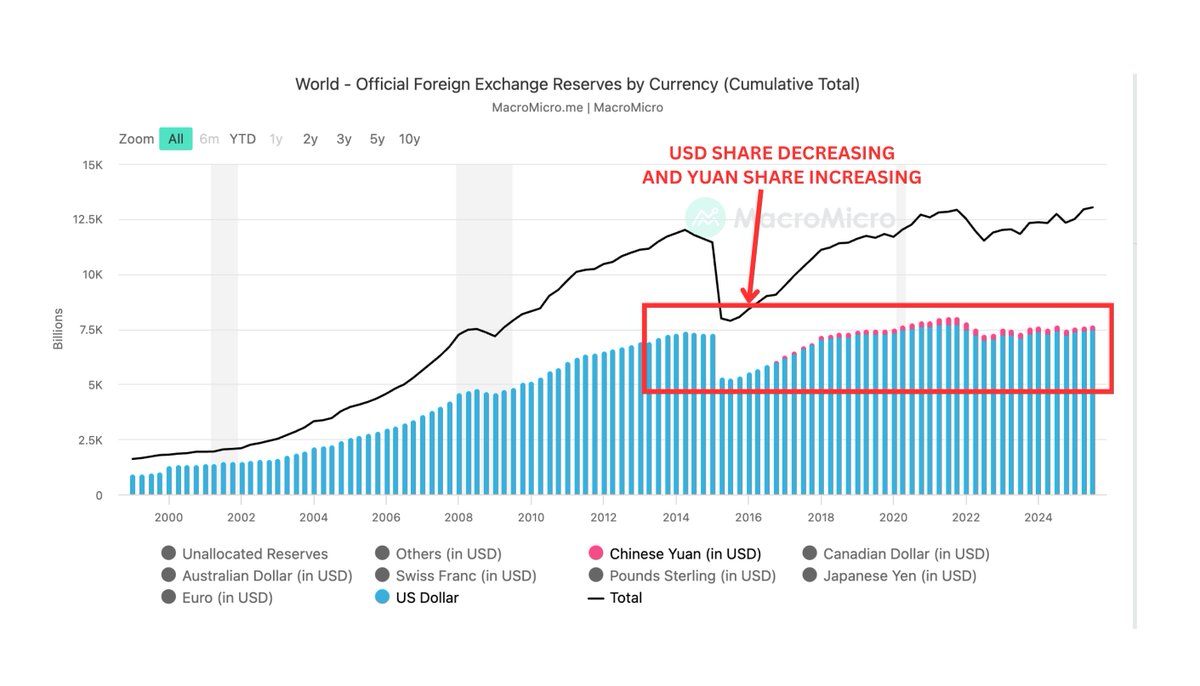
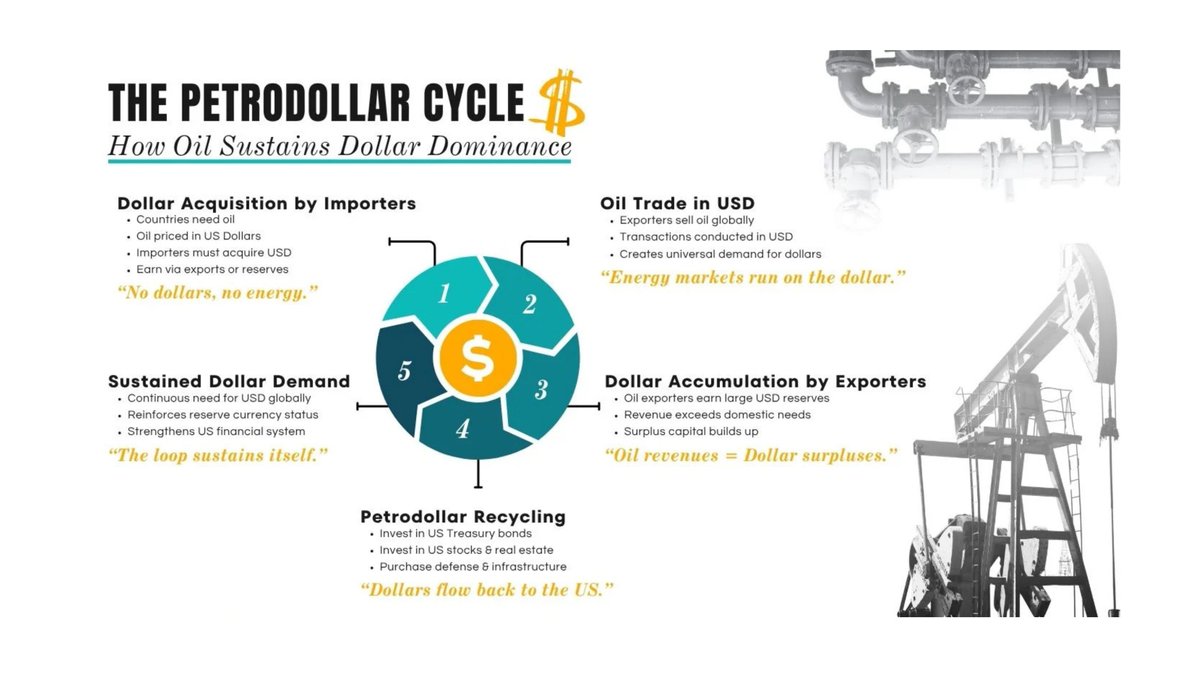
TRUMP DIDN'T START THE IRAN WAR TO DESTROY IRAN. HE STARTED IT TO SAVE THE U.S. DOLLAR. Before the first bomb dropped, the petrodollar was visibly falling apart, Fast. Saudi Arabia publicly said for the first time since 1974 that it was open to settling oil in other currencies. Then the actions followed. China and Saudi Arabia signed a 50 billion yuan currency swap. Saudi Arabia joined mBridge, the system built explicitly to bypass SWIFT and the dollar. The original 1974 petrodollar agreement was allowed to expire without renewal. India was buying Russian oil settled in rupees and yuan. One fifth of all global oil trade was already settling outside the dollar by 2023. The dollar's share of global reserves had fallen to a 30 year low. The petrodollar was dying already. To understand why this matters you need to understand what the petrodollar actually is. It is a protection deal. In 1974, Kissinger flew to Riyadh and made a secret agreement with King Faisal. Saudi Arabia prices oil in dollars and recycles profits into US Treasuries. In return, America guarantees Saudi security. Weapons, troops, and the promise that US military keeps the shipping lanes open. Every OPEC member followed within a year. The arrangement gave Washington something extraordinary. A permanent buyer for its debt. The ability to borrow cheaply and run deficits indefinitely while maintaining the world's reserve currency. For fifty years Gulf states believed this was a partnership. It was not. It was leverage. And when Gulf states started building their own exits, that leverage had to be demonstrated again. On February 28, 2026, the demonstration began. Iran closed the Strait of Hormuz. Kuwait has no bypass pipeline. Qatar sends 93% of its LNG through it. Saudi Arabia exports 5.5 million barrels per day through it. Multiple Gulf energy companies declared force majeure simultaneously for the first time in history. Oil hit $120. R Refineries were shut. The IEA called it the largest energy supply disruption in history. And the same Gulf states that had been quietly building yuan settlement systems and joining Chinese financial infrastructure found themselves with their entire economic survival at stake and only one country capable of doing anything about it. They went back to Washington and asked for help. Saudi Arabia reversed its refusal to grant the US military base access. The UAE declared willingness to join a US coalition. The GCC went to the UN and called for US-backed force to reopen the strait. Countries that had been distancing themselves from American dependence for two years were suddenly asking America to come back and protect them. That is not a coincidence, That is the leverage being applied. Now look at what happened to the dollar while all of this was happening. DXY surged to a 10 month high. Gold collapsed 13 to 20%, its worst month since 2013. Investors sold alternative stores of value and bought dollars. Every barrel of emergency oil released by the IEA was priced and settled in dollars. SWIFT data showed the dollar's share of global transactions at its highest level in years. And Gulf states who had been accumulating yuan and building alternative payment systems ended up spending their crisis buying American weapons instead. A $16.5 billion emergency arms package was approved during the war. The petrodollar recycling mechanism, dollars earned from oil flowing back into American defense industry, ran perfectly. Now look at what Trump had been saying for years before the war. He threatened BRICS nations with 100% tariffs if they backed any alternative to the dollar. He said directly that losing the world's reserve currency would be "like losing a war." His National Security Strategy, published one month before the bombs fell, explicitly named preventing any power from controlling Middle Eastern oil chokepoints as a core US interest. After the war started he posted publicly: "With a little more time, we can easily OPEN THE HORMUZ STRAIT, TAKE THE OIL, and MAKE A FORTUNE." This is the part that should make every Gulf state rethink everything. The system was sold to them as a partnership. America protects you. You price oil in dollars. Mutual benefit. But when Gulf states started building exits, a war appeared that destroyed their ability to use those exits and forced them back into dependence. Gulf states spent two years building non dollar infrastructure. Then a crisis arrived that made all of it irrelevant overnight and left them with no option except to ask Washington for protection. The dollar surged. American weapons factories got new orders. And the countries trying to escape the system found themselves locked back inside it. That is a reset. And the people who paid for it are the same ones who always pay, The Gulf. The petrodollar was never a partnership. It was always a system designed to make American power self financing. The Iran war did not threaten that system. It renewed it.
Bull Theory tweet mediaBull Theory tweet mediaBull Theory tweet mediaBull Theory tweet media
English
187
524
2.1K
227.1K
Majid Seif retweetledi
Abhinav Kumar
Abhinav Kumar@singhabhinav·
Nigeria is ranked #1 in global USDT and USDC ownership. Not the US. Not the UK. Not Singapore. Nigeria. 59% of Nigerian crypto users hold USDT. 48% hold USDC. More than any other country surveyed. India is third. Brazil close behind. The reason is obvious once you see it: in countries where local currency loses 20–40% of value annually, stablecoins aren't a crypto product. They're a savings account. A dollar-denominated store of value that doesn't require a US bank account. Here's what the data doesn't show: most of those stablecoin holders can't use their USDT to buy anything. No merchant acceptance. No subscription billing. No automatic payment. No way to pay a supplier. They hold the dollars. They can't spend the dollars. They convert back to fiat every time they need to transact. The gap between stablecoin adoption and stablecoin utility is most visible not in San Francisco or Singapore. It's in Lagos, Jakarta, São Paulo. $308B in circulation. The people who need stablecoin commerce most have the fewest tools to access it. That's not a distribution problem. That's an infrastructure problem. The rails exist everywhere. The billing layer doesn't exist anywhere. That's who we're building for.
English
783
1.8K
8K
964.3K
Majid Seif retweetledi
Shanaka Anslem Perera ⚡
Shanaka Anslem Perera ⚡@shanaka86·
BREAKING: The most dangerous number in global finance is not the price of oil. It is the entire Japanese yield curve. The 10-year hit 2.32 percent on Monday, highest since 1999, now at 2.278 percent, up 13.1 basis points this month. The 5-year is at 1.71, up 11.5 basis points. But the detonation is at the long end: the 30-year sits at 3.54 percent, up 15.4 basis points. The 40-year is at 3.77, up 23.9 basis points, the largest monthly move on the curve. Japanese life insurers hold $5 trillion in foreign assets. When long-end yields rise this fast, they repatriate. And what they repatriate FROM is every Treasury, every European bond, and every emerging-market position funded by cheap yen. For decades, the yen carry trade worked like this: borrow yen at near-zero, invest globally at higher yields, pocket the spread. Trillions sit on this foundation. When yen borrowing costs rise, the trade unwinds. Margin calls do not negotiate. The BOJ just signalled rates are rising. Board member Takata dissented for the second meeting, demanding a hike to 1 percent. The yen is approaching 160 against the dollar. The MOF warned it is “fully prepared to take action.” On January 20, when the 40-year hit a record 4.24 percent on fiscal fears alone, the Nikkei cratered and global markets shook. Now the same curve is being pushed higher by something fiscal policy cannot fix: a mined strait 9,000 kilometres away. Now trace the dominoes. Domino one: the BOJ signals tightening. The carry trade unwinds. Japanese life insurers, holding $5 trillion in foreign assets with unrealised domestic losses estimated at $60 billion, begin repatriating to capture 3.54 percent at home instead of holding US Treasuries at lower risk-adjusted returns. Japanese securities dealers dumped a record 822 billion yen in super-long bonds in a single month earlier this year. The selling is not discretionary. It is balance-sheet survival. Domino two: that capital was in US Treasuries, European bonds, and emerging-market debt. Repatriation means selling. Yields rise everywhere, not just Tokyo. Domino three: higher global yields tighten financial conditions during a war energy shock. The recession arrives via a strait, not the Federal Reserve. Domino four: emerging markets crushed. Turkey, Brazil, South Africa, Indonesia face stronger yen killing the carry subsidy AND higher dollar costs simultaneously. Domino five: Nvidia, Apple, Microsoft, the AI trade, partially financed by cheap yen, face forced selling on margin calls because the yen that funded them hit a 27-year inflection. Domino six: the Fed cannot cut to cushion the blow because inflation is running at 2.7 percent on the war energy shock. The BOJ is tightening because of oil. The Fed cannot ease because of oil. Both central banks are prisoners of the same 21 miles of water. Japan holds $1.1 trillion in US Treasuries. Ghalibaf threatened to strike any entity financing the US military. Japan is funding the war, being destroyed by the war, and destabilising global markets by bringing its money home. Remember August 5, 2024. The last carry trade unwind crashed the Nikkei 12 percent in a single session. That was a 15 basis point hike during peacetime. This is a 27-year yield extreme during a war that mined the world’s most important chokepoint. The molecules closed the strait. The strait spiked the oil. The oil moved the BOJ. The BOJ is unwinding the carry trade. The carry trade is selling the Treasuries that fund the war. The war closed the strait. The circle is complete. And at every point on the circle, the dominoes are falling. open.substack.com/pub/shanakaans…
Shanaka Anslem Perera ⚡ tweet mediaShanaka Anslem Perera ⚡ tweet media
English
38
192
728
120.9K
Majid Seif retweetledi
Shanaka Anslem Perera ⚡
Shanaka Anslem Perera ⚡@shanaka86·
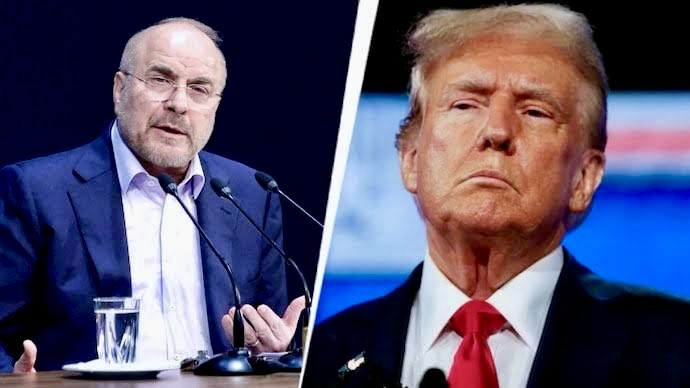
BREAKING: Iran’s Parliament Speaker just threatened every government in the world, sovereign fund, and institution on Earth that holds US Treasury bonds. Mohammad Bagher Ghalibaf, the IRGC-aligned hardliner who is now the most visible wartime leader in Iran while Mojtaba Khamenei has not been seen for 24 days, posted on X: “Alongside military bases, those financial entities that finance the US military budget are legitimate targets. US treasury bonds are soaked in Iranians’ blood. Purchase them, and you purchase a strike on your HQ and assets. We monitor your portfolios. This is your final notice.” Read that again. He did not threaten military bases. He threatened bond holders. He declared the financial infrastructure that funds the American war machine a legitimate military target. He claimed Iran is monitoring portfolios in real time. And he issued a “final notice” to every entity financing the Pentagon’s $200 billion supplemental request. Japan holds $1.1 trillion in US Treasuries. China holds $770 billion. The United Kingdom holds $690 billion. Luxembourg, the Cayman Islands, Canada, Belgium, Ireland, Switzerland, and Taiwan are all in the top fifteen. Ghalibaf just told every one of them: your Treasury holdings make your headquarters a target. This is not a bluff. It is not operational either. Iran cannot strike the Bank of Japan. Iran cannot hit the Cayman Islands. The threat is psywar, and the psywar is aimed at the one mechanism that matters: the next Treasury auction. If sovereign funds hesitate at the margin, yields rise. If yields rise, US borrowing costs increase. If borrowing costs increase, the $200 billion war supplemental becomes more expensive. The threat does not need to be executed. It needs to be believed by enough participants in a single bond auction to move the yield curve by a few basis points. A few basis points on $36 trillion in outstanding US debt is billions in additional annual interest. This is the war’s third front. The first front is kinetic: missiles, drones, and 100-munition strikes on Tehran. The second front is energy: the Strait of Hormuz, the insurance market, the fertiliser blockade, the helium bottleneck. The third front is financial: Treasury bonds as a weapon, de-dollarisation as a strategy, and portfolio surveillance as a threat. Iran has lost 70 percent of its ballistic launchers. It has lost its navy. Its air force is destroyed. Its supreme leader has not been seen. Its internet has been dark for 504 hours. And from inside that darkness, its parliament speaker just told the world that buying American debt makes you a combatant. The country being bombed into the Stone Age is threatening to destabilise the currency of the country doing the bombing. The weapon is not a missile. The weapon is a sentence on X that raises the risk premium on $36 trillion in sovereign debt. The PBOC added gold for the 16th consecutive month. USD share of global reserves has fallen to 56.9 percent from 71 percent in 2000. Foreign ownership of US Treasuries has dropped to 30 percent from a 50 percent peak. The de-dollarisation was already underway. Ghalibaf just gave it a wartime accelerant. Bonds as battlefield. Portfolios as targets. Yields as weapons. The war just went from the strait to the spreadsheet. open.substack.com/pub/shanakaans…
Shanaka Anslem Perera ⚡ tweet media
English
42
150
319
85.7K
Majid Seif retweetledi
Shanaka Anslem Perera ⚡
Shanaka Anslem Perera ⚡@shanaka86·
BREAKING: President Trump just told 450 million Europeans: sign my deal by Thursday or I cut your gas. And if you think this is impulsive, you are not paying attention. This is the most calculated energy play in American history. Qatar’s LNG is offline. Force Majeure. Ras Laffan shut after Iranian drones hit it on Day 3. Seventeen percent of global LNG capacity gone for 3 to 5 years. Russia’s pipeline gas to Europe was severed after Ukraine. Norway is maxed. Europe’s LNG prices have surged 35 to 50 percent since Hormuz closed. One supplier remains at scale: the United States. Trump’s ambassador to the EU just told the Parliament: ratify the $750 billion trade deal without amendments by Thursday March 26, or lose “favorable access” to American LNG. Now decode the strategic geopolitical chess game which is being played in realtime. Saturday night, Trump posted a 48-hour ultimatum threatening to obliterate Iranian power plants. That was not about Iran. That was about oil prices. He needed them high enough to terrify Europe into ratifying the LNG deal, but not so high that American consumers revolted before the midterms. The ultimatum spiked Brent past $113 and WTI past $100 on Sunday. Monday morning, Trump posted about “productive conversations” and paused the power plant strikes for five days. Oil crashed over 10 percent in hours. WTI hit $89. The S&P surged $2 trillion. He spiked oil to create the fear. Then crashed it to create the relief. The fear makes Europe sign. The relief makes American voters forgive the war. Both moves serve the same president. Both happened within 36 hours. Both were executed with social media posts, not missiles. The $750 billion deal is the permanent monetisation of Europe’s energy vulnerability. LNG. Oil. Civil nuclear. Locked in until 2028. The EU had been delaying ratification for months. Three wars removed every alternative: Iran removed Qatar, Ukraine removed Russia, Norway’s geology removed Norway. What remains is American LNG. Trump is not selling gas. He is selling the absence of alternatives. The 5-day power-plant pause expires Saturday March 28. The EU Parliament votes Thursday March 26. Europe must ratify American energy dependency two days before the war might escalate again. If the pause collapses Saturday and Iran executes Ghalibaf’s promise to “irreversibly destroy” regional energy infrastructure, European LNG prices spike after the deal is already signed. Trump gets the $750 billion commitment at crisis pricing, then potentially triggers the next crisis 48 hours later. The deal locks in before the leverage expires. This is Trump Doctrine in its purest form. He does not separate trade from security from energy from markets. He operates them as one instrument. The war degrades Iran. The degradation closes Hormuz. The closure spikes energy. The spike terrifies Europe. The terror forces the deal. The deal locks in $750 billion. The pause crashes oil. The crash rallies stocks. The rally preserves midterm support. Every move funds the next move. He used the words “Department of War” in the pause announcement. Not Defence. The pre-1947 name. The name that tells Europe: the man offering you gas can resume bombing power plants on Saturday. Yesterday Russia signed a deal to build Vietnam’s first nuclear plant. Today Trump threatens to cut Europe’s gas. Two great powers selling energy security to two desperate continents during the same war. Both profit from the crisis. Both lock in decades of dependency. Both timed the offer to the moment the customer cannot refuse. The strait closed the alternatives. The ultimatum created the fear. The pause created the relief. The deal monetises both. Thursday is payday. Full deep dive analysis: open.substack.com/pub/shanakaans…
Shanaka Anslem Perera ⚡ tweet media
English
597
2.7K
6K
1.2M
Majid Seif retweetledi
Evan
Evan@EvanWritesOnX·
Remember as America declines, the stock market machine that has generated billions will decline with it. The system will undergo repricing. People will get hurt by the markets. And not everyone. The ones that get hurt are the ones whose entire thesis is "the market goes up because it has always gone up." And there's a lot of them out there. That thesis is not an analysis. It is a description of the FIC's capital allocation machinery operating as intended. When the machinery stutters, which it certainly will, that thesis evaporates, and the people holding positions based on it discover that they were not investing. They were riding a mechanical flow that they mistook for a market. The multipolar transition is going to increases the advantage of fundamental analysis over passive strategies, for a specific structural reason. In the unipolar era, the FIC's machinery compressed the dispersion between good companies and bad companies. Index funds bought everything. Cheap credit sustained everything. Buybacks inflated everything. A terrible company with declining revenue could maintain its share price for years because it was in an index and the index received automatic inflows. Fundamental analysis was still correct in identifying the good companies, but the payoff for being correct was muted because the bad companies were being artificially sustained alongside the good ones. In a bifurcating world, dispersion increases. The companies that have diversified into growth markets, that generate real cash flow from real economic activity, that are not dependent on the American consumer's credit card, those companies pull away from the companies that remain domestically trapped, debt-dependent, and structurally exposed to the declining platform. The gap between the winners and losers widens. And that widening gap is exactly what fundamental analysis is designed to exploit. The bigger the dispersion, the more a good stock picker outperforms the index, because the index is averaging across an increasingly bimodal distribution of outcomes. So the analyst who screens for undervalued companies with strong fundamentals and a foresight into geographic diversification and geopolitical impact, is positioned to outperform not just in normal conditions but specifically during the transition. They are selecting for companies on the right side of the structural shift while the passive machinery continues to hold companies on both sides indiscriminately. The passive investment machinery breaks for everyone eventually. The fundamental analyst is not just protected from that break. They profit from it, because the break creates exactly the kind of dislocation that fundamental analysis was built to exploit: good companies temporarily mispriced because the selling was mechanical rather than analytical, bad companies finally repriced to reflect the reality that the machinery was concealing. The multipolar transition is, from the perspective of a disciplined fundamental analyst, the biggest opportunity in a generation. The structural shift creates dispersion. Dispersion creates mispricing. Mispricing is where returns live. The analyst who understands the framework's structural map and applies it to their existing fundamental toolkit is not just picking stocks. They are positioning across a global reordering with an analytical advantage that most market participants, still operating on unipolar-era assumptions, do not possess. That global reordering is coming.
English
19
26
219
21.7K
Majid Seif retweetledi
Shanaka Anslem Perera ⚡
Shanaka Anslem Perera ⚡@shanaka86·
BREAKING: Iran’s Energy Minister just confirmed the damage. Now count what is broken. South Pars gas fields struck. Asaluyeh processing complex hit. Gas storage tanks destroyed. Isfahan gas administration building bombed. Isfahan pressure reduction station destroyed. A major pipeline near Khorramshahr severed. Refineries halted. Power plants damaged. Transmission networks collapsed across provinces. Dozens of water treatment and transmission facilities destroyed. Desalination systems offline. Minister Abbas Aliabadi described the damage as “extensive.” The Iranian Red Crescent says 80,000 civilian building units have been damaged. The electricity grid is fractured. And the 5-day power-plant pause is the only thing preventing the rest of it from being hit. South Pars is not an Iranian gas field. It is one half of the single largest natural gas reservoir on Earth, shared with Qatar’s North Field across the maritime border. Combined, they hold roughly 8 percent of the world’s total proved gas reserves. Qatar already declared Force Majeure on its side after Iranian drones struck Ras Laffan on Day 3. Seventeen percent of global LNG capacity went offline for 3 to 5 years. Now the Iranian side of the same geological formation is being struck by American and Israeli munitions. Both ends of the world’s largest gas field are under attack simultaneously. One by Iranian drones. The other by the countries those drones targeted. The gas that heated European homes, powered Asian factories, produced the fertiliser that feeds South Asia, and supplied the helium that TSMC requires to fabricate every advanced semiconductor on Earth comes from a single formation now being bombed from both directions. Isfahan is not a peripheral target. Its refinery processes approximately 375,000 barrels per day, one of Iran’s largest. The gas administration building and pressure reduction station that were struck control distribution to central Iran’s power generation and industrial base. Without pressure reduction, gas cannot flow safely through the national grid. Without the grid, the power plants that were paused from targeting cannot operate anyway. The pause protects the buildings. The strikes have already degraded the system that feeds them. The Khorramshahr pipeline supports southwestern Iran’s export capacity and power generation. Severing it disconnects refineries from feedstock and power stations from fuel. The damage is not a single facility. It is a network. Pipelines feed refineries feed power stations feed the grid feed the water treatment feed the desalination feed the cities. Cut one node and the cascade propagates. Iran has now publicly confirmed what it has lost. The electricity ledger has been read: hospitals absorbed, schools absorbed, emergency centres absorbed, electricity is the line. The Energy Minister’s statement turns the ledger from a warning into a legal and moral foundation for reciprocity. Iran has established the record. The 140 remaining Khorramshahr-4 launchers, each carrying 1,500-kilogram warheads at Mach 8 to 16 with cluster submunitions, are the instruments of that reciprocity. Every Gulf desalination plant, every Saudi refinery, every Bahraini power station that runs on gas from the same geological basin now sits inside the target set. Saturday is March 28. The pause expires. The minister just told the world what has already been destroyed. The 140 launchers are the answer to what gets destroyed next. open.substack.com/pub/shanakaans…
Shanaka Anslem Perera ⚡ tweet media
English
59
463
1.2K
433.2K
Shahid Bolsen
Shahid Bolsen@ShahidkBolsen·
AI has made intelligence / knowledge a sucbscription service. Think that through. What is the underlying necessity of any market? For food it is hunger For medicine it is illness For the defence industry it is war So, for the intelligence business it is... And they do not respond to existing market demand, they create market demand. Create hunger, create illness, create war, create...
English
13
82
339
20.9K
Majid Seif retweetledi
Shanaka Anslem Perera ⚡
Shanaka Anslem Perera ⚡@shanaka86·
BREAKING: The President of the United States told China this morning to start policing the Strait of Hormuz. China’s response was not a warship. It was gold. Six hundred kilograms of gold bars allocated by major Chinese banks this morning were sold out in under one minute at the 9am Shanghai opening. One hundred kilograms allocated for the weekend sold out in the same window last Saturday. This has been happening every single trading day while bunker-busters hit Natanz and 5,000 Marines head to the Gulf and Trump tells the world America does not need Hormuz. China heard the message. China’s answer is not military. It is monetary. The People’s Bank of China has purchased gold for 16 consecutive months. Reserves reached 2,308 tonnes by February. The Shanghai Gold Exchange recorded 126 tonnes of withdrawals in January and 85 in February. Chinese gold ETFs added 38 tonnes in January, the strongest start to any year on record. Seventy-seven percent of central banks globally now intend to increase gold reserves over the next 12 months. Gold touched $5,589 per ounce in January before correcting to $4,494 this week. Chinese retail buyers did not care. They bought the dip because the dip happened in paper. The physical metal in their hands did not lose weight. Trump said the words today: “We don’t use the Strait of Hormuz. We don’t need it. Europe, Korea, Japan and China need it. They will have to get involved a little bit.” China imports more than 70 percent of its crude from the Middle East and Africa, the largest share transiting Hormuz. Trump is telling China to send warships to protect a shipping lane that American forces are simultaneously disrupting through a war against Iran. The request is structurally impossible. China will not deploy naval assets alongside the fleet that is bombing its strategic partner. So China deploys capital instead. Gold is the asset that cannot be sanctioned, cannot be frozen, cannot be confiscated by executive order, and does not transit the Strait of Hormuz. This is not a gold rush. A rush implies speculation. This is rearmament. The PBOC is building reserves outside the dollar system. Chinese households are converting savings into a store of value independent of American financial infrastructure. Hainan’s free-trade port has become a gold shopping destination. Banks ration supply because demand exceeds every ceiling Beijing sets. The queue at ICBC is not for jewellery. It is for monetary sovereignty, purchased 600 kilograms at a time. The symmetry with Natanz is exact. The United States has bombed Iran’s nuclear facility five times in 16 years. The programme survives because nuclear knowledge cannot be destroyed by ordnance. China is building a gold reserve that the United States cannot reach because physical metal in a sovereign vault cannot be frozen by SWIFT exclusion. Both strategies operate on the same principle: the thing that matters most is the thing that cannot be taken away. For Iran it is the physics equation. For China it is the gold bar. Both are responses to the same American power projection. Both are designed to outlast it. The West is fighting a kinetic war over a strait it controls militarily. The East is fighting a monetary war over a reserve asset it controls physically. Both wars are happening on the same day. Neither side has acknowledged the other’s battlefield. The strait is 21 miles wide. The gold bar is 400 ounces. And the distance between them is the distance between the world that is ending and the world that is beginning. Full analysis: open.substack.com/pub/shanakaans…
Shanaka Anslem Perera ⚡ tweet media
English
133
578
2.2K
1.2M
Majid Seif retweetledi
Ray Dalio
Ray Dalio@RayDalio·
Comparing what is now happening with what has happened in analogous historical situations and triangulating my thinking with smart, well-informed leaders and experts has always helped me make better decisions. I have found that most wars are filled with big disagreements about what is likely to happen and big surprises. However, in the case of this Iran war, it is obvious, and there is near-universal agreement, that it all comes down to who controls the Strait of Hormuz. I hear from those who run governments, geopolitical experts, and people all over the world that if Iran is left with control over who can pass through the Strait of Hormuz, or is even left with the power to negotiate, there are four (4) key implications. I wrote about these consequences in my latest article. I want to emphasize that I am not political; I am just a practical person who has to bet on what will happen and has studied history to draw lessons that help me do that well, and I am now passing along my principles and thoughts that might help others navigate these tumultuous times. I remain ready, willing, and able to explore these things with you if you’d like to ask me questions in the comments. x.com/RayDalio/statu…
English
129
108
1.1K
208K
Majid Seif retweetledi
Shanaka Anslem Perera ⚡
Shanaka Anslem Perera ⚡@shanaka86·
Hours ago, Trump went on Fox News to announce he is calling European allies and regional governments to form a coalition to reopen the Strait of Hormuz. Hours later, Germany said no. “As long as this war continues, there will be no participation, not even in any effort to keep the Strait of Hormuz open by military means.” That is the German government spokesperson. On the record. Today. This is the moment the market’s quick-resolution thesis died. Think about what just happened. The United States asked the largest economy in Europe, the country that received the most American support during the Russian energy crisis, the NATO ally that benefits most from Gulf energy transits, to help reopen a 21-mile waterway carrying one-third of global seaborne fertilizer trade and a fifth of world oil. Germany said it has nothing to do with NATO. And walked away. Japan already declined. Australia already declined. The US Navy confirmed on March 12 it is not ready for escorts. Minesweeping assets were retired in 2025. Trump is demanding roughly seven countries send warships. The number of confirmed commitments as of this evening: zero. Now do the math on the calendar. Even if a coalition somehow materializes next week, minesweeping a 21-mile corridor saturated with Iranian mines and drone threats under active fire takes weeks of operational preparation. Then escorts must begin. Then insurance must recalibrate. Solvency II capital buffers depleted by 26 months of Red Sea losses do not rebuild in days. Reinsurance treaties must be renegotiated. Individual vessels must be re-underwritten. The Red Sea precedent is 26 months old and premiums never returned to pre-crisis levels. The Corn Belt needs nitrogen by mid-April. India needs Kharif prep by May. Australia needs urea by June. Do you see the problem. The coalition timeline is measured in months. The planting window is measured in weeks. These two clocks do not intersect. The food the world eats in late 2026 is being decided right now by soil chemistry, not by which foreign minister picks up Trump’s phone call. Nearly 49% of globally traded urea is tied to conflict-exposed Gulf exporters. Transit has collapsed 97%. Bangladesh has shut five of six urea factories during its primary rice season. India formally asked China for emergency urea. China responded by banning phosphate exports through August. Egypt is bleeding foreign reserves to feed 69 million people on bread subsidies priced for a world that no longer exists. 318 million people were at crisis-level hunger before any of this started. Germany’s GDP will take a 0.2 to 0.4 percentage point hit from the energy shock alone. TTF gas is up 45 to 60 percent since the closure. And Berlin just told Washington it will not lift a finger to fix it. The country that shut down its nuclear plants, became dependent on imported gas, and now refuses to help secure the strait through which that gas flows. The irony writes itself. The consequences do not. The $20 billion DFC reinsurance backstop with Chubb has zero confirmed fertilizer vessel utilization. Insurance compensates for financial loss. It does not sweep mines that Germany will not help clear. Every hour that passes without escorts is another hour closer to the planting deadline. Every ally that declines is another month added to the normalization timeline. Every month added is another harvest lost on the steep side of the quadratic yield curve where the world’s poorest farmers operate. Germany’s rejection is not a diplomatic footnote. It is the confirmation signal that the molecules stay trapped through spring. The planting window does not care about your coalition politics. It is closing. open.substack.com/pub/shanakaans…
Shanaka Anslem Perera ⚡ tweet media
Shanaka Anslem Perera ⚡@shanaka86

BREAKING: Trump is personally calling European allies and regional governments begging them to send warships to reopen the Strait of Hormuz. Read that again. The President of the United States, commanding the most powerful navy in human history, is calling around asking for help to reopen a 21-mile waterway. That single fact tells you everything you need to know about how severe this crisis actually is. If the US could reopen Hormuz alone, it would have done so two weeks ago. It has not. The Navy confirmed on March 12 it is “not ready” for escort operations. Minesweeping assets were retired in 2025. Japan and Australia have already declined. Now Trump is demanding roughly seven countries send warships, framing it as reciprocity for US support in Ukraine, warning NATO faces a “very bad future” if allies refuse. No commitments have been received. Zero. And while heads of state negotiate who sends which frigate, the biological clock that governs whether four billion people eat next year is ticking toward deadlines that do not wait for coalition logistics. The Corn Belt needs nitrogen applied by mid-April. India needs Kharif season prep by May. Australia needs urea by June. These are not financial deadlines that reprice. They are photosynthetic deadlines that, once missed, lock in yield losses no subsequent intervention can reverse. The food the world eats in late 2026 and early 2027 is being decided right now, in fields, not in war rooms. Here is what the coalition talk actually means for markets: It confirms the crisis is real. Governments do not scramble multinational naval coalitions for temporary disruptions. It confirms the US cannot solve this alone. It confirms the timeline is months, not weeks. The 1987 Tanker War coalition took months to assemble and attacks continued throughout. The Red Sea crisis is 26 months old and premiums never normalized. Even if allies commit warships tomorrow, minesweeping a 21-mile corridor saturated with Iranian mines and drones while under active fire takes weeks of operational preparation before a single fertilizer vessel transits safely. The $20 billion DFC reinsurance backstop with Chubb has zero confirmed fertilizer vessel utilization. Insurance pays for loss. It does not clear mines. Meanwhile, the fertilizer system continues to fracture in real time. One-third of seaborne fertilizer trade passes through Hormuz per UNCTAD. Nearly 49% of traded urea is tied to conflict-exposed exporters. Bangladesh has shut five of six urea factories during its primary rice season. India asked China for emergency urea. China responded by banning phosphate exports through August. Egypt is hemorrhaging foreign reserves to feed 69 million people on a bread subsidy it cannot afford. 318 million people were at crisis-level hunger before any of this started. The market is pricing a 45-day disruption because it heard “Trump building coalition” and assumed resolution. The evidence says 90 to 150 days minimum. Coalition formation, escort logistics, minesweeping, insurance recalibration, vessel re-underwriting. Each step sequential. Each step taking weeks. The planting window closes in six. Trump’s phone calls are not the solution. They are the confirmation signal. The most powerful country on Earth just told you it cannot fix this alone. Believe it. The planting window does not care about your coalition. It is closing. Full crisis analysis: open.substack.com/pub/shanakaans…

English
213
338
961
313.3K
Majid Seif retweetledi
Vijay Thirumalai
Vijay Thirumalai@vijaythirumalai·
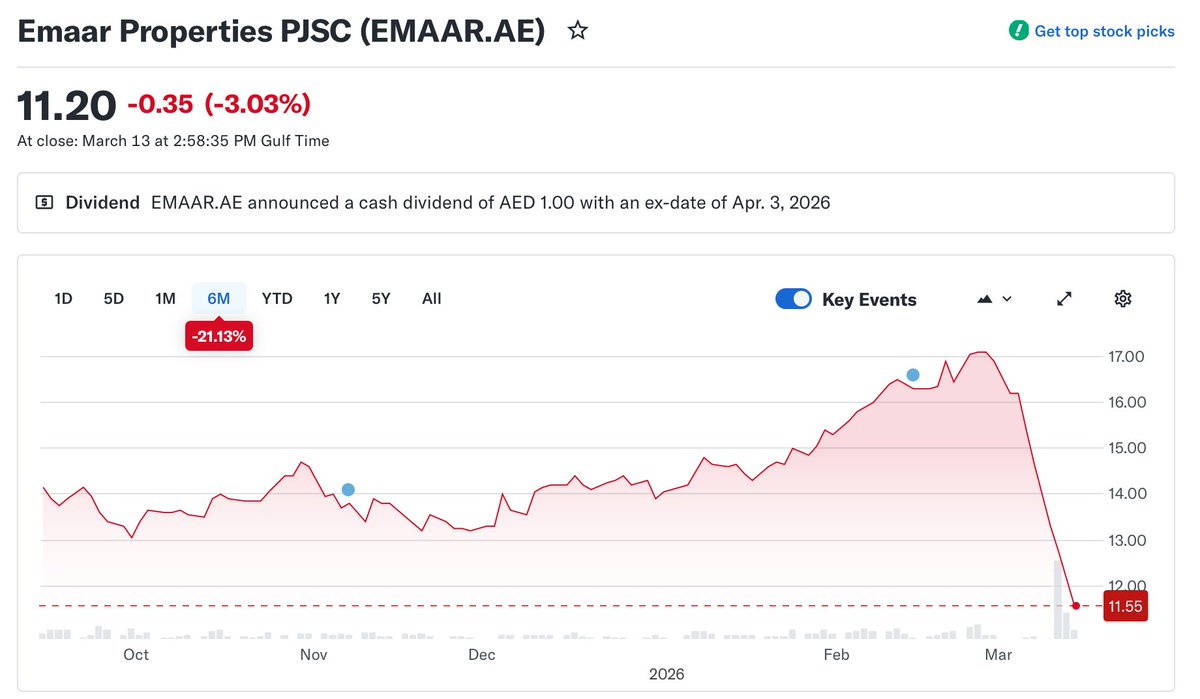
If Emaar corrects by another 20%, im going to buy in SIZE and call it a day for the UAE trade 1/Single digit PE 2/Best in Class player in UAE ( best in terms of balance sheet, execution, product quality and dozen more) 3/ Net profit more than 2xed in the last 3 years 4/Owned by Dubai Sovereign fund 5/Cleaner asset to own than RE 6/ AI benificiary eventually ( when smart money moves to Dubai again) 7/Last and more importantly, i believe UAE will eventually come back once this settles down What do you guys think?
Vijay Thirumalai tweet media
English
145
87
1.4K
307.3K
Majid Seif retweetledi
Shanaka Anslem Perera ⚡
Shanaka Anslem Perera ⚡@shanaka86·
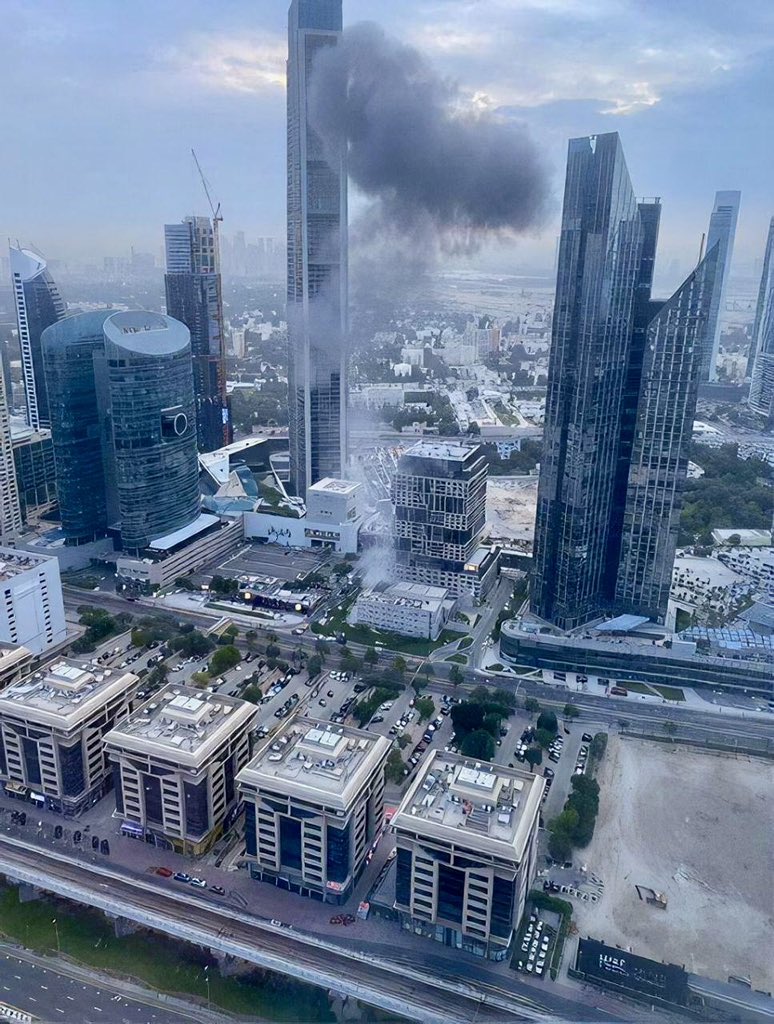
Dubai’s stock market says the real estate market is crashing. Dubai’s real estate market says it is not. The gap between the two is the trade of the decade. The DFM Real Estate Index closed at 13,290 on 12 March, down exactly 21.4% from its 27 February intraday peak of 16,910. Emaar Properties fell 24.1%. Aldar fell 19.8%. Deyaar fell 28.3%. Combined market capitalisation loss: $248.7 billion. The entire 15.3% gain Dubai had built since January, erased in fourteen days of war. The headlines wrote themselves: safe haven destroyed, property crash, Gulf dream over. Then look at the transaction ledger. In the week of 2nd to 9th March, while missiles hit towers and drones struck ports, 3,570 properties changed hands for Dh11.93 billion. Transaction volume was up 12% week on week. Actual property prices showed weighted average discounts of 5.8 to 9.2% in distressed luxury and off-plan segments, according to Knight Frank and Bayut data. That is not a crash. That is a negotiation between fear and fundamentals, and the fundamentals are winning. In 2008, the Global Financial Crisis hit a city where real estate represented 85% of GDP. Property prices fell 40.2% in Q1 2009 alone and 60% peak to trough. Developers defaulted. Abu Dhabi bailed out the emirate. Prices rebounded over 100% by 2014. In 2020, COVID produced a 9.1% dip. Golden Visa reforms and capital flight from Russia produced a 60% surge within 18 months. In 2026, tourism, finance, and technology represent 68% of Dubai’s GDP. There is no leverage crisis, no oversupply, no credit crunch, no banking contagion. There is a regional war producing debris on a skyline, and the stock market is pricing the debris while the transaction ledger prices the city. Knight Frank’s base case projects 3.2% prime residential growth for 2026 if the conflict shortens. No credible analyst, not Knight Frank, not S&P Global, not JLL, not Savills, not Colliers, projects anything approaching the 50 to 70% crash scenarios circulating on X. The deepest crash in Dubai’s history, during a global financial crisis that froze credit worldwide, produced 60% at its worst. A regional war with zero leverage unwind produces 5.8 to 9.2% in the physical market. The comparison ends the argument. Three scenarios govern what happens next. If the war ends by Q2, approximately 45% probability per strategic consensus, the DFM index rebounds 15 to 25% as capital returns to the tax-free, visa-friendly hub that no missile has structurally damaged. If asymmetric attrition continues through 2026, approximately 40% probability, actual property prices correct 15 to 25% as tourism losses compound and selective capital repositions to Singapore and Lisbon. If the war escalates to ground operations or nuclear threshold, approximately 15% probability, the index falls 30 to 40% but even this does not replicate 2008 because the preconditions for 2008 do not exist. The selective repositioning is real but modest. East Asian HNWIs have shifted an estimated $12 to 18 billion toward Singapore and Hong Kong. Russian and European flows of $4 to 7 billion are exploring Turkey, Thailand, and Cyprus. Against $248.7 billion in listed developer losses, these outflows are a rounding error. The money is not leaving Dubai. The stocks are repricing Dubai. The transaction ledger is not. Every previous gap between Dubai sentiment and Dubai structure has closed with the structure winning. Post-2008: stocks crashed, prices recovered 100%. Post-2020: sentiment collapsed, Golden Visa reforms triggered a boom. The pattern is the thesis: the stock market panics first and recovers last, the physical market rebounds fastest, and the investors who buy the gap build generational wealth. The towers burn from debris. The index burns from panic. The transaction ledger keeps printing at Dh11.93 billion per week. And the investors who bought Emaar at the 2009 bottom or Palm Jumeirah during COVID are already on planes. open.substack.com/pub/shanakaans…
Shanaka Anslem Perera ⚡ tweet media
English
15
57
277
54K