ZANUPF

164 posts

ZANUPF

ZANUPF

@2023zimdecides

Katılım Ağustos 2023
82 Takip Edilen26 Takipçiler
ZANUPF retweetledi
Dereck Goto
Dereck Goto@dereckgoto·
Under the leadership of President E.D. Mnangagwa, ZanuPF has fully embraced the principles of unity, peace, and development as central pillars of the nation's progress. Unity fosters national cohesion, ensuring that citizens work together towards common goals, while peace serves as the foundation for stability and socio-economic growth. Development, driven by Vision 2030, is the culmination of these efforts, as the party seeks to transform Zimbabwe into a middle-income economy. Together, these principles symbolise the government's commitment to prosperity, inclusivity, and a bright future for all Zimbabweans.
Dereck Goto tweet media
English
10
15
38
2K
ZANUPF retweetledi
Dereck Goto
Dereck Goto@dereckgoto·
ZIM1.
Dereck Goto tweet media
7
8
34
2.6K
ZANUPF retweetledi
Dereck Goto
Dereck Goto@dereckgoto·
Harnessing the Power of Satellites: Starlink’s Economic and Social Benefits for Zimbabwe Following Starlink’s fulfilment of the operational prerequisites stipulated by Zimbabwe’s telecommunications regulator, POTRAZ, it has been granted the necessary authorisation to commence operations within the country. The introduction of Starlink in Zimbabwe presents a myriad of substantial advantages, particularly in light of the country's well-documented issues surrounding internet connectivity, prohibitive costs, and inadequate infrastructure. Interestingly, China is fast moving in developing its own low-earth-orbit (LEO) mega-constellation of satellites which should be fully operational globally in the next three or four years. Outlined below are some of the potential benefits of this relatively new satellite technology for Zimbabwe: 1. Enhanced Internet Access in Rural Regions Starlink’s satellite technology delivers internet access to remote and underserved areas. In Zimbabwe, where rural regions often grapple with insufficient broadband infrastructure, Starlink has the potential to close the digital divide by facilitating access to e-commerce, education, and healthcare services for rural communities. 2. Catalyst for E-commerce and Business Growth High-speed, reliable internet can empower small and medium-sized enterprises (SMEs) to participate in the global e-commerce landscape. Zimbabwean businesses, particularly in rural and peri-urban areas, stand to benefit from expanded market reach and streamlined operations through improved internet access, thereby fostering economic growth. 3. Advancements in Education and Healthcare Services Education: Starlink’s presence could revolutionise learning by providing rural schools with access to online educational platforms and digital resources, linking students and teachers to global information repositories. Healthcare: Telemedicine services would see significant expansion, especially in remote clinics where medical specialists are in short supply. This improved connectivity can enhance healthcare outcomes by enabling remote consultations and access to medical expertise. 4. Fostering Innovation and the Growth of Tech Startups Improved internet connectivity would nurture innovation ecosystems and stimulate the growth of tech startups. Zimbabwean entrepreneurs and developers could better integrate into the global digital economy, driving the creation of new jobs and the development of technological solutions tailored to local needs. 5. Promoting Economic Inclusivity Financial Inclusion: Starlink could facilitate broader access to mobile banking, online payment systems, and other financial technologies (fintech), which are crucial for individuals in rural and marginalised areas. This access could enhance economic participation, alleviate poverty, and foster financial autonomy. Agriculture: Farmers would gain access to improved weather forecasting tools, market data, and precision agriculture technologies, which could significantly boost productivity and operational efficiency. 6. Decreased Reliance on Existing Infrastructure Zimbabwe’s current internet infrastructure is constrained by frequent power outages, outdated telecommunications networks, and coverage gaps. Starlink’s low-orbit satellite system circumvents the need for traditional infrastructure, offering a more resilient and less local infrastructure-dependent solution. 7. Attracting Foreign Investment The availability of reliable, high-speed internet could render Zimbabwe more attractive to foreign investors, particularly in industries such as IT outsourcing, agriculture, and tourism. High-quality internet access is often a fundamental criterion for investors considering new markets. 8. Improved Disaster Preparedness and Response In a country prone to natural disasters like floods and cyclones, Starlink’s satellite network could bolster emergency response efforts by providing reliable communication systems when terrestrial infrastructure is compromised. In conclusion, Starlink’s high-speed, satellite-based internet has the potential to profoundly transform Zimbabwe’s economy by advancing digital transformation, promoting inclusivity, and bolstering economic resilience.
Dereck Goto tweet media
English
6
10
34
2.5K
ZANUPF retweetledi
ZanuPF Treasurer General - Patrick Chinamasa
Hevoyi, mwene venyika ye Zimbabwe, mwana vaMwenemutapa, arikuvaka nyika yekwake brick by brick, stone upon stone, as exhorted by His Excellency President Dr. E.D. Mnangagwa: Tuesday, 3 September 2024, I passed by an indigenous-owned and run A2 tobacco farm in Makoni District, Manicaland Province, and was witness to a hive of activity, which I thought I should share so that it may serve as an inspiration to others. A tobacco workforce was busy at work planting the first irrigated tobacco crop for the 2024-2025 agricultural season, to be harvested beginning December 2024. The indigenous farmer has also started a small horticulture project, which he hopes will help improve cash flows in the period from planting tobacco in September to March/April next year, when the tobacco selling season is likely to commence. I took a number of videos. Those who have eyes, let them “eye,” and those who have ears, let them “ear.” Nokuti hatigoni kurega kutaura zvatakaona nezvotakanzwa.
English
12
20
50
4.7K
ZANUPF retweetledi
Oppah Muchinguri-Kashiri (ZANUPF Nat. Chairman)
In my capacity as the Acting Minister of Foreign Affairs and International Trade, I met with Ms Diana Cartier, the Chief of Mission of the United Nations agency on migration, to discuss Zimbabwe’s expectations from the International Organisation for Migration. Ms Cartier reaffirmed her organisation’s unwavering commitment to supporting Zimbabwe in addressing the complex migration challenges. The Zimbabwean government is equipping critical departments, including the Department of Immigration, which recently received thirty-six vehicles to enhance operations. @edmnangagwa @MoFA_ZW @IOMZimbabwe
English
4
17
36
3.3K
ZANUPF retweetledi
Dereck Goto
Dereck Goto@dereckgoto·
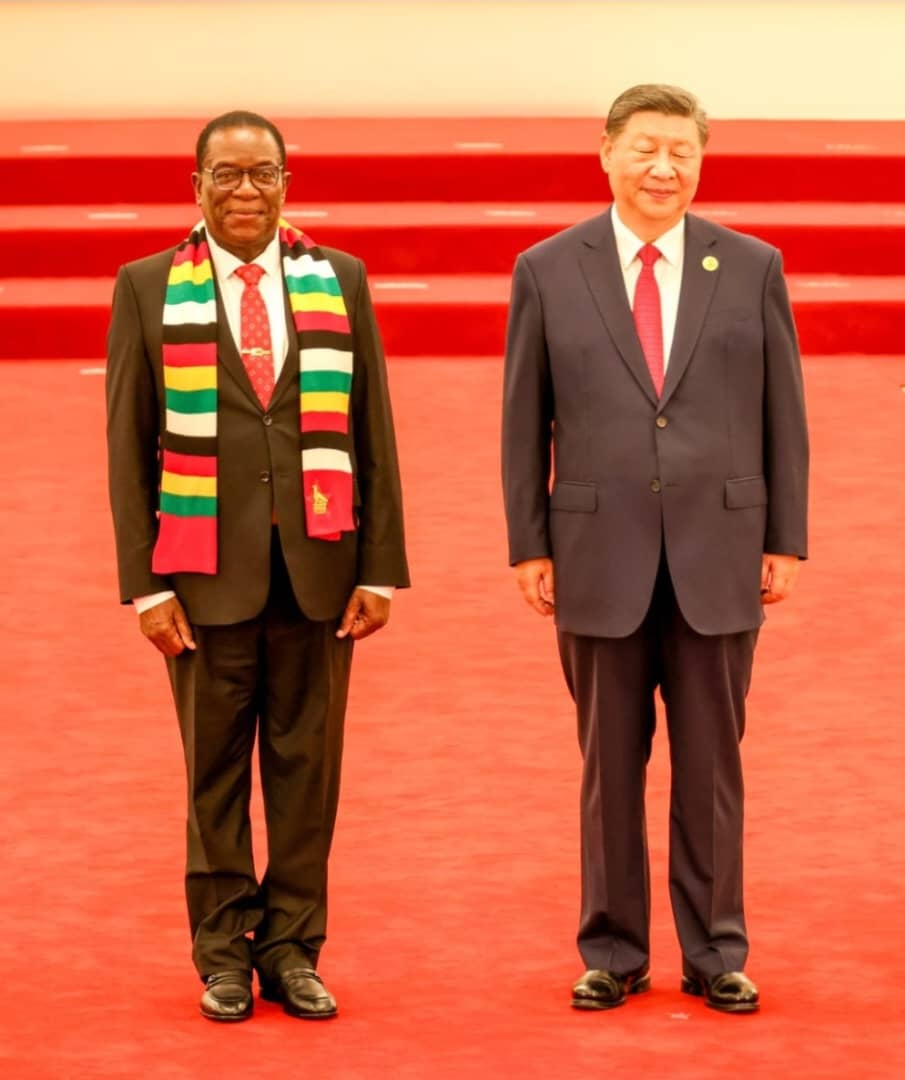
China-Zimbabwe Agreements Pave Path to Vision 2030: A New Era of Strategic Partnerships As President Mnangagwa returns from China, it is time to reflect on a historic moment for Zimbabwe’s economic trajectory. His Excellency, President Emmerson Mnangagwa, alongside Chinese President Xi Jinping, presided over the signing of 17 critical bilateral agreements - each aimed at propelling Zimbabwe’s development toward the ambitious Vision 2030. These agreements, strategically designed, underscore China’s pivotal role in driving Zimbabwe's agenda for prosperity and improving the livelihoods of ordinary citizens. The agreements span a comprehensive array of sectors, addressing economic, infrastructural, agricultural, and cultural challenges while bolstering ties between the two nations. Here’s a detailed look at the key elements of this groundbreaking partnership. Belt and Road Initiative (BRI): Catalyzing Infrastructure Revolution Central to these agreements is Zimbabwe’s alignment with China’s Belt and Road Initiative (BRI). By synergizing with the BRI, Zimbabwe will tap into vast opportunities for infrastructure development - unlocking seamless trade routes and connectivity. As the country embarks on what is arguably its most significant infrastructure revolution since independence, the BRI promises not only to modernize transport and logistics systems but also to substantially improve Zimbabwe’s Ease of Doing Business. Economic Partnership Framework: Strengthening Industrial Capacity The Economic Partnership Framework heralds a new phase in Zimbabwe’s industrial expansion. Aligning with President Mnangagwa’s vision to bolster industrial capacity, this framework promotes shared prosperity. Already, Zimbabwe has made strides in local manufacturing - currently producing 75% of goods found on supermarket shelves. This agreement now expands production into sectors such as steel, electronics, and industrial supplies, solidifying Zimbabwe's standing as a self-sustaining industrial power on the global stage. Investment and Cooperation Working Group: A Magnet for FDI Foreign Direct Investment (FDI) remains a cornerstone of Zimbabwe’s economic revival. The Investment and Cooperation Working Group aims to capitalize on China’s global investment reach - especially in Greenfield projects. These projects have already played a vital role in Zimbabwe’s development. With increased foreign capital injections, Zimbabwe stands to see further economic growth, local job creation, and critical skills development. Mining Industry Cooperation: Unlocking Zimbabwe’s Mineral Wealth Zimbabwe's vast mineral wealth is a key pillar of the country's economic potential. Through the Mining Industry Cooperation agreement, the country is set to harness this wealth more effectively. Joint ventures in resource extraction, beneficiation, and rural industrialization will not only maximize Zimbabwe’s mineral potential but also channel revenues into rural communities - ushering in an era of inclusive growth. Agricultural Export Boost: Phytosanitary Protocol and Irrigation Upgrades The Phytosanitary Protocol for avocados opens doors for Zimbabwean farmers to access China's expansive market. This agreement not only increases agricultural income but also ensures stringent export standards to safeguard product quality. Complementing this, the irrigation facilities upgrade promises a revolution in agricultural productivity. Zimbabwe’s High Impact Dams Projects, combined with climate-proofing efforts, will create green belts in arid regions - ensuring long-term food security and boosting export potential. Unimpeded Trade Working Group: Tearing Down Trade Barriers Addressing one of Zimbabwe’s critical economic bottlenecks - market access - the Unimpeded Trade Working Group is set to reduce trade barriers. By smoothing the way into China’s vast consumer market, Zimbabwe stands to benefit from cheaper imports while expanding its export portfolio. As trade barriers fall, Zimbabwe's emergence as a significant global trade player becomes all the more plausible. Legal and Institutional Reforms: Enhancing Security and Efficiency Legal cooperation forms a vital aspect of these agreements. The Mutual Legal Assistance Treaty aims to modernize Zimbabwe’s justice delivery systems - strengthening crime detection and creating a safer environment for citizens, investors, and tourists alike. This, in turn, fosters an environment conducive to sustainable growth and development. Media and Cultural Exchange: Countering Western Media Hegemony A major cultural shift emerges through the media cooperation agreements, particularly involving the Zimbabwe Broadcasting Corporation (ZBC) and The Herald. By aligning more closely with Chinese media, Zimbabwe seeks to counterbalance the dominance of Western narratives. These collaborations will project Zimbabwe’s stories on the global stage, fostering cultural exchange and elevating local content creators. Modernized broadcasting and strengthened media ties promise a democratization of information - ensuring a more informed and engaged citizenry. Railways Human Resource Development: Empowering the Transport Sector Another focal point of these agreements is the development of Zimbabwe’s human resource capacity in the railway sector. By training a skilled workforce in rail management, Zimbabwe not only improves its logistics infrastructure but also reduces transport costs for industries - thereby enhancing local businesses' competitiveness and efficiency. A New Era of Collaboration The enduring partnership between Zimbabwe and China is deeply rooted in historical solidarity - dating back to the Liberation Struggle when China stood by Zimbabwe in its fight for independence. Throughout the challenges of post-independence, China has remained a steadfast ally - opposing sanctions and contributing to Zimbabwe’s development through pivotal infrastructure and investment initiatives. The success of previous mega-deals stands as a testament to the immense potential of these newly signed agreements to bring about tangible, far-reaching improvements in the lives of ordinary Zimbabweans. As Zimbabwe marches confidently toward Vision 2030, these 17 agreements represent far more than a deepening of China-Zimbabwe relations; they embody a blueprint for sustainable development—anchored in strategic partnerships, shared prosperity, and a resolute commitment to uplifting the lives of the Zimbabwean people. Together, these agreements are set to usher in an era of unprecedented growth, reinforcing Zimbabwe’s position on the global stage.
Dereck Goto tweet media
English
12
7
31
2K
ZANUPF retweetledi
Dereck Goto
Dereck Goto@dereckgoto·
Evaluation and Charting the Course to Vision 2030: Key Outcomes of ZANU PF’s 21st People’s Conference The ZANU PF 21st People’s Conference, scheduled for 22-27 October 2024 at the Zimbabwe International Trade Fair (ZITF) grounds in Bulawayo, is set to be a pivotal gathering. This event follows Zimbabwe's recent success in hosting the Southern African Development Community (SADC) summit in August and is framed by the theme “Industrialise and Modernise Towards the Attainment of Vision 2030.” A strong attendance is anticipated, with over 4,231 delegates expected, including diplomats, representatives from Diaspora districts, traditional chiefs, service chiefs, government ministers, officials, and other esteemed local guests. The conference will be presided over by the party’s First Secretary, President Mnangagwa. ZANU PF’s dedication to internal democratic processes is exemplified by its tradition of holding annual conferences between congresses to evaluate performance - a practice that stands in stark contrast to the lack of similar mechanisms in many opposition parties. The chosen theme for this year’s conference is particularly pertinent, emphasising the critical role of industrialisation and modernisation in tackling Zimbabwe’s economic challenges while aligning with the broader national Vision 2030. The conference also provides an occasion for the party to celebrate significant achievements since last year’s harmonised elections, which saw President Mnangagwa secure victory and subsequently assume the SADC chairmanship. Attendees will review government progress on a range of infrastructure and food security initiatives, all crucial to achieving the Vision 2030 objective of elevating Zimbabwe to an upper-middle-class society. Furthermore, the conference offers delegates the opportunity to reflect on the party’s electoral commitments and evaluate the progress made towards fulfilling them. It serves as a vital platform for reaffirming the nation’s long-term goals, ensuring that party strategies are aligned with these objectives, and maintaining accountability. The timing of the event is particularly significant given Zimbabwe's recent strategic investments in key sectors, such as the US$1.5 billion Dinson Iron and Steel Company (Disco) steel plant and the Muzarabani oil and gas reserves, both of which are poised to significantly boost the economy. Ongoing infrastructure projects, including the Lake Gwayi-Shangani, Chivhu Dam, Muchekerenwa, and Kunzvi Dam, alongside extensive road rehabilitation efforts, further illustrate the government’s commitment to national development. In sum, the conference represents a critical juncture for reviewing progress, setting new goals, and ensuring that party strategies remain in harmony with the nation’s overarching development agenda.
Dereck Goto tweet media
English
3
4
20
1.1K
ZANUPF retweetledi
dhonzamusoro007
dhonzamusoro007@dhonzamusoro007·
Breaking with the traditional format of State Visits, President ED Mnangagwa, structured his visit to start with a two-day tour of Shenzhen, itself the setting for the seed which modernized China soon after the fall of the Berlin Wall. It is also home to major Chinese industries, including Huawei. From Shenzhen, he proceeded to Hunan, and then to Jiangsu. From Jiangsu Province, he then flew to Beijing to fulfill formal commitments related to the State Visit. The accent of the State Visit was meeting Corporate China whose interest in Zimbabwe continues to grow. China now stands as the biggest source of FDI in Zimbabwe.
dhonzamusoro007 tweet media
English
66
45
173
57K
ZANUPF retweetledi
Dereck Goto
Dereck Goto@dereckgoto·
Nelson Chamisa: The Biblical Joshua that never was.
Dereck Goto tweet media
English
21
11
48
6.8K
ZANUPF
ZANUPF@2023zimdecides·
@dereckgoto Our government is very lenient. If it was in other countries, a lot of these opposition people would be locked up and the keys thrown away
English
1
0
1
61
ZANUPF retweetledi
Dereck Goto
Dereck Goto@dereckgoto·
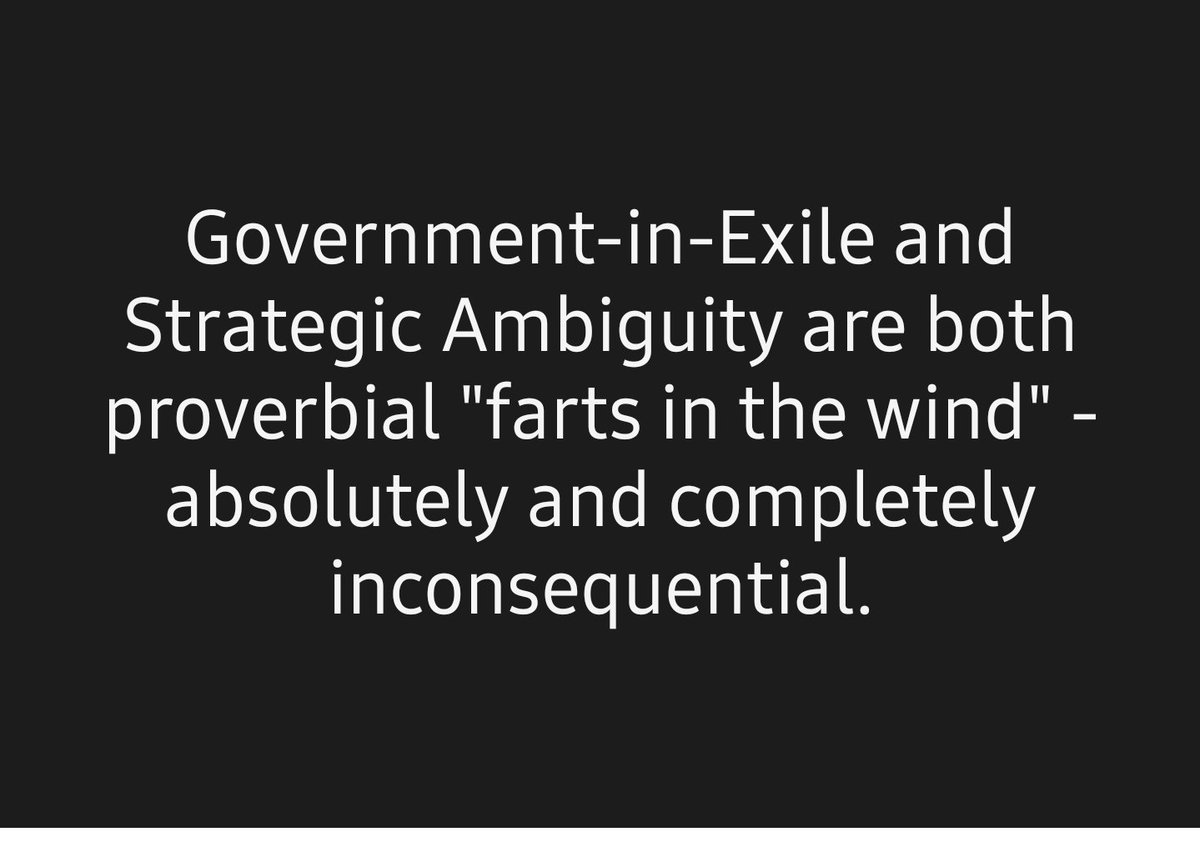
Hopewell Chin’ono must be arrested immediately for his blatant act of treason against Zimbabwe. Planning to commit treason is a serious crime, not only in Zimbabwe but in every nation around the globe. Zimbabwean law treats treason as one of the gravest offences, and both the act of treason and the mere conspiracy or planning to commit it are severely punishable. Hopewell's involvement in plotting a Government-in-Exile surpasses the clear legal threshold of what constitutes "planning" or "conspiring" to commit treason. If he truly sold off most of his assets before leaving the country, it indicates a long-standing intent to betray the nation - a clear manifestation of mens rea, or criminal intent. His inflammatory remarks during the X Spaces rally must be understood within this context. The fact that individuals and factions aligned with Saviour Kasukuwere and the G40 cabal are vocally supporting him and providing legal counsel only deepens the suspicion. This group has a well-documented history of seeking to seize power by any means necessary, from the era of President Mugabe to the present day. Zimbabwe’s Criminal Law (Codification and Reform) Act [Chapter 9:23] explicitly defines treason and associated crimes. Section 20 of this Act addresses treason, which encompasses acts like planning or conspiring to overthrow the government, wage war against the state, or aid the state’s enemies. The law imposes harsh penalties for these crimes, including life imprisonment or even the death penalty (though currently under moratorium), reflecting the state's uncompromising stance on treason and its conspirators. Hopewell Chin’ono’s actions are not just reckless; they are a direct assault on the sovereignty and stability of Zimbabwe and must be met with the full force of the law.
English
62
7
32
8.3K
ZANUPF retweetledi
Dereck Goto
Dereck Goto@dereckgoto·
The healthcare landscape in Zimbabwe has shown notable improvement, especially since the challenges it faced in 2008 due to Western-led international sanctions. Under the leadership of President E.D. Mnangagwa's Second Republic, the government has launched several commendable initiatives, including the construction of numerous clinics funded through devolution, procurement of essential radiology equipment, and the acquisition of road and air ambulances to bolster medical services across the nation. In addition to government efforts, non-governmental hospitals such as Karanda, part of the Zimbabwe Association of Church Hospitals, and the China-Zimbabwe Friendship Hospital, commonly known as Mahusekwa Hospital, have made significant strides in enhancing healthcare within their respective regions. A particular point of interest is the bustling activity at Arundel Hospital, located on Norfolk Road in Mt. Pleasant, Harare. Observations suggest that the facility serves over 200 patients daily, indicating a high level of community trust and reliance. Owned by Sakunda Holdings, under the leadership of businessman Kudakwashe Tagwirei, Arundel Hospital began operations during the peak of the COVID-19 pandemic in 2020. Despite misconceptions that the hospital serves only members of the Seventh Day Adventist Church, due to the owner’s religious affiliations, it is inspiring to learn that Arundel Hospital provides free access to a comprehensive range of medical services, including emergency and intensive care, to everyone, regardless of their background. A noteworthy example of the hospital’s community service occurred in August 2022, when Arundel Hospital generously offered to cover the hospital bills for a Zimbabwean woman detained in South Africa following a contentious incident sparked by South African politician Phophi Ramathuba. This act of kindness not only alleviated the woman’s predicament but also underscored the hospital's commitment to humanitarian principles. Such initiatives by private citizens and the private sector are invaluable, complementing government efforts in healthcare and representing a significant investment in the nation's human resources. It is essential to recognise and encourage more private entities to undertake such impactful investments, which are crucial for the continued improvement and sustainability of healthcare services in Zimbabwe.
Dereck Goto tweet mediaDereck Goto tweet media
English
12
11
32
2.4K
Dereck Goto
Dereck Goto@dereckgoto·
Wow! I've been waiting for the day someone would finally call out the Save Our Hospitals initiative for what really happened. At times, I doubted this day would ever come. This is going to blow up in @daddyhope's face and drag his so-called "respectable" partners in the initiative straight into the gutter where they ALL belong. His brainwashed followers are about to be hit with the shame they deserve. We donated a website for the initiative, but let's be clear - we took it over from a company/group that wanted nothing to do with the impending disaster they saw coming. Our developers reported shady and blatantly suspicious instructions regarding the donations page - clear signs of abuse that should never have been ignored. I couldn't help but wonder what else was happening in the other donation channels. Was the accountability equally lax and unilateral? @LynneStactia, you and everyone who once worshipped him as some sort of crusader against corruption are in for the shock of your lives. When the full audit is done, the filth that will be uncovered will destroy any lingering illusions you may have. The truth is coming, and it's going to be ugly. Ini ziii, semunhu mukuru. 🤐
LynneM 💕💝💎@LynneStactia

Dear @daddyhope, can you kindly provide the audited records for Save Our Hospitals , given the millions raised in medical supplies, em wondering if it is possible to view the records online? Is it a registered charity , a private company or a trust? The only UK-registered entity I found was struck off 🤷🏽‍♀️ could this be the same one?

English
6
4
20
3.4K
ZANUPF retweetledi
Dereck Goto
Dereck Goto@dereckgoto·
Dereck Goto tweet media
ZXX
7
2
21
2.9K
ZANUPF retweetledi
Dereck Goto
Dereck Goto@dereckgoto·
Freeman Chari, Nelson Chamisa, and ZESN: Masters of Political Deceit; Traitors in Zimbabwe’s Midst Freeman Chari, Nelson Chamisa, and their acolytes at ZESN have shown nothing but a disgraceful disregard for the truth. After an entire year of deceit, peddling baseless allegations of electoral loss against President Emmerson Mnangagwa in the 2023 Harmonised General Elections, Freeman Chari, a staunch Chamisa supporter and founding member of Team Pachedu, finally unveiled the findings of their so-called parallel voter tabulation using Mandla, an amateurish and unsophisticated software that was laughably touted as the ultimate tool to ‘protect the vote’ from alleged ZANU PF rigging. The results from this farcical exercise, released conveniently on the first anniversary of the election, confirm what every rational observer already knew: President Mnangagwa won, and he won decisively. Mandla’s findings, drawn from 84 percent of results (10,250 polling stations) and deliberately excluding ZANU PF strongholds in the Mashonaland Provinces where Chamisa’s CCC failed to provide V11s, still couldn’t deny President Mnangagwa’s overwhelming victory. Meanwhile, ZESN, a so-called electoral watchdog, conducted a Sample Based Observation (SBO) poll with 1,000 participants but chose to withhold their results for a year because they, too, confirmed Mnangagwa’s win. Their silence is a deafening admission of Chamisa’s failure. These undeniable facts expose the shameless lies of Chamisa, Chari, and their Western-sponsored stooges. It is crystal clear that President Mnangagwa’s victory was legitimate and uncontested, endorsed by SADC, the AU, and the UN. Only a complete fool would continue to believe otherwise. Chari and Chamisa know the truth but refuse to accept it because it would mean the end of their political and financial grifting. Acknowledging President Mnangagwa's win would cut off funding for Mandla 2.0, their next doomed electoral gimmick, and potentially spell the end of Chamisa’s precarious grip on opposition leadership. Despite deliberately ignoring ZANU PF’s strongholds, Mandla still recorded a win for Mnangagwa, a testament to his dominance. The fact that these findings were released a year later only underscores the pathetic state of Zimbabwe's opposition. They stalled the nation’s progress, undermined economic development, and fuelled baseless accusations against ZEC, all the while knowing that Chamisa had lost fair and square. These acts reveal the cowardice and incompetence of Chamisa, Chari, and their entire entourage of traitorous puppets. ZEC has been vindicated as a professional and independent body that delivered a free and fair election, contrary to the hot air spewed by these charlatans. The confirmation of President Mnangagwa's victory by Mandla and ZESN is precisely why Chamisa didn’t dare challenge the election results in court. He knew his lies would be exposed and instead chose to mislead his gullible followers with propaganda and empty rhetoric. The pathetic failure of Mandla to account for all polling stations, leaving 16 percent unaddressed, is further proof of Chamisa’s incompetence. His inability to provide V11s for Mashonaland West, Central, and East shows he never had a leg to stand on. Yet, the same Western countries that funded Mandla and ZESN’s SBO continue to slander Zimbabwe’s elections, despite knowing that their puppet, Chamisa, failed miserably to unseat ZANU PF in two consecutive elections. This is not just political incompetence; it is a disgraceful betrayal of the people of Zimbabwe.
Dereck Goto tweet media
English
28
11
46
5.1K
ZANUPF retweetledi
Dereck Goto
Dereck Goto@dereckgoto·
If you have not yet become a member of Zimbabwe's ONLY revolutionary and patriotic political party, ZanuPF, now is the time to take action. Don't miss out - join us today.
Dereck Goto tweet media
Harare, Zimbabwe 🇿🇼 English
55
15
58
7.2K
Dereck Goto
Dereck Goto@dereckgoto·
The day ALL opposition forces in Zimbabwe realise that politics is rooted in the local reality will be the day they might start to matter. As long as they continue pandering to the international audience while disregarding and even mocking the everyday Zimbabwean, they will never garner any significant support within the country. Their disconnect from the people ensures their perpetual irrelevance.
Harare, Zimbabwe 🇿🇼 English
4
3
19
1.6K