
2730.eth
584 posts


@ASX__Trader @ca91450 Can you do personal expense from company accounts then?
English

@ca91450 Why would I ever take it out of the company? Think you need to brush up on how it all works instead of attacking me
English
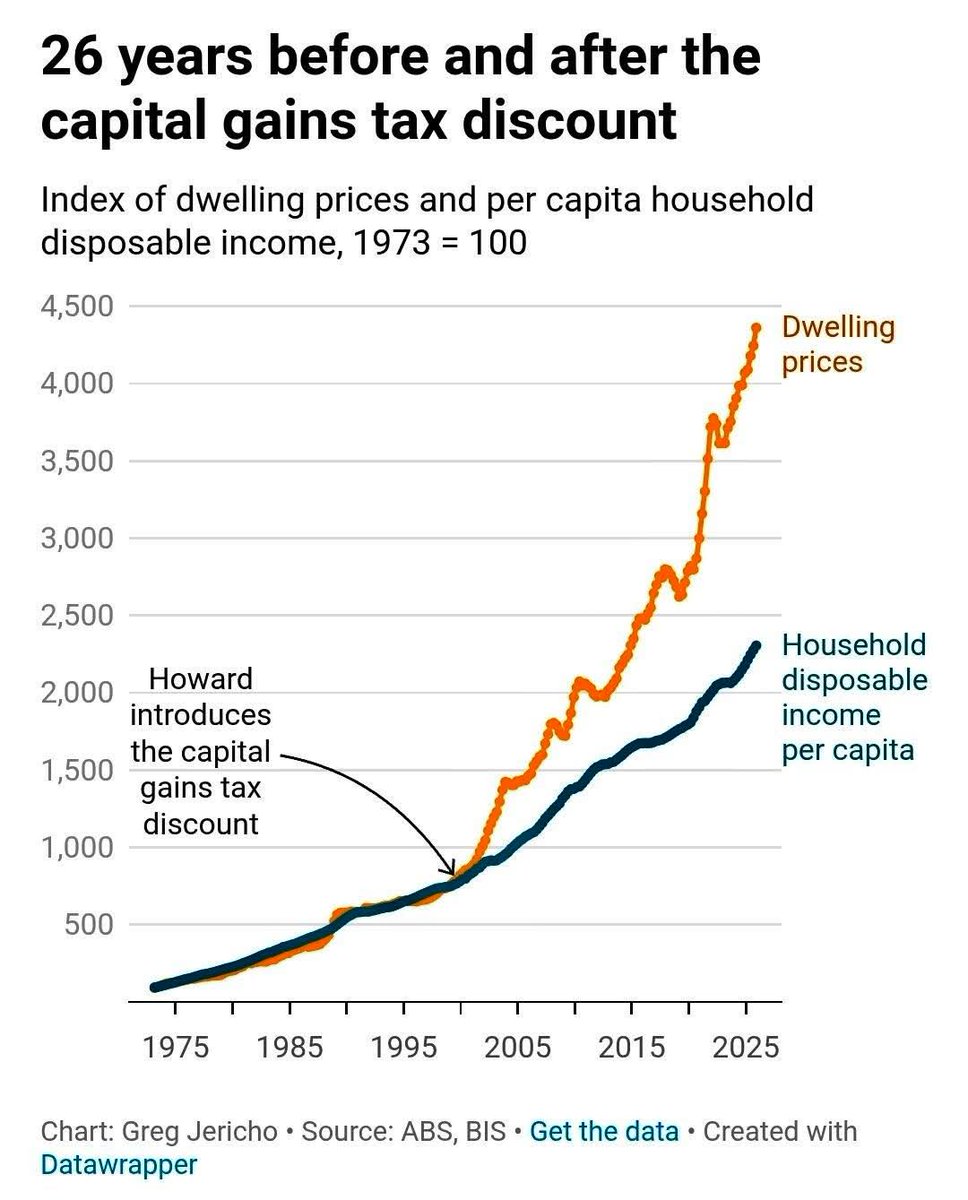
For decades, Australian house prices and wages moved fairly closely together.
Then the capital gains tax discount came in around 1999.
Since then, property prices have absolutely detached from income growth.
People who already owned assets saw their wealth explode. People relying on wages got left behind.
That’s why the divide today feels so big.
It’s not just “work harder.” It’s asset inflation vs wage growth.
And if you didn’t own assets during that period, catching up became dramatically harder.
English
@jasonpizzino Is it worth investing in crypto with CGT changes in Australia?
English

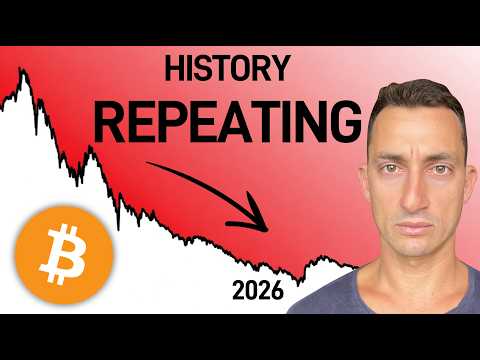
Bitcoin: This Is Going To Be Brutal (for EVERYONE).
Today's Bitcoin update video is now live: 👇
youtu.be/cMwOtM7NLV0?si…
YouTube

English
@ASX__Trader Is crypto investing still worth in Australia after changes to CGT?
English
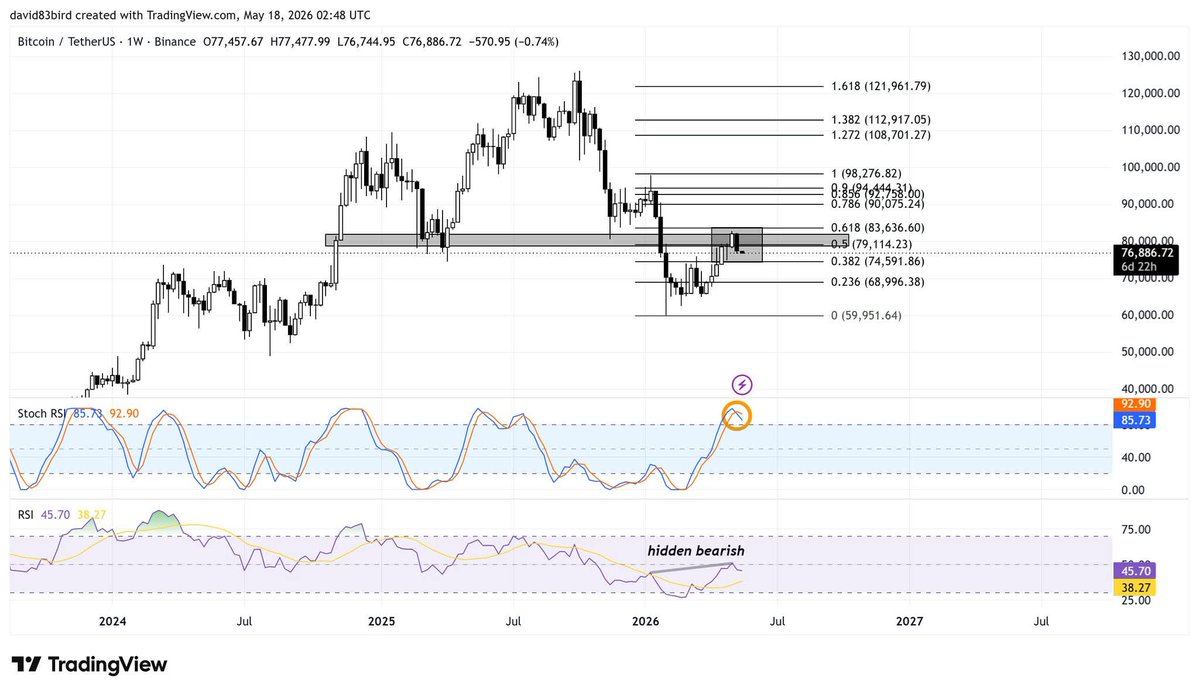
BTC - Weekly
Still in a clear downtrend. Rejecting major confluence resistance on hidden bearish divergence (continuation) and a bearish cross on STOCHRSI
English
@IamCryptoWolf What sort of lows do you see for ETH this bear market?
English

Consensus is calling for $ETH to 1200s, but the 3D RSI tells a different story.
Every touch of the lower trendline has led to strong bounces.
I’m looking at 3200s as a base case.
Give it time, and don’t be surprised by shakeouts toward 2000s designed to trap you.

English
2026 - Active Portfolio Update
As we approach the end of the quarter, I wanted to provide a transparent update on the portfolio I shared at the beginning of the year.
At that time, the core thesis was clear: 2026 would be a year for defence. The strategy was to overweight defensive sectors, particularly energy, while avoiding higher-risk areas such as information technology and consumer discretionary.
So far, that thesis has played out as expected.
Energy has been the strongest performing sector, up over 30%, while infotech and consumer discretionary have both declined massively. This sector positioning has been a key driver of overall performance.
From a portfolio perspective:
Woolworths has delivered strong gains, increasing from approximately $6,000 to $18,000 in profit over 3 months.
Santos and Woodside have been standout performers, each moving from small gains to approximately $25,000 in profit.
BHP has provided steady upside, adding to an already profitable position.
On the risk management side:
CSL was stopped out for a very small loss (0.1%), but a recent re-entry has already recovered that loss, effectively resetting the position.
Endeavour was exited in a small profit after losing momentum.
Worley followed a similar pattern, with a controlled loss on earnings followed by a successful re-entry at support.
Not all positions have performed strongly:
James Hardie has retraced from earlier gains and is now close to breakeven.
Domino’s Pizza has pulled back from a strong profit into a current small winning position.
NIC has remained relatively flat.
Importantly, hedging has played a critical role in protecting capital:
SNAS and BBUS positions are both in profit, helping offset broader market weakness.
New opportunities have also been added:
YAL has performed strongly, contributing meaningfully to returns.
Cochlear has recently been initiated at a key technical level (0.618 retracement), with a defined risk profile and potential for a minimum short-term bounce.
Zooming out, the broader context is what matters most.
The XJO and NASDAQ is down approximately 10% year-to-date. Despite this, the portfolio remains firmly in the green.
This is the objective of active portfolio management is to outperform the benchmark, particularly in challenging market conditions. If you're not outperforming why are you taking the extra risk?
Positioning, risk management, and discipline matter far more than prediction. In uncertain environments, playing defence is not about avoiding opportunity. It is about allocating capital intelligently and protecting downside while still capturing upside where it exists.

English
People get caught up in the butterfly effect. The day to day moves. Even the week to week noise.
That is why I love zooming out to the big timeframes.
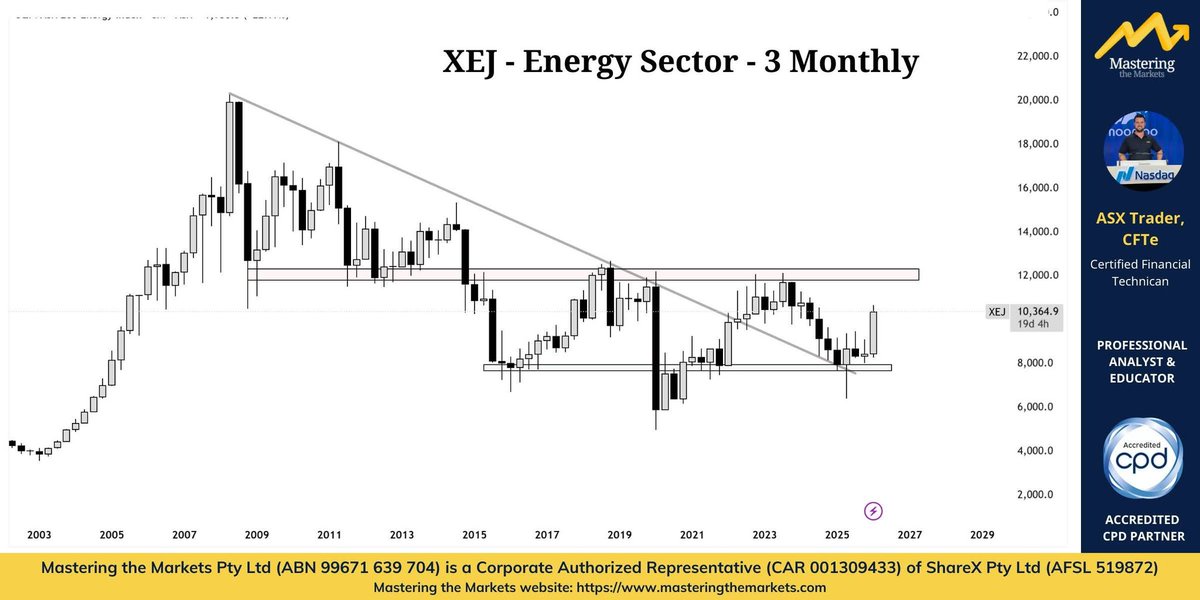
The energy sector in Australia, XEJ, is in clear accumulation mode. It had a beautiful spring back at the COVID bottom, which marked the end of the bear market.
Now the structure is building.
Once it clears the red zone around 12,000, that is when the public participation phase begins. That is when everyone suddenly turns bullish on energy again.
But by that point the move is already well underway.
I know where energy is going. I know where oil is going. And in my view it is one way.
Up.
I have positioned myself accordingly. And unless the data changes, the evidence is overwhelming.
When you look across 100 charts telling the same story, they cannot all be wrong. Follow the data!
English
@jasonpizzino Would you rate ASX200 over S&P500 for next 5-10-20 years?
English
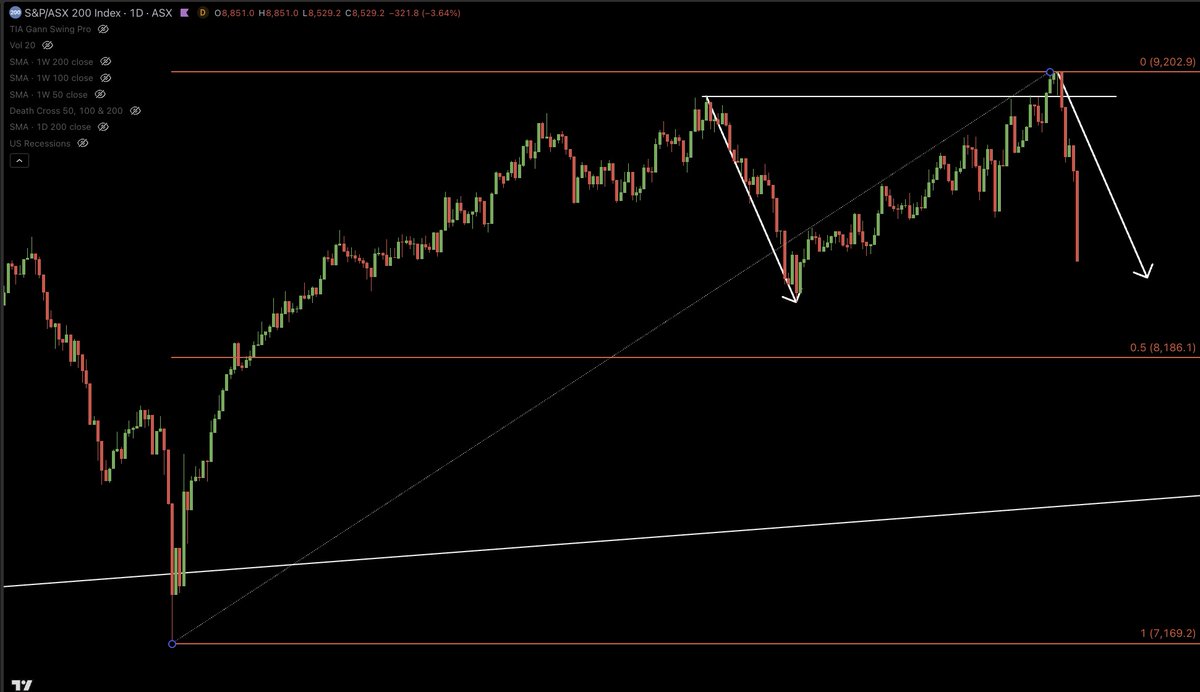
The #ASX Australian Stock Market falls 3.6%. A close below ~8200 in April would be very weak. Until then, this looks like panic selling due to war, oil, and the US.
English
@ASX__Trader What would be a good DCA strategy to buy stocks like WDS and BHP?
Or is it more like buy and hold strategy or no longer offers good buying opportunities?
English
A good lesson for beginners about where real wealth often comes from in markets.
Today WDS and BHP are down a couple of percent, but that’s simply because they’ve paid their dividend.
I just received a few thousand dollars for doing absolutely nothing, and I’ve also had capital growth since buying them a few months ago.
This highlights something important about investing.
As your account grows, many investors shift toward high-quality companies (often in the Top 100) that can deliver two powerful things at the same time:
• Capital growth as the business increases in value
• Dividend income paid directly to shareholders
Over time, that combination becomes extremely powerful. You can go about living your life while your capital continues working for you, growing in value and producing passive income through dividends.
It also highlights an important contrast with parts of the crypto market. Many people get burnt because some coins can fall 90–99% and never recover. A lot of them don’t produce earnings, cash flow, or dividends.
Large established companies are very different.
They have real businesses generating income, which is why they rarely collapse 99% unless something fundamentally breaks inside the company. Of course, even great companies can fall if they become overvalued or stretched. That’s why entry price matters.
You don’t want to buy quality companies when they’re expensive and everyone is excited. You want to buy them after major corrections when they become undervalued.
That’s the approach behind many successful long-term investors.
The real edge often comes from combining:
• Technical analysis to find the right timing
• Fundamental analysis to understand the company’s value
• Macro analysis to understand the broader economic environment
When those three align, you can identify high-quality opportunities that may perform well over the coming years.
And most importantly, it shows something many beginners overlook:
You don’t have to trade the gutter to make money.
You can generate excellent returns trading the Top 100 as well.

English
A stop loss is not a number.
It is a line in the sand where your thesis is proven wrong.
When I enter a trade or investment, I’m not guessing. I’m presenting a case.
“Your Honour, I believe this is a buy because…”
Then I also acknowledge the opposing argument:
“These are the bearish risks…”
A trade only exists because, at that moment, the bullish case outweighs the bearish case. The second that balance shifts — when the reasons that justified the trade start migrating to the other side of the courtroom — I’m out.
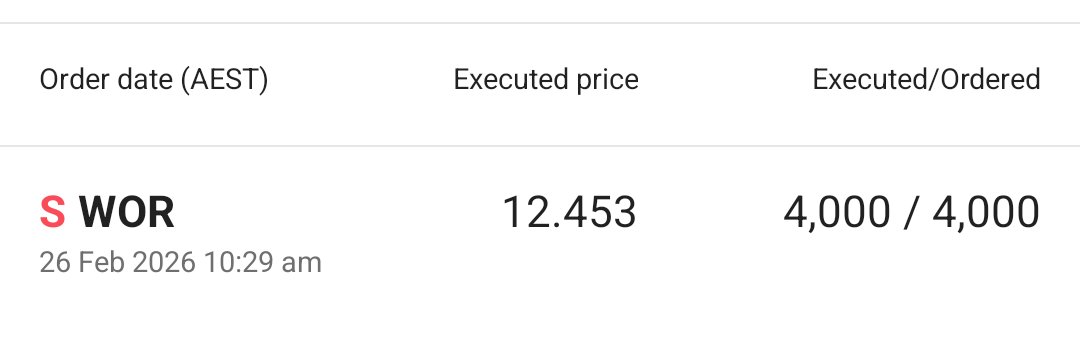
That’s what happened with Worley. Earnings came out. Price invalidated the level. The thesis was no longer intact.
My stop loss wasn’t random. It was positioned exactly where the trade idea stopped making sense.
Result: –$2,000 or 0.2% of the account
A flesh wound. I live to fight another day.
Now here’s the important mindset shift: That $2,000 isn’t catastrophic. It’s controlled. It’s accounted for. It reduces taxable profit from a year that has already been highly profitable. Compare that to not acting. If I ignored the stop? It drops to $11. Now I’m down $7,000. One ignored stop becomes four stop losses. And for what?
To stay in a trade I no longer believe in? That’s ego. Not trading.
Professionals don’t defend positions. They defend capital.
Capital is ammunition. If you protect it, you stay in the game long enough for the asymmetric opportunities to pay you. If you refuse to accept small losses, the market will eventually hand you a large one. Cutting losses is not weakness. It’s intellectual honesty. You are simply saying: “My original reasoning is no longer valid. Case dismissed.”
Most people won’t invest because when they see a $2,000 loss, they see 40 hours of their life. That’s the trap. If you’re trained to trade time for money, every dollar feels personal. Every loss feels like life wasted. So you avoid risk. You stay safe. You keep swapping hours for income. But money is not life. Money is a tool. And until you see it that way, you’ll always be emotionally attached to it. Investors think differently. They don’t see “lost hours.” They see capital being deployed. They understand that money can work without them. That it can be risked intelligently to create more of itself. The moment you stop valuing money as stored time and start valuing time as the real asset everything shifts. You stop working for money. And start making money work for you. That mindset — not the strategy — is what separates consistent operators from emotional gamblers.
“The rich invest in time, the poor invest in money.” — Warren Buffett
English
@ASX__Trader When is it good time to start stacking Silver again? Or would you rather stack Uranium?
English
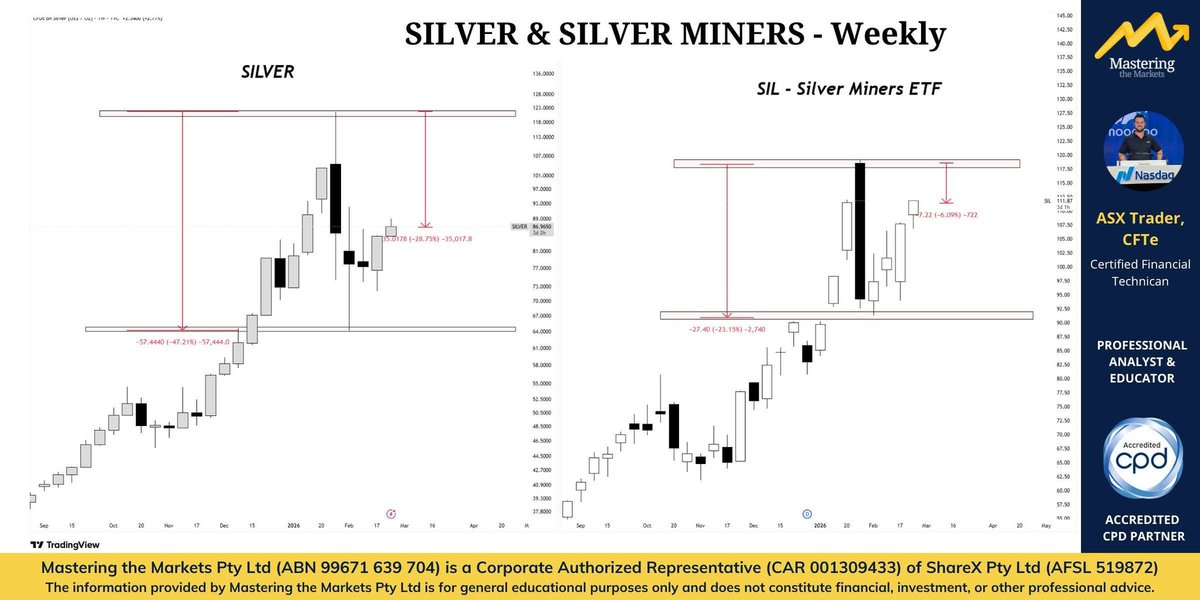
Silver crashed 50%.
On Ausbiz, right in the middle of the panic, I said I was buying more and I wasn’t selling a single silver miner I’ve held since 2024.
Here’s why.
If silver is making a major cycle top, history tells you one thing: The leveraged play — silver miners — should get obliterated.
But that’s not what happened.
📉 Silver: -50%
📉 Silver miners: -24%
That’s a massive divergence. Now look at the bounce:
Silver is still ~29% below the highs.
Silver miners? Only ~6% off and pushing toward all-time highs on great volume.
Read that again.
The “leveraged” asset fell less… and recovered stronger. That’s not classic top-of-cycle behaviour. So, what was that 50% move? A genuine breakdown? Or a violent futures flush to wipe out overleveraged positions before the next leg? Because here’s the part most people don’t see:
My public MtM long-term account, heavily positioned in silver miners since April 2024, took a $120,000 drawdown during that drop.
Today? It’s only 6% from all-time highs again.
And this is the real secret to holding through volatility: When your conviction is greater than your asset allocation. Most people get shaken out because their position is bigger than their belief system. Weeks ago, I said it publicly:
I didn’t wish my silver miners position was smaller…
I wished it was bigger. And I would’ve worn that drawdown with a smile because I knew what was likely coming next.
That’s the difference:
❌ “I hope this works.”
✅ “I understand the cycle.”
Pullbacks don’t break you when:
- you planned for them
- you sized for them
- your thesis stayed intact
- and you’re not watching price… you’re watching structure
If you can’t handle the zags, you don’t deserve the zigs.
Now tell me was that 50% drop a major top… or a setup?
#Silver #SilverMiners #TechnicalAnalysis #CycleInvesting #Ausbiz #ASXTrader #MasteringTheMarkets
English

this is what making money on alts looks like
TheGameVerse@TheGameVerse
Fun Fact: Only 6 people worldwide have beaten this level in Super Mario.
English
@benjamincowen Ben, what do you think of ETH?
Is it good buying opportunity?
English
might need a dubious speculation video on this
Benjamin Cowen@benjamincowen
In 2018, this is the day BTC found a low at just below $6k. That low more or less held until Q4. Let's see what BTC does here? Could we be repeating, just 10x higher?
English
@FWhaly @AndreaCapellin4 How does it make any difference? It’s about the present. It’s about Silver/Gold vs Shitcoins in the present!
English

@2730eth @AndreaCapellin4 It took 20 years to see anything substantial.
English

@ASX__Trader Is there an ETF for Silver Miners or do we have to go individual stocks?
English
SILVER MINERS HAVE JUST BEGUN
If you really think silver and the junior silver miners can spend 12 years accumulating, finally break out in July last year, rally for six months… and then suddenly roll into another 13-year bear market — like 1980 or 2011 — you need to step back and think logically.
That’s not how markets work.
Markets don’t sit in a bear market for 13 years and then rally for six months just to die again for another decade. What wasn’t normal was silver miners exploding from $22 to $125 in a 18 months. That was the abnormal move.
What we’re seeing now is completely different — it’s mean reversion. A healthy pullback. Froth getting washed out. Typical wave structure.
This is what always happens:
- the excess gets wiped out
- the late money gets punished
- the last 3 months of hype buyers get flushed out
- capitulation happens
- then price resets back to a healthier level and continues
Anyone who piled in because it was suddenly “the thing” everyone was talking about… gets cleaned up. Every time. No exceptions.
For people like us, we’re not worried because we bought in early:
March / April 2024
Anyone who bought before September 2025 — is going to be fine.
But anyone who bought after September 2025? That’s where the risk is. That’s where gains can turn into losses.
And heading into 2026, we still don’t know how aggressive this pullback will be — will it be shallow or deeper? Either way, it’s healthy. It’s normal. It’s exactly what you expect at the top of a wave in the early stages of a new cycle.
This is coming from someone who called the bottom in these miners. Someone who kept in silver the whole way up and only a few days ago said we’re at the top of a wave.
The market is doing exactly what it should be doing.
Like I’ve said for weeks: know your time horizon.
If you were trying to get rich in 2026 — you’re late.
If you’re investing long term — you’re still at the beginning of the cycle.
You’ve only just broken out of the major accumulation zones.

English