Sabitlenmiş Tweet
Justin Jones
2.7K posts

Justin Jones
@2JustinJones
Marketing Strategist for Hyper Competitive Markets
Toronto Canada Katılım Şubat 2009
2.1K Takip Edilen1.6K Takipçiler
Justin Jones retweetledi

Bezos wrote the playbook for this in his 2015 shareholder letter, and most CEOs still haven't read it.
He splits every decision into two categories. One-way doors: irreversible, high consequence, go slow. Two-way doors: reversible, low consequence, go fast. His exact threshold is 70% of the information you wish you had. At 70%, decide. At 90%, you waited too long.
The problem is organizational, not intellectual. As companies scale, they default to treating every decision like a one-way door. Three rounds of review for a button color change. Executive sign-off on an A/B test. Legal review on a landing page. Bezos named this failure mode directly: the tendency to use the heavyweight decision-making process on decisions that could be reversed tomorrow.
Amazon built an internal experimentation platform called Weblab. First year: 546 experiments. Within a few years: over 12,000 annually. That 22x increase in decision velocity is the actual competitive advantage. AWS, Prime, one-click ordering, personalized recommendations. Every one of those started as a two-way door experiment that a small team pushed through without executive approval.
When Bezos was asked what Day 2 looks like at Amazon, his answer was four words: "Day 2 is death." Stasis, then irrelevance, then decline. The mechanism that kills companies is the same every time: they start requiring certainty before acting, which means they stop learning, which means they stop adapting.
The counterintuitive part is that Bezos also calls himself Amazon's "chief slow down officer" on the decisions that actually matter. Selling a division, entering a new country, acquiring a company. He goes painfully slow on those. The speed comes from knowing which 95% of decisions can be reversed tomorrow.
Most companies get this exactly backwards. They spend three months deciding on reversible product changes and three days on irreversible org restructures.
shouko@shoukointech
Jeff Bezos: Slow decisions are worse than bad decisions
English

If AI is "changing everything," why does the job market look so quiet?linkedin.com/pulse/why-ai-w… via @LinkedIn
English
Justin Jones retweetledi

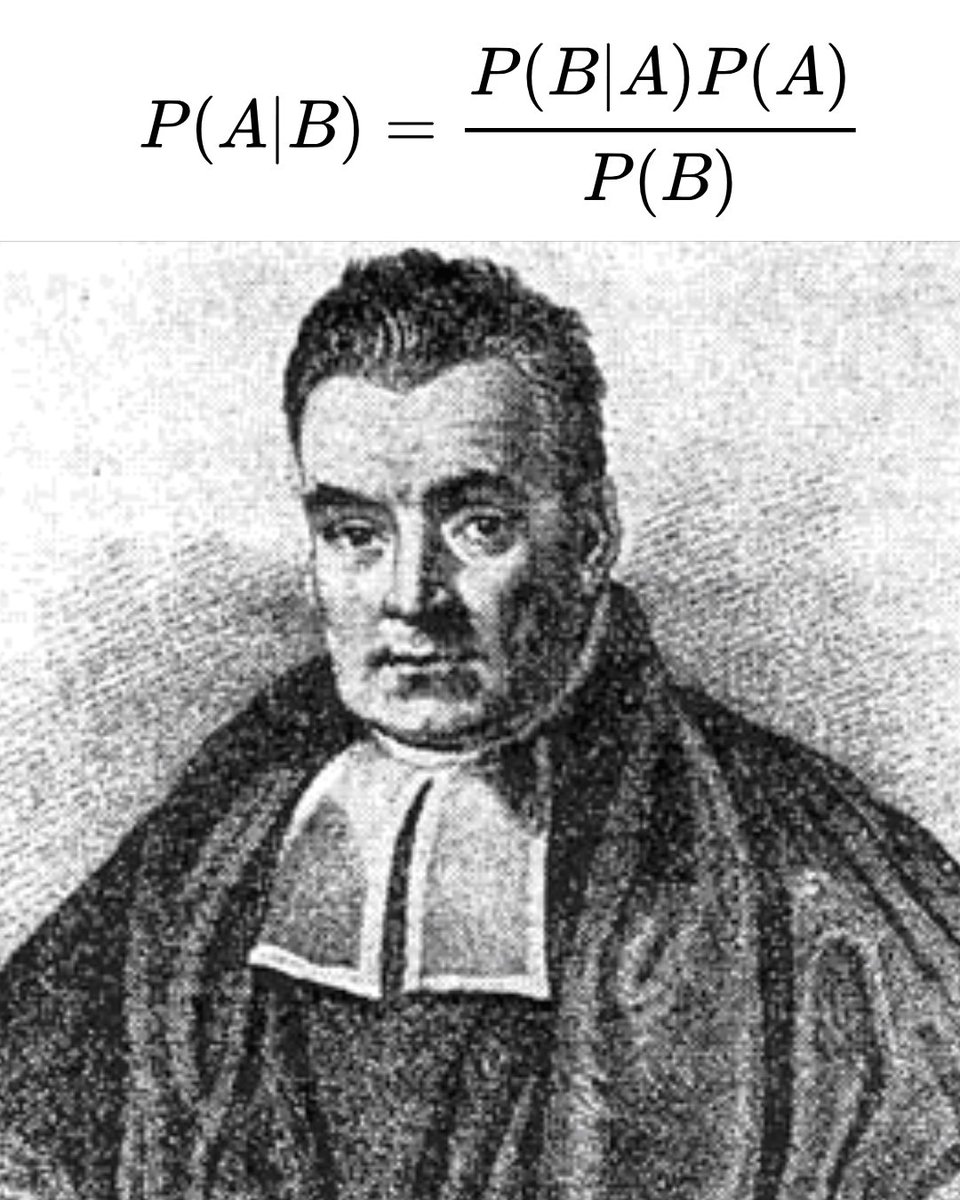
Bayes’ theorem is probably the single most important thing any rational person can learn.
So many of our debates and disagreements that we shout about are because we don’t understand Bayes’ theorem or how human rationality often works.
Bayes’ theorem is named after the 18th-century Thomas Bayes, and essentially it’s a formula that asks: when you are presented with all of the evidence for something, how much should you believe it?
Bayes’ theorem teaches us that our beliefs are not fixed; they are probabilities. Our beliefs change as we weigh new evidence against our assumptions, or our priors. In other words, we all carry certain ideas about how the world works, and new evidence can challenge them.
For example, somebody might believe that smoking is safe, that stress causes mouth ulcers, or that human activity is unrelated to climate change. These are their priors, their starting points. They can be formed by our culture, our biases, or even incomplete information.
Now imagine a new study comes along that challenges one of your priors. A single study might not carry enough weight to overturn your existing beliefs. But as studies accumulate, eventually the scales may tip. At some point, your prior will become less and less plausible.
Bayes’ theorem argues that being rational is not about black and white. It’s not even about true or false. It’s about what is most reasonable based on the best available evidence. But for this to work, we need to be presented with as much high-quality data as possible. Without evidence—without belief-forming data—we are left only with our priors and biases. And those aren’t all that rational.

English
Justin Jones retweetledi

Elon Musk: "People get confused sometimes they think an economy is money , But money is a database
for the exchange of goods and services and for time-shifting the exchange of goods and services. Money is a database. Money does not have power in and of itself
You can run the thought experiment: if you are shipwrecked on a remote island and you have a trillion dollars in a Swiss bank account, "it's worthless"
You’d rather have a can of soup. You can have all the Bitcoin in the world and you’re still going to starve
The actual economy is goods and services”
English
Justin Jones retweetledi

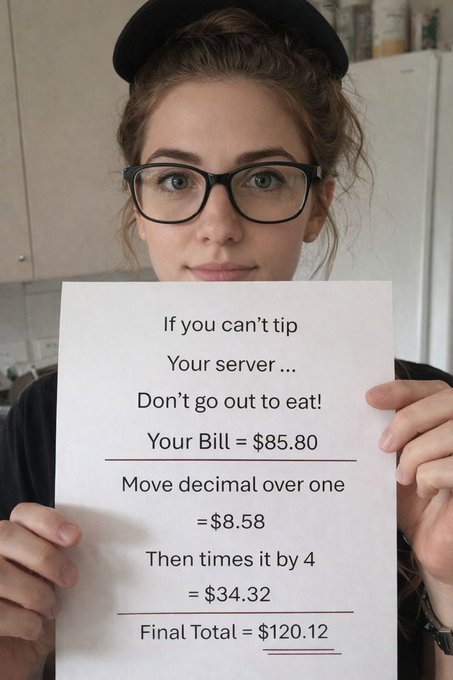
@Rainmaker1973 Who qualifies for a tip —- I still don’t understand how this works. My doctor and nurse saved my life for $175,000 —- do I move one decimal over for the tip?
English
Justin Jones retweetledi