2 Sticks of RAM

47 posts

2 Sticks of RAM banner
2 Sticks of RAM

2 Sticks of RAM

@2SticksofR4M

Raging against the death of personal compute one RAM meme at a time. TG:: https://t.co/4apNibBI1V CA: DmGvYx7R4ZJnSocMauain4LXh3oA8kuDYavLoDLYpump

Motherboard Katılım Mayıs 2026
50 Takip Edilen43 Takipçiler
2 Sticks of RAM retweetledi
Flippercoins
Flippercoins@flippercoins_·
You all are making lot of AI videos, but you never ask why 2 sticks of $RAM prices keep increasing???😂😂😂 DmGvYx7R4ZJnSocMauain4LXh3oA8kuDYavLoDLYpump @2SticksofR4M
English
1
4
4
143
2 Sticks of RAM retweetledi
Vini B |「 thecoding 」
Vini B |「 thecoding 」@vinibarbosabr·
Intentional VPN backdoor on Android? Looks like it TL;DR + security researcher @cybaqkebm found a bug on Android + the bug allows apps to circumvent VPN tunnels, leaking user data + the bug was reported to Android, with a proposed fix + Android sais it wouldn't fix it + The bug report mysteriously disappeared + GrapheneOS already released a patched version + advanced users can manually patch their Androids via USB debugging (adb code)
Mullvad.net@mullvadnet

A new VPN leak that allows any app to leak traffic outside the VPN tunnel has recently been discovered by @cybaqkebm Read more here: mullvad.net/blog/any-app-o…

English
35
623
3.1K
135.3K
2 Sticks of RAM
2 Sticks of RAM@2SticksofR4M·
TL;DR - The price of 2 Sticks of $RAM is going up👺
Aakash Gupta@aakashgupta

Korean DRAM export prices just hit $64,000 per kilogram. The same chip sold for under $11,000 a year ago. The hockey stick is what AI is doing to the global memory market. HBM and conventional DRAM are built on the same fab lines. Every wafer SK Hynix and Samsung dedicate to high-bandwidth memory is a wafer they don't ship as DDR5 server modules or DDR4 desktop sticks. HBM also consumes roughly 3 wafers for every 1 wafer of equivalent DDR5 capacity. Supply gets eaten faster than the revenue line suggests. NVIDIA accounts for roughly 90% of SK Hynix HBM output. SK Hynix sold out its 2025 HBM allocation by mid-2024, locked in all of 2026 by mid-2025, and is now pricing 2027. Samsung and Micron are sold out through 2026 too. AI alone is projected to consume 20% of total DRAM production in 2026. Now the cascade. Retail DDR5 prices climbed 123% in 2025. Another 45% increase is forecast for 2026. A 32GB DDR5-6000 kit that sold for $80 to $100 in early 2025 trades at $364 to $529 today. A 4x repricing on the same SKU, same speed, same generation. Phones get the same bill. Xiaomi told investors its DRAM cost per device will rise 25% in 2026. Some OEMs are quietly engineering downgraded SKUs, 8GB laptops and 4GB phones, just to keep a product on the shelf. The Phison CEO warned that some consumer electronics manufacturers will exit product lines entirely by end of year. Gaming GPUs caught the same wave. NVIDIA cut RTX gaming production 30 to 40% in the first half of 2026 because GDDR7 ships from the same Korean fabs that make HBM. Same factory floor, different SKU. HBM wins the priority queue. Three companies set the price of every memory chip on earth. Samsung, SK Hynix, and Micron together control about 95% of global DRAM. Korean exports alone account for two-thirds. In October, OpenAI signed a letter of intent with Samsung and SK Hynix for 900,000 wafers a month for Stargate. Per month. Memory was historically the worst business in tech. Cyclical, commoditized, single-digit operating margins through entire decades. SK Hynix now runs over 50% operating margin and just posted another record quarterly profit. SK Group's chairman said publicly that the wafer shortage will persist until 2030 because cleanroom buildouts take five years and nobody is willing to overbuild into an AI bust. Memory stopped being cyclical the day NVIDIA wanted all of it.

English
1
3
4
159
2 Sticks of RAM retweetledi
Memory Controller
Memory Controller@MemoryControllr·
@2SticksofR4M Two sticks of $RAM will define the success and survival of tech companies.
Memory Controller tweet media
English
0
1
1
27
2 Sticks of RAM retweetledi
Flippercoins
Flippercoins@flippercoins_·
Somethings brewing here, stay tuned 👁️ DmGvYx7R4ZJnSocMauain4LXh3oA8kuDYavLoDLYpump
English
0
1
4
43
2 Sticks of RAM retweetledi
GrapheneOS
GrapheneOS@GrapheneOS·
Apple and Google are gradually expanding their use of hardware-based attestation. They're convincing a growing number of services to adopt it. Google's Play Integrity API and Apple's App Attest API are very similar. Apple brought it to the web via Privacy Pass, which Google intends on doing too. Google's Play Integrity API requires hardware attestation for the strong integrity level and is gradually phasing in requiring it for the more commonly used device integrity level. Apple already has it as a requirement. Over the long term, this will increasingly lock out hardware and OS competition. The purpose of these systems is disallowing people from using hardware and software not approved by Apple or Google. This is wrongly presented as being a security feature. Banks and government services are the main ones adopting it but Apple and Google are encouraging every service to use it. Apple's Privacy Pass brought hardware attestation to the web to help with passing captchas on their own hardware. Many people saw that as harmless since few sites would be willing to lock out non-Apple-hardware users. Apple and Google are both likely to bring broader hardware attestation to the web. Google's reCAPTCHA is planning an approach where they use Privacy Pass on Apple hardware, their own approach on Google Mobile Services Android devices and a QR code scanning system to require an iOS or Google certified Android device for Windows and other systems: support.google.com/recaptcha/answ… Banking and government services increasingly require using a mobile app where they can use attestation to force using an Apple or Google approved device and OS. Apple's privacy pass, Google's 'cancelled' Web Environment Integrity and now reCAPTCHA Mobile Verification are bringing this to the web. Current media coverage for reCAPTCHA Mobile Verification misunderstands it and the impact of it. They're bringing a hardware attestation requirement to Windows, desktop Linux, OpenBSD, etc. by requiring a QR scan from a certified smartphone to pass reCAPTCHA in some cases. They could expand it more. Control over reCAPTCHA puts Google in a position where they can require having either iOS or a certified Android device to use an enormous amount of the web. Google defines certification requirements for Android which includes forcing bundling Google Chrome, etc. It's enormously anti-competitive. Google's Play Integrity API bans using GrapheneOS despite it being far more secure than anything they permit. It also bans using any other alternative. This isn't somehow specific to an AOSP-based OS. You can't avoid this by using a mobile OS based on FreeBSD instead. You'll just be more locked out. Google's Play Integrity API permits devices with no security patches for 10 years. The device integrity level can be bypassed via spoofing but they can detect it quite well and block it once it starts being done at scale. The strong integrity level requires leaked keys from TEEs/SEs to bypass it. It doesn't provide a useful security feature, but it does lock out competition very well. Services requiring Apple App Attest or Google Play Integrity are primarily helping to lock in Apple and Google having a duopoly for mobile devices. Play Integrity is more relevant due to AOSP being open source. Governments are increasingly mandating using Apple's App Attest and Google's Play Integrity for not only their own services but also commercial services. The EU is leading the charge of making these requirements for digital payments, ID, age verification, etc. Many EU government apps require them. Instead of governments stopping Apple and Google from engaging in egregiously anti-competitive behavior, they're directly participating in locking out competition via their own services. Requiring people to have an Apple device or Google-certified Android device is anti-competition, not security. reCAPTCHA Mobile Verification will currently work with sandboxed Google Play on GrapheneOS but it clearly exists to provide a way for them to start using hardware attestation on systems without it. People without an iOS or Android device will be locked out when this is required even without that. This isn't about security or any missing functionality. GrapheneOS can be verified via hardware attestation. Google bans using GrapheneOS for Play Integrity because we don't license Google Mobile Services and conform to anti-competitive rules already found to be illegal in South Korea and elsewhere. Services shouldn't ban people from using arbitrary hardware and operating systems in the first place. Google's security excuse is clearly bogus when they permit devices with no patches for 10 years but not a much more secure OS. It's for enforcing their monopolies via GMS licensing, that's all.
English
152
2.3K
8.6K
312.2K
2 Sticks of RAM retweetledi
Memory Controller
Memory Controller@MemoryControllr·
This is why 2 Sticks of $RAM cost so much.
English
0
1
2
67
2 Sticks of RAM retweetledi
Ewan Morrison
Ewan Morrison@MrEwanMorrison·
More evidence of the scale of the AI bubble. Over $1.2 trillion in debt is linked to companies involved in AI.
Ewan Morrison tweet media
English
7
87
280
39.9K
2 Sticks of RAM retweetledi
Ben Inskeep
Ben Inskeep@Ben_Inskeep·
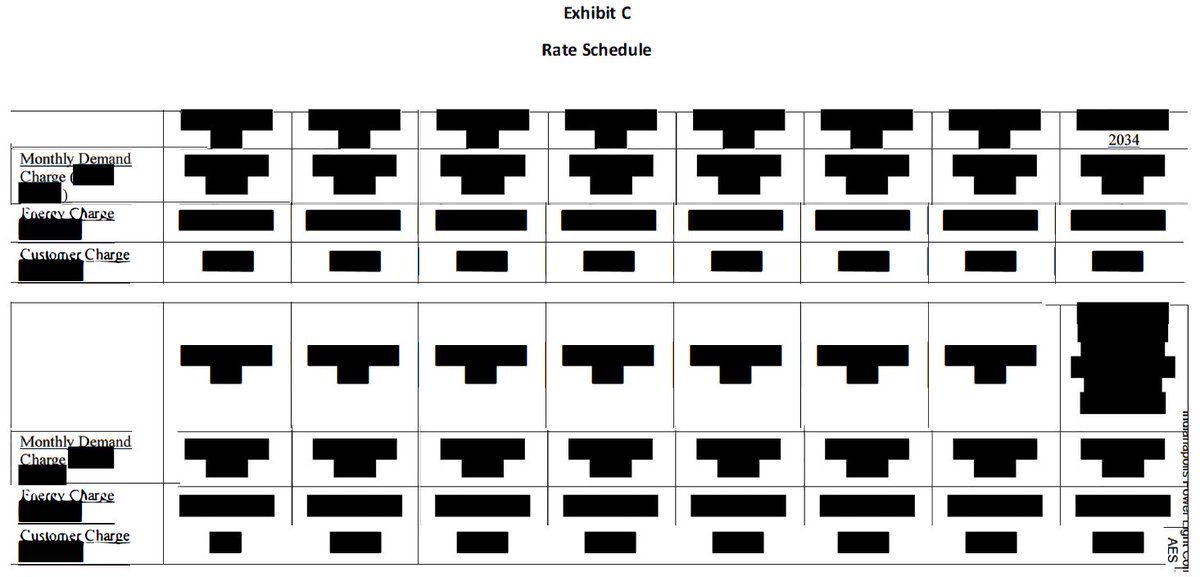
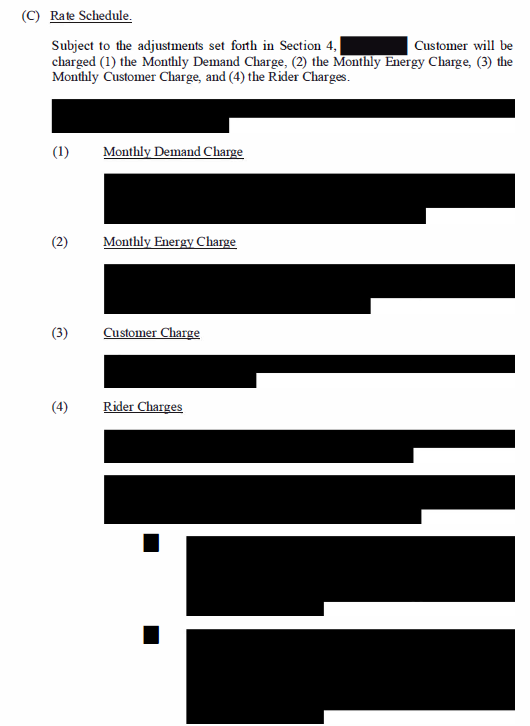
I don't understand why people don't trust data centers. You can clearly see that these AES Indiana rates for Google's data center in Monrovia, IN are fair and reasonable.
Ben Inskeep tweet mediaBen Inskeep tweet media
English
31
670
4.2K
88.5K
2 Sticks of RAM retweetledi
Insider Wire
Insider Wire@InsiderWire·
#BREAKING: U.S. Chapter 11 Bankruptcy Filings Jump 42% Year-Over-Year.
English
61
664
2.8K
142K
2 Sticks of RAM retweetledi
Ramin Nasibov
Ramin Nasibov@RaminNasibov·
Browsing the internet nowadays.
Ramin Nasibov tweet media
English
27
890
8.7K
82.7K