

whatnow

256 posts

whatnow banner
whatnow

whatnow

@2sun99

Katılım Mart 2021
42 Takip Edilen42 Takipçiler
whatnow
whatnow@2sun99·
@_MaxO22_ All the best to you sir! You have been and still are a positive force for sure. Wish you good health and stay safe in this new endeavour.
English
1
0
1
36
MaxO
MaxO@_MaxO22_·
After reflecting deeply and spending 80% of my time outside over the past few months, I have come to the conclusion that I am going to greatly reduce my efforts and time as a trader. To me, life is measured not by the income I create, but by the amount of fulfilment an activity brings. While I found great pleasure in pursuing the skill of trading over the past two years, that passion is now completely fading. I have changed my career path many times in the past, and I will most likely keep doing so every time life tells me to keep moving. With every new skill I develop, my horizon expands tenfold. With every new discipline, I become a more valuable member of society and a better version of myself. Trading has become a very empty pursuit of printing money, devoid of any deeper meaning. To me, that is the exact opposite of why I am on this planet. The only logical step is to move on. True fulfilment for me came from mentoring, coaching, and educational work. By contrast, the raw mechanics of trading can feel empty. Clicking buttons in front of a screen while turning off everything that makes me human. Every thank you from a real person has been worth more to me than any winning trade. To be completely honest, the trading space can be a toxic environment. It's filled with scams, larping, and constant negativity. Spending most of my time in nature has shown me that I’m done draining my energy understanding the worst types of human beings, those who try to conquer the world just to satisfy their own egos and fears. Compared to the mountains and their people I’ve met out there over the past few weeks, i figured it’s just not a world I want to be a big part of my life anymore. In Q4, I will begin training to become a certified mountain rescuer at a ski resort, performing first aid for accidents, and eventually learning to bomb avalanches to secure the slopes. Just thinking about it makes my heart jump with excitement and this is exactly how I want to experience this life. This is the first major step toward fulfilling my dream of becoming a certified mountain guide, and it will require everything I have over the next few years. My body needs to be in peak physical condition, which is my main focus right now. My mind needs to be perfectly balanced, fully aware of the risks and challenges I’m about to face. I am entering a highly demanding new world, and trading will take a backseat for a while. To free up mental capacity, I’ve already closed 10 of my 44 active positions, and I will continue to reduce my exposure over the coming weeks. I will also wind down my coaching work and will not be accepting new students for the foreseeable future once the current group finishes their three-month term. Going forward, my main financial focus will be to invest my capital with minimal time and effort, protecting what I've built after four years of travel and to continue guiding the few people who have proven they are truly willing to put in the work. I’ve never been someone who stays in one place or remains the same person for long, and those who know me understand this. I view the time and effort I put into trading as a massive success. I proved more than once that I can outperform the markets, and I’ve learned invaluable lessons about business, mental discipline, resilience, and how social media works. I’ve also learned how to generate passive income from major market trends, which is exactly how I will approach the charts from now on. I don't need much screen time for that. I will continue to update the plays I've shared publicly and offer occasional insights into my investment portfolio. I'll also share updates on my physical, mental, and mountain progress, as sharing this journey has become a truly inspiring and fun outlet for me. Maybe down the road, I'll want to increase my screen time and return to active trading and public education. But for now, thank you for being a part of this journey so far.
English
4
1
60
2.1K
whatnow
whatnow@2sun99·
@luckychartape Thanks, getting new understanding and reminders reading it again with the experiences gathered in the past year or two.
English
0
0
0
14
Lucky Chart Ape
Lucky Chart Ape@luckychartape·
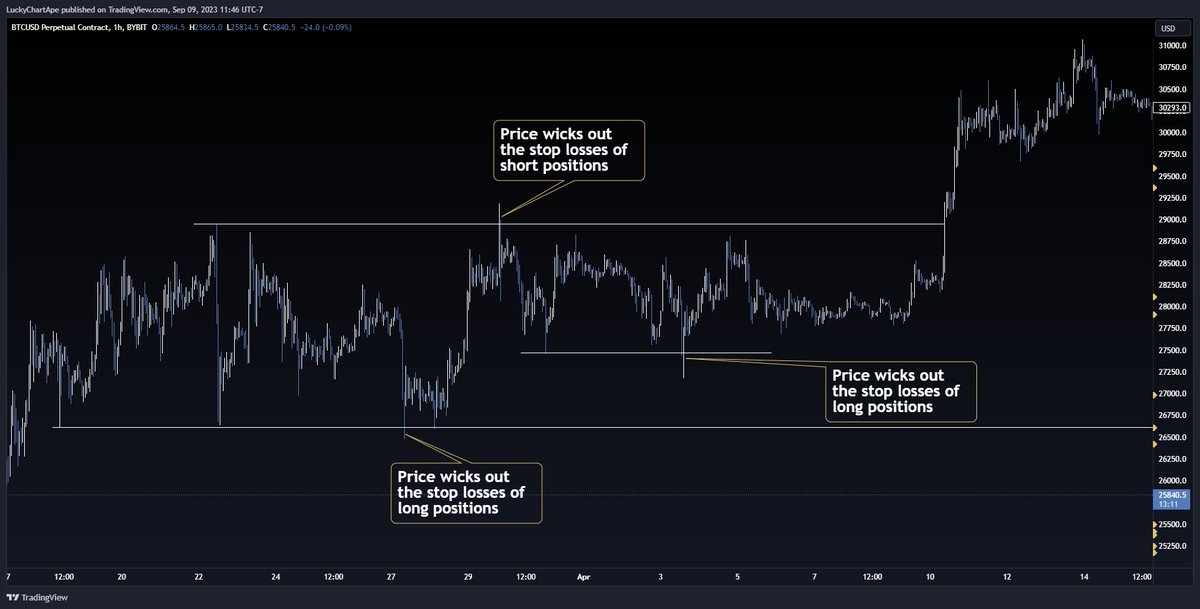
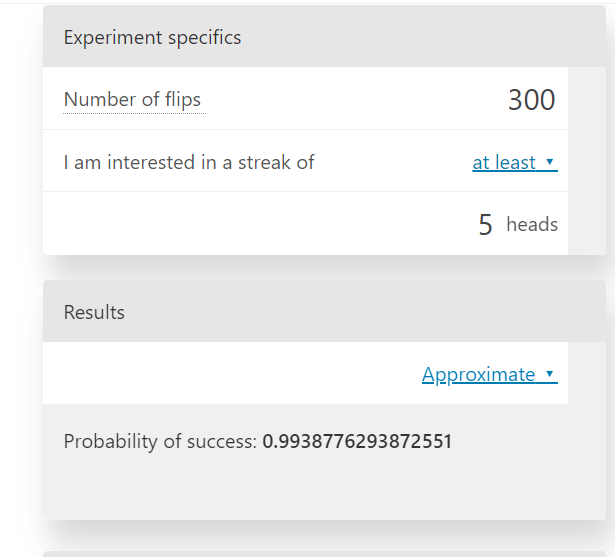
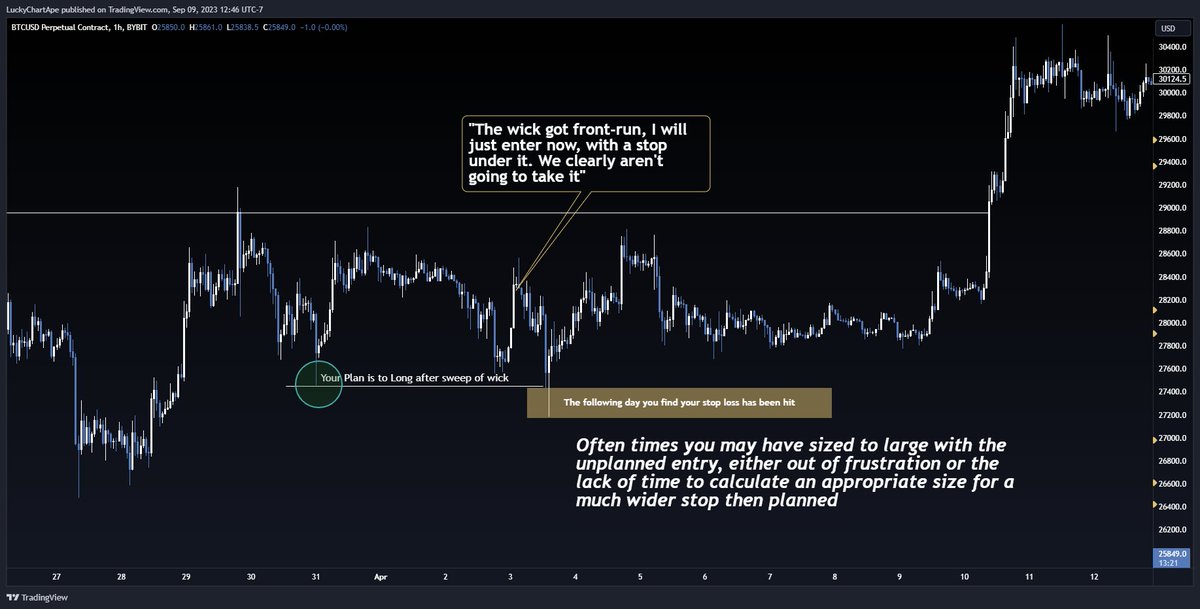
Below I am going to break down what I believe are some of the most important components to trading. Technical Analysis I believe TA is deeply misunderstood. Many believe it's some sort of 🔮to see the future. There are various styles of TA, many of which are referred to as "patterns". Price seeks liquidity, as people place Bids, Asks, set stop losses, liquidation, and profit taking targets, it would be reasonable to suspect some "patterns" might arise from that activity. If you pay attention to order flow, you will see that the majority of traders consistently make similar choices. One of the most recognizable cases of this is when price makes a significant high or low, ranges, and comes back to barely take that level before reversing. Here we see a pattern arise, it's not generated by some mystical force, but instead by the consistency of human behavior. Everyone has placed their stop losses in the same place, and price has revisited that liquidity, taking out the positions before reversing. Most of you have probably experienced being on the losing side of this price action many times. In my view technical analysis is simply using tools to identify the "patterns" generated by predictable human behavior. The goal is then to structure a trade around these higher probability events with clearly defined risk management. Instead of consistently getting stopped out of trades by "predictable" market activity, you are consistently finding your shorts from the highs, and longs from the lows, with high risk/reward. RISK MANAGEMENT No matter how hard you try, there is no way to enter the market without risk. All we can do is manage our risk. We don't want to rely on our intuitions to figure out what reasonable risk is, as our intuitions about probabilities are often wrong. Instead We can use mathematical modelling to understand how to manage our risk. Let me give an analogy, lets say that you bet someone $1,000 that if you flip a coin, heads wont land 5 times in a row. You probably intuit that the odds of heads landing 5 times in a row is an extremely unlikely event, but what if your opponent insists that the coin must be flipped 300 times? Your intuition might not tell you that there is now a 99.4% chance that heads lands 5 times in a row. Much like trading, flipping coins is a set of independent random events, but over large sets, we see various events arise with near 100% certainty. A trader uses risk management because they truly accept that they are operating in a space of probabilities. Given enough trades, outlier loss streaks are certainties. We can mathematically calculate the odds of various loss streaks happening, given enough trades. Most systems should be able to withstand a 10 trade loss streak comfortably. This leaves room for probabilistic variance, and execution errors. This is why the value "1% risk per trade" is often seen as a standard for risk management. TRADING PSCHOLOGY (Patience, Greed, Fear, and everything else) After a trader has done their due diligence, planned out their technical trade, defined their entry criteria, calculated their positions size based and their invalidation (risk management), and their targets. It is now time to execute the trade. In some ways I view executions as a sub category of trading psychology. Patience - Patience is one of the most important aspect of execution. It doesn't matter how well your trade is planned if you don't have the patience to wait for that key level or idea. A trader may enter a position well before their level is hit, because price has a significant bounce before that level, as they watch price move further and further away from their entry level they decide to enter, fearing that they will miss the move. Suddenly they are trading well beyond the scope of their plan. They may be able to justify the decision as logical at the time, "the level almost got hit", but the next day reality sets in, they entered at the top of a local bounce, and they placed their stop loss under the most recent low, right at the level they had planned to long. In hindsight it might feel unbelievable to you, how are you getting stopped out exactly where you had planned on entering? I prefer not to think in terms of "missing a trade", if my level doesn't get hit, then I missed nothing, because I don't know what the market is going to do. How can I be expected to trade something I had no plan for? I simply accept my level may or may not get hit, and wait for my trade. GREED? - When the term Greed is thrown around, it evokes images of Scrooge Mcduck. Someone rubbing their hands together, with a villain's smile on their face. I believe it's more subtle then that. Greed often takes the shape of hope, or optimism. You might be thinking about paying off a looming bill, or paying off some debt quicker. These aren't insidious ambitious, but they are just as deadly. Without even realizing it, you are no longer thinking about the technical mechanics of the trade you are executing. You aren't thinking about "risk management" or "invalidation" you are thinking "If I put this big of size on the trade, I can pay this months rent from one trade" or "If I don't take any profits at my target, and price goes up to this price, I can make enough to pay for the family trip next week". These thought processes detach a trader from the reality of the market. The market doesn't care about the bills you have to pay. We have to detach our personal goals from the trades we are currently taking. We must do our best to remain objective at all times. We don't size our trade based on when rent is due. We don't base our targets on how much money we want to make on the trade. Those factors must be based on the reality of the market, not the conditions of our lives. FEAR - Fear can come in many forms. A trader might be afraid to lose, so they find themselves unable to enter when their planned trade presents itself, or fear might cause them to remove their stop loss entirely. That fear of loss has turned what might have been a small, managed loss, into a ruinous one, as price goes further and further against the trader, the fear of accepting that loss leaves them frozen as they watch their trading account evaporate. Fear of losing is only one side of the coin. We are all familiar with the term FOMO, the FEAR OF MISSING OUT. It does not take long for a trader to have the experience of barely missing a trade, or exiting a trade right before a large move takes place. These experiences create emotional baggage. When a trader finds themselves in a situation where the market is doing something entirely unexpected to them those memories of missing out on a large move come flooding back to them, and they might find themselves scrambling to enter a random, unplanned position to catch the unexpected move, often times with no risk management or invalidation. Inevitably this FOMO has caused them to enter right before price reverses, maybe a long at the peak of a move, or a short at the bottom. When we accept that there is no way to catch every move, or predict every pivot, we release ourselves from the pressure to do so. We can accept that it doesn't matter where the market goes, we simply want to trade pre-defined levels and setups. What happens between those levels is irrelevant. Everything else- Everyone has their own personal experiences, goals, baggage, and journey as a trader. Sometimes the emotional triggers might not fit neatly in a particular category. Trading represents freedom for many, it represents an opportunity to break away from the mundane routine of life. An opportunity to write your own ticket with the sense that your opportunity is limitless, only restricted by your own hard work and performance. Often times all of these hopes, dreams, fears and ambitions entangle themselves into our trades in such a way that only we can identify. Single trades might start to subconsciously represent all of the hopes and ambitions a trader has for their life. We can't carry all of that emotional weight into the market with us. We must detach the outcome of random trading events from our personal self-worth, or hopes for out future. This practice is referred to as "Mechanical Trading". You simply take trade setups with risk management and invalidation, with no expectation or care as to what the outcome of a specific trade is. JOURNAL - Keeping a journal may seem like something teenage girls do, but it is the most valuable tool a trader has to develop in all areas. Collect the data on your trades. Win-rates, average loss, average win, outlier events, reflection on your emotional state when taking trades, etc. Start identifying your strengths and weaknesses. Maybe you find that you performance suffers after to many hours at the chart, or at the end of the week, maybe you find that you start taking on too much risk after a 4+ win-streak, or certain setups greatly out-perform all of your other setups. I can't tell you what you will find in your personal trading data, All I can tell you is that you will find gold.
Lucky Chart Ape tweet mediaLucky Chart Ape tweet mediaLucky Chart Ape tweet media
English
46
116
570
63.2K
Mark Gadala-Maria
Mark Gadala-Maria@markgadala·
Bass Windu is becoming an AI masterpiece. I want a full movie.
English
225
1.9K
13.9K
1.2M
whatnow
whatnow@2sun99·
@Moneytaur_ Meanwhile new zealand will be there again. Also, unbeaten in their WC 2010 run
English
0
0
2
376
🎯 Master
🎯 Master@Moneytaur_·
Insane seeing Italy missing their third straight FIFA World Cup. Four-time champions. Winners in 2006 with one of the greatest squads ever assembled.
English
13
5
312
22.1K
whatnow
whatnow@2sun99·
@_MaxO22_ Great read and adds depth to what's in the discord education section. thanks for adding the link to this post.
English
0
0
0
4
MaxO
MaxO@_MaxO22_·
Advanced Orderflow: Orderflow is a very powerful tool in trading. For me, it can’t stand on its own, but it provides clear signals and strong confluence for your levels and helps show whether a move still has fuel left or not. As you all know, I love using Orderflow in my analysis to get a better understanding of the real sentiment, not just what people say they’re doing. Orderflow shows me the actual money flow and how the majority is positioned. Because of that, I can narrow down the max pain move and where the largest pools of liquidity are sitting, ready to be taken. Orderflow is so powerful because it reveals the underlying principle of the market: Buying and Selling. In the end, this is all that truly creates price movement and volatility. On one side, you have the buyers, driving or holding price up; on the other, the sellers, pushing price down or keeping it steady. Volatility arises from the divergence between buyers and sellers. If you understand the basics of the Orderbook, you can start extracting signals from Orderflow by refining your understanding. The first step is becoming aware of the different types of participants in the market. Aggressive Buyers&Sellers: These types of players are the ones working with market orders. They actively remove liquidity from the order book and move price when the book is too thin to absorb their orders completely. On high-volume assets, most of us won’t move the price even a dime. The books are simply too thick. This is actually one of the biggest advantages of being a small fish in the ocean: You can move without being noticed. Yeah, probably not completely stealthily as whales have access to all our data and know exactly how we behave as a swarm. They don’t care about our $5 stop loss individually, but collectively it adds up to a significant amount of liquidity they can use for their own game. Whales don’t play the game like we do. They rarely work with full-size market orders and when they do, it’s because they have very different intentions than us. They might want to open new trading ranges, fuel new narratives (like BTC breaking above 100k), or push people into mistakes to take their liquidity. They are willing to invest a certain amount into these moves just to keep the game alive and interesting. If you study Orderflow closely, you’ll notice that after a certain amount of time, ranges start to "run dry" and that's when they need to ignite a new move to keep retail engaged. Retail needs action, dreams, drama and narratives, and without it, the game would stall. This is when they really move price with aggressive market orders. Otherwise, they mostly rely on limit orders, which is their preferred way of building or unwinding positions over time without being easily spotted. If there isn’t enough time or they need to get rid of positions faster than other whales, assets can nuke quite heavily. You can spot this more clearly on lower-volume or younger assets. The lower the volume and the thinner the order books, the easier it is to move price, but this isn't a big advantage for real whales with real size. Scammer larps love their low-volume shitcoins for exactly this reason: They can move price easily with relatively small amounts of money. If they also control the supply (for example, through mining or token allocations), the game becomes even easier for them. Just like the big whales, they create narratives and price moves to attract retail, just on a smaller scale. Meanwhile, real whales play the same game on the world stage, crafting not only market narratives but also real-world events, which they then spread through their own media channels or via friendly outlets. Nowadays, most of these whale games are played automatically by the infamous algorithms. And it's not just one algorithm running the market, it’s many. All of them are designed to hijack retail traders emotions and weaknesses, pushing them into bad decisions. These algorithms are programmed with one core purpose: To create volatility, liquidity and target key levels. So as you can see now the aggressive side of the order book is the reason for the moves that we a so love, but now lets have a look at limit orders. Passive Buyers&Sellers: These are the kinds of traders who are patient, have a certain size that doesn’t allow them to use market orders, or simply want to get their assets at a specific price or are willing to pay a small spread. Its important to understand that limit orders don't move the price. If you look into the order book, you’ll see it’s filled with limit orders. You can either use your exchange’s order book or specialised software that makes those walls of orders more visible. But be careful with these "walls", whales know a lot of people are watching them, so they often spoof walls to trick others into thinking a strong reversal level is forming. To be honest, I haven’t found a strong direct trading edge from these walls, even though I have software for it. I don’t use it to make trade decisions, but it tremendously helped me improve my overall understanding of market structure and behaviour. Once you truly understand these dynamics, your entire game will change. You’ll start to see what really moves price and how narratives are crafted around it. So, knowing now that big players fill their bags over time using limit orders, you can also understand why they need fear at bottoms and euphoria at tops. They want to load up at the best prices and offload at the best prices as well. The thing is, a whale doesn’t really care about selling at 95k or 110k, they just want to exit their bags somewhere in that general area without nuking price through the order book. That’s why tops and bottoms on high-volume assets take time to form. It's a completely different game than the one we play and you really need to understand this if you want to survive. They aren't making moves based on speculative dreams like "BTC to one million in 2026." They fuel those narratives to make you believe it and then they use your liquidity to quietly exit on the other side. So as you can see, limit orders are a very effective tool for whales to on-/offload positions, all while using their algorithms to create liquidity inside these ranges. This constant activity ensures they can drain the market 24/7, while also building and managing their long-term positions without exposing themselves. 💡Remember: Whales can't make a dime without your liquidity and the entire game is designed to extract exactly that. The most powerful tool I’ve found for applying this limit order knowledge is CVD, so let’s talk about that. CVD: CVD stands for Cumulative Volume Delta, and it shows the relationship between buying and selling in relation to price. CVD is the aggressive side of the participants, but it still shows you what the bigger passive fish are doing. I talk about a bullish divergence when price is moving up while CVD is either flat or even going down. This tells me that aggressive sellers are stepping in, but they’re not able to push price down. It signals that a bigger player is absorbing the sell-side liquidity, probably after stop hunts or with an even bigger goal in mind, like establishing a new trading range. A bearish divergence is the opposite: Price is steady or moving down while aggressive buyers are stepping in but fail to lift the price. Same principle here: A large passive seller is absorbing all of that buying pressure. His goal could be to trap buyers, hunt their stops later, or aim for a larger objective. In both cases, it’s usually wiser to side with the passive player, the obviously more powerful fish. Most of the time, the aggressive side is being used by those passive players. They are the ones going long or short at the worst possible moments, getting trapped, and becoming the reason why a move continues higher or lower. Trapped traders are the whales profit. The whale simply needs to push price far enough against the trapped side until they either capitulate or get stopped out, which creates liquidity. 🔹For shorts, this means they are forced to buy back their borrowed shares, adding buy-side liquidity. 🔹 For longs, it’s the opposite, their stops add sell-side liquidity. This liquidity becomes the whale’s profit or it’s used as an opportunity to onload or offload their real positions, just like we talked about earlier. Funding Rate: Funding rate is a very powerful tool and even better, it’s free. The funding rate shows the difference between longs and shorts, and it helps keep the market relatively balanced by adding a fee to whichever side is overexposed. For us, the important part is the signal that funding gives us. As mentioned, funding shows the imbalance between longs and shorts. If you’ve been around crypto for a while and are familiar with funding rates, you already know that funding is usually positive most of the time. If you look at a HTF chart of BTC alongside its funding rates, you’ll see that it’s actually a pretty simple strategy to buy when funding turns negative. This usually happens at major bottoms and shows how people are maximum bearish at the worst possible point, but it doesn't mean it the ultimate bottom is in for sure! On a HTF basis, this is a great confluence tool for me when scaling into or out of spot positions. Now let’s combine this knowledge with Open Interest (OI) to refine our approach even further and even get real trading signals, not just spot market insights. Open Interest: OI shows you whether new futures positions are being opened or existing ones are being closed. When you combine OI with funding, you can tell if the current pump is being driven by closing shorts (buyers) or closing longs (sellers) and that’s extremely important. 🔹 If a lot of new longs are piling in, it’s often a sign that the move is starting to overheat. 🔹 On the other hand, if a move is triggered mostly by closing shorts (buyers) and even new shorts (sellers) are entering, there’s a good chance the move still has fuel to continue for a little longer. As mentioned earlier, people usually long tops and short bottoms. So if you see traders shorting into resistance or pumps, you should think twice, either size your own short smaller or maybe skip it altogether. If funding turns negative with rising OI during pumps, it tells you that sentiment is pretty bad, people are desperate and getting squeezed over and over again. On the other hand, if funding turns highly positive with rising OI into resistance, it adds strong confluence for your own short setup. Both concepts apply vice versa during dumps. If you see many longs stacking into a dump, you should consider skipping your own long, because you want to stay contrarian to the herd, not join it. Around major and powerful key long levels, funding usually turns negative anyway, but even if it doesn't, I would still start scaling into spot positions and longs there. It takes a little time to learn how to read funding and OI charts correctly, but it’s absolutely worth it. In my view, it's the realest sentiment indicator out there and on high-volume assets, it’s extremely reliable. Sentiment: People in crypto spend 90% of the time waiting for the "biggest altseason of all time" and position themselves accordingly. Only if it's really worth getting heavily positioned do they wait for either slightly lower prices or even full-blown Armageddon. This isn’t a coincidence, it’s by design and it works perfectly. The herd almost never gets it right, so you really want to make sure you're on the other side of their trade. If you look at X and the biggest crypto accounts and their thousands of followers, they’re basically always bullish, so they aren’t reliable indicators. On the flip side, you have the perma-bears who are always waiting for doomsday, which, looking at any zoomed-out chart in stocks or Bitcoin, is statistically an even worse approach. Reliable sentiment indicators are News and Orderflow, but they must be read correctly and not coloured by your bias or dreams. As mentioned before, you can use funding rates to gauge sentiment quite well: 🔹 If funding turns negative after a big drop, it’s usually a good time to start looking for buys. This doesn’t mean it's the absolute bottom, it could simply trigger a bounce to take out bottom shorts. You still need to combine this with good price action reading skills, and use it as secondary confluence. 🔹 If you see funding turning negative at resistance after a big pump, it shows that people still don’t trust the move and remain bearish these are often the moves that keep pushing higher until the crowd finally flips bullish. Sometimes, though rarely, funding turns negative at resistance, showing that many traders are shorting directly into the level. This usually happens after weeks or months of downside, once people have capitulated and finally turned bearish. They’re stuck waiting for "just a little lower" and can’t accept the reality that the move may already be reversing. See: Bitcoin Oct 2023 🔹 On the other side, if funding turns positive, it’s not an instant short signal. As said, it needs to be combined with proper price action. Funding is usually slightly positive anyway. What you really want to watch for are big spikes in funding and OI, like when BTC spiked above 100k or for the bearish example nuked to 16k in 2022. These spikes and overextensions, in both directions, are very reliable sentiment indicators. They show that people are giga bullish and are finally putting their money where their mouth is. Most of the time, this money gets taken shortly after, once the herd collectively decides to be bullish. Some Bonus Tips: 🔹 Use aggregated data if possible. The more data you have, the more reliable it becomes, it helps flatten out potential manipulation from single exchanges. 🔹 Stick to high-volume assets when using orderflow confluence. Higher volume makes it much harder for anyone to manipulate the data. 🔹 Before trading with orderflow, make sure you fully understand it. Spend time simply watching buyers and sellers battle during volatile moves without taking positions. Observation first, then integration into your strategy once you truly understand the dynamics. Alright guys, this is how I use Orderflow as confluence. If you want weekly updates on how I read Orderflow in real time, make sure to check out my weekly BTC updates.✌️
MaxO tweet media
English
26
40
301
29.1K
whatnow
whatnow@2sun99·
@_MaxO22_ thanks for a dose of calm in the chaos
English
1
0
1
23
MaxO
MaxO@_MaxO22_·
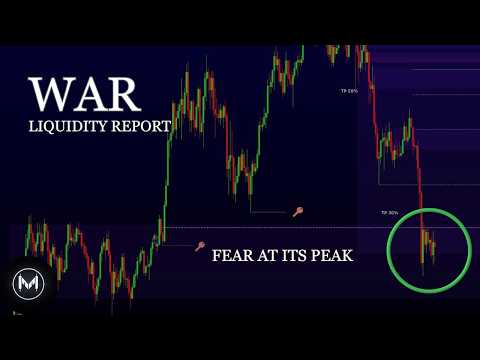
Ignore the noise and focus on the charts for your trading. I wish and pray for all innocent people that this will be over soon. youtu.be/Zhje0TNVu6c
YouTube video
YouTube
English
2
1
30
4.1K
whatnow
whatnow@2sun99·
@_MaxO22_ Thank you - good hearing your thought process!
English
0
0
0
9
MaxO
MaxO@_MaxO22_·
Major Monday - Traders Mindset - Key Levels - What is happening if the long ideas fail? - MSTR youtu.be/_BNbvwX_u5I
YouTube video
YouTube
English
2
2
28
3.2K
whatnow retweetledi
FilippoPalizzi
FilippoPalizzi@FilippoPalizzi·
Welcome to "Notes on Self-Mastery," a series where I share insights from my own journey as well as reflections on common struggles I've observed. Each note aims to inspire deeper self-understanding and meaningful change. Episode 1: Building Discipline That Lasts Discipline should be rooted in deep self-respect. We all know that discipline is essential for any improvement we want to achieve — without it, there’s no consistency and thus no sustainable progress. Anyone can motivate themselves for a few days, but once that initial burst fades, most people quit. On your path to self-mastery, discipline is required to establish new habits, as well as to maintain, support, and refine them. In theory, the longer you perform a habit, the easier it gets — but there is one important caveat: For many, discipline resembles self-terrorism — harsh self-talk and brutal perfectionism, driven by self-punishment — or rather the avoidance of it — since they engage in self-demoralization every time they fall short. Essentially, they shame themselves into action. Habits created this way are fragile and rigid in nature and lead to emotional pain (anxiety, stress, resentment), which makes them very hard to maintain over time. Even if it might work for you now, such an approach is not sustainable. You will make the journey miserable for yourself, with the risk of crumbling under ever-increasing pressure. The healthier alternative: Discipline driven by self-respect. This form of discipline is grounded in believing you are worth the effort. Instead of punishing yourself for falling short, you learn from setbacks and use them as fuel to recalibrate and keep going. True discipline isn’t fighting a war against yourself, but aligning your actions with your own values. It’s a partnership with the side of you that genuinely wants to grow. You won’t have to lower your standards; you will be able to maintain or even advance them without making yourself miserable or destroying yourself in the process. Key to this strategy: Negotiating with yourself instead of terrorizing yourself. 🔵 Honor your humanity while still respecting your goals to create a relationship with yourself built on trust and compromise. 🔵 Healthy negotiation means allowing yourself occasional adjustments without abandoning your goals entirely. 🔵 Hold yourself accountable through constructive reflection rather than harsh self-criticism. 🔵 Use setbacks as signals, not verdicts — adapt your strategy instead of attacking yourself. 🔵 Encourage yourself without making excuses. In life, you’ll inevitably face many challenges that threaten to disrupt your routine. Discipline based on self-respect creates habits that stay resilient because they were built on a stable foundation. Nonetheless, to sustain them you have to be willing to adapt when necessary, so you’re not demanding the impossible from yourself. This approach ultimately leads to more consistency and therefore more progress, all while further strengthening your resilience. Over time, this creates a positive feedback loop: the more you grow, the easier it becomes to keep growing. You build a version of yourself that becomes unstoppable.
English
32
38
396
29.1K
whatnow
whatnow@2sun99·
@_MaxO22_ inner wellbeing seems a constant struggle, but i find myself asking does it have to be? thanks for sharing your insight that the wealth I hope for won’t solve one’s insecurities- need to actually work on them
English
0
0
0
18
MaxO
MaxO@_MaxO22_·
Last year around this time I was spending 5 weeks in the tropics, in the Philippines to be exact. It was paradise, and for me as someone for whom November is the worst month, as it gets cold already in the mountains I live in but usually there isn’t enough snow for proper skiing yet, it was perfect. Yet I thought I was going to feel completely different. Much freer, much happier, once I finally had the financial freedom to roam around like this. But in reality it was very different. After a few days, I simply felt like I always feel, just in a different climate zone. Once again I fell for the trap of believing that something material would change my inner state, and once again I learned that this is not the case. Sure, it truly was paradise and I created countless unforgettable memories for which i'm deeply grateful for. I got taught surfing for free by a local who is now a friend. I discovered old caves hidden deep in the rainforest, without any other tourists. My whole portfolio doubled during this time. I spent more than a month on a stunning, uncrowded little island. I even proposed to my fiancé right before we swam out to try catch some waves. And for three days straight I watched a distant typhoon passing the island about 1000km out in the pacific ocean, creating the biggest waves I’ve ever seen in my life. I even got completely wiped out by one of them, to the pure delight of the locals. It was heaven, and yet, as mentioned, I was still me. I had the same doubts, the same fears, the same thoughts. It taught me once again that changing your surroundings or your physical location won’t change your inner world. Inner wellbeing comes from within. I genuinely wish for everybody to achieve their wildest dreams and to become completely free from a physical perspective. But I also hope that everyone understands this: If you are not at peace with who you are right now, getting everything you desire won’t magically transform your inner life. Focus on the inside and the outside becomes a paradise, no matter where you are or what you have.
English
6
2
62
2K
whatnow
whatnow@2sun99·
@OverlordEins The 0.2 EV difference after 1000 trades: Strategy A: Ends with $19,813,022 Strategy B: Ends with ~$2,708,213 Grok initially gave me widely wrong figures, so hope this is right lol. 1.006^1000 * 50k , 1.004^1000 * 50k
English
0
0
0
8
whatnow
whatnow@2sun99·
@OverlordEins Strategy A (2R reward, 60% hit rate): EV = (2 × 0.6) - (1 × 0.4) = 1.2 - 0.4 = 0.8 Expected return per trade: 1% × 0.8 = 0.8% Strategy B (3R reward, 40% hit rate): EV = (3 × 0.4) - (1 × 0.6) = 1.2 - 0.6 = 0.6 Expected return per trade 0.6% EVs modest but incl fees partial TPs..
English
1
0
0
14
Overlord
Overlord@OverlordEins·
How to maximize your returns? Don’t just chase higher risk-reward ratios, focus on the probability of your stop being hit. You have to think in expected values rather than absolute RR. A 1 to 10 RR with a wide stop isn’t necessarily worse than a 1 to 20 RR setup with a tight stop. The tighter your stop, the faster your hit rate decreases, and it doesn’t decrease linearly but exponentially due to the inherent variance of the market. Instead, think in expected values: Expected value = (Reward × Hitrate) - (Loss × (1 - Hitrate) ) Consider these scenarios: 10R with a 60% hit rate is not equivalent to 20R with a 30% hit rate. Expected value calculations: 10* 0.6 - 1 * 0.4 = 5.6 20* 0.3 - 1* 0.7 = 5.3 Don’t maximize risk-reward. Maximize expected value. Expected value is the only metric that matters if you want to maximize your earnings over time. The law of large numbers ensures returns move toward the expected value.
English
3
5
72
3.8K
whatnow
whatnow@2sun99·
@TomBilyeu 'If you treat Sunday with intention, Monday becomes domination. If you treat Sunday like escape, Monday becomes a beating.' 'The world doesn’t care how you feel' - matters only you show up again and again, and move towards your goals
English
0
1
0
47
Tom Bilyeu
Tom Bilyeu@TomBilyeu·
Rest today. Monday morning, the market's coming straight for your jaw. I learned that reality young. Twelve years old, working full-time in a door factory while other kids slept in. Hard, loud, unforgiving work. It taught me the rule I’ve built my entire life on: The world doesn’t care how you feel. It cares whether you show up stronger than yesterday. Fast-forward: tiny kitchen, early Quest days, everyone telling me it’s impossible to manufacture a bar without corn syrup. Impossible to scale. Impossible to compete. That word never bothered me. We built the machinery ourselves. Physics bends for the people who refuse to break. That’s why I don’t put my faith in motivation. Motivation cracks under pressure. Principles don’t. Here’s the one you need for this week: The market attacks the moment you walk in soft. So treat today like your reset. Not a retreat, a reload. By tonight, you should be brutally clear on four things: 1. What you’re going to execute Monday morning before anyone else is even awake 2. What you’re no longer tolerating from yourself or your team 3. What problem you’re solving that actually moves the business forward 4. What excuse you’ve been carrying that dies today Because Monday doesn’t reward effort. It rewards precision. It rewards aggression. It rewards the founder who made their decisions *before* stepping into the arena. If you treat Sunday with intention, Monday becomes domination. If you treat Sunday like escape, Monday becomes a beating. Rest today. But rest like a fighter sitting in the corner. Breathing, recovering, staring across the ring at what’s coming next. Tomorrow, the market swings first. Make damn sure you swing harder. P.S. If you liked this, you might like my weekly newsletter for founders. It's free, just click here: buff.ly/qYehE0w
Tom Bilyeu tweet media
English
11
3
69
7.8K
whatnow
whatnow@2sun99·
@phoenix_cr47 Seeing ltf bullish liquidity being respected inside a htf area of interest as early sign of reversal htf? I could tighten the SL and feel more confident I wouldn’t get wicked out.
English
0
0
0
77
Phoenix
Phoenix@phoenix_cr47·
$ETH 15 min TF What do you see? And how could you use these insights to manage risk within potential HTF reversal levels? Where could you enter? Where would be invalidation? How could you increase r/r by using LTF within HTF Level of significance?
Phoenix tweet media
English
11
1
68
6.5K
Trader Dune
Trader Dune@TraderDune·
Friendly reminder of something important, especially for those of you still in the early or middle stages of your trading journey. If you are not yet a consistently profitable trader, don't measure your progress by the number of dollars you make or lose. That metric is deceptive at that stage. It distracts you from what truly matters, your growth in understanding. Every elite-level trader you admire went through a long phase where it wasn’t about making money, but to lose intelligently, to learn from each trade, refine their strategy, and deepen their understanding of market behavior. So instead of asking: “how much did I make today?” Start asking: “What did I understand today that I didn’t understand yesterday?” Did you manage your emotions better? Did you stick to your plan with more discipline? Did you spot a setup a little earlier, or recognize a risk a little faster? Profits are just a byproduct of deep understanding. The money will always follow mastery, not the other way around. So be patient with yourself. Your account balance does not define your progress, your knowledge curve does. Keep learning, keep journaling, keep refining, and each day, make sure you know a little more than you did yesterday.
English
11
16
278
8.2K
whatnow
whatnow@2sun99·
@IamZeroIka Get better soon sir. You were everywhere, helping all the time, I was asking 'how does he do this and keep this up?'. Sorry to hear it came at such a cost. Thank you for what you are doing, and I wish you the best in this next evolution.
English
0
0
0
21
ZERO IKA 🗡️
ZERO IKA 🗡️@IamZeroIka·
I took the whole day yesterday to reflect on everything that’s happened over the past couple of weeks, and I’ve come to a realization: that there can’t be great work without a healthy balance. The truth is, I’m so passionate about this field that I’ve always tried to improve..my content, my analyses, myself. This passion has often led me to want to share it too intensely with others. It probably stems from something deeper, a past experience that made me feel the need to carry the weight on my shoulders and always be there for everyone. After reading all the wonderful messages of support, both in the comments and in private, I’ve realized that I truly need to learn to take breaks and make time for myself. The world doesn’t fall apart if I’m not always present. That fear of not being enough is just a construct in my head,it’s not real. From now on, I’ll focus more on taking care of myself, being more relaxed, and continuing to improve and create quality content but in a way that’s more balanced and sustainable. I’m sure this will benefit not only my work but also my well-being and the quality of what I share with others. Thank you all so much for your support, it truly means a lot.
ZERO IKA 🗡️@IamZeroIka

During this period, I’ve probably found myself in a state of burnout. In the past few days, my desire and determination to give not just 100%, but 101% of myself in order to please others have led to some troubling episodes: I’ve felt sick, had no appetite, couldn’t sleep, and spent days in a fog of mental confusion. At first, I thought it was just normal: ordinary fatigue, the kind you carry with you from work… But recently, I’ve realized it’s something much bigger. The headaches have become more intense, I’ve had episodes of vomiting, and every time I sit at the computer to look at charts, I’m overwhelmed by a sense of discouragement, almost mixed with depression. That thing which once gave me satisfaction and positivity for months has suddenly turned into its opposite ..and I’ve blamed myself for it. Creating videos, producing guides, interacting with people every day, posting here on X, and managing my trades is incredibly draining. I’m sacrificing not only my health but also my personal life. I’ve been neglecting many people and damaging relationships, even with my parents..all because I’ve been pushing myself to 101% over the past two years. But this is becoming unsustainable. It’s not normal to have a constant mental fog and no desire to eat. It’s not normal to lose sleep because you’re worried about helping others. It’s not normal to work even while you’re on vacation. I need rest. I need to think about myself and that’s something I never do. One thing I can say: don’t be like me. Don’t ruin your health for work. Because there’s nothing more important than yourself ..especially if you want to do great work.

English
30
3
345
22.4K
whatnow retweetledi
🎯 Master
🎯 Master@Moneytaur_·
Remove the wick and play the game.
English
14
19
508
26.3K