FIRST_OFFICER 🏇
123.4K posts

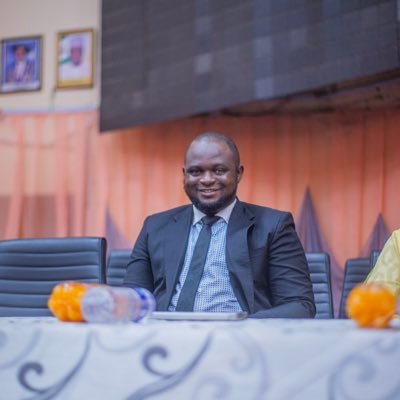


President Bola Ahmed Tinubu, GCFR, has appointed Major General Adeyinka A. Famadewa (Rtd) as Special Adviser to the President on Homeland Security. His mandate will include supporting efforts to strengthen internal security coordination, enhance intelligence-driven operations, and deepen inter-agency collaboration in addressing existing and emerging security threats across Nigeria. Major General Fadewa (Rtd) is a highly decorated retired General with over three decades of distinguished military and intelligence service spanning national security strategy, intelligence fusion, counter-terrorism operations, and international security diplomacy.

Lagos is positioning itself as West Africa’s digital hub, with more than 20 operational data facilities and a market valued at $374m this year, drawing global firms including Google.


FG is literally building the so called "OB3" that takes gas from the SE and ship it to SW. Ogun state is working to set up an NLNG plant with the mind to now take this gas liquefy it and ship it abroad. Look at all the possibility that is on an plater to Ogun State. The state literally want to take your gas from the SE, process it and sell abroad. If Ogun was a typical SE state, you would have seen all sort of analysis and mostly coming from Igbo people as to why it is not possible. But look at what Ogun wants to do with the gas been shipped off your backyard. If you people like. Follow "Nigerian National Cake" dey do logic. The Igbo people joining to beat down Mr Alex Otti, it is not as if the Port will be built using their fathers money, so I am really surprised why they have strong opinion about the project.


Where Justice Mark Chidiebere Crossed the Line By Zagazola Makama The recent arrest and handover of Justice Mark Chidiebere, popularly known as Justice Crack, to the Department of Security Services has sparked predictable debates about free speech, accountability, and the limits of online activism. But beneath the noise lies a more serious issue one that goes beyond blogging and into the sensitive terrain of national security. From available details, the turning point was not mere criticism of the military. Democracies tolerate, and even benefit from, scrutiny of their institutions. The red line appears to have been crossed when private conversations between the blogger and serving soldiers suggested alignment around “change of government.” In any country, that phrase, especially when involving active-duty personnel is not taken lightly. No professional military, whether in Nigeria or elsewhere, would ignore such signals once credible evidence emerges. The Nigerian Army’s response, therefore, should be viewed through that lens. This is an institution that has, in recent months, remained alert to internal and external threats, including failed attempts by rogue elements to destabilise the system. When a civilian is perceived rightly or wrongly to be encouraging disaffection or coercing soldiers within the ranks, it triggers an entirely different category of concern. At that point, it is no longer about opinion, it becomes a question of discipline, cohesion, and national stability. This is where many content creators must draw a hard lesson. The digital space is not a vacuum. Conversations especially with uniformed personnel carry consequences. Amplifying unverified allegations, engaging soldiers in sensitive political discussions, or projecting narratives that could be interpreted as incitement can quickly move from advocacy into dangerous territory. The line is not always visible, but it is very real. There is also the broader issue of responsibility. Too often, fragments of internal grievances are pushed into the public domain without context or verification, feeding a cycle where the military is portrayed only through its shortcomings. While criticism is legitimate, a pattern of reckless amplification erodes public confidence and, more importantly, can embolden hostile actors who thrive on internal discord. If indeed the conversations attributed to Justice Mark Chidiebere reflect attempts to influence serving soldiers toward political ends, then the response by authorities was not just expected; it was inevitable. What we must all know is that freedom of expression does not extend to actions that could undermine the stability of the state. In an era where a single message can travel faster than any bullet, knowing where the line is and choosing not to cross it has never been more important.



From Sambisa to Zamfara, the Niger Delta creeks to the volatile South-East, Nigeria’s military has delivered real, hard-fought gains against diverse threats. However, weak governance continues to erode these gains. The state cannot hold ground; it never governed properly. The result is a cycle where progress is made, then steadily undone. humanglemedia.com/inside-the-nig…