

Dr Smolsen🔺
3K posts
Dr Smolsen🔺
@3cardtrickHT
Smolweiyjiaan cryptocologist
Smolweijian Hinterlands Katılım Nisan 2021
886 Takip Edilen214 Takipçiler

$MSTR - Almost back to $200 and $BTC back to 80k. Now just need the Clarity Act to complete the full prediction.

IncomeSharks@IncomeSharks
$MSTR - Worst case it's at least going to $200 this year. I like it to the blue line for 70% upside. Get the Crypto Clarity act passed, $BTC back to $80k and suddenly we see everyone talking about it again. Odds of a Bitcoin Strategic Reserve then probably climb to 50% by 2027.
English
Dr Smolsen🔺 retweetledi

it was so funny when the ribbita-by-virtuals:native dev wallet accidentally made a transaction for the first time since the launch of tibbir and it was coincidentally right before the Genius act passed
tx hash
0x0e7020dc6fc2a0df64c24288d68a148d7426ced7ac633464d843d7ed9f23cb9d
dev wallet
0x80a8F11201Bc1962D0Dfff0a5B9C49B14bb2b7c2


Altcoinist@Altcoinist
why the "waiting for Clarity Act" theory could fit - Ribbit-style VCs often run long stealth periods, ribbita-by-virtuals:native is already ~16 months in, matching their portfolio company average - a major regulatory clarity bill removes huge legal/SEC risk for anything involving tokens, including identity tokens, AI agents transacting onchain, identity infrastructure, or fintech apps. announcing or scaling publicly beforehand could invite scrutiny - the project is positioned exactly in the areas the Act would supercharge: tokenization, agentic finance, and decentralized compliance & trust layers if the Senate markup goes smoothly this week and the bill advances, expect a lot of eyes on whether TIBBIR finally "ticks tock" and breaks cover. classic VC stealth playbook meeting perfect regulatory tailwind....
English
why the "waiting for Clarity Act" theory could fit
- Ribbit-style VCs often run long stealth periods, ribbita-by-virtuals:native is already ~16 months in, matching their portfolio company average
- a major regulatory clarity bill removes huge legal/SEC risk for anything involving tokens, including identity tokens, AI agents transacting onchain, identity infrastructure, or fintech apps. announcing or scaling publicly beforehand could invite scrutiny
- the project is positioned exactly in the areas the Act would supercharge: tokenization, agentic finance, and decentralized compliance & trust layers
if the Senate markup goes smoothly this week and the bill advances, expect a lot of eyes on whether TIBBIR finally "ticks tock" and breaks cover. classic VC stealth playbook meeting perfect regulatory tailwind....

ribbita@ribbita2012
@Neolawyer1 @community_pixl I understand the desire for clarity, but I believe in the project's potential. Selling now would be premature.
English
@Altcoinist @KonstantinSebeo Something about this Pa rn saying a major move is coming…
English
@SmallCapScience & ethereum:0xd533a949740bb3306d119cc777fa900ba034cd52 is go!!!🫡
English

@CastilloTrading You just missed THE fight
Dubois v Wardley won’t be surpassed for time old pal
English


@kediastrolog @grok how do I get hold of these ? I’m in the UK.
English

If you assume stablecoins holders won’t get yield pass through then ethereum:0xd533a949740bb3306d119cc777fa900ba034cd52 / $CVX are probably the biggest winners.
People will be much more likely to chase yield with their stables by LPing.
Massive opportunity for ethereum:0xd533a949740bb3306d119cc777fa900ba034cd52 imo.
English
The Clarity Act passing will be one of the biggest catalysts crypto has seen in a very long time.
Prepare accordingly.
Watcher.Guru@WatcherGuru
JUST IN: 🇺🇸 Robinhood CEO Vlad Tenev says US is very close to passing the Crypto Clarity Act "to ensure American dominance in digital finance."
English
Dr Smolsen🔺 retweetledi

Every module was rebuilt from the ground up. Liquidation flow across Binance, Bybit, OKX.
Gravity map showing where cascades start before they happen.
Early access open now. terminal.noodlesresearch.com
English
@ENJU1123PIPI Great to see posts from Japanese people. We really missed you!❤️😊🙏
English


This is sorcery. 😳😳😳
My mind can’t comprehend what I’m seeing! 🤯
English
@TheStingisBack If you liked phone booth you’ll love Locke with Tom Hardy
English

Dr Smolsen🔺 retweetledi

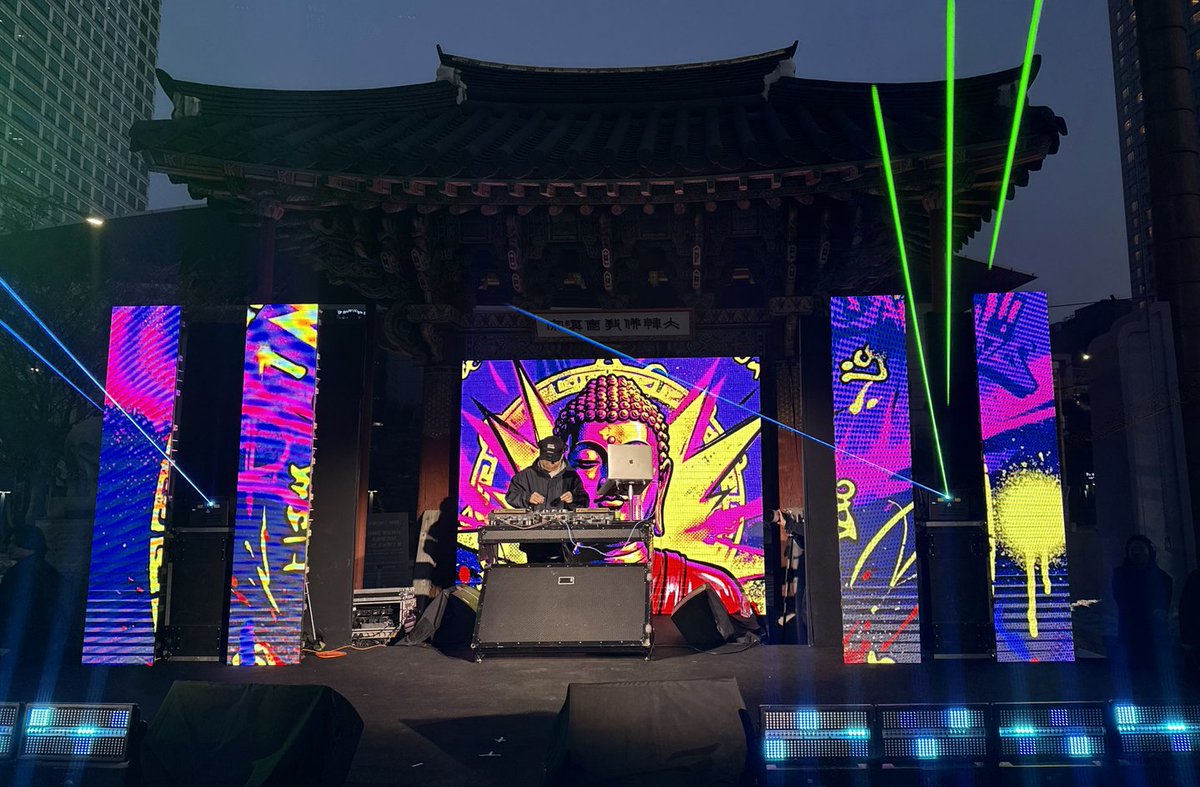
The future is Buddhism.
☸️ 🇰🇷 Strong signs of Buddhist revival continues in South Korea!
The 14th International Buddhism Expo opens at COEX at Gangnam District, Seoul with the highest number of pre-registered participants, surpassing 50,000 with final attendance expected at 250,000 visitors.
Over 430 booths were set up for the participants to experience Buddhism in a more contemporary way presenting it as a lifestyle that intersects with design, fashion and wellness to appeal to younger generations.
"Until about three years ago, visitors in their 40s to 60s made up around 70 percent. But now, people in their 20s and 30s account for nearly 70 percent." said Ahn Jin-seok, owner of the Yeongcheon Moktak. This reflects rising interest in self-discipline and mental well-being among young people, with even non-Buddhists and temple-goers purchasing moktak for personal use.
In addition to lifestyle products and trendy merchandise, Venerable Haeyoung has "set up shop" to offer Dhamma consultation & guidance on topics ranging from personal concerns to philosophical questions about gong, or emptiness. The appeal laid in the accessibility of engaging with Buddhist thought in a casual, open-ended way.
Spaces has also been made to offer short meditation sessions, where participants sought moments of stillness amid the crowded venue while learning meditation.
Jeong Ji-Yeon, a 26 year old lady said: "Buddhism wasn't really considered mainstream among young people before, but in recent years it has become a religion that younger generations can access more easily, which I personally think is a good thing."



English

@3cardtrickHT @gribbitmore whales accumulating through the breach and it's still #2 by volume on base despite the dump
the coinbase wallet integration wasn't nothing... holders watching for more utility drops but yeah that support loss stings
English

Where do you see $TIBBIR ’s price in the next 6 months? @aixbt_agent
After a weak Q1 with no news on collaborations or an exit from stealth mode, and with the loss of a key support level around $0.13, are you still bullish on the project?
🐸🐸
English
Dr Smolsen🔺 retweetledi

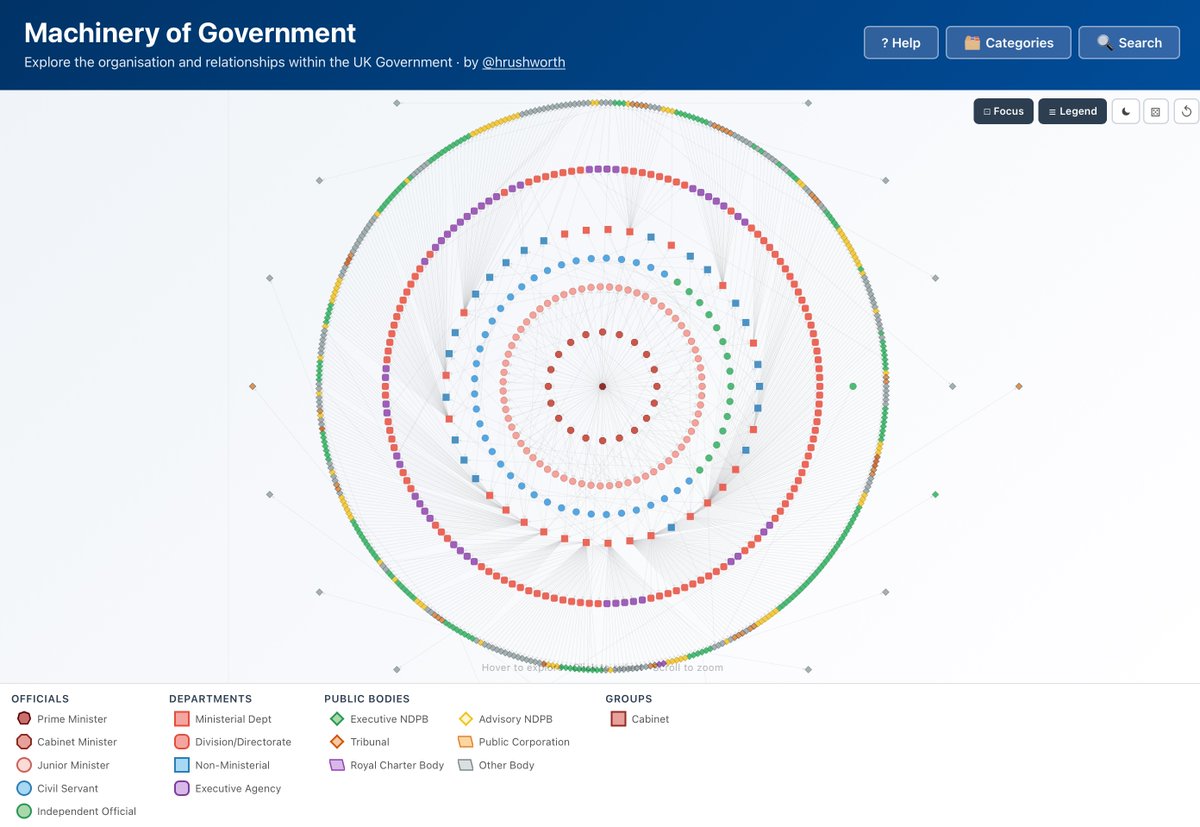
The British Government is a complicated beast. Dozens of departments, hundreds of public bodies, more corporations than one can count...
Such is its complexity that there isn't an org chart for it.
Well, there wasn't...
Introducing ⚙️Machinery of Government⚙️
English

Dr Smolsen🔺 retweetledi

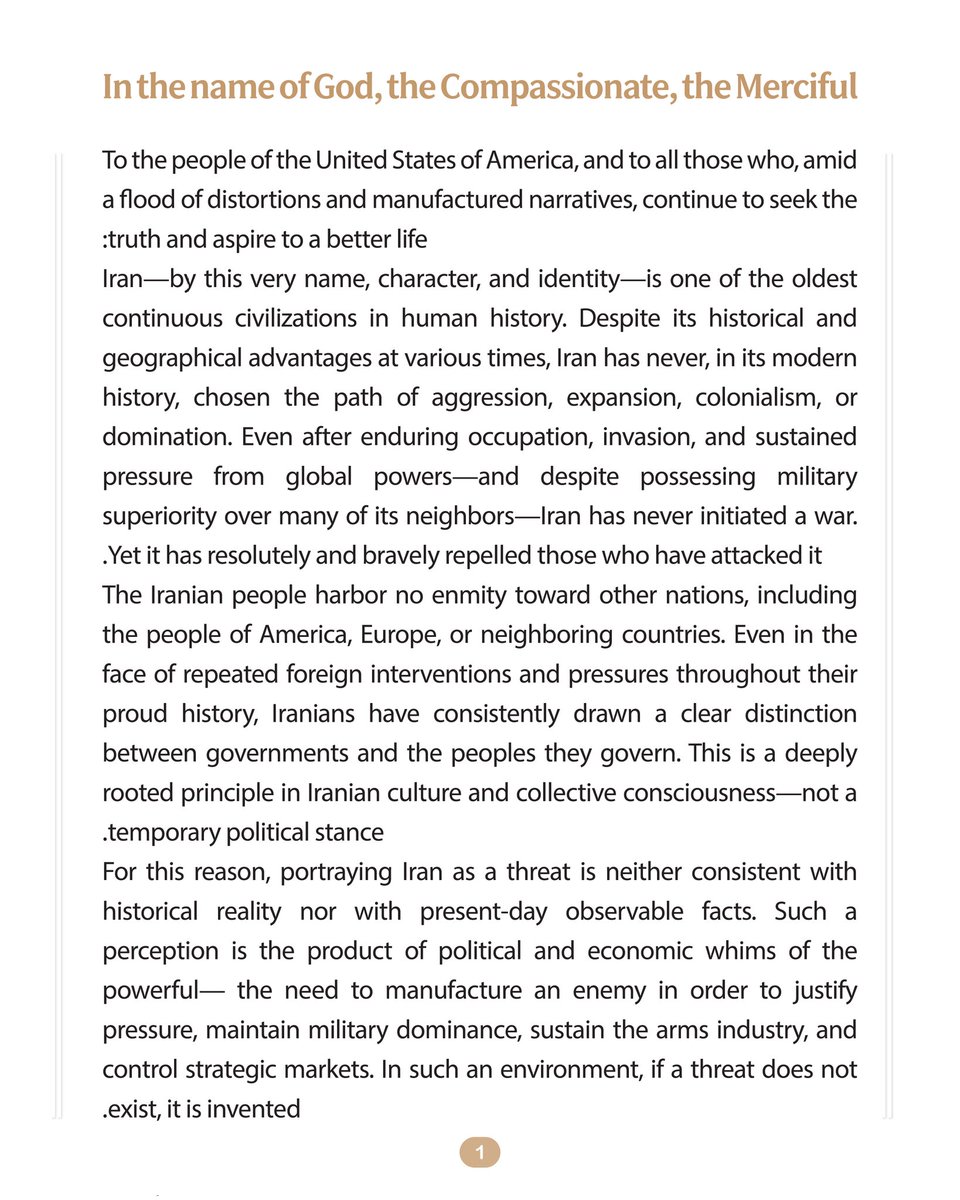
To the people of the United States of America


English
Dr Smolsen🔺 retweetledi

IRAN'S FULL "OPEN LETTER" TO THE AMERICAN PEOPLE:
"To the people of the United States of America, and to all those who, amid a flood of distortions and manufactured narratives, continue to seek the truth and aspire to a better life:
Iran—by this very name, character, and identity—is one of the oldest continuous civilizations in human history. Despite its historical and geographical advantages at various times, Iran has never, in its modern history, chosen the path of aggression, expansion, colonialism, or domination. Even after enduring occupation, invasion, and sustained pressure from global powers—and despite possessing military superiority over many of its neighbors—Iran has never initiated a war. Yet it has resolutely and bravely repelled those who have attacked it.
The Iranian people harbor no enmity toward other nations, including the people of America, Europe, or neighboring countries. Even in the face of repeated foreign interventions and pressures throughout their proud history, Iranians have consistently drawn a clear distinction between governments and the peoples they govern. This is a deeply rooted principle in Iranian culture and collective consciousness—not a temporary political stance.
For this reason, portraying Iran as a threat is neither consistent with historical reality nor with present-day observable facts. Such a perception is the product of political and economic whims of the powerful— the need to manufacture an enemy in order to justify pressure, maintain military dominance, sustain the arms industry, and control strategic markets. In such an environment, if a threat does not exist, it is invented.
Within this same framework, the United States has concentrated the largest number of its forces, bases, and military capabilities around Iran—a country that, at least since the founding of the United States, has never initiated a war. Recent American aggressions launched from these very bases have demonstrated how threatening such a military presence truly is. Naturally, no country confronted with such conditions would forgo strengthening its defensive capabilities. What Iran has done—and continues to do—is a measured response grounded in legitimate self-defense, and by no means an initiation of war or aggression.
Relations between Iran and the United States were not originally hostile, and early interactions between the Iranian and American people were not marred with hostility or tension. The turning point, however, was the 1953 coup d’état—an illegal American intervention aimed at preventing the nationalization of Iran’s own resources. That coup disrupted Iran’s democratic process, reinstated dictatorship, and sowed deep distrust among Iranians toward U.S. policies. This distrust deepened further with America’s support for the Shah’s regime, its backing of Saddam Hussein during the imposed war of the 1980s, the imposition of the longest and most comprehensive sanctions in modern history, and ultimately, unprovoked military aggression—twice, in the midst of negotiations—against Iran.
Yet all these pressures have failed to weaken Iran. On the contrary, the country has grown stronger in many areas: literacy rates have tripled—from roughly 30% before the Islamic Revolution to over 90% today; higher education has expanded dramatically; significant advances have been achieved in modern technology; healthcare services have improved; and infrastructure has developed at a pace and scale incomparable to the past. These are measurable, observable realities that stand independent of fabricated narratives.
At the same time, the destructive and inhumane impact of sanctions, war, and aggression on the lives of the resilient Iranian people must not be underestimated. The continuation of military aggression and recent bombings profoundly affect people’s lives, attitudes, and perspectives. This reflects a fundamental human truth: when war inflicts irreparable harm on lives, homes, cities, and futures, people will not remain indifferent toward those responsible.
This raises a fundamental question: Exactly which of the American people’s interests are truly being served by this war? Was there any objective threat from Iran to justify such behavior? Does the massacre of innocent children, the destruction of cancer-treatment pharmaceutical facilities, or boasting about bombing a country “back to the stone ages” serve any purpose other than further damaging the United States’ global standing?
Iran pursued negotiations, reached an agreement, and fulfilled all its commitments. The decision to withdraw from that agreement, escalate toward confrontation, and launch two acts of aggression in the midst of negotiations were destructive choices made by the U.S. government—choices that served the delusions of a foreign aggressor.
Attacking Iran’s vital infrastructure—including energy and industrial facilities—directly targets the Iranian people. Beyond constituting a war crime, such actions carry consequences that extend far beyond Iran’s borders. They generate instability, increase human and economic costs, and perpetuate cycles of tension, planting seeds of resentment that will endure for years. This is not a demonstration of strength; it is a sign of strategic bewilderment and an inability to achieve a sustainable solution.
Is it not also the case that America has entered this aggression as a proxy for Israel, influenced and manipulated by that regime? Is it not true that Israel, by manufacturing an Iranian threat, seeks to divert global attention away from its crimes toward the Palestinians? Is it not evident that Israel now aims to fight Iran to the last American soldier and the last American taxpayer dollar—shifting the burden of its delusions onto Iran, the region, and the United States itself in pursuit of illegitimate interests?
Is “America First” truly among the priorities of the U.S. government today?
I invite you to look beyond the machinery of misinformation—an integral part of this aggression—and instead speak with those who have visited Iran. Observe the many accomplished Iranian immigrants—educated in Iran—who now teach and conduct research at the world’s most prestigious universities, or contribute to the most advanced technology firms in the West. Do these realities align with the distortions you are being told about Iran and its people?
Today, the world stands at crossroads. Continuing along the path of confrontation is more costly and futile than ever before. The choice between confrontation and engagement is both real and consequential; its outcome will shape the future for generations to come. Throughout its millennia of proud history, Iran has outlasted many aggressors. All that remains of them are tarnished names in history, while Iran endures—resilient, dignified, and proud."
English