M.R. retweetledi
M.R.
1.7K posts


@claretcrumpet Reform are basically right wing Tories so I'd say the conservatives would
English
M.R. retweetledi

In local elections the voting system means councils often don’t reflect the way people actually vote. Right now millions of local votes don’t help shape the final result. You deserve a voting system where all of your neighbours help shape what happens next action.electoral-reform.org.uk/page/2401/peti…
Walton-le-Dale, England 🇬🇧 English
M.R. retweetledi
M.R. retweetledi

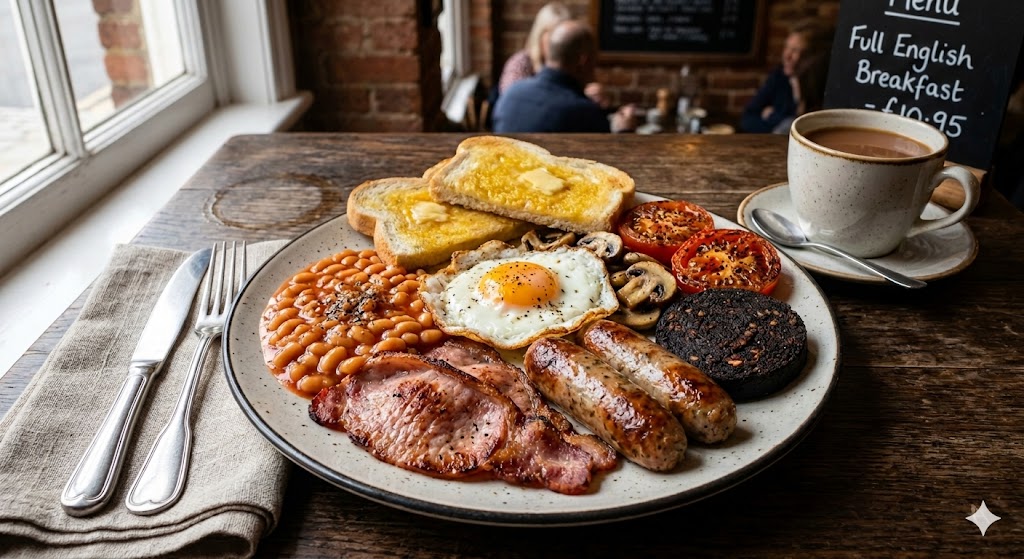
The fry-up has been quietly demoted, over the last forty years, from a daily British breakfast to a Saturday indulgence. A hangover meal. A guilty pleasure. The kind of thing you order in a Wetherspoons at half past eleven on a Sunday with a slightly apologetic look at the waitress, on the understanding that you will be having a salad for dinner to make up for it.
Your nutrition app flags it. Your doctor sighs at it. The newspaper runs an article every six months explaining that it will kill you.
This is one of the great practical jokes of modern British life.
The traditional Full English is one of the most nutritionally complete breakfasts a human being can sit down to.
Two eggs from a hen that scratched about in a back garden, eating grubs and kitchen scraps. Complete protein, choline, B12, vitamin D, the whole fat-soluble suite delivered in a yolk the colour of a marigold.
Two rashers of dry-cured back bacon from a Wiltshire pig. Stable saturated fat, B vitamins, selenium.
A pork sausage made that morning with three ingredients by the village butcher. A grilled tomato. Mushrooms cooked in the bacon fat. Black pudding for the iron. A slice of fried bread. A pot of tea strong enough to stand a teaspoon in.
This breakfast fuelled the men who dug the coal, laid the railways, fished the North Sea, and walked twelve miles a day delivering the post. Their cardiovascular disease rate was a fraction of ours. Their diabetes rate was a rounding error. Their obesity rate was zero.
Then sometime around 1985 we were told this breakfast was killing us. We were instructed, by people in offices, to switch to a bowl of corn flakes with skimmed milk. To a yoghurt with fourteen ingredients. To an oat milk latte. To a green smoothie containing more sugar than a can of Coke.
The cardiovascular disease rates climbed.
The diabetes rates climbed.
The obesity rates climbed.
The breakfast did not change. The advice did. The advice was wrong.
A plate of eggs, bacon, sausage, and black pudding will outperform any breakfast designed by a wellness brand in a Shoreditch office. It costs less. It contains no seed oil. It has been keeping the British upright since the Iron Age.
Your grandfather did not feel guilty about his breakfast. He had bigger things to worry about.
So do you.
Eat it on a Tuesday. Without apologising.

English

@PhilBirdBFC First thing I thought when I watched it as well. The levels of consistency in refereeing is a joke.
English

“No conclusive evidence” when Ashley Barnes scored against Brentford but that was ruled out!
Mirror Football@MirrorFootball
VAR checked Benjamin Sesko's goal in Man Utd vs Liverpool for a potential handball 📺 The goal was eventually allowed to stand as there was "no conclusive evidence" that the Man Utd striker had handled the ball 💬⬇️ mirror.co.uk/sport/football…
English

@Curtis16Jack @BFCspares No problem. PM me your email address
Thornton-in-Craven, England 🇬🇧 English
M.R. retweetledi

The British Vitamin D problem is not new.
Britain sits between 50 and 58 degrees north. London is on the same latitude as Calgary. Edinburgh is level with Moscow. From October to March, the sun does not rise high enough above the horizon for the UVB wavelength your skin needs to actually reach the ground. You can stand naked in February noon sunlight on the south coast and produce essentially zero vitamin D.
This is six months of the year, every year, for the entire history of human habitation on these islands.
The British have known this, in their bones, for ten thousand years.
Look at what was eaten in winter, before anyone had ever heard the term cholecalciferol:
Oily fish. Herring, mackerel, sprats, kippers. Three or four times a week from October to March. A single kipper carries roughly 250 IU of D3.
Cod liver oil. Spooned into every British child between 1850 and 1980, a teaspoon at a time. Distributed free by the Ministry of Food in the war on the explicit understanding that British children needed it through the dark months. Rickets fell by 90 per cent between 1940 and 1960. Cod liver oil was the reason.
Liver. Eaten weekly in working households until 1985.
Egg yolks from hens that had been outside in the summer.
Grass-fed butter, made from cream from cows on summer pasture, the fat-soluble vitamins banked into the cream and eaten through the winter.
The British solution to the British problem, evolved over centuries by people who could not articulate the biochemistry but knew, with absolute certainty, what kept the children growing through the dark months.
Then between 1955 and 2010, the British removed almost all of them.
Cod liver oil reduced to a niche supplement. Liver dropped from weekly to never. Oily fish consumption halved. Eggs rationed by the Department of Health on cholesterol grounds since retracted. Butter replaced with margarine carrying no fat-soluble vitamins at all.
Result, by 2020: roughly half of all British adults are vitamin D deficient by the end of winter. A third of children. Rickets has reappeared in British paediatric wards. The NHS now recommends every adult take a supplement from October to March.
This is the NHS recommending in 2026 what the British diet was doing automatically in 1926.
The geography has not changed. The latitude is the same. The sun is still inadequate from October.
The food used to handle it.
The kippers are still being smoked at Craster. The cod liver oil is on the chemist's shelf. The liver is at the butcher. The butter is in the dairy aisle, behind the spreads.
The sun was always seasonal.
The food was the backup.
The backup got thrown out.
Get it back.

English

@ParkersCardigan There's a core of a squad capable of becoming established in the Prem here now, keeping them together in the Championship is the problem.
English

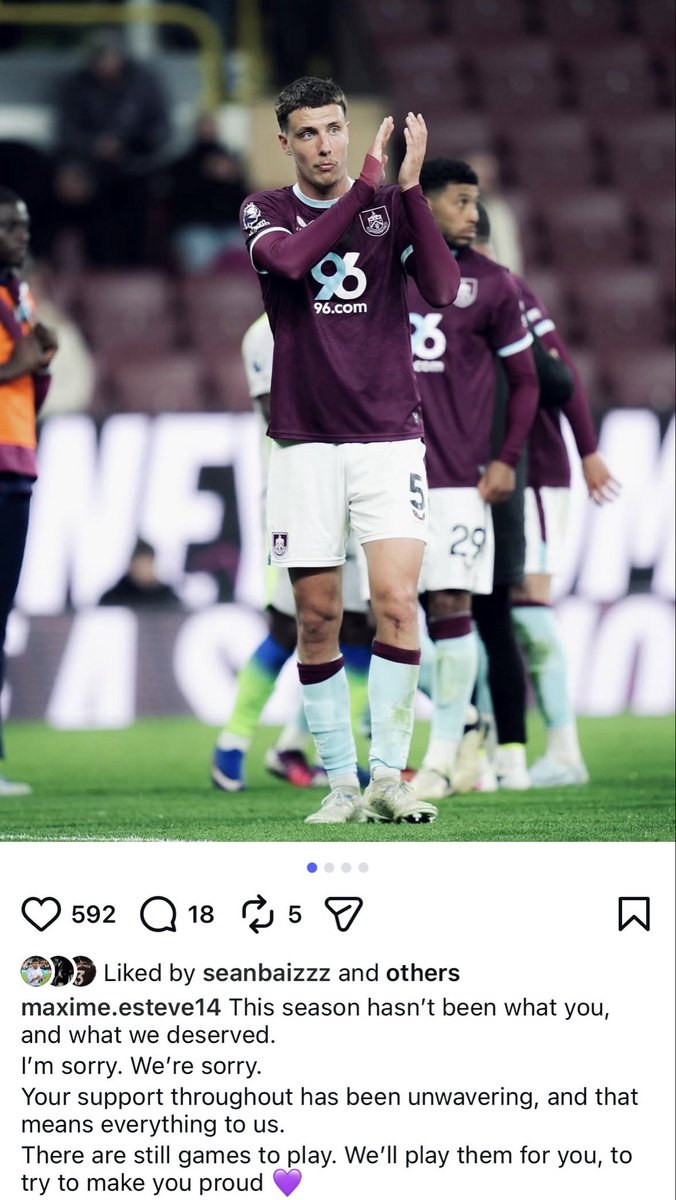
At some point we have to stop this player merry go round and build a team around a core group that we think will come good & keep us in the Premier League
I’d move heaven & earth to make Steve one of those players
Just such a great guy
Pay him what he wants
#twitterclarets

English

@rushy_sport Real character throughout that team. Heaton, Mee, Bardsley, Tarkowski, Westwood, Barnes etc. We did appreciate it at the time but even more so now looking back
English

We used to destroy big 6 clubs and be the cause of a 6 year domino effect to relegate one to the Championship btw #twitterclarets
⚪️@owenthfc__
The real beginning of the end for me. All went downhill after that Burnley loss. The UCL run & the opening of the new stadium papered over the cracks of our terrible league form. Truth is we've never recovered since.
English

@Natalie_Bromley Just received my season ticket confirmation. My teenage daughter was charged full adult price last season. Refused a refund and told the difference would be knocked off this seasons ticket. She's being charged full adult price again! Club's going downhill.
English

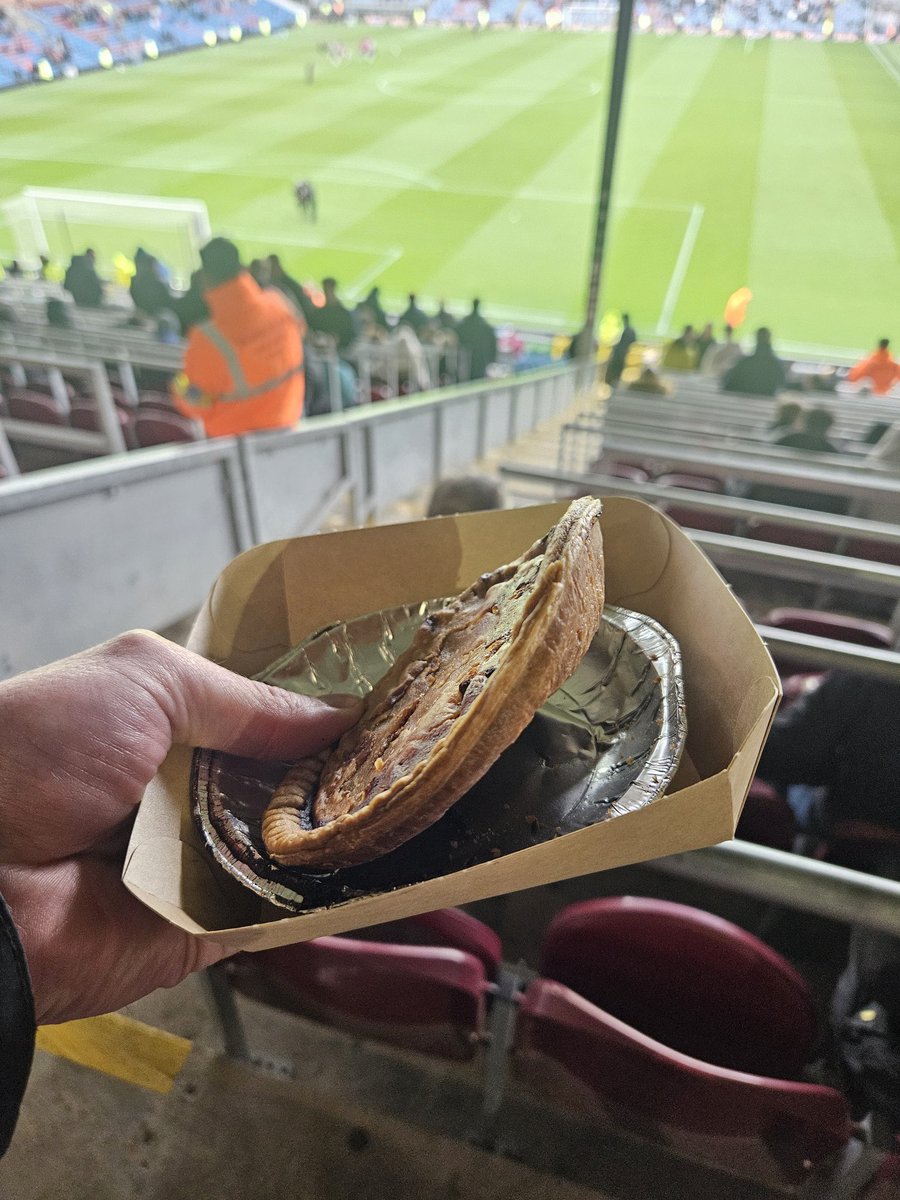
@Natalie_Bromley Can I add this to your list, served up at today's game.

Walton-le-Dale, England 🇬🇧 English

Just going to add this to the long list of sloppy mistakes that we are seeing from the club: the programme, the website and now the fixture list.
We’ve got zero pride in anything we produce anymore. And noone is accountable.
#twitterclarets

English

@henrywinter VAR is a failed experiment. Time for the Premier League to accept the findings, cancel it and move on. UTC
English

Premier League fans deliver damning verdict on VAR. 75% of 7,946 fans polled by the Football Supporters’ Association “didn’t support the use of VAR”. Too long, too forensic, too much of a joy killer, fans say. Findings shared with Premier League and PGMO.
92% of fans surveyed “agreed” that “VAR has removed the spontaneous joy of goal celebrations” (82% of them “strongly agreed”).
85% of match-going fans “strongly disagreed” with the notion that “VAR makes watching football more enjoyable”. And 83% of those watching on TV.
85% of match-going fans “strongly disagreed” that “VAR decisions are generally resolved in a reasonable amount of time”. Echoed by 83% of those watching on TV.
Only 18% agreed that “VAR has improved the overall accuracy of refereeing decisions”.
72% are “concerned about the expansion of VAR beyond its current remit”.
79% “strongly disagreed” with the suggestion “that the match-going experience is better with VAR”.
67% “strongly agreed” that they preferred “watching games that are played without VAR to games with VAR”.
84% “strongly support” goal-line technology.
34% “strongly opposed” to the idea of a challenge system (two per game per team).
“These findings back up the FSA's previous survey in 2021, where fans expressed misgivings about the introduction of VAR,” says Thomas Concannon, @WeAreTheFSAPremier League network manager.
“The vast majority are reporting the same concerns five years on - the loss of spontaneity when celebrating goals, and an overall worsening of the match-going experience. We have shared the survey results with the Premier League and PGMO, and look forward to discussing its findings with them.” Fans surveyed of all PL clubs and all ages (Under-18 to 65+).
English
M.R. retweetledi
M.R. retweetledi
M.R. retweetledi

🏴🇬🇧 The last time a foreign army invaded Britain, a Welsh cobbler sent them home.
With a pitchfork. 🍴
Her name was Jemima Nicholas.
Born in Mathry, Pembrokeshire. 1755. A cobbler. Not a soldier. Not a general.
On the 22nd of February 1797, four French warships anchored off the Welsh coast. 🚢 1,400 soldiers came ashore at Carreg Wastad Point. Many of them were convicts and deserters. Their plan was to march on Bristol, start a revolution and inspire the British poor to rise up.
It did not go to plan.
A ship had recently wrecked nearby. Its cargo was Portuguese wine. 🍷 The French found it. Within hours, the invasion force was drunk.
Jemima heard what was happening.
She reached for her pitchfork. And walked out to meet them. 🏴
She found twelve French soldiers. They were drunk. She rounded them up, marched them to the church, and locked the door.
She wasn't the only one.
Hundreds of Welsh women came out of their homes in their traditional red shawls and tall black hats. 🟥 From a distance, after a glass or two of Portuguese wine, they looked exactly like British Redcoats.
On the 24th of February, two days after they landed, 1,400 French soldiers surrendered. ⚖️
Unconditionally.
The surrender was signed in a pub.
It was the last time a foreign army set foot on British soil. 🇬🇧
Jemima Nicholas was awarded a pension of £50 a year for the rest of her life. She died in 1832. Her gravestone reads:
"The Welsh heroine who boldly marched to meet the French invaders who landed on our shores."
Did they teach you her name? 🏴
Jemima Nicholas was almost forgotten forever.
So were thousands of others.
Every time you support this channel,
more of them survive.
Be Part Of Us.
Be Proud Of Us. 🇬🇧
proudofus.co.uk
English
M.R. retweetledi
M.R. retweetledi

Every pane of glass around you. 🪟
Every window. Every phone screen. Every car windscreen. Every skyscraper.🇬🇧
All made the same way. All using the same process.
Invented in a kitchen sink in Lancashire.
His name was Sir Alastair Pilkington. He wasn't even related to the glass company. He just happened to share the name and married into the family.
In 1952 he was doing the washing up at home. He watched the grease float on the water. Perfectly flat. Undisturbed.
And thought: what if molten glass could do that?
Before this moment, flat glass had been made the same way for three hundred years. 😰
You melted sand. You poured it into sheets. Then you ground it. And polished it. By hand. For hours.
A third of every sheet was wasted in the process. The work was brutal. The results were inconsistent.
Nobody questioned it. That was just how glass was made.
Pilkington went to his bosses at Pilkington Brothers in St Helens with his idea. They backed him.
It took seven years. It cost £7 million. An enormous sum in the 1950s. There were years where nothing worked. The company nearly went bankrupt.
His idea: pour molten glass at 1,100°C onto a bath of molten tin. Glass is less dense than tin. It floats. It spreads. Both surfaces fire-polished perfectly flat by the heat. No grinding. No polishing. No waste. 🔥
In January 1959, it worked.
The float glass process was licensed to manufacturers across the world. Over 40 companies. Over 30 countries.
Today it accounts for over 90% of all flat glass production on Earth.
Every window you have ever looked through in your entire life was almost certainly made using this single British process.
Sir Alastair Pilkington was knighted in 1970. Elected Fellow of the Royal Society in 1969. Made a life peer in 1995. Baron Pilkington of St Helens.
He died the same year. Before he could take his seat in the House of Lords.
A British man with an idea who changed every building on Earth. 🇬🇧
Be part of us - proudofus.co.uk
Be proud of us. 🙏🇬🇧
English