

Bill Adams - Combat News - CCO
2.6K posts
Bill Adams - Combat News - CCO
@5Gables
Retired Marine & Veterans Advocate - https://t.co/SNsnY1WzrY - #VeteranPolicyPutInPerspective - Veterans Open Forum - WEDNESDAY 19:00 EST - #PolicyNOTPolitics
Fairport, NY Katılım Ocak 2011
1.6K Takip Edilen1.9K Takipçiler


When transitioning from the Department of Defense (DoD) to the Department of Veterans Affairs (VA), spouses are eligible for several programs and resources designed to ease the shift into civilian life.
Transition Assistance Program (TAP)
The Transition Assistance Program (TAP) is the primary resource for both service members and their families.
VA Benefits and Services Course: This one-day course is open to spouses and covers disability compensation, education, and healthcare benefits. It is available in person or online via TAPevents.mil.
Transition Employment Assistance for Military Spouses (TEAMS): A series of Department of Labor workshops specifically for spouses and caregivers, focusing on job searches, resume building, and interview skills.
Additional Tracks: Spouses can participate in vocational, education, or entrepreneurship tracks to plan their own post-military careers.
Career and Employment Support
MySTeP (Military Spouse Transition Program): Provides videos and tools to help spouses navigate financial planning, relocation, and career goals at every stage of the transition.
Veteran and Spouse Transitional Assistance Grant Program: A newer initiative that provides grants to organizations offering job recruitment, interview training, and resume assistance specifically for veterans and their spouses.
VA Job Transferability: For spouses already employed by the VA, the department facilitates transfers between its 1,300+ facilities during a permanent change of station (PCS) or transition.
Health and Benefits
Healthcare Transitions: Spouses typically transition from TRICARE to other options. While most veterans use VA healthcare, spouses may qualify for CHAMPVA if the veteran is rated 100% permanently and totally disabled.
GI Bill Transfer: If the service member transferred Post-9/11 GI Bill benefits while on active duty, spouses can continue to use these for education after separation.
Disability Compensation: When a veteran applies for disability, they can add their spouse as a dependent if their combined rating is at least 30%, which increases the monthly payment amount.
Personalized Consultation
Military OneSource: Offers "Transitioning Veterans" specialty consultations that include spouses. These sessions help families navigate benefits and create a personalized action plan.
USO Transition Program: Provides a dedicated Transition Specialist to help spouses with personalized employment and financial wellness plans.
English
The Department of Veterans Affairs (VA) has confirmed the nine additional medical centers that will transition to the Federal Electronic Health Record (EHR) system in 2026.
These facilities along with four previously announced Michigan sites bring the total number of scheduled deployments for 2026 to 13.
Standardization: To prevent previous rollout issues, the VA has standardized over 1,000 workflows into a national baseline to improve patient safety and staff efficiency.
English
Veterans Open Forum is an Open Group Held By Vets For Vets and Special Guests. We are Not Aligned with Any Political Party, Our Focus is Only Veteran Issues and Who Addresses Our Veteran Needs Best. We Provide a Safe Space for Veterans to Voice their Opinion About the Issues that Affect Them Most.
English
*** VETERANS OPEN FORUM *** JOIN US TONIGHT 19:00 EST ***
Sarge-Combat News-@sgtmitchell88
💯 In a world of corporate spin and political agendas, our strength lies in our ability to provide peer-to-peer support, share vital information, and look out for one another just as we did downrange. 🇺🇸 By showing up, you aren't just joining a conversation..you are helping to rebuild that essential sense of platoon and ensuring that no veteran is overlooked. Let’s gather at 1900 EST to empower each other, trade the resources we deserve, shoot the bull and joke with fellow veterans...all while reminding the world that when vets unite, we drive the change we need. Stay ready, and I’ll see you there! x.com/i/spaces/1dGYl…
English
*** VETERANS OPEN FORUM *** JOIN US TONIGHT 19:00 EST ***
Sarge-Combat News-@sgtmitchell88
💯 In a world of corporate spin and political agendas, our strength lies in our ability to provide peer-to-peer support, share vital information, and look out for one another just as we did downrange. 🇺🇸 By showing up, you aren't just joining a conversation..you are helping to rebuild that essential sense of platoon and ensuring that no veteran is overlooked. Let’s gather at 1900 EST to empower each other, trade the resources we deserve, shoot the bull and joke with fellow veterans...all while reminding the world that when vets unite, we drive the change we need. Stay ready, and I’ll see you there! x.com/i/spaces/1dGYl…
English
*** VETERANS OPEN FORUM *** JOIN US TONIGHT 19:00 EST ***
Sarge-Combat News-@sgtmitchell88
💯 In a world of corporate spin and political agendas, our strength lies in our ability to provide peer-to-peer support, share vital information, and look out for one another just as we did downrange. 🇺🇸 By showing up, you aren't just joining a conversation..you are helping to rebuild that essential sense of platoon and ensuring that no veteran is overlooked. Let’s gather at 1900 EST to empower each other, trade the resources we deserve, shoot the bull and joke with fellow veterans...all while reminding the world that when vets unite, we drive the change we need. Stay ready, and I’ll see you there! x.com/i/spaces/1dGYl…
English
*** VETERANS OPEN FORUM *** JOIN US TONIGHT 19:00 EST ***
Sarge-Combat News-@sgtmitchell88
💯 In a world of corporate spin and political agendas, our strength lies in our ability to provide peer-to-peer support, share vital information, and look out for one another just as we did downrange. 🇺🇸 By showing up, you aren't just joining a conversation..you are helping to rebuild that essential sense of platoon and ensuring that no veteran is overlooked. Let’s gather at 1900 EST to empower each other, trade the resources we deserve, shoot the bull and joke with fellow veterans...all while reminding the world that when vets unite, we drive the change we need. Stay ready, and I’ll see you there! x.com/i/spaces/1dGYl…
English
*** VETERANS OPEN FORUM *** JOIN US TONIGHT 19:00 EST *** SEMPER FI! ***
Sarge-Combat News-@sgtmitchell88
💯 In a world of corporate spin and political agendas, our strength lies in our ability to provide peer-to-peer support, share vital information, and look out for one another just as we did downrange. 🇺🇸 By showing up, you aren't just joining a conversation..you are helping to rebuild that essential sense of platoon and ensuring that no veteran is overlooked. Let’s gather at 1900 EST to empower each other, trade the resources we deserve, shoot the bull and joke with fellow veterans...all while reminding the world that when vets unite, we drive the change we need. Stay ready, and I’ll see you there! x.com/i/spaces/1dGYl…
English
*** VETERANS OPEN FORUM *** JOIN US TONIGHT 19:00 EST ***
Sarge-Combat News-@sgtmitchell88
💯 In a world of corporate spin and political agendas, our strength lies in our ability to provide peer-to-peer support, share vital information, and look out for one another just as we did downrange. 🇺🇸 By showing up, you aren't just joining a conversation..you are helping to rebuild that essential sense of platoon and ensuring that no veteran is overlooked. Let’s gather at 1900 EST to empower each other, trade the resources we deserve, shoot the bull and joke with fellow veterans...all while reminding the world that when vets unite, we drive the change we need. Stay ready, and I’ll see you there! x.com/i/spaces/1dGYl…
English
*** VETERANS OPEN FORUM *** JOIN US TONIGHT 19:00 EST ***
Sarge-Combat News-@sgtmitchell88
💯 In a world of corporate spin and political agendas, our strength lies in our ability to provide peer-to-peer support, share vital information, and look out for one another just as we did downrange. 🇺🇸 By showing up, you aren't just joining a conversation..you are helping to rebuild that essential sense of platoon and ensuring that no veteran is overlooked. Let’s gather at 1900 EST to empower each other, trade the resources we deserve, shoot the bull and joke with fellow veterans...all while reminding the world that when vets unite, we drive the change we need. Stay ready, and I’ll see you there! x.com/i/spaces/1dGYl…
English
Dear Chairman Bost, @RepBost
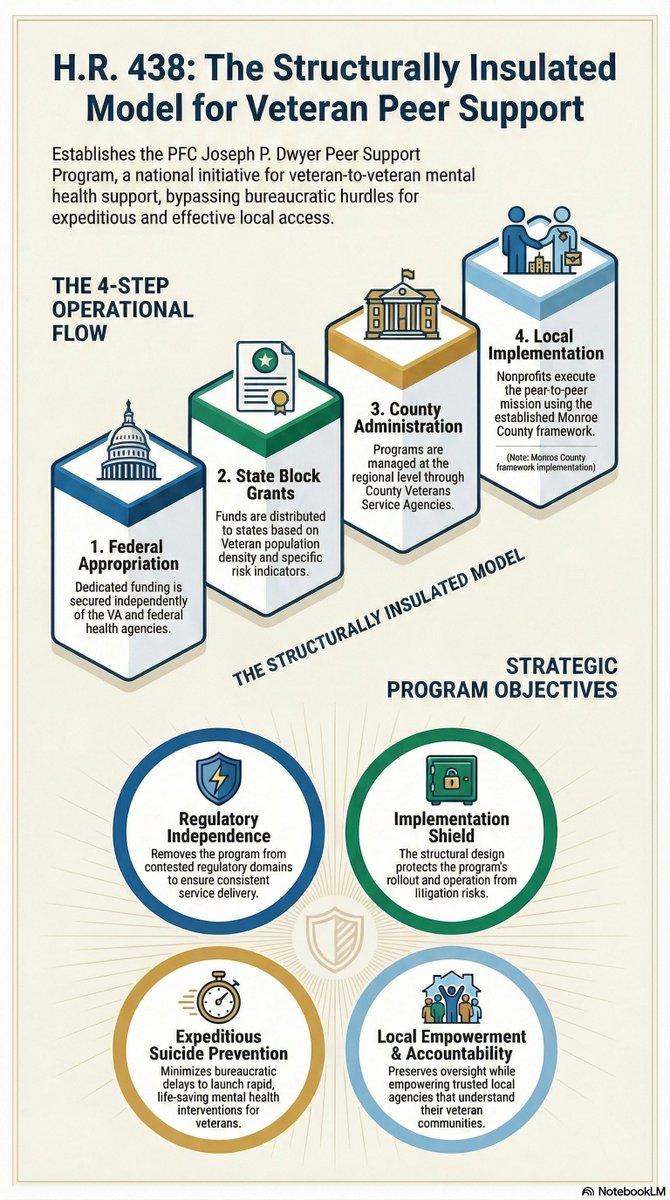
I am writing to respectfully share a concise summary of H.R. 438, the PFC Joseph P. Dwyer Peer Support Program Act and to explain why a small but important structural shift could significantly improve the bill’s chances of successful implementation and movement through the House.
Executive Summary
H.R. 438 addresses a real and urgent need: expanding Veteran peer-to-peer support for suicide prevention. The core policy intent is strong and bipartisan. However, as currently drafted, the bill places primary administrative responsibility on the VA itself - an approach that in practice, has been a consistent obstacle to execution due to staffing, data and capacity constraints.
The proposed shift does not change the intent of the bill. Instead, it reframes H.R. 438 as a zero-VA-staffing, process-focused reform by using a federally overseen third-party grant administration model, clarifying anonymized outcome reporting and reinforcing professional guardrails. These changes are designed to make the bill administratively executable, politically safe and easier for the Committee and House leadership to advance.
What H.R. 438 Currently Does
As introduced, H.R. 438 authorizes the Department of Veterans Affairs to establish and administer a grant program supporting State, local, tribal and nonprofit peer-to-peer mental health programs for Veterans. Key elements include:
- VA-administered grants to eligible organizations
- Authorization of approximately $25 million
- Prohibition on retention of personally identifying Veteran data
- Creation of advisory structures to guide program standards
The bill has been referred to the Subcommittee on Health, where it remains Pending.
Where the Structural Risk Lies
While the policy goal is widely supported, the current structure presents three quiet but significant risks that often stall otherwise bipartisan Veterans legislation:
- VA Administrative Capacity - The VA is required to stand up, staff, oversee and report on a new grant program. Historically, even modest new program responsibilities have triggered implementation delays, staffing objections or prolonged “Technical Assistance” reviews
- Ambiguity Around Data and Reporting - The current non-retention language is well-intentioned, but it leaves open questions about how outcomes are measured, inviting concerns from both privacy advocates and fiscal overseers
- Perceived Program Creep - Without explicit guardrails, some stakeholders worry peer programs could blur into clinical care, claims assistance or benefits-adjacent activity, creating hesitation among members who otherwise support the concept
Why the Proposed Shift Matters
The recommended adjustments are narrow, pragmatic and designed specifically to address these institutional concerns:
- Third-Party Grant Administration - Utilizing a federally audited fiscal intermediary (with GAO and IG oversight) removes staffing and IT burdens from the VA while maintaining congressional oversight
- Anonymized Outcome Reporting - Replacing “non-retention” ambiguity with clear, anonymized, aggregate reporting protects Veteran privacy while allowing Congress to assess effectiveness
- Clear Scope-of-Practice Guardrails - Explicit separation of peer support from clinical care, medical determinations and disability claims reduces risk and strengthens bipartisan comfort
- Conditional, Disciplined Funding - Any scalability is tied to performance and audit review, reinforcing fiscal responsibility and minimizing CBO and leadership concerns
Importantly, these changes do not expand benefits, create new entitlements or require additional VA staff. They simply create a structure that can execute within current institutional realities.
Why This Is Worth Advancing
With these refinements, H.R. 438 becomes:
- Administratively executable
- Politically low-risk
- Aligned with major VSOs
- Unlikely to generate amendments, controversy or future oversight headaches
It offers the Committee an opportunity to move a meaningful Veteran suicide-prevention measure that works within the VA’s real-world capacity rather than against it.
Thank you for your leadership on Veterans’ issues and for considering this perspective. I would welcome the opportunity to provide any additional detail or answer questions at the Committee’s convenience.
Respectfully,
@5Gables
CombatNews.org
cc: @sgtmitchell88 @blankcombatnews @HouseVetAffairs @RepLaLota @RepJoeMorelle
English
In 1969, Chicago Bears Linebacker Dick Butkus was Named the NFL Defensive Player of the Year While the Team Finishing with a 1-13 Record. Despite the Team's Poor Performance, Butkus was Recognized for his Dominant, Elite Play and Selected First Team All-Pro and to the Pro Bowl that Year.
English
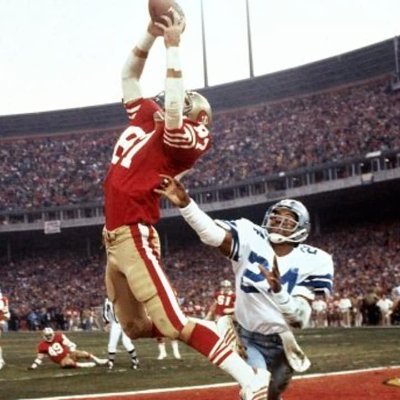
"I want to let 'em know that they've been hit...to say, 'must have been Butkus that got me.'"
English
REAL CHANGE - REAL HOPE - REAL ACTION
A Proven Track Record of Leadership and Caring - Of the People - By the People - For the People
We're In It to WIN IT! VOTE MERCEDES!
mercedes2026.com
@sgtmitchell88 @blankcombatnews @VazquezSim78447 #MVSfor137
English