@SarahHuckabee @realDonaldTrump How is this aging today old “Smokey eyes”?? I got a podium to sell ya!
English
716brewer
7.1K posts

🔥🔥🔥


President Trump’s Tariff Strategy: Economic Leverage and National Security through Supply Chain Repatriation President Donald Trump’s tariff strategy represents a bold and multifaceted approach to reshaping America’s economic and security landscape. By imposing high tariffs, particularly a 145% tariff on Chinese imports, Trump aims to reduce dependency on foreign manufacturing, bolster domestic industries, and address national security vulnerabilities exposed by global supply chain disruptions. This strategy is not merely about economic protectionism but is deeply rooted in ensuring America’s self-sufficiency and resilience in times of crisis, war, or epidemic. President Trump’s vision has the dual objectives of saving American resources from high foreign tariffs and securing critical supply chains to safeguard national interests. Economic Leverage Through Tariffs At the core of Trump’s tariff strategy is the use of economic leverage to re-balance trade relationships, particularly with China. The president has emphasized the need to counteract what he describes as an unfair trade dynamic, where China has benefited disproportionately. He stated, “They were doing $1,100,000,000,000. Think of that. $1,100,000,000,000… It was a one-sided… very one-sided.” This staggering trade imbalance, in Trump’s view, has drained American wealth and weakened its economic position. By imposing a 145% tariff, Trump seeks to make Chinese goods prohibitively expensive, effectively discouraging their importation. He explained, “It basically means China's not doing any business with us, essentially, because it's a very high number. So when you add that to the price of a product, you know, a lot of those products aren't gonna sell.” This tariff is strategically timed to exploit perceived vulnerabilities in China’s economy. Trump asserted, “Now is the time to hit the Chinese economy while it is in a weakened state,” signaling a calculated move to maximize pressure when China is already facing challenges, such as a 30% cancellation of orders from the U.S. by shipping giant Hapag Lloyd, among other many order cancellations in China from U.S. companies, leaving the finished unshipped goods stuck in the Chinese factories. These disruptions indicate a softening demand for Chinese goods and services, providing an opportune moment for Trump to push for economic decoupling. The economic rationale extends beyond punishing China to protecting American industries and consumers. By reducing reliance on Chinese imports, the tariffs aim to save America from paying high tariffs imposed by other nations when exporting goods. This protectionist stance is designed to incentivize domestic production, create jobs, and retain wealth within the U.S. economy. Trump’s vision is clear: a strong economy is the foundation for winning global competition, as he noted, “We have to win through our markets, and we have to win through our strong economy.” National Security Through Supply Chain Repatriation Beyond economics, Trump’s tariff strategy is a cornerstone of a broader national security agenda focused on bringing critical supply chains back to the United States. The COVID-19 pandemic exposed the dangers of relying on foreign nations for essential goods, such as masks, gowns, and gloves, which became “a national security issue” when supply chains faltered. Mike Waltz, National Security Advisor of the United States: “We have to bring our supply chains home… If they're made abroad and not made here, become a national security issue.” This vulnerability is particularly acute for military equipment, critical minerals, chips, AI, and quantum technologies, all of which are vital for defense and technological leadership. Trump’s strategy prioritizes repatriating these supply chains to ensure America’s self-reliance. The goal is to have “clean supply chains” for military and civilian needs, with a preference for domestic production. If domestic production is not feasible, the strategy emphasizes sourcing from trusted allies or partners in the Western Hemisphere. This approach reduces the risk of supply chain disruptions during crises, such as wars or epidemics, and mitigates the leverage foreign adversaries could exert by controlling essential goods. Mike Waltz: “We have to have access, through our allies or even right here in our Western Hemisphere. That is a key element rebuilding our military.” The national security dimension is further reinforced by Trump’s focus on rebuilding American manufacturing and shipbuilding, supported by a recent executive order. These industries are critical for producing military equipment and maintaining naval capabilities, ensuring the U.S. can project power without relying on foreign suppliers. The appointment of Pete Hegseth as Secretary of Defense, with a focus on “meritocracy and lethality,” aligns with this vision of a robust, self-sufficient military-industrial base. Strategic Alliances and Global Competition Trump’s tariff strategy is complemented by diplomatic efforts to strengthen alliances, particularly with nations like India, Japan, Australia, and South Korea. These partnerships are crucial for securing alternative supply chains and countering China’s global influence. Mike Waltz also notes that Trump’s engagement with leaders like Prime Minister Modi and Prime Minister Ishiba, signal a collaborative approach to economic and security challenges. These alliances ensure that, where domestic production is not viable, the U.S. can rely on trusted partners rather than adversarial nations. The strategy also intersects with broader geopolitical objectives, such as securing rare earth minerals through deals like the one being negotiated with Ukraine. These minerals are essential for advanced technologies and military applications, and Trump’s determination to finalize this deal reflects the urgency of securing strategic resources. The statement, “The Ukraine deal is going to get done,” underscores the administration’s commitment to prioritizing national security imperatives. Trump is Setting the Table for the Next Great American Century: Becoming a Great Industrial Powerhouse Again President Trump’s tariff strategy is a dual-purpose policy aimed at reshaping America’s economic and security posture. By imposing high tariffs, particularly the 145% tariff on Chinese goods, Trump seeks to save American resources, protect domestic industries, and exploit China’s economic vulnerabilities, as he boldly declared, “Now is the time to hit the Chinese economy while it is in a weakened state.” Simultaneously, the strategy addresses national security by repatriating critical supply chains, ensuring America’s self-sufficiency in times of crisis. The emphasis on domestic production, strategic alliances, and securing vital resources like rare earth minerals reflects a comprehensive vision to “win through our markets” and maintain global leadership. As Trump navigates these challenges, his tariff policy stands as a testament to his commitment to making America economically resilient and militarily secure.


Love is in the details. ✨ With Love, Meghan, a new series, premieres January 15.

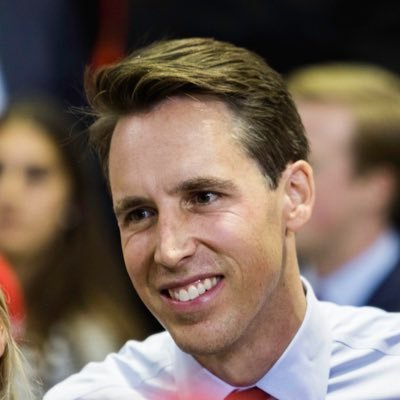


NEW VIDEO armed group at troubled #aurora #colorado apartment complex now home to many migrants. Councilmember @DaniJurinsky says gangs have taken over the complex @KDVR @AuroraPD