Joe Donnelly, MD

30 posts

Joe Donnelly, MD banner
Joe Donnelly, MD

Joe Donnelly, MD

@96Jldi

Anesthesiology. Informatics. AI. Teaching.

Houston, Texas Katılım Ocak 2019
78 Takip Edilen6 Takipçiler
Joe Donnelly, MD
Joe Donnelly, MD@96Jldi·
@rohindhar What did you think of the Sea Cliff home? It feels like one of those rare homes that only comes around every few years. Definitely will reach out to you later on.
English
1
0
2
866
Rohin Dhar
Rohin Dhar@rohindhar·
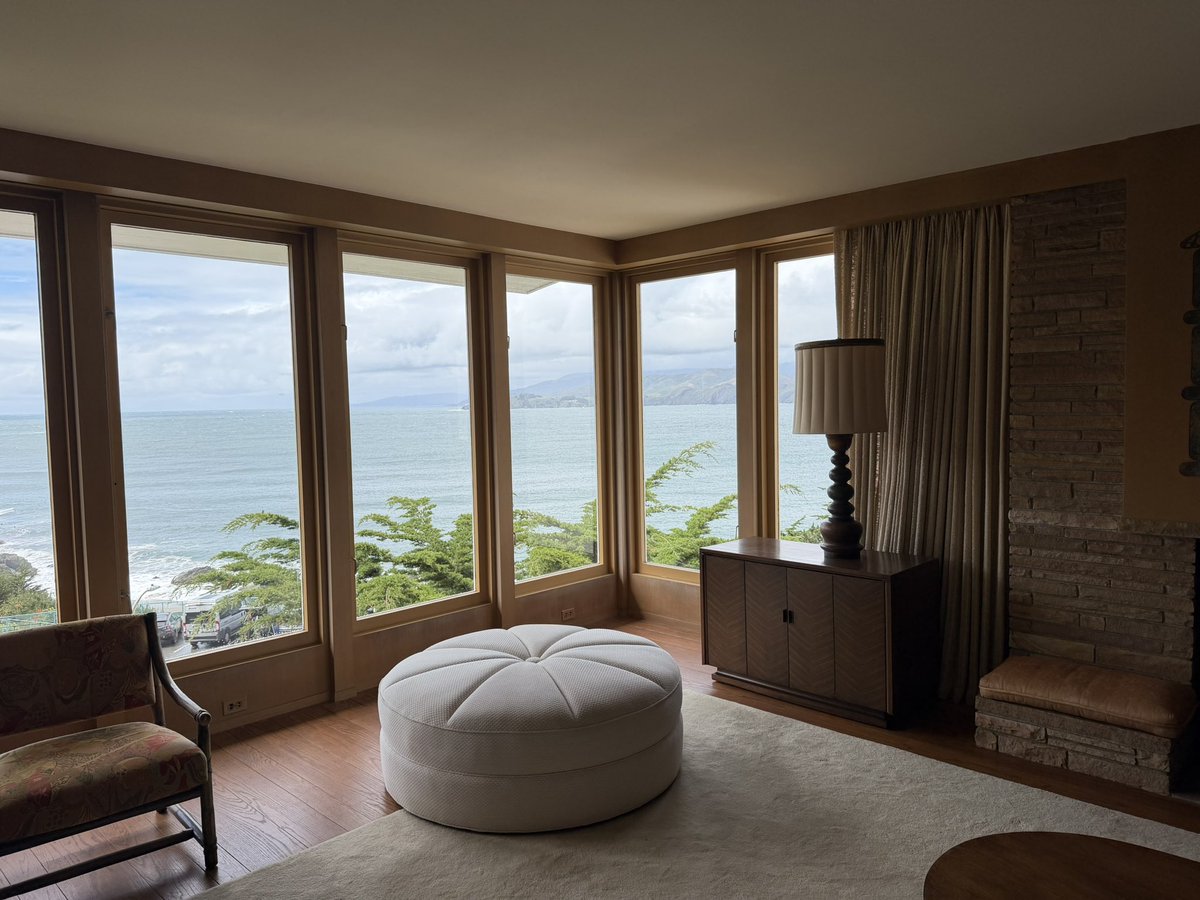
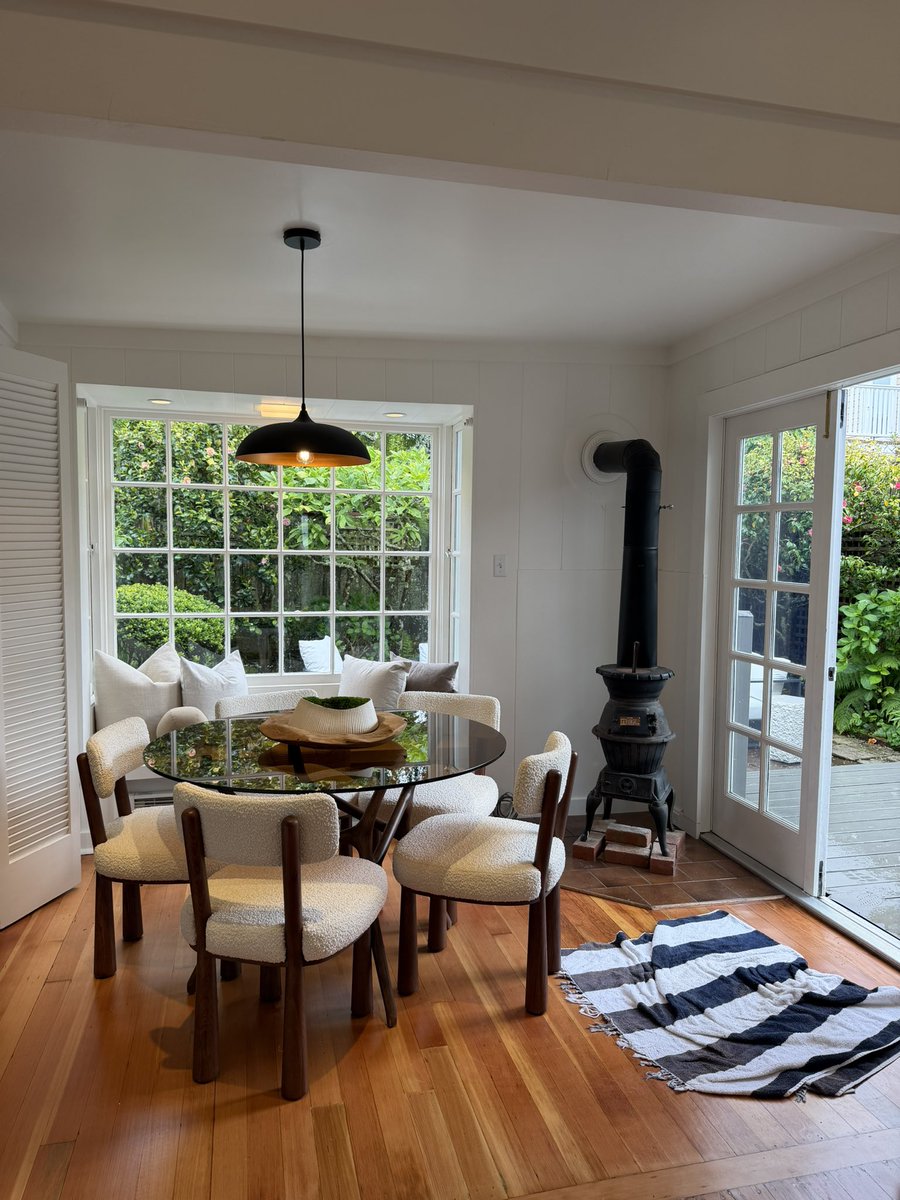
Scenes from some homes for sale in San Francisco I toured this weekend
Rohin Dhar tweet mediaRohin Dhar tweet mediaRohin Dhar tweet media
English
3
1
125
18.6K
Joe Donnelly, MD
Joe Donnelly, MD@96Jldi·
@rohindhar Nice. That’s secretly my dream house. Just want a 2 bedroom on sea cliff with a view. Won’t be in a position to buy for another 3-4 yrs. Hopefully by then they haven’t doubled again
English
0
0
1
171
Rohin Dhar
Rohin Dhar@rohindhar·
@96Jldi Have to see this one in person to better estimate. But best guess at the moment is in the $6-7 range?
English
1
0
1
349
Rohin Dhar
Rohin Dhar@rohindhar·
In a very competitive bidding situation for a home (in San Francisco at the moment at least) There is always a moment during the bidding process where you need to decide whether to stretch your budget and bid dramatically *above* where the comps suggest if you want to win. Ie set a new neighborhood record for price per sqft Would say in only about 10% of these situations do I recommend to my clients to really “go for it” because it’s such an amazing piece of real estate (if they can make it work financially) The other 90% of the time, usually I just let them know they’ll have other, better options at this price and maybe it’s best to stick to the plan. But 10% of the time I do let the know this is a "very good one and something as good is not likely to come along at this price, even though it's a lot" But in general, you shouldn’t reflexively bid beyond you plan just to win in most cases. If the price goes too high, just wait for the next one
English
10
0
42
8.7K
Rohin Dhar
Rohin Dhar@rohindhar·
Noe Valley in San Francisco Is just blowing by the $2000 per sqft mark
Rohin Dhar tweet media
English
32
15
379
210.2K
Joe Donnelly, MD retweetledi
Bill Ackman
Bill Ackman@BillAckman·
An excellent analysis on housing and Fannie and Freddie.
Cassandra Unchained@michaeljburry

Open Letter on Housing, Fannie & Freddie @realDonaldTrump @pulte @SecScottBessent @FHFA @USTreasury $fnma $FMCC We studied housing square footage per capita adequacy, and found that there is no problem there. The US in fact has more residential square footage per capita than any other country in the world. This is not a housing shortage, despite what so many say. The problem is that bigger houses are inefficiently housing fewer people. The post-COVID low rate environment locked people into a lifecycle real estate position. Empty nesters can't sell, first time home buyers cannot buy. Second-hand home inventory is near all-time lows due to record low supply, not record demand. Prices are high due to the same reason. Home equity is now a record $35 trillion, nearly doubling pre-COVID levels. 40% of homeowners own their homes free and clear - a record. And about 30% of all home buyers pay for homes without borrowing. Older homes were upgraded at a record pace during COVID, extending and refreshing the usefulness of residential real estate. Artificially low interest rates, ~$6-7 trillion in helicopter cash and forgivable loans helped drive both the home updates and high housing prices. Work from home moved the office into the home, often expensed or deductible. People with white collar jobs and means chose to live/work in exotic or remote locations. All of this together does not speak of a housing shortage, or a housing problem. Instead it is a problem of current residential space allocation and mobility, and this problem was created by government manipulation of interest rates, cash money supply, and COVID lockups that went on too long and changed work/home behavior. Government created the problem and now maintains policies that prevent free markets from reaching a solution, not the least of which is keeping the GSEs inefficiently run while in conservatorship. Recall Pulte's video upon arriving at Fannie Mae - no one was in the office buildings. The companies have become atherosclerotic, inefficient government programs, while a decade of financial engineering optimized for homeowner wealth accumulation rather than housing market velocity/mobility/fluidity. Government must fix this problem by facilitating efficient re-allocation of housing stock with higher housing velocity/mobility through the release of the GSEs into free markets. This is a problem made for the GSEs. Through well-targeted programs, the GSE can help the free market find spaces to intelligently reallocate , and help US citizens with housing mobility. Building more new overpriced, poorly built homes in increasingly dangerous flood zones and other hazardous fringe areas is not the solution. It adds to the problem through high maintenance burdens on new homeowners with little equity in their homes. Rather, to build mobility/velocity of homeowners and housing space, the GSEs need to be recapitalized and retain easy access to capital markets. They also need to be run by real mortgage executives, not government functionaries. To achieve this they need to exit conservatorship in a manner that excites markets to fund these companies, now with guidelines to prevent risk-taking outside of their purpose, and grow their purchases of mortgages of well-targeted specification. I should have written this into the Recurrence piece itself.

English
72
139
831
221.4K
Joe Donnelly, MD retweetledi
Cassandra Unchained
Cassandra Unchained@michaeljburry·
Open Letter on Housing, Fannie & Freddie @realDonaldTrump @pulte @SecScottBessent @FHFA @USTreasury $fnma $FMCC We studied housing square footage per capita adequacy, and found that there is no problem there. The US in fact has more residential square footage per capita than any other country in the world. This is not a housing shortage, despite what so many say. The problem is that bigger houses are inefficiently housing fewer people. The post-COVID low rate environment locked people into a lifecycle real estate position. Empty nesters can't sell, first time home buyers cannot buy. Second-hand home inventory is near all-time lows due to record low supply, not record demand. Prices are high due to the same reason. Home equity is now a record $35 trillion, nearly doubling pre-COVID levels. 40% of homeowners own their homes free and clear - a record. And about 30% of all home buyers pay for homes without borrowing. Older homes were upgraded at a record pace during COVID, extending and refreshing the usefulness of residential real estate. Artificially low interest rates, ~$6-7 trillion in helicopter cash and forgivable loans helped drive both the home updates and high housing prices. Work from home moved the office into the home, often expensed or deductible. People with white collar jobs and means chose to live/work in exotic or remote locations. All of this together does not speak of a housing shortage, or a housing problem. Instead it is a problem of current residential space allocation and mobility, and this problem was created by government manipulation of interest rates, cash money supply, and COVID lockups that went on too long and changed work/home behavior. Government created the problem and now maintains policies that prevent free markets from reaching a solution, not the least of which is keeping the GSEs inefficiently run while in conservatorship. Recall Pulte's video upon arriving at Fannie Mae - no one was in the office buildings. The companies have become atherosclerotic, inefficient government programs, while a decade of financial engineering optimized for homeowner wealth accumulation rather than housing market velocity/mobility/fluidity. Government must fix this problem by facilitating efficient re-allocation of housing stock with higher housing velocity/mobility through the release of the GSEs into free markets. This is a problem made for the GSEs. Through well-targeted programs, the GSE can help the free market find spaces to intelligently reallocate , and help US citizens with housing mobility. Building more new overpriced, poorly built homes in increasingly dangerous flood zones and other hazardous fringe areas is not the solution. It adds to the problem through high maintenance burdens on new homeowners with little equity in their homes. Rather, to build mobility/velocity of homeowners and housing space, the GSEs need to be recapitalized and retain easy access to capital markets. They also need to be run by real mortgage executives, not government functionaries. To achieve this they need to exit conservatorship in a manner that excites markets to fund these companies, now with guidelines to prevent risk-taking outside of their purpose, and grow their purchases of mortgages of well-targeted specification. I should have written this into the Recurrence piece itself.
English
197
298
1.7K
617.6K
Joe Donnelly, MD
Joe Donnelly, MD@96Jldi·
@michaeljburry @MMTLP4ME88 @CompoundinGirl It’s almost impossible to find someone who can actually beat the market and charges affordable prices for stock picks. The "affordable genius" is incredibly rare. If you could offer access to a real, transparent live portfolio without it leaking, you could charge a ton.
English
1
0
6
720
Cassandra Unchained
Cassandra Unchained@michaeljburry·
You should get an email every time I post an article and most times I start a Chat. Both are sent to all paid and free subscribers. I don’t find Substack cluttered with ads. Notifications can be controlled in your settings. Also the Chat discussions are very high quality, essentially 90%+ signal.
English
4
1
16
1.3K
Joe Donnelly, MD
Joe Donnelly, MD@96Jldi·
@michaeljburry The Silicon Valley people literally think that AI will fully replace humans. Elon musk said all surgeons will be without jobs in 3 years.
English
0
0
0
136
Joe Donnelly, MD
Joe Donnelly, MD@96Jldi·
@michaeljburry @hansjohnsonlive Dr. Burry, quick question--At times you've said bitcoin has merit but is plagued by leverage, but you’ve more recently described it as totally worthless. There is a big difference. Can you clarify? It's an interesting shift, especially given your strong bullish stance on gold.
English
0
0
0
77
Cassandra Unchained
Cassandra Unchained@michaeljburry·
Another excerpt of the answer.
Cassandra Unchained tweet media
English
9
18
436
104.6K
Cassandra Unchained
Cassandra Unchained@michaeljburry·
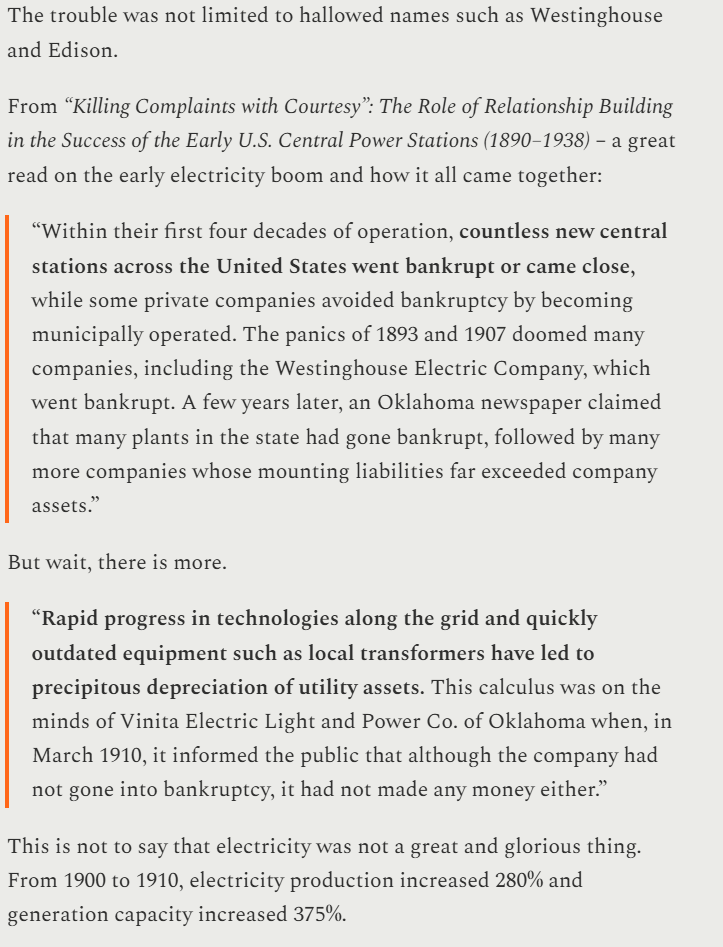
I was challenged by this question, and an excerpt of the answer is the image. "This process has just begun, less than 3 years ago, and will take many years to get to saturation. All other applications of AI will be happening at the same time. A more relevant analogy is the electrification of the late-19th and early-20th centuries rather than Cisco’s 1990s telecom equipment bubble. Electrification had immediate killer application, the electric light, with an unlimited demand -- followed by all kinds of machinery later."
Cassandra Unchained tweet media
English
105
167
1.6K
516.1K
Joe Donnelly, MD
Joe Donnelly, MD@96Jldi·
@michaeljburry What do you think happens to value stocks such as your picks (MOH, LULU, FNMA) if there is a massive crash? Do you adjust your allocations to these positions to "time the market" based on macro events such as an AI Capex catalyzed crash?
English
0
0
1
604
Nick Gerli
Nick Gerli@nickgerli1·
A friendly reminder: a vast majority of Americans want home prices to drop. Nearly every renter. And about 70% of homeowners. Why? Lower prices = lower payments and more affordability across the board, including lower property taxes.
Nick Gerli tweet media
English
330
97
895
42.5K
Joe Donnelly, MD retweetledi
roon
roon@tszzl·
companies like Facebook record every imaginable interaction their users have with the platform. they log each of your clicks and taps. they keep track of how long your gaze lingered on a post, whether you were on the same WiFi as that woman who might be your friend, which instagram reel you watched three times. for a single user this is quaint, but these practices are done on a planetary scale across all technology giants. they create petabytes of data per day and keep it for as long as the European regulators will let them. then they can have machine intelligence instrument it into useful knowledge for their cybernetic control systems that build newsfeeds, serve ads, decide how much compute to spend on you, which SKUs should be in which warehouses right before you want them. the Hive metastore bills run into the billions hospitals throw most of their data and telemetry out after each case, every single day. they record videos of vascular surgeries, endoscopies, discovering interesting physiologies. sometimes they're not recorded at all and most of them the time they delete them as soon as they’re done it's even worse for physiologic waveforms (ECG, EEG, arterial lines) which are essentially never recorded anywhere at all. milisecond scale views of patient's brains, vasculatures, hearts are generated and instantly destroyed. all of these time series of course predict people's hearts stopping, brains exploding, etc ahead of time. surgeons teleoperate robots, none of the micro-movements are recorded, policies never learned, never correlated into which outcomes were successful or not this would be unthinkable to most software people whose instinct is to record everything everywhere never mind the cloud costs, because we are sure there will be some use for it later and some model to be trained later. i don't have a prescription here per se my point is just that our civilization routinely hoards and treasures some of the silliest data in the world "i pressed like on the john pork reel" & destroys much of all the most important data it generates and limits what machines can learn
English
379
877
10K
1.1M
Joe Donnelly, MD retweetledi
The Kobeissi Letter
The Kobeissi Letter@KobeissiLetter·
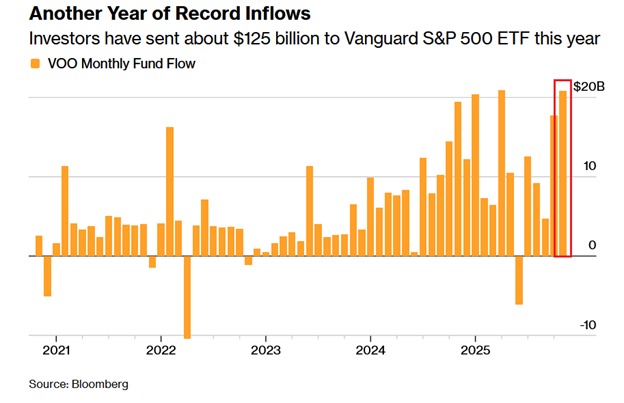
BREAKING: The Vanguard S&P 500 ETF, $VOO, posted a +$20.82 billion net inflow in November, the 2nd-highest in at least 4 years. This also marks the 5th consecutive monthly inflow. Year-to-date, $VOO net inflows are now up +17%, to +$124.29 billion, on track for its biggest yearly inflow since its inception. Since the start of 2023, the fund has seen just one month with net outflows. Investors are piling into US large-cap stocks at a record pace.
The Kobeissi Letter tweet media
English
70
165
1.3K
199.9K
Joe Donnelly, MD
Joe Donnelly, MD@96Jldi·
@greengarry_ @Buckingham_Show I don't know anything about this guy's story, but infusion pumps are left powered off at bedside all the time e.g. if the infusion is no longer needed. Nothing in that pic suggests a staged set.
English
0
0
0
91
Green Garry
Green Garry@greengarry_·
Insane. Youtuber and rapper @Buckingham_Show exposed for faking his hospital GoFundMe scare, recording in a possibly fake hospital set, not showing medical documents regarding his condition...
English
974
128
2.9K
4.4M