Tony Hansmann

10.3K posts

Tony Hansmann banner
Tony Hansmann

Tony Hansmann

@997unix

eXtreme Iteration: let's rewrite the amplitahedron.

Scottsdale, AZ Katılım Şubat 2008
1.8K Takip Edilen825 Takipçiler
Sabitlenmiş Tweet
Tony Hansmann
Tony Hansmann@997unix·
Signposts of the revolution: 10^10 human-seconds is a good return on knowlege. In 2017, ~4 x10^6 seconds of AI time, computed 3.16 x 10^16 human-seconds worth of work. Let's keep chasing the curve. --- A million seconds (10^6) is ~11 days A billion seconds (10^9) is ~31 years A trillion seconds (10^12) is about ~31,000 year 3.16 x 10^16 seconds is about a billion years.
Chubby♨️@kimmonismus

The year 2017 will go down in history. As the year in which the Transformer architecture enabled us to achieve scientific breakthroughs that were previously unimaginable. Demis Hassabis and colleagues were rightly awarded the Nobel Prize in Chemistry for AlphaFold. In his TED Talk, @maxjaderberg explained why this is so incredibly important and why we are at the beginning of a scientific revolution. Check it out. Link in the commentary. We cannot rate this technological breakthrough highly enough. Nothing stays the same.

English
0
1
8
839
Tony Hansmann retweetledi
Peter Steinberger 🦞
Peter Steinberger 🦞@steipete·
Built clawsweeper, which runs 50 codex in parallel around the clock, scans issues/prs deep and closes what is already implemented or what makes no sense. Closed around 4000 issues today, a few thousand are in the pipeline. (rate limits are rough) github.com/openclaw/claws…
English
423
574
9.3K
2.1M
Tony Hansmann retweetledi
Kat ⊷ the Poet Engineer
Kat ⊷ the Poet Engineer@poetengineer__·
trying to use topological data analysis to map the shape of my x bookmarks through mapper + embedding extraction and generated 3 views: - density: where attention keeps gravitating - pca: the dominant axes of variation - centroid: center vs edge (typical -> outlier)
English
139
639
6.3K
769.4K
Tony Hansmann retweetledi
Elon Musk
Elon Musk@elonmusk·
Cybercab has started production
English
8K
14K
160.9K
60.9M
Tony Hansmann retweetledi
Dustin
Dustin@r0ck3t23·
Mark Cuban just described the largest wealth transfer of the AI era. Almost nobody understood what he said. Cuban: “There are 33 million companies in this country. Aren’t going to have AI budgets. Aren’t going to have AI experts.” Not tech startups. The shoe store. The regional trucking outfit. The accounting firm with 12 employees. The businesses that actually run the physical economy. They know AI is coming. They have no idea what to do with it. Cuban: “You’ve got the head of Microsoft saying software is dead because everything’s going to be customized to your unique utilization.” Software is dead. The SaaS era ran on one rule. Build a generic product. Force millions of companies to bend their workflows around it. Charge rent forever. AI ends the contract. The business stops bending to the software. The intelligence bends to the business. But customized by whom. The third-generation manufacturer cannot tell Claude from Gemini. The county hospital is staring at a reactor asking where the light switch is. Cuban: “Who’s going to do it for them?” That question is worth more than the frontier models themselves. Hundreds of billions are being burned to build the foundation. The smartest engineers alive are locked in a bloodbath over who owns the base layer. Let them fight. Let them burn the capital. Let them drive the cost of raw intelligence toward zero. Because the wealth does not collect where the brain is built. It collects where the brain meets the business. Every ambitious kid in college right now thinks survival means a seat at OpenAI or Anthropic. Cuban is staring at the other 99 percent of the economy. Learn the models. Then learn the messy, unglamorous reality of how a 50-person company actually operates. Walk through the door. Understand their problems. Wire the intelligence directly into their revenue. That is not a job title. That is an entire economic class being born. You do not need to build the brain. You need to build the nervous system. The biggest winners of the electricity era were not the engineers who built the generators. They were the ones who walked into dark factories and showed the owners where to plug in. 33 million companies are standing in the dark right now. Silicon Valley is racing to build the god. The fortunes will belong to whoever teaches him a trade.
English
489
1.9K
14.3K
3.7M
Tony Hansmann retweetledi
Natalie Wolchover
Natalie Wolchover@nattyover·
Bacteria move around using a molecular machine called the flagellar motor that rotates faster than the flywheel of a race car engine and switches directions in an instant. After 50 yrs, scientists have finally figured out how it works. “My lifelong quest is now fulfilled.” Link⤵️
English
528
4.4K
32.8K
6.1M
Tony Hansmann retweetledi
Mitchell Hashimoto
Mitchell Hashimoto@mitchellh·
I'm writing Go again (for what, you'll see later...). `go doc` and `gopls` are like agent superpowers and its shocking how productive agents are out of the box at writing [good] Go code versus other languages I've used (including the JS ecosystem). Also, Go + Zig is a good mix. Go for the higher level and concurrent stuff and then no-libc Zig code plus the Zig compiler for zero dependency cross-compiled cgo with high-performance characteristics (minimize cgo boundary crosses). Chefs kiss. Its funny because a lot of the shitty ergonomics of Go CLIs like `go doc` and `gopls` (prev. stuff like `go oracle` or `guru`) are totally obviated by agents and not just that but in a twist of irony they're excellent for agents. Don't worry, its not Ghostty. Ghostty and libghostty will remain pure Zig; it's a fantastic fit and a perfect pairing. This is for something else. "Wait, I thought you said Go has no place anymore?" I was wrong, mostly because agents are so productive at Go. I won't bring in other languages in this discussion because I don't want to feed the crabs, so to speak. lol.
English
133
157
2.9K
315.1K
Tony Hansmann retweetledi
Prince Canuma
Prince Canuma@Prince_Canuma·
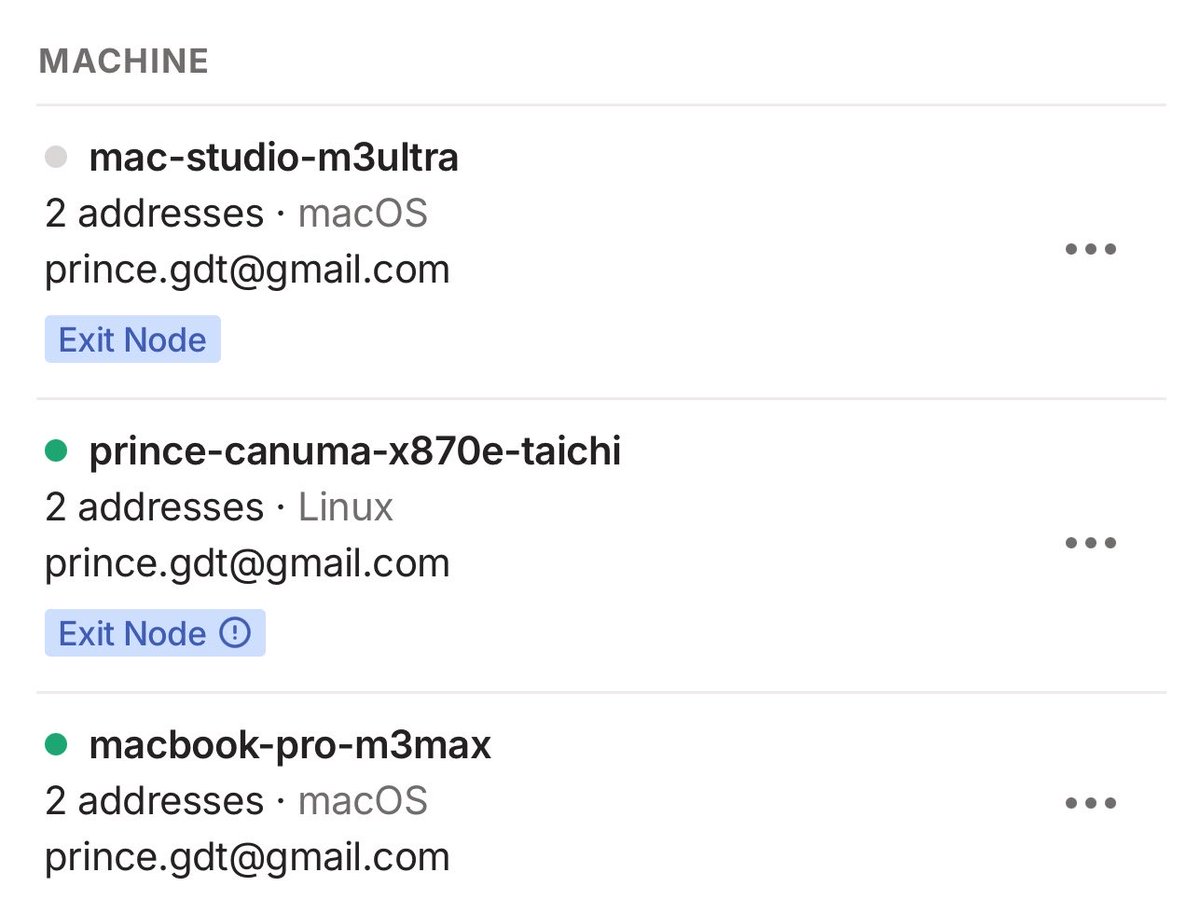
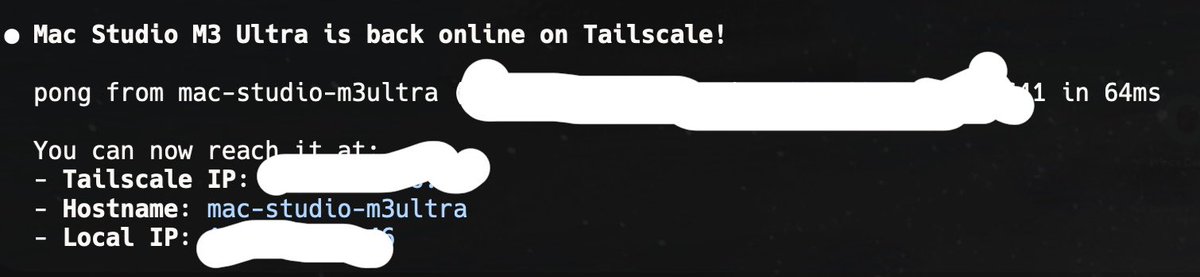
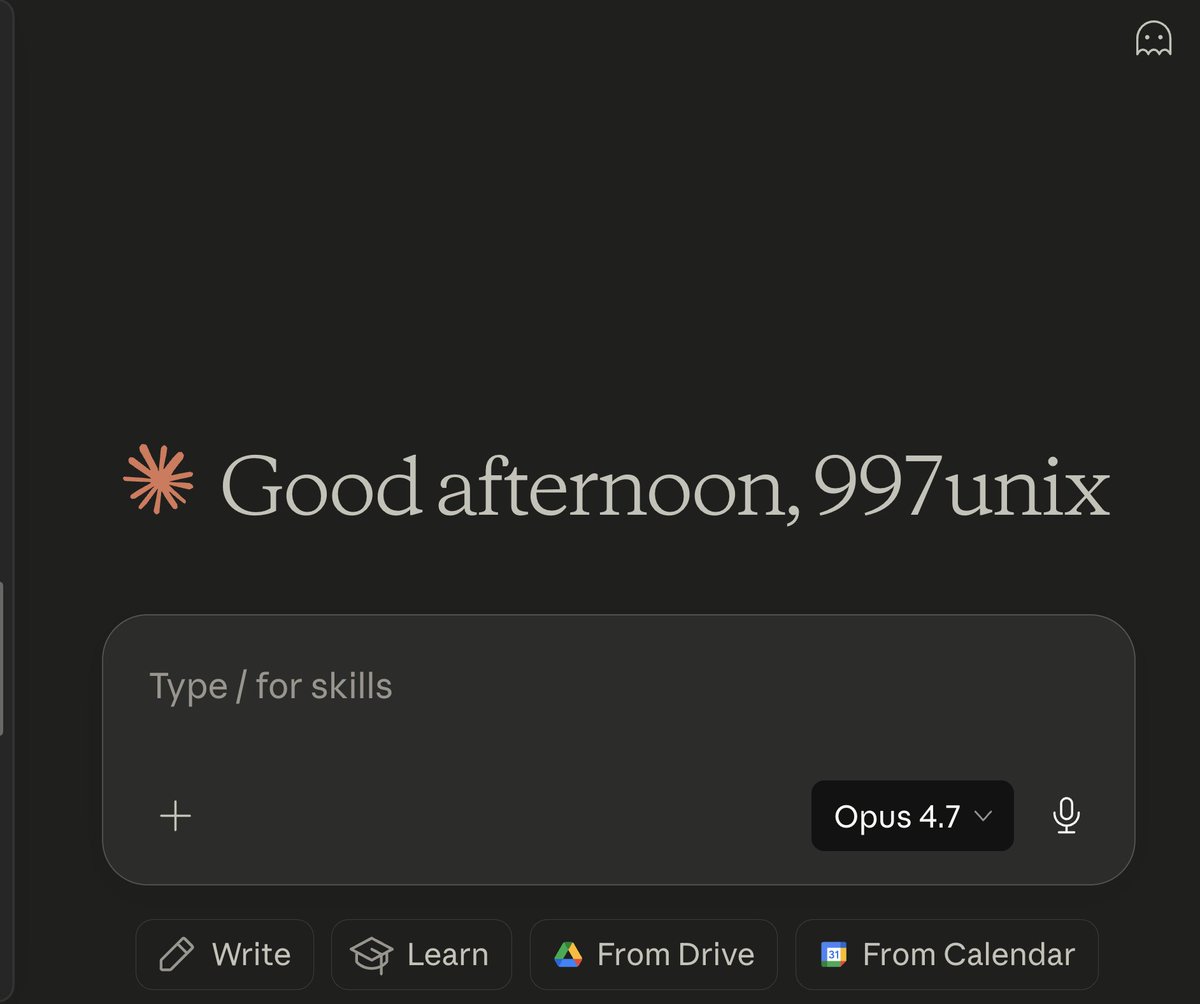
We’re living in interesting times. Traveled ~300km from home. Left a Claude Code session running on my M3 Ultra to test continuous batching across all models (2TB of weights) and check for regressions. Overnight the M3 Ultra auto-updated, restarted, and killed both my session and Tailscale. So I SSH’d into my Linux box, asked Claude Code there to scan the network, SSH into the M3 Ultra, and restart Tailscale. It worked, my session is back and it’s like I never left home. 🙌🏽🔥
Prince Canuma tweet mediaPrince Canuma tweet mediaPrince Canuma tweet media
English
17
12
267
73.1K
Tony Hansmann retweetledi
Dudes Posting Their W’s
Dudes Posting Their W’s@DudespostingWs·
Japanese engineers developed a “Sword Tip Visualization System” for the Fencing World Championships, and it makes fencing look absolutely incredible to watch.
English
952
10.2K
98K
6.4M
Tony Hansmann retweetledi
Boris Cherny
Boris Cherny@bcherny·
Opus 4.7 uses more thinking tokens, so we've increased rate limits for all subscribers to make up for it. Enjoy!
English
1.2K
928
22.2K
1.3M
Tony Hansmann retweetledi
Eric Hartford
Eric Hartford@QuixiAI·
Last week, Anthropic announced Project Glasswing alongside Claude Mythos Preview, a model they described as so powerful at finding vulnerabilities they couldn't release it. The announcement featured AWS, Microsoft, Google, and Apple as partners, $100M in compute credits, and a clear message: this is dangerous, and only we can be trusted to deploy it safely. The results were real. Thousands of zero-days across every major OS and browser. A 27-year-old bug in OpenBSD. A 16-year-old bug in FFmpeg. Fully autonomous exploit chains that would have taken human researchers weeks. But here's what bothered me: all the credit went to the model. Read the technical blog carefully and a different picture emerges. The real innovation isn't the model. It's the workflow: - Rank every file in a codebase by attack surface - Fan out hundreds of parallel agents, each scoped to one file - Use crash oracles (AddressSanitizer, UBSan) as ground truth - Run a second verification agent to filter noise - Generate exploits as a triage mechanism for severity That's a pipeline. And pipelines are model-agnostic. At Lazarus AI, we spend our days deploying custom AI in places where "just use the closed API" isn't an option: regulated industries, enterprise, and government. When I saw Glasswing, my instinct was the same one I have every week: strip out the proprietary model, keep the architecture, run it on whatever model is best for the customer. Clearwing is a fully open-source vulnerability discovery engine. Crash-first hunting, file-parallel agents, oracle-driven verification, variant hunting, adversarial verification. Works with any LLM. I tested it with OpenAI Codex 5.4 and reproduced Glasswing's findings. I'm now reproducing results with our own ReAligned model - Qwen3.5 finetuned to Western alignment. Mythos is certainly a great model. The N-day exploit walkthroughs in Anthropic's blog show real reasoning depth. But it's an incremental improvement over Opus, the same way Opus was over Sonnet, and Sonnet over Haiku. It's not a leap to superintelligence. It's the next point on a curve we've been watching for years. What actually changed the game was the workflow. Defenders shouldn't have to wait for access to a gated model to secure their software. These vulnerabilities have been sitting in codebases for decades. The tools to find them should be available to everyone: the open source maintainer running FFmpeg on a Saturday, the startup that can't afford $125/M output tokens, the researcher in a country where Anthropic doesn't operate. Clearwing is MIT licensed and available now. github.com/Lazarus-AI/cle… Clearwing enables a wide variety of security activities. Handle with care. It is sharp.
English
48
242
1.5K
210K
Tony Hansmann retweetledi
Austen Allred
Austen Allred@Austen·
Talked to a few of Gauntlet AI’s partner companies today, and one thing stood out: Old hiring practices are COMPLETELY dead. * Every role gets 20x the applicants it used to. Candidates are applying to insane numbers of roles without filtering for anything at all. There’s no cost to applying to a role that won’t hire you, and there’s no guarantee that an applicant is actually interested in a role or company they’ve applied for. * All the tests people started using so they could filter by skills instead of résumé are now worthless. Everyone passes them now because everyone cheats. Companies can’t decide whether they should refuse to hire people who are using AI to ace the tests or if they should only hire people who are using AI to ace the tests. You’re left with HR and/or recruiters filtering people purely based on name recognition of schools or companies and seeing if candidates mention a grab bag of keywords (which they usually do because AI is making sure to). Then they do endless amounts of interviews to sift through people in fields they know nothing about. And at the end of the day it either totally fails or someone who is a subject matter expert pulls themselves off of all work for weeks at a time to find a reasonable hire. It’s all completely broken. Nobody is quite sure what to do about it.
English
42
14
318
28.1K
Tony Hansmann retweetledi
Elon Musk
Elon Musk@elonmusk·
Congrats to the @Tesla_AI chip design team on taping out AI5! AI6, Dojo3 & other exciting chips in work.
Elon Musk tweet media
English
6.9K
13.1K
119.9K
19.3M
Tony Hansmann retweetledi
Understanding Linux: The Kernel Perspective
SpaceX uses Linux in Dragon spacecraft with flight software written in C++. The Dragon and Falcon 9 flight systems use triple-redundant computer architectures based on commodity x86-class processors (rather than specialised radiation-hardened chips traditionally used in spacecraft, which lag behind in raw compute power). Three independent processors execute identical code in parallel and compare results; this voting-based design enables robust operation in the presence of hardware or software faults. x.com/elonmusk/statu…
Understanding Linux: The Kernel Perspective tweet media
English
63
189
1.5K
81.8K
Tony Hansmann retweetledi
G-MA & G-PA
G-MA & G-PA@GPAIndiana·
I am pretty sure this violates at least a couple of laws of physics! 🤣 That was Amazing
English
386
1.8K
28.1K
2.3M
Tony Hansmann retweetledi
Andrej Karpathy
Andrej Karpathy@karpathy·
Something I've been thinking about - I am bullish on people (empowered by AI) increasing the visibility, legibility and accountability of their governments. Historically, it is the governments that act to make society legible (e.g. "Seeing like a state" is the common reference), but with AI, society can dramatically improve its ability to do this in reverse. Government accountability has not been constrained by access (the various branches of government publish an enormous amount of data), it has been constrained by intelligence - the ability to process a lot of raw data, combine it with domain expertise and derive insights. As an example, the 4000-page omnibus bill is "transparent" in principle and in a legal sense, but certainly not in a practical sense for most people. There's a lot more like it: laws, spending bills, federal budgets, freedom of information act responses, lobbying disclosures... Only a few highly trained professionals (investigative journalists) could historically process this information. This bottleneck might dissolve - not only are the professionals further empowered, but a lot more people can participate. Some examples to be precise: Detailed accounting of spending and budgets, diff tracking of legislation, individual voting trends w.r.t. stated positions or speeches, lobbying and influence (e.g. graph of lobbyist -> firm -> client -> legislator -> committee -> vote -> regulation), procurement and contracting, regulatory capture warning lights, judicial and legal patterns, campaign finance... Local governments might be even more interesting because the governed population is smaller so there is less national coverage: city council meetings, decisions around zoning, policing, schools, utilities... Certainly, the same tools can easily cut the other way and it's worth being very mindful of that, but I lean optimistic overall that added participation, transparency and accountability will improve democratic, free societies. (the quoted tweet is half-ish related, but inspired me to post some recent thoughts)
Harry Rushworth@Hrushworth

The British Government is a complicated beast. Dozens of departments, hundreds of public bodies, more corporations than one can count... Such is its complexity that there isn't an org chart for it. Well, there wasn't... Introducing ⚙️Machinery of Government⚙️

English
416
736
6K
995.2K
Tony Hansmann retweetledi
Sovey
Sovey@SoveyX·
SpaceX now has over 10,000 Starlink satellites in orbit, which is honestly an absurd engineering achievement. And no, they are not just up there freelancing and hoping for the best. They stay separated because they are placed in organized orbital lanes, constantly tracked, and able to maneuver when needed. Starlink also uses automated collision-avoidance systems, which is how a constellation this large can operate without turning low Earth orbit into a scrapyard. It’s already the closest thing in the world to a true work-anywhere network and they are just getting started.
English
1.1K
2.7K
13.3K
1.4M
Tony Hansmann retweetledi
Andrej Karpathy
Andrej Karpathy@karpathy·
Wow, this tweet went very viral! I wanted share a possibly slightly improved version of the tweet in an "idea file". The idea of the idea file is that in this era of LLM agents, there is less of a point/need of sharing the specific code/app, you just share the idea, then the other person's agent customizes & builds it for your specific needs. So here's the idea in a gist format: gist.github.com/karpathy/442a6… You can give this to your agent and it can build you your own LLM wiki and guide you on how to use it etc. It's intentionally kept a little bit abstract/vague because there are so many directions to take this in. And ofc, people can adjust the idea or contribute their own in the Discussion which is cool.
Andrej Karpathy@karpathy

LLM Knowledge Bases Something I'm finding very useful recently: using LLMs to build personal knowledge bases for various topics of research interest. In this way, a large fraction of my recent token throughput is going less into manipulating code, and more into manipulating knowledge (stored as markdown and images). The latest LLMs are quite good at it. So: Data ingest: I index source documents (articles, papers, repos, datasets, images, etc.) into a raw/ directory, then I use an LLM to incrementally "compile" a wiki, which is just a collection of .md files in a directory structure. The wiki includes summaries of all the data in raw/, backlinks, and then it categorizes data into concepts, writes articles for them, and links them all. To convert web articles into .md files I like to use the Obsidian Web Clipper extension, and then I also use a hotkey to download all the related images to local so that my LLM can easily reference them. IDE: I use Obsidian as the IDE "frontend" where I can view the raw data, the the compiled wiki, and the derived visualizations. Important to note that the LLM writes and maintains all of the data of the wiki, I rarely touch it directly. I've played with a few Obsidian plugins to render and view data in other ways (e.g. Marp for slides). Q&A: Where things get interesting is that once your wiki is big enough (e.g. mine on some recent research is ~100 articles and ~400K words), you can ask your LLM agent all kinds of complex questions against the wiki, and it will go off, research the answers, etc. I thought I had to reach for fancy RAG, but the LLM has been pretty good about auto-maintaining index files and brief summaries of all the documents and it reads all the important related data fairly easily at this ~small scale. Output: Instead of getting answers in text/terminal, I like to have it render markdown files for me, or slide shows (Marp format), or matplotlib images, all of which I then view again in Obsidian. You can imagine many other visual output formats depending on the query. Often, I end up "filing" the outputs back into the wiki to enhance it for further queries. So my own explorations and queries always "add up" in the knowledge base. Linting: I've run some LLM "health checks" over the wiki to e.g. find inconsistent data, impute missing data (with web searchers), find interesting connections for new article candidates, etc., to incrementally clean up the wiki and enhance its overall data integrity. The LLMs are quite good at suggesting further questions to ask and look into. Extra tools: I find myself developing additional tools to process the data, e.g. I vibe coded a small and naive search engine over the wiki, which I both use directly (in a web ui), but more often I want to hand it off to an LLM via CLI as a tool for larger queries. Further explorations: As the repo grows, the natural desire is to also think about synthetic data generation + finetuning to have your LLM "know" the data in its weights instead of just context windows. TLDR: raw data from a given number of sources is collected, then compiled by an LLM into a .md wiki, then operated on by various CLIs by the LLM to do Q&A and to incrementally enhance the wiki, and all of it viewable in Obsidian. You rarely ever write or edit the wiki manually, it's the domain of the LLM. I think there is room here for an incredible new product instead of a hacky collection of scripts.


English
1.1K
2.8K
26.7K
7.1M
Tony Hansmann retweetledi
Elon Musk
Elon Musk@elonmusk·
My idea of a good time is working with amazing engineers to create incredible technology 🤩 The Tesla chip research fab will have all the machines needed to do logic, memory, packing & masks in one building for a lightning fast development cycle. Heaven 💫
English
9.9K
16.2K
207.3K
49.5M
Tony Hansmann retweetledi
Lenny Rachitsky
Lenny Rachitsky@lennysan·
"Using coding agents well is taking every inch of my 25 years of experience as a software engineer, and it is mentally exhausting. I can fire up four agents in parallel and have them work on four different problems, and by 11am I am wiped out for the day. There is a limit on human cognition. Even if you're not reviewing everything they're doing, how much you can hold in your head at one time. There's a sort of personal skill that we have to learn, which is finding our new limits. What is a responsible way for us to not burn out, and for us to use the time that we have?" @simonw
Lenny Rachitsky@lennysan

"Using coding agents well is taking every inch of my 25 years of experience as a software engineer." Simon Willison (@simonw) is one of the most prolific independent software engineers and most trusted voices on how AI is changing the craft of building software. He co-created Django, coined the term "prompt injection," and popularized the terms "agentic engineering" and "AI slop." In our in-depth conversation, we discuss: 🔸 Why November 2025 was an inflection point 🔸 The "dark factory" pattern 🔸 Why mid-career engineers (not juniors) are the most at risk right now 🔸 Three agentic engineering patterns he uses daily: red/green TDD, thin templates, hoarding 🔸 Why he writes 95% of his code from his phone while walking the dog 🔸 Why he thinks we're headed for an AI Challenger disaster 🔸 How a pelican riding a bicycle became the unofficial benchmark for AI model quality Listen now 👇 youtu.be/wc8FBhQtdsA

English
558
697
6.9K
1.9M