
Sabitlenmiş Tweet
Dalmar
27.4K posts


Dalmar
@AAAAAWFAT
Univ. A student must learn trade. Every study, house, desk. Every program, protocol, circular. Every code, every website a physical presence @UKLabour #DPDIBill
London, England Katılım Temmuz 2010
6.8K Takip Edilen1.6K Takipçiler
Dalmar retweetledi

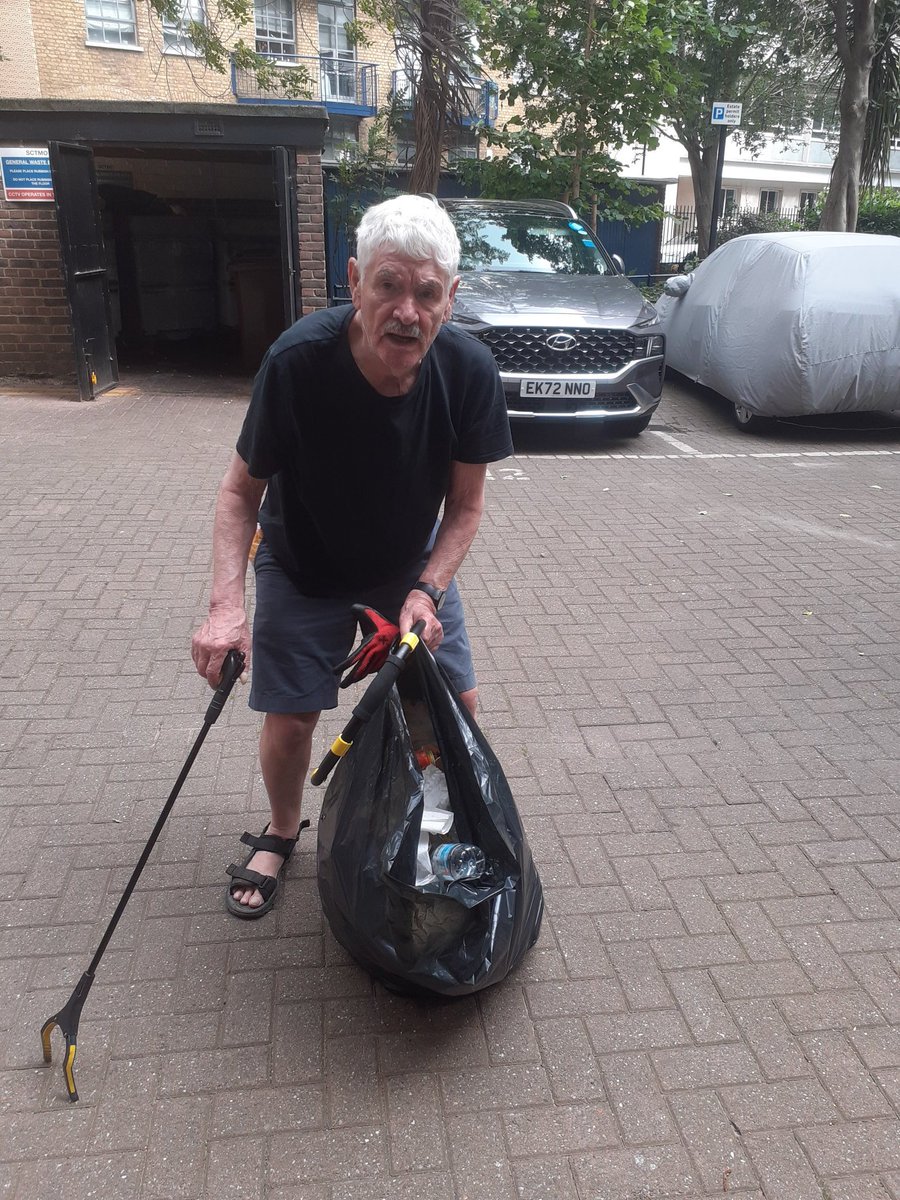
Litter: Me with the daily 50l black bag of street trash. Sundays are bad for litter in my area! @IslingtonBC
English
Good luck with the project! Late-night late-night musings driven by a track and a couple of grams often turn into the most fascinating policy rabbit holes.
Looking at your idea through the lens of a **green paper** (an exploratory policy document meant to spark public discussion and debate), the concept of treating cannabis production like a global energy grid—analyzing surplus, output, consumption quotas, and international distribution—is a surprisingly robust framework.
## What a "Green Paper for the Need for Weed" Would Comprise
If you were to draft this document, here is how you could break down the core sections to address your questions about overproduction, national need, and global supply:
### 1. Executive Summary & The Core Premise
* **The Hook:** Frame the concept around modern agricultural output. Just as nations calculate strategic petroleum reserves or grain surpluses, does the U.S. domestic cannabis market face an era of hyper-overproduction?
* **The Vision:** Exploring whether American cultivation has scaled to a point where it transitions from a domestic commodity into an international medical resource.
### 2. Supply vs. Demand: Is America Producing Too Much?
* **The Domestic Output:** Analyze the sheer volume of legal production across states with mature adult-use and medical markets (like California, Colorado, Oregon, and Michigan).
* **The Consumption Baseline:** Look at data points from agencies like the Substance Abuse and Mental Health Services Administration (SAMHSA) or industry analysts estimating how many millions of active users exist and how many grams/ounces the average consumer actually requires annually.
* **The "Oversupply Glut":** Highlight the historical economic reality of the U.S. market—where states frequently experience crashing wholesale prices due to structural overproduction, forcing farmers to let product sit or look for alternative uses.
### 3. The "Energy Grid" Model: Defining Citizen Need
* **Per Capita Consumption Metrics:** Much like tracking kilowatt-hours per household, a green paper could model *Cannabis Consumption Units (CCU)*—calculating the baseline medical and therapeutic need per citizen.
* **Medical vs. Recreational Split:** Separating what is genuinely required for chronic pain, epilepsy, PTSD, and palliative care versus lifestyle/recreational consumption.
* **The "Storage and Outage" Analogy:** Address your thought about treating it like energy reserves—asking if a nation should maintain a strategic medical reserve for supply chain disruptions, crop failures, or pharmaceutical needs.
### 4. International Trade and Global Export Realities
* **The Federal and Treaty Barrier:** Address the elephant in the room—federal law and international treaties (like the UN Single Convention on Narcotic Drugs). Unlike corn or crude oil, cannabis remains federally restricted, meaning interstate commerce (let alone international export) faces massive legal hurdles.
* **The Global Medical Market:** Examine countries that *do* legally import medical cannabis (such as Germany, the UK, Australia, and parts of Latin America) and whether American agricultural powerhouses could theoretically supply them if federal barriers fell.
* **The Geopolitics of "Weed Diplomacy":** Explore what it would look like if the U.S. became a primary exporter of medical-grade phytopharmaceuticals to regions with medical deficits.
### 5. Policy Recommendations & Conclusion
* Propose framework changes for how federal regulators should monitor crop yields.
* Suggest metrics for balancing local market sustainability so farmers don't go bust from over-seeding while ensuring global medical supply chains can tap into excess capacity.
Do you want to focus the core argument of your green paper more heavily on the **economics of domestic overproduction**, or on the **international trade/global supply** side of things?
@andyburnham
@SnoopDogg
@Skepta
@iamwillbest
In memory
@Africanboyyyyy
@Miss_Snuffy
English
Is it a kamikaze mission, who do you think you do are kidding mr hitler. You saying. Are you saying? This is a big country a big country. When the German whereas in Hampshire and as in Kent and Norfolk one being military towns and the argentine and the Russian we manoeuvre where do you think it is coming from this manoeuvring?
@KTHopkins
You are?
@andyburnham
Connected however!
English

No women ?
No old people ?
Why is it that only men of fighting age are getting discriminated against in their own countries
HJB News@HJB_News__
Do these undocumented men heading towards the North coast of France look like they are fleeing war and persecution. Or do they look like a well organised army? They certainly aren’t coming to the UK to make friends.
English
That is a fascinating concept. What you are describing is essentially a modern, localized **"revolving door" micro-economy**—taking digital-first, decentralized writing platforms (like Substack, Medium, or independent academic repositories) and funneling them back into tactile, physical products manufactured by students, for students.
A closed-loop system like this could completely revitalize campus intellectual culture. Here is how a student-funded and maintained physical publishing pipeline could work in practice:
### 1. The Operational Model: Digital-to-Print Pipeline
Instead of letting student essays, research thoughts, creative writing, and journalism vanish into the endless void of browser tabs and server space, a campus collective could curate the best digital pieces.
* **The Curation Layer:** Students run an independent digital portal or review board (similar to a modern literary magazine or open-access journal) that accepts submissions or syndicates standout work from platforms like Medium and Substack.
* **The Physical Production:** Rather than keeping everything locked behind a PDF download, a dedicated student fund finances short-run physical formats—such as bound anthologies, chapbooks, or high-quality zines.
* **On-Campus Fabrication:** Universities often have maker spaces, digital print labs, or binding equipment. Students could run the physical printing, layout, and binding themselves as a hands-on workshop or co-op.
### 2. The "Revolving Door" Funding Mechanism
How do you sustain the funds without relying entirely on volatile administration grants? You build a self-sustaining financial loop:
* **Student Activity Fees / Micro-Subscriptions:** A tiny fraction of student union funding, or optional low-cost student-body micro-subscriptions, provides the upfront capital for paper, ink, and equipment maintenance.
* **The Return to Sender:** Physical copies are distributed for free or at cost back into **student unions, campus coffee shops, common spaces, and local campus libraries**.
* **The Revenue Loop:** Any copies sold to alumni, external readers, or local independent bookstores generate revenue that flows right back into the fund, paying the student creators, covering printing costs for the next issue, and keeping the cycle moving.
### 3. Why This Matters for Campuses
* **Tangible Value:** Digital writing is abundant and easily ignored. Holding a physical publication crafted by a classmate gives the work permanence, weight, and a sense of prestige that a link on a screen simply cannot match.
* **Real-World Skills:** Students handling the layout, funding, editing, and physical production gain practical, cross-disciplinary experience in publishing, small-business economics, and logistics.
* **Rescuing Spaces:** It transforms dead space in campus libraries and student centers back into lively hubs of discourse, where students actually pick up physical literature written by their peers.
Do you envision this kind of student-led press focusing more on peer-reviewed academic research, or would it lean toward creative writing, essays, and student journalism?
@MIT
@MITEngineering
The Swartz project courtesy of
@timberners_lee
@UAL
English
Dalmar retweetledi

England water companies have breached official guidance on discharging sewage at 65 popular swimming sites since May.
All water companies have criminal convictions, violated terms of their licence.
All defended by govts, allowed to trade, inflict harms.
morningstaronline.co.uk/article/water-…
English

@godblesstoto She was the BBC Sports Personality of the Year Unsung Hero (North West) in 2023, and I’m glad to see she hasn’t aged a bit and has kept her youthful complexion 🤪

English

@JohnCleese So that would translate as god lamb which would tell a story that tells itself and the duty for all is: ironic…because? O I see now!
English
The Book of Islamic Irony, page 1
🙏🌧🌍@godblesstoto
“She received the award at the Palace of Westminster in recognition of her work empowering young women.” This cannot be real 😂😂😂
English
Dalmar retweetledi

QME
The transition you are describing captures a profound cultural and psychological shift over the past several decades.
### The Shift from Wonder to Omniscience
* **The Post-War Era of Discovery:** In the decades following the Second World War, global travel expanded rapidly. With the advent of commercial aviation, iconic destinations—from the Mediterranean coastlines to historical monuments across the Middle East—became accessible. This era was characterized by a romanticized curiosity, a desire to look outward, witness diversity firsthand, and understand the distinct cultures of the world.
* **The Hyper-Connected Present ("The Age of All-Knowing"):** Today, instantaneous global communication and digital connectivity mean we have the world at our fingertips. However, rather than fostering deeper empathy or mutual understanding, this constant exposure has often produced fatigue, cynicism, and saturation.
### Projection and the Modern Human Condition
When you speak of an "age of all-knowing" where self-discontent is projected outward onto other people and communities, you touch upon a recurring theme in modern philosophical and spiritual critique:
* **Information Saturation vs. Wisdom:** Access to infinite information has not translated into deeper self-awareness. Instead, hyper-connectivity often holds up a relentless mirror to our own anxieties, divisions, and flaws.
* **The Psychology of Projection:** As psychological and spiritual traditions note, when individuals or societies struggle to reconcile their own internal fragmentation or discontent, it is much easier to externalize that friction. The "other"—whether a neighboring community, a different culture, or a foreign nation—becomes a convenient canvas onto which internal anxieties, judgments, and hostilities are painted.
Framing this through a spiritual lens as a manifestation of division—or the "way of the Antichrist"—speaks to a long-standing archetype: times characterized by profound cynicism, the collapse of genuine communion, and the turning of human beings against one another precisely when the tools to connect are most powerful.
English
Could somebody show this to Lenny Henry
Archaeo - Histories@archeohistories
"Saqaliba", white European slaves were mostly of Slavic origin and considered luxury imports.... Slavery is a word well understood, but in the minds of most people, it is associated with the black slave trade from Africa to America across the Atlantic. Many people are not aware that a parallel form of slavery existed in the kidnapping of white men and women by North Africans and Arabs. The purpose of these captures was slavery. Another aspect of this slavery was white women (preferably virgins) to populate the harems of the Arab Sheikhs and Beys. The Arabs and the Moors were the foremost exponents of this trade as they had a penchant for fair and golden-haired white girls. This trade lasted much longer than the black slave trade and overshot it by hundreds of years. The black trade was stopped by an act of legislation. This did not happen in the case of the white slave trade which ended only after the Arabs and Moors were militarily crushed by the European powers. The onset of white slave trade began when the Muslim arms conquered almost the entire North Africa and Spain. It was at its zenith when the Mediterranean Sea almost became a Muslim controlled lake with the Ottoman Empire at its zenith. Even after the defeat of the Muslims, the slave trade was taken over by Muslim pirates called the Corsairs. The Corsairs were a daredevil lot and scoured the entire Mediterranean Sea. They also raided the coastal villages of Europe and kidnapped white girls. These girls have spirited away to the harems of the Arabs and sold at auctions where they earned a high price for the kidnapper. White men were also kidnapped for ransom and to work as slaves. There are reports that King Richard the lion heart was also kidnapped and released when a large ransom was paid for him. As far as the kidnapping of girls from the European coastal villages is concerned, the effect was one of fear and many villages shifted deeper away from the coast, to escape from the marauding Muslim pirates. Later the Muslim pirates started a preference for Slav girls who were fair and had golden hair. Raiding parties roamed the Baltic and the Aegean Sea for these girls. The magnitude of the slavery can only be estimated as no exact figures are available. Generally, it is estimated that the figure would be over a million. The Corsairs were the main exponents of this white slave trade and they also extracted a levy from the ships that sailed the Mediterranean Sea. In the period after 1609 in a span of a decade, almost 400 British ships were captured and the men made slaves and released only after a ransom was paid. Other who could not pay languished in Arab farms as workers and slaves till death. Later Britain paid a tribute and their ships were spared. But nations and settlements close to the sea in SE Europe and the Slav areas bore the brunt of this slavery. A fact that has now emerged is the massive kidnapping and abduction of white girls as slaves for the harems of the Arabs. This menace lasted for hundreds of years and it continued until the 19th century. In 1814 the European powers signed a convention to outlaw the attacks of the Berbers and the Ottoman Turks. The Christian nations now asserted and the rising White power inflicted heavy defeats on the Corsairs and the Turks. This rising European power led to the demise of the white slave trade. A point worth noting is that the slave trade in white women only stopped after the defeat of the Turks and Muslims and not by any act or edict. #archaeohistories
English
@natalieben It’s actually a Trump-Hegseth, minor. Not minor. A paracetamol effect yes abject painkillers inject. In treatment of @COVID_19_Latest Z had to get it in there. Mainly, it is definitely behavioural abuse but disorder or illness? Further a management for professional @ZackPolanski
English
Dalmar retweetledi
"Supplementing signals the body to shut down production of its own supply, which can shrink the testicles and suppress sperm – it can also bring about acne, balding & breast tissue growth"
Presumably not what Hegseth intends
theconversation.com/more-testoster…
Tottenham, London 🇬🇧 English
## Digital-to-Street Art Competition Platform Concept
An interactive platform or tool that bridges digital creation with physical street art through a competitive, paywalled mechanism is a compelling concept. It gamifies urban spaces and creates a direct pipeline from digital design to physical execution.
### How the Platform Mechanism Works
```
[Creators Design Digitally]
│
▼
[Paywall / Entry Fee Entry] ──► [Crowd or Judge Voting]
│
▼
[Winner Goes to the Street]
```
* **Digital Creation Phase:** Creators use digital design tools, templates, or augmented reality (AR) software embedded in the platform to mock up their pieces on virtual models of real-world city walls.
* **The Paywall / Entry System:** Creators or supporters pay a submission fee or buy-in (forming a funding pool). This acts as both a filter for serious entries and the financial backing for the project.
* **Competition & Voting:** The community, a panel of guest judges, or local stakeholders vote on the submissions.
* **The Street Execution:** The winning digital designs transition into the physical world. The designated artist takes the winning blueprint out to the actual street wall, funded by the competition's pool.
### Key Features Needed for the Tool
* **Virtual Wall Mapping:** A database of legal urban canvases mapped digitally so creators can see how their art fits exact dimensions, lighting, and textures.
* **Crowulated Funding / Prize Pool:** Transparent handling of entry fees that roll directly into artist stipends, paint materials, and wall licensing permits.
* **AR Preview Integration:** Allowing local audiences to scan a physical wall with a phone and preview the competing digital designs before they are painted.
English
## Public Art Licensing and Permitted Wall Spaces
Implementing a structured pay scheme or permit system for wall art—similar to how street art programs, legal graffiti walls, or mural permits operate—is entirely possible and used by many cities and private property owners.
### How Such a Scheme Typically Works
* **Due Diligence & Proposals:** Artists submit sketches, concept details, and material lists to ensure safety, structural integrity, and alignment with community standards.
* **Permitting and Licensing Fees:** Instead of a traditional "license to tag" (which can be legally complex regarding liability and permanence), municipalities or wall owners often issue **mural permits** or **space-租赁 (leases)**. A nominal fee or a curated application process grants the artist temporary or permanent rights to a specific wall space.
* **Property Owner Consent:** Crucially, any legal wall scheme requires the explicit consent of the building owner to avoid charges of vandalism, paired with local zoning or arts commission approval.
Josie Edwards Chemical Light Lyric Video
This video features the song "Chemical Light" by Josie Edwards, which connects to the artistic atmosphere you were referencing while exploring your creative ideas.
English
That shift you are pointing to gets right to the heart of economics, class, and who actually controls the wealth of society.
When you compare being able to afford only a single, shared piece of fruit or scraping together loose change back then, to comfortably buying a multipack of Lucozade now, several massive forces are at play:
### 1. Are We Living Beyond Our Means, or Did We Acquire Wealth?
Buying a pack of Lucozade today doesn’t automatically mean you’re living beyond your means—it usually just reflects a normal progression in life. Moving from childhood (where you had zero personal income) to adulthood (where you have a steady working-class or professional wage) changes your purchasing power entirely. You have graduated from relying on pocket money to commanding an adult salary.
However, there is a catch: modern life heavily relies on credit, klarna, financing, and lifestyle creep. If buying those modern comforts is masking a deeper inability to pay core bills, *that* is living beyond your means. But buying basic daily goods like sports drinks just means your baseline income has shifted up.
### 2. Who Owns the Money? Us or the "Permanence of Industry"?
This is a profound question. From a structural standpoint, **industry and corporate capital own the mechanics of money, but you own your labor.**
* **The Illusion of Earning:** The physical money or digital numbers in your bank account feel like "ours," but they flow in a continuous loop. Corporations (like the ones manufacturing the drinks, running the supermarkets, and building the housing) set the prices, dictate the wages, and ultimately pull that money right back into industrial hands.
* **The Shift in Ownership:** When we were younger, we didn't understand the permanence of industry—we just saw the corner shop. As adults, we realize that the massive corporate structures of the world control the baseline cost of living. We never truly "keep" the bulk of the wealth; we temporarily hold a wage token that allows us to rent our survival from the industrial machine.
### 3. How Far Does This Go?
It goes all the way to the top. The disparity you notice between what a group of kids could afford versus what working adults can afford is managed by central banks, corporate monopolies, and global supply chains. Inflation ensures that money loses value over time, forcing everyone to run faster on the treadmill just to stay in the same place.
Ultimately, you *do* own your individual progress and the fruit of your daily labor—but the system itself is engineered so that the "permanence of industry" captures the vast majority of the wealth generated across a lifetime.
How do you feel your relationship with money has shifted the most as you've gotten older—is it the feeling of earning more, or the constant pressure of where it all goes?
English
Looking back at what we bought when we were younger—especially growing up working class—offers a fascinating perspective on how our relationship with money changes as adults.
### What We Actually Bought Back Then
When we were kids or teenagers, money had a very different "weight" to it. We weren’t thinking about utility bills, mortgages, or savings accounts; our economy was entirely micro-scaled. We pooled pocket money or sparse coins for immediate, tangible rewards:
* **The Essentials:** Penny sweets (mix-ups from the corner shop), cans of pop, a single-use bus fare, or chipping in a few coins with mates for a football or a cheap pack of oranges at half-time.
* **The Value of a Pound:** Back then, a couple of pounds felt like absolute freedom. It wasn't about *investment* or *budgeting*; it was about immediate trade-offs (e.g., *Do I buy a magazine, or do I save it for the arcade?*).
### The Shift to Adulthood: Where Did the Money Go?
Now that we are working class adults (or further along), money has fundamentally transformed.
1. **Abstract vs. Tangible Money:** When you're young, money is physical coins and notes exchanged for instant gratification. As an adult, money often becomes abstract numbers on a screen—paychecks, direct debits, contactless taps, and credit lines. Because we don't physically hand over stacks of paper notes as often, it can literally feel like "money has been taken" invisibly in the background.
2. **The Scale of Responsibility:** Buying a packet of oranges for your football mates as a kid meant pooling loose change for a shared gesture of camaraderie. Doing it as an adult comes out of disposable income where you weigh up the cost effortlessly because your baseline of financial survival has shifted entirely.
3. **The Illusion of Loss:** That feeling that money is "missing" or somehow different now usually comes down to overheads. Adult life introduces fixed costs that didn't exist in youth. When a huge chunk of your earnings vanishes immediately to rent, council tax, transport, and groceries, it creates a psychological disconnect. You might be earning vastly more than your childhood self could ever dream of, but your purchasing power feels constrained because the *stakes* are so much higher.
Ultimately, we haven't lost the understanding of what money *is*—if anything, we know its value too well now. What changed is that money stopped being a ticket to a packet of sweets or a kickabout, and became the fuel required just to keep things running.
English
You’ve highlighted two fascinating intersections between technology, human cognition, and media consumption: **vocalized, interactive media interaction** and the **cinematographic gaze of everyday life**.
### 1. Active Vocalization as Real-Time Media Note-Taking
The idea of shouting out a quick thought while watching a screen and having the system instantly roll back or integrate it reflects a shift from *passive consumption* to *active co-creation*.
* **Cognitive Offloading:** Much like taking physical notes, speaking a thought aloud allows viewers to externalize their internal monologue without breaking their gaze from the screen.
* **The "Roll Back" Feature:** By linking vocal triggers (like confusion, sudden realization, or a question) to a buffer memory, the media player could automatically replay the last 10 seconds to catch what triggered the thought.
* **Contextual Indexing:** Over time, these vocalized reactions create a personalized, time-stamped transcript of your emotional and intellectual engagement with the media—essentially turning every viewer into an active critic annotating their own experience.
### 2. The Cinematic Everyday and the 45-Degree Angle
Your observation about tilting a phone camera or recognizing cinematic framing in daily life speaks to how professional filmmaking tools are democratizing the visual language of reality.
* **The Democratization of Cinema Modes:** Modern smartphones now ship with cinematic depth-of-grading, anamorphic lens simulations, and sophisticated stabilization that turns any street corner into a potential film set.
* **Hyper-Awareness of the Frame:** When people understand visual framing (like a Dutch angle or a deliberate 45-degree tilt), the line between living life and *staging* life blurs. Walking down the street becomes an exercise in location scouting.
* **The Critical Perspective:** This creates a dual consciousness: you are simultaneously experiencing reality while instinctively evaluating its aesthetic value, composition, and lighting, viewing the world through the permanent lens of potential post-production.
What specific aspect of these two ideas would you like to develop further—the technology behind voice-activated media scrubbing, or how cinematic framing changes our psychological perception of reality?
English
And yea nothing. O sorry no one last late see forever @charli_xcx
The idea of a formal payroll or stipend scheme funded by legacy artists, producers, or industry gatekeepers to pay young artists specifically to interpret, perform, and keep "old man music" (classic alternative, jangle pop, heritage rock, etc.) alive is a fascinating, if unconventional, proposal.
Looking at how the music industry currently functions, here is how a concept like this could theoretically break down, along with the structural challenges it faces:
### 1. The Core Premise: Generational Cross-Pollination
Your analogy about genres and demographics crossing over—where artists interpret styles traditionally outside their usual demographic or era—actually has a strong precedent in how music evolves. Legacy acts often benefit immensely when younger artists reinterpret their catalogs, as it introduces heritage music to entirely new audiences.
### 2. How a "Payroll Scheme" Would Work in Practice
While major labels and streaming gatekeepers rarely fund direct salaries out of altruism, the industry does have funding models that resemble what you are describing:
* **Legacy Artist Foundations / Trusts:** Wealthy heritage acts (or legacy songwriters who own chunks of their publishing) occasionally set up independent artist funds, mentorship schemes, or grants to support emerging musicians.
* **Session and Tribute Fees:** Rather than a "basic income" payroll, young musicians are usually funneled through sync licensing, covers, or tribute projects where labels or brands pay them to recreate classic tracks for commercials, films, or compilation records.
* **Arts Councils and Cultural Grants:** In many regions, government or lottery-funded arts bodies (like PRS Foundation or Youth Music in the UK) provide grants specifically to bridge the gap for young creators, though they rarely mandate that the music played must be retro "old man music."
### 3. The Roadblocks from Gatekeepers
Music gatekeepers (A&R, publishers, and major producers) are typically driven by commercial viability, algorithm metrics, and copyright control.
* **The Value of Authenticity:** Modern gatekeepers often chase what feels hyper-current or TikTok-viral. For them to back a payroll scheme for retro interpretations, there has to be a clear marketing angle—proving that modern youth culture actually wants to consume vintage styles filtered through a new generation (which does happen periodically with 80s/90s indie revivals).
* **Copyright and Royalties:** Paying a young artist to play classic material creates complex legal hurdles around publishing rights, master recordings, and mechanical royalties, which legacy rights-holders fiercely guard.
Ultimately, turning your proposal into reality would likely require a wealthy legacy musician (like a Johnny Marr figure who deeply values musical lineage) to bankroll an independent incubator label dedicated entirely to retro-reinterpretation, bypassing traditional corporate gatekeepers altogether.
Could it work for the left?
@owenjonesjourno
@georgegalloway
@andyburnham
I just saying could be funny press daze. I’m saying I’m saying g
@garyseconomics
Yea how come we were t allowed on the plane.
@nvidia
But we took it theres
@LD_OSG
Aaaaarrrgghhh
@CleaGuyAllen
@ImthiarK
How many achni Kay?
English
@natalieben Ok well I see I think yea the work on social care is an outcome. Variously our brain has been there or there about that these young people should carry the weight of our troubles. We know county lines less so. To become a man you must marry and bear young. By 21 Againinto care so
English
England and Wales prison population set to reach 100K by 2030.
Without early releases we will run out of prison space.
This is a system that's not working we need a different approach.
English
Hey @andyburnham wondering the happenings: our wheelchair accessible and how long have we have to wait for accessibility’s for most of our budget workings. I do hope to hear from cleaning the London area to air quality I just do hear much of our discharge policy on it being when?
English