Andrew Crookston

13.7K posts

Andrew Crookston banner
Andrew Crookston

Andrew Crookston

@acr

Engineering Manager. 20yrs in tech. Write about engineering and entrepreneurship. Past: @spotify @instacart @lifesum 👨‍🔬 Home DJ 🎧 Swedish 🇸🇪 Ex-SF 🌉

Stockholm, Sweden Katılım Ocak 2008
1.1K Takip Edilen976 Takipçiler
Andrew Crookston
Andrew Crookston@acr·
@twostraws Very happy with my Nudient Thin Case. They look the same as yours after a year and a few drops but it's cheap(ish) to replace. Good grip and slim profile.
English
0
0
0
440
Paul Hudson
Paul Hudson@twostraws·
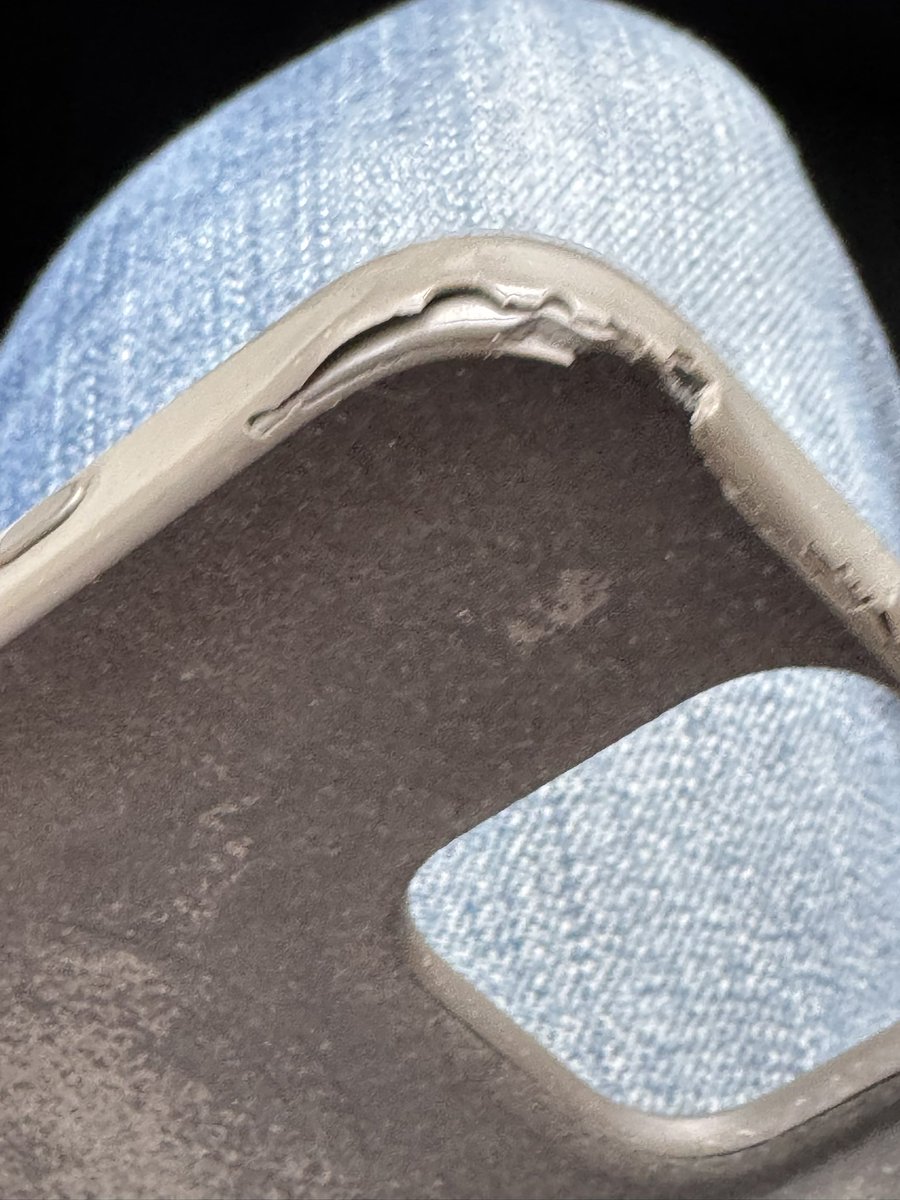
This isn’t to say I regret my choice, because removing the case today shows the phone to be in basically as-new condition. But I would love hear recommendations for better cases than the one I had – it was Apple’s regular silicone case.
English
11
0
7
5.1K
Paul Hudson
Paul Hudson@twostraws·
I’ve used the iPhone Upgrade Program since launch, and made the same joke as others: “Case? My case is AppleCare+!” Last year I finally (very late, sorry!) realised that returning phones with scratches etc was grim for reuse/resale, so I got a case. This the case today 😬
Paul Hudson tweet mediaPaul Hudson tweet mediaPaul Hudson tweet media
English
15
1
54
20.7K
Andrew Crookston retweetledi
Kartikay
Kartikay@Kartikayb77·
There is a lot fear about the progress of ai making software engineers 'irrelevant'. Especially among those in college and those just starting out in their careers. I do not share those fears. Because I am not a software engineer, I am a problem solver. A much more powerful title.
Kartikay tweet media
English
4
27
241
21.6K
Andrew Crookston
Andrew Crookston@acr·
@ptr So very happy for you to find yourself, and having the bravery for writing this. I know it hasn't been easy but I'm proud to be able to call you a friend. Just amazing to see all the love you're getting in the replies.
English
1
0
1
124
*tess
*tess@ptr·
It has been a busy few months! Somehow, I find myself with one more bit of news: I am transgender, and I'm in the middle of a gender transition. 🏳️‍⚧️ I am changing my name to Tess (she/her). I am out at home and at work and now you know, too. That's the gist. If the story interests you, more below. [If you are having a 🤯 moment, that's totally normal! I'll wait. :)] Alright so... this is news for most people in my life, but it isn't for me. It's something I have struggled with deeply for over 25 years, mostly in denial of what it was and what it meant. As a kid I struggled with shyness and social anxiety. I learned to hide parts of me and fake others so I could fit in. Not just thoughts about gender, but also things like being a nerd, anything I worried made me weird or strange or unlovable. It's a kind of mask that I wore, consciously at first, but increasingly invisible even to me. As I approached 40 last year, I found myself gaining the bravery to interrogate these feelings, educate myself about them, and take steps to be happier, calmer, and more present for the people who matter most in my life, starting with my amazing wife and wonderful kids. I don't know exactly what untangled this web of thoughts for me. My best guess is I got to a point in my life where I could breathe and reflect and for the first time ever, worry less about achieving in the eyes of others. I have gained a lot of strength over the last many months. In spite of all that, the truth is that writing this, and posting it here, is an incredibly scary thing. I've come to see my professional network as a kind of consolation prize for suppressing parts of me I thought the world might judge, things that would prevent me from achieving a career I was proud of or building a family I could love and care for. The thing with consolation prizes is they mean you didn't get what you were hoping for, and I realize now that the thing I missed out on was being myself, openly and without fear, or at least with courage and bravery. In the back of my mind in nearly every social interaction in my life has been this lurking question, "What if they knew?" Would they still like me? Respect me? Want to work with or for me? I hid from the answers to those questions. That path served me for a time, but the healthier path, the one I am choosing, is to say: Be who you are. Let people come into or out of your life of their own accord. These days I don't have to ask "What if they knew?" anymore around the house or at work or with my friends, and by telling you all, I don't have to ask that here, either. It's a special kind of peace I never thought possible. It's going to be hard to believe this, but I promise, it's true: while the news sounds huge and life defining, it's quite the opposite. I carried this inside me and I'm finally setting it down. Yes I look different, and that will play out more over time. Yes I am changing my name. But the thoughts were always there, the secret strain on my life was always there. I'm free of that, now, and with that comes a lightness that far exceeds the awkwardness you might imagine I feel. Truly, and I mean this: things are easier for me now. As complex as this whole thing seems from the outside, it is deeply, profoundly simplifying on the inside. I am at peace. Thanks for listening. If you made it this far, I'm flattered. I write all of this partly for catharsis, but it serves another more important role. Product Management, and especially product leadership, has near zero trans representation. At times I wonder if seeing others like me live openly would have helped me when I was suffering. Perhaps I would have figured myself out a bit sooner. Regardless, I feel compelled to speak up and out and to be that representation for others. Living openly and showing people like me that it is going to be okay helps me forgive myself for many years of confusion, fear, and shame. And if this note resonates with you in any way and you want to talk about it, my DMs are open anytime. Hang in there; it gets better. 💜
English
40
0
204
37.4K
Andrew Crookston
Andrew Crookston@acr·
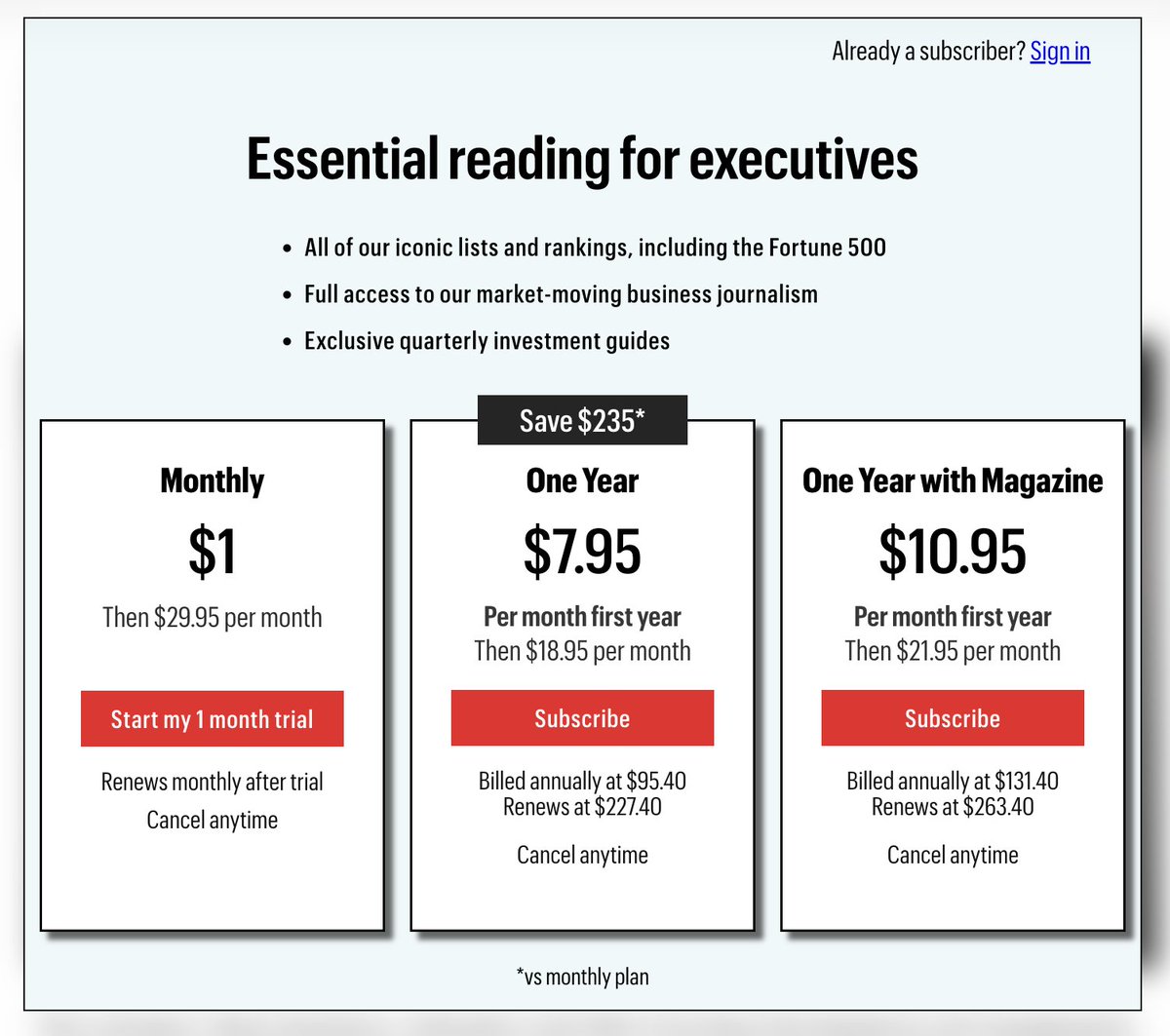
@aaditsh I pay for a digital subscription for a big Swedish newspaper. Definitely read it a few times per day.
English
0
0
0
27
Aadit Sheth
Aadit Sheth@aaditsh·
I'm genuinely curious: Have you ever bought from these gated articles?
Aadit Sheth tweet media
English
12
0
6
12.5K
Andrew Crookston
Andrew Crookston@acr·
@SahilBloom Form does not show in Firefox. I see some "Content-Security-Policy" and "TypeError: styleElement.sheet is null" errors in the console.
English
0
0
0
113
Sahil Bloom
Sahil Bloom@SahilBloom·
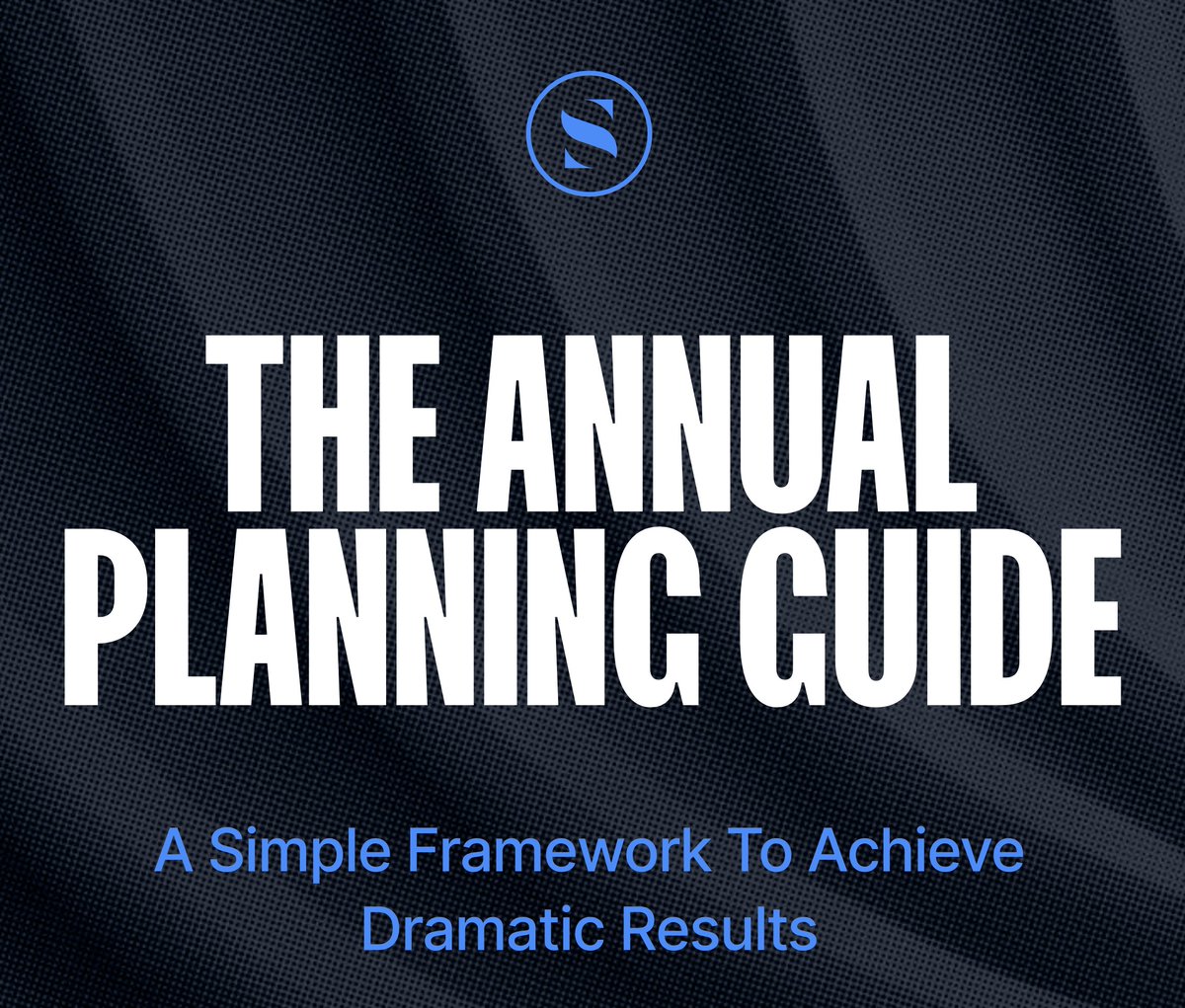
I just released my free Annual Planning Guide! The printable PDF includes: • Simple goal-setting framework • Four system-building mental models • Strategy for tracking and adjusting (bookmark and share this) This annual planning process has been an immensely helpful exercise to which I would credit many of my greatest achievements. I hope that the free guide will spark you to conduct your own annual planning process for 2024, as I'm highly confident you will get incredible value from the exercise. You can download the beautiful printable PDF ​here​: sahilbloom.com/annual-planning
Sahil Bloom tweet media
English
59
118
1.1K
439.3K
Andrew Crookston
Andrew Crookston@acr·
@engineers_feed $0.18 avg last month. Only 0.43kr = $0.039 for production, rest is taxes and cable fees. Although last December was about 10x that Stockholm Sweden
English
0
0
0
13
World of Engineering
World of Engineering@engineers_feed·
How much do you pay for 1 kWh of electricity? And what is your country?
English
723
89
906
871.4K
Andrew Crookston retweetledi
Gergely Orosz
Gergely Orosz@GergelyOrosz·
This is kind of an open secret when talking with founders. It’s much easier to get people to care about the company when they meet other coworkers semi-regularly. Of course many full-remote companies do a great job with this: it’s just far more work to do, and needs thought.
George Mayer@GeorgeMayer

Turns out remote people care less about their jobs… which is obvious, but something team “we’re just as productive” will need to contend with.

English
68
36
453
287.4K
Andrew Crookston retweetledi
*tess
*tess@ptr·
When I tell people we didn't use an issue tracker at Slack, I typically get one of two reactions, either "oh thank god" or "how tf did you stay organized?" Here's the thing: we were incredibly organized. Here was our system: Use a document (and checklists) to track your work. We used a tool called Hackpad, which Dropbox acquired and became the bones of Dropbox Paper. With Paper we could keep the product brief, designs, and engineering tasks in a single spot. This was immensely helpful for keeping everyone aligned -- there was just one place to check, and no risk of things being out of sync across multiple tools. We'd project the doc during team meetings, and the whole team worked out of this document throughout the day. (This was so effective that it motivated us to build @Balsa to implement the patterns we used at Slack.) Use a spreadsheet to track status. We used a simple Google Sheet, with a row for each project, the PM/EM working on it, launch date, project status (red/yellow/green), and a column for comments, which contained a weekly note on how things were going. We reviewed this spreadsheet every Monday in an all-PM/EM meeting with the CPO, CTO, and VPs of Eng and Design. Use your issue tracker as a bug database. Issue trackers are great at remembering, but they suck for keeping track of what's happening now. Eng tasks related to a project we were actively working on, including bugs caught in QA, were all kept in a checklist in the project document. Things we knew we weren't going to fix, or that needed to be done by other teams would go into an issue tracker we built ourselves. (We eventually migrated this to Jira.) The issue tracker was helpful for cataloguing things and giving Customer Support a place to search for known defects, but we never worked out of it for active project work. Closing thought: Most of the time, you just need a document. Lightweight product process is not anarchy. As an industry we've been brainwashed for 20+ years by giants like Atlassian telling us the only way to stay organized is to use Jira (or issue trackers like it). This is outdated advice. Issue trackers are designed for a bygone era. Nowadays projects change daily or hourly as designers, engineers, and PMs adapt in real time, tweaking designs, running experiments, and incorporating feedback between research sessions. When your whole team is coordinating in Slack, chiseling tasks into your bug database slows you down and makes you less adaptable. A doc and checklists. It's all you need. (We're building @Balsa as a builder-focused, dedicated tool for this workflow, but you can do this with Dropbox Paper, Notion, or even Word or Google Docs.)
English
11
19
186
47.3K
Andrew Crookston retweetledi
*tess
*tess@ptr·
We designed, built, and shipped Slack's Do Not Disturb feature in four weeks, between Thanksgiving and Christmas 2015. (We wanted it out for the holidays so folks could snooze notifications during their time off.) Here's how we pulled it off: Know what you want to achieve. We knew customers were increasingly unhappy with how noisy Slack's notifications could be. Especially off hours or during deep work. We knew we needed two things: 1. DND hours, for nights and weekends 2. Ad-hoc snooze ability, for meetings and deep work Be ruthless about scope. Nothing was bolted down, and everything was up for grabs. We cut the ability for custom snooze length -- in the first version, you had to pick your snooze duration from preset options, and they were capped at 24h. We cut weekend DND, which felt like a brutal omission. (Turns out it didn't matter as much as we thought! We didn't get back to it until 2020 -- five years later -- because it just wasn't as much of a customer priority as we expected.) Secure stakeholder buy-in continuously. When you're shipping fast, there's no time to wait for reviews. We invited stakeholders to our Slack channel and I kept a running changelog in our project document, with notes posted in Slack, so everyone always knew what was changing and what the finished product would look like. When we were cutting scope or tweaking designs I sent updates to Stewart directly and we incorporated his feedback straightaway. Consolidate everything into *one* document. To keep everyone tightly aligned, we created a canonical document somewhere between a product brief and a PRD, which also contained design documentation and the engineering task list. This document was changing daily (sometimes hourly). To keep things straight and help stakeholders stay informed, I wrote a running changelog at the top of the document, including bullets for each update and a link to the relevant section. With this doc, everyone from team members to the CEO knew where to go, knew the information was up-to-date, and could keep up without re-reading the entire doc. By the time we launched, this doc was 10+ pages long. (Long is okay! The important thing is that it's consolidated, and that people can find their way around.) Skip the issue tracker. This one surprised me the most: the team was adamant that we work out of a document, not an issue tracker. We didn't write user stories. There was no task breakdown in Jira. In fact, if we had done these things we never would have shipped on time, because we would have spent all our time updating our tasks as our plans changed daily. Not to mention how reluctant teams are to constantly adjust course when a detailed plan is chiseled into your issue tracker. We did track tasks! We just did it as checklists in the doc. This made cutting scope, tweaking requirements, and catching+fixing bugs much lighter weight and helped us move at lightspeed. Final thought: Do Not Disturb was the first feature I worked on at Slack. The playbook I learned challenged a lot of my presumptions about building great software, and it made me a better, faster PM. As a PM some of these pieces might be out of your control, like flexibility on scope or continuous access to stakeholders. But some of the more tactical bits are things you can do today, like letting go of your issue tracker and consolidating all your documentation into a single point of reference. (We built @balsa to reflect how we documented projects at Slack, so if this speaks to you, check it out!) Good luck out there!
English
7
24
263
82.1K
Andrew Crookston retweetledi
*tess
*tess@ptr·
When it comes to PM, stored knowledge deteriorates so rapidly that you should try to create as little of it as possible. You are probably writing too much down, at the cost of more important things like talking to customers, iterating on designs, deep diving into analytics, etc etc. I'm not talking about skipping writing down the problem you're trying to solve when you build a feature. I'm talking about the 100s of stale Jira tickets you'll never close, the sprawling Notion, carefully organized and full of outdated documentation. You ain't gonna need it... and it's slowing you down. Cut the anchor. You probably just need a list of what your goals are, and a checklist of the tasks you need to complete to get there.
English
4
10
83
12.3K
Andrew Crookston retweetledi
*tess
*tess@ptr·
How to prioritize a product backlog, in 9 easy steps. 🪄 Many PMs struggle with this. You don't have to. If you have a list of ideas already, you can do it in under an hour. 1. Create a blank spreadsheet (e.g. sheets.new) 2. Add column headers: "Project", "Reach", "Impact", "Confidence", "Effort", "ROI" 3. Write your ideas in the Project column 4. In the "Reach" column, guess the # of customers who will use the feature (very rough! 10? 100? 1000?) 5. In the "Impact" column, guess the % improvement on the customer's life (again, rough! tiny = 10%, medium = 100%, high = 200%, etc.) 6. In the "Confidence" column, guess the % chance you will get it right on the first try (again, very rough: closing a commonly requested feature gap = 100%, never-tried experimental idea the team is excited about = 25%, etc) 7. In the "Effort" column, write the # of person-weeks required (e.g. 2 people for 2 weeks = 4 -- this is a great spot to bring your eng mgr peer into the convo) 8. In the ROI column, calculate: Reach*Impact*Confidence/Effort 9. Sort by ROI Boom, done. At this point you will probably wince at some of the results -- this is your intuition telling you either: a) there's a mistake somewhere in your estimate of reach/impact/confidence/effort b) you are more attracted to some ideas than you should be, in light of your alternate options c) you have large projects that could be broken down in ways that would isolate the higher ROI bits Building a ranked backlog is easy once you know how to do it. The hard part is applying your judgment to the results, and transforming the backlog into a sequenced roadmap that factors in people's availability, need for quick wins vs. longer term investments, tech debt, refactoring, etc. Having a great ranked backlog puts you on the path. Good luck!
English
11
14
191
51.5K
Andrew Crookston
Andrew Crookston@acr·
3D is hard. Why has nobody created Figma for 3D? (Free idea! I'm busy building this...) #raspberrypi
Andrew Crookston tweet media
English
0
0
1
127