A. K. Rushing

3.7K posts

A. K. Rushing banner
A. K. Rushing

A. K. Rushing

@AKRushingAuthor

Follower of Christ ✝️ Author - Horror novella - THE FORMERLY LIVING - Available on Amazon & Apple Books - Drummer - Woodworker - Ole Miss Rebels


Tennessee, USA Katılım Ağustos 2024
1.3K Takip Edilen2.4K Takipçiler
Sabitlenmiş Tweet
A. K. Rushing
A. K. Rushing@AKRushingAuthor·
My horror novella, THE FORMERLY LIVING, is available on Amazon for Kindle and Apple Books for all you iPhone types. See link below.
English
1
1
2
265
A. K. Rushing retweetledi
Handre
Handre@Handre·
Sweden's socialist experiment collapsed spectacularly in the early 1990s, forcing politicians to abandon decades of central planning and embrace free markets. The results speak louder than any economic textbook ever could. By 1990, Sweden's government consumed 67% of GDP. The marginal tax rate hit 87%. Capital flight accelerated as entrepreneurs fled to countries that didn't punish success. The krona crashed. Banks failed. Unemployment spiked to 9.9% by 1997. Sweden's welfare state had priced itself out of reality, just as free market economists predicted it would. Then came the great reversal. Sweden privatized telecommunications, postal services, railways, and electricity. Politicians slashed the corporate tax rate from 57% to 22%. They introduced school vouchers, allowing parents to choose private schools with taxpayer funding. They partially privatized pensions, letting workers invest in individual accounts instead of relying solely on government promises. Most importantly, they eliminated wealth taxes and inheritance taxes that had driven capital overseas. The recovery was swift and decisive. GDP growth accelerated. Unemployment plummeted to 6.1% by 2007. Sweden became a tech powerhouse, producing global companies like Spotify and Skype. The Stockholm stock exchange outperformed most European markets. Foreign investment flowed back as Sweden transformed from socialist cautionary tale to Nordic success story. Today's American progressives love citing "Scandinavian socialism" while ignoring that Sweden's prosperity stems from abandoning socialism when it failed. They want the Sweden of 2023 while implementing the policies of 1975.
Handre tweet media
English
64
490
1.5K
74.8K
A. K. Rushing
A. K. Rushing@AKRushingAuthor·
Yes!
Athenaeum Book Club@athenaeumbc

You did not receive a real education. Today, we think of education as a litany of scattered disciplines that you study for careerism and social mobility. But a classical education was different. It taught you the seven liberal arts to liberate your soul... First, you learned the Trivium: • Grammar • Logic • Rhetoric Once you could think, speak, and articulate yourself clearly, you moved to the Quadrivium: • Arithmetic • Music • Geometry • Astronomy The Quadrivium is about training you to see order in reality itself. Nature has an intelligent design and you are connected to it: you belong in the cosmos. The difference with a true liberal arts education is not simply what you study, but *why* you study it. A classical liberal arts education taught you how to find God — the Transcendent Good was the end point of all education. Instead of a set of independent disciplines, education was a deeply interconnected moral pursuit, teaching you to be attuned with truth, beauty, and goodness. This interconnectedness is why the 7 liberal arts are presented as a wheel. And have you noticed that the symbol of the 7 liberal arts is strikingly similar to the rose windows of Gothic cathedrals? That's no coincidence. Rose windows symbolize Heaven, suggesting that reality itself is patterned after them — and this same circular pattern is the symbol of classical education in the liberal arts. The implication is that the liberal arts liberate your soul by forming you according to the pattern of Heaven itself. Education is preparation for eternity. athenaeumbooks.com/welcome This is from a longer essay published in our newsletter — join us!


QST
0
0
0
11
A. K. Rushing retweetledi
Wall Street Apes
Wall Street Apes@WallStreetApes·
This is horrifying and every American needs to hear this California resident exposes what’s really going on with Flock Cameras in America “I want to be clear what these cameras actually are, and I say that with somebody with 20 years of experience in IT. I've served as the chief network architect for Fortune 500 companies, I've designed data centers, and today I work on cloud infrastructure for one of the largest loan origination companies in the country. I'm not speculating on how this technology works. I've read their patents and I know how it works. Flock advertises these cameras as simple license plate readers. But their own patents tell a different story. They're AI-powered surveillance machines that capture every passing vehicle and person and transmit that data to a private corporate cloud, making it queryable by a multitude of state and federal agencies. The city of Corona does not control that database, and Corona residents have no public record rights against a private company's servers. Our daily movements are being harvested by a $7.5 billion corporation, that only answers to venture capital investors, not to us. Flock did not reach that valuation on their per-camera subscription fees. That math doesn't add up The city council should also understand who they're doing business with. Flock CEO was asked whether the company had any federal contracts. He said no. That was a lie. Public records revealed that Flock had been secretly running a pilot program giving the US Border Patrol access to local police camera data without the knowledge of the cities that paid for the cameras. Now consider who's behind the company and where your data flows. Flock integrates directly with Palantir, a data fusion platform, with a $30 million contract with ICE. Peter Thiel, the founder of Palantir, is also one of Flock's primary investors. These are not separate companies with separate agendas. They are connected actors that are building a connected infrastructure. Palantir's own CEO stated publicly just this month that his technology is being used as a political instrument, designed to reduce the political power of certain voters. And that's the ecosystem that our Corona cameras are feeding into. We're not anti-police at all. We're against mass surveillance of innocent residents by a company with a documented record of deception, built by investors with a stated political agenda. We're asking the City Council to start auditing the queries made against Flock's database, to disclose any data sharing agreements, and to take a vote to cancel the Flock safety contract” I looked more into this and he is 100% right Patents describe broader object detection, including tracking people and pedestrians, patents like US11416545B1. The system uses a centralized cloud database for nationwide queries Data goes to Flock’s private cloud, AWS-based, encrypted. Nationwide lookup is common, 75%+ of customers are enrolled enabling cross-jurisdictional searches. Residents have no direct public records access to the corporate servers. This creates a mass surveillance network feeding a private company’s infrastructure If you ask me this is laying the infrastructure for a mass surveillance network in America. We are being lied to. Cancel all contracts nationwide
English
820
15.2K
27.8K
817.6K
A. K. Rushing retweetledi
Black Hole
Black Hole@konstructivizm·
Imagine a silence so profound it swallows entire galaxies. There exists a void in space so incomprehensibly vast that a traveler moving at the speed of light — the fastest anything can go — would plunge through unbroken, starless darkness for 752,536,988 years before encountering even a single speck of matter.This is the Boötes Void (also known as the Great Nothing), one of the most staggering empty regions ever mapped in our observable universe. Spanning roughly 330 million light-years across, it contains almost nothing — just a lonely handful of galaxies where thousands should exist. It is a cosmic abyss so empty it defies our intuition about what “space” even means.Using deep-sky maps from the Sloan Digital Sky Survey and other powerful observatories, astronomers have revealed these enormous voids as dark, yawning gaps between the glowing filaments of galaxies that form the large-scale structure of the cosmos. In the early universe, gravity acted like a sculptor, pulling matter into vast cosmic webs and threads, leaving behind these immense, hollow pockets — nature’s ultimate voids.Even more strangely, galaxies seem to crowd nervously along the edges of these empty zones, as if shunning the desolation at their cores. The universe, it turns out, is not a uniformly filled expanse. It resembles a delicate cosmic spiderweb: shimmering strands of galaxies and clusters connected by thin filaments, with cavernous voids making up the majority of its volume.In a cosmos teeming with billions of galaxies, these voids stand as humbling reminders that much of existence is defined not by presence, but by absence. They challenge everything we think we know about “empty” and “full,” whispering of a universe far stranger, far lonelier, and far more mysterious than we ever dared imagine.A quiet kind of infinity — not shouting, simply being.
Black Hole tweet media
English
23
103
501
30.4K
A. K. Rushing
A. K. Rushing@AKRushingAuthor·
Fascinating!
Black Hole@konstructivizm

Saturn doesn’t just have rings — it rules an entire miniature solar system.As of 2026, the ringed giant boasts 292 confirmed moons, far more than any other planet, with the number still climbing as astronomers keep spotting tiny new ones. Dominating them all is Titan, a colossal world larger than the planet Mercury. With a thick nitrogen atmosphere, rivers and lakes of liquid methane, and a diameter of 5,150 km, Titan feels more like a planet that got captured than a mere moon.Titan orbits Saturn at a safe distance of about 1.2 million kilometres — well beyond the outer edge of the famous ring system. Those dazzling rings, made of countless icy particles and moonlets, are confined much closer to the planet, while Titan sails majestically around the entire sprawling family of satellites. The sheer crowd of moons — from planet-sized Titan down to kilometer-scale irregular rocks — reveals just how gravitationally chaotic and crowded Saturn’s neighborhood truly is. It’s a dynamic, ever-evolving system where collisions, captures, and gravitational dances continue to shape one of the most spectacular regions in our Solar System.

English
0
0
0
4
A. K. Rushing retweetledi
Black Hole
Black Hole@konstructivizm·
After 9 years… and 3 BILLION miles… we finally met Pluto For decades, Pluto was nothing more than a faint, blurry speck in our telescopes — a lonely mystery at the frozen edge of our Solar System.Then, in July 2015, NASA’s New Horizons spacecraft screamed past at 30,000 mph… and completely changed everything. What we saw blew our minds: Towering ice mountains rising 11,000 feet high — as tall as the Rockies, but made of frozen nitrogen and methane Heart-shaped plains of smooth, young ice that look eerily like Earth’s polar regions A hazy blue atmosphere with drifting hazes and possible snow Active geology, possible subsurface ocean, and even dunes made of methane iceThis isn’t a dead, cratered rock. Pluto is a dynamic, colorful, living world — one that still surprises scientists years later. The wildest part? Every single pixel of these jaw-dropping images had to travel 3 billion miles back to Earth… taking over 4 hours just to arrive.From a distant dot in the sky to one of the most fascinating worlds we’ve ever explored.That’s the absolute magic of space exploration. What surprised you most about Pluto? by 1994
English
188
940
6.6K
660.3K
A. K. Rushing
A. K. Rushing@AKRushingAuthor·
It’s time to wake up!!
English
0
0
0
4
A. K. Rushing retweetledi
History Nerd
History Nerd@_HistoryNerd·
In 1977, Sylvester Stallone explained why he wrote Rocky and how he convinced Hollywood to let an unknown actor play the lead. When asked why he wrote the script, Stallone described what he saw as a problem with the films of that era: "I felt at the time that cinema, at least the movies I had been seeing were at an all-time low. It was everything was anti-society, anti-Christ, anti-government, anti-everything. And there was no one to root for." He believed films move in cycles, and he wanted to bring back something that had been lost: "I wanted to get back into the cycle of the films of the 40s and the 50s where people say, 'Hey, gee, I missed the good old films.' Yet Hollywood hasn't taken heed and hasn't made any good old-fashioned type films where morality was at the forefront." Up to that point, Stallone's career had been built on tiny roles, what he called "atmosphere": "I was mostly what is known as atmosphere, always in the background or the guy that was being the drunk that was being stepped over in the gutter and other lame roles." Writing Rocky was his way of giving himself one real shot before disappearing: "I felt that gee, if I was going to go down at least into professional obscurity, I wanted to at least have the opportunity to say to myself, well, you tried. You put your best foot forward and you didn't make it." He knew the character had to match what he could authentically play: "I surely couldn't pass myself off at least as a lawyer in a three-piece suit. I just don't think I have that kind of appeal or whatever it is. So I wanted to take it much more basic. A man from the street. All right. What kind of a man? An underdog. And that being a professional fighter I think has that connotation to it." When the script reached studio executives, they wanted a star. They floated James Caan, Burt Reynolds, Ryan O'Neal, Gene Hackman, and Robert Redford. Stallone's pitch for himself came down to persistence and economics: "Usually it's the old syndrome of knocking on the windows, pestering them, pressing my face in the door, honking their horn in the driveway. In other words, making a real pain in the neck out of myself." "I kept saying I work a lot cheaper and a lot harder and for a lot longer." The film was eventually made for $960,000, which Stallone described as roughly the cost of "a good toothpaste commercial."
English
44
378
2.5K
375.7K
A. K. Rushing retweetledi
Bitcoin Teddy
Bitcoin Teddy@Bitcoin_Teddy·
Milton Friedman: “I am not a conservative. I’ve never been a conservative. Hayek was not a conservative.” “We are liberals in the true meaning of that term: concerned with freedom. We are not liberals in the current distorted sense—those liberal with other people’s money.”
English
61
1K
6.2K
216.1K
A. K. Rushing retweetledi
Elon Musk
Elon Musk@elonmusk·
This is how an economy actually works
Brivael Le Pogam@brivael

Elon Musk avait dit un truc qui m'avait marqué sur l'allocation de ressources. En substance : passé un certain niveau de richesse, l'argent n'est plus de la consommation, c'est de l'allocation de capital. Cette phrase change tout. L'économie, dans le fond, c'est juste un problème d'allocation. Tu as des ressources finies et des usages infinis. Qui décide où va quoi ? Imagine une cour de récré. 100 enfants, des paquets de cartes Pokémon distribués au hasard. Tu laisses faire. Très vite, un ordre émerge. Les bons joueurs accumulent les cartes rares, les collectionneurs trient, les négociateurs trouvent des deals. Personne n'a planifié. Et pourtant chaque carte finit dans les mains de celui qui en tire le plus de valeur. Le système maximise le bonheur total de la cour. C'est ça, la main invisible. Maintenant fais entrer la maîtresse. Elle trouve ça injuste. Léo a 50 cartes, Tom en a 3. Elle confisque, redistribue, impose l'égalité. Trois effets immédiats. Les bons joueurs arrêtent de jouer, à quoi bon. Les mauvais n'ont plus de raison de progresser, ils auront leur part. Les échanges s'effondrent. La cour est égale, et morte. Elle a maximisé l'égalité, elle a détruit le bonheur. Le problème de la maîtresse, c'est qu'elle ne peut pas avoir l'information que la cour avait collectivement. C'est le problème du calcul économique de Mises, formulé en 1920. L'URSS a essayé de le résoudre pendant 70 ans avec le Gosplan. Résultat : pénuries, queues, effondrement. Pas parce que les Soviétiques étaient bêtes, parce que le problème est mathématiquement insoluble en mode centralisé. Quand Musk a 200 milliards, il ne les consomme pas, il les alloue. SpaceX, Starlink, Neuralink, xAI. Chaque dollar est un pari sur le futur. Et lui a un track record. PayPal, Tesla, SpaceX. Il a démontré qu'il sait identifier des problèmes immenses et y allouer des ressources avec un rendement spectaculaire. L'État aussi a un track record. Hôpitaux qui s'effondrent, éducation qui décline, dette qui explose, services publics qui se dégradent malgré des budgets en hausse constante. Le marché identifie les bons allocateurs, la politique identifie les bons communicants. Le profit n'est pas une finalité, c'est un signal. Il dit : tu as alloué des ressources rares vers un usage que les gens valorisent suffisamment pour payer. Plus le profit est gros, plus la création de valeur est grande. Quand Starlink est rentable, ça veut dire que des millions de gens dans des zones rurales ont enfin internet. Quand un ministère est en déficit, ça veut dire qu'il consomme plus qu'il ne produit. L'un crée, l'autre détruit, et on appelle ça redistribution. Dans nos sociétés il y a deux catégories d'acteurs. Les entrepreneurs et les bureaucrates. L'entrepreneur prend un risque personnel pour identifier un problème, mobiliser des ressources, créer une solution. S'il se trompe il perd. S'il a raison, ses clients gagnent, ses employés gagnent, ses fournisseurs gagnent, l'État collecte des impôts. Il est la cellule de base du progrès humain. Le bureaucrate ne prend aucun risque personnel. Son salaire est garanti. Au mieux il maintient une rente existante. Au pire il la détruit par excès de réglementation, mauvaise allocation forcée, incitations perverses qui découragent ceux qui produisent. Mais dans aucun cas il ne crée. Regarde les 50 dernières années. iPhone, internet civil, SpaceX, Tesla, Google, Amazon, Stripe, mRNA, ChatGPT. Toutes des inventions privées, portées par des entrepreneurs, financées par du capital risque. Pas un seul ministère n'a inventé quoi que ce soit qui ait changé ta vie au quotidien. La France est devenue le laboratoire mondial de la dérive bureaucratique. 57% du PIB en dépenses publiques, record absolu. Une administration tentaculaire, une fiscalité qui pénalise la création de richesse. Résultat : décrochage face aux États-Unis, à l'Allemagne, à la Suisse. Fuite des cerveaux. Désindustrialisation. Dette qui explose. Et le pire c'est que la mauvaise allocation s'auto-renforce. Plus l'État prélève, moins les entrepreneurs créent. Moins ils créent, moins il y a de base fiscale. Plus l'État s'endette et taxe. Boucle de rétroaction négative parfaite. La maîtresse pense qu'elle aide, et chaque année la cour produit moins. Dans nos sociétés, ce sont les entrepreneurs, toujours, qui font avancer la civilisation. Les bureaucrates au mieux maintiennent une rente, au pire la détruisent. Aucune société n'a jamais progressé en taxant ses créateurs pour subventionner ses gestionnaires. La question n'est jamais qui a combien. C'est qui alloue le mieux la prochaine unité de ressource pour maximiser le futur de l'humanité. La réponse depuis 200 ans n'a jamais changé. Ce ne sont pas les fonctionnaires.

English
5.6K
18.4K
130.3K
79.9M
A. K. Rushing
A. K. Rushing@AKRushingAuthor·
@RepKeithSelf @4_0GTS This shouldn’t even be a discussion: it is blatant government overreach. We, the American people, MUST band together to vote out the”lawmakers” that treat us like sheep. These elite, arrogant, mini-tyrants work for us. It’s time - long PAST time - to remind them of that!
English
0
0
1
14
Rep. Keith Self
Rep. Keith Self@RepKeithSelf·
Imagine a woman fleeing an attacker—and her car won’t start because it thinks she’s impaired. Imagine a farmer injured on the job—his truck won’t start because it thinks he’s drunk. These are the unintended consequences of the Kill Switch mandate. Kill the Kill Switch.
English
2.8K
26K
95.6K
1.5M
A. K. Rushing retweetledi
Alec Lace
Alec Lace@AlecLace·
🚨 MUST WATCH: Johnny Carson (a Democrat) opens the 1981 Oscars, a day after the assassination attempt on President Reagan, with genuine class and respect. The entire liberal Hollywood crowd erupts in applause. Today? Jimmy Kimmel jokes about Melania Trump becoming a widow.
English
2.9K
13.8K
52.7K
1.1M
A. K. Rushing retweetledi
Milton Friedman Quotes
Milton Friedman Quotes@MiltonFriedmanW·
Milton Friedman on 4 ways to spend money: 1) Your money on yourself (you’re careful about both cost and quality) 2) Your money on others (you care about cost, less about quality) 3) Someone else’s money on yourself (you care about quality, not cost) 4) Someone else’s money on others (you care about neither) The last one is how government spending works.
English
45
2.2K
7.1K
274K
A. K. Rushing retweetledi
Michael Warburton
Michael Warburton@For_Film_Fans·
This STAR WARS teaser trailer was screened before ‘King Kong’ in December of 1976. The special effects weren’t finished, the music is NOT John Williams, and all in all it gives off a very different much darker vibe. Interesting.
English
125
812
6.9K
610.9K
A. K. Rushing
A. K. Rushing@AKRushingAuthor·
Outstanding!
mike bski@BskiMike22802

BEFORE WE BEGIN -- THEY ARE NOT COMING FOR YOUR GUNS FIRST. THEY ARE COMING FOR YOUR FEELINGS. I want to tell you something before we get into Machiavelli and Alinsky and Hitler and all of it. Something that never makes it into political analysis. Something that every authoritarian playbook skips right over, because the people writing those playbooks already know it and assume you do not need to be told. Here it is. The left does not recruit people by appealing to their reason. It recruits them by appealing to their pain. Sit with that for a second. I have been a medic. Civilian paramedic in Cleveland, Army combat medic for 23 years, including a deployment to Iraq where I opened a school, a fire station, and a hospital. I know what a person looks like when they are hurting and someone shows up offering relief. I have seen it in a firefight and I have seen it in a classroom. The mechanics are identical. Find someone at their lowest. Offer community. Offer identity. Offer purpose. And very quietly, in exchange, require their loyalty and their silence. That is not a political strategy. That is a predatory pattern. Ohio State University published a study in PNAS Nexus -- this is peer-reviewed research, not a talk show -- using functional MRI brain scans to determine whether political ideology is detectable neurologically. The short answer is yes. Remarkably so. As predictive as parental ideology, which is the gold standard in political science. But here is the part that should stop you cold. Of all eight cognitive tasks they ran, the ONE task most strongly associated with MODERATE political views was the EMPATHY task. Participants were shown photos of emotional faces -- people in distress. Liberals and moderates responded differently in the brain than conservatives. The empathy circuits lit up differently. Now. I am not here to tell you that empathy is bad. Empathy is a gift. It is also a vulnerability. Because when a political movement figures out that your empathy can override your critical thinking -- that showing you the right suffering face at the right moment will get you to suspend rational analysis and reach for your wallet or your vote -- that movement will USE that knowledge. Deliberately. Systematically. On a mass scale. Kirkegaard's 2020 analysis of the General Social Survey, 64,814 respondents spanning nearly five decades, found that every single mental health measure showed a consistent correlation with left-wing political orientation. The "extremely liberal" category showed a 150% INCREASED rate of mental illness compared to moderates. Conservatives consistently reported higher happiness and life satisfaction across multiple measures. This pattern held across the 1970s, 80s, 90s, and 2000s without significant change. I am not mocking people who struggle with mental health. I am observing a recruitment pattern. Polish psychiatrist Andrzej Lobaczewski -- who studied political systems under Soviet occupation, which is a more rigorous laboratory than any university campus -- developed what he called "political ponerology." The science of evil in political movements. His central finding: pathological individuals, people with psychopathic or narcissistic personality structures, do not build authoritarian movements from scratch. They INFILTRATE existing social movements. They climb to the top of organizations that well-meaning, empathetic people built in good faith. And they use the moral credibility of those people as a shield while they hollow out the movement from the inside. He called this process "ponerization." The corruption of a normal group by pathological leadership. And the first people absorbed? Not the cynical. Not the calculating. The EMPATHETIC. The ones who saw genuine injustice somewhere and responded with their whole heart before anyone told them to look closer at who was actually running the organization and where it was actually heading. The research on neuroticism tells the same story. Liberal individuals consistently score higher on neuroticism -- anxiety, emotional instability, heightened sensitivity to perceived threat and injustice. These are not character flaws. They are personality traits. But they are also traits that make a person MORE susceptible to what researchers now call "spellbinding" -- the ability of pathological communicators to override rational evaluation with emotional appeal. In other words. A person who feels deeply is easier to manipulate if you can control what they feel about. So here is the structure of what you are about to read. I am going to walk you through five hundred years of authoritarian playbooks. Machiavelli through Chavez. Each one built on the same architecture, just updated for the available technology. But I want you to hold onto this preface the entire time. Because the question is not just "what is the strategy." The question is "who does the strategy WORK on." And the answer, in every case, is: the people with the most empathy, the most emotional sensitivity, and the least institutional protection against manipulation. The targets are not the cold and the cynical. The left does not go after people who are already hard. They go after the generous. The people who genuinely want to help. The people who saw something wrong in the world and decided to do something about it and then got handed a movement that told them exactly who to blame, exactly who to hate, and exactly how to perform their virtue loudly enough that the people around them would accept them. Community. Identity. Purpose. Enforced loyalty. Public shaming of dissent. You know what that is. You have seen that word used before. Do not let it make you dismiss what I am saying. Just keep reading. By the time you finish this article, you will understand why the playbook targets empathy first. And you will understand what the alternative actually looks like. It does not look like being cold. It looks like being INFORMED. Informed people are the only ones the playbook cannot absorb. That is not an opinion. That is a historical pattern. Five hundred years of it. Let us begin.

English
0
1
1
89
A. K. Rushing retweetledi
Handre
Handre@Handre·
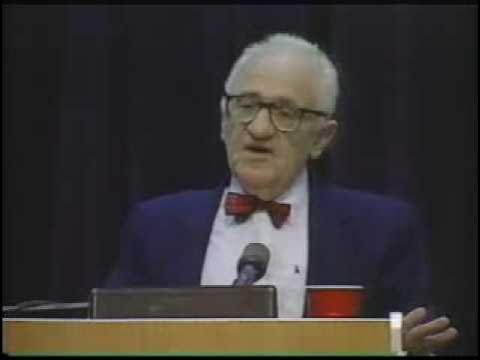
Murray Rothbard demolished every economic justification for government intervention in his 1970 masterpiece "Power and Market," and the state's apologists still haven't recovered from the intellectual beatdown. Rothbard took apart price controls, antitrust laws, regulation, taxation, and public goods theory with surgical precision, showing how each intervention creates more problems than it solves while transferring wealth from producers to political parasites. Take minimum wage laws. Politicians claim they help workers, but Rothbard showed how artificial wage floors create unemployment by pricing low-skilled workers out of jobs entirely. You force employers to pay $15/hour for $10/hour productivity, and guess what happens? The worker gets zero dollars instead of ten. Meanwhile, politicians get votes from unions whose higher-skilled members face less competition. Rothbard exposed the public goods fallacy that still dominates economics textbooks today. Governments monopolize roads, schools, and defense to create dependency and justify their existence, not because markets fail to supply them. Private roads existed throughout American history. Private schools outperform government schools. Private security protects property better than police (who have no legal duty to protect you, according to the Supreme Court). The most devastating insight: every government intervention creates a constituency that benefits from the intervention, making reversal politically difficult even when the policy fails spectacularly. Tariffs create protected industries that lobby for more protection. Welfare creates bureaucracies that demand bigger budgets. Regulations create compliance costs that large corporations can handle but small competitors cannot. Government intervention expands state power while enriching connected elites at your expense.
Handre tweet media
English
26
195
490
11.9K