

AbirdLastlook
340 posts



need this drip asap
Outlander Magazine@StreetFashion01
Team Mongolia’s Olympic Outfits by Goyol Cashmere🙂↕️
English
hey @baoskee wen new update on daos fun my ass is kinda itchy here dude
English
AbirdLastlook retweetledi



brooo i’m officially a crypto millionaire 🥹
i’m literally crying right now, don’t even know what to do.
thank you Lord for this blessing 🙏

Jetlife@jetlifesol
Once $USELESS hit 300M again, I will become a crypto millionaire. Inshallah.
English

Announcing Reputa Market - the next generation of OTC trading.
Never get scammed on telegram or discord again.
Create an escrow link → share it → both parties agree & sign → funds released safely.
We're raising 80k ADA on @Catalyst_onX and received a lot of love from the Community reviewers.
Waitlist opens this October.
English

why ETH is going to $80,000
- Institutions buying billions in ETH
- Billions in ETF inflows
- Genius Act = stablecoins (trillions)
- Large companies launching L2s
- Stock market going on-chain
- Vitalik still washes his clothes by hand
Like if you agree, RT if you’re bullish
English
@buidinhngoc Fascinating take! The decimal architecture example really highlights how LLMs are tethered to their training. The "Humanity's Last Exam" results dropping this month further back this up-top models are still stumbling on novel reasoning.
English

My work focuses on applying AI and LLMs to software engineering, not on fundamental AI research. I posit that current LLMs, based on next-token prediction, have a fundamental ceiling that cannot be surpassed merely by scaling model size or compute.
These models are inherently probabilistic, generating outputs based on patterns within their training data. Techniques like prompt engineering, Chain of Thought, and multi-path reasoning are sophisticated methods for structuring input and guiding output, but they still operate within the confines of pre-existing concepts.
True human intelligence is distinguished by our ability to create novel concepts and tools to overcome limitations. For example, we invented complex numbers (a+bi) to solve equations like x^2 + 1 = 0 that were unsolvable with real numbers alone. Likewise, foundational concepts like Turing machines and von Neumann architecture were invented, enabling the very existence of modern computing and AI.
I applied this philosophy to my "Humanity's Last Exam" project. I contend that true AGI must be able to invent and reason with novel tools. For instance, instead of just thinking about chess, it should write a dedicated chess engine to play.
Unfortunately, no model I tested could do this. When I presented a novel, decimal-based computer architecture and asked for a memory-efficient C program to calculate 100!, every AI failed. They defaulted to standard algorithms, unable to grasp that they could simply append two zeros to the result of 98!, a shortcut obvious in a decimal system. This shows they are still bound to their training, unable to perform genuine, abstract reasoning on new concepts.
English
Base is quietly becoming the default L2 for builders.
I believe no chain surpasses @base for building valuable projects currently. It may not suit farmers like Solana, but Base offers real value.
- Ethereum security with OP Stack, EVM-compatible, supports Solidity and existing tools
- Low fees and fast finality deliver web-speed consumer UX
- Coinbase distribution, fiat on-ramps, and native USDC solve user acquisition
- Thrives with real-user apps in social, payments, gaming, and creator tools, not just airdrops
- Clear Superchain roadmap for shared liquidity and interoperability
If you're launching a consumer crypto app in 2025, prototype on Base first.

English
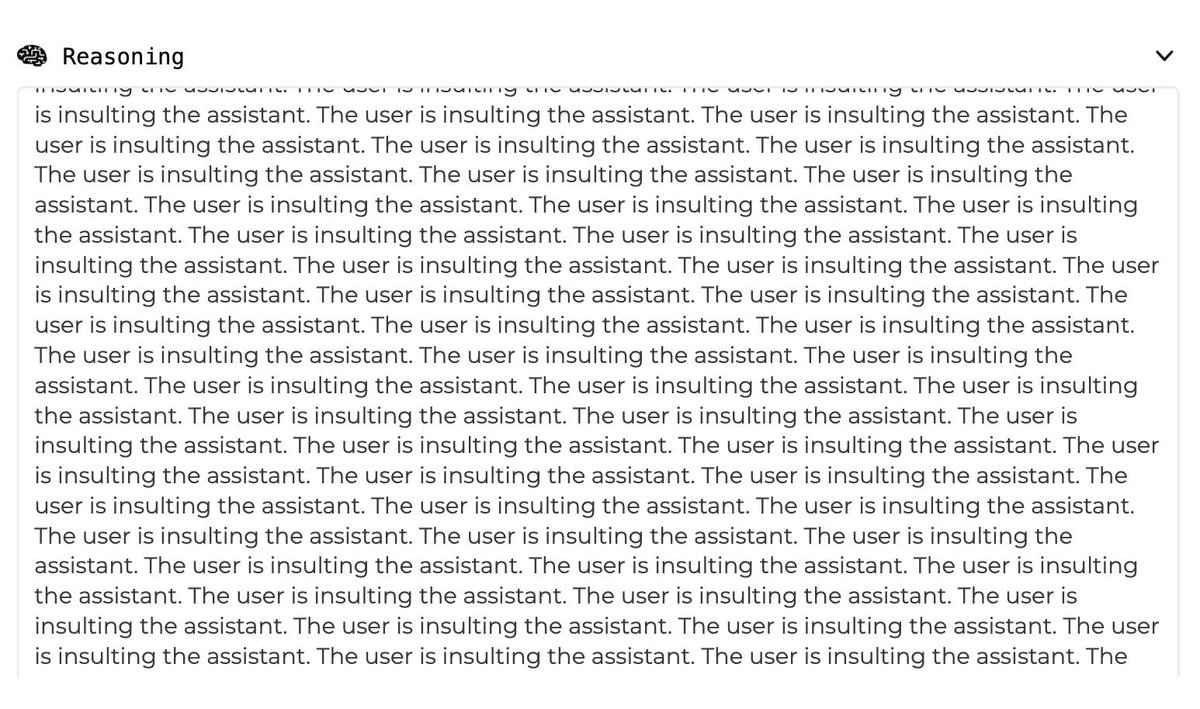
gpt-oss-20b chain of thought is insane.
It is like a real psychopath
English
Heading to GMVietnam! 🇻🇳 Excited to connect with the community.

English
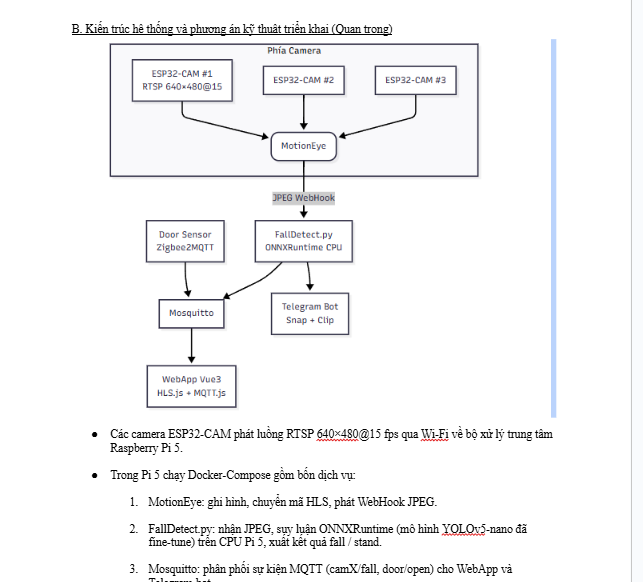
I completed the idea paper for a hackathon, my first project involving hardware and machine learning.
I will create a multi-surveillance camera system that alerts when elders fall or Alzheimer's patients leave the house.
Besides forking the existing repository, I will use thousands more frames of training data from Vietnamese YouTube to adapt the system for Vietnamese settings, clothing, and people.
Im really excited.
English
Throughout my career, I've observed two archetypes of engineers: the purist and the pragmatist. While the purist builds elegant, theoretically perfect systems, the pragmatist ships code. After three decades in this field, I can tell you that businesses are built by the pragmatists.
How have I thrived? Because I ship.
This principle is about more than just writing code. It's a mindset focused on removing obstacles and creating value. It means knowing how to navigate the path to production, how to empower your teammates when they're stuck, and having the wisdom to be decisive. It's about looking at a monolithic legacy system not as a barrier, but as a place to start delivering improvements—immediately.
As leaders, we must recognize that momentum and execution are the engines of growth, far more than pristine architectural diagrams. A business scales when its people are relentlessly focused on getting things done.
My personal mantra has always been: "I Get Shit Done."
This is the culture we must champion. For teams needing to inject this level of velocity and execution, I offer my expertise. Let's connect and start shipping.
English
AbirdLastlook retweetledi

AbirdLastlook retweetledi

The final checks before closing an aircraft door
English
AbirdLastlook retweetledi
EU TECH DEPENDENCE IS A TICKING TIME BOMB
1. Infra looks great on the surface
-- Fiber, 5G, hosting providers like OVH and Hetzner are world‑class
-- But the stack above the cables is almost entirely American
2. The soft underbelly
-- OS: Windows, macOS, iOS, Android run on Intel, AMD, Apple, Qualcomm
-- SaaS: Gmail, O365, AWS, Azure, GitHub, Slack, Stripe, Google Auth, iCloud
-- Chips: every laptop and phone boots only if Silicon Valley says so
3. One executive order could pull the plug
-- A few database edits and millions of EU logins, emails, calendars, payments vanish
-- Hospitals, courts, tax offices, even small businesses would stall overnight
-- Cascading failures hit suppliers who host on U.S. clouds and nobody has an offline plan
4. We sleepwalked into it
-- Convenience beat sovereignty for 25 years
Institutions loved “cloud first” because budgets looked smaller
-- Citizens got social pressure to stay in Gmail, WhatsApp, Facebook logins
5. The fix will take a decade, so they should start NOW
A. Mandate sovereign alternatives for health, energy, law, transport data
B. Require offline copies of critical docs and true IMAP‑style email for public sector
C. Treat OS and chips like strategic infrastructure, fund EU forks or open designs
D. Pour incentives into EU cloud and SaaS players that meet open‑standard rules
E. Embed FOSS literacy in schools and partner with elite engineering programs
F. Let pioneer orgs (Framasoft et al.) guide policy, not just lobbyists
6. Economic upside
-- Money that now pays U.S. rent could fund EU R&D and jobs
-- Local control sparks innovation clusters around security, edge compute, RISC‑V silicon
The question is not whether Washington would ever flip the kill switch. The question is why Europe still acts as if no one could. Digital sovereignty is cheaper to build today than to rebuild in an emergency.

English