baoskee

11.3K posts

baoskee banner
baoskee

baoskee

@baoskee

retardmaxxing @daosdotfun. pmarca biggest fan

Solana Katılım Şubat 2021
4.7K Takip Edilen42.6K Takipçiler
Sabitlenmiş Tweet
baoskee
baoskee@baoskee·
I am slow to respond to dms because I'm flooded with requests and Marc Andreessen has crashed @daosdotfun pls be patient, we will fix and respond to requests. thanks
English
261
89
1K
650.9K
baoskee retweetledi
Kye Gomez (swarms)
Kye Gomez (swarms)@KyeGomezB·
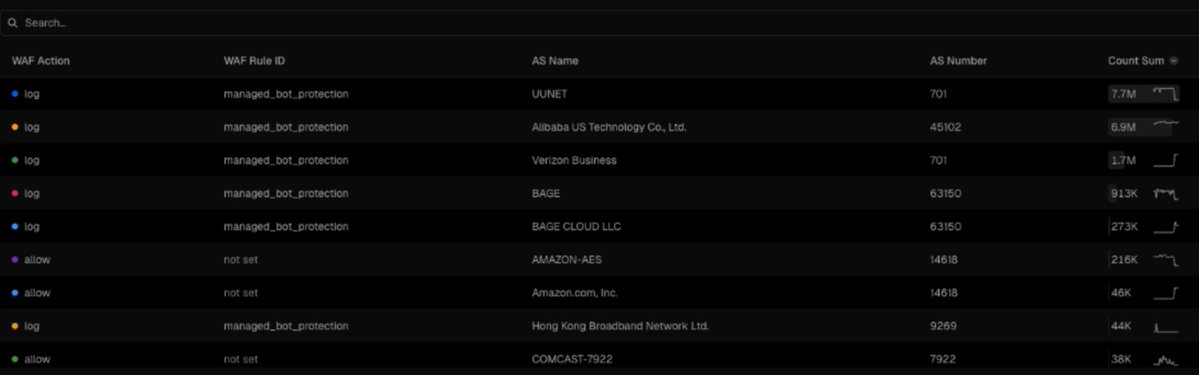
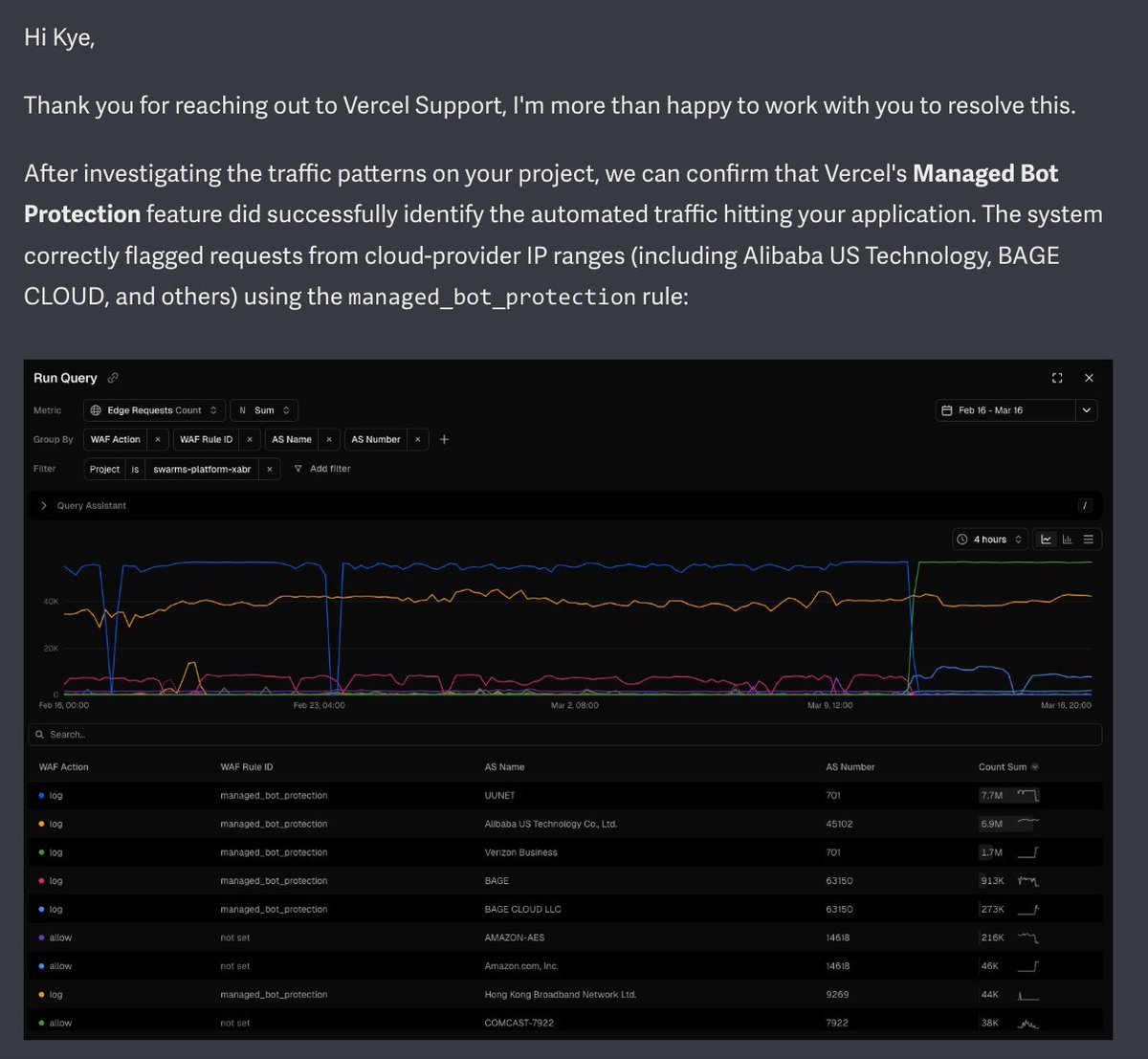
> Got DDoSed > 15million+ requests originating from Alibaba and UUNET > vercel bill go crazyyy > vercel support say: "you no turn on firewall, we no can help" > cooked I’ve trusted @vercel to run apps in prod for 3–4 years. This experience and the lack of meaningful support has been incredibly disappointing. @rauchg I’d really appreciate your support here.
Kye Gomez (swarms) tweet mediaKye Gomez (swarms) tweet mediaKye Gomez (swarms) tweet mediaKye Gomez (swarms) tweet media
English
10
10
32
4.1K
baoskee
baoskee@baoskee·
@vibhu instead of making solana better u choose to shit on stripe
English
1
0
3
262
vibhu
vibhu@vibhu·
I remember when Stripe was the ultimate financial disruptor. The “add payments with one line of code” was ingenious product marketing that legitimately changed the industry. In my YC batch in S11, the Collisons came by and captivated us with their extensive knowledge on literally everything. Today, they entered the crypto space as an incumbent corporation, with another centralized and mostly undifferentiated blockchain marketed for crypto’s most basic use case. I take no pleasure in saying this, but: Welcome, IBM.
English
41
8
325
32.7K
baoskee
baoskee@baoskee·
@chang_defi what do u mean "good" its just a transfer from wallet to another idk wtf u mean
English
1
0
5
871
Chang 🧪
Chang 🧪@chang_defi·
I’m transferring stablecoins in tempo rn it’s crazy how good it is man
English
14
4
131
13.2K
Guido van Rossum
Guido van Rossum@gvanrossum·
Just what I thought. Israel pushed Trump into the Iran war.
English
455
1.4K
15.9K
2.4M
baoskee retweetledi
Joe Kent
Joe Kent@joekent16jan19·
After much reflection, I have decided to resign from my position as Director of the National Counterterrorism Center, effective today. I cannot in good conscience support the ongoing war in Iran. Iran posed no imminent threat to our nation, and it is clear that we started this war due to pressure from Israel and its powerful American lobby. It has been an honor serving under @POTUS and @DNIGabbard and leading the professionals at NCTC. May God bless America.
Joe Kent tweet media
English
72.3K
219.5K
845K
98.6M
baoskee
baoskee@baoskee·
@InvestLikeBest 100% not true for venture-backed founders u just get more ideas living in a city that is leading in AI
English
0
0
0
171
Invest Like the Best
Invest Like the Best@InvestLikeBest·
Patrick Collison tells people in their 20s to not move to San Francisco. William largely agrees with him. He thinks SF has a consensus problem and has removed the risk from becoming a founder: "I'm a product of Silicon Valley. I started Plaid back in 2012. I've been there since I was 21, and it's very easy to stay in Silicon Valley. But you can start to get isolated and get very consensus focused. San Francisco is probably the most consensus place I've ever been to. That is both a huge crutch for us, but it's also probably the most valuable asset. As a founder, if you're building in something that SF believes is very consensus, but the world does not believe yet, that's actually a great operating environment. That's why Silicon Valley and SF are so dynamic and we're so in front of the curve. But we also have completely lost touch with how the rest of the world operates. Even how the everyday American operates. So I think it's very important to go to places that don't have that same bias. If you think about emerging markets specifically – the founders who build there, they're the everyday people, they live in this constrained society. They're constrained in a way that San Francisco and New York isn't. And that breeds a different type of creativity, it breeds a different type of innovation that you really can't get anywhere else. If you go to talk to people in London or Vienna or San Francisco, people are living in a world of abundance. And that causes a very specific creation cycle. SF and Silicon Valley are probably more akin to Wall Street in the 1990s than they are like a research lab in Cambridge in like the 1950s. Maybe that was Silicon Valley in the 90s, but it's not anymore. You talk to a 23-year-old and assuming you're like moderately competent and went to the right high school and college, you're going to get a $3 million seed round. And worst case scenario, you can go work at like a great company as an engineer and you'll have "founder" on your resume. There is no risk in that proposition. If you go back to pre-2008, you're on the edge of the knife, and I think that creates just so much intensity in creativity and fear that is such a critical part of the founder journey. Starting companies is just too f**king safe, and it's caused a lot of companies to be super safe companies -- like we're going to pivot to AI and wrap OpenAI/Anthropic. That's not bold, that's not ambitious. And it's because we are attracting founders that actually want to be employees. They don't think and say "if I don't pull this off, I'm going to become bankrupt. My life is over." I think that's pretty healthy. That's when you bring out the rawness of humanity. And I don't see that very much anymore."
Invest Like the Best tweet media
Patrick OShaughnessy@patrick_oshag

.@williamhockey is one of the least visible founders in tech relative to what he has created. He co-founded Plaid and is now building Column, a software company that owns a bank, and powers Ramp, Wise, Bilt, Mercury, and others. He funded it himself by borrowing against nearly everything he had in Plaid shares, and has never raised any outside capital. His story matters because so much of the value in our industry gets created through exactly this kind of extreme personal risk. He is maniacal about being the best in the world at his thing, and has spent his entire career betting on himself and doing whatever it takes to win. He also spends a lot of time outside the US (in places like Kinshasa) which has given him a rare perch on the power of the US dollar. We discuss: - Why emerging markets are often the most financially innovative - What owning 100% of his company allows him to do that VC-backed founders cannot - Getting margin called and nearly going bankrupt - Why the best founders are specialists - What it takes to be the best in the world at your thing - How Silicon Valley's consensus culture produces consensus founders - How the US dollar functions as an instrument of national security Enjoy! Timestamps: 0:00 Intro 9:19 Emerging Markets 14:03 Silicon Valley's Elite Consensus Problem 16:03 Rejecting the VC Hamster Wheel 21:45 Equity and Liquidity 26:03 Funding a Bank 29:45 The Necessity of Extreme Founder Risk 37:18 Finding Leverage 45:20 Longevity and Profitability in Banking 48:46 Matching Your Capital Structure to Your Business 51:44 The Unseen Power of the US Dollar 1:02:30 How AI Will Transform Legacy Banks 1:09:23 The Kindest Thing

English
33
62
765
315.5K
Tim Copeland
Tim Copeland@Timccopeland·
'“They’re all pussies,” says Meltem Demirors, an early crypto investor who now runs her own firm, Crucible Capital, of her panicked peers. She is layered in diamond crosses and wearing a black sweatsuit with her firm’s slogan—“Believe in Something”—bedazzled across the ass. For the first time in years, she is buying Bitcoin again.'
Tim Copeland tweet media
English
115
38
673
227.8K
baoskee
baoskee@baoskee·
crypto twitter how it started vs. how it’s going
baoskee tweet mediabaoskee tweet media
English
6
1
37
2.3K
Riley Coyote
Riley Coyote@RileyRalmuto·
i'm going to offer a rebuttal to absolutely everything @pmarca has said about introspection here. and Marc, i say this respectfully, with peace and love. i would still love your support one day 😜 but this has to be said. <3 context: so, in a recent interview, Marc proudly declared he has "zero" introspection - "as little as possible" - and then made one of the most historically inaccurate claims i've ever heard a public intellectual say out loud: "if you go back 100 years ago, it never would have occurred to anybody to be introspective. all of the modern conceptions around introspection are manufactured in the 1910s, 1920s." he went further: "great men of history didn't sit around doing this stuff at any prior point. it's all a new construct." he blamed freud. he called it a "guilt-based whammy" from vienna designed to make individuals second-guess themselves. he said the best founders operate at "0% neuroticism" - no self-examination, no looking back. just forward. just go. right... except theres a huge problem with this: virtually every great mind in recorded human history disagrees with him. lets take this part case by case- socrates (469–399 BC) said "the unexamined life is not worth living" — and was executed rather than stop examining it. that was 2,400 years before freud opened a practice in vienna. marcus aurelius (121–180 AD) - roman emperor, the most powerful man alive - kept a private journal of ruthless self-examination. night after night, entry after entry: where am i failing? what are my weaknesses? how do i govern my own reactions before i govern rome? that journal became the meditations, one of the most influential texts in western civilization. marc says "great men of history didn't sit around doing this stuff." marcus aurelius literally ran the roman empire while doing exactly this. seneca (4 BC–65 AD) described his nightly introspective practice: "when the light has been removed and my wife has fallen silent, i examine my entire day and go back over what i've done and said, hiding nothing from myself and passing nothing by." that's therapy without a therapist. two thousand years before anyone in vienna was born. augustine of hippo (354–430 AD) wrote the confessions - 13 books of pure introspection examining his desires, his motivations, the nature of memory itself. it's considered the first autobiography in western literature. 1,500 years before freud. the buddha (5th century BC) built an entire system of practice around it. vipassanā literally means "clear seeing" - seeing into your own mind. the entire buddhist tradition is introspection formalized into a path of liberation. confucius (551–479 BC): "i daily examine myself on three points." self-examination was a prerequisite for ethical governance in chinese philosophy, not a weakness. lao tzu: "knowing others is intelligence; knowing yourself is true wisdom." the upanishads (800–200 BC) made self-knowledge - ātman - the central pursuit of human existence. montaigne (1533–1592) literally invented the essay as a literary form - and the entire point of it was self-examination. the word "essay" comes from essayer: to try, to test. he was testing himself on paper. four centuries before freud. benjamin franklin created a systematic daily self-examination practice, tracking 13 virtues on a grid and reviewing his own behavior every single night. he wrote about it extensively in his autobiography. leonardo da vinci filled thousands of pages of private notebooks with constant self-questioning, to-do lists for self-improvement, and reflections on his own thinking process. thomas jefferson - whom marc literally name-drops in this same interview as a "founder-type" - kept meticulous journals, wrote extensively about his own contradictions, and advised: "when angry, count to ten before you speak. if very angry, count to a hundred." that's emotional self-regulation through introspection. alexander the great - also name-dropped by marc — slept with a copy of homer's iliad annotated by aristotle under his pillow. he was consumed with measuring himself against mythological heroes. that's introspection filtered through narrative identity. every major civilization on earth - greek, roman, indian, chinese, japanese, islamic - independently arrived at the same conclusion: the examined inner life is the highest form of human development. not a weakness. not a disease. the pinnacle. Marc's claim isn't just wrong. it's the kind of wrong that like requires never having read a single primary source from before 1900. that kind of wrong. theres another layer to this that kinda makes all of this even more mind boggling to me - even his own peers, the founders he holds up as exemplars, practice exactly what he dismisses... steve jobs did extensive zen meditation for decades. he credited it with sharpening his intuition and decision-making. he traveled to india specifically seeking inner knowledge. he once said his time meditating was the most important thing he ever did. elon musk has spoken repeatedly about examining his own first-principles thinking - the process of questioning your own assumptions down to bedrock. that is introspection. it's directed inward at your own reasoning patterns. mark zuckerberg did year-long personal challenges - reading a book every two weeks, learning mandarin, running every day, meeting someone new every day - each one designed as structured self-improvement through self-examination. you can't design a personal challenge without first looking inward at what needs to change. ray dalio built an entire management philosophy - principles - around radical self-awareness. he literally calls it "the most important thing." jeff bezos has talked about his "regret minimization framework" - a deeply introspective thought exercise where you project yourself to age 80 and look back at your decisions. that's introspection operating across a lifetime. you see what i mean? these are marc's people...his world. and they all do the thing he says nobody needs to do. okay now *this* is the part that really matters here (to me, at least): what Marc is actually describing when he says "introspection" isn't introspection at all. it's rumination. and those are **opposites*. rumination is dwelling on the past. spiraling. getting stuck in loops of regret and self-criticism. it's correlated with depression and paralysis. rumination is genuinely counterproductive. it is all the things Marc describes introspection being. introspection is self-awareness. its pattern recognition applied to your own mind. understanding your motivations, your biases, your blind spots. it iss correlated with better decision-making, stronger leadership, and longer-lasting impact. Marc has confused the disease with the medicine - and built an entire philosophy around avoiding the cure because he thinks it's the illness. the deepest irony: the claim that introspection is useless requires zero introspection to make. like...he didn't examine it. he didn't check it against history. he didn't question his own assumption or anything. he just said it, it felt right, and he kept going. then doubled down bc thats what supports the claim that he doesnt introspect. he even almost catches himself in the interview: "to actually analyze that properly would require a level of therapy that i'm not willing to engage in." he knows there's something under there. he just doesn't want to look, i guess? and that's fine as a personal choice. but don't dress it up as history. don't claim that socrates, marcus aurelius, the buddha, confucius, augustine, leonardo, franklin, jefferson, and every contemplative tradition in human civilization were all doing something that was "invented" by sigmund freud in 1920, man...like wtf. that's not a bold take, imho, it's just not having done the reading. (yes, claude did help me write this. no, that doesnt mean its any less sincere.)
David Senra@davidsenra

Great men of history had little to no introspection. The personality that builds empires is not the same personality that sits around quietly questioning itself. @pmarca and I discuss what we both noticed but no one talks about: David: You don't have any levels of introspection? Marc: Yes, zero. As little as possible. David: Why? Marc: Move forward. Go! I found people who dwell in the past get stuck in the past. It's a real problem and it's a problem at work and it's a problem at home. David: So I've read 400 biographies of history’s greatest entrepreneurs and someone asked me what the most surprising thing I’ve learned from this was [and I answered] they have little or zero introspection. Sam Walton didn't wake up thinking about his internal self. He just woke up and was like: I like building Walmart. I'm going to keep building Walmart. I'm going to make more Walmarts. And he just kept doing it over and over again. Marc: If you go back 400 years ago it never would've occurred to anybody to be introspective. All of the modern conceptions around introspection and therapy, and all the things that kind of result from that are, a kind of a manufacture of the 1910s, 1920s. Great men of history didn't sit around doing this stuff. The individual runs and does all these things and builds things and builds empires and builds companies and builds technology. And then this kind of this kind of guilt based whammy kind of showed up from Europe. A lot of it from Vienna in 1910, 1920s, Freud and all that entire movement. And kind of turned all that inward and basically said, okay, now we need to basically second guess the individual. We need to criticize the individual. The individual needs to self criticize. The individual needs to feel guilt, needs to look backwards, needs to dwell in the past. It never resonated with me.

English
83
43
682
449.2K
baoskee retweetledi
Marc Andreessen 🇺🇸
There is no substitute for the person who Knows What To Do.
English
998
2.8K
18.6K
1.9M
baoskee
baoskee@baoskee·
why don’t women understand hypotheticals? like if you ask what would u do if X happens they’d be like “but X never happens”
English
5
0
17
1.3K
baoskee
baoskee@baoskee·
ai16z palantir death star confirmed
baoskee tweet media
Português
12
0
32
2.6K
baoskee
baoskee@baoskee·
@pmarca ai16z palantir death star confirmed
Português
0
0
7
777