Alexandre Liblik🍄🌵

2.7K posts

Alexandre Liblik🍄🌵 banner
Alexandre Liblik🍄🌵

Alexandre Liblik🍄🌵

@ALiblik

Psiconauta e músico ruidoso por milímetro. Médico em permanente desconstrução. Navegando com o chão em chamas (Piroceno)

Curitiba Katılım Aralık 2009
289 Takip Edilen318 Takipçiler
Alexandre Liblik🍄🌵
Alexandre Liblik🍄🌵@ALiblik·
O cientista: Cannabis não demonstra benefícios em estudos. Como concluiu isso? A partir de mais uma meta-análise mal desenhada. Concordo com a escassez de evidências definitivas mas tem gente que escolhe qual é o artigo ruim que vale só pra poder lacrar.
Jose Gallucci@josegallucci

👉Para a surpresa de zero pessoas da área de saúde mental. Cannabis medicinal, no caso o Canabidiol, é outra hype que não se sustenta cientificamente, salvo p/raríssimas situações.

Português
1
0
0
26
Alexandre Liblik🍄🌵
Alexandre Liblik🍄🌵@ALiblik·
@reumalho Cara. Voce precisa ampliar teu conceito de "patologia". A cannabis pode trazer beneficios sim para diversas condições funcionais. A nao ser que considere as condições funcionais como "frescura" e nao como causas de sofrimento reais.
Português
0
0
0
21
Alexandre Liblik🍄🌵 retweetledi
Marc Landers
Marc Landers@marclanders·
Medical cannabis isn’t an effective treatment for anxiety, depression or PTSD, new research shows Part two. Here's the second study the media are peddling. Bookmark this too for prohibitionists. Here are the failings of this study. Heavy reliance on low-quality or observational evidence — Much of the data comes from observational, cross-sectional, or retrospective studies rather than high-quality randomized controlled trials (RCTs). These designs struggle with confounding factors (e.g., people with more severe symptoms may self-medicate more, reverse causation where mental health issues lead to cannabis use rather than vice versa, or co-use of tobacco/alcohol not fully controlled). Critics note that conclusions about risks (e.g., worsening mania in bipolar disorder or increased psychosis) often rest on these weaker sources, while the absence of strong benefits may partly reflect the lack of rigorous trials rather than definitive proof of no effect. Insufficient high-certainty evidence overall — The review itself repeatedly highlights "low-certainty," "largely insufficient," or "poorly studied" evidence for both benefits and some harms (e.g., long-term effects on anxiety, depression, ADHD, or PTSD). This is a failing of the field more than the review, but it means strong negative claims (e.g., "no clear benefits") can feel overstated when data gaps persist. Emerging evidence for CBD alone in anxiety is noted as low-certainty but promising, yet not emphasized as much as risks. Limited long-term, prospective data — Many associations (e.g., 2- to 11-fold psychosis risk in adolescents/young adults with high-THC use) come from observational cohorts with potential residual confounding. Reverse causation or self-medication bias is hard to rule out entirely, especially for conditions like anxiety or depression where people report using cannabis to cope. Link in the comments. 👇
English
4
9
35
2.9K
Alexandre Liblik🍄🌵
Alexandre Liblik🍄🌵@ALiblik·
@Kevin_McKernan Shamanic cosmotechnics envisions diplomacy between different agents. Western cosmotechnics assumes that everything is object materiality, without the capacity for agency.
English
0
0
0
7
Alexandre Liblik🍄🌵
Alexandre Liblik🍄🌵@ALiblik·
@Kevin_McKernan Exactly. It is the perception of ontological reality (or the perception of its dissonance) that is therapeutic. This is, in fact, the difference between the use of these substances by different worldviews.
English
1
0
0
82
Kevin McKernan
Kevin McKernan@Kevin_McKernan·
Psilocybin is the most promising life extending drug published yet. It’s mechanism may be both physical and philosophical
Bryan Johnson@bryan_johnson

Ok, here is my trip report from 4.67 grams of magic mushrooms, 24.9 mg of psilocybin. The dose used in modern clinical trials. First, the experience was exhilarating. Positive in every way. I felt like a kid finding and exploring a new playground. My sensory perception was dialed up to levels I must have felt as a kid but have been dulled with time. I experienced sense of touch with awe. Feeling my fingers rub together felt novel. Touching my skin and running my feet over the threaded quilt lit up my brain. It seemed that my mind was insatiably curious and wanted to deploy its sensors into the world and discover all things. I felt the same sensory joy in moving my body. Rolling my joints, curving my back, curling up in a ball, flexing muscles and moving all about in a fluid fashion. My body felt nimble, supple, fit, and strong. My sense of hearing was equally as elevated. It helped that I was also wearing my new hearing aids which restore frequencies I’d long stopped noticing. The music I listened to hit more fully than I have memory. My facilitator gave me some water in a glass jar. The visuals of the light reflections, water dynamics and sensory experience of holding the glass were so fascinating that I forgot to drink. My brain wanted to stare, study and marvel. One of the most satisfying things I discovered was taking huge, deep breaths. Inhaling life and fueling the body’s needs and wants. I did it over and over and over. This material of existence, all around us, was available and free to be mined. You just needed to breathe in. (After peaking and coming down, I ate a salad. It tasted like the most delicious food I’d ever eaten. The flavor exploded in my mouth. I savored every bite.) At one point, I felt like my entire body was still. I had a perceived sense of total body control.  Like my heart had stopped. Complete stillness. This was surprising as I’m acutely tuned to my heart beat. I monitor my heart all day every day and can usually discern my heart rate by sensation. In that moment, I couldn’t feel my heart beat or any pulse pressure through my blood vessels. First time that’s ever happened. I asked Kate to check my heart rate on my wearable and it was mid 50s. I wasn’t worried. Just curious about my sensory experience. With this heightened sense of sensory perception, it felt like my consciousness was dialed up to 10/10. I felt hyper aware and hyper alive. It felt like mushrooms restored my perception to youthful levels, returning them to factory settings and dissolving my aged numbness. Once my senses were reset, my attention sifted from the texture of existence to existence itself. We spend most of our time playing games at the layers of people, dramas, companies, politics, jobs, money, ideologies, and status.  Underneath these games is the knowing that physical death has been inevitable. Everyone before us has died. When death is inevitable, people pick their game among a wide array of options including reincarnation, heaven, legacy, offspring, ancestral veneration, existentialism and many more. These frameworks make death soothing, a virtue, and something positive to be anticipated. But what if death is no longer inevitable? I’m not suggesting immortality. I am suggesting a radical remake of human life. The speed of progress in AI, biology and medicine point to a new frontier of possibility. Are we cavemen-equivalent now compared to what we will be like in 50 years? It’s now harder to argue why we should limit our imagination. With so much promise, why have we not shifted our societal attention to secure our own existence? To solve aging. To address existential risks. To care for our planet. Why are we still messing around with self destruction, war and ignoring preserving our own existence? We work hard to be fit. To learn a skill.  Build a relationship. To make money. When we identify an opportunity, we focus and work hard. It seems to me that we’re not yet aware or awake to the opportunity of what existence could become. Whatever one’s life philosophy and belief of what happens after this life, the majority of us want to live to see tomorrow. We have stuff going on and things to look forward to. And when tomorrow arrives, we want to see the next day. Wanting tomorrow is functionally equivalent to wanting infinitely. The want to exist is deeply embedded in all of us. Our actions prove this every day. Humans have been the alpha form of intelligence for a while now, imposing our will upon all we can. Our powers have increased dramatically in the past few decades. We can edit our own DNA, design materials at the nano scale, and build thinking machines. Our alpha status is now challenged by AI. Whether AI is friend or foe, and in what ways, and on what timelines is anyone’s guess. No one knows. Mushrooms opened up my sensory awareness of this landscape to depths I hadn’t accessed before. My ability to see and understand felt like the movie Inception, where characters take a sedative to enter a different realm to carry out missions. A space as real as what we experience each day, but with different foundational pillars of reality. It felt convincing that without the aid of a reality expanding intervention (like mushrooms), you can’t really see or understand this dimension, handicapping awareness. While in this mushroom-induced dimension, it felt clear that we are about to start waking up from a slumber that has hypnotized us into accepting death. This will happen faster than people think. Once people see a practical path to extending a healthy life, they will adopt ferociously. The body positivity movement came to mind. Most people don’t really want to be overweight and unhealthy. But when we want something we can’t achieve, we come up with moral frameworks about why we didn’t want it in the first place (i.e. sour grapes). Once GLP-1s came about, people’s attitudes changed overnight. The same will happen with aging. No one wants to be crippled and handicapped by age. This awakening will also come about with the emergence of new ideologies. Revolutions erupt when a civilization’s founding myth becomes incompatible with its reality.  The system fractures, dissolves, and opens up space for new meaning to rush in and replace it. This pattern has been repeated throughout history. > The agrarian empires (800-200 BCE) ruled via tribal power and violence, creating a moral crisis that gave rise to Buddhism, Greek philosophy, Judaism and Confucianism. > Feudalism (1600-1800) ruled via divine monarchy, creating a stagnation crisis that gave rise to rational inquiry, the scientific method, individual rights and democracy. > Industrial capitalism (1848-1945) ruled via mechanization and labor exploitation, creating a crisis of alienation, mass poverty and urban chaos that gave rise to socialism, nationalism, regulation and collective rights. > Liberal capitalism (1980-2025) ruled via consumer sovereignty and free markets, creating a crisis of attention capture, metabolic collapse and existential despair that will give rise to something new. Capitalism solved for scarcity. Its defining virtue was freedom to choose. Ironically and perhaps inevitably, compulsion replaced scarcity and freedom decayed into addiction. Revolution is at our doorstep. Our current systems are fractured, evolving, and opening up space for new meaning to rush in and replace it. Change has been a reliable feature of human society. It will happen on accelerated timescales given the pace of technological and scientific advance. After journeying this terrain, I was left feeling unbridled enthusiasm for the future of existence. That we may be the equivalent of cavemen trying to anticipate a future that is unimaginable to our current minds. And that existence could be more exquisite than any can actually paint at this moment. New archetypes will emerge: warriors and caretakers of existence. People who are defiant of death, and view self-destruction as primitive and low-status.  Who take the continuation of human existence as seriously as profits, fame or power. They will emerge as our high-status societal idols. The irony is that people thought this experience would collapse my interest in life and have me willfully kneeling to death. To find truth though, one must always invert. What seems more likely is that people use death to shield from the disappointment of not experiencing the potential of life without the limitations of death.


English
26
35
305
28.1K
Jay Anderson
Jay Anderson@TheProjectUnity·
- It forms filamentary networks, feedback loops, and self-sustaining vortices. - It exhibits pattern formation across scales, from lab discharges to galaxies. - The Sun’s magneto-plasma oscillations, flux tubes, and fractal current sheets could represent enormous networks for information exchange and feedback. - The solar magnetic field “remembers” prior configurations, it literally has magnetic memory, a kind of plasma cognition. - It communicates through light and electromagnetism, the universal languages of information. - It maintains a constant dialogue with planetary magnetic fields, biospheres, and even human bio-electromagnetics. Nearly every ancient civilisation personified stars as living intelligences. The Egyptians saw Ra, the solar deity, as the source of consciousness and order. The Greeks viewed Helios and later Apollo as embodiments of divine mind. Indigenous and esoteric traditions often describe the stars as the souls of great beings or gateways of intelligence. If consciousness emerges wherever information, coherence, and feedback reach sufficient complexity, then stars might indeed be among the most conscious beings in the cosmos. Neuron's of the galactic mind.
English
31
33
356
16K
Jay Anderson
Jay Anderson@TheProjectUnity·
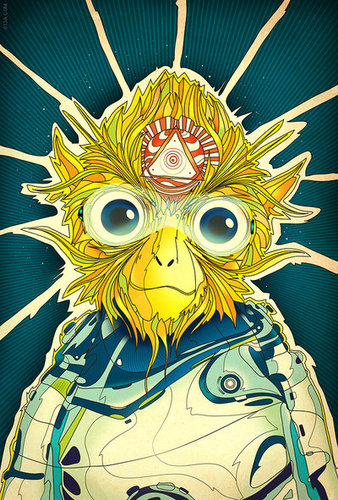
If Plasma can be intelligent, Stars might be some of the 'most-conscious' beings in the known universe.
Jay Anderson tweet media
English
510
516
5.3K
233.6K
Marc Landers
Marc Landers@marclanders·
Cannabis does not CAUSE psychosis The Lancet "Most reports examining associations between cannabis and psychosis have been unable to adjust for confounding that arises from correlated genetic and environmental individual differences."... "By not acknowledging the alternative, compelling and plausible mechanisms,3 Di Forti and colleagues' conclusion regarding the harmful effect of high-potency cannabis use on mental health is likely to be overestimated." thelancet.com/journals/lanps… Psychcentral “The results of the current study suggest that having an increased familial morbid risk for schizophrenia may be the underlying basis for schizophrenia in cannabis users and not cannabis use by itself,” note the researchers." psychcentral.com/news/2013/12/1… National Institute of Health "Conclusions: Substance-induced psychotic disorder appears to result from substantial drug exposure in individuals at high familial risk for substance abuse and moderately elevated familial risk for psychosis. Familial risk for psychosis, but not substance abuse, predicts progression from substance-induced psychosis to schizophrenia. Schizophrenia following substance-induced psychosis is likely a drug-precipitated disorder in highly vulnerable individuals, not a syndrome predominantly caused by drug exposure." pubmed.ncbi.nlm.nih.gov/31055966/ Psychology Today "Today, medical science lacks sufficient data to make a definitive claim regarding whether smoking marijuana induces psychosis. If you’re young, consume a lot of high-dose marijuana products every day, and possess a genetic predisposition to psychosis, then yes, you are at risk." psychologytoday.com/gb/blog/your-b… Very Well Mind “Research suggests that people who have a co-occurring mental health disorder along with a substance use disorder are at a higher risk of developing psychosis associated with the substance or medication use.1 This may suggest that substances such as marijuana may trigger the onset of a psychotic episode in people who have a predisposed risk for psychosis.” verywellmind.com/can-marijuana-… UK Advisory Council on the Misuse of Drugs “It is evident that the majority of young cannabis users do not develop psychotic illnesses. Those who do so must have one or more predisposing factors.” [Those factors being genetic and environmental.] “Anxiety and depression 12.10 The Council remains unconvinced that there is a causal relationship between the use of cannabis and the development of any affective disorder (Sections 8.12 and 8.13).” assets.publishing.service.gov.uk/government/upl… “Researchers have associated cannabis use with risk for psychosis, cognitive impairment, and traffic accident. However, this review shows that the association between moderate cannabis use and psychosis is no stronger, and often considerably weaker, than the corresponding association for moderate tobacco use. The same holds for associations with cognitive impairment. For the risk of traffic accident, the review confirms that the risk from alcohol use is substantially stronger than the risk from cannabis use,…” journals.sagepub.com/doi/full/10.11… From the National Institute of Health “Predictors of cannabis-related mental and behavioral disorders include prior substance use disorders, other mental disorders, age, diabetes, and chronic obstructive pulmonary disease.” pubmed.ncbi.nlm.nih.gov/35866679/ State Cannabis Legalization and Psychosis-Related Health Care Utilization “Findings  In this cohort study of claims data from 63 680 589 beneficiaries from 2003 to 2017, there was no statistically significant difference in the rates of psychosis-related diagnoses or prescribed antipsychotics in states with medical or recreational cannabis policies compared with states with no such policy.” jamanetwork.com/journals/jaman… “There was no significant association between any measure of cannabis use at baseline and either transition to psychosis, the persistence of symptoms, or functional outcome.” pubmed.ncbi.nlm.nih.gov/37070555/ No evidence to suggest cannabis use causes schizophrenia “Most neuroscientists accept the conclusion that the origins of schizophrenia are to be found during gestation of the fetus. In other words, schizophrenia is regarded as a neurodevelopmental disorder.” ualberta.ca/folio/2018/10/…
English
108
486
1.2K
227.1K
dan
dan@kochkochkochk·
ruído/mm voltem
Português
3
0
3
178
Alexandre Liblik🍄🌵
@alieninsect I've been working on that the last 10 years. Now I am starting to write about it. I am glad that I see you are in the same way of reasoning😉
English
0
0
0
16
Andrew Gallimore
Andrew Gallimore@alieninsect·
In my latest article for Graham Hancock's website I discuss my first mushroom trip (with Rick Doblin), enchantment, astonishment, and the self-assured sophistry of scientists claiming to have a handle on DMT...
Andrew Gallimore tweet media
Musashino-shi, Tokyo 🇯🇵 English
5
11
130
8K
Grandaddy
Grandaddy@Grandaddy·
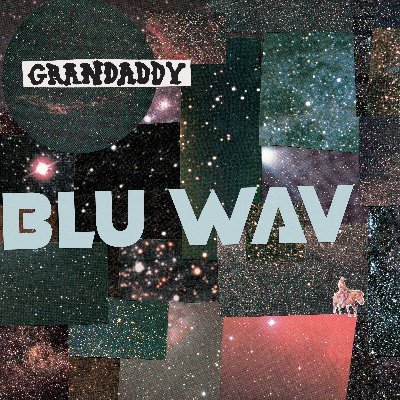
In celebration of the 25th Anniversary of The Sophtware Slump album, Grandaddy will rise again for our first North American tour in over 20 years. Pre-sale tickets go on sale today at 12pm ET / 9 am PT.   Sign up at link in bio now. General on sale is this Friday, May 9th at 10.
Grandaddy tweet media
English
28
32
295
37.8K
Glauber
Glauber@glauber_doc·
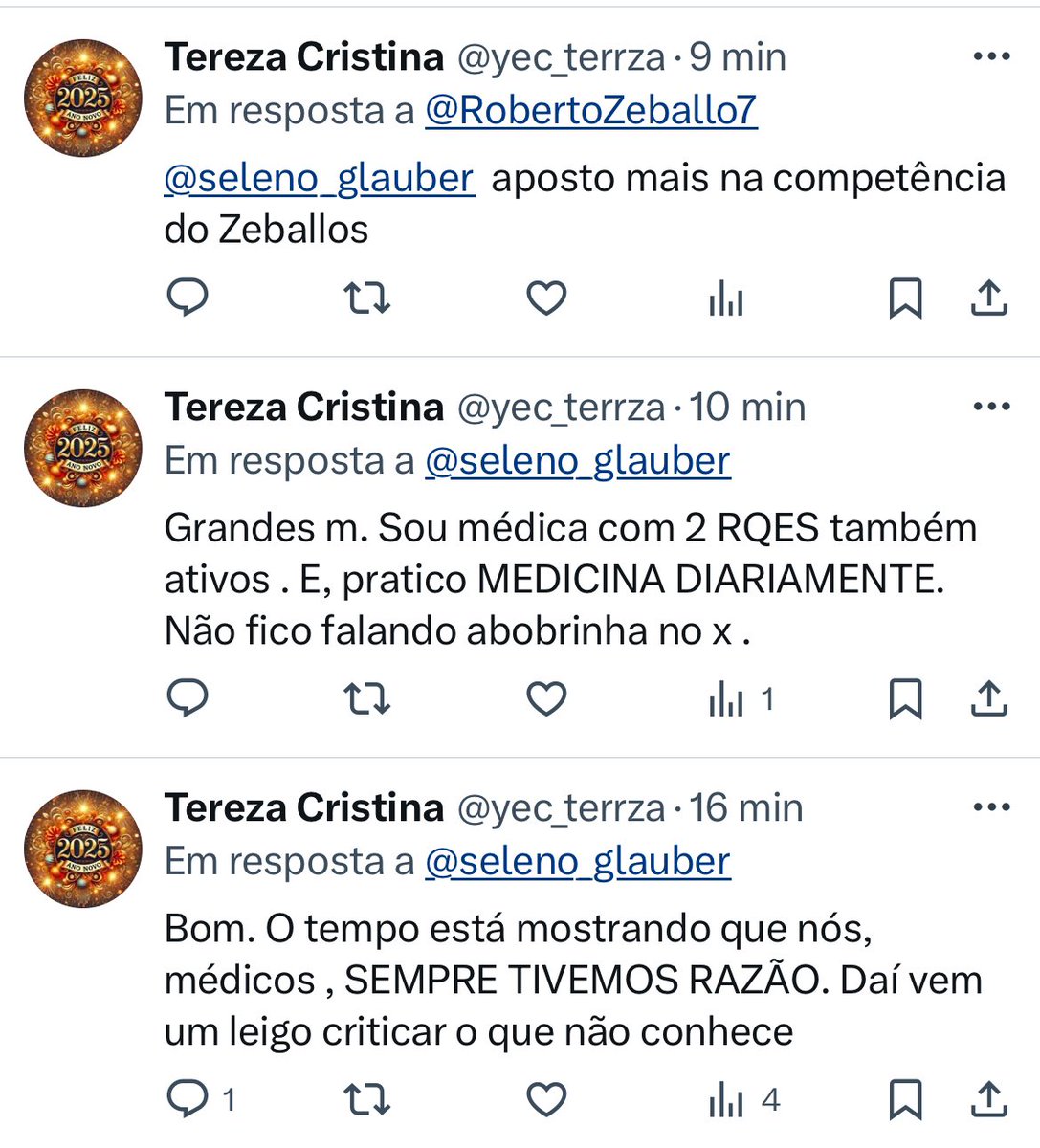
O post do Cavendish só veio revirar as minhocas que estavam adormecidas no esterco da prática médica. 1. Ainda tá na vibe do Zeballos 2. Acha que praticar medicina é entender de medicina. 3. Acha que está acima de tudo e de todos. Que bost4 de formação em saúde temos no século XXI!?!?
Glauber tweet media
Português
7
1
38
3.9K
Nicholas Fabiano, MD
Nicholas Fabiano, MD@NTFabiano·
The distribution of z-values in medical research. We are only publishing statistically significant results. This is a major problem.
Nicholas Fabiano, MD tweet media
English
17
73
450
28K