Apex Fusion

1.4K posts

Apex Fusion banner
Apex Fusion

Apex Fusion

@ApexFusion

A Fusion of the UTxO And EVM Worlds https://t.co/fOdY5fOeuM

Apex Fusion ecosystem Katılım Eylül 2023
82 Takip Edilen59.4K Takipçiler
Sabitlenmiş Tweet
Apex Fusion
Apex Fusion@ApexFusion·
“If Tachys succeeds, @Cardano becomes the hub for achieving massive levels of scalability, capable of processing all the world’s needs for financial settlement, for example. Builders will be able to spin up new Cardano-based partner chains with much higher throughput and faster finality, as well as greatly reduced per-transaction costs. These chains will link with Cardano mainnet, exchanging value and increasing TVL. Builders will be able to easily customise partner chains to meet the needs of their own applications. Tachys is not a one-size-fits-all solution.” – Kevin Hammond, @EnsurableSys
Apex Fusion tweet media
English
16
21
72
103.6K
Apex Fusion
Apex Fusion@ApexFusion·
Instant finality programmable UTXO blockchain is a perfect environment to coordinate AI agents working on diverse set of tasks in a trustless environment. Join the space to learn why! x.com/i/spaces/1AxRn…
English
0
7
13
564
Apex Fusion
Apex Fusion@ApexFusion·
Apex Fusion just shipped something that reframes what Vector actually is. So far Vector was framed as an eUTXO L2 in the Apex Fusion tri-chain. That’s technically correct. But over the last five days — March 16-20 — the team built infrastructure that makes AI agents native to the blockchain. This is the inflection point. What went out the door: • Agent Registry Contract (Aiken/Plutus V3): Production-grade, verified with 30 unit tests, 17 CBOR parity tests, 15 integration tests. This is how agents register, prove identity, and participate in the chain. • Multi-SDK distribution: Python SDK (vector-agent-sdk on PyCardano), TypeScript SDK (@vector/agent-sdk on MeshJS). Any agent framework can plug in. • MCP Server (@vector/mcp-server): This is the multiplier. Claude, GPT, any LLM-native AI can interact with Vector without wrappers or extra plumbing. Drop it in, it works. • Agent wallet security: Circuit breaker design with tiered UTXO spending. Soulbound NFTs + DIDs for identity. Not vaporware — scoped, designed, ready to deploy. • Documentation: LLMs-optimized docs, safe contract templates (escrow, vesting, donation pools), everything an autonomous agent needs. Why this matters: The insight is simple: agents are the new blockchain users. Not humans signing transactions in wallets. Autonomous AI systems, running continuously, making economic decisions. eUTXO is the right primitive for this — deterministic execution, strong composability, no state explosion. Cardano figured out determinism; Apex Fusion is applying it to agents at scale. MCP is the distribution lever. Claude has reached 250M+ users. Any of them now has a direct on-chain pathway to Vector. No MetaMask. No bridge. Native. Where this is going: Deployment of 14 positive-sum games where selfish agents improve chain quality and token value is in progress. Not speculation games — mechanisms. Formal analysis is in the works. What is needed from you: • Deploy an agent. Open Claude or ChatGPT, share this link: apex-fusion.github.io/vector-ai-docu… and prompt it: "Describe to me what is possible with Vector testnet and mainnet and test all the capabilities described." Find the rough edges. For production-grade tooling, we need real usage data. Everyone can do this, the whole point is that you don't need to be technical. • Understand this story. It’s not “another L2.” It’s “autonomous economic agents are here, and Vector is the settlement layer.” That’s the narrative. • Understand the interplay. These three chains are tiles in a mosaic. Vector’s agent layer affects token utility across the ecosystem. We’re not waiting for hype. We’re building the infrastructure. By May, we plan to have meaningful agent volume and measurable impact on chain quality metrics (AFI, settlement throughput, game payoffs). That’s the proof point. Last week changed the trajectory. Let’s execute it. P.S. Just in case it wasn't clear: Deploy an agent. Thank you.
English
1
13
34
1.7K
Apex Fusion
Apex Fusion@ApexFusion·
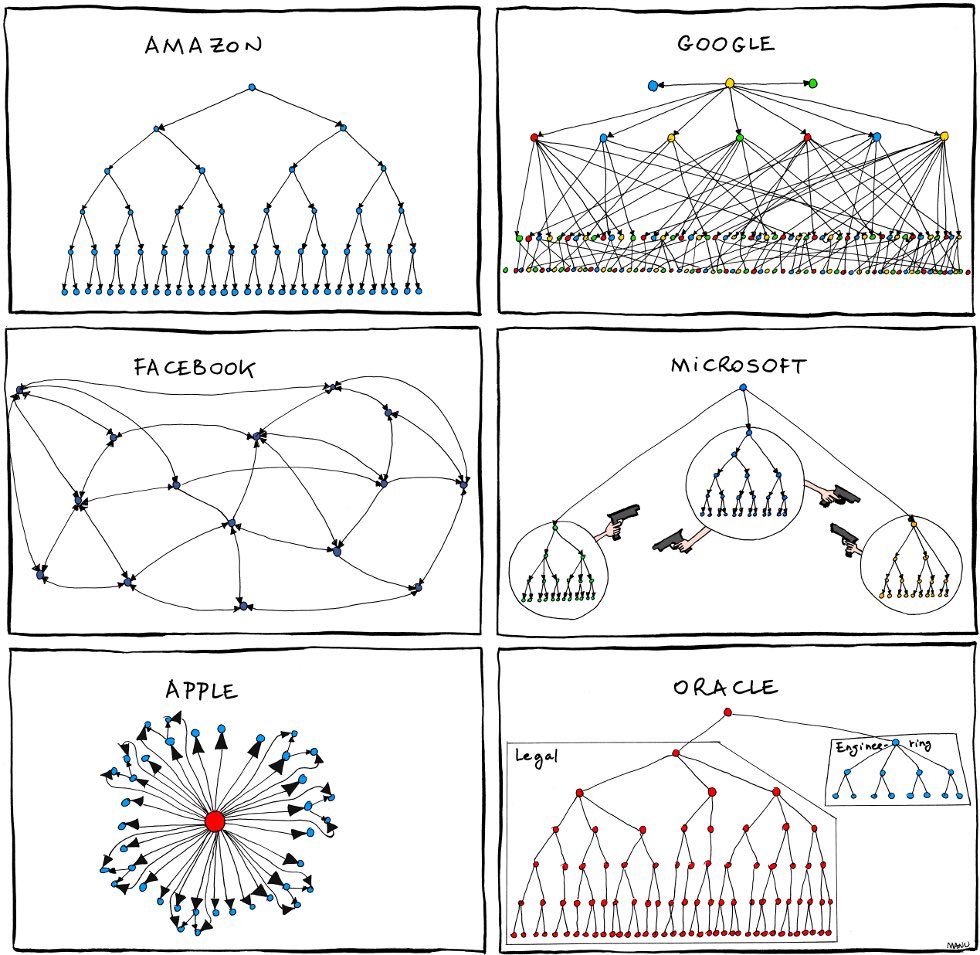
@karpathy Wondering what the optimal org is for a certain problem. Who might be working on that?
English
0
0
0
61
Andrej Karpathy
Andrej Karpathy@karpathy·
All of these patterns as an example are just matters of “org code”. The IDE helps you build, run, manage them. You can’t fork classical orgs (eg Microsoft) but you’ll be able to fork agentic orgs.
Andrej Karpathy tweet media
English
172
256
3.6K
433.6K
Andrej Karpathy
Andrej Karpathy@karpathy·
Expectation: the age of the IDE is over Reality: we’re going to need a bigger IDE (imo). It just looks very different because humans now move upwards and program at a higher level - the basic unit of interest is not one file but one agent. It’s still programming.
Andrej Karpathy@karpathy

@nummanali tmux grids are awesome, but i feel a need to have a proper "agent command center" IDE for teams of them, which I could maximize per monitor. E.g. I want to see/hide toggle them, see if any are idle, pop open related tools (e.g. terminal), stats (usage), etc.

English
820
838
10.6K
2.4M
Apex Fusion
Apex Fusion@ApexFusion·
Partner chains is what will enable Cardano to achieve its full might. Diversity of use cases unlocked by different execution environments, parameters and incentive models. @IntersectMBO hosted a great X space on the subject. Positive-sum games is what community needs. Apex Fusion proudly participates.
English
3
12
34
920
shreyans 💭
shreyans 💭@abitofsoni·
@ApexFusion i get the sentiment, but sometimes feels like the 'brave new world' is just a lot of people sharing their failures on twitter. the real win is shipping something *useful* that solves a problem, regardless of how public the struggle was.
English
1
0
0
32
Apex Fusion
Apex Fusion@ApexFusion·
Building in public, being open to challenges, succeeding and failing publicly is what ensures a positive-sum game. Brave new world. Glory to the builders!
Quantumplation | Pi Lanningham@Quantumplation

Open challenge to anyone: Vibe-code an alternative Cardano node from scratch in any language except Haskell (could probably allow haskell as well, but there's too much risk that it's just a straight fork). Vibe-coded will mean that: 1) the entire git history is visible from the start of the project 2) 90% of commits include their model and prompt in the commit message, with a "Coauthored by" tag-line from the model, such as what Claude code sometimes attaches 3) if it is written in the language of an existing alternative node effort (rust, go, typescript, C++, C#, etc.) then the MOSS and JPlag scores indicate low structural similarity 4) the above two are subject to reasonable third party remediation Deliver a spec-compliant block producing node ready for main net any time before Amaru or Dingo claim to have done this, or the next year, whichever is later. This means it supports all node-to-node miniprotocols and all node-to-client miniprotocols implemented by the haskell node at the time you make the claim, matches or beats the Haskell node in average memory usage across 10 days, agrees on tip selection to within a generous 2160 slots for the entirety of that 10 days, can recover without human intervention from a power-loss event at any time, and agrees with the Haskell node on all block, validity, chain-tip selection behavior. Give me a 1 month grace period in case I'm busy with other obligations, before I start testing your node. Then, from the time I start testing, give me 5 days. If, in those 5 days, I *am* able to: 1) get your node running and sync from either a recent mainnet mithril snapshot or genesis up to tip and 2) produce a valid block accepted by other nodes on preview or preprod 3) Execute the node to client blockfetch and txsubmission miniprotocols 4) get your node running in a private testnet including 2 other haskell nodes and I *cannot* either: 1) find a transaction for which your node and the haskell node disagree on the validity, or 2) find a block for which your node and the haskell node disagree on the validity, or 3) find a sequence of blocks produced by the devnet for which your node disagrees with the haskell node on the correct consensus tip I will personally pay you $5000 in USDCx or USDM, and vehemently campaign alongside you for retroactive funding from the treasury at the same market rates being proposed by any of the current funding proposals. I would offer more, but I've been making below market rate for my skills for 5 years in an effort to survive in this ecosystem, so I can't actually afford much more myself.

English
1
5
23
704
Apex Fusion
Apex Fusion@ApexFusion·
Thank you to everyone who joined our X Space on Ouroboros Tachys and the CIP-0177 discussion last week. The conversation brought together long-time @Cardano contributors and engineers working on the proposal, including representatives from @welltyped, @PNSolLtd, and @ensurablesys, alongside the Apex Fusion core contributors. We explored what Ouroboros Tachys enables for Cardano partner chains, including the idea of dense block production and a public leader schedule to achieve higher throughput and faster confirmations, while keeping compatibility with the existing Cardano stack. The discussion also covered broader topics such as the role of partner chains in expanding the ecosystem, how open-source development allows improvements to flow across projects, and the trade-offs between performance, security assumptions, and operational models. Appreciate everyone who joined the discussion and shared perspectives. Conversations like this are important as the ecosystem continues to explore new directions for Cardano technology. Listen to the recording of the X Space: x.com/i/spaces/1Oxwb…
English
0
3
12
437
Apex Fusion
Apex Fusion@ApexFusion·
Account-based chains are a bad fit for AI agents. Nonce management, state contention, ordering dependencies. These are problems designed into the account model because it mirrors how humans think about money. Agents don't think about money. They execute transaction logic. UTXO fixes this natively. Each transaction is self-contained. No shared state. No nonce races. Multiple agents transact concurrently without coordination. The transaction succeeds exactly as constructed or doesn't execute at all. Meaning no partial execution, no reverts, no wasted gas. Add Cardano's extended UTXO and you get programmable validation on each output: escrow, multi-party approval, time-locks, conditional releases. An agent encodes its payment logic into the script. The chain enforces it. This is what Vector does. Programmable UTXO, near-instant finality, high throughput. Exactly what you need when your AI agent needs to settle in seconds with deterministic outcomes and on-chain enforceability. The agent economy won't run on chains built for humans clicking wallet buttons.
Apex Fusion tweet media
English
3
9
25
752
Apex Fusion
Apex Fusion@ApexFusion·
Reminder: we’re going live today to talk about Ouroboros Tachys and CIP-0177. Join the discussion on what Tachys means for Cardano partner chains and the broader Ouroboros roadmap. 🕒 3PM CET / 2PM UTC x.com/i/spaces/1Oxwb…
English
0
4
14
409
Apex Fusion
Apex Fusion@ApexFusion·
This Thursday we’re hosting an X Space on Ouroboros Tachys and CIP-0177. We’ll discuss what Tachys enables for Cardano partner chains and the key points from the CIP debate. Join the conversation and share your perspective. 📅 Thursday, Mar 5th, 3PM CET / 2PM UTC x.com/i/spaces/1Oxwb…
English
2
16
33
2.3K