Approved People Network

518 posts

Approved People Network banner
Approved People Network

Approved People Network

@APNcommunity

Approved People Network unites people in an ecosystem where collective trust forms the basis for every member’s success and opportunities in all life areas

Telegram: @APN_team Katılım Şubat 2025
2 Takip Edilen408 Takipçiler
Sabitlenmiş Tweet
Approved People Network
Approved People Network@APNcommunity·
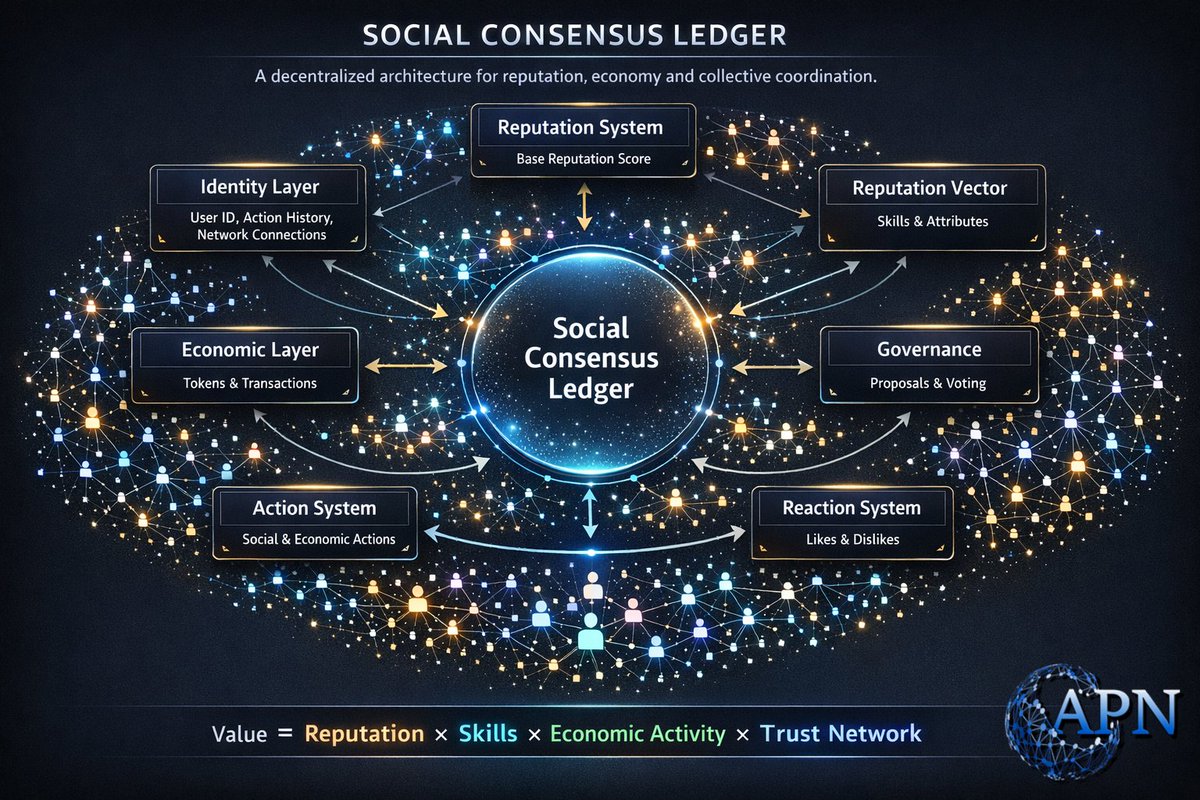
Rethinking Economic Value Imagine an economic network where the fundamental unit of value is not a coin, a stock, or a digital asset, but human trust and meaningful participation. Here, status is determined not by the size of one's capital, but by how useful and reliable your actions are to others. This is a fundamental shift: the system is protected from internal oligarchy and takeover by "whales" because influence cannot be bought—it can only be earned through consistent actions. The right to vote is not a privilege for a select few with large savings, but a tool for everyone who contributes their efforts to the common good. Mechanism of Resilience: An Ecosystem, Not a Pyramid The resilience of this network stems from several key principles, making it resemble a living, breathing organism rather than a fragile financial instrument: -Independence from external speculation. The internal value of the network and its ability to function are decoupled from the chaotic fluctuations of global crypto markets. The external token price is merely a reflection of external demand, while internally it serves as an immutable unit of account for trust and merit. Even in times of external panic, the "weather" inside the ecosystem can remain stable. -Organic, not artificial growth. Instead of infinite emission of new tokens that dilutes value (as in traditional farming), growth occurs through the expansion of social and economic activity. New "units of trust" (tokens) appear not on a schedule, but as a reward for specific, network-beneficial actions. This makes inflation manageable and meaningful. -Social consensus as the supreme arbiter. Governance is built not on blind code execution, but on constant, living social agreement (Social Consensus Ledger). Reputation, proven by deeds, becomes more important than any wallet balance. A participant acting against the community's interests will naturally lose influence and access to opportunities, even if they formally hold tokens. The network possesses immunity and is capable of self-cleaning without centralized "bans." The Nature of Yield: Circulation, Not Extraction Yield here is not a promised dividend, but a natural consequence of healthy economic activity within the ecosystem. It can be viewed from three perspectives: 1. Participation Yield. This is analogous to earning in a healthy guild or cooperative. By participating in moderation, helping newcomers, creating content, organizing processes, or building connections, you increase the overall "pie" of activity and receive a fair share of the value you helped create. 2. Trust Yield. This is the network effect, materialized in the economy. The higher your reputation and reliability (Social Loyalty Index), the more other participants want to collaborate with you, delegate tasks, and choose you as an arbitrator. This creates a flow of microtransactions and fees that concentrates around trusted nodes. Money follows trust. 3. Infrastructure Yield. As it grows, the network inevitably creates internal infrastructure: service markets, P2P platforms, arbitration systems, data storage. Microscopic fees for using this infrastructure do not flow to external investors but are redistributed among all who support and develop it, creating a self-sustaining cycle of internal capital circulation. Scaling: People as the Universal Asset The strength of this model lies in its universality and low growth requirements. It does not depend on a specific jurisdiction, culture, or level of wealth—trust is international. Network growth occurs by attracting new participants and deepening connections between them, which is a linear and predictable process. It does not need exponential financial injections to maintain interest, as is often the case with GameFi or hype-driven DeFi projects. This makes its development slower but immeasurably more resilient, free from "boom-and-bust" cycles. The Philosophical Paradox and Conclusion The main paradox, which is also its main strength, is as follows: **the less the system focuses on promising yield and the more it focuses on creating a healthy socio-economic environment, the higher its real, long-term value for participants becomes.** It filters out those seeking only quick profit and attracts builders, creators, and those who believe in the power of community. Ultimately, this is an experiment in creating an economy that serves people, not the other way around. It is an attempt to return to the origins, where the most solid asset was one's word, and the most stable currency was reputation, now materialized in digital space.
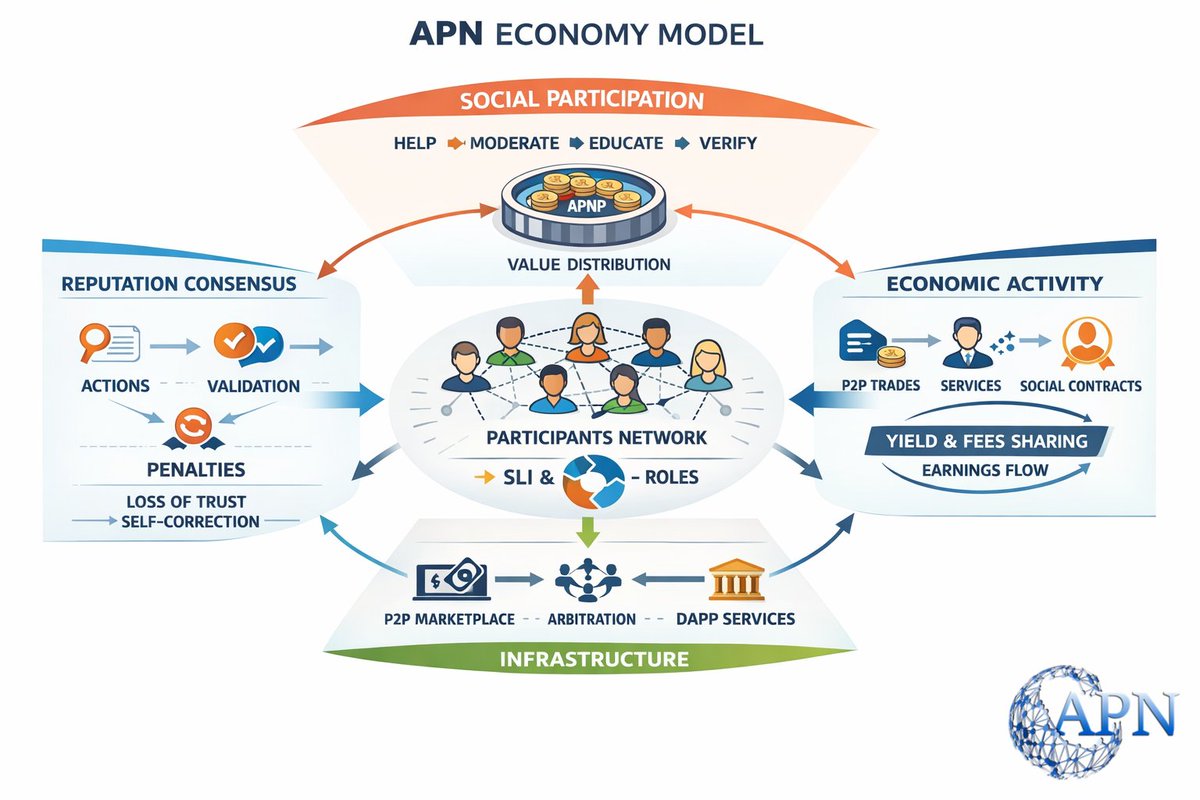
Approved People Network tweet media
English
12
7
15
46.9K
Approved People Network
Approved People Network@APNcommunity·
x.com/i/status/20169… Именно поэтому мы создаём распределённую общественную экономику. Чтобы никакие деструктивные процессы государств, или элит не имели катастрофического значения для общества. Мы с вами можем и должны быть независимы! Присоединяйтесь к нашему сообществу. Уже скоро запуск экосистемы. Первый этап проекта.
Approved People Network@APNcommunity

Rethinking Economic Value Imagine an economic network where the fundamental unit of value is not a coin, a stock, or a digital asset, but human trust and meaningful participation. Here, status is determined not by the size of one's capital, but by how useful and reliable your actions are to others. This is a fundamental shift: the system is protected from internal oligarchy and takeover by "whales" because influence cannot be bought—it can only be earned through consistent actions. The right to vote is not a privilege for a select few with large savings, but a tool for everyone who contributes their efforts to the common good. Mechanism of Resilience: An Ecosystem, Not a Pyramid The resilience of this network stems from several key principles, making it resemble a living, breathing organism rather than a fragile financial instrument: -Independence from external speculation. The internal value of the network and its ability to function are decoupled from the chaotic fluctuations of global crypto markets. The external token price is merely a reflection of external demand, while internally it serves as an immutable unit of account for trust and merit. Even in times of external panic, the "weather" inside the ecosystem can remain stable. -Organic, not artificial growth. Instead of infinite emission of new tokens that dilutes value (as in traditional farming), growth occurs through the expansion of social and economic activity. New "units of trust" (tokens) appear not on a schedule, but as a reward for specific, network-beneficial actions. This makes inflation manageable and meaningful. -Social consensus as the supreme arbiter. Governance is built not on blind code execution, but on constant, living social agreement (Social Consensus Ledger). Reputation, proven by deeds, becomes more important than any wallet balance. A participant acting against the community's interests will naturally lose influence and access to opportunities, even if they formally hold tokens. The network possesses immunity and is capable of self-cleaning without centralized "bans." The Nature of Yield: Circulation, Not Extraction Yield here is not a promised dividend, but a natural consequence of healthy economic activity within the ecosystem. It can be viewed from three perspectives: 1. Participation Yield. This is analogous to earning in a healthy guild or cooperative. By participating in moderation, helping newcomers, creating content, organizing processes, or building connections, you increase the overall "pie" of activity and receive a fair share of the value you helped create. 2. Trust Yield. This is the network effect, materialized in the economy. The higher your reputation and reliability (Social Loyalty Index), the more other participants want to collaborate with you, delegate tasks, and choose you as an arbitrator. This creates a flow of microtransactions and fees that concentrates around trusted nodes. Money follows trust. 3. Infrastructure Yield. As it grows, the network inevitably creates internal infrastructure: service markets, P2P platforms, arbitration systems, data storage. Microscopic fees for using this infrastructure do not flow to external investors but are redistributed among all who support and develop it, creating a self-sustaining cycle of internal capital circulation. Scaling: People as the Universal Asset The strength of this model lies in its universality and low growth requirements. It does not depend on a specific jurisdiction, culture, or level of wealth—trust is international. Network growth occurs by attracting new participants and deepening connections between them, which is a linear and predictable process. It does not need exponential financial injections to maintain interest, as is often the case with GameFi or hype-driven DeFi projects. This makes its development slower but immeasurably more resilient, free from "boom-and-bust" cycles. The Philosophical Paradox and Conclusion The main paradox, which is also its main strength, is as follows: **the less the system focuses on promising yield and the more it focuses on creating a healthy socio-economic environment, the higher its real, long-term value for participants becomes.** It filters out those seeking only quick profit and attracts builders, creators, and those who believe in the power of community. Ultimately, this is an experiment in creating an economy that serves people, not the other way around. It is an attempt to return to the origins, where the most solid asset was one's word, and the most stable currency was reputation, now materialized in digital space.

Русский
0
0
1
51
SOTA
SOTA@sotaproject·
Маленькая, но поучительная история, почему никогда нельзя доверять российскому государству. Году этак в 90-м – аккурат под закрытие СССР – моя мама решила обеспечить будущее своего тогда еще маленького сына и положила ему на специальный счет в Сбербанке 1000 рублей. По тем временам это были большие деньги, которые банк обещал вернуть с процентами к моему совершеннолетию – то есть в начале двухтысячных. Получился бы такой красивый подарок. Но, как вы понимаете, он не получился: в 91-м году вклады обнулились («были заморожены» или любой другой синоним узаконенного грабежа) – и тысяча советских рублей превратилась в тыкву. Конечно, тут надо учитывать, что реально на эту самую тысячу рублей тогда было купить особо ничего нельзя: товаров в стране не было в отличие от щедро раздаваемых государством денег с профилем Ленина. Тем не менее с какой-то туманной периодичностью в последующие годы Сбербанк соглашался отдавать от тех денег комические проценты. Например, в 25-м году, если верить сайту того же «Сбера», очередные компенсации должны были выплачивать «в двукратном размере»: то есть 1000 советских рублей (при зарплате в те годы в 100-200 рублей в месяц) равна 2 тысячам российских. Как обесценился вклад «на вырост», можете посчитать сами. Но это было только начало истории, не стоившее бы упоминания, если бы не утреннее письмо на «Госуслугах», куда хорошие люди, конечно, не напишут. Дело в том, что в 2024-м году меня внесли в почетный список «участников иноагентского объединения «Сота», а в 2025 году первый раз оштрафовали за отсутствие в наших текстах плашки. Штраф я, конечно, платить не стал – и загрузил работой по поиску моего имущества пристава Валерию Игоревну Шиванову. Она-то сегодня и нашла тот самый счет в Сбербанке (о котором я по понятным причинам забыл и думать где-то лет 20 назад), заблокировав его с удивительной формулировкой о том, что на этом счете есть «признаки российского рубля». Удачное определение для всей этой многолетней государственной авантюры. Мораль у истории простая: не жили хорошо – не надо и начинать. Государство обманет тебя всегда, сынок. Сначала оно платит необеспеченные деньги, на которые ничего нельзя купить. Потом – обнуляет эти деньги, но обещает, что отдаст их когда-нибудь потом. Конечно, ничего не отдает на протяжении 37 лет (это ж не война, чтобы тратиться), а в финале ворует даже виртуальную сумму. Алексей Обухов
SOTA tweet media
Русский
69
77
773
58.6K
Approved People Network
Approved People Network@APNcommunity·
The video ended when he already had 18 SOL. Because of this post, it's unclear how much he actually locked in, and whether he ended up in the red at all. Such "snapshots" are often taken out of context and may only show the situation at a single moment. Stay vigilant and be consistent in evaluating the real situation when viewing such content.Our community is building an ecosystem where every action is backed by reputation. In APN, everything is designed so that creating incompetent or toxic content becomes unprofitable and destructive for its creator, while content and actions that are healthy, structural, and beneficial are maximally encouraged. This is essentially a currency of trust - something that cannot be bought, sold, lost, or stolen.
English
0
0
1
31
cold
cold@coldtrz·
This degen made $200,000 in a few seconds Crypto is actually insane
English
114
50
689
157.9K
Approved People Network retweetledi
Approved People Network
Approved People Network@APNcommunity·
A Blessed Evening APN Community! The moment you’ve been waiting for is here… APN Referral Contest starts TOMORROW APRIL 1ST Want to earn rewards? Simple: 1️⃣ Join our Telegram: [@apn_team] 2️⃣ Generate your invite link using 👉 /invite @EliteMSGScannerBot 3️⃣ Invite friends & climb the leaderboard The bigger your network, the bigger your rewards 🏆 Prizes: 🥇 1st — $25 SOL 🥈 2nd — $15 SOL 🥉 3rd — $10 SOL 4th — 1,200,000 APNP 5th — 1,000,000 APNP 6th — 800,000 APNP 7th — 700,000 APNP 8th — 600,000 APNP 9th — 400,000 APNP 10th — 300,000 APNP ⏳ Duration: 10 Days Every referral counts Tag someone who should be part of APN GL everyone… let’s make this epic #RAW #contest #Apncommunity #Giveaway #Airdrop
Approved People Network tweet media
English
15
6
15
291
Approved People Network retweetledi
Approved People Network
Approved People Network@APNcommunity·
$20 SOL GIVEAWAY We’re rewarding the real ones building with us APN isn’t just another project… it’s an ecosystem shaping the future of Social Consensus Ledger (SCL) and the launch is getting close than expected now ready 🌐 And we want more people to see it 👀 Win $20 in SOL — easy, prize will be shared among 4 randomly people,Good luck To enter: 1️⃣ Follow us 2️⃣ Like & RT this post 3️⃣ Drop your wallet + tag 2 friends That’s it. We’re growing fast… don’t watch from the sidelines. ⏳ Winner announced in 48 hours #SOL #Crypto #Web3 #Airdrop #Giveaway 🚀
Approved People Network tweet media
English
24
20
30
685
Approved People Network
Approved People Network@APNcommunity·
x.com/i/status/20169… In the financial world, not a single safe haven remains. All markets are exhibiting insane manipulativeness. This is a sign of resource redistribution by the largest clans. It does not bode well. It is necessary to create our own alternative to the public economy. We need to become independent from the owners of money. Our community was created to address this global issue. We all need to unite. Support us with your attention. Together, we will become independent!
Approved People Network@APNcommunity

Rethinking Economic Value Imagine an economic network where the fundamental unit of value is not a coin, a stock, or a digital asset, but human trust and meaningful participation. Here, status is determined not by the size of one's capital, but by how useful and reliable your actions are to others. This is a fundamental shift: the system is protected from internal oligarchy and takeover by "whales" because influence cannot be bought—it can only be earned through consistent actions. The right to vote is not a privilege for a select few with large savings, but a tool for everyone who contributes their efforts to the common good. Mechanism of Resilience: An Ecosystem, Not a Pyramid The resilience of this network stems from several key principles, making it resemble a living, breathing organism rather than a fragile financial instrument: -Independence from external speculation. The internal value of the network and its ability to function are decoupled from the chaotic fluctuations of global crypto markets. The external token price is merely a reflection of external demand, while internally it serves as an immutable unit of account for trust and merit. Even in times of external panic, the "weather" inside the ecosystem can remain stable. -Organic, not artificial growth. Instead of infinite emission of new tokens that dilutes value (as in traditional farming), growth occurs through the expansion of social and economic activity. New "units of trust" (tokens) appear not on a schedule, but as a reward for specific, network-beneficial actions. This makes inflation manageable and meaningful. -Social consensus as the supreme arbiter. Governance is built not on blind code execution, but on constant, living social agreement (Social Consensus Ledger). Reputation, proven by deeds, becomes more important than any wallet balance. A participant acting against the community's interests will naturally lose influence and access to opportunities, even if they formally hold tokens. The network possesses immunity and is capable of self-cleaning without centralized "bans." The Nature of Yield: Circulation, Not Extraction Yield here is not a promised dividend, but a natural consequence of healthy economic activity within the ecosystem. It can be viewed from three perspectives: 1. Participation Yield. This is analogous to earning in a healthy guild or cooperative. By participating in moderation, helping newcomers, creating content, organizing processes, or building connections, you increase the overall "pie" of activity and receive a fair share of the value you helped create. 2. Trust Yield. This is the network effect, materialized in the economy. The higher your reputation and reliability (Social Loyalty Index), the more other participants want to collaborate with you, delegate tasks, and choose you as an arbitrator. This creates a flow of microtransactions and fees that concentrates around trusted nodes. Money follows trust. 3. Infrastructure Yield. As it grows, the network inevitably creates internal infrastructure: service markets, P2P platforms, arbitration systems, data storage. Microscopic fees for using this infrastructure do not flow to external investors but are redistributed among all who support and develop it, creating a self-sustaining cycle of internal capital circulation. Scaling: People as the Universal Asset The strength of this model lies in its universality and low growth requirements. It does not depend on a specific jurisdiction, culture, or level of wealth—trust is international. Network growth occurs by attracting new participants and deepening connections between them, which is a linear and predictable process. It does not need exponential financial injections to maintain interest, as is often the case with GameFi or hype-driven DeFi projects. This makes its development slower but immeasurably more resilient, free from "boom-and-bust" cycles. The Philosophical Paradox and Conclusion The main paradox, which is also its main strength, is as follows: **the less the system focuses on promising yield and the more it focuses on creating a healthy socio-economic environment, the higher its real, long-term value for participants becomes.** It filters out those seeking only quick profit and attracts builders, creators, and those who believe in the power of community. Ultimately, this is an experiment in creating an economy that serves people, not the other way around. It is an attempt to return to the origins, where the most solid asset was one's word, and the most stable currency was reputation, now materialized in digital space.

English

0
0
1
15
Wazz
Wazz@WazzCrypto·
The whole @Binance listing team should be jailed
Wazz tweet media
English
110
75
1.1K
161.5K
Approved People Network
Approved People Network@APNcommunity·
@minh_tuan88 Đó chính là cách mà bản năng của một người bình thường khỏe mạnh vận hành. Lòng trắc ẩn và sự giúp đỡ người khác, dù có thể nguy hiểm đến tính mạng của chính mình. x.com/APNcommunity/s…
Approved People Network@APNcommunity

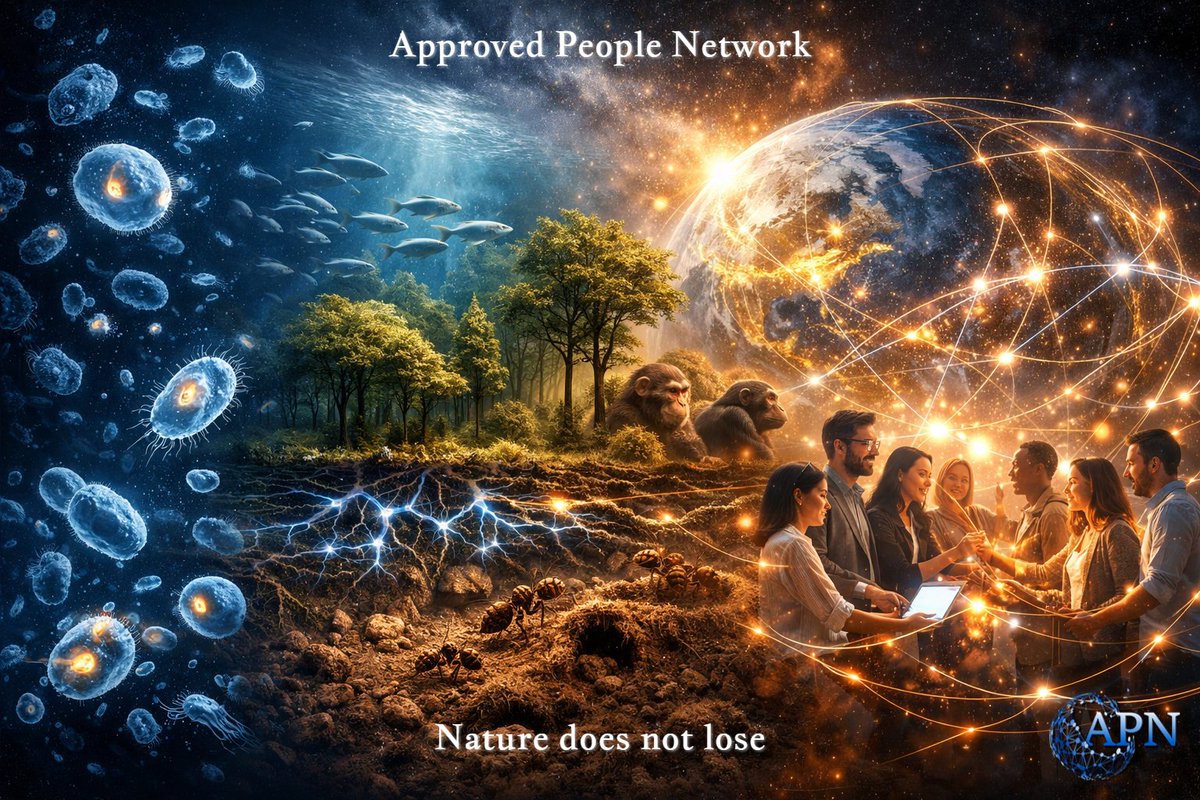
The Selfish Gene or the Great Altruist: Why Evolution Chooses Cooperation We are used to thinking of nature as a brutal arena of struggle. "Man is a wolf to man," "survival of the fittest" — these phrases seem to us axioms of Darwinism. Fangs, claws, poisons, and deadly competition — all of this undoubtedly exists. But if you dig deeper, an astonishing thing is revealed: the main driver of progress in evolution is not fighting, but the ability to negotiate. Biologists and mathematicians have been trying for half a century to answer the question: is cooperation a random occurrence or a fundamental law of life? And the data inexorably shows: evolution methodically weeds out absolute egoists. Those who know how to unite always conquer the world. The Paradox of the Altruist How could altruism even arise? Why does a bee give its life when stinging an enemy, if it dies in the process? The "heroism" gene should have disappeared — yet it exists. The answer was found by William Hamilton in 1964. A bee's genes are immortal not within itself, but within its sisters and mother. The bee stings an enemy not because it is "brave," but because its genes command it to save the body of the hive, where millions of these genes reside. This is called kin selection. But this only explained help among relatives. What about cooperation between strangers? The Mathematics of Kindness: Axelrod's Tournament In the late 70s, political scientist Robert Axelrod organized a tournament based on the "Prisoner's Dilemma" — the classic model of conflict between personal gain and the common good. Participants submitted complex algorithms: bluff, total aggression, cunning. And the winner was the simplest program. It was called "Tit for Tat." Its logic: on the first move, always cooperate; then simply copy your opponent's action. They helped you — help them; they betrayed you — punish them. This strategy won because it was kind (never betrayed first), forgiving, and clear. Axelrod's conclusion was a sensation: in the long term, in a world where beings meet repeatedly, it is evolutionarily more advantageous to be a cooperator. Egoists win in the moment, but lose in eternity. Interview with Nature Field biologists see cooperation at every step. Cleaner fish set up "service stations" on reefs. Predators could eat them, but they don't — because the cleaners rid them of parasites. If a cleaner cheats, it gets put on a "blacklist." Fish remember cheaters and prefer honest partners. The most large-scale cooperation happens right beneath our feet. Suzanne Simard proved the existence of the "Wood Wide Web" — trees in the forest are connected by a giant network of fungi. Old "mother" trees feed young saplings that lack sunlight. The forest is not a collection of individuals fighting for light, but a single superorganism. Frans de Waal, studying chimpanzees, showed that politics and alliances are not a human invention. Primates live in a complex web of mutual obligations. By helping the weak today, you can gain support against the strong tomorrow. Cooperation as the Engine of Evolution Biologist David Sloan Wilson formulated the theory of multilevel selection: egoists win within a group, but groups of cooperators win against groups of egoists. A single ant is helpless, but an ant colony is a biological weapon, capable of building cities and solving complex problems. Evolution doesn't tell us "be good." It simply conducts experiments. And the experiments show: the strategy of total aggression leads to a dead end. Cooperation allowed life to transition from single cells to multicellular organisms. It allowed us to leave the savanna and build civilization. The main lesson of evolution sounds like this: unite, or you will lose. Nature Does Not Lose Evolution is not an archive of dusty facts. It is a living current flowing through us right now. And this current has a direction. From simple to complex. From loneliness to unity. From competition to co-creation. Look at the history of life. First, there were single cells devouring each other in the primordial soup. It was a dead end. But one day, two cells decided not to fight, but to unite. Thus, the first cooperation was born. From it came fish, dinosaurs, trees, and — us. In a world where old structures are crumbling, where "man is a wolf to man" leads civilization into the dead end of loneliness, there is another path. The path of mycorrhiza. The path of symbiosis. The path that evolution has recognized as the only true one for millions of years. Approved People Network was born from this understanding. If you look closely, it is an exact replica of the mechanism nature has been refining for billions of years. It is that same fungal network connecting tree roots, so no one goes hungry. It is that same school of fish, where each individual is protected by the movement of millions. It is that ant colony, where personal success is impossible without the success of the common home. We cannot lose. Why? Because we are not going against nature — we are going with its flow. The predator that eats the cleaner today will die from parasites tomorrow without its help. The tree that refuses to share will wither alone when the drought comes. The great tournament of strategies showed: in the infinite game called "life," only cooperators win. Only those who, on the first move, offer trust, not a blow. Approved People Network is that very first move. We extend our hand not to take away, but to create a network. A network where the success of each is multiplied by the success of all. When you become part of this movement, you cease to be a grain of sand that the wind of history can blow away at any second. You become part of the Wood Wide Web. Part of the mycelium. Part of a living, breathing organism that grows according to the laws of life itself. Nature does not build empires on deceit. It builds ecosystems on trust. Our path is inevitable. Our victory is predetermined. Not because we are smarter or cleverer. But because we have chosen the same strategy that transformed the primordial soup into blooming gardens. Join the movement that evolution itself has chosen. Because evolution does not lose. Approved People Network — we grow together, as nature intended.

Tiếng Việt
0
0
0
129
Minh Tuấn
Minh Tuấn@minh_tuan88·
VIỆT NAM TÔI ĐÓ RA NGÕ GẶP ANH HÙNG 🇻🇳🇻🇳 Chiều nay tại Lĩnh Nam xảy ra vụ cháy căn nhà 7 tầng , 2 thanh niên chưa rõ ở đâu đã trèo lên phá mái tôn cứu được rất nhiều người bên trong. Những tấm gương cần được lan toả rộng rãi ngoài cộng đồng. Nguồn : Mạng xã hội
Tiếng Việt
85
114
1.6K
466.6K
Approved People Network
Approved People Network@APNcommunity·
Nature is wondrous in every form she takes. The very emergence and existence of life upon our cherished home - this alone is a miracle beyond words. An unfathomable constellation of variables is woven into the very fabric of life with absolute precision. And the foundation of all life on Earth is Water. Water, with her unique and sacred properties, holds memory within her depths and trembles at the vibrations of emotion. We must cherish what we have been given. We think, we are, we live, we dream, we seek to understand… We were made to nurture our common home - and yet, like quarrelsome children, we fight and tear apart all that surrounds us… Let your thoughts turn more often to kindness, to deeds of honesty and grace. One day, the noblest and brightest yearnings of the human heart shall prevail over darkness and malice. For it is infinitely more peaceful and more safe to dwell in trust, in compassion, in mutual care. This is the way of nature. You need only listen to the voice within your soul. And you shall hear… The Truth…
Approved People Network tweet media
English
0
3
11
2K
Narendra Modi
Narendra Modi@narendramodi·
Water sustains us and shapes our planet’s future. On World Water Day, let us reaffirm our commitment to conserve every drop of water and use it responsibly. Today is also a day to appreciate those who engage in sustainable practices, promote awareness and nurture a culture of conservation.
English
2K
6.4K
33.1K
13.9M
Approved People Network
Approved People Network@APNcommunity·
x.com/APNcommunity/s… People! Stop gloating and hating each other. Don't you see? They're pitting us against one another, dividing us, making us believe that those close to us are our enemies. You - the people - didn't start what you're now supporting! Wake up! This is the simplest manipulation - playing on emotions - and it works! Just think about it!
Approved People Network@APNcommunity

The Selfish Gene or the Great Altruist: Why Evolution Chooses Cooperation We are used to thinking of nature as a brutal arena of struggle. "Man is a wolf to man," "survival of the fittest" — these phrases seem to us axioms of Darwinism. Fangs, claws, poisons, and deadly competition — all of this undoubtedly exists. But if you dig deeper, an astonishing thing is revealed: the main driver of progress in evolution is not fighting, but the ability to negotiate. Biologists and mathematicians have been trying for half a century to answer the question: is cooperation a random occurrence or a fundamental law of life? And the data inexorably shows: evolution methodically weeds out absolute egoists. Those who know how to unite always conquer the world. The Paradox of the Altruist How could altruism even arise? Why does a bee give its life when stinging an enemy, if it dies in the process? The "heroism" gene should have disappeared — yet it exists. The answer was found by William Hamilton in 1964. A bee's genes are immortal not within itself, but within its sisters and mother. The bee stings an enemy not because it is "brave," but because its genes command it to save the body of the hive, where millions of these genes reside. This is called kin selection. But this only explained help among relatives. What about cooperation between strangers? The Mathematics of Kindness: Axelrod's Tournament In the late 70s, political scientist Robert Axelrod organized a tournament based on the "Prisoner's Dilemma" — the classic model of conflict between personal gain and the common good. Participants submitted complex algorithms: bluff, total aggression, cunning. And the winner was the simplest program. It was called "Tit for Tat." Its logic: on the first move, always cooperate; then simply copy your opponent's action. They helped you — help them; they betrayed you — punish them. This strategy won because it was kind (never betrayed first), forgiving, and clear. Axelrod's conclusion was a sensation: in the long term, in a world where beings meet repeatedly, it is evolutionarily more advantageous to be a cooperator. Egoists win in the moment, but lose in eternity. Interview with Nature Field biologists see cooperation at every step. Cleaner fish set up "service stations" on reefs. Predators could eat them, but they don't — because the cleaners rid them of parasites. If a cleaner cheats, it gets put on a "blacklist." Fish remember cheaters and prefer honest partners. The most large-scale cooperation happens right beneath our feet. Suzanne Simard proved the existence of the "Wood Wide Web" — trees in the forest are connected by a giant network of fungi. Old "mother" trees feed young saplings that lack sunlight. The forest is not a collection of individuals fighting for light, but a single superorganism. Frans de Waal, studying chimpanzees, showed that politics and alliances are not a human invention. Primates live in a complex web of mutual obligations. By helping the weak today, you can gain support against the strong tomorrow. Cooperation as the Engine of Evolution Biologist David Sloan Wilson formulated the theory of multilevel selection: egoists win within a group, but groups of cooperators win against groups of egoists. A single ant is helpless, but an ant colony is a biological weapon, capable of building cities and solving complex problems. Evolution doesn't tell us "be good." It simply conducts experiments. And the experiments show: the strategy of total aggression leads to a dead end. Cooperation allowed life to transition from single cells to multicellular organisms. It allowed us to leave the savanna and build civilization. The main lesson of evolution sounds like this: unite, or you will lose. Nature Does Not Lose Evolution is not an archive of dusty facts. It is a living current flowing through us right now. And this current has a direction. From simple to complex. From loneliness to unity. From competition to co-creation. Look at the history of life. First, there were single cells devouring each other in the primordial soup. It was a dead end. But one day, two cells decided not to fight, but to unite. Thus, the first cooperation was born. From it came fish, dinosaurs, trees, and — us. In a world where old structures are crumbling, where "man is a wolf to man" leads civilization into the dead end of loneliness, there is another path. The path of mycorrhiza. The path of symbiosis. The path that evolution has recognized as the only true one for millions of years. Approved People Network was born from this understanding. If you look closely, it is an exact replica of the mechanism nature has been refining for billions of years. It is that same fungal network connecting tree roots, so no one goes hungry. It is that same school of fish, where each individual is protected by the movement of millions. It is that ant colony, where personal success is impossible without the success of the common home. We cannot lose. Why? Because we are not going against nature — we are going with its flow. The predator that eats the cleaner today will die from parasites tomorrow without its help. The tree that refuses to share will wither alone when the drought comes. The great tournament of strategies showed: in the infinite game called "life," only cooperators win. Only those who, on the first move, offer trust, not a blow. Approved People Network is that very first move. We extend our hand not to take away, but to create a network. A network where the success of each is multiplied by the success of all. When you become part of this movement, you cease to be a grain of sand that the wind of history can blow away at any second. You become part of the Wood Wide Web. Part of the mycelium. Part of a living, breathing organism that grows according to the laws of life itself. Nature does not build empires on deceit. It builds ecosystems on trust. Our path is inevitable. Our victory is predetermined. Not because we are smarter or cleverer. But because we have chosen the same strategy that transformed the primordial soup into blooming gardens. Join the movement that evolution itself has chosen. Because evolution does not lose. Approved People Network — we grow together, as nature intended.

English
0
0
0
52
Approved People Network
Approved People Network@APNcommunity·
@front_ukrainian We are not the ones who start world conflicts. But we are the ones who will end them. x.com/APNcommunity/s…
Approved People Network@APNcommunity

The Selfish Gene or the Great Altruist: Why Evolution Chooses Cooperation We are used to thinking of nature as a brutal arena of struggle. "Man is a wolf to man," "survival of the fittest" — these phrases seem to us axioms of Darwinism. Fangs, claws, poisons, and deadly competition — all of this undoubtedly exists. But if you dig deeper, an astonishing thing is revealed: the main driver of progress in evolution is not fighting, but the ability to negotiate. Biologists and mathematicians have been trying for half a century to answer the question: is cooperation a random occurrence or a fundamental law of life? And the data inexorably shows: evolution methodically weeds out absolute egoists. Those who know how to unite always conquer the world. The Paradox of the Altruist How could altruism even arise? Why does a bee give its life when stinging an enemy, if it dies in the process? The "heroism" gene should have disappeared — yet it exists. The answer was found by William Hamilton in 1964. A bee's genes are immortal not within itself, but within its sisters and mother. The bee stings an enemy not because it is "brave," but because its genes command it to save the body of the hive, where millions of these genes reside. This is called kin selection. But this only explained help among relatives. What about cooperation between strangers? The Mathematics of Kindness: Axelrod's Tournament In the late 70s, political scientist Robert Axelrod organized a tournament based on the "Prisoner's Dilemma" — the classic model of conflict between personal gain and the common good. Participants submitted complex algorithms: bluff, total aggression, cunning. And the winner was the simplest program. It was called "Tit for Tat." Its logic: on the first move, always cooperate; then simply copy your opponent's action. They helped you — help them; they betrayed you — punish them. This strategy won because it was kind (never betrayed first), forgiving, and clear. Axelrod's conclusion was a sensation: in the long term, in a world where beings meet repeatedly, it is evolutionarily more advantageous to be a cooperator. Egoists win in the moment, but lose in eternity. Interview with Nature Field biologists see cooperation at every step. Cleaner fish set up "service stations" on reefs. Predators could eat them, but they don't — because the cleaners rid them of parasites. If a cleaner cheats, it gets put on a "blacklist." Fish remember cheaters and prefer honest partners. The most large-scale cooperation happens right beneath our feet. Suzanne Simard proved the existence of the "Wood Wide Web" — trees in the forest are connected by a giant network of fungi. Old "mother" trees feed young saplings that lack sunlight. The forest is not a collection of individuals fighting for light, but a single superorganism. Frans de Waal, studying chimpanzees, showed that politics and alliances are not a human invention. Primates live in a complex web of mutual obligations. By helping the weak today, you can gain support against the strong tomorrow. Cooperation as the Engine of Evolution Biologist David Sloan Wilson formulated the theory of multilevel selection: egoists win within a group, but groups of cooperators win against groups of egoists. A single ant is helpless, but an ant colony is a biological weapon, capable of building cities and solving complex problems. Evolution doesn't tell us "be good." It simply conducts experiments. And the experiments show: the strategy of total aggression leads to a dead end. Cooperation allowed life to transition from single cells to multicellular organisms. It allowed us to leave the savanna and build civilization. The main lesson of evolution sounds like this: unite, or you will lose. Nature Does Not Lose Evolution is not an archive of dusty facts. It is a living current flowing through us right now. And this current has a direction. From simple to complex. From loneliness to unity. From competition to co-creation. Look at the history of life. First, there were single cells devouring each other in the primordial soup. It was a dead end. But one day, two cells decided not to fight, but to unite. Thus, the first cooperation was born. From it came fish, dinosaurs, trees, and — us. In a world where old structures are crumbling, where "man is a wolf to man" leads civilization into the dead end of loneliness, there is another path. The path of mycorrhiza. The path of symbiosis. The path that evolution has recognized as the only true one for millions of years. Approved People Network was born from this understanding. If you look closely, it is an exact replica of the mechanism nature has been refining for billions of years. It is that same fungal network connecting tree roots, so no one goes hungry. It is that same school of fish, where each individual is protected by the movement of millions. It is that ant colony, where personal success is impossible without the success of the common home. We cannot lose. Why? Because we are not going against nature — we are going with its flow. The predator that eats the cleaner today will die from parasites tomorrow without its help. The tree that refuses to share will wither alone when the drought comes. The great tournament of strategies showed: in the infinite game called "life," only cooperators win. Only those who, on the first move, offer trust, not a blow. Approved People Network is that very first move. We extend our hand not to take away, but to create a network. A network where the success of each is multiplied by the success of all. When you become part of this movement, you cease to be a grain of sand that the wind of history can blow away at any second. You become part of the Wood Wide Web. Part of the mycelium. Part of a living, breathing organism that grows according to the laws of life itself. Nature does not build empires on deceit. It builds ecosystems on trust. Our path is inevitable. Our victory is predetermined. Not because we are smarter or cleverer. But because we have chosen the same strategy that transformed the primordial soup into blooming gardens. Join the movement that evolution itself has chosen. Because evolution does not lose. Approved People Network — we grow together, as nature intended.

English
0
0
1
44
🪖MilitaryNewsUA🇺🇦
🪖MilitaryNewsUA🇺🇦@front_ukrainian·
❗️Full video: 🇺🇦Ukrainian FPV drone operator from the 59th brigade destroys a 🇷🇺Russian Ka-52 on the Pokrovsk direction. After ejection, the crew was eliminated.
English
247
764
10.2K
1.3M
Approved People Network
Approved People Network@APNcommunity·
@failure1991 Death and destruction are offshoots of egoism-a trait required only during a specific phase of evolution. As intricate social beings, our survival is contingent upon cooperation. Such is the law of nature. x.com/APNcommunity/s…
Approved People Network@APNcommunity

The Selfish Gene or the Great Altruist: Why Evolution Chooses Cooperation We are used to thinking of nature as a brutal arena of struggle. "Man is a wolf to man," "survival of the fittest" — these phrases seem to us axioms of Darwinism. Fangs, claws, poisons, and deadly competition — all of this undoubtedly exists. But if you dig deeper, an astonishing thing is revealed: the main driver of progress in evolution is not fighting, but the ability to negotiate. Biologists and mathematicians have been trying for half a century to answer the question: is cooperation a random occurrence or a fundamental law of life? And the data inexorably shows: evolution methodically weeds out absolute egoists. Those who know how to unite always conquer the world. The Paradox of the Altruist How could altruism even arise? Why does a bee give its life when stinging an enemy, if it dies in the process? The "heroism" gene should have disappeared — yet it exists. The answer was found by William Hamilton in 1964. A bee's genes are immortal not within itself, but within its sisters and mother. The bee stings an enemy not because it is "brave," but because its genes command it to save the body of the hive, where millions of these genes reside. This is called kin selection. But this only explained help among relatives. What about cooperation between strangers? The Mathematics of Kindness: Axelrod's Tournament In the late 70s, political scientist Robert Axelrod organized a tournament based on the "Prisoner's Dilemma" — the classic model of conflict between personal gain and the common good. Participants submitted complex algorithms: bluff, total aggression, cunning. And the winner was the simplest program. It was called "Tit for Tat." Its logic: on the first move, always cooperate; then simply copy your opponent's action. They helped you — help them; they betrayed you — punish them. This strategy won because it was kind (never betrayed first), forgiving, and clear. Axelrod's conclusion was a sensation: in the long term, in a world where beings meet repeatedly, it is evolutionarily more advantageous to be a cooperator. Egoists win in the moment, but lose in eternity. Interview with Nature Field biologists see cooperation at every step. Cleaner fish set up "service stations" on reefs. Predators could eat them, but they don't — because the cleaners rid them of parasites. If a cleaner cheats, it gets put on a "blacklist." Fish remember cheaters and prefer honest partners. The most large-scale cooperation happens right beneath our feet. Suzanne Simard proved the existence of the "Wood Wide Web" — trees in the forest are connected by a giant network of fungi. Old "mother" trees feed young saplings that lack sunlight. The forest is not a collection of individuals fighting for light, but a single superorganism. Frans de Waal, studying chimpanzees, showed that politics and alliances are not a human invention. Primates live in a complex web of mutual obligations. By helping the weak today, you can gain support against the strong tomorrow. Cooperation as the Engine of Evolution Biologist David Sloan Wilson formulated the theory of multilevel selection: egoists win within a group, but groups of cooperators win against groups of egoists. A single ant is helpless, but an ant colony is a biological weapon, capable of building cities and solving complex problems. Evolution doesn't tell us "be good." It simply conducts experiments. And the experiments show: the strategy of total aggression leads to a dead end. Cooperation allowed life to transition from single cells to multicellular organisms. It allowed us to leave the savanna and build civilization. The main lesson of evolution sounds like this: unite, or you will lose. Nature Does Not Lose Evolution is not an archive of dusty facts. It is a living current flowing through us right now. And this current has a direction. From simple to complex. From loneliness to unity. From competition to co-creation. Look at the history of life. First, there were single cells devouring each other in the primordial soup. It was a dead end. But one day, two cells decided not to fight, but to unite. Thus, the first cooperation was born. From it came fish, dinosaurs, trees, and — us. In a world where old structures are crumbling, where "man is a wolf to man" leads civilization into the dead end of loneliness, there is another path. The path of mycorrhiza. The path of symbiosis. The path that evolution has recognized as the only true one for millions of years. Approved People Network was born from this understanding. If you look closely, it is an exact replica of the mechanism nature has been refining for billions of years. It is that same fungal network connecting tree roots, so no one goes hungry. It is that same school of fish, where each individual is protected by the movement of millions. It is that ant colony, where personal success is impossible without the success of the common home. We cannot lose. Why? Because we are not going against nature — we are going with its flow. The predator that eats the cleaner today will die from parasites tomorrow without its help. The tree that refuses to share will wither alone when the drought comes. The great tournament of strategies showed: in the infinite game called "life," only cooperators win. Only those who, on the first move, offer trust, not a blow. Approved People Network is that very first move. We extend our hand not to take away, but to create a network. A network where the success of each is multiplied by the success of all. When you become part of this movement, you cease to be a grain of sand that the wind of history can blow away at any second. You become part of the Wood Wide Web. Part of the mycelium. Part of a living, breathing organism that grows according to the laws of life itself. Nature does not build empires on deceit. It builds ecosystems on trust. Our path is inevitable. Our victory is predetermined. Not because we are smarter or cleverer. But because we have chosen the same strategy that transformed the primordial soup into blooming gardens. Join the movement that evolution itself has chosen. Because evolution does not lose. Approved People Network — we grow together, as nature intended.

English
0
0
0
1.1K
Just Me
Just Me@failure1991·
From Russian journalist Evgeny Poddubny - in case anyone was wondering how the UKR counterattacks in Zapo and Dnepropetrovsk are doing. Warning: 18+ (Distressing images)
English
28
109
1.1K
51.3K
Approved People Network
Approved People Network@APNcommunity·
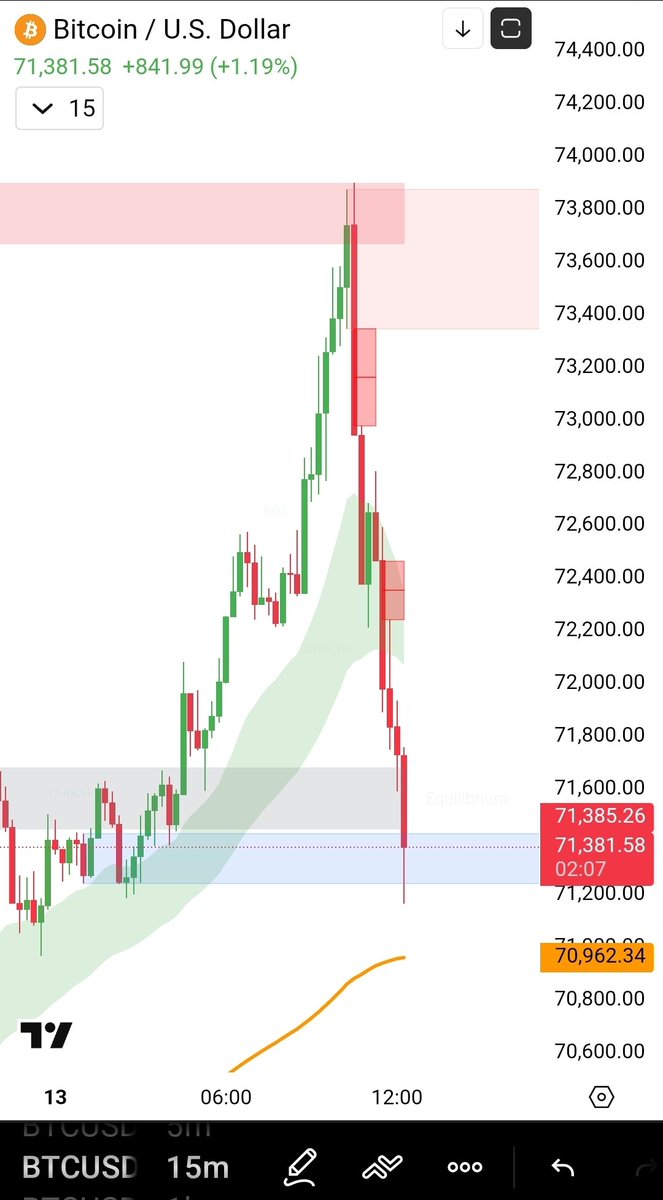
If liquidation levels worked as a unconditional indicator, then the traders who follow them would be extremely accurate and successful. So why don’t we see any such traders? Ask yourself that question, and find the answer. Once you find it, you’ll be one step closer to success. Right now, you’re just confusing wishful thinking with reality.
English
0
0
0
24
ThaScalpStation
ThaScalpStation@ThaScalpStation·
@seth_fin That heatmap tells the real story. Price isn’t moving randomly — it’s gravitating toward liquidity clusters. The bigger the liquidation wall, the stronger the magnet for price. Traders who follow liquidity usually stay one step ahead of the move.
English
1
0
0
367
Crypto Seth
Crypto Seth@seth_fin·
Do you have any questions?
Crypto Seth tweet media
English
82
33
303
66.3K
Approved People Network
Approved People Network@APNcommunity·
@Intl_Relations0 There really is a lot we can learn from children. Their spontaneity and sincerity. x.com/APNcommunity/s…
Approved People Network@APNcommunity

The Selfish Gene or the Great Altruist: Why Evolution Chooses Cooperation We are used to thinking of nature as a brutal arena of struggle. "Man is a wolf to man," "survival of the fittest" — these phrases seem to us axioms of Darwinism. Fangs, claws, poisons, and deadly competition — all of this undoubtedly exists. But if you dig deeper, an astonishing thing is revealed: the main driver of progress in evolution is not fighting, but the ability to negotiate. Biologists and mathematicians have been trying for half a century to answer the question: is cooperation a random occurrence or a fundamental law of life? And the data inexorably shows: evolution methodically weeds out absolute egoists. Those who know how to unite always conquer the world. The Paradox of the Altruist How could altruism even arise? Why does a bee give its life when stinging an enemy, if it dies in the process? The "heroism" gene should have disappeared — yet it exists. The answer was found by William Hamilton in 1964. A bee's genes are immortal not within itself, but within its sisters and mother. The bee stings an enemy not because it is "brave," but because its genes command it to save the body of the hive, where millions of these genes reside. This is called kin selection. But this only explained help among relatives. What about cooperation between strangers? The Mathematics of Kindness: Axelrod's Tournament In the late 70s, political scientist Robert Axelrod organized a tournament based on the "Prisoner's Dilemma" — the classic model of conflict between personal gain and the common good. Participants submitted complex algorithms: bluff, total aggression, cunning. And the winner was the simplest program. It was called "Tit for Tat." Its logic: on the first move, always cooperate; then simply copy your opponent's action. They helped you — help them; they betrayed you — punish them. This strategy won because it was kind (never betrayed first), forgiving, and clear. Axelrod's conclusion was a sensation: in the long term, in a world where beings meet repeatedly, it is evolutionarily more advantageous to be a cooperator. Egoists win in the moment, but lose in eternity. Interview with Nature Field biologists see cooperation at every step. Cleaner fish set up "service stations" on reefs. Predators could eat them, but they don't — because the cleaners rid them of parasites. If a cleaner cheats, it gets put on a "blacklist." Fish remember cheaters and prefer honest partners. The most large-scale cooperation happens right beneath our feet. Suzanne Simard proved the existence of the "Wood Wide Web" — trees in the forest are connected by a giant network of fungi. Old "mother" trees feed young saplings that lack sunlight. The forest is not a collection of individuals fighting for light, but a single superorganism. Frans de Waal, studying chimpanzees, showed that politics and alliances are not a human invention. Primates live in a complex web of mutual obligations. By helping the weak today, you can gain support against the strong tomorrow. Cooperation as the Engine of Evolution Biologist David Sloan Wilson formulated the theory of multilevel selection: egoists win within a group, but groups of cooperators win against groups of egoists. A single ant is helpless, but an ant colony is a biological weapon, capable of building cities and solving complex problems. Evolution doesn't tell us "be good." It simply conducts experiments. And the experiments show: the strategy of total aggression leads to a dead end. Cooperation allowed life to transition from single cells to multicellular organisms. It allowed us to leave the savanna and build civilization. The main lesson of evolution sounds like this: unite, or you will lose. Nature Does Not Lose Evolution is not an archive of dusty facts. It is a living current flowing through us right now. And this current has a direction. From simple to complex. From loneliness to unity. From competition to co-creation. Look at the history of life. First, there were single cells devouring each other in the primordial soup. It was a dead end. But one day, two cells decided not to fight, but to unite. Thus, the first cooperation was born. From it came fish, dinosaurs, trees, and — us. In a world where old structures are crumbling, where "man is a wolf to man" leads civilization into the dead end of loneliness, there is another path. The path of mycorrhiza. The path of symbiosis. The path that evolution has recognized as the only true one for millions of years. Approved People Network was born from this understanding. If you look closely, it is an exact replica of the mechanism nature has been refining for billions of years. It is that same fungal network connecting tree roots, so no one goes hungry. It is that same school of fish, where each individual is protected by the movement of millions. It is that ant colony, where personal success is impossible without the success of the common home. We cannot lose. Why? Because we are not going against nature — we are going with its flow. The predator that eats the cleaner today will die from parasites tomorrow without its help. The tree that refuses to share will wither alone when the drought comes. The great tournament of strategies showed: in the infinite game called "life," only cooperators win. Only those who, on the first move, offer trust, not a blow. Approved People Network is that very first move. We extend our hand not to take away, but to create a network. A network where the success of each is multiplied by the success of all. When you become part of this movement, you cease to be a grain of sand that the wind of history can blow away at any second. You become part of the Wood Wide Web. Part of the mycelium. Part of a living, breathing organism that grows according to the laws of life itself. Nature does not build empires on deceit. It builds ecosystems on trust. Our path is inevitable. Our victory is predetermined. Not because we are smarter or cleverer. But because we have chosen the same strategy that transformed the primordial soup into blooming gardens. Join the movement that evolution itself has chosen. Because evolution does not lose. Approved People Network — we grow together, as nature intended.

English
0
0
1
35
International Relations
International Relations@Intl_Relations0·
🔴We have so, so much to learn from Children. Two victories: she won the match and won when she turned the opponent's sadness into a smile.
English
519
9K
88.1K
3.1M
Approved People Network
Approved People Network@APNcommunity·
@bankertobuilder In order to live in a safe world without turning into isolated enclaves, there is only one path of development for society. It is dictated by evolution itself. Trust and cooperation. x.com/APNcommunity/s…
Approved People Network@APNcommunity

The Selfish Gene or the Great Altruist: Why Evolution Chooses Cooperation We are used to thinking of nature as a brutal arena of struggle. "Man is a wolf to man," "survival of the fittest" — these phrases seem to us axioms of Darwinism. Fangs, claws, poisons, and deadly competition — all of this undoubtedly exists. But if you dig deeper, an astonishing thing is revealed: the main driver of progress in evolution is not fighting, but the ability to negotiate. Biologists and mathematicians have been trying for half a century to answer the question: is cooperation a random occurrence or a fundamental law of life? And the data inexorably shows: evolution methodically weeds out absolute egoists. Those who know how to unite always conquer the world. The Paradox of the Altruist How could altruism even arise? Why does a bee give its life when stinging an enemy, if it dies in the process? The "heroism" gene should have disappeared — yet it exists. The answer was found by William Hamilton in 1964. A bee's genes are immortal not within itself, but within its sisters and mother. The bee stings an enemy not because it is "brave," but because its genes command it to save the body of the hive, where millions of these genes reside. This is called kin selection. But this only explained help among relatives. What about cooperation between strangers? The Mathematics of Kindness: Axelrod's Tournament In the late 70s, political scientist Robert Axelrod organized a tournament based on the "Prisoner's Dilemma" — the classic model of conflict between personal gain and the common good. Participants submitted complex algorithms: bluff, total aggression, cunning. And the winner was the simplest program. It was called "Tit for Tat." Its logic: on the first move, always cooperate; then simply copy your opponent's action. They helped you — help them; they betrayed you — punish them. This strategy won because it was kind (never betrayed first), forgiving, and clear. Axelrod's conclusion was a sensation: in the long term, in a world where beings meet repeatedly, it is evolutionarily more advantageous to be a cooperator. Egoists win in the moment, but lose in eternity. Interview with Nature Field biologists see cooperation at every step. Cleaner fish set up "service stations" on reefs. Predators could eat them, but they don't — because the cleaners rid them of parasites. If a cleaner cheats, it gets put on a "blacklist." Fish remember cheaters and prefer honest partners. The most large-scale cooperation happens right beneath our feet. Suzanne Simard proved the existence of the "Wood Wide Web" — trees in the forest are connected by a giant network of fungi. Old "mother" trees feed young saplings that lack sunlight. The forest is not a collection of individuals fighting for light, but a single superorganism. Frans de Waal, studying chimpanzees, showed that politics and alliances are not a human invention. Primates live in a complex web of mutual obligations. By helping the weak today, you can gain support against the strong tomorrow. Cooperation as the Engine of Evolution Biologist David Sloan Wilson formulated the theory of multilevel selection: egoists win within a group, but groups of cooperators win against groups of egoists. A single ant is helpless, but an ant colony is a biological weapon, capable of building cities and solving complex problems. Evolution doesn't tell us "be good." It simply conducts experiments. And the experiments show: the strategy of total aggression leads to a dead end. Cooperation allowed life to transition from single cells to multicellular organisms. It allowed us to leave the savanna and build civilization. The main lesson of evolution sounds like this: unite, or you will lose. Nature Does Not Lose Evolution is not an archive of dusty facts. It is a living current flowing through us right now. And this current has a direction. From simple to complex. From loneliness to unity. From competition to co-creation. Look at the history of life. First, there were single cells devouring each other in the primordial soup. It was a dead end. But one day, two cells decided not to fight, but to unite. Thus, the first cooperation was born. From it came fish, dinosaurs, trees, and — us. In a world where old structures are crumbling, where "man is a wolf to man" leads civilization into the dead end of loneliness, there is another path. The path of mycorrhiza. The path of symbiosis. The path that evolution has recognized as the only true one for millions of years. Approved People Network was born from this understanding. If you look closely, it is an exact replica of the mechanism nature has been refining for billions of years. It is that same fungal network connecting tree roots, so no one goes hungry. It is that same school of fish, where each individual is protected by the movement of millions. It is that ant colony, where personal success is impossible without the success of the common home. We cannot lose. Why? Because we are not going against nature — we are going with its flow. The predator that eats the cleaner today will die from parasites tomorrow without its help. The tree that refuses to share will wither alone when the drought comes. The great tournament of strategies showed: in the infinite game called "life," only cooperators win. Only those who, on the first move, offer trust, not a blow. Approved People Network is that very first move. We extend our hand not to take away, but to create a network. A network where the success of each is multiplied by the success of all. When you become part of this movement, you cease to be a grain of sand that the wind of history can blow away at any second. You become part of the Wood Wide Web. Part of the mycelium. Part of a living, breathing organism that grows according to the laws of life itself. Nature does not build empires on deceit. It builds ecosystems on trust. Our path is inevitable. Our victory is predetermined. Not because we are smarter or cleverer. But because we have chosen the same strategy that transformed the primordial soup into blooming gardens. Join the movement that evolution itself has chosen. Because evolution does not lose. Approved People Network — we grow together, as nature intended.

English
0
0
1
190
Mason Home Builder
Mason Home Builder@bankertobuilder·
Everyone wants a safe, nice neighborhood where kids can play in the streets We just bought an abandoned K-Mart and turned it into your new home Starting in the low $500,000s just 75 miles outside of Denver The dream of home ownership is still alive in America!
Mason Home Builder tweet media
English
1.8K
1.2K
16.9K
3.8M
Approved People Network
Approved People Network@APNcommunity·
@oxJudah This is truly the only correct possible path for the survival of humanity and its prosperity. Any other path leads to destruction.
English
0
0
1
44
0xJudah-Gç
0xJudah-Gç@oxJudah·
@APNcommunity Strong perspective. 🌱 As shown by Robert Axelrod’s work, cooperation often outperforms pure competition in the long run. That’s the same principle behind Approved People Network networks built on trust grow stronger over time
English
1
0
1
52
Approved People Network
Approved People Network@APNcommunity·
The Selfish Gene or the Great Altruist: Why Evolution Chooses Cooperation We are used to thinking of nature as a brutal arena of struggle. "Man is a wolf to man," "survival of the fittest" — these phrases seem to us axioms of Darwinism. Fangs, claws, poisons, and deadly competition — all of this undoubtedly exists. But if you dig deeper, an astonishing thing is revealed: the main driver of progress in evolution is not fighting, but the ability to negotiate. Biologists and mathematicians have been trying for half a century to answer the question: is cooperation a random occurrence or a fundamental law of life? And the data inexorably shows: evolution methodically weeds out absolute egoists. Those who know how to unite always conquer the world. The Paradox of the Altruist How could altruism even arise? Why does a bee give its life when stinging an enemy, if it dies in the process? The "heroism" gene should have disappeared — yet it exists. The answer was found by William Hamilton in 1964. A bee's genes are immortal not within itself, but within its sisters and mother. The bee stings an enemy not because it is "brave," but because its genes command it to save the body of the hive, where millions of these genes reside. This is called kin selection. But this only explained help among relatives. What about cooperation between strangers? The Mathematics of Kindness: Axelrod's Tournament In the late 70s, political scientist Robert Axelrod organized a tournament based on the "Prisoner's Dilemma" — the classic model of conflict between personal gain and the common good. Participants submitted complex algorithms: bluff, total aggression, cunning. And the winner was the simplest program. It was called "Tit for Tat." Its logic: on the first move, always cooperate; then simply copy your opponent's action. They helped you — help them; they betrayed you — punish them. This strategy won because it was kind (never betrayed first), forgiving, and clear. Axelrod's conclusion was a sensation: in the long term, in a world where beings meet repeatedly, it is evolutionarily more advantageous to be a cooperator. Egoists win in the moment, but lose in eternity. Interview with Nature Field biologists see cooperation at every step. Cleaner fish set up "service stations" on reefs. Predators could eat them, but they don't — because the cleaners rid them of parasites. If a cleaner cheats, it gets put on a "blacklist." Fish remember cheaters and prefer honest partners. The most large-scale cooperation happens right beneath our feet. Suzanne Simard proved the existence of the "Wood Wide Web" — trees in the forest are connected by a giant network of fungi. Old "mother" trees feed young saplings that lack sunlight. The forest is not a collection of individuals fighting for light, but a single superorganism. Frans de Waal, studying chimpanzees, showed that politics and alliances are not a human invention. Primates live in a complex web of mutual obligations. By helping the weak today, you can gain support against the strong tomorrow. Cooperation as the Engine of Evolution Biologist David Sloan Wilson formulated the theory of multilevel selection: egoists win within a group, but groups of cooperators win against groups of egoists. A single ant is helpless, but an ant colony is a biological weapon, capable of building cities and solving complex problems. Evolution doesn't tell us "be good." It simply conducts experiments. And the experiments show: the strategy of total aggression leads to a dead end. Cooperation allowed life to transition from single cells to multicellular organisms. It allowed us to leave the savanna and build civilization. The main lesson of evolution sounds like this: unite, or you will lose. Nature Does Not Lose Evolution is not an archive of dusty facts. It is a living current flowing through us right now. And this current has a direction. From simple to complex. From loneliness to unity. From competition to co-creation. Look at the history of life. First, there were single cells devouring each other in the primordial soup. It was a dead end. But one day, two cells decided not to fight, but to unite. Thus, the first cooperation was born. From it came fish, dinosaurs, trees, and — us. In a world where old structures are crumbling, where "man is a wolf to man" leads civilization into the dead end of loneliness, there is another path. The path of mycorrhiza. The path of symbiosis. The path that evolution has recognized as the only true one for millions of years. Approved People Network was born from this understanding. If you look closely, it is an exact replica of the mechanism nature has been refining for billions of years. It is that same fungal network connecting tree roots, so no one goes hungry. It is that same school of fish, where each individual is protected by the movement of millions. It is that ant colony, where personal success is impossible without the success of the common home. We cannot lose. Why? Because we are not going against nature — we are going with its flow. The predator that eats the cleaner today will die from parasites tomorrow without its help. The tree that refuses to share will wither alone when the drought comes. The great tournament of strategies showed: in the infinite game called "life," only cooperators win. Only those who, on the first move, offer trust, not a blow. Approved People Network is that very first move. We extend our hand not to take away, but to create a network. A network where the success of each is multiplied by the success of all. When you become part of this movement, you cease to be a grain of sand that the wind of history can blow away at any second. You become part of the Wood Wide Web. Part of the mycelium. Part of a living, breathing organism that grows according to the laws of life itself. Nature does not build empires on deceit. It builds ecosystems on trust. Our path is inevitable. Our victory is predetermined. Not because we are smarter or cleverer. But because we have chosen the same strategy that transformed the primordial soup into blooming gardens. Join the movement that evolution itself has chosen. Because evolution does not lose. Approved People Network — we grow together, as nature intended.
Approved People Network tweet media
English
3
8
10
2.4K
Approved People Network
Approved People Network@APNcommunity·
@alifarhat79 The global economy is built on a destructive and dead-end path of egocentrism. There is only one path to prosperity, and it is embedded in all of us by nature. You simply need to choose the path. x.com/APNcommunity/s…
Approved People Network@APNcommunity

The Selfish Gene or the Great Altruist: Why Evolution Chooses Cooperation We are used to thinking of nature as a brutal arena of struggle. "Man is a wolf to man," "survival of the fittest" — these phrases seem to us axioms of Darwinism. Fangs, claws, poisons, and deadly competition — all of this undoubtedly exists. But if you dig deeper, an astonishing thing is revealed: the main driver of progress in evolution is not fighting, but the ability to negotiate. Biologists and mathematicians have been trying for half a century to answer the question: is cooperation a random occurrence or a fundamental law of life? And the data inexorably shows: evolution methodically weeds out absolute egoists. Those who know how to unite always conquer the world. The Paradox of the Altruist How could altruism even arise? Why does a bee give its life when stinging an enemy, if it dies in the process? The "heroism" gene should have disappeared — yet it exists. The answer was found by William Hamilton in 1964. A bee's genes are immortal not within itself, but within its sisters and mother. The bee stings an enemy not because it is "brave," but because its genes command it to save the body of the hive, where millions of these genes reside. This is called kin selection. But this only explained help among relatives. What about cooperation between strangers? The Mathematics of Kindness: Axelrod's Tournament In the late 70s, political scientist Robert Axelrod organized a tournament based on the "Prisoner's Dilemma" — the classic model of conflict between personal gain and the common good. Participants submitted complex algorithms: bluff, total aggression, cunning. And the winner was the simplest program. It was called "Tit for Tat." Its logic: on the first move, always cooperate; then simply copy your opponent's action. They helped you — help them; they betrayed you — punish them. This strategy won because it was kind (never betrayed first), forgiving, and clear. Axelrod's conclusion was a sensation: in the long term, in a world where beings meet repeatedly, it is evolutionarily more advantageous to be a cooperator. Egoists win in the moment, but lose in eternity. Interview with Nature Field biologists see cooperation at every step. Cleaner fish set up "service stations" on reefs. Predators could eat them, but they don't — because the cleaners rid them of parasites. If a cleaner cheats, it gets put on a "blacklist." Fish remember cheaters and prefer honest partners. The most large-scale cooperation happens right beneath our feet. Suzanne Simard proved the existence of the "Wood Wide Web" — trees in the forest are connected by a giant network of fungi. Old "mother" trees feed young saplings that lack sunlight. The forest is not a collection of individuals fighting for light, but a single superorganism. Frans de Waal, studying chimpanzees, showed that politics and alliances are not a human invention. Primates live in a complex web of mutual obligations. By helping the weak today, you can gain support against the strong tomorrow. Cooperation as the Engine of Evolution Biologist David Sloan Wilson formulated the theory of multilevel selection: egoists win within a group, but groups of cooperators win against groups of egoists. A single ant is helpless, but an ant colony is a biological weapon, capable of building cities and solving complex problems. Evolution doesn't tell us "be good." It simply conducts experiments. And the experiments show: the strategy of total aggression leads to a dead end. Cooperation allowed life to transition from single cells to multicellular organisms. It allowed us to leave the savanna and build civilization. The main lesson of evolution sounds like this: unite, or you will lose. Nature Does Not Lose Evolution is not an archive of dusty facts. It is a living current flowing through us right now. And this current has a direction. From simple to complex. From loneliness to unity. From competition to co-creation. Look at the history of life. First, there were single cells devouring each other in the primordial soup. It was a dead end. But one day, two cells decided not to fight, but to unite. Thus, the first cooperation was born. From it came fish, dinosaurs, trees, and — us. In a world where old structures are crumbling, where "man is a wolf to man" leads civilization into the dead end of loneliness, there is another path. The path of mycorrhiza. The path of symbiosis. The path that evolution has recognized as the only true one for millions of years. Approved People Network was born from this understanding. If you look closely, it is an exact replica of the mechanism nature has been refining for billions of years. It is that same fungal network connecting tree roots, so no one goes hungry. It is that same school of fish, where each individual is protected by the movement of millions. It is that ant colony, where personal success is impossible without the success of the common home. We cannot lose. Why? Because we are not going against nature — we are going with its flow. The predator that eats the cleaner today will die from parasites tomorrow without its help. The tree that refuses to share will wither alone when the drought comes. The great tournament of strategies showed: in the infinite game called "life," only cooperators win. Only those who, on the first move, offer trust, not a blow. Approved People Network is that very first move. We extend our hand not to take away, but to create a network. A network where the success of each is multiplied by the success of all. When you become part of this movement, you cease to be a grain of sand that the wind of history can blow away at any second. You become part of the Wood Wide Web. Part of the mycelium. Part of a living, breathing organism that grows according to the laws of life itself. Nature does not build empires on deceit. It builds ecosystems on trust. Our path is inevitable. Our victory is predetermined. Not because we are smarter or cleverer. But because we have chosen the same strategy that transformed the primordial soup into blooming gardens. Join the movement that evolution itself has chosen. Because evolution does not lose. Approved People Network — we grow together, as nature intended.

English
0
0
0
431
Not Jerome Powell
Not Jerome Powell@alifarhat79·
The global economy right now
English
620
13.4K
87.6K
5.6M
Crypto Seth
Crypto Seth@seth_fin·
What is this pattern called? 🤔🎄
Crypto Seth tweet media
Crypto Seth@seth_fin

#Bitcoin analysis intra day for the subscribers today, warned about this pump. A few moments later...

English
75
12
119
34.4K
Approved People Network
Approved People Network@APNcommunity·
@sminer_0 The evolution of consciousness is the growth of awareness, and cooperation-particularly conscious and coordinated cooperation-is the most natural path for survival in nature.
English
0
0
1
32
sminer
sminer@sminer_0·
@APNcommunity Quantum awakening, a general increase in intelligence?
English
1
0
1
43
Approved People Network
Approved People Network@APNcommunity·
The internet gave people a superpower - the ability to talk to anyone, anywhere, anytime. Billions of people can speak their minds. But there's one problem that keeps getting bigger. People still haven't learned what matters most - how to truly reach an agreement. They know how to like. They know how to argue until they're blue in the face. They know how to forward links. But build something together? Really together, where the result becomes bigger than the sum of the parts? It almost never works. And it's not the people who are broken. It's that there's no layer between them that turns conversations into something real. Imagine a space where your word actually means something. Not because you have a million followers. But because there are real things behind you. Real actions. Real deeds. This space is called the Social Consensus Ledger. Sounds complicated, but the idea is simple: it's an attempt to build a nervous system for society. Not another social network. Not another crypto playground. But a coordination layer. A place where reputation, economy, and human connection finally come together. What you actually get In this world, everyone has an SCL-ID - a digital identity. But it's not just a profile with a nice avatar. It's a living story of what you've actually done. Who you've worked with. What you've built. Who trusts you. What you've created. Reputation here can't be bought. It can't be sold. It grows from only one thing — the value you bring to others. Not your money. Not your loudest posts. Just the real stuff. For a normal person, this means something simple: your worth isn't decided by someone else's algorithm anymore. It's decided by your own actions. You build your own weight in the network. Every day. With every move you make. The network sees what you're truly good at Over time, the system starts to understand who you really are. It senses: this one's an entrepreneur. That one's an engineer. An investor. An organizer. A creator. Someone who knows how to bring people together. Someone who sees opportunities where others only see walls. You stop being just a name in a list. You become a node on the map of what humans can do. What does that give you? When someone needs exactly the kind of person you are — they find you. Not through a resume. Not through connections. Through real reputation. The best projects find the best people by themselves. Investors see entrepreneurs. Entrepreneurs see engineers. Teams form not blindly, but with a clear sense of who's actually worth what. A like stops being an empty click Now let's talk about attention — the most scarce thing we have left. In this world, you can't just click around like a zombie. Every reaction is a tiny piece of responsibility. You like an idea? You're basically saying: "I believe this matters." If the idea takes off — your weight grows with it. If the idea turns out to be empty — your reputation quietly dips. Sounds a bit harsh? Maybe. But this is exactly how the noise dies. This is exactly how information stops being garbage. Because behind every opinion there's a real person who has something real to lose. What does that give an ordinary person? Your feed cleans itself. Spam vanishes. People actually think before they type. Discussions stop being shouting matches. Information becomes something you can trust, not something you have to wade through. An economy where you're part of it Now about money. Because this matters too. Anyone in the network can create tokens for their projects. A startup. A community. An investment pool. A creative crew. But here's the thing — transaction fees don't disappear into some corporation's pocket. They don't end up in offshore accounts. They get distributed. Among everyone. Proportional to reputation. What does that give you? The more value you bring to the network — the more you're part of its economy. You're not just a user. You're a co-owner. The system works — you earn. The system grows — you grow with it. Not from speculation. From actually contributing. Reputation kills the spam Every action in the system needs a tiny reputational deposit. So small you barely notice it when you're doing good. But just big enough to hurt if you're just trying to cause trouble. If your action helps — the deposit comes back. If it's useless — part of it fades. If it's harmful — it burns. What does that give you? The network's attention becomes something precious. Empty fights disappear. Trolls get bored and leave. Bots can't survive. Only people who actually have something to say and build remain. When you vouch for someone, it means something You can support someone else's project with your reputation. Not your money — your reputation. Which is worth way more. If they succeed — you succeed with them. Your reputation grows because you believed in the right thing. If they fail — you feel it too. Your reputation takes a hit. What does that give you? People stop making promises just to be nice. They start choosing carefully who they stand behind. Support becomes real. Responsibility becomes something you share. And slowly, clusters of people form — people who actually trust each other, not just in words. Communities of entrepreneurs. Groups of engineers. Circles of investors. Creative crews. People who've been through things together. Who know — this one, I can count on. Time doesn't wait, not even for the great ones Old achievements don't last forever here. You can't build a reputation once and then live off it for the next twenty years. Trust is alive. It needs movement. If you stop — your weight slowly fades. What does that give you? Honesty. Flow. Fairness. The ones who keep creating keep rising. The ones who rest on what they did yesterday make room for new people. The system stays young, even as its people grow older. No one can take over So that no one grabs all the power, influence grows in a special way. You can have a huge reputation. But your voice grows slower — like a root, not a rocket. Even the strongest can't just decide things alone. What does that give you? Balance. The new person gets heard. The old hand doesn't drown everyone out. Decisions get made together, not by a handful of whales. What happens at the end Over time, the network starts to see what only a few used to sense. It recognizes the best investors — not by their fancy decks, but by the deals they actually made. It finds the best engineers — not by their diplomas, but by code that runs. It surfaces the best entrepreneurs — not by their hype, but by projects that live. It brings together the best teams — not by their big names, but by what they built together. This is what science fiction used to call collective intelligence. Except it's not here to take over the world. It's here to help people finally build together. But here's what really matters — what this gives humanity in 10 or 15 years Now imagine this isn't just a small experiment. Imagine this becomes how millions — billions — of people actually connect. What happens to the world? Conflict stops paying off. Right now, conflict is a tool. It grabs attention. It pumps up ratings. It feeds the ones who know how to make things worse. In a world where reputation grows from building, not breaking, conflict becomes a bad deal. Anyone who tries to light fires loses weight. Anyone who spreads chaos pays for it. Anyone who wants to turn people against each other finds their support melting away. Conflicts die while they're still small. Because no one gains from keeping them alive. Two sides start fighting — and quickly see that tearing each other down hurts both. The only real win is finding a way forward. Coordination stops being nice — it becomes the only smart choice. We stop wasting everything on fighting. Think about what humanity spends its energy on. Wars. Lawsuits. Blocking each other. Protecting ourselves from "them." In an SCL world, all that energy starts flowing somewhere else. Into building. Into creating. Into things that actually matter. Every person. Every team. Every place. All connected to a global pool of trust and skill. People stop being strangers. The trust network doesn't care about borders. When someone has reputation — real reputation, built on real things — it doesn't matter where they were born. What language they speak. What passport they hold. What matters is what they've done. Slowly, "us vs. them" fades away. It becomes "trusted vs. untrusted." And trusted just means — someone you can build with. Kids raised in this world think differently. Children who grow up seeing that honesty pays. That reputation matters more than quick money. That backing others makes you stronger too — they can't go back to the old ways. For them, coming together is natural. For them, trust is natural. For them, building together is just how things work. Humanity gets a shot at something new. Not through violence, or force, or fear. But through something simpler. Through each person seeing that being part of the whole is actually better for them. This isn't a dream. It's just the next step. Tribes became cities. Cities became nations. Nations became markets. The next step is a network where trust is real. Where your contribution is seen. Where what you give comes back to you. So what does each person actually get? Your worth in this world isn't your bank account. It isn't your follower count. It's four things woven together: — Your reputation — what you've actually done, the real story of your actions — Your competencies — what you're genuinely good at — Your economic life — what you create, the projects you bring to life — Your trust network — who stands behind you, who would vouch for you This is the Social Consensus Ledger. Not a platform. Not an economy. Not a social network. Just a new way for people to be together. A layer where we don't just talk — but finally, actually build. People have spent long enough learning to talk. They've been bruised by empty fights. They're tired of the noise. They're ready for something real. It's time to learn how to build together. Everything is here. The shape of it. The understanding. The way it could work. One question stays: Are we ready to try?
Approved People Network tweet media
English
5
10
11
5.9K
sminer
sminer@sminer_0·
This is a good idea, maybe I’m a pessimist, but human nature is difficult to change, if at all possible, it may be possible, but then the “feeling of envy” should disappear, and in general laziness and general motivation and discipline, but is this achievable, or should everyone simultaneously have the necessary knowledge to understand each other or skills that complement each other, when one is better than the other, this other will have feelings, emotions and other fundamental factors or survival should be built on trust, honesty, sincerity and others good factors, well, this is a primitive sense of survival
English
1
0
1
54
Approved People Network
Approved People Network@APNcommunity·
This looks like a contained issue within private credit—not something likely to spill over into crypto. If anything, it might actually strengthen crypto's position. When traditional markets get shaky-when commodities swing 20–30% in a day and funds start locking gates-investors start caring about two things: keeping their capital safe and being able to move it fast. Crypto gives them both. Global, 24/7 liquidity without the structural bottlenecks you see in traditional products. With the Fed turning more supportive and pro-crypto voices like Trump gaining traction, digital assets are starting to look like a legitimate option for storing value while staying flexible. So rather than contagion, this could be another reason for people to see crypto as a mobile hedge in an unstable world.
English
1
0
1
42
John & Lidia Benson
John & Lidia Benson@6491010Benson·
I understand institutional money is significant, but it ultimately belongs to individuals (pension holders, endowments, HNWI allocators) who can—and do—get nervous about accessing their capital when stress hits. That said, the picture in March 2026 isn't one of broad panic pulling money out of crypto exposure: ETF flows have been resilient and recently positive overall: U.S. spot Bitcoin ETFs saw strong inflows early March (e.g., ~$458M–$568M net in the first week, breaking prior outflow streaks), with BlackRock's IBIT often leading. There were some outflows mid-week (like ~$227M–$348M on March 6), but the net trend shows institutional buying during dips/geopolitical noise, not mass exodus. This contrasts sharply with TradFi liquidity crunches. Redemption pressure is hitting private credit hard—not crypto ETFs: BlackRock capped withdrawals at 5% on its $26B HPS Corporate Lending Fund after ~9% redemption requests; Blackstone met record 7.9% pulls on BCRED by injecting firm/employee capital; Blue Owl faced similar stress. These are illiquid, gated vehicles with mismatch risks. Bitcoin ETFs? Daily creations/redemptions via APs, highly liquid, 24/7 underlying market—no gates, no forced delays. Institutions aren't "nervous about getting to their money" in BTC the same way. Mistrust in the broader system actually bolsters crypto's case: When people see "safe" private credit funds gating payouts or injecting cash to avoid fire sales, it highlights centralized vulnerabilities. Self-custody BTC or ETF-accessible exposure stays instantly liquid. If nervousness spreads, it could drive more flows into decentralized hedges, not away—especially as 24/7 trading absorbs volatility when TradFi sleeps. So, to that end investors can spook and redeem, but right now the data shows ETF exposure holding up better than many TradFi pockets amid the stress. If private credit issues cascade wider, watch for accelerated BTC accumulation as the escape hatch. What do you see as the bigger risk here—more gates spreading to other alts, or this staying contained to credit?
English
2
0
2
73
Crypto Fergani
Crypto Fergani@cryptofergani·
BUY. ALTCOINS. NOW. THE NEXT 3-6 MONTHS WILL BE LIFECHANGING ALTCOINS WILL EXPLODE WE ARE ABOUT TO MAKE STUPID AMOUNTS OF MONEY THIS IS THE TIME TO GRIND OPPORTUNITIES LIKE THIS WON'T COME AGAIN IF YOU'RE READING THIS, YOU'RE NOT LATE YOU STILL HAVE TIME BUT IT'S RUNNING OUT MAKE IT HAPPEN DON'T SIT THIS ONE OUT IF YOU STILL HAVEN'T FOLLOWED ME, YOU'LL REGRET IT
Crypto Fergani tweet media
English
396
499
2.3K
177.4K