APOLON

486 posts

APOLON banner
APOLON

APOLON

@APOLONMH

Head Of DLMC | Minecraft Persian Video Creator 🚩

Iran - Ancient City Katılım Ekim 2021
402 Takip Edilen136 Takipçiler
APOLON
APOLON@APOLONMH·
@YoufoundSara حالا مشکل اینجاست، شما وقتی به یونانی‌های مدرن نگاه می‌کنی، دقیقا شبیه جمعیت‌های خاورمیانه‌ای هستن. به خاطر همین باور کردن موی طلایی و پوست روشن دور از انتظاره.
فارسی
3
0
2
3.8K
پرنسسِ شوالیه
پرنسسِ شوالیه@YoufoundSara·
ببینید من عاشق داستان های یونانیم و بیشتر از خاندان خودم اینا رو میشناسم. یه عده اومدن میگن چرا یه شخصیت مدیترانه ای بازیگرش بور و سفیده؟ خب شما کتابش رو بخونی، میبینی آشیل موهای طلایی و چشمای سبز داشت و پوست روشنی که انقد زیر آفتاب میموند یه کم تیره شد ولی وقتی رفت پیش کایرون...
امید توشه | Omid Tousheh@tousheh

مشکل بازی کردن نقش «آشیل» توسط زنی ترنس، یا «هلن» توسط یک سیاه‌پوست، ناسازگاری‌ با روایت اسطوره‌ای ایلیاده؛ مثل این که ارژنگ امیرفضلی نقش «رستم» رو بازی کنه.

فارسی
29
11
760
98.1K
H K
H K@HK0229548872120·
@menavisualss She is Iranian Azerbaijani by the way
English
1
0
2
1.4K
MENA Visuals
MENA Visuals@menavisualss·
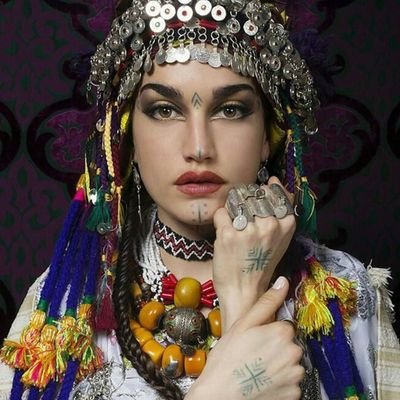
The beautiful Iranian actress Golshifteh Farahani
MENA Visuals tweet media
English
85
230
3.8K
112K
berk kaptan
berk kaptan@Maz91284·
@Sulkalmakh Looks like average Turkish. Some rat races will cry bout it :D
English
3
0
3
1.3K
Ancestral Whispers
Ancestral Whispers@Sulkalmakh·
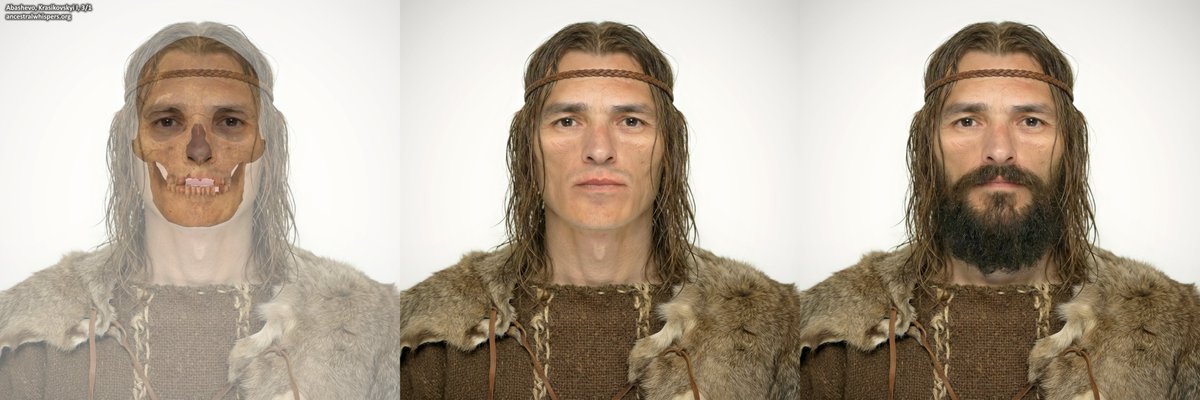
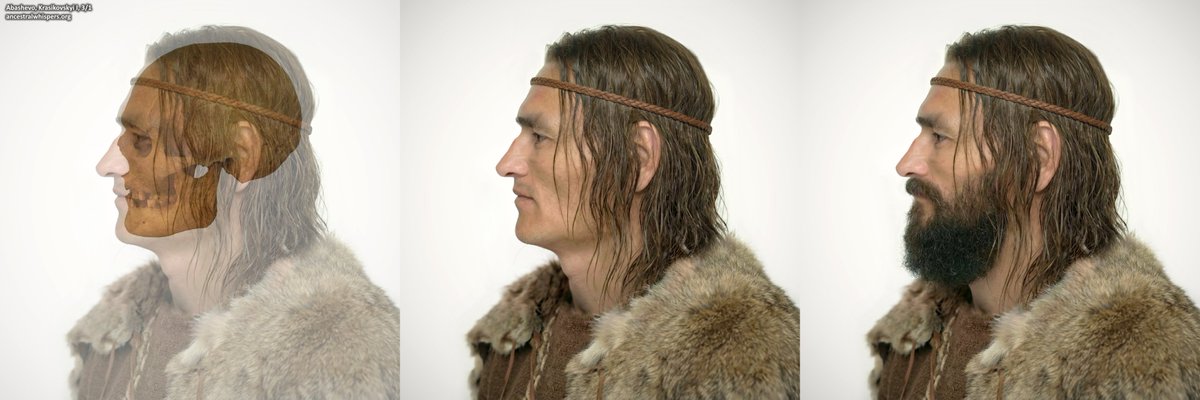
Facial reconstruction of a 4,000-year-old Proto-Aryan He belonged to the Volga–Ural group of the Proto-Indo-Iranic Abashevo culture, which included previously known materials from the Samara Trans-Volga region and the forest-steppe Cis-Urals (the cemeteries of Syezzhee I, Churakaevsky, and the more recently discovered Malo-Yuldashevo I, Krasikovo I, and Imangulovo-2e II). Ground burials at Mount Berezovaya (Bulanovo I) in the Orenburg Cis-Urals have also been tentatively attributed to this group, where rituals and artifacts characteristic simultaneously of the Abashevo, Sintashta, and Seima-Turbino populations were recorded (A.A. Khokhlov, A.P. Grigoriev). Excavations of Kurgan Cemetery I near the village of Krasikovo in the Krasnogvardeysky District of Orenburg Oblast were carried out by the Orenburg Archaeological Expedition of Orenburg State Pedagogical University. The site was discovered in 1977 by N. L. Gabelko (Morgunova). The cemetery is located north of Krasikovo, on the steep left bank of the Tok River (a right tributary of the Samara River), and consists of six earthen kurgans measuring 13–40 m in diameter and 0.25–2 m in height. In 2015, two kurgans (Nos. 1 and 3), situated in the southern and central parts of the cemetery, were investigated. Kurgan 3 was excavated manually; its diameter was 18 m and its height 0.25–0.3 m. The mound was constructed on a level platform; no surrounding ditch was identified. Stratigraphy: turf layer; mound fill (dark-gray humified sandy loam, 10–50 cm thick); buried soil (brown humified sandy loam, 30–50 cm thick); subsoil (brown loam). Within the mound fill and at the level of the buried soil, human bones (from the destroyed Burial 2), animal bones, a rounded stone artifact, and fragments of a single pot-jar–shaped vessel were found. The ornamentation of the vessel consisted of fingernail impressions beneath the rim and cord impressions forming a “herringbone” pattern. Four burials were identified in the kurgan: two intrusive burials (Nos. 1 and 2) at the level of the buried soil, one of which (Burial 2) was completely destroyed, and a complex consisting of Burials 3 and 4, over which the mound was constructed. In intrusive Burial 1, the skeleton lay extended on its back, head oriented to the southeast, and was accompanied by small fragments of resin. To the right of the skull stood a handmade pot-shaped vessel with a carination in the upper third of its height, an everted rim, and a pronounced internal ridge. The rim was decorated with zigzag lines; the body from the rim to the ridge was ornamented with horizontal fluting; below the ridge, a band of slanted lines was applied, underlined at the bottom by a double zigzag. The ornament was made with a toothed stamp, whose comb impressions covered the lower part of the vessel. In the upper part beneath the rim, the vessel had been repaired with two bronze clamps. Based on the vessel, Burial 1 of Kurgan 3 dates to the Sintashta period (Evgenyev A.A., Morgunova N.L., Kryukova E.A., Kharlamov P.V.). The individual (Krasikovo I, 3/1) had a large cranial length of 194 mm, a medium-large cranial breadth of 146 mm, and a large cheekbone breadth of 145 mm.
Ancestral Whispers tweet mediaAncestral Whispers tweet media
English
21
56
414
34.1K
pehlûg yebqû II 🇮🇷
pehlûg yebqû II 🇮🇷@insultbitches·
@SassanidPrpgnda این استپی های وحشی غارتگر آریایی زن کصه همش در حال حمله به ایران زنشون گاییده میشد، بیغیرت ها اخرشم همه اسیا میانه رو به ترک ها باختن هم مارو بدبخت کردن هم خودشون را نابود کردن اگر این مادرجنده ها یکم وحشیگری و عشایرچی بودن را کنار میگذاشتن، حیف
فارسی
3
0
7
582
APOLON
APOLON@APOLONMH·
@menavisualss If you want to know what they looked like
APOLON tweet media
English
0
0
9
1.2K
MENA Visuals
MENA Visuals@menavisualss·
🍂 The Hasanlu Lovers are 2,800 year skeletons found locked in an eternal kiss in Solduz Valley, Iran.    "The body on its back was around 20 years old, and the other skeleton was around 30 and showed signs of injury on the right side of their body. They were found in a plaster grain bin, most likely hiding from soldiers in a raid, and asphyxiated during this time." #ValentinesDay2026
MENA Visuals tweet media
English
10
28
175
37.1K
APOLON
APOLON@APOLONMH·
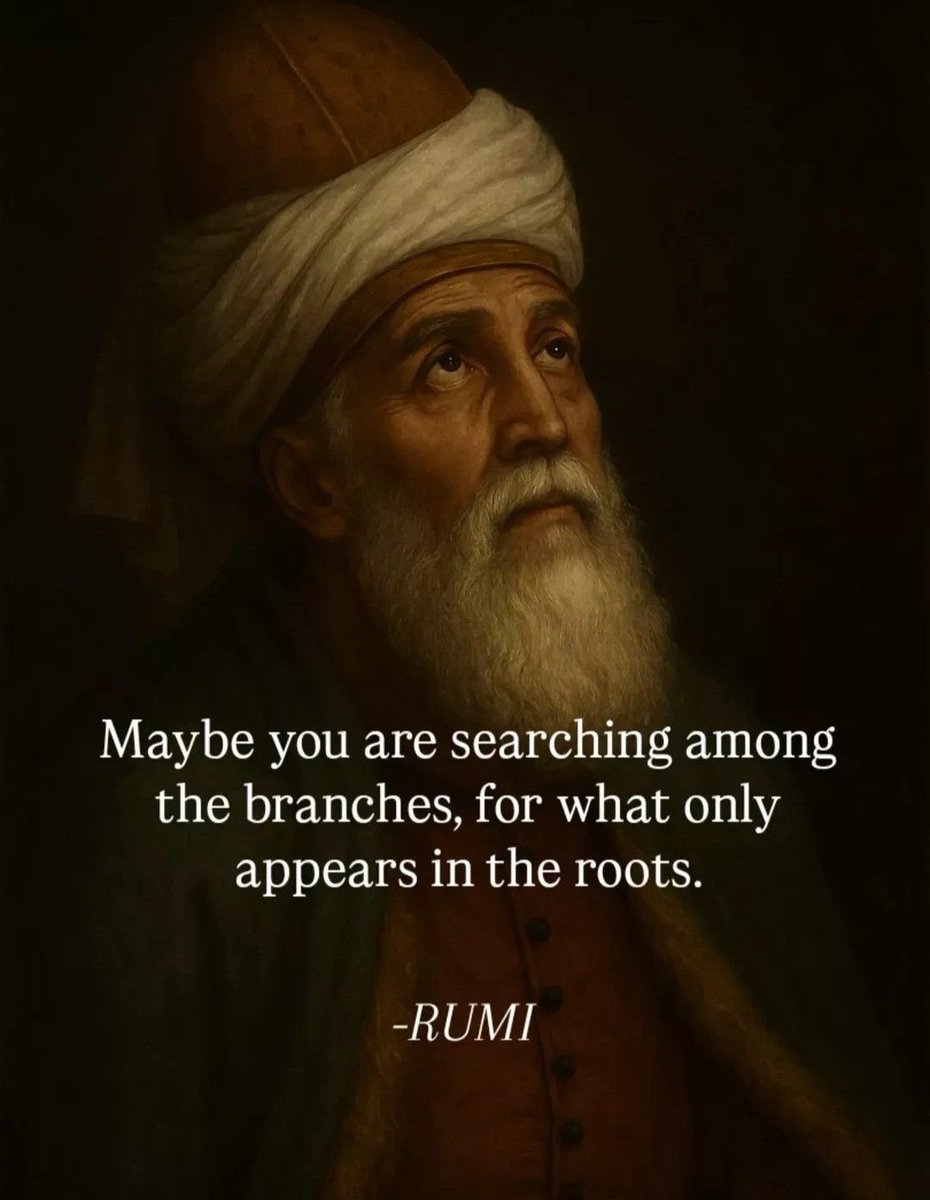
@DailyTurkic Hey Turk, let’s see if you can recite one of Rumi’s poems in your own language 🤣
English
0
0
0
37
Daily Turkic
Daily Turkic@DailyTurkic·
🇹🇷 Santa isn’t the only famous white-bearded Turk. There’s also Rumi. Santa gave presents, Rumi gave meaning.
Daily Turkic tweet media
English
183
29
250
26.7K
Khushruz
Khushruz@Khushruz·
@APOLONMH @Sulkalmakh We are very productive. We increase in numbers faster than rabbits. 🐇 satisfied? 😄
English
1
0
0
191
Ancestral Whispers
Ancestral Whispers@Sulkalmakh·
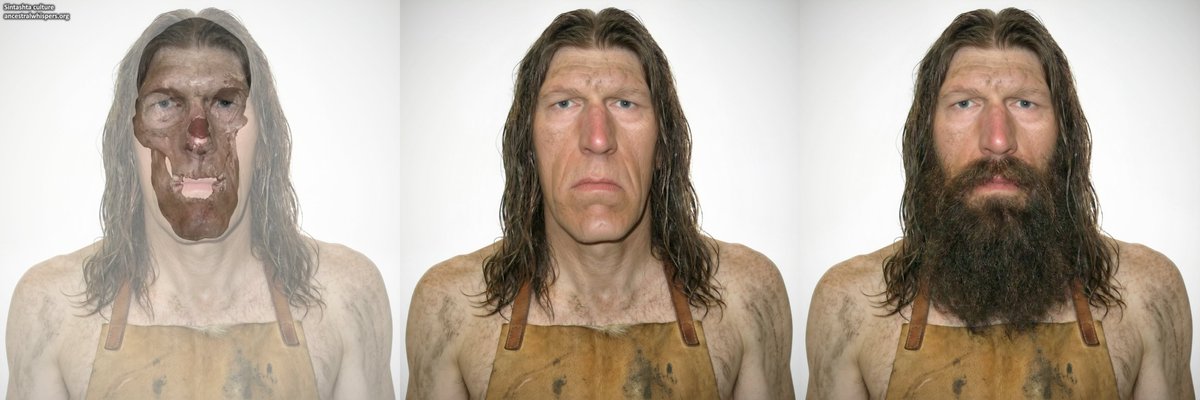
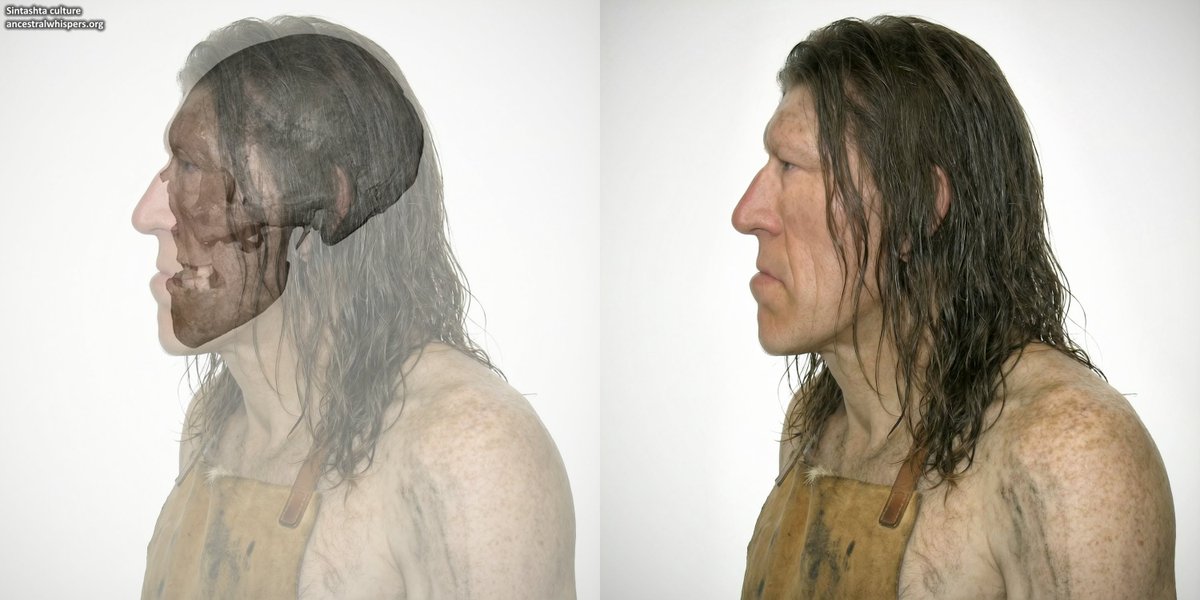
Facial reconstruction of a 3,750-year-old acromegalic Aryan smith from Chelyabinsk He belonged to the proto-Indo-Iranian Sintashta culture, which traces its origins farther to the west in Europe. In the late 1970s, archaeologists discovered a fortified settlement of the Sintashta people in the Troitsk district of the Chelyabinsk region, which was named Chernorechye-III. A few years later, not far from it, researchers also identified the ancient cemetery of Krivoe Ozero, where its inhabitants may have been buried. In the third grave of barrow number ten, archaeologists found the skeleton of an adult who had been buried on his side with bent legs and arms, with the hands positioned close to the face. Alongside the skeleton, scientists found ceramic vessels, animal bones, metal objects and fragments of them, as well as pieces of ore and slag. Anthropologists determined that the skeleton belonged to an adult man approximately 164-167 cm tall, who died at an age of over 50. On his bones they identified signs that during his life he had performed heavy physical labor, with more strain on the arm muscles than on the legs. Together with the finds of ore, slag, and metal items, this suggests, according to the researchers, that the burial most likely belongs to an ancient metallurgist who worked in processing copper ore, forging bronze tools, and possibly frequently pumped air into furnaces using bellows. In addition, anthropologists noted this man’s atypical appearance, which differed significantly from the general Sintashta population. Apparently, he suffered from acromegaly - a pituitary disorder that leads to the enlargement and thickening of cranial bones. Moreover, the analysis of ore from this man’s grave showed the presence of material from gold-copper-porphyry deposits. The nearest such deposit with evidence of ancient mining is located in the Ural-Mugodzhary mining-metallurgical center - roughly 300-350 kilometers south of the cemetery. This likely indicates contacts between the Sintashta people and inhabitants of more southern regions. The paleoanthropological material from the site was described by G. V. Rykushina (Rykushina 2003), unfortunately only at the individual level. The author noted the presence of morphologically different skulls in the sample - Europoid (kurgan 1, burial 3; kurgan 10, burial 3; kurgan 10, burial 34), gracile Europoid (kurgan 9, burial 7), and a Europoid skull with equatorial features (kurgan 10, burial 6). Based on the study of pathological markers (such as mastoiditis, cranial infections, and diseases of the dental-jaw system), the author suggested that this group had immigrated from a different climatic zone (Rykushina 2003: 360). A particularly specific skull that should be noted is from kurgan 10, burial 3, which is characterized by overall maturization, dolichocrany, a high cranial vault, a large facial skeleton, and moderate horizontal profiling with a strongly projecting nose. One must agree with G. V. Rykushina’s observation of signs of hormonal disorders that led to the development of acromegaly (Rykushina 2003: 352). This likely caused changes in the size of the facial skeleton, primarily in height and width. However, even without considering these pathologies, this skull is quite distinctive. (E. P. Kitov, A. A. Khokhlov, P. S. Medvedeva 2018) The man had a medium-large cranial length of 182 mm, a medium-small cranial width of 135 mm, and a broad cheekbone width of around 145 mm.
Ancestral Whispers tweet mediaAncestral Whispers tweet media
English
362
260
3.4K
3.5M
APOLON
APOLON@APOLONMH·
@Sulkalmakh اینکه علیرضاست، آقا اشتباه گرفتید.
فارسی
0
0
20
3.8K
Ancestral Whispers
Ancestral Whispers@Sulkalmakh·
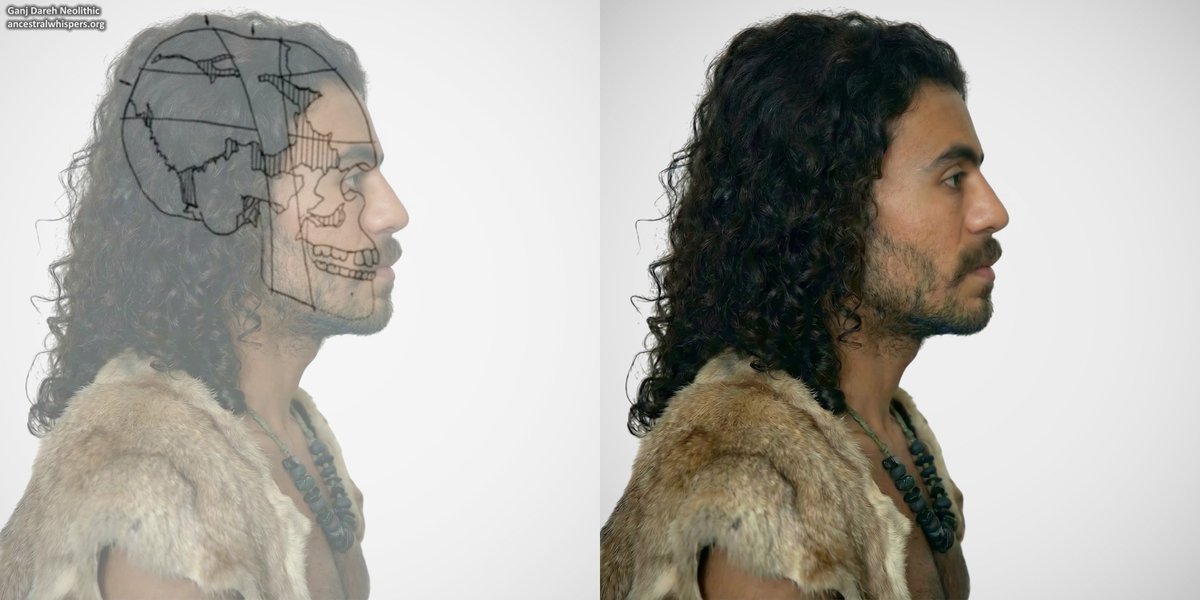
Facial reconstruction of a 10,000-year-old man from Iran Found at Ganj Dareh Tepe, a Neolithic site with some of the earliest evidence of goat domestication in the world. The individuals from Ganj Dareh belong to the Iran_N genetic cluster, and most carry Y-DNA haplogroup R2, which is associated with the dispersal of Ancient North Eurasian ancestry. This young adult was described by anthropologist Peter Lambert as follows: This individual is the third of the sarcophagus burial group and is complete except for several vertebrae and portions of the skull and pelvis. The mandible and both maxillae are well preserved. Overall, the large and robust musculature suggests that this is a male, whose age—estimated from epiphyseal fusions (Krogman, ’73)—is approximately 15–18 years at death... The third mandibular molars are partially erupted. Gray’s Anatomy (’77) gives an estimated age range of 18–25 years. The reconstructed cranium is complete except for the basal elements. The vault is artificially deformed and represents the best example of the Ganj Dareh deformation style. The teeth show deposits of salivary calculus in the anterior arcades, but no other pathology is present. Reconstruction commissioned by @shoresh03
Ancestral Whispers tweet mediaAncestral Whispers tweet media
English
91
116
981
250.4K
MENA Visuals
MENA Visuals@menavisualss·
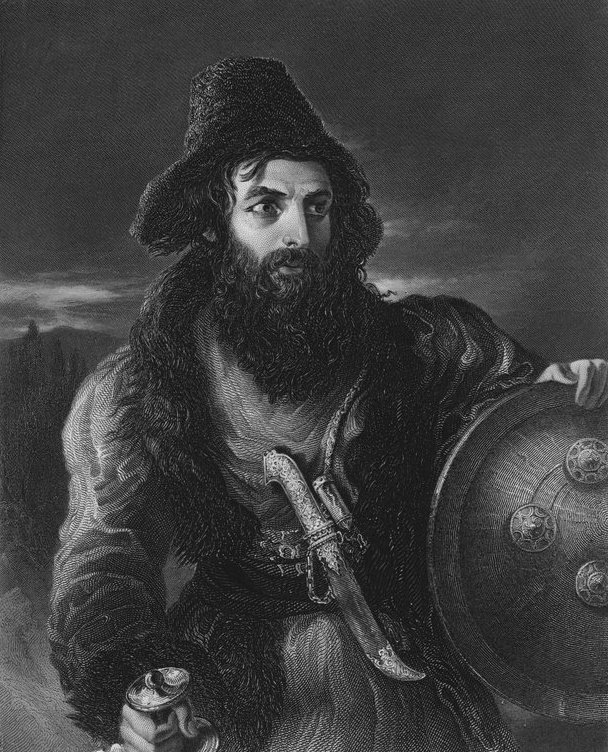
A Persian Warrior, from the picture in the Vernon Gallery
MENA Visuals tweet media
English
6
14
281
14.3K
APOLON
APOLON@APOLONMH·
@menavisualss Find someone in the deserts of Iraq who can build such a structure. The image you placed in your profile header is presented as Iraqi architecture. But this is Iranian architecture. The tiles and craftsmen all came from Iran to build it.
English
0
0
22
1K
MENA Visuals
MENA Visuals@menavisualss·
The ceiling of Imam Hussein's tomb, a beautiful example of Iraqi-Islamic architecture, Kerbala, Iraq 💜
MENA Visuals tweet media
English
74
190
2.3K
61.9K
APOLON
APOLON@APOLONMH·
@mehrshaddarzi خب سلطان، چطور باید اثراتش رو حذف کنیم که پس فردا به ما نگی بی مغز؟
فارسی
0
0
0
145
NoName
NoName@mehrshaddarzi·
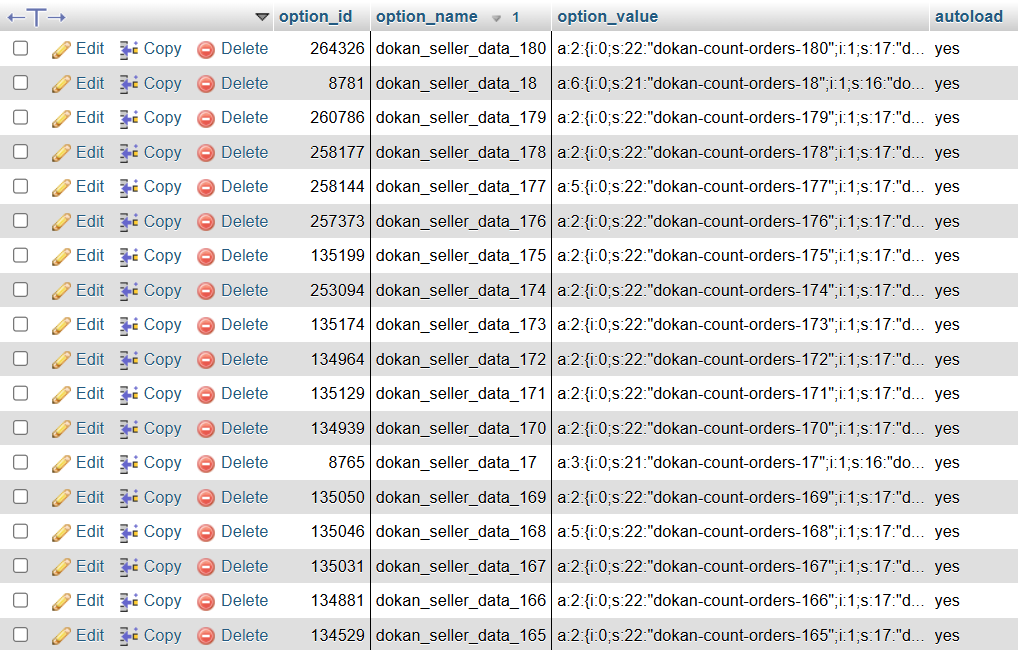
زمانی که #پکیج نصب آسان #قالب #وردپرس رو از مارکت ها دانلود می کنید و ذوق مرگ می شوید که سریع سایت رو آوردین بالا و لوگو و رنگش رو تغییر میدین.. باید دقتکنید که با حذف #افزونه نیز اثرات دیتابیس آن ازبین نمی رود واین بی مغز ها همه مدل افزونه روامتحان کرده و #دیتابیس رول بک نمی کن
NoName tweet media
فارسی
4
1
42
2.7K
APOLON
APOLON@APOLONMH·
@ZekunBlitz @Malak356775433 No one denies that the Scythians had no ties with Europeans. And no one can deny that they were not Iranic. But know this: you are not European. You are Turk.
English
0
0
0
55
🇭🇺Zekun🇭🇺
🇭🇺Zekun🇭🇺@ZekunBlitz·
@APOLONMH @Malak356775433 Why are you so invested in denying European ties to the Scythians? Scythians used to roam all over Eastern and Central Europe it's obvious they left some genetic impact. And of course the Persians didn't like the pagan barbarian Scythians very much.
English
2
0
0
79
APOLON
APOLON@APOLONMH·
@ZekunBlitz @Malak356775433 That brown monotheist Cyrus, posing as Aryan, ruled 45% of the world — even his sons took Tomyris’s tribe. Yet you and your 100-year-old ancestors still can’t decide whether to wash your ass with the left or right hand.
English
1
0
0
80
APOLON
APOLON@APOLONMH·
@ZekunBlitz @Malak356775433 Two Iranics fought each other and one ended up dead. It’s a family quarrel. no need for you to get involved.
English
3
0
3
136
APOLON
APOLON@APOLONMH·
@harristic_ It seems like the Minecraft developers have found the elixir of youth. Someone should tell them we won’t be alive by then.
English
1
0
5
510
harri
harri@harristic_·
I fully believe that the whole “we will update Minecraft for at least another 50 years” thing will be very true and it is a little weird to think about what the game might look like in even another 10 years, wonder if I’ll still be actively following news
English
12
11
437
7K