Penn State Africana Research Center

10.3K posts
Penn State Africana Research Center banner
Penn State Africana Research Center

Penn State Africana Research Center

@ARCPennState

The mission of the Africana Research Center is to encourage and support research and scholarship on Africa and its diaspora. @PSULiberalArts @penn_state

Penn State University Park Katılım Mart 2014
442 Takip Edilen680 Takipçiler
Penn State Africana Research Center retweetledi
@richardscenter.bsky.social
@richardscenter.bsky.social@RichardsCenter·
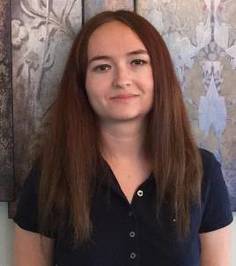
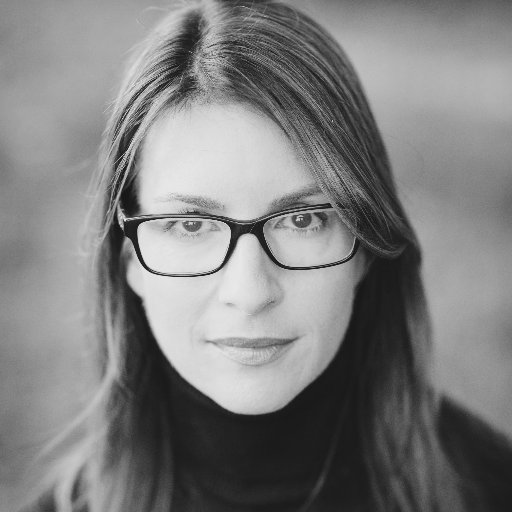
🎉We are so excited to welcome Allison Mitchell (@AlliMitch04) and Hannah Hicks as our next postdoctoral scholars! Allison will be the Richards Center and @ARCPennState postdoc in African American history and Hannah will be the Richards Center postdoc in the Civil War Era.🎉
@richardscenter.bsky.social tweet media@richardscenter.bsky.social tweet media
English
0
10
43
9.4K
Penn State Africana Research Center retweetledi
Penn Stater Magazine
Penn Stater Magazine@pennstatermag·
"✅ Just married, or just moved? ✅ Got published, or got an award? ✅ New job, new baby, or newly retired? Submit your class notes at pennstater at psu dot edu so we can share your good news with your fellow alums!" #WeAre #PennStateAlums #PennStaterMag #PennStater
Penn Stater Magazine tweet media
English
1
5
5
1.4K
Penn State Africana Research Center retweetledi
ChristinaProenzaColes
ChristinaProenzaColes@ProenzaColes·
Dr. Nathan Mossell, whose great-grandfather survived the Middle Passage, was a highly accomplished surgeon & founded a hospital in Philadelphia in 1895.
ChristinaProenzaColes tweet media
English
9
294
835
26.7K
Penn State Africana Research Center retweetledi
Typical African
Typical African@Joe__Bassey·
THE FACE OF SARAH BAARTMAN The story of Sarah Baartman of South Africa who had an unusual long backside. Sarah Baartman, also known as Saartjie Baartman, was a Khosa woman who was born in South Africa in the late 1789. She is famous for being exhibited as a freak show attraction in Europe in the early 18th century because of her large buttocks, which were considered unusual and exotic at the time. Baartman was born in the Gamtoos Valley, in what is now the Eastern Cape province of South Africa. She was a member of the Khoikhoi, a group of indigenous people who lived in the region. As a young woman, Baartman was taken from her home by a British ship's doctor, William Dunlop, who promised her work as a servant in Cape Town. However, instead of being employed as a servant, Baartman was taken to England and exhibited as a sideshow attraction under the name "Hottentot Venus." Baartman's large buttocks and elongated labia were considered unusual and exotic, and she was put on display in London and Paris, where people paid to gawk at her. She was also made to perform various tricks, such as dancing and singing, for the entertainment of spectators. Baartman was treated poorly during this time and was not paid for her performances. Baartman died of Syphilis in 1815 at the age of 26. She was sexually assaulted multiple times and her captors paid in exchange to experience ssehura also know by stage name The Hottentot venus , and her remains were dissected and put on display in a museum in Paris. In 2002, the South African government successfully campaigned for the return of Baartman's remains to South Africa, and she was finally laid to rest in 2002. Baartman's story is a tragic one and serves as a reminder of the exploitation and mistreatment of people of color throughout history may she rest in eternal peace..! #Africa
Typical African tweet media
English
224
1.7K
4.9K
347.4K
Penn State Africana Research Center retweetledi
Typical African
Typical African@Joe__Bassey·
In 1961 they assassinated Patrice Lumumba and Congo have never been the same again…. All the Coup happened because we were disunited and weak. - Lumumba #Africa
English
30
909
2K
45.1K
Penn State Africana Research Center retweetledi
Equal Justice Initiative
Equal Justice Initiative@eji_org·
On this day in 1865, the Kentucky General Assembly refused to endorse an end to slavery in America. Kentucky did not officially ratify the Thirteenth Amendment until 1976. calendar.eji.org/racial-injusti…
English
18
369
481
32.9K
Penn State Africana Research Center retweetledi
Typical African
Typical African@Joe__Bassey·
Right in front of Leopold II statue in Belgium 🇧🇪, the people of Congo protest against the ongoing genocide in Eastern Congo and the looting of resources by the west in the Region. #CongoGenocide
English
139
2.5K
5.4K
164.1K
Penn State Africana Research Center retweetledi
Typical African
Typical African@Joe__Bassey·
Protest against the ongoing genocide in Congo right in front of Apple Store in London (UK). Remember About 70 per cent of all the global cobalt consumed in a year is mined out of the DRC. Big Tech like Tesla, Apple and other hardware manufacturers take up a major chunk of this mined cobalt, which are mined by forced labor of small children who earn nothing from it. #CongoGenocide
English
113
3.9K
6.9K
188.3K
Penn State Africana Research Center retweetledi
ChristinaProenzaColes
ChristinaProenzaColes@ProenzaColes·
Nannie Helen Burroughs (left) was an educator, an entrepreneur, a staunch advocate of women’s rights, & the daughter of formerly enslaved parents in Virginia. She founded a school in Washington DC in 1901. loc.gov/exhibitions/wo…
ChristinaProenzaColes tweet media
English
8
181
425
11.5K
Penn State Africana Research Center retweetledi
AFRICAN & BLACK HISTORY
AFRICAN & BLACK HISTORY@AfricanArchives·
Mary Jane Patterson made history when she became the first black woman to receive a college degree when she graduated from Oberlin College in 1862. She was also the first black principal at America's first public high school for black students. (Preparatory High School for Colored Youth known today as Dunbar High School, Washington, D.C.) —Born in Raleigh, North Carolina, she was the oldest of seven children. In 1856, she and her family moved to Oberlin, Ohio, where they joined a growing community of free Black families who worked to send their children to the college. Her father worked as a master mason. For many years, the family boarded large numbers of Black students in their home. In 1862, Patterson graduated from Oberlin College, earning her historic degree. On September 21, 1864, she applied for a position in Norfolk, Virginia, at a school for Black children. On October 7, 1864, E. H. Fairchild, principal of Oberlin College's preparatory department from 1853 to 1869, wrote a recommendation for an "appointment from the American missionary Association as a ... teacher among freedmen." In this letter, Fairchild described Patterson as "a light quadroon, a graduate of this college, a superior scholar, a good singer, a faithful Christian, and a genteel lady. She had success is teaching and is worthy of the highest ... you pay to ladies." The following year, she became an assistant to Black educator Fanny Jackson in the Female Department of the Institute for Colored Youth in Philadelphia. In 1869, Patterson accepted a teaching position in Washington, D.C., at the newly organized Preparatory High School for Colored Youth -- later known as Dunbar High School. She served as Dunbar's first Black principal from 1871 to 1874. During Patterson's administration, the name "Preparatory High School" was dropped, high school commencements were initiated, and a teacher-training department was added. Her commitment to thoroughness as well as her personality helped her establish the school's strong intellectual standards. Patterson also devoted time and money to other Black institutions in Washington, especially to industrial schools for young African-American women, as well as to the Home for Aged and Infirm Colored People. Her achievements as a leading Black educator influenced generations of African-American students and paved the way for other Black female educators. 🖋️if you love our content, please consider supporting our page on AfricanArchives.Support (follow the ko-fi page too for weekly posts roundup)
AFRICAN & BLACK HISTORY tweet media
English
43
1.2K
4K
130.2K
Penn State Africana Research Center retweetledi
AFRICAN & BLACK HISTORY
AFRICAN & BLACK HISTORY@AfricanArchives·
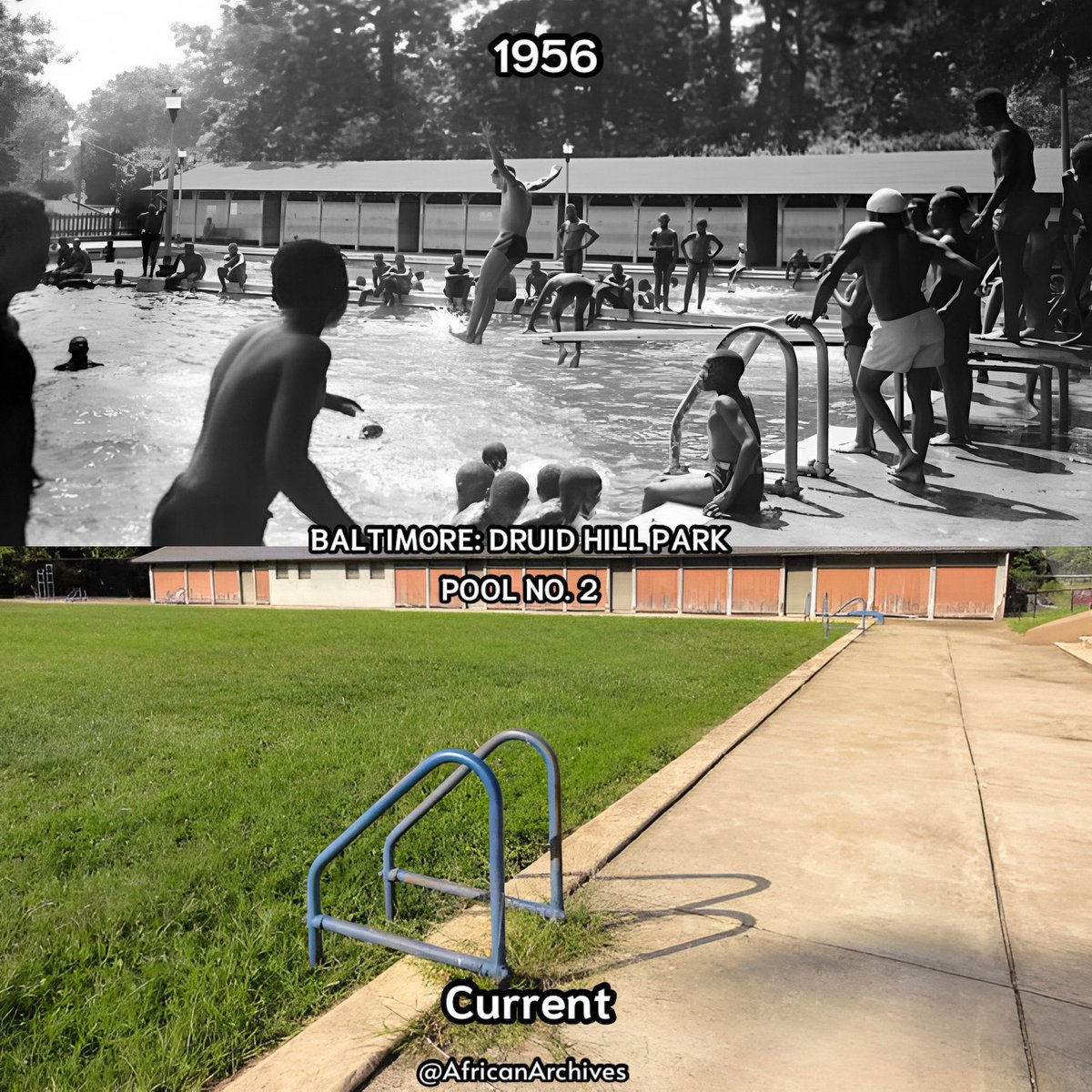
BALTIMORE: DRUID HILL PARK POOL NO. 2 Built: 1921 Desegregated: 1955 Drained: 1956 Public pools were common in American cities before the 1950s and most were officially “whites only”. When the Supreme Court declared segregated access to public amenities (such as pools) to be unconstitutional, cities circumvented integration by simply removing the amenities for everybody. In short, rather than integrate public pools, many cities decided to demolish them altogether. Subsequently, beginning in the 60s, there was an explosion in the popularity of backyard swimming pools in the suburbs which were, of course, mostly whites-only due to restrictive covenants and exclusionary zoning. In the name of racism and avoiding integration, American cities effectively eliminated a public good and privatised it for only those who could afford it.
AFRICAN & BLACK HISTORY tweet media
English
422
3.9K
11.3K
832.7K
Penn State Africana Research Center retweetledi
Equal Justice Initiative
Equal Justice Initiative@eji_org·
On this day in 1886, white citizens in Boise, Idaho, organized an anti-Chinese convention and voted to expel Chinese citizens, who had moved to the area for work in mining and construction. calendar.eji.org/racial-injusti…
English
11
158
209
13.9K
Penn State Africana Research Center retweetledi
AFRICAN & BLACK HISTORY
AFRICAN & BLACK HISTORY@AfricanArchives·
Lorenzo Dow Turner (1890 –1972) was an academic and linguist who conducted seminal research on the Gullah language of coastal South Carolina and Georgia. He earned a master's degree from Harvard and a Ph.D. from the University of Chicago. He taught at Howard University (1917-1928) and Fisk University (1929 – 1946) and traveled West Africa, identifying over 300 (Mende, Vai, Fulani) Gullah loanwords and 4,000 personal names. He published his findings in his book “Africanisms in the Gullah Dialect (1949). —Lorenzo Dow Turner was an African American linguist who headed the English department at Howard University in Washington, D.C. from 1920 to 1928, and later headed of the English department at Fisk University (1929 to 1946). His accomplishments within his career in academia include the creation of the African Studies curriculum at Fisk University in 1943 and participation in the early African Studies program at Roosevelt University, beginning in 1946. Turner is best known for his research on the Gullah language or dialect, a provincial language spoken by descendants of African slaves in coastal South Carolina and Georgia. Later in life, Turner played a role in founding the training program for Peace Corps volunteers going to Africa. Lorenzo Dow Turner was born on October 21, 1890 in Elizabeth City, North Carolina. His parents, Rooks Turner and Elizabeth Freeman emphasized the importance of education while raising Turner and his three brothers. Rooks Turner earned a Master’s degree from Howard University, and two of Lorenzo Dow Turner’s brothers also earned graduate level degrees in the 1940s (?) which was unusual for that time. Lorenzo Dow Turner earned a Master’s degree from Harvard University in Massachusetts in 1917, before enrolling in the University of Chicago in Illinois where he earned a Ph.D. in English Literature in 1926. From 1917 to 1928 Turner taught at Howard University. After leaving Howard University, Turner unsuccessfully tried to establish the Washington Sun newspaper, which closed within a year. In 1929, Turner first heard Gullah speakers while teaching at South Carolina State University. This experience would lead him down a long journey of research discovery into the Gullah language and its origins. Eventually he would be known as the “father” of Gullah studies. Turner’s research which began in the South Carolina and Georgia Low Country would eventually extend to Sierra Leone in Africa, and Brazil in South America (along with other areas, nationally and internationally where creole and African languages were influential). Turner investigated the influence of African languages on the dialect spoken by Gullah speakers in their isolated communities. By doing so, he exposed the complexities of the African diaspora in America, and how it pertained to cultural assimilation. In 1949, Turner published his most well-known work, Africanisms in the Gullah Dialect. His arguments were so convincing, that his thesis (Gullah speakers are influenced by African languages) faced little criticism. To this day this classic work is a symbol of Diaspora influence among African descendants in America. Turner’s research also solidified his reputation as a founding figure in American linguistics and African American studies. Lorenzo Dow Turner retired from Roosevelt University in 1970. He died in Chicago, Illinois on February 10, 1972 of heart failure. He was 81. 🖋️if you love our content, please consider supporting our page on AfricanArchives.Support (follow the ko-fi page too for weekly posts roundup)
AFRICAN & BLACK HISTORY tweet media
English
21
1.3K
4K
165K