

acap
260 posts

when do we start counting uniswap houses like we counted other defi founder mansions, gathered on the back of token sales?
Masha@MashaHealy
Uniswap House powered by Vietnamese coffee
English




Will the first solo founder to hit $100M ARR be an AI game creator?? Probably...
@levelsio just built a flight sim in 3 hours that's now making $67K/month. using grok3, cursor and a cocktail of ai tools.
History keeps compressing:
1) The web era gave us Million Dollar Homepage (1 guy, 1 month, $1M).
2) Mobile brought us Flappy Bird (1 guy, few days, $50K daily).
3) Now AI delivers Levels' flight sim (1 guy, 3 hours, $67K monthly and growing).
The traditional game economics are brutal: AAA games cost $100M+, indie games need $100K+, and mobile hits demand teams of 10+ devs plus $250K to build and another $100K monthly in marketing.
The barrier to entry was skill, capital, distribution, and time. No wonder 99% of them failed.
Now, you just use Grok3, Cursor, Midjourney, Cling AI etc to build your games. And you just tweet it out when it's live. Don't need to get into BestBuy lol.
"BuT PiEtEr'S GaMe iS so UglY and BugGy"
Well, what if people prefer it that way?
Like how amateur YouTube videos outperform polished productions, these games create genuine communities. Players suggest features and see them implemented in real-time.
They're participants, not just consumers. Couldn't be more different than a Call of Duty and maybe thats what people are seeking.
And what's cool is these AI game studios will operate at 80%+ margins whereas typical studios are in the 15-20% after costs.
Sam Altman predicted the first billion-dollar solo founder.
I'll go further: the first solo founder to hit $100M annual revenue will be an AI game creator who launches 50 concepts in the time it takes traditional studios to build one.
The AI games gold rush has begun?
English

Had my horoscope read. In 2025:
- I'm going to make a ton of money in H2
- Might get a short term gf
- I will be proven right about everything
English




Whenever some startup talks about their TAM being “humanity” or “it’s for everyone” it’s not so much a sign of delusion so much as a lack of taste.
You can make something popular if you make something good, but you can’t make something good by trying to make something popular.
English

Some of the recent developments in ZK allow for societal restructuring that can change a lot of things
Urbit as a new computing paradigm coming alive and apps being built on it
TON miniapps, Blinks, Coinbase smart wallet, account abstraction, AI agents, UX improvements thru privy, regulation and institutional acceptance, stablecoins etc all form culture in a way that creates an environment for a flurry of new apps we haven’t even seen yet
First ever time Futarchy as a governance system has been tried in the history of humanity
etc
English

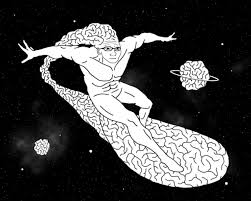
no one is stopping you from selling your planets for mores than $500
~disden-talhes@GlueWear
no one is stopping you from selling your planets for more than $500
English

does “urbit is a shitcoin” need an entire thread or is it self explanatory?
English

acap retweetledi
Lots of critics of Urbit ID seem to confuse the distribution of the address space with the structure and design of the address space. The former is clearly a hindrance to the project, but the latter is compelling on its own and I think the real key to an Urbit beyond a science project.
So let's talk a little bit about what aspects of the design I find compelling.
An Azimuth point is just ultimately just a cryptographically ownable number. That number is represented in the pronounceable fashion of Urbit as a multi-syllabic word like ~zod, ~marlur, ~poldec-tonteg, etc.
You can think about that at a basic level as a handle, as equivalent of a handle on Twitter or of a unique user ID. The main distinction between the Twitter handle and the Urbit ID is that there's a finite amount of Urbit IDs. That number is way too big to be useful right now, but there is a finite amount of IDs.
Azimuth points also have two key pairs, networking and encryption keys.
The networking key pair is used by your ship to sign and decrypt messages. This is currently used by Ames, the Arvo networking protocol, but this could easily be used in a normal stack for e2e encryption.
But the there's also an encryption keypair as well. This allows you to share encrypted files with people on the open internet and use Azimuth as the key server.
And an underrated aspect Bridge, the application that is used primarily to boot a ship, is that it gives you an easy way to initialize both these key pairs without going through a centralized service.
The Azimuth point structure also includes several “proxies” that can have various permissions on the point itself.
Every NFT has a way to own the NFT via an Ethereum address, we refer to this as the Master Address. You can think of this as “root” in a unix system, it can do anything.
Urbit ID, though, adds the ability to delegate certain permissions to other “proxy” addresses.
An important proxy is the management proxy, which is allowed to do essentially everything on the point except for transfer it.
This makes it so you can your everyday address can have lesser security, be more available, accessible, while being confident that no one's going to be able to steal your point.
And then there’s a third a proxy address that allows you just to transfer the point. This could be used for safe transfers, lockups or escrow contracts.
As an example, this delegation of privileges allows for social recovery of the NFT. You can shard the master address, and then distribute that among a few friends, opting to use the management address for day to day use. If you lose access to that address you can get three out of five of your friends to reconstitute the point for you and reset everything.
But probably the least understood aspect about the Azimuth point is that it has a series of what are called claims, a list of data triples (key, value, hash) that are associated with the point. This allows you to attach basic metadata or application specific data to the point.
Imagine keybase-style attestation: you tweet a signed string from your Twitter, and that would attest that you owned that Urbit ID. That attestation goes on the chain, and can be verified by anybody.
You can also get arbitrarily complex with the metadata, because you can also put other endpoints in the claim, if you needed a larger data structure that can be stored on IPFS or similar.
But what's interesting about all of these design features is that is that they don’t require the whole cap table, the whole address space to get the benefits.
If you wanted to, you could carve off a little piece of the namespace, you can say, okay, under my star, I'm going to do all this cool stuff with the Azimuth points for the planets under my star. But you know, if you're under a different star, you’re out of luck
In the coming days, I’m going to be riffing on product more use cases for Azimuth and sharing them on here just to get the old noggins joggin.
~sorreg-namtyv@sorreg_namtyv
Unlinking Urbit, the society of Azimuth names, from Urbit, the network of Arvo servers, doesn’t mean we stop building Arvo servers or Tlon stops building an Arvo UI
English

The Mars Review of Books has always been demure
That's why we put this opaque black cover over the swimsuit edition

English
Growth and death both involve pain.
(They got my order wrong at Coffee Bean)
English

what memes around 50m or below should i accumulate?
i will come in harder than your favorite folks on here.
English

McKinsey warns about 3,000 consultants that their performance is unsatisfactory and will need to improve trib.al/jGcRfrX
English

I think i'm the lowest iq person on urbit. they should disregard my 'humanity' and just treat me like an urbit space monkey
English

This goes both ways as it is also hard to sell... As seen by one entity indiscriminately liquidating a few million of $wTAO at massive slippage today. So long as nothing has changed fundamentally (it hasn't), this presents opportunity... Adding here.
Eric Chen@MetanovaCap
"Hard to buy" aspect of $TAO thesis still very much in play...here's someone slamming market buys of 250-300 $wTAO directly into the uni pool at 4-5% slippage
English
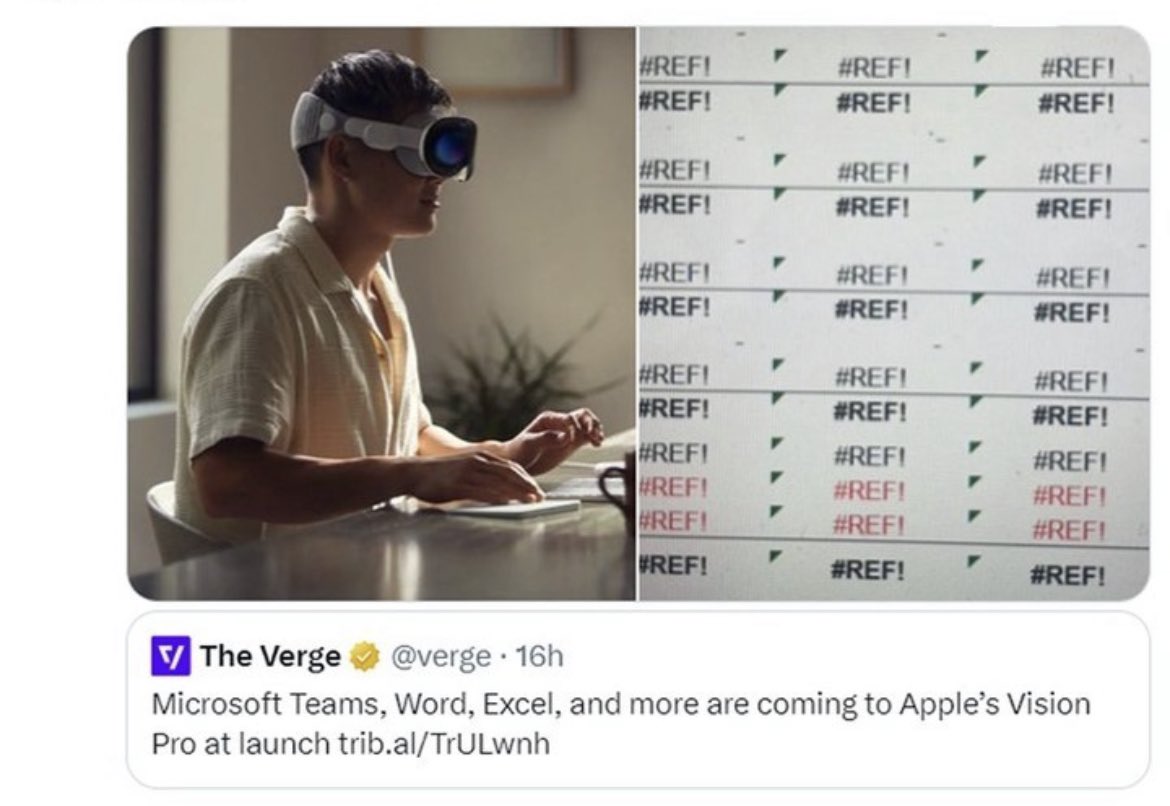
Demo videos are like movie trailers, you try to showcase the most exciting interaction.
The fact that a committee of well paid Geniuses got together and decided that the most compelling thing to show was someone watching TV does not bode well.
M1@M1Astra
Apple has released a new Apple Vision Pro video "First-Timer"
English