Adam Stenman
3.4K posts

Adam Stenman
@AdamStenman
Educator of Swedish primary care physios. 9:27 Ironman.


Correct diagnosis is the first step in effective management of plantar heel pain. In her “Assessment of Plantar Heel Pain” Practical, Dr Melinda Smith shows exactly how she evaluates plantar heel pain to guide differential diagnosis and treatment planning. You’ll learn how to: 📋 Ask the right questions ✅ Conduct a thorough physical exam 🔎 Perform foot-specific strength testing ...and much more! Don’t miss this opportunity to watch how an expert works through a complete assessment of plantar heel pain. Watch Melinda’s assessment process for free now 👇 physio-network.com/practicals/

You are wrong and this tweet is irresponsible. Sure, many conditions can be resolved short of surgery. In my case I spent a decade exploring every alternative remedy you can name with the top people in each respective discipline—from PT to PRP, peptides and every progressive protocol you can put a label on. Yes, I did all the glute activations. Yes, I read Sarno’s book. Yes, I saw all ‘the guys’ all my LA & NYC friends insisted are uniquely suited to heal me. Nothing moved the needle. My pain increased and numbness expanded. Surgery solved it. I wish I had done it years ago. I would have avoided years of unnecessary suffering. Sometimes surgery really is the right thing to do. In my case it was 100% the best option. An option I would have benefitted from taking advantage of years ago but didn’t in part because of people like you who associate a very personal decision to undergo surgery as if it is a shameful moral failure.


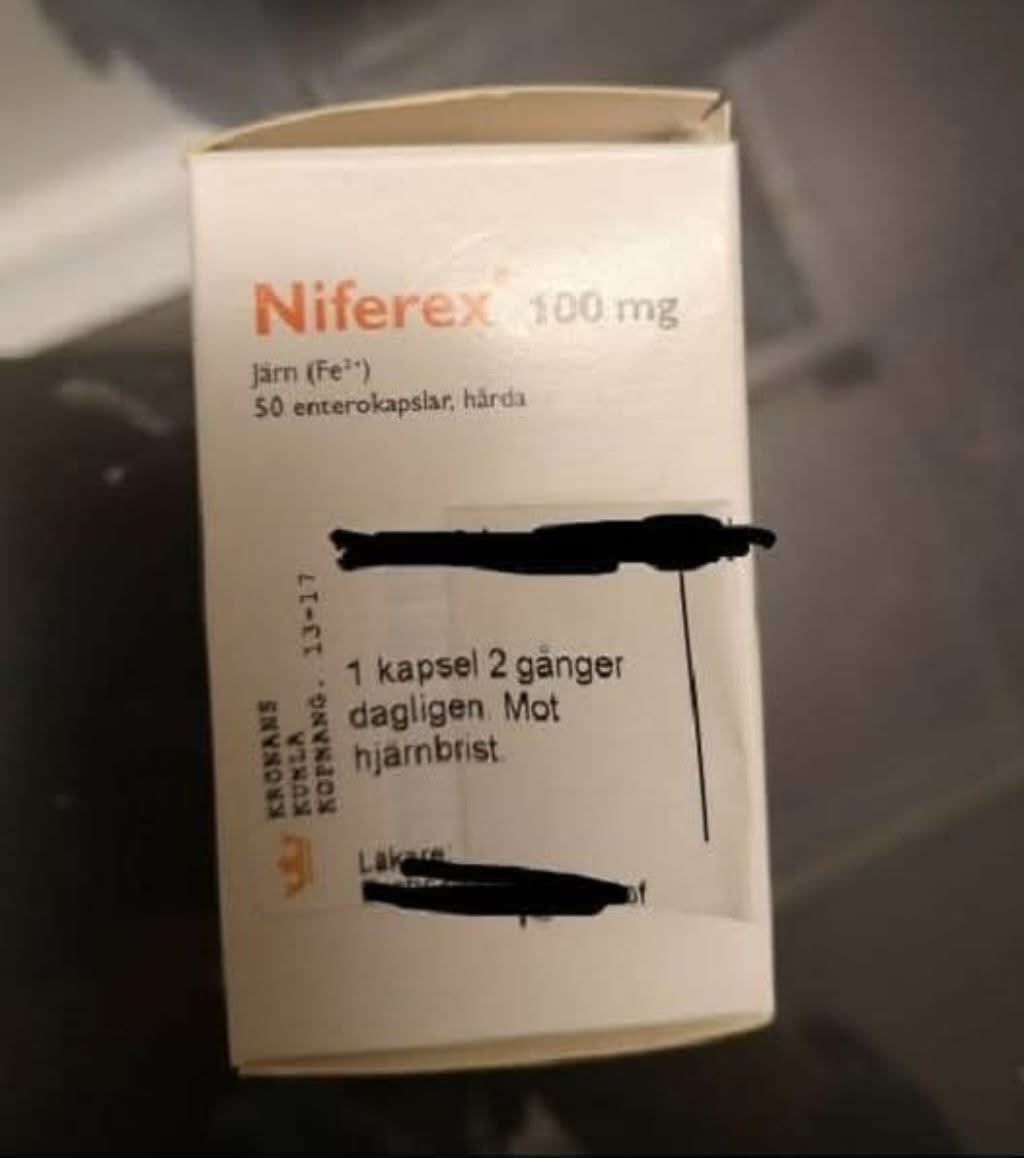
Hittade bild på nätet - det finns alltså medicin mot hjärnbrist 😁🙌🏻


Quick physio tip 👇 If someone falls into femoral IR, use a resistance band + cue them to press out slightly. Think: kneecaps = headlights 🚗 → keep them facing forward. Simple cue, huge impact on movement quality. #PhysioHack #PhysicalTherapy #RehabScience


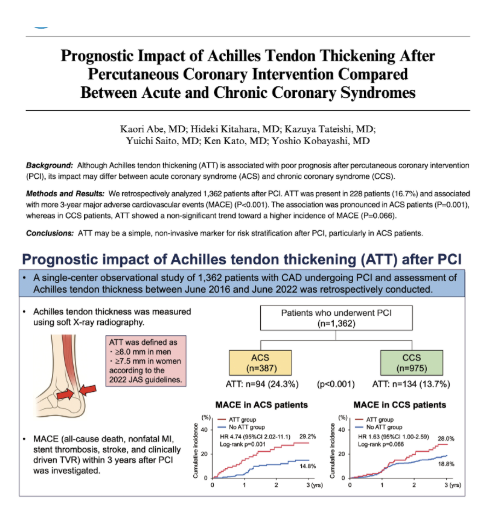
Your ankle is a window into your heart. A new study found that patients with a thickened Achilles tendon were nearly twice as likely to experience a major cardiovascular event within three years of a coronary stent procedure. An observational study retrospectively compared outcomes for 1362 participants with coronary artery disease undergoing PCI, examining differences between patients with and without Achilles tendon thickening (defined as ≥8 mm in men or ≥7.5 mm in women). Patients with thickened Achilles tendons faced a 99% higher risk of major adverse cardiovascular events (MACE) over three years (28.4% vs 17.9% for those with and without thickening, respectively). (MACE was defined as all-cause death, nonfatal myocardial infarction, stent thrombosis, stroke, and clinically driven target-vessel revascularization.) Thickened Achilles tendons were more prevalent in patients with the more severe, rapidly developing, and less stable acute coronary syndrome (ACS) (24.3% had thickened tendons) compared to patients with the more stable chronic coronary syndrome (CCS) (13.7% had thickened tendons). Among ACS patients, having a thickened Achilles tendon was a significant predictor, increasing the risk of a recurring major cardiovascular event within the next three years by 4.7 times. The findings suggest that Achilles tendon thickening may serve as a prognostic marker in patients with cardiovascular disease, with special value in predicting early recurrence of major adverse cardiovascular events in patients with acute coronary syndrome. While the analysis did not include blood cholesterol levels and does not establish causation, one plausible explanation is that Achilles tendon thickening reflects cumulative exposure to elevated LDL cholesterol over many years. This may be especially relevant in familial hypercholesterolemia, a genetic disorder characterized by markedly elevated LDL cholesterol, in which Achilles tendon thickening is also used as a diagnostic criterion.


I think you can tell how smart or dumb someone is by the cadence they adopt when they read out loud. Everyone has a characteristic “reading out loud” cadence that probably comes from 1 or 2 core influences from when you first learned to read. And that cadence shapes how you quietly read in your mind. And that cadence influences how you process written information, which impacts intelligence.