༺ Adan ༻

15.8K posts

༺ Adan ༻ banner
༺ Adan ༻

༺ Adan ༻

@AdanAlbertoA

• Ex estudiante del curso de #Meteorología • Aficionado a las #CienciasdelaTierra, a los multimedios y al cine • Afectado por un problema urológico.

World Katılım Temmuz 2014
172 Takip Edilen644 Takipçiler
Sabitlenmiş Tweet
༺ Adan ༻
༺ Adan ༻@AdanAlbertoA·
Si en este 2023 has hecho lo correcto, felicidades. Sí has ganado el pan de forma honrada y honesta, cuidando del ambiente y los animales, sin causar perjuicios o hacer daño a los demás, sin mentir para 'salvarte', sin robar, ERES DE LOS QUE GANÓ. Mereces un feliz #NewYear2024
Español

1
1
1
2.7K
༺ Adan ༻ retweetledi
د. زياد الجهني
د. زياد الجهني@Zeyad_jehani·
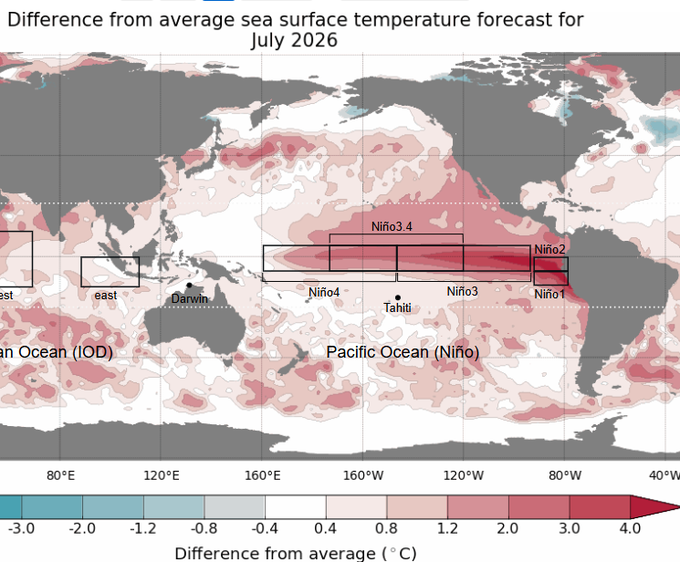
🚨 تحذير مناخي من مكتب الأرصاد الأسترالي..‼️ بناءً على أحدث توقعات النماذج، نحن أمام تطور متسارع وخطير لظاهرة "سوبر نينو" حيث يتوقع تجاوز عتبة 2°C باختصار: المحيط الهادئ سيشهد تسخيناً شديداً وسريعاً بعد شهر مايو هذا قد يتسبب بارتفاعات قياسية في درجات الحرارة العالمية، وتغيرات متطرفة في الطقس (موجات حر غير مسبوقة، جفاف في مناطق، وفيضانات في أخرى).
د. زياد الجهني tweet mediaد. زياد الجهني tweet media
العربية
42
58
242
100.8K
༺ Adan ༻ retweetledi
Earth
Earth@earthcurated·
Antarctica isn’t just a frozen desert it’s a key piece of Earth’s climate system. It holds most of the planet’s fresh water in ice, shapes global sea levels, and even influences ocean currents worldwide. Yet it has no permanent cities, only research stations like McMurdo Station, where scientists study ice that preserves millions of years of climate history. What happens in Antarctica doesn’t stay in Antarctica… it affects all of us.
Earth tweet media
English
28
206
925
32.7K
༺ Adan ༻ retweetledi
United Nations Geneva
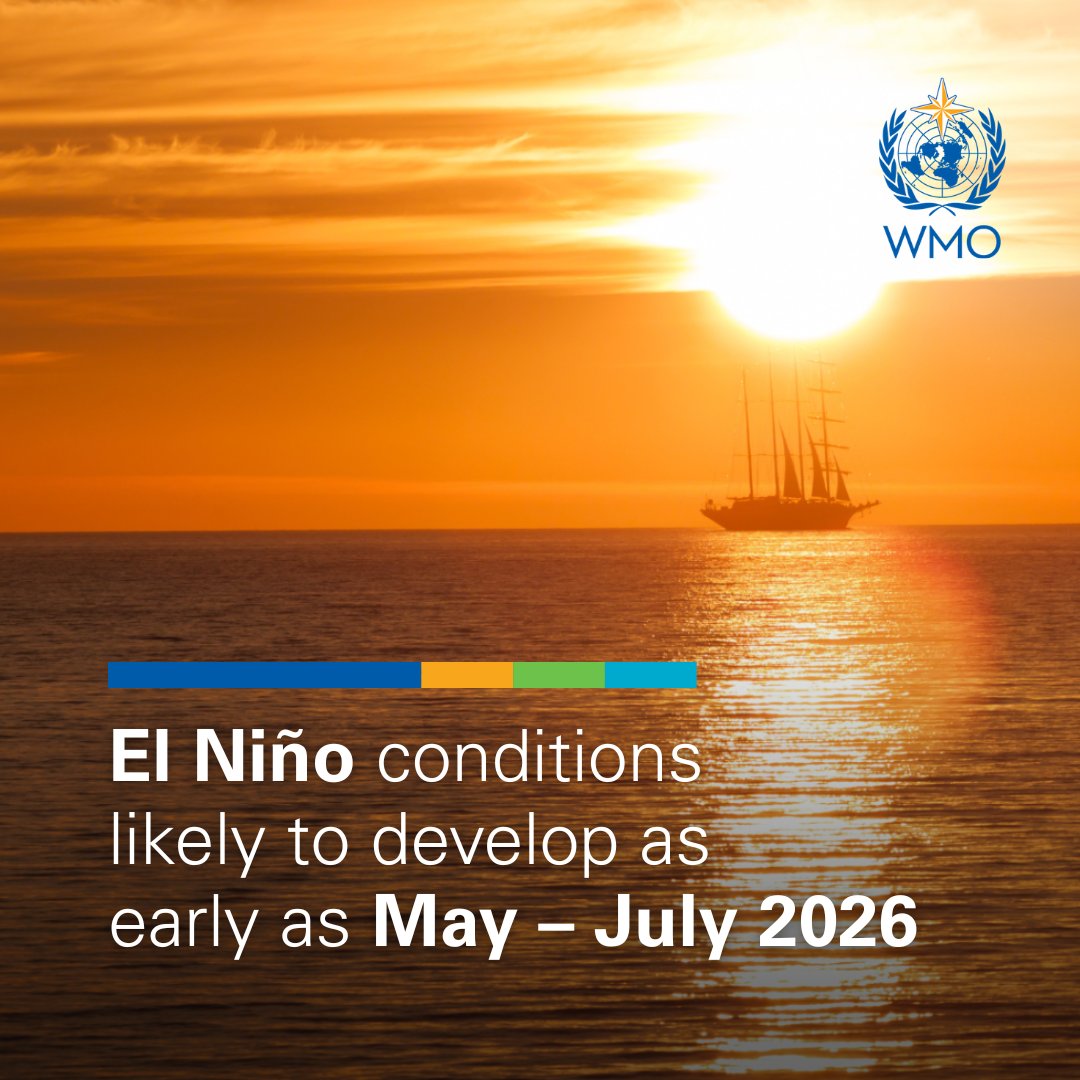
An El Niño event is expected to develop from mid-2026, impacting global temperature and rainfall patterns, according to @WMO. For the May-June-July season, land surface temperatures are expected to be above-normal nearly everywhere. buff.ly/WhTCdw9
United Nations Geneva tweet media
English
21
74
129
5.9K
༺ Adan ༻
༺ Adan ༻@AdanAlbertoA·
@OficialMiBus Como usuario, no reporto esperas de 15 minutos o de 20 minutos. Cuándo escribo es porque en la fila o parada estamos pasados de los 40 minutos de espera o se aproximan y veo la mala forma de poner a circular rutas en desventaja de la ruta K530. Hasta cuándo.
Español

1
0
0
49
༺ Adan ༻
༺ Adan ༻@AdanAlbertoA·
@OficialMiBus @OficialMiBus nuevamente esta noche, como todas las noches y todos los días. También larga espera del bus K530 para ir al este, entonces. 4 C928, uno de largo vacío. Pero no logran mejorar la frecuencia de los buses en la ruta K530. Poca voluntad, poco importa.
Español
1
0
0
44
༺ Adan ༻ retweetledi
Jeff Berardelli
Jeff Berardelli@WeatherProf·
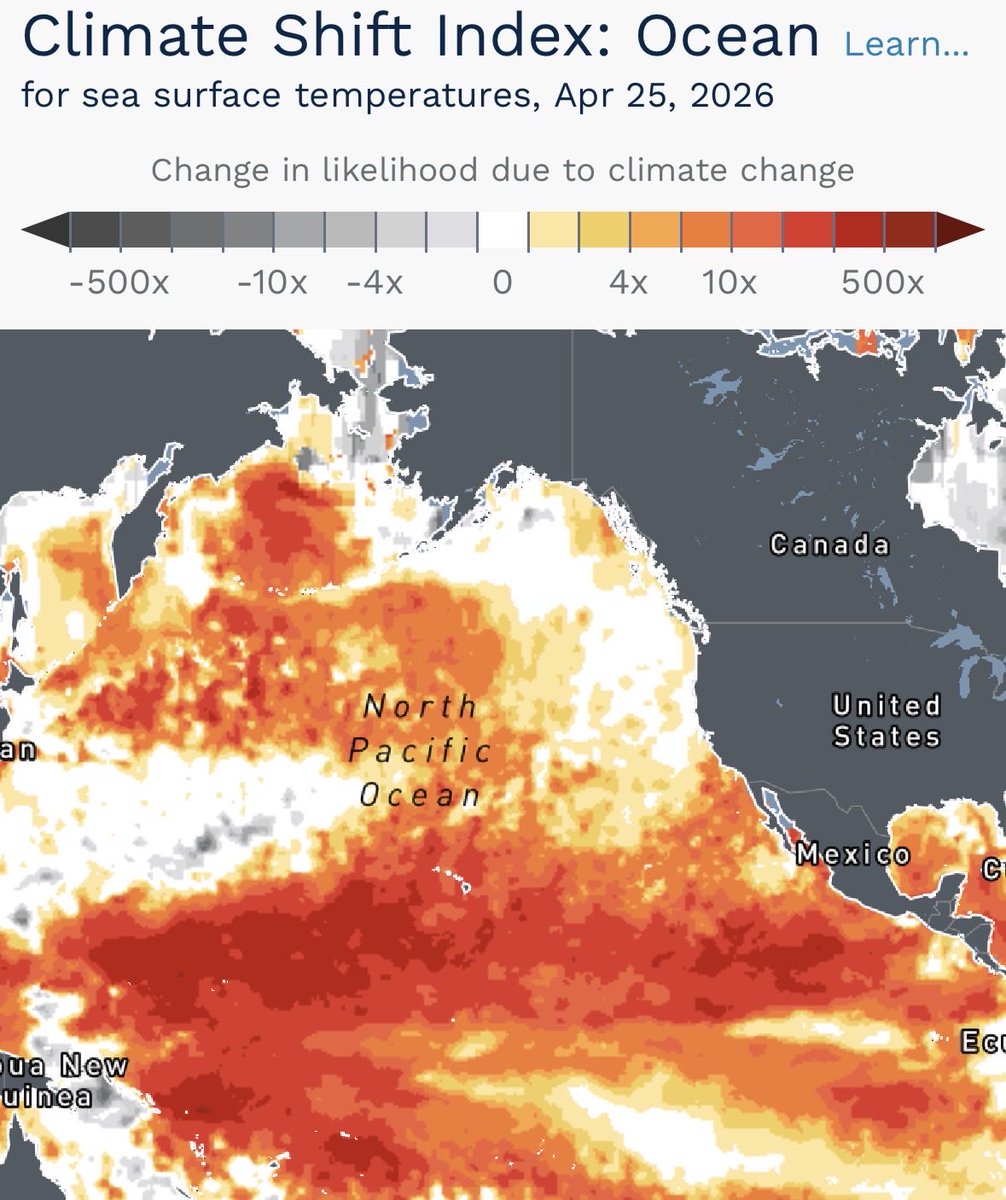
100X more likely! Our heated climate has made the intensity of the Pacific marine heatwave 100X - or more - likely. This is what happens when you have a million Hiroshima equivalent bombs worth of excess energy retained by the ocean each day! To be clear: the rearrangement of sea surface heat configurations is not caused by climate change - that’s often natural - but the elevated baseline boosts these heatwaves into record territory.
Jeff Berardelli tweet media
Jeff Berardelli@WeatherProf

Huge Pacific Heatwave - larger than North America - with record heat spanning 6,000 miles across, peaking in the East Pacific. The highest anomalies are near the Galápagos Islands, a clear sign a mighty El Niño is beginning. This excess heat infused in the climate system throws everything off-kilter globally, making heatwaves more extreme, floods more intense, but also subduing Atlantic hurricane season. #elnino #heatwave #pacific

English
9
93
239
12.8K
༺ Adan ༻ retweetledi
NOAA Research
NOAA Research@NOAAResearch·
New research finds stratospheric nanoparticles, a previously unrecognized but widespread class of ultrafine aerosol particles, are surprisingly abundant in the lowest parts of the stratosphere, accounting for up to 90% of the total aerosol surface area. research.noaa.gov/stratospheric-…
NOAA Research tweet media
English
10
125
420
17.3K
༺ Adan ༻ retweetledi
World Meteorological Organization
For the May-June-July season, above-normal land surface temperatures are expected nearly everywhere, esp. over southern North & Central America, the Caribbean, Europe & Northern Africa. Rainfall predictions show strong regional variations. To the update➡️bit.ly/3QFgz7j
World Meteorological Organization tweet media
English
6
200
284
22.2K
༺ Adan ༻
༺ Adan ༻@AdanAlbertoA·
Algo que no alcanzo a entender es la 0 proactividad de los chequeadores o personal en zona paga Pedregal del estado del paso o zarpe del bus. Ven que usuarios siguen en sitio, que la fila se maneja mal y absolutamente nada hacen por verificar y hacer algo al respecto @casafa47
Español
1
0
0
39
༺ Adan ༻ retweetledi
Brian Smith
Brian Smith@smithwbrian68·
@Rainmaker1973 Climate change is real and man has an impact. Climate ALARMISM is another HOAX.
Brian Smith tweet media
English
4
6
89
1.4K
༺ Adan ༻ retweetledi
Massimo
Massimo@Rainmaker1973·
Earth’s atmosphere has crossed a historic threshold unseen for more than 3 million years. Atmospheric carbon dioxide (CO₂) levels have now surpassed 430 parts per million (ppm): a concentration last experienced during the Pliocene epoch, long before modern humans existed. This milestone was recorded at the Mauna Loa Observatory in Hawaii, the world’s longest continuously operating CO₂ monitoring station. In early March, daily averages peaked at 430.60 ppm: a figure climate scientists have tracked with growing concern for decades. But what does crossing this threshold actually mean? Prior to the Industrial Revolution, atmospheric CO₂ levels remained stable around 280 ppm. Today, they stand more than 50% higher, largely due to the burning of fossil fuels, large-scale deforestation, and other industrial activities. This is far more than just a number: it’s a clear warning signal for the planet. Approximately 25% of the CO₂ we emit is absorbed by the oceans. As it dissolves, it forms carbonic acid, driving ocean acidification. This process is already weakening shell-forming marine organisms such as corals, plankton, and mollusks — the foundational species of ocean food webs. Researchers note that the current rate of ocean acidification is likely the fastest seen in at least 300 million years. Many climate models had projected that CO₂ concentrations would only approach this level under aggressive global mitigation efforts. Instead, we’ve reached it while emissions continue to rise. If current trends persist, atmospheric CO₂ could exceed 500 ppm by the end of the century, ushering in climate conditions not seen on Earth for tens of millions of years. ["Record-breaking CO2 Levels Recorded for Earth’s Polar Regions." PML]
Massimo tweet media
English
484
420
727
71.6K
༺ Adan ༻ retweetledi
د. زياد الجهني
د. زياد الجهني@Zeyad_jehani·
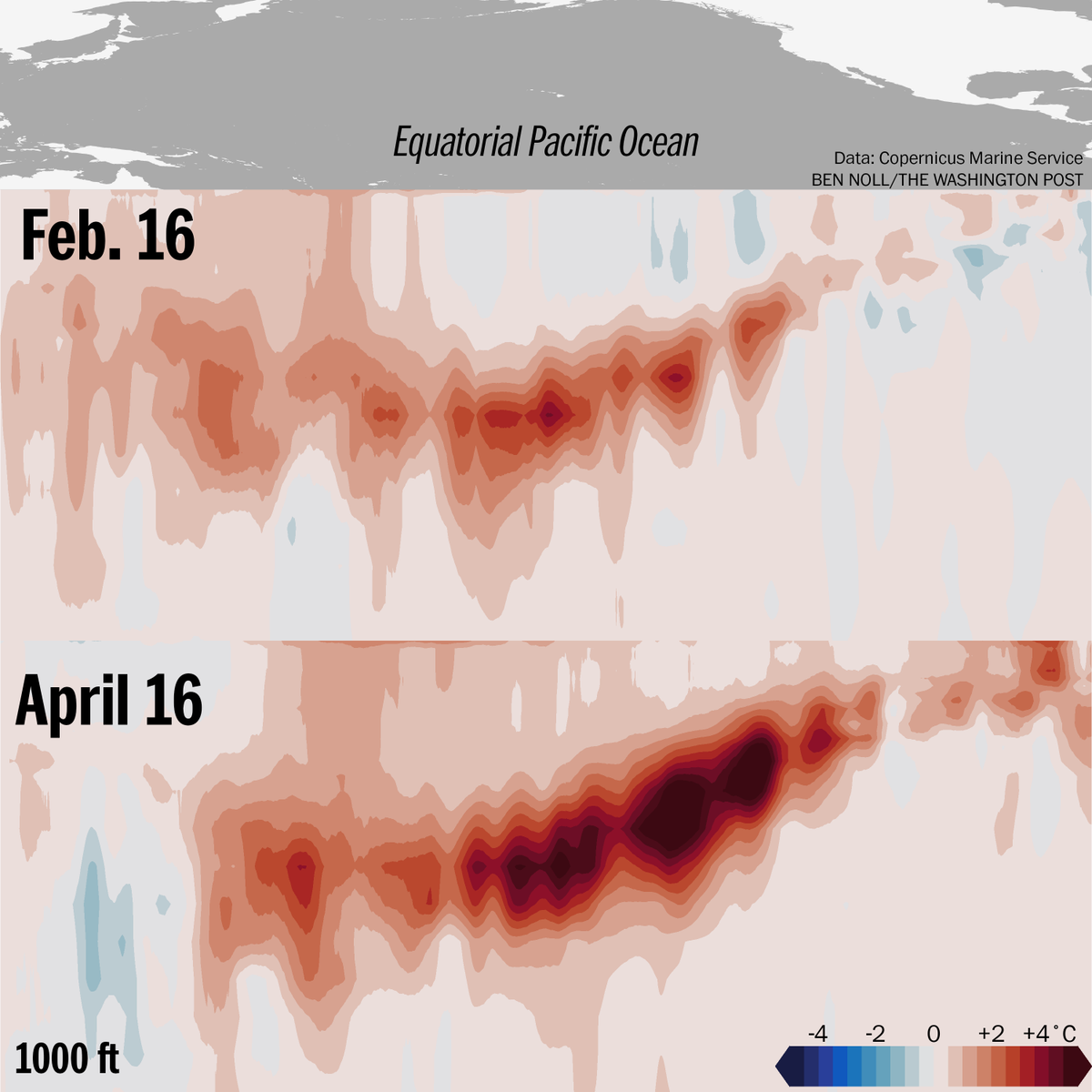
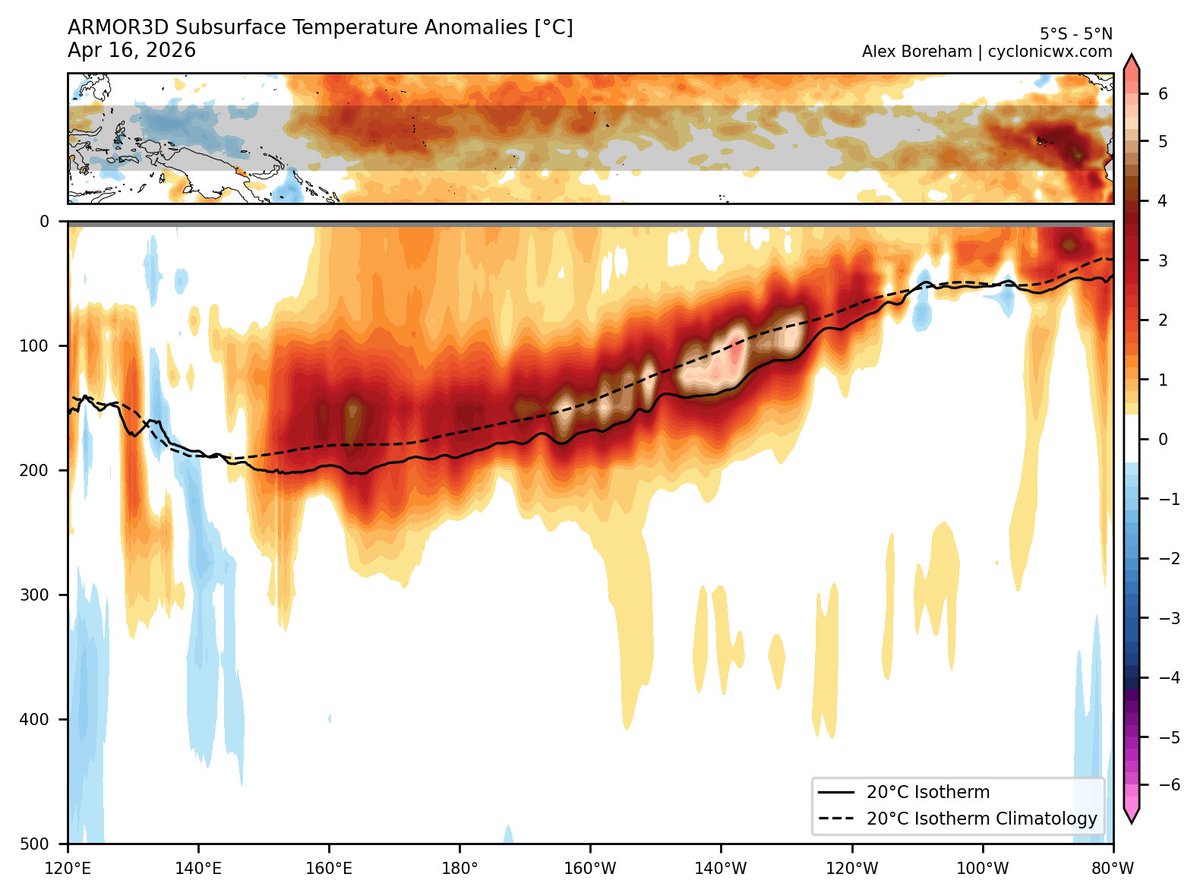
🚨ظاهرة "النينيو" تتطور بشكل أسرع من المتوقع..‼️ حرارة المياه في أعماق المحيط الهادئ ارتفعت بقوة وسجلت 6 درجات مئوية أعلى من المعدل الطبيعي..😨 هذه الحرارة العالية ستصعد الآن لسطح المحيط.. وهذا يؤكد التوقعات بحدوث ظاهرة "سوبر نينيو نادرة" أواخر هذه السنة واللي راح تأثر بشكل واضح ومباشر على طقس العالم.
د. زياد الجهني tweet media
العربية
76
78
590
876.4K
༺ Adan ༻ retweetledi
Esteban Perdomo
Esteban Perdomo@EstebanWXcast·
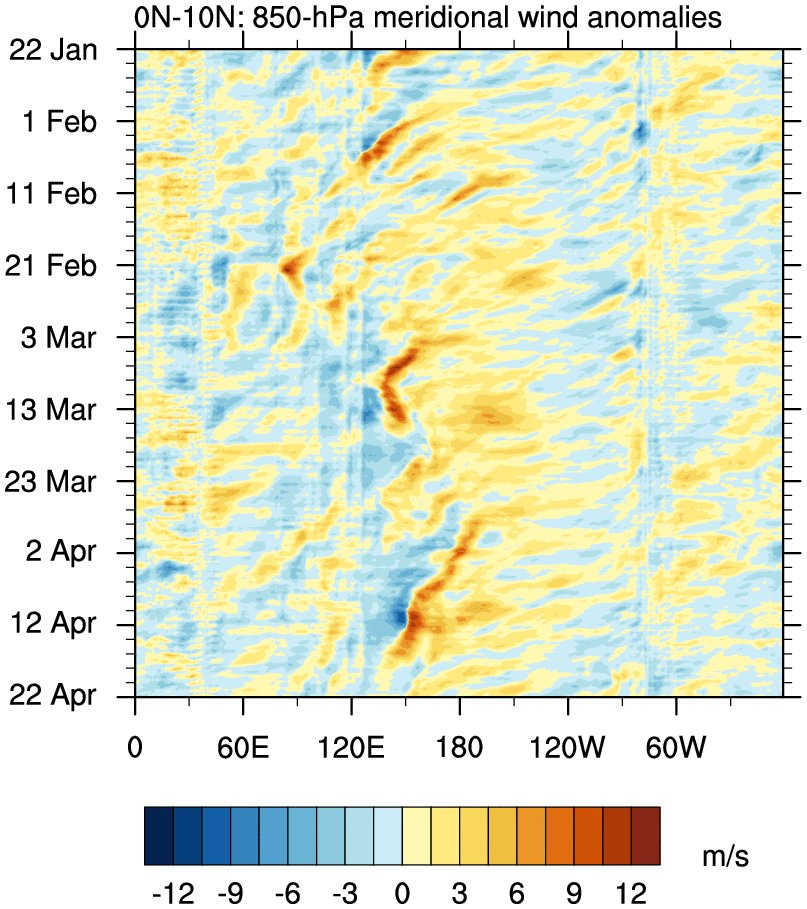
1/3 Análisis Hovmoller (tiempo-longitud) de la anomalía del viento meridional (v) es una herramienta clave para identificar el paso de ondas del este africanas (AEWs). AEWs son perturbaciones que avanzan de este a oeste y son precursoras de ciclones tropicales en el Atlántico.
Esteban Perdomo tweet mediaEsteban Perdomo tweet media
GIF
Español
1
3
4
157
༺ Adan ༻ retweetledi
Jeff Berardelli
Jeff Berardelli@WeatherProf·
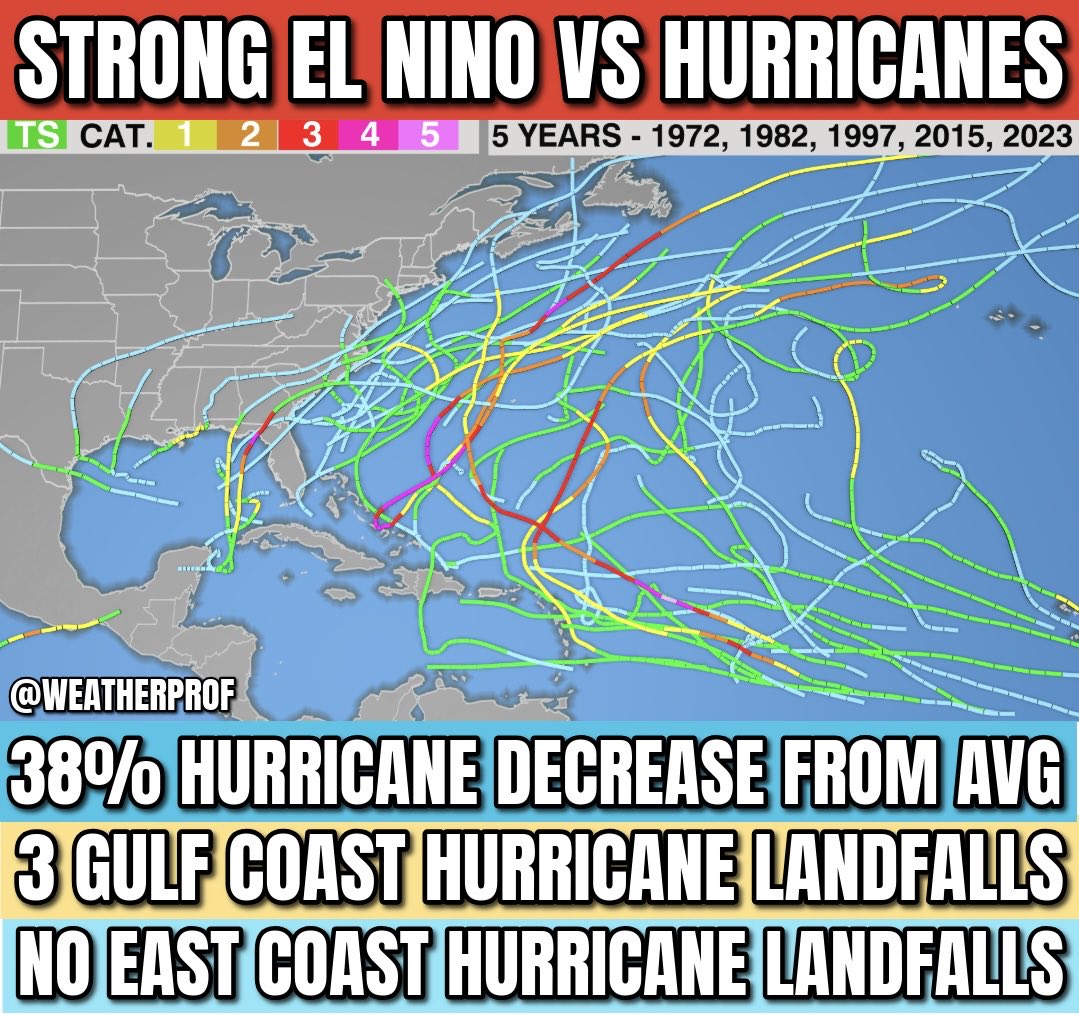
With the strong Pacific El Niño expected this summer-fall, what does that mean for Atlantic hurricane season? There’s no way to know for sure. But we can look to history to help. I looked at the 5 strongest El Niño episodes since 1972. It shows a substantial decrease in Atlantic activity. About 40% less hurricanes than an average year! In those 5 years, only 3 hurricanes landfilled in the US - all in the Gulf. Bottom line: strong El Niños mean less risk - but they do not totally eliminate the risk of landfalls. So be prepared each year regardless.
Jeff Berardelli tweet media
English
6
19
76
4K
༺ Adan ༻ retweetledi
NHC_TAFB
NHC_TAFB@NHC_TAFB·
NOAA and the U.S. Air Force Reserve will host a series of events during National Hurricane Preparedness Week to help Gulf Coast communities prepare for the upcoming hurricane season. The media and the public are invited to meet NOAA hurricane experts, scientists and crew members.
NHC_TAFB tweet media
English
1
2
17
955
༺ Adan ༻ retweetledi
DW Español
DW Español@dw_espanol·
"Prepárense ya": científicos aceleran las alertas sobre el colapso de una corriente oceánica clave El sistema que regula el #clima atlántico se debilita más rápido de lo previsto, según un nuevo estudio científico. #AMOC (few) p.dw.com/p/5CiKd
Español
15
349
532
63.2K
༺ Adan ༻ retweetledi
LocalMan Weather
LocalMan Weather@localmanweather·
Violent psycho-bitch tornado just west of Braman, OK, intercepted in the Dominator 3
English
85
767
6.7K
358.5K
༺ Adan ༻ retweetledi
Extrême Météo
Extrême Météo@ExtremeMeteo·
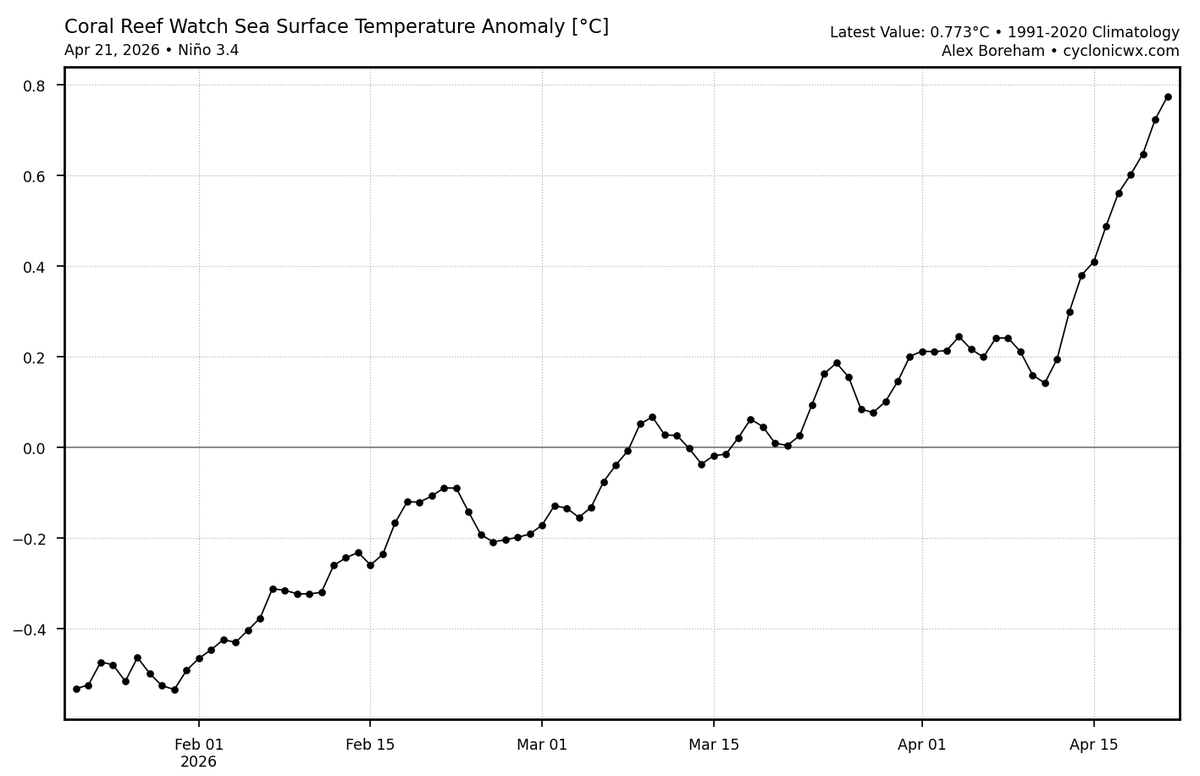
Le phénomène El Nino poursuit sa mise en place avec une accélération du réchauffement des eaux de la zone Nino 3.4. L'onde de Kelvin descendante est maintenant bien formée décalant les eaux chaudes de plus en plus vers l'est. Tandis que la couverture médiatique nous annonce "le pire" en terme d'évènement El Nino, je préfère rester modéré car deux points attirent mon attention : - Pour l'heure, on ne voit pas une rafale de vent d'ouest aussi développée que début avril arriver en mai. Cela ne veut pas dire pour autant que ça ne viendra pas mais on a actuellement un relâchement des vents d'ouest qui peut perdurer un peu. - Les modélisations générales des modèles s'orientent majoritairement vers un phénomène modéré et fort certes notable, mais pas forcément vers un "super El Nino". La barrière de visibilité est toujours en cours et nous serons réellement fixés sur l'intensité de ce phénomène El Nino qu'à la fin du printemps certainement en juin. La probabilité qu'on ait un El Nino, pour moi elle est acquise, l'incertitude c'est son intensité. A suivre.
Extrême Météo tweet mediaExtrême Météo tweet mediaExtrême Météo tweet mediaExtrême Météo tweet media
Français
0
10
101
4.6K
༺ Adan ༻ retweetledi
Dreams N Science
Dreams N Science@dreamsNscience·
Cloud Guide: How the Naming System Works Cloud names are built from Latin prefixes and roots that describe key traits: • Cirro- / Cirrus: High altitude (typically above 6 km / 20,000 ft), wispy or fibrous, often made of ice crystals. • Alto-: Mid-level altitude (roughly 2–6 km / 6,500–20,000 ft). • Strato- / Stratus: Layered, flat, or sheet-like (horizontal spread). • Cumulo- / Cumulus: Heaped, puffy, or cauliflower-like (vertical development). • Nimbo- / Nimbus: Rain-bearing or precipitating. 🎥 topdown.world
English
0
19
49
2.8K