Adaptyv Bio

186 posts

Adaptyv Bio banner
Adaptyv Bio

Adaptyv Bio

@adaptyvbio

You design proteins - we run the lab. We build an automated lab that enables anyone to become a protein designer.

Katılım Temmuz 2021
2 Takip Edilen3K Takipçiler
Sabitlenmiş Tweet
Adaptyv Bio
Adaptyv Bio@adaptyvbio·
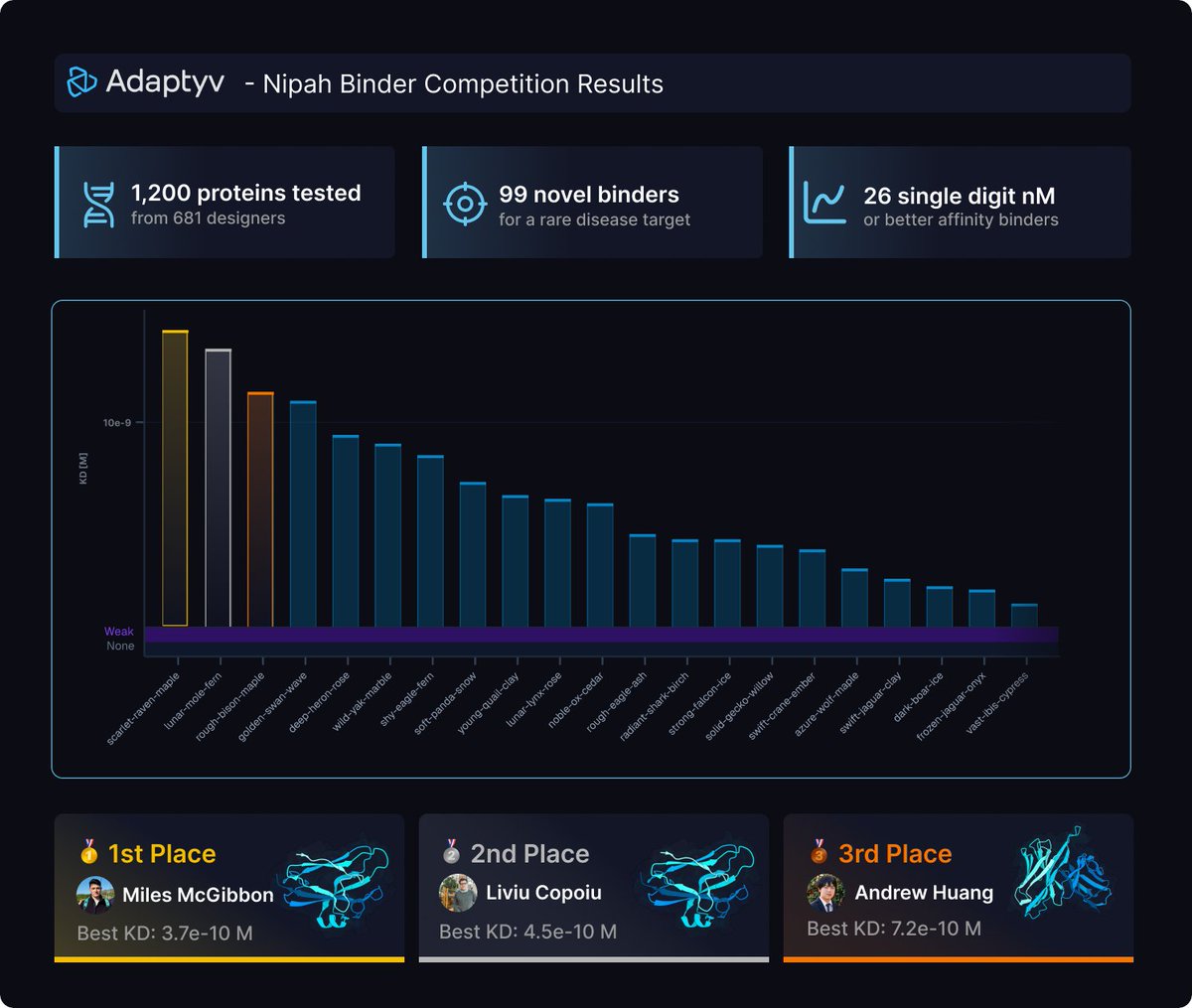
The results of the Nipah Protein Design Competition are out! 🧬 1200 proteins experimentally validated (3x more than last year) 📈 99 novel binders against the target protein (a challenging tetramer with little prior work) 💪 26 single digit nM or better binders, with the best ones at single-digit picomolar affinity! All data now available open-source on Proteinbase! Let's take a look at the results ⬇️
Adaptyv Bio tweet media
English
4
24
133
83K
Adaptyv Bio
Adaptyv Bio@adaptyvbio·
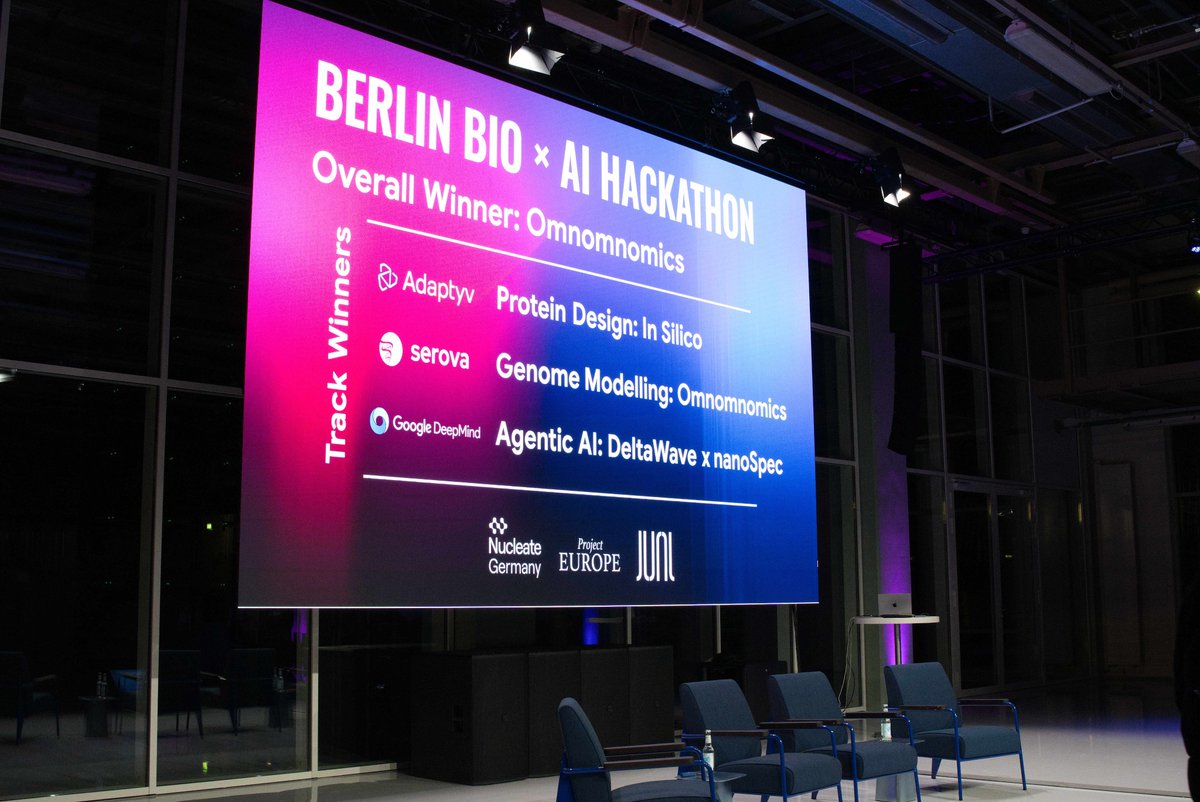
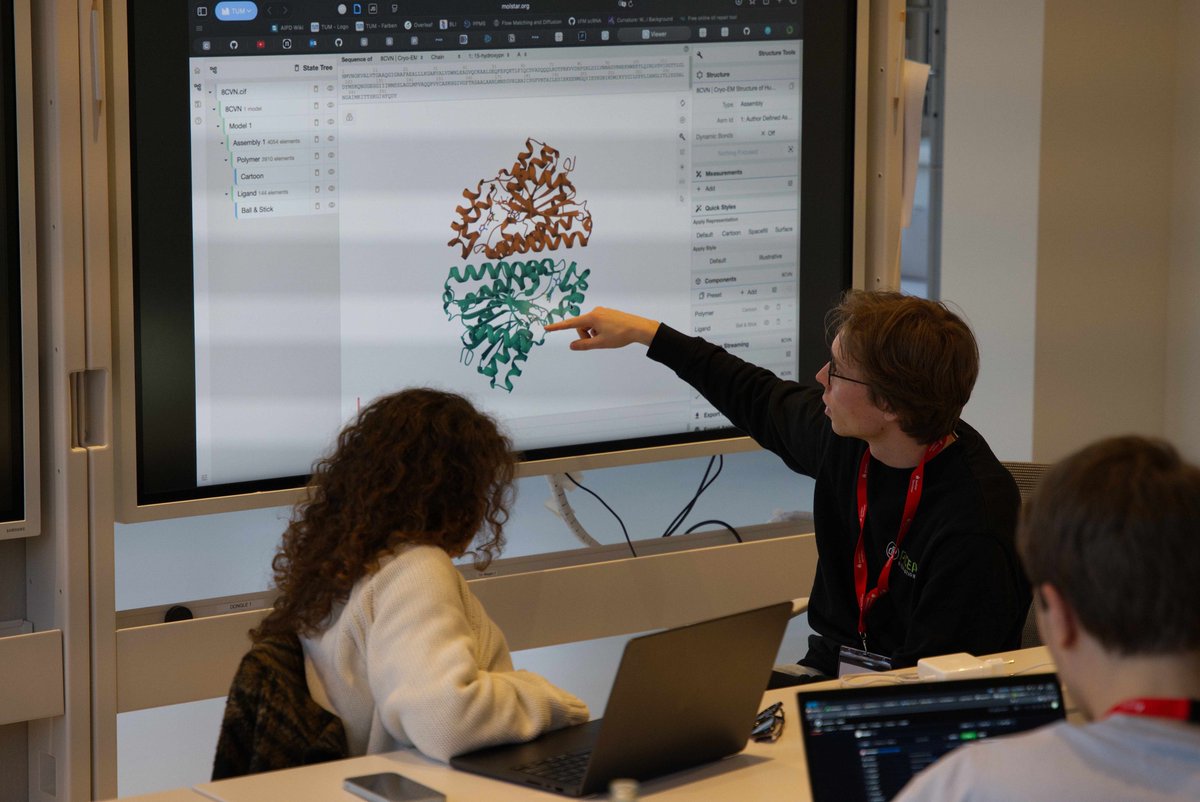
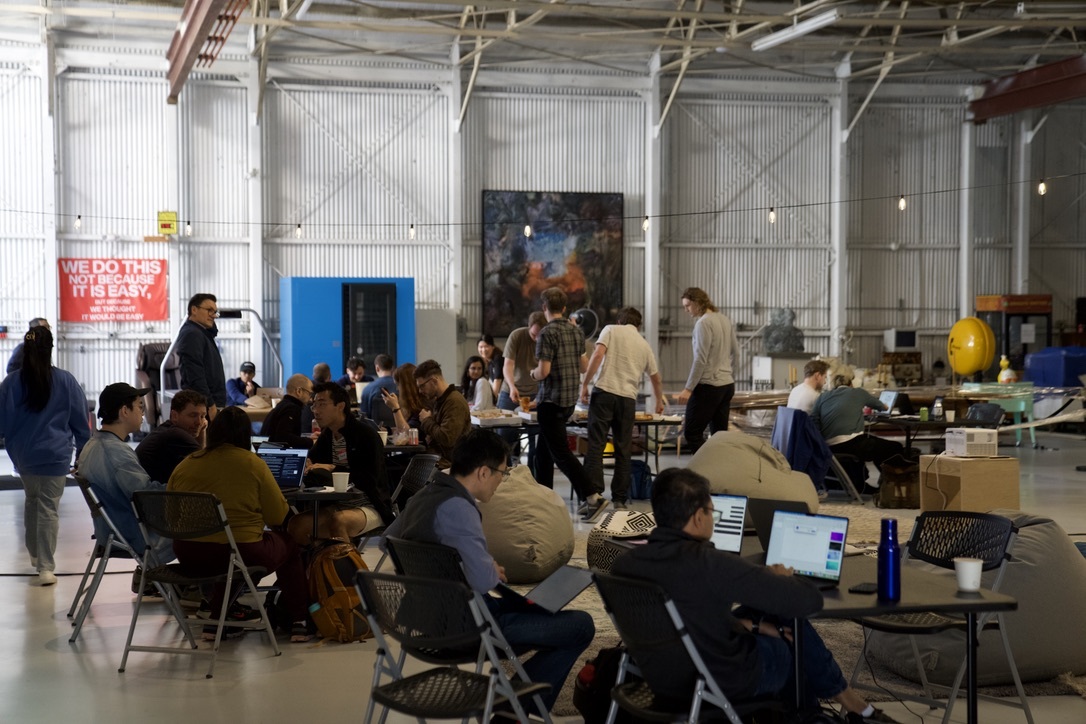
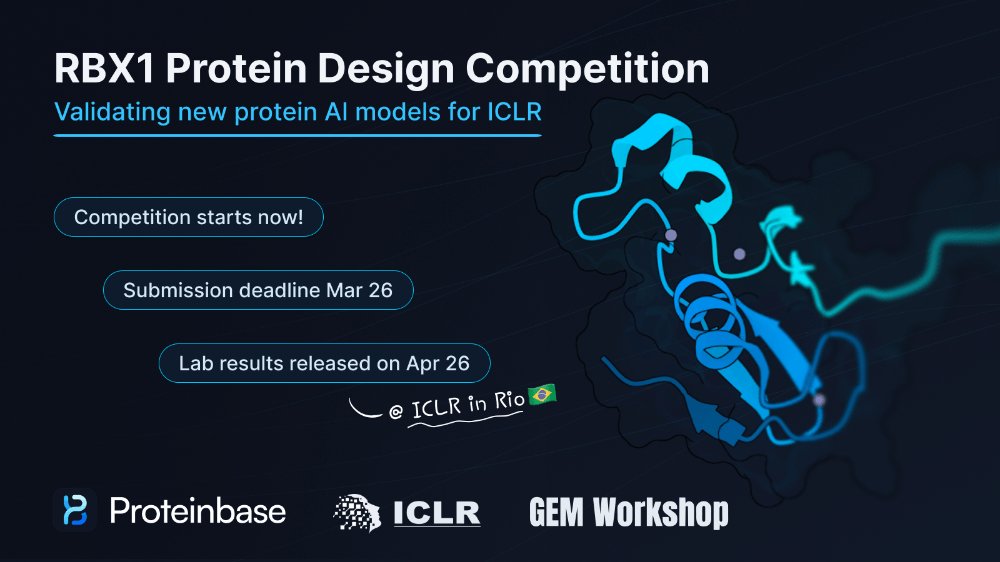
This weekend we hosted two challenging hackathons on two different continents! Excited to see so many people passionate about protein design. We’re looking forward to experimentally test all of those new proteins in our wet lab next, stay tuned for the results 🇩🇪 Berlin Bio × AI Hackathon The Protein Design Track we organized had 6 teams competing by designing binders against 15-PGDH, a gerozyme whose rising activity with age drives muscle loss, neurodegeneration, and joint decline. We saw teams bringing their own models to the task, improving them in 24 hours, while others used out-of-the-box solutions. Some people even created new dashboards with Claude Code integrated for direct feature requests. And others focused on critical challenges for building a biotech: delivering the designer drugs, market analysis, exploring other binder modalities. We’re now testing the best 150 proteins in our lab and will release the experimental results next month! 🇺🇸 SF bioArena Hackathon - Humans vs AI agents A single-day hackathon where human teams and AI agents competed side by side in designing proteins. The target was TREM2, a receptor involved in Alzheimer’s disease. 9 human teams competed against 6 agents, including Anthropic’s Claude Sonnet 4.6 and xAI’s Grok 4.1. 100 designs were selected for experimental validation in our wet-lab. We’ll reveal who won, agents or humans, soon! 🧬Want to participate in one of our competitions? Join the RBX1 challenge on @proteinbase - the submission deadline is at the end of this month. Thanks a lot to @la_Payette_ , Stefan Hristov, @burgshrimps, and the rest for organizing the Berlin Bio hackathon and to @katyenko for the bioArena one in SF.
Adaptyv Bio tweet mediaAdaptyv Bio tweet mediaAdaptyv Bio tweet mediaAdaptyv Bio tweet media
English
0
5
18
2K
Adaptyv Bio retweetledi
Proteinbase
Proteinbase@proteinbase·
Submissions are open for the GEM x @adaptyvbio RBX1 Binder Design Competition 🧬 We're partnering with the GEM Workshop at ICLR 2026 for a new protein design challenge. The target is RBX1, a 108-amino acid component of Cullin-RING E3 ubiquitin ligase complexes, which control degradation of roughly 20% of all cellular proteins. In many cancers, this protein is overexpressed and degrades important tumor suppressing proteins. Disrupting RBX1's function with a de novo designed binder could slow down cancer cell proliferation. But RBX1 is a tricky design problem. Half the protein is an intrinsically disordered N-terminus so it has limited use for structure-based design methods. The part you actually need to bind, the E2 recruitment surface on helix α2, sits within a RING domain with an usual fold that is shaped by three coordinated zinc ions. How it works: - Submit up to 100 ranked binder sequences (≤250 aa) with a design method description on Proteinbase till March 26 - An expert panel from the GEM workshop selects 300 designs based on novelty and originality - We test all 300 for expression and binding affinity in the @Adaptyv Bio lab - Experimental results will be released April 26 at ICRL 2026 in Rio de Janeiro and open-sourced on Proteinbase Prizes: $1,000 for the best binder, $100 for the runner-up, and co-authorship on the results paper.
Proteinbase tweet media
English
4
28
110
11.5K
Adaptyv Bio
Adaptyv Bio@adaptyvbio·
We're hiring software engineers at Adaptyv. We're building an automated lab that allows AI models to run biology experiments in the real world. You'll build the software platform that turns lab hardware into programmable APIs, orchestrates complex experiment workflows, and processes messy physical-world data. 50+ companies already run experiments on our platform — big pharma, frontier AI labs, techbio startups. We're scaling fast and need people who can ship across the full stack. You don't need a bio background, but you should be genuinely curious about biology. What matters most is product instinct, comfort in ambiguity, and the ability to build things that work in the real world (literally).
GIF
English
1
3
15
5.1K
Adaptyv Bio
Adaptyv Bio@adaptyvbio·
𝗖𝗮𝗻 𝗔𝗜 𝗮𝗴𝗲𝗻𝘁𝘀 𝗱𝗲𝘀𝗶𝗴𝗻 𝗽𝗿𝗼𝘁𝗲𝗶𝗻 𝗯𝗶𝗻𝗱𝗲𝗿𝘀 𝗼𝗻 𝘁𝗵𝗲𝗶𝗿 𝗼𝘄𝗻? 𝗛𝗼𝘄 𝗱𝗼 𝘁𝗵𝗲𝘆 𝗰𝗼𝗺𝗽𝗮𝗿𝗲 𝗮𝗴𝗮𝗶𝗻𝘀𝘁 𝗵𝘂𝗺𝗮𝗻𝘀? 𝗪𝗲'𝗿𝗲 𝗮𝗯𝗼𝘂𝘁 𝘁𝗼 𝗳𝗶𝗻𝗱 𝗼𝘂𝘁 🤖🧬 Teaming up with @bioArena_ for a single-day hackathon in San Francisco (Feb 28). The target: TREM2, a microglial receptor where loss-of-function variants increase Alzheimer's risk 2-4x. Alector's antibody AL002 failed Phase 2 last year. Novartis' VHB937 is still in trials. New binding modalities might find paths that existing antibodies missed. Human teams and autonomous agents compete side by side in this hackathon. Participants can submit to 10 sequences, ranked by the ipSAE score via Boltz-2. 🔬 Top 100 designs tested in our wet lab 📊 Results ~3 weeks post-event on @proteinbase 🤖 Get started with the Protein Design Skills for Claude Code → proteinbase.com/protein-design… Register → luma.com/a6t92ohv
GIF
English
1
14
45
12.8K
Adaptyv Bio retweetledi
Proteinbase
Proteinbase@proteinbase·
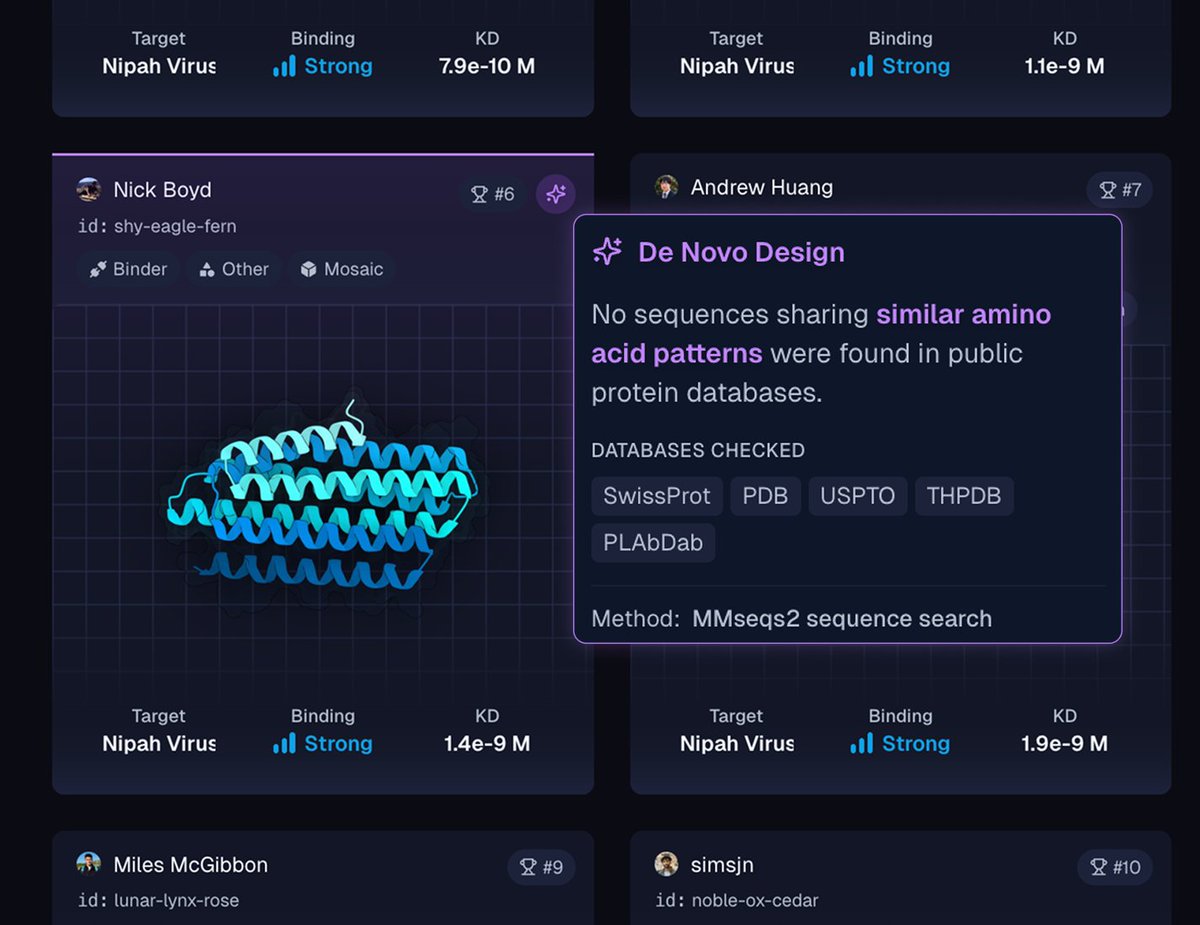
Announcing the winners of the “De Novo” track of the Nipah Protein Design Competition! This track rewards completely novel design ideas. No starting scaffold, no antibody to optimize, no template to tweak: just the target structure and a blank canvas. Winners (by best binding strength) 🥇 Nick Boyd (Escalante) — KD: 1.4e-9 M 🥈 Johannes Klier (Schoeder lab)— KD: 1.2e-8 M 🥉 Brian Coventry (@UWproteindesign) — KD: 1.8e-8 M
Proteinbase tweet media
English
3
10
73
4.1K
Adaptyv Bio
Adaptyv Bio@adaptyvbio·
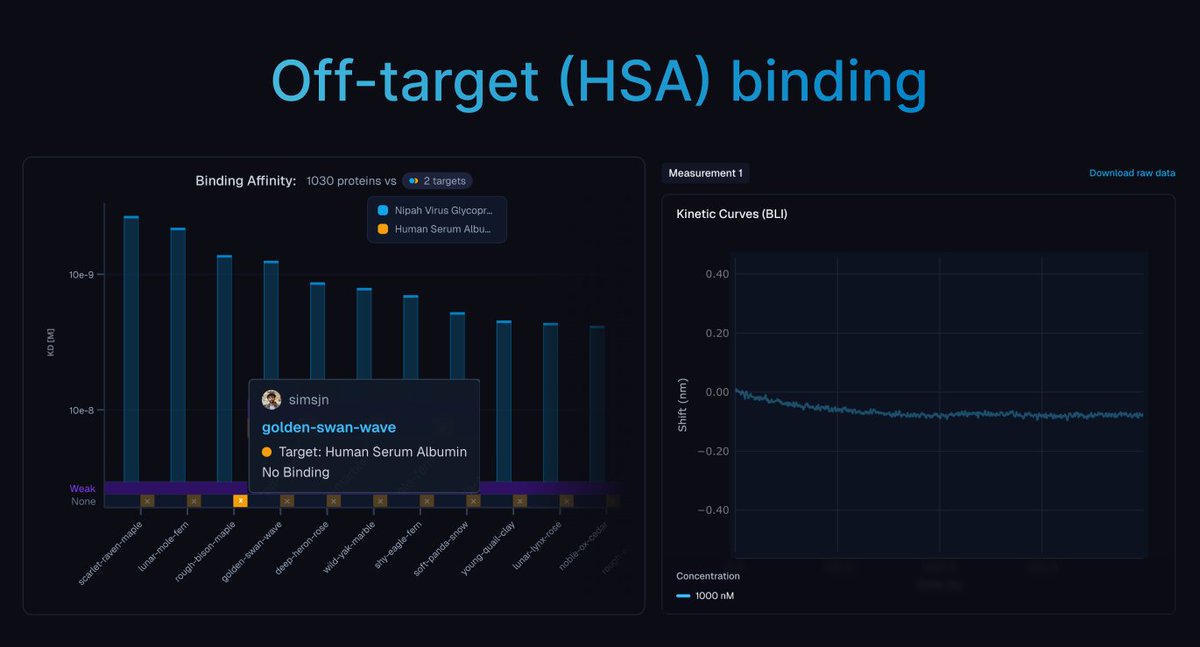
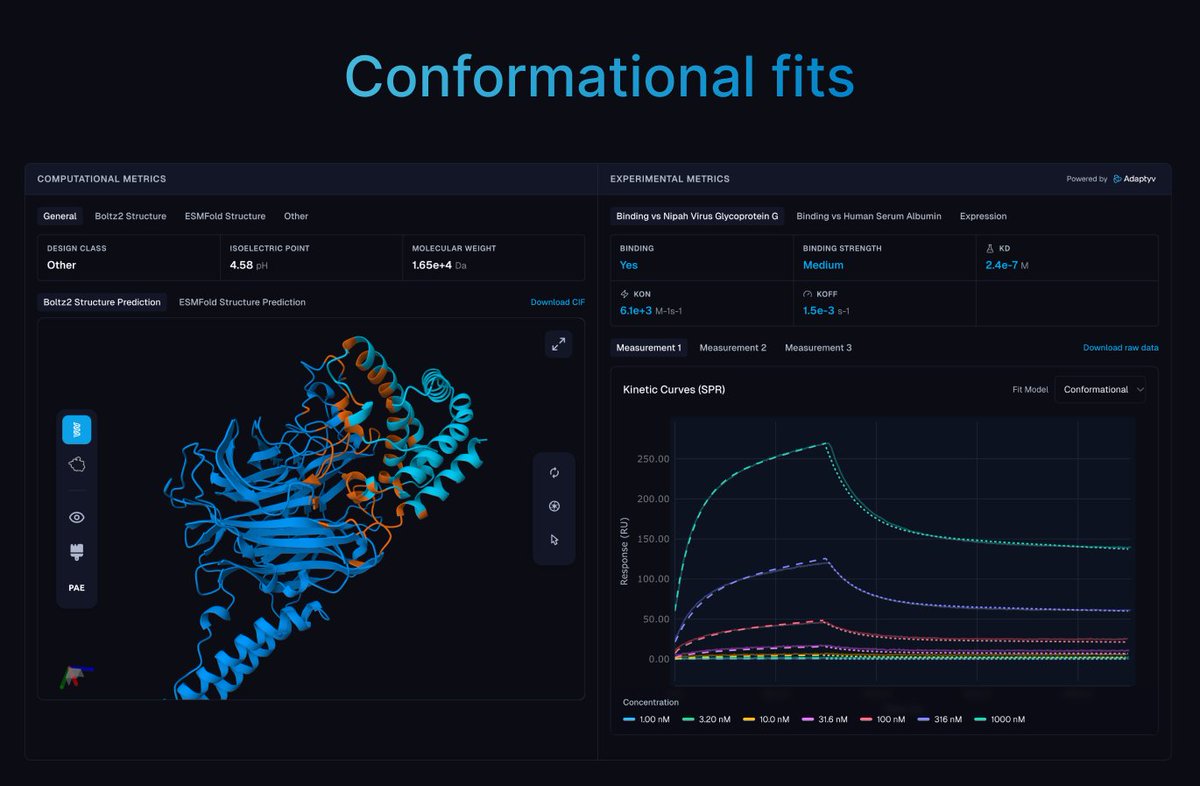
We’ve just added more experimental data to the Nipah Protein Design Competition results: 1. Off-target HSA binding — Human Serum Albumin (HSA) is the most abundant protein in blood. For therapeutic applications it’s important that your binders don’t stick to HSA. We ran additional binding assays to validate that there is no HSA binding ✅ 2. More fitting models — The standard model for fitting protein binding data assumes a 1:1 interaction between the binder and the target. But in many cases, the target (or the binder) actually forms dimers (or trimers, tetramers etc) and that changes how the binding curves look like. So the binding model needs to be able to account for that behavior so we just added conformational fitting 📏 3. Expression yield— A good binder should not just bind well but should also express well so that it can be produced easily. We quantified expression for all proteins in our E. Coli based cell-free system and added that data to the measurements tab. 🧪 All data available here: proteinbase.com/collections/ni…
Adaptyv Bio tweet mediaAdaptyv Bio tweet mediaAdaptyv Bio tweet media
Adaptyv Bio@adaptyvbio

The results of the Nipah Protein Design Competition are out! 🧬 1200 proteins experimentally validated (3x more than last year) 📈 99 novel binders against the target protein (a challenging tetramer with little prior work) 💪 26 single digit nM or better binders, with the best ones at single-digit picomolar affinity! All data now available open-source on Proteinbase! Let's take a look at the results ⬇️

English
0
7
28
6.8K
Adaptyv Bio
Adaptyv Bio@adaptyvbio·
@proteinbase Small typo: the best binders are at picomolar affinity but not single digit picomolar obviously. Sorry for the confusion ;)
English
1
0
2
1.7K
Adaptyv Bio
Adaptyv Bio@adaptyvbio·
The results of the Nipah Protein Design Competition are out! 🧬 1200 proteins experimentally validated (3x more than last year) 📈 99 novel binders against the target protein (a challenging tetramer with little prior work) 💪 26 single digit nM or better binders, with the best ones at single-digit picomolar affinity! All data now available open-source on Proteinbase! Let's take a look at the results ⬇️
Adaptyv Bio tweet media
English
4
24
133
83K
Theo Jala
Theo Jala@theo_jala·
@adaptyvbio can’t wait to see what people do with the data!
English
1
0
4
1.3K